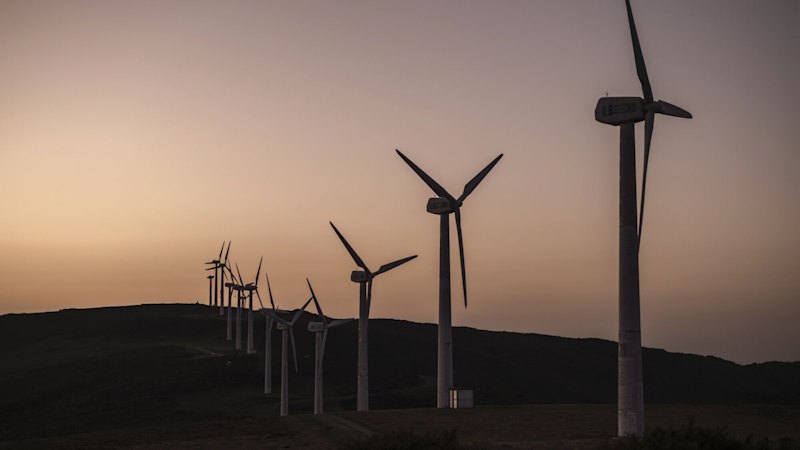
Australia’s wholesale power prices would be up to 50 per cent higher if the country had embraced coal, gas or nuclear power rather than renewables and batteries, a leading economist has declared while arguing the nation had been “de-risked” from the full cost of the surge in fossil fuel prices.
asserted
nation → embrace → prices
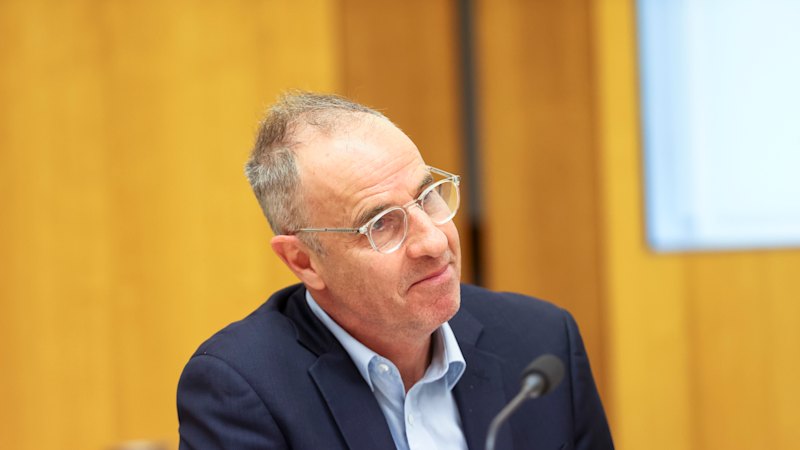
Guy Debelle, a former deputy governor of the Reserve Bank who is now non-executive director of independent think tank e61, has used a major address to argue Australia was lucky to embrace renewable energy sources to replace the nation’s network of coal- and gas-fired power stations.
asserted
Australia → use → stations
Critics of the rollout of solar and wind power plus batteries have claimed renewables have driven up Australians’ power prices.
asserted
renewables → claim → prices
Opposition Leader Angus Taylor has claimed government energy policy had prevented the construction of gas- and coal-fired power plants, leading to a 40 per cent surge in prices.
asserted
policy → claim → prices
But Debelle, who also sits on the board of the Clean Energy Finance Corporation, said critics ignored the pressing need to replace the Australian power system, given its suite of fossil fuel power sources had come to the end of their lifespan.
asserted
suite → sit → lifespan
He said the huge fall in the price of renewables and batteries, and the surge in the cost of coal- and gas-fired power stations, meant Australian households were substantially better off.
“The counterfactual of not doing this energy transition is that we would have a lot higher energy prices than we have today.
asserted
we → say → prices
The energy transition isn’t costless, but the alternatives are considerably more costly,” Debelle said.
asserted
Debelle → say → ?
“Wholesale energy prices would be 30 to 50 per cent higher today than if we had not installed this renewable energy capacity.
asserted
we → instal → capacity
When coal and gas prices rise higher as they have done recently, than the cost savings are even larger.”
asserted
savings → rise → ?
Last week, former prime minister Tony Abbott linked the growth in renewable energy across Australia to the surge in household power bills while arguing for “climate warriors” to back nuclear power.
asserted
warriors → link → power
“If renewables really are cheap, they don’t need to be subsidised or mandated; and if it really is necessary to limit emissions, the climate warriors should be the strongest advocates for nuclear power because it’s the only proven emissions-free form of the base-load electricity a modern economy needs,” Abbott said.
asserted
Abbott → need → electricity
But Debelle said by every measure, renewable energy sources were cheaper to build and operate than their fossil fuel alternatives, which meant households had avoided even larger power bills.
asserted
households → say → bills
He said that since 2010, the number of coal-fired power stations had fallen from 26 to 15 with their output dropping from 28 gigawatts of power to 21 gigawatts.
asserted
output → say → gigawatts
Over that period, renewable energy output had grown to 36 gigawatts.
asserted
output → grow → gigawatts
In the 2025-26 financial year, Australian households installed more than 13 gigawatt hours of battery storage, or more than the United States has ever put in place.
asserted
States → instal → place
According to Debelle, coal-fired power stations would not be competitive against renewables while calls for nuclear power ignored the long-term problems of building and running them.
uncertain
calls → accord → them
Cheap nuclear has been just around the corner for about the past 50 years,” he said.
asserted
he → say → years
“We can’t wait until that technological challenge is solved.
asserted
challenge → wait → ?
We need the generation capacity now.”
But the renewable rollout is currently running well over headline, as planning logjams and community opposition gum up project in the pipeline.
asserted
logjams → need → pipeline
Last year, the Australian Energy Market Regulator warned projects, including new transmission links, faced cost blowouts of up to 100 per cent.
asserted
projects → warn → cent
A failure to streamline the national rollout could add 30 per cent to projects’ costs, the regulator estimated in a report last December.
uncertain
regulator → streamline → report
Debelle noted whole power prices had fallen across the national electricity market in recent months.
asserted
prices → note → months
But in most of the rest of the world, prices have increased by a large amount due to the US-Israel war on Iran.
asserted
prices → increase → Iran
“We’ve been able to insulate ourselves from that,” he said.
asserted
he → insulate → that
Apart from the collapse in the cost of solar and wind, which are now cheaper sources of energy than coal, the fall in the use of fossil fuels is aiding Australia’s efforts to reduce greenhouse gas emissions.
asserted
fall → aid → emissions
Debelle said that by 2030, electricity would no longer be Australia’s largest source of emissions.
asserted
electricity → say → emissions
It would be overtaken by transport due to ongoing use of diesel- and petrol-powered vehicles.
asserted
It → overtake → vehicles
But Debelle said continuing the rollout of renewables, and providing access to the overall energy grid, remained a major challenge.
asserted
continuing → say → grid
He said finding ways to encourage the installation of solar on businesses and warehouses in urban areas would increase the amount of electricity available to the grid while reducing the cost of transmission lines.
asserted
finding → say → lines
Subscribers can sign up to our weekly Inside Politics newsletter.
asserted
Subscribers → sign → newsletter
 The Aporia