Photo via The Sydney Morning Herald

Cut and cut now: Economists urge next Victorian government to swing the axe

Read the original at The Sydney Morning Herald ↗
Cite

Wright, S. (2026, November 22). Cut and cut now: Economists urge next Victorian government to swing the axe. The Sydney Morning Herald. https://www.smh.com.au/politics/federal/cut-and-cut-now-economists-urge-next-victorian-government-to-swing-the-axe-20261122-p61g7d.html?ref=rss&utm_medium=rss&utm_source=rss_feed

Dated from the outlet's own feed. Check the original for its byline.

The Sydney Morning Herald · collected 2026-11-22 · by Shane Wright

Quick Summary

Leading economists advise the incoming Victorian government to reduce budget deficits by immediately scaling back or delaying major construction projects, as the state’s net debt is forecast to reach $197 billion by 2029-30, the highest among all states and territories. The economists, surveyed by the Economic Society of Australia, also recommend shifting from stamp duty to a broad-based land tax and reducing the size of the public service to control spending and improve economic performance. Notable economists such as Melinda Cilento and Saul Eslake emphasize the need for fiscal restraint and prioritizing infrastructure projects with higher benefit-cost ratios.
Written by AI on 2026-11-22, from this article's own text only (the story summary below draws on all the coverage).

AI analysis

Story summary

The Economic Society of Australia has urged the next Victorian government to drastically cut spending and delay or cancel major building projects to control the state's budget. A survey of high-profile economists revealed strong support for new fiscal rules to prevent a future increase in state debt, which is forecast to reach $197 billion by 2029-30, the highest among all states and territories. The Victorian economy was the slowest growing in Australia through 2025-26, according to figures from the bureau of statistics. The economists also suggested shifting from stamp duty to a broad-based land tax as a way to improve the economy and safeguard the budget.

Written for “Victorian Government Budget Cuts Urged” on 2026-11-22, grounded in this article and the 0 other(s) covering the same event.
Why this leaning score
The article's own words the score was based on. Each is quoted verbatim and was checked against the article text before being stored, so you can find it in the original.
Reading Leans strongly right (beta estimate) Confidence high
Leaning: leans strongly right for article 171511 (high confidence, 3 verified quotes) · logged 2026-11-22

Compared with similar articles

This article reads leans strongly right and hedges 3% of its claims. Each row says how that neighbour differs.
ABC News (AU)
Hedges 2 of 41 claims Outlet record 67/100
“The articles discuss different aspects of the Victorian political landscape and do not describe the same specific event or incident.”

Story

Victorian Government Budget Cuts Urged
Economy/Business · 1 article(s) covering the same event.
How this article was measured signals, leaning charts, publisher record, byline, topics and claims

Signals How these are calculated →

Claims extracted
35
sentences that state something as happening or true
Uncertain
3%
1 of 35 hedged ("reportedly", "may", "according to")
Leaning
Leans strongly right
of the writing, not the subject · beta estimate
Publisher signals
61/100
The Sydney Morning Herald's corrections and hedging, across everything collected from it. Not a measure of accuracy.
Outlets on this story
1
Economy/Business
Same framing elsewhere
1
articles that frame the event the way this one does
Analyzed 2026-11-22 · how these are computed

How this is being covered How these are calculated →

Article leaning vs. publisher reliability
Source leaning vs. consistency

Publisher

The Sydney Morning Herald · 7890 article(s) · 16 correction(s) detected
Running correction rate · 16 correction(s)

Who wrote this

Shane Wright
32 article(s) here · 1 carrying a prediction
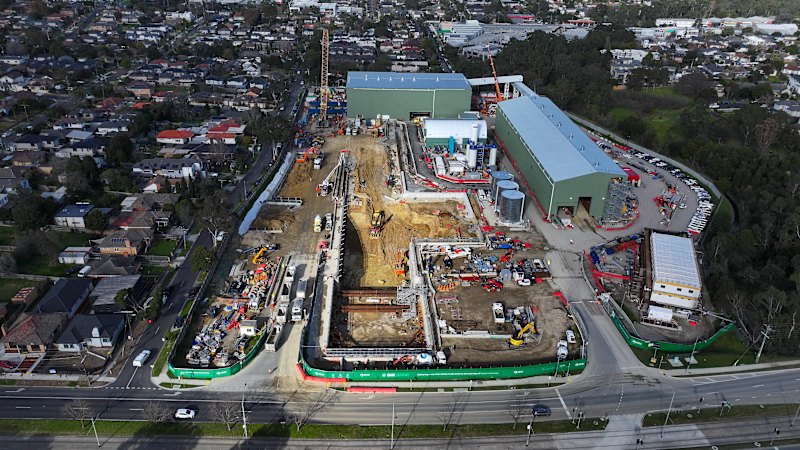
Victoria’s net debt, forecast by Treasury to reach $197 billion by 2029-30, is the highest of all state and territories.
Australia’s wholesale power prices would be up to 50 per cent higher if the country had embraced coal, gas or nuclear power rather than renewables and batteries, a leading economist has declared while arguing the nation had been “de-risked” from the full cost of the surge in fossil fuel prices.
Treasurer Jim Chalmers is promising a “Goldilocks” mid-year budget update that will be focused on savings large enough ease inflation pressures but which will not hurt the overall economy.
The Greens could get in the way of Treasurer Jim Chalmers’ plans to overhaul capital gains tax by the end of the year, backing an inquiry into a separate proposal from independent MP Allegra Spender.
The CEOs of two of the nation’s largest banks have backed cuts in government spending to bring down inflation and make housing more affordable amid warnings the AI building boom could push up the cost of suburban homes as they compete for electricians and plumbers.
The federal government’s budget overhaul of negative gearing and capital gains tax has been blamed for the biggest fall in home loans taken out by investors on record, with warnings the property market will struggle well into next year.
The AI building boom that is powering the global economy could force interest rates to remain higher, the Reserve Bank’s chief economist has warned, while revealing there are few signs the new technology will eat into the job prospects of young Australians.
But it wasn’t accompanied by a surge in unemployment which would peak at 7.4 per cent.
It may not be an official recession, but the Reserve Bank knows it may feel like one for plenty of Australians after it delivered another dose of monetary policy punishment to the country.
The last time the RBA board split was in May when 8 voted in favour of a rate hike with one holding out.
Also by Shane Wright
Chalmers reveals plan for ‘Goldilocks’ budget update
2026-11-16 · The Sydney Morning Herald
Nothing else under this byline is closely related to this article, so these are simply their most recent.
All 32 articles by Shane Wright →

Topics

The Economic Society Treasury Victoria Victorian the Economic Society of Australia

Subjects

Victoria GPE · 6× Victorian NORP · 6× Deborah Cobb-Clark PERSON · 1× Melinda Cilento PERSON · 1× Reserve Bank ORG · 1× Saul Eslake PERSON · 1× The Economic Society ORG · 1× Treasury ORG · 1× the Economic Society of Australia ORG · 1× the Melbourne Institute ORG · 1×

Narrative

A survey of high-profile economists by the Economic Society of Australia has revealed strong support for an overhaul of government spending plus the adoption of new fiscal rules to prevent a future blowout in state debt. They also believe Spring St needs to adopt a raft of policies to safeguard the budget and improve the economy, including a shift from stamp duty towards a broad-based land tax.
framing: assertive · carried by 1 article(s) · first seen 2026-11-22
Victoria’s net debt, forecast by Treasury to reach $197 billion by 2029-30, is the highest of all state and territories.
2026-11-22 · The Sydney Morning Herald
Cut and cut now: Economists urge next Victorian government to swing the axe · assertive framing

Claims (35 extracted, 1 hedged)

The next Victorian government should immediately wind back the scale of, delay or cancel major building projects to help bring the state budget under control while looking to reduce the number of bureaucrats, the nation’s top economists have urged. asserted
economists → wind → bureaucrats
A survey of high-profile economists by the Economic Society of Australia has revealed strong support for an overhaul of government spending plus the adoption of new fiscal rules to prevent a future blowout in state debt. They also believe Spring St needs to adopt a raft of policies to safeguard the budget and improve the economy, including a shift from stamp duty towards a broad-based land tax. asserted
St → reveal → tax
Victoria’s net debt, forecast by Treasury to reach $197 billion by 2029-30, is the highest of all state and territories. asserted
debt → forecast → state
Figures from the bureau of statistics released last week showed the Victorian economy was the slowest growing in the federation through 2025-26. asserted
economy → release → 2025
The Economic Society put to members at least a dozen proposals that have been floated publicly as ways to bring down state debt and improve the performance of the Victorian election. asserted
that → put → election
Respondents included current Reserve Bank board member Melinda Cilento, prominent independent economist Saul Eslake, former director of the Melbourne Institute Deborah Cobb-Clark and Queensland University’s John Quiggin. asserted
Respondents → include → Institute
Only one proposal – a reduction in infrastructure spending – was backed as a priority by most of those surveyed. asserted
proposal → back → those
Matthew Butlin, a former Productivity Commission member, said the state was in an “appalling mess” and had choices had to be made that would require sharing pain across Victoria. asserted
that → say → Victoria
“We are over-borrowed as a state, the public sector capital obligations are too large relative to our debt and income, our productivity is far too low, government spending is inadequately targeted, the tax burden is too high and we need to take a very sharp lens to what is very important over the next five years to build productivity growth,” he said. asserted
he → borrow → growth
Bob Breunig, director of ANU’s Tax and Transfer Policy Institute, was blunt about the choices facing the party taking office from Saturday night. asserted
Breunig → face → night
“They have to cut expenditure and decide what is really needed and what isn’t,” he said. asserted
he → have → expenditure
Hugh Sibly, a senior lecturer in economics from the University of Tasmania, said the Victorian budget was heavily exposed to rising interest rates because of the amount of debt it had taken on for its infrastructure program. asserted
it → say → program
“Unfortunately, Victoria has engaged in some infrastructure projects, notably the Suburban Rail Loop, for which the benefits are significantly less than the costs,” he said. asserted
he → engage → costs
“Reprioritising towards those projects with a benefit cost ratio greater than one would help Victoria’s economic position.” The survey also showed strong support for either reducing the size of the Victorian public service or restraining public sector wages growth. asserted
survey → reprioritise → growth
Figures released last week showed that since 2014, when Labor took office, public sector wages only in Queensland had grown faster than those in Victoria. asserted
wages → release → Victoria
The NSW government has pledged to keep net debt under 15 per cent of state economic output. asserted
government → pledge → output
Many economists believe such a set target should be adopted by Victoria. asserted
target → believe → Victoria
Uwe Dulleck, from the Crawford School of Public Policy in Canberra, cautioned that while spending cuts were necessary, they would hurt the economy in the short term. asserted
they → caution → term
“Major repair can only be achieved with major cuts in infrastructure investments, which will have negative impact on the local economy, and a restructure of the public service (again, it has an impact on the local economy),” he said. asserted
he → achieve → economy
“Thus, the balance between raising revenue and reducing expenditure is needed.” asserted
balance → raise → expenditure
Apart from cuts, the economists largely agree there is scope for major tax reform with the number one item a shift from stamp duty on property sales to a broad-based land tax. asserted
item → agree → tax
Such a proposal was rejected by the Andrews government. asserted
proposal → reject → government
Lisa Magnani, the head of Macquarie University’s economics department, said the next government should examine the state’s entire tax system, starting with its stamp duty system. asserted
government → say → system
“With one of the highest state debts in Australia, Victoria’s budget position is vulnerable to the negative effects of rising interest rates,” she said. asserted
she → rise → rates
“Victoria would benefit from a full review of its tax structure to possibly find new sources of revenues (particularly those with progressive features, such as taxes on high-income recipients and wealth owners).” uncertain
Victoria → benefit → recipients
Victoria University senior economist Janine Dixon said making the state more attractive to investors would go a long way to improving the budget. “Making Victoria an attractive place to invest would be a good start, and fits well with making sure Victoria’s considerable workforce, particularly in the outer suburbs, is well connected to employment opportunities. asserted
is → say → opportunities
Addressing crime would also give potential investors more confidence,” she said. asserted
she → address → confidence
While most economists believed budget cuts were a priority, some argued the new government should put its attention into other areas. asserted
government → believe → areas
Julie Toth, from the Committee for the Economic Development of Australia, said while budget repair was important in the long term, it was not the most urgent financial priority. asserted
it → say → term
She said it was more important that public services and infrastructure kept pace with Victoria’s growing population and that there was support for the state’s most disadvantaged and vulnerable residents. asserted
services → say → residents
“Economic and social inclusion matters for everyone. asserted
inclusion → matter → everyone
We all feel the impact of ineffective safety nets and support services, directly and indirectly. asserted
We → feel → nets
This will become more urgent if unemployment rises, as is widely forecast over the next two to three years,” she said. asserted
she → become → years
Apart from spending cuts and tax reforms, the surveyed economists backed changes including a reduction in free services or universal concessions, introduction of road user charges and broadening of the payroll tax base. asserted
economists → survey → base
There was also support for an overhaul of the Commonwealth Grants Commission GST allocation system which is the centre of a Productivity Commission report due by the end of the year. asserted
which → be → year

Give feedback · no sign-in needed

No sign-in needed for now. Your note is sent without a name, so it cannot be answered.

History Support