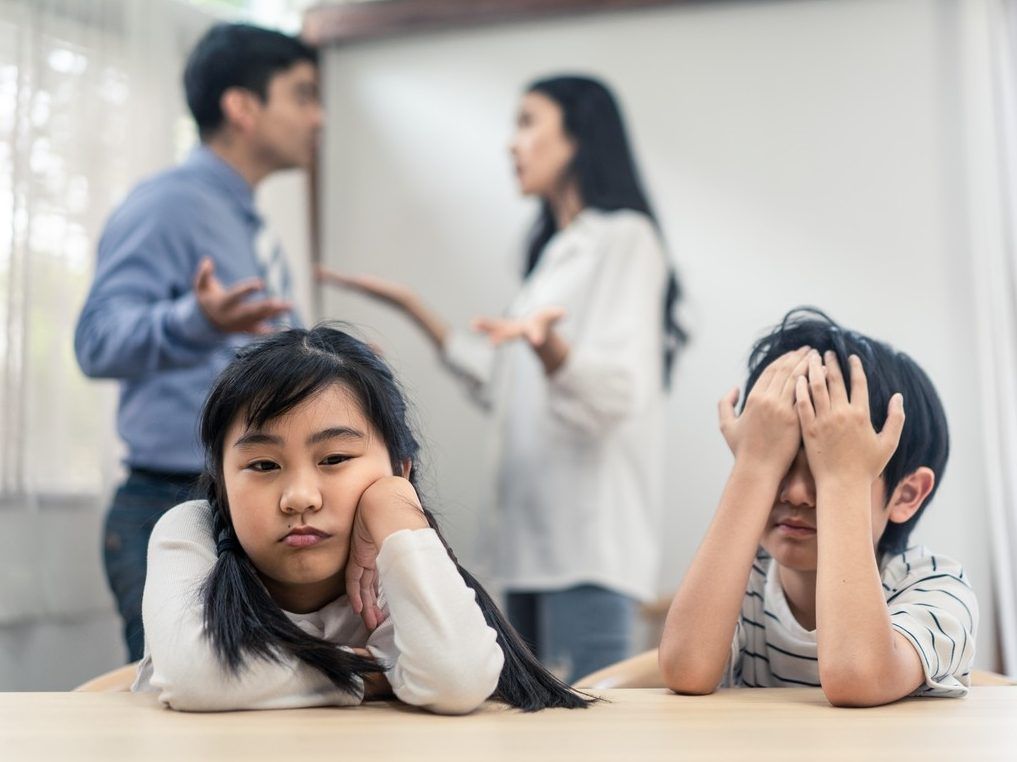
When I was growing up, it wasn’t uncommon for my parents to argue, yelling so loudly that the sound would reverberate through the two-storey stairwell of our 1911 house.
asserted
sound → grow → house
When they weren’t fighting, I could often sense tension between them.
uncertain
I → fight → them
When I was around five years old, I developed insomnia.
asserted
I → develop → insomnia
At bedtime, my anxiety was so acute that falling asleep felt like an impossibility.
asserted
falling → fall → impossibility
This eventually led to full-on panic attacks, until I was in my early 30s when I was diagnosed with an anxiety disorder and began treatment.
asserted
I → lead → treatment
For years, I thought my anxiety was just part of how I was wired.
asserted
I → think → years
But could my parents’ marriage have played a part?
uncertain
marriage → play → part
Studies show children exposed to emotionally distant parents face a 187% higher risk of clinical anxiety.
asserted
children → show → anxiety
Additionally, 42% of teen behavioural disorders trace directly to marital tension observed as early as age three.
asserted
% → trace → age
“Children read the room long before they hear words.
asserted
they → read → words
Cold silences, clipped tones, a parent leaving the room, or a house that feels tense all register, even with no arguing in front of them,” says Patrick Cloutier, founder of Daddy Simply.
asserted
Cloutier → leave → Simply
Children scan their environment for signs of safety and danger.
asserted
Children → scan → safety
When danger is detected — for example, tension between mom and dad — their nervous system switches to an anxious state.
asserted
system → detect → state
“Without a context to help them make sense of this experience, they will create their own explanations,” explain clinical psychologists Susan Bauerfeld, and Chris Parrott, authors of Base Camp Parenting: Worry Less to Help Your Kids More.
asserted
Bauerfeld → help → Kids
Bauerfeld and Parrott say that this can become emotionally harmful.
asserted
this → say → ?
“Some children may conclude, ‘I must not be important.
uncertain
I → conclude → ?
If I need attention, I’ll have to be really loud.”
asserted
I → need → attention
Others may conclude, “Best to steer clear because mom/dad is scary.”
uncertain
dad → conclude → ?
Along with experiencing anxiety, children may also internalize their parents’ stress, which can have far-reaching effects into adulthood.
uncertain
which → experience → adulthood
Bauerfeld and Parrott say that this may look like perfectionism and people-pleasing; acting out; adopting a caretaking role with one or both parents; clinginess; slipping grades; and getting less sleep.
uncertain
this → say → sleep
“All of these efforts take time away from activities that build coping and other skills which support long-term health and well-being,” explain Bauerfeld and Parrott over email.
asserted
Bauerfeld → take → email
For example, when a child is concerned about a parent’s well-being, they may get distracted at school or pull away from friends.
uncertain
they → concern → friends
“They may also begin to believe that taking care of their emotional needs is not as important as taking care of others,” shared Bauerfeld and Parrott.
uncertain
Bauerfeld → begin → others
While my parents’ relationship thankfully never kept me from socializing with my friends, it likely contributed to my habit of people-pleasing — something I’m trying to unlearn as an adult.
asserted
I → keep → adult
How to help kids through conflict
With that being said, relationship conflict is normal, and according to Bauerfeld and Parrott, staying connected with your children during this time can help lower their anxiety.
uncertain
staying → help → anxiety
Bauerfeld and Parrott say this starts by acknowledging what is happening, rather than trying to sweep the conflict under the rug.
asserted
what → say → rug
“Children don’t need a blow-by-blow description of how and why the marriage is strained; They just need a simple statement that confirms what they sense, i.e., something has changed, and there is tension in the air,” explain Bauerfeld and Parrott.
asserted
Bauerfeld → need → air
They encourage parents to start with a simple, age-appropriate statement, then follow up with curiosity.
asserted
They → encourage → curiosity
I wonder what you have noticed about that?”
asserted
you → wonder → that
The goal is to stay focused on their experience.
asserted
goal → stay → experience
The next step is to help them make sense of what is happening to them with language and concepts they can understand given their age and skill level.
asserted
they → help → level
Bauerfeld and Parrott say this may sound like, “Mommy and daddy are having some trouble getting along with one another.
uncertain
Mommy → say → one
That’s a big change from what you are used to.
asserted
you → ’ → what
But I am confident that we will figure out how to cope with this change and still be here to listen and support you.”
asserted
we → figure → you
As they explain, when parents interact with their children in this more regulated state, it helps them feel safe.
asserted
them → explain → state
If you think your child might already be experiencing anxiety because of conflict in your marriage, repair is possible.
uncertain
repair → think → marriage
“It’s never too late,” say Bauerfeld and Parrott.
asserted
Bauerfeld → ’ → ?
Children are malleable, and their brains and nervous systems are growing rapidly.
asserted
brains → grow → ?
It all comes down to how you connect and communicate with your child.
asserted
you → come → child
As Bauerfeld and Parrott remind us, “When parents can shift toward being more regulated and emotionally available, children’s systems will shift as well.”
asserted
systems → remind → us
 The Aporia