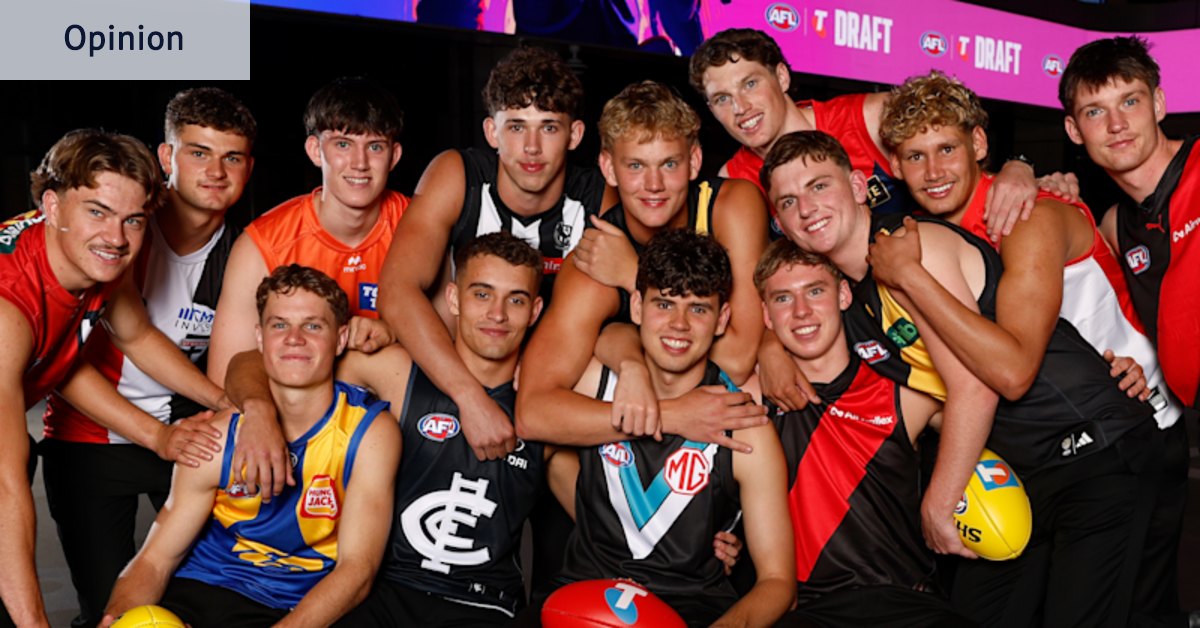
Most AFL clubs want the father-son rule scrapped if it forms part of sweeping changes they believe are needed in a reimagining of the entire player movement industry of drafts, free agency, academies and talent pathways.
asserted
they → want → drafts
All 19 clubs, including incoming club Tasmania, were polled by this masthead on a wide range of issues about player movement and development.
asserted
clubs → include → movement
The club representatives – a mix of chief executives, list managers, recruiters and football managers – spoke on the condition of anonymity in order to speak freely.
asserted
representatives → speak → anonymity
Clubs are frustrated that the current system has grown organically with annual changes, and would not be the system the AFL would choose if it started from scratch.
asserted
it → frustrate → scratch
“The AFL keeps saying the draft is one of the three pillars of competitive balance.
asserted
draft → say → balance
It is not,” one senior football figure said.
asserted
figure → say → ?
“They have to stop saying that, they look foolish.
asserted
they → have → that
It has nothing to do with competitive balance any more when the bottom teams can be denied access to the best players because they are tied to NGAs [next-generation academies], northern academies and father-sons.
asserted
they → have → NGAs
“When the lowest clubs lose free agents to the best clubs and the best clubs keep their draft pick and everyone else is punished with a compensation pick, it is nothing to do with competitive balance or equalisation.”
asserted
it → lose → balance
The clubs unanimously backed the idea of hosting an industry-wide forum next year with a view to introducing changes in 2030.
asserted
clubs → back → 2030
The time frame takes account of the fact the next two drafts are heavily compromised by the building of the new Tasmanian club’s list and the AFL commencing negotiations on a new collective bargaining agreement with the players.
asserted
AFL → take → players
Nominating 2030 for potential changes to the system would give clubs a strong lead time to prepare.
asserted
Nominating → nominate → time
All clubs backed scrapping the rookie list and having one playing list plus a continued provision for category B rookies (for players such as those from Ireland or non-football backgrounds).
asserted
clubs → back → Ireland
The clubs said the rookie list was unnecessary as long as the players taken late in the draft – perhaps after the third round – were only on one-year contracts.
asserted
players → say → contracts
The clubs were unanimous that free agency needed to be properly reviewed, saying it had not had the effect that was intended when it was introduced in 2012.
asserted
it → need → 2012
Free agency was expected to help lower clubs with money to spend bring in quality players.
asserted
clubs → expect → players
It has had the opposite effect, where the best free agents have been going to the top clubs – for example, Richmond winning a flag and then getting Tom Lynch as a free agent, and the Brisbane Lions winning premierships and still taking Sam Draper (Essendon) and Oscar Allen (West Coast).
asserted
Lions → have → Draper
Recently retired former Sydney and Brisbane Lions list manager Kinnear Beatson echoed the sentiments of the clubs on free agency.
“I don’t think free agency has worked as they meant it to.
asserted
it → retire → agency
The best free agents have not gone to the low clubs.
asserted
agents → go → clubs
They have to look at a change there,” Beatson said.
asserted
Beatson → have → change
“And as an industry, are we doing enough to develop the talent pool with 19 clubs and potentially a 20th club?
asserted
we → do → clubs
I think you need to look at those talent pathways in Victoria, WA and SA.”
asserted
you → think → Victoria
The overwhelming majority of clubs – 15 of the 19 – said change was needed to prevent the sort of side deals that were attached to the free agency moves this off-season of Zak Butters (Port Adelaide to the Western Bulldogs) and Ben King (Gold Coast to Hawthorn).
asserted
that → say → Hawthorn
“There is no world in which any club would do the trade the Western Bulldogs did and give up everything they did for what they got back if it wasn’t tied to Butters,” said one list manager.
asserted
manager → be → Butters
“It was a complete sham, but it was waved through.”
asserted
it → wave → ?
A variation of this comment was made by 14 other clubs.
asserted
variation → make → clubs
Some suggested the top-finishing clubs – possibly the top four or six – be precluded from securing free agents.
uncertain
clubs → suggest → agents
Several clubs felt that would be unfair if a club spent the year courting a player and agreeing terms but then snuck into the last of the top positions and being prohibited from securing the player.
asserted
club → feel → player
Many felt that any team that finished in the finals and then secured a free agent who drew first-round compensation for the club they left should lose their own first-round draft pick.
asserted
they → feel → pick
For instance, Hawthorn wouldn’t have been able to bring in King and keep their first-round draft pick, which they used this year to also trade for Zach Merrett.
asserted
they → bring → Merrett
The majority of clubs were sceptical of the new Indigenous rookie list, describing it as a sugar hit that would potentially spike Indigenous numbers at AFL level in the short term but do little to address the underlying problem of neglected development pathways.
asserted
that → describe → pathways
Eleven of the 19 clubs said the AFL should do away with the father-son rule to try to restore integrity to the draft.
asserted
AFL → say → draft
But a majority favoured keeping the rule if it was not offset by a broader overhaul of the compromises to the draft from northern academies and/or the next-generation academies.
asserted
it → favour → academies
A majority of clubs felt the northern academies had been effective in growing talent, but disliked the inequitable distribution of those players throughout the competition.
asserted
academies → feel → competition
Seven clubs approved of the academies, six wanted to scrap them, six more felt the academy in NSW was still needed but Queensland now no longer required an academy as participation levels were high there.
asserted
levels → approve → academy
Most clubs felt the AFL used the draft as a game-development tool to avoid having to spend money on talent pathways, which had been neglected throughout the country, especially since COVID.
asserted
which → feel → COVID
Clubs overwhelmingly wanted the AFL to better fund talent pathways, in particular investing more heavily in Victoria, South Australia and Western Australia.
asserted
AFL → want → Victoria
All clubs argued the problem was not the amount spent on the northern academies, or their effectiveness, but the amount spent on the other states’ pathway programs and the equality of access to those players.
asserted
problem → argue → players
“The draft is not working anything like it was intended,” said one veteran industry figure.
asserted
figure → work → ?
“There are too many compensation picks, too many players excluded from being freely available because they are father-sons or tied to academies.
asserted
they → be → academies
…and 18 more, not listed.
 The Aporia