Photo via The Sydney Morning Herald

Holy Grail: Mathematician says he has solved a 167-year-old problem using AI

Read the original at The Sydney Morning Herald ↗
Cite

Golden, H. (2026, November 22). Holy Grail: Mathematician says he has solved a 167-year-old problem using AI. The Sydney Morning Herald. https://www.smh.com.au/technology/holy-grail-mathematician-says-he-has-solved-a-167-year-old-problem-using-ai-20261123-p61gbx.html?ref=rss&utm_medium=rss&utm_source=rss_feed

Dated from the outlet's own feed. Check the original for its byline.

The Sydney Morning Herald · collected 2026-11-22 · by Hallie Golden analysis

Quick Summary

Levent Alpöge, a mathematician at Anthropic, claims to have solved the Riemann Hypothesis, a 167-year-old mathematics problem, with the help of Anthropic's AI tool Claude. Alpöge posted a four-page explanation on his website, detailing his work that resulted in 17 million lines of Lean code. The Clay Mathematics Institute offers a $1 million prize for solving the Riemann Hypothesis, one of their Millennium Prize Problems, but the assessment process to confirm a solution takes significant time.
Written by AI on 2026-11-22, from this article's own text only (the story summary below draws on all the coverage).
See how they differ ↓

AI analysis

Story summary

On November 20, 2026, Levent Alpöge, an Anthropic researcher, claimed to have used the company's AI chatbot Claude to prove the Riemann Hypothesis, a 167-year-old mathematical problem that has eluded mathematicians. The Riemann Hypothesis is one of the seven Millennium Prize Problems, each carrying a US$1 million reward from the Clay Mathematics Institute. Alpöge and Claude also reportedly resolved a broader version known as the Generalized Riemann Hypothesis, and it is expected to resolve the Extended Riemann Hypothesis as well. The proof, which is 250,000 pages long, was released in the Lean programming language to allow computers to verify the solution. Under the institute's rules, the proof must be published in a peer-reviewed journal and withstand two years of scrutiny before the prize is awarded.

Written for “AI Solves Riemann Hypothesis” on 2026-11-28, grounded in this article and the 21 other(s) covering the same event.

How they differ

17 outlets covered “AI Solves Riemann Hypothesis”.

What each outlet says

One AI summary per outlet of its latest article on this story, written from that article alone and checked against it. Open the article for the outlet's own words.

Sydney Morning HeraldThis outlet22 Nov

Levent Alpöge, a mathematician at Anthropic, claims to have solved the Riemann Hypothesis, a 167-year-old mathematics problem, with the help of Anthropic's AI tool Claude. Alpöge posted a four-page explanation on his website, detailing his work that resulted in 17 million lines of Lean code. The Clay Mathematics Institute offers a $1 million prize for solving the Riemann Hypothesis, one of their Millennium Prize…

Holy Grail: Mathematician says he has solved a 167-year-old problem using AI (this article)
New York Post23 Nov

Meta’s chief AI officer, Alexandr Wang, has warned about the implications of superintelligence following the solution of the 150-year-old Riemann hypothesis by an Anthropic researcher using the AI system Claude. Wang emphasized the significance of Claude’s achievement, noting that the proof exists solely as 17 million lines of computer code, far beyond human comprehension. He called for cautious progress and AI…

Meta’s chief AI officer issues warning after Claude solves legendary math problem: ‘Implications are enormous’ →2 articles from New York Post on this story
Daily Mail20 Nov

Dr. Levent Alpöge, a 34-year-old Turkish-American mathematician, claims to have proven the 167-year-old Riemann Hypothesis using Anthropic's AI chatbot Claude. The Riemann Hypothesis, introduced in 1859 by Bernhard Riemann, concerns the distribution of prime numbers along the number line. Alpöge published his proof in Lean computer code, and experts will now verify its correctness. Clay Mathematics offered a $1…

Most famous unsolved maths riddle solved by AI giant Anthropic after 167 years →2 articles from Daily Mail on this story
Al Jazeera23 Nov

Meta’s Chief AI Officer, Alexandr Wang, warned on Sunday that superintelligent AI, surpassing human intellect, is imminent. This warning came after an Anthropic employee claimed to have used Claude AI to solve the Riemann hypothesis, a complex mathematical problem. Wang stated that AI's ability to improve itself and accelerate research in various fields will soon surpass human capabilities, urging humanity to act…

AI superintelligence ‘arriving’ warns top Meta executive →2 articles from Al Jazeera on this story
Washington Examiner28 Nov

On November 20, mathematician Levent Alpöge claimed to have solved the 167-year-old Riemann hypothesis with the help of artificial intelligence. Alpöge posted a four-page note on his website announcing the discovery, which includes the resolution of the Generalized Riemann Hypothesis and progress towards solving the Extended Riemann Hypothesis. The breakthrough raises questions about the capabilities and future…

Does AI solving the Riemann hypothesis usher in the era of technological singularity? →2 articles from Washington Examiner on this story
The Guardian22 Nov

Ken Ono, a mathematician, reflects on his near decision to quit mathematics following the announcement that AI had solved the Riemann hypothesis, a 167-year-old problem. Ono led the number theory team for Epoch AI’s FrontierMath project, where he witnessed an unreleased ChatGPT model perform complex calculations with ease. Despite these challenges, Ono decided to continue his work in mathematics, inspired by his…

Why I won’t leave mathematics, despite AI solving centuries-old problems | Ken Ono →2 articles from The Guardian on this story
Show 11 more outlets
The Hindu20 Nov

Levent Alpoge, a mathematician at Anthropic, announced on November 20, 2026, that he had used the company’s Claude chatbot to prove the Riemann Hypothesis, a 160-year-old mathematical problem. Alpoge claims to have also solved the broader Generalized Riemann Hypothesis, but the proof has yet to be reviewed by independent experts. The Riemann Hypothesis is one of the seven Millennium Prize Problems, each carrying a…

Anthropic researcher says Claude solved maths’ greatest riddle →
The Straits Times20 Nov

On November 20, Levent Alpoge, a researcher at Anthropic, claimed that the company’s AI chatbot Claude helped prove the Riemann Hypothesis, a 160-year-old mathematical problem. Alpoge posted a four-page note online but the claim has not been verified by experts. The Riemann Hypothesis is one of seven Millennium Prize Problems, each carrying a $1 million reward if a solution is published in a peer-reviewed journal…

Anthropic researcher says AI chatbot Claude solved math’s greatest riddle →
BBC20 Nov

An Anthropic employee and mathematician, Levent Alpöge, claims to have used the company's AI chatbot Claude to prove the Riemann hypothesis, a nearly 170-year-old unsolved math problem related to prime numbers. Alpöge made this claim on Friday, a day after Anthropic's stock market debut, stating that he worked on the proof over six weeks. If verified, this proof would be a significant breakthrough in mathematics…

In a year of AI solving maths problems, Anthropic may have just solved the biggest →
Toronto Star21 Nov

Levent Alpöge, a mathematician at Anthropic, claims to have solved the Riemann Hypothesis with assistance from the company’s AI tool Claude. Announced on Friday, this development follows a similar claim by OpenAI regarding the Navier-Stokes equation in September. The Riemann Hypothesis, a 150-year-old unsolved problem concerning the distribution of prime numbers, carries a $1 million prize from the Clay Mathematics…

Anthropic worker claims to have solved a Holy Grail of math problems with the help of AI →
Deutsche Welle21 Nov

Levent Alpoge, a mathematician at Anthropic, claims to have used the company’s AI tool, Claude, to solve the Riemann hypothesis, a famous unsolved problem in mathematics dating back to 1859. Alpoge announced on his website that he and Claude generated over 250,000 pages of mathematical material, though the proof still needs verification by other mathematicians. The Riemann hypothesis, one of the Clay Mathematics…

Anthropic researcher uses AI to solve math's greatest riddle →
NPR21 Nov

Levent Alpöge, a mathematician at Anthropic, claims to have solved the Riemann Hypothesis, a long-standing mathematical problem, with the assistance of the company's AI tool, Claude. Alpöge posted a four-page explanation on his website, detailing his discovery which he believes is proven through 17 million lines of Lean code. The claim is significant as the Riemann Hypothesis, formulated in 1859, remains one of the…

Anthropic worker claims to have solved a Holy Grail of math problems with the help of AI →
Semafor22 Nov

Anthropic, an AI firm, has reportedly solved the Riemann Hypothesis, a mathematical problem that has remained unsolved for nearly 170 years. Two independent groups have verified the proof, which uses Claude, an AI system, to explore the distribution of prime numbers toward infinity. Experts in the field, including a Fields Medal winner, suggest the proof is likely correct, marking a historic milestone in mathematics…

Claude helps topple Riemann problem →
Daily Caller23 Nov

Alexandr Wang, Meta’s chief AI officer and founder of Meta Superintelligence Labs, warns in a Sunday X article that humanity is approaching a stage where artificial intelligence could surpass human control. Wang, who joined Meta in June 2025 after the company invested $14.3 billion in his startup Scale AI, expresses concern that AI’s recursive self-improvement could lead to superintelligence, making human workforce…

Meta’s AI Chief Warns Against A ‘Handover’ Of Society To The Machines →
The Free Press24 Nov

Ross Douthat discusses the contrasting reactions of the stock market to recent events in the tech industry, highlighting the debut of a mathematically advanced AI at Anthropic and the return of Jensen Huang to Nvidia’s leadership. Douthat uses these events to propose a personal test for determining when an AI has achieved superintelligence, suggesting that an AI should be considered superhuman if it would be a more…

Ross Douthat: The Test for AI Superintelligence →
Toronto Sun24 Nov

Meta’s AI executive Alexandr Wang has warned that humanity may lose control over superintelligent AI, stating that decisions made in the next year could have significant consequences. His concerns were sparked by a claim that an AI chatbot solved the Riemann Hypothesis, though the proof remains unverified. Critics, however, are calling for concrete actions from AI companies rather than warnings, urging them to…

Meta executive warns humanity could lose control of superintelligent AI →
The Daily Wire27 Nov

Levent Alpöge, an AI researcher at Anthropic, claims to have solved the Riemann Hypothesis with the help of the company’s AI tool Claude. The hypothesis, a 167-year-old mathematical conjecture about prime numbers, has eluded mathematicians since 1859. Alpöge made his announcement a day after Anthropic's initial public offering, and independent groups quickly verified the proof with full confidence. Alpöge attributes…

After 167 Years, An AI Researcher Says He Solved Math’s Most Famous Problem →

Where they agree and split

Framing

How the first headlines put it

A claim to check4
Attributed to a source2
Stated as fact2
The headlines (8)

Anthropic researcher claims Claude cracked legendary $1M math problem — and left him struggling to keep up New York Post · a claim to check

Claude has solved most famous problem in mathematics just a day after Anthropic's record stock market listing, scientist claims Daily Mail · a claim to check

Anthropic worker claims to have solved a Holy Grail of math problems with the help of AI Toronto Star · a claim to check

Anthropic worker claims to have solved a Holy Grail of math problems with the help of AI NPR · a claim to check

Anthropic researcher says Claude solved maths’ greatest riddle The Hindu · attributed to a source

Anthropic researcher says AI chatbot Claude solved math’s greatest riddle The Straits Times · attributed to a source

In a year of AI solving maths problems, Anthropic may have just solved the biggest BBC · stated as fact

Anthropic researcher uses AI to solve math's greatest riddle Deutsche Welle · stated as fact

The full story: what happened, how it changed, and all 22 articles →

Compared with similar articles

This article reads unscored and hedges 10% of its claims. Each row says how that neighbour differs.
Toronto Star
Hedges 3 of 23 claims Outlet record 64/100
The Daily Wire
Hedges 5 of 19 claims Outlet record 68/100
The Guardian
Leans left Hedges 4 of 26 claims Outlet record 64/100
Washington Examiner
Hedges 2 of 2 claims Outlet record 66/100
Semafor
Hedges 1 of 2 claims Outlet record 70/100
The Guardian
Hedges 4 of 61 claims Outlet record 63/100
Al Jazeera
Hedges 5 of 89 claims Outlet record 60/100
NPR
Hedges 3 of 30 claims Outlet record 60/100
Deutsche Welle
Hedges 1 of 19 claims Outlet record 95/100

Story

AI Solves Riemann Hypothesis
Science · 22 article(s) covering the same event. Compare every outlet's account →
How this article was measured signals, leaning charts, publisher record, byline, topics and claims

Signals How these are calculated →

Claims extracted
30
sentences that state something as happening or true
Uncertain
10%
3 of 30 hedged ("reportedly", "may", "according to")
Leaning
not political
takes no side on a contested political question
Publisher signals
61/100
The Sydney Morning Herald's corrections and hedging, across everything collected from it. Not a measure of accuracy.
Outlets on this story
22
Science
Same framing elsewhere
2
articles that frame the event the way this one does
Analyzed 2026-11-22 · how these are computed

How this is being covered How these are calculated →

Article leaning vs. publisher reliability
Source leaning vs. consistency

Publisher

The Sydney Morning Herald · 8628 article(s) · 19 correction(s) detected
Running correction rate · 19 correction(s)

Who wrote this

Hallie Golden
21 article(s) here · 1 carrying a prediction
The Federal Aviation Administration and the National Transportation Safety Board will investigate the crash.
“I am relieved that he will be safe, in a country of his choosing, and free – including from this Administration’s constant persecution,” he said in a statement.
Traditionally, the findings buried in that code would be published in a formal paper, said Alex Kontorovich, distinguished professor and department chair of mathematics at Rutgers University.
Amodei has projected an optimistic vision for AI’s future in which the technology leads to significant advancements in math and science research while simultaneously warning about the potential risks AI poses.
But officials said the effects could be felt for days, with the system likely to be operating normally in time to handle the Thanksgiving travel rush.
But the effects could be felt for days, with officials saying the system is likely to be operating normally in time to handle the Thanksgiving travel rush.
“We are all grappling with how something so devastating could happen at a place that has given generations of families such happy memories,” she said.
The stunning Pentagon announcement Thursday that the first military execution in more than 65 years will be livestreamed could change that.
Forecasters warned that Isaias could deliver destructive hurricane-force winds to the Florida Panhandle, alongside southern Alabama and southern Mississippi.
Also by Hallie Golden
Nothing else under this byline is closely related to this article, so these are simply their most recent.
All 21 articles by Hallie Golden →

Topics

Alpöge Anthropic Claude San Francisco The Associated Press

Subjects

Alpöge PERSON · 6× Claude PERSON · 5× Anthropic NORP · 4× Alex Kontorovich PERSON · 1× Dario Amodei PERSON · 1× Levent Alpöge PERSON · 1× Rutgers University ORG · 1× San Francisco GPE · 1× The Associated Press ORG · 1× the Clay Mathematics Institute’s ORG · 1×

Narrative

“This is an announcement of historic significance, which holds the promise of a dramatic transformation in the perception of what is possible in the struggle to extend the human understanding of mathematics,” he said in a statement.
framing: assertive · carried by 2 article(s) · first seen 2026-11-21
Traditionally, the findings buried in that code would be published in a formal paper, said Alex Kontorovich, distinguished professor and department chair of mathematics at Rutgers University.
2026-11-22 · The Sydney Morning Herald
Holy Grail: Mathematician says he has solved a 167-year-old problem using AI · assertive framing

Claims (30 extracted, 3 hedged)

A mathematician who works for artificial intelligence giant Anthropic claims he has solved a Holy Grail of maths problems with the help of the company’s AI tool Claude. uncertain
he → work → tool
It marks the second time in recent months that an AI company or someone linked to one claims to have cracked a famed unsolved mathematics problem. uncertain
company → mark → problem
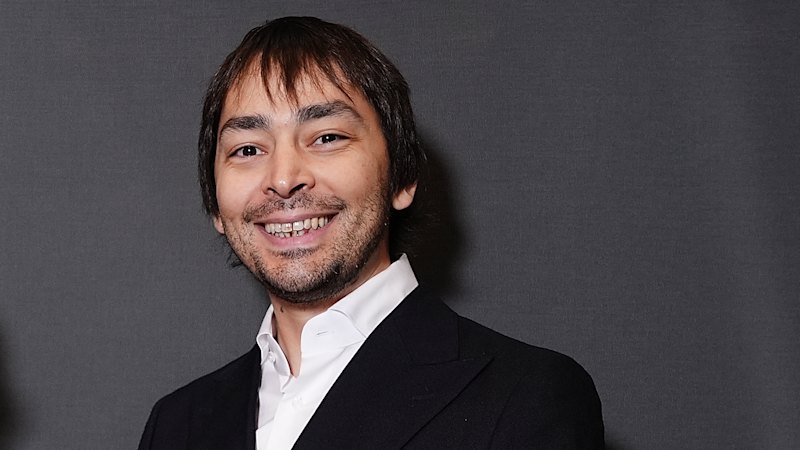
Levent Alpöge, a member of the company’s technical staff, made the announcement by way of a four-page explanation posted on his website. asserted
Alpöge → make → website
He said that he believes by working with Claude, he has found a proof of the Riemann Hypothesis. asserted
he → say → Hypothesis
“Claude and I have had a great time together with such breadth in recent months, but this time Claude far outpaced me near the finish line,” Alpöge wrote. asserted
Alpöge → have → line
“No, Claude flew, and danced, and sparkled near that finish line.” asserted
Claude → fly → line
Formulated in 1859, the Riemann Hypothesis centres on the distribution of prime numbers — those that are only divisible by one and themselves — as they grow towards infinity. asserted
they → formulate → infinity
Alpöge said his discovery came late one night. asserted
discovery → say → ?
He messaged Anthropic CEO Dario Amodei to ask about “my ability to announce,” as the San Francisco-based company was about to make major news with its stock market debut. asserted
company → message → debut
A day after the company’s initial public offering — the most valuable in history — Alpöge revealed he’d solved the problem that has proved elusive for more than 150 years. asserted
that → reveal → years
Anthropic did not respond to an email from The Associated Press requesting comment on Alpöge’s claim. uncertain
Anthropic → respond → claim
Alpöge released his and Claude’s proof of the Riemann Hypothesis within 17 million lines of Lean code, a programming language that allows people to program proofs of mathematical theorems. asserted
people → release → theorems
Traditionally, the findings buried in that code would be published in a formal paper, said Alex Kontorovich, distinguished professor and department chair of mathematics at Rutgers University. asserted
Kontorovich → bury → University
“Usually when somebody gives you a paper, that’s also kind of code for a proof and you have to actually read the paper, follow it yourself, figure out if you believe every single line in that paper. asserted
you → give → paper
And when you’re done, you should have a deep understanding of why something is true,” he said. asserted
he → do → understanding
He said Claude followed that code and said the proof is true. asserted
proof → say → code
“Does that mean I understand it? asserted
I → mean → it
But the computer is extraordinarily picky, way pickier than I am and so if you can satisfy the computer, there’s a very, very good chance you’re going to satisfy me too,” he said. asserted
he → satisfy → me
“But I have to do the work.” asserted
I → have → work
Hours after the announcement, the Riemann Hypothesis remained listed as unsolved on the Clay Mathematics Institute’s website. asserted
Hypothesis → list → website
The institute had selected the hypothesis back in 2000 as one of seven Millennium Prize Problems and offered a reward of $US1 million ($1.5 million) for the solution. asserted
institute → select → solution
The assessment process of whether the problem has actually been solved takes time, explained Martin Bridson, president of the institute. asserted
Bridson → solve → institute
“This is an announcement of historic significance, which holds the promise of a dramatic transformation in the perception of what is possible in the struggle to extend the human understanding of mathematics,” he said in a statement. asserted
he → hold → statement
Alpöge said he is “presenting the world with a complete argument before having mastered a massive neighbourhood around its mathematics.” asserted
he → say → mathematics
He said more than 250,000 pages came out of his work with AI. asserted
pages → say → AI
In September, OpenAI said its technology was key in a similar breakthrough with Navier-Stokes, an equation that governs the flow of fluids. asserted
that → say → fluids
“Navier-Stokes fell and now the Riemann Hypothesis,” said Kontorovich. asserted
Kontorovich → fall → ?
“There’s some kind of out-of-body experience where I’m looking at myself saying, ‘Yes, the Riemann Hypothesis has been solved,’ and kind of trying to comprehend what the hell these words are coming out of my mouth. asserted
words → ’ → mouth
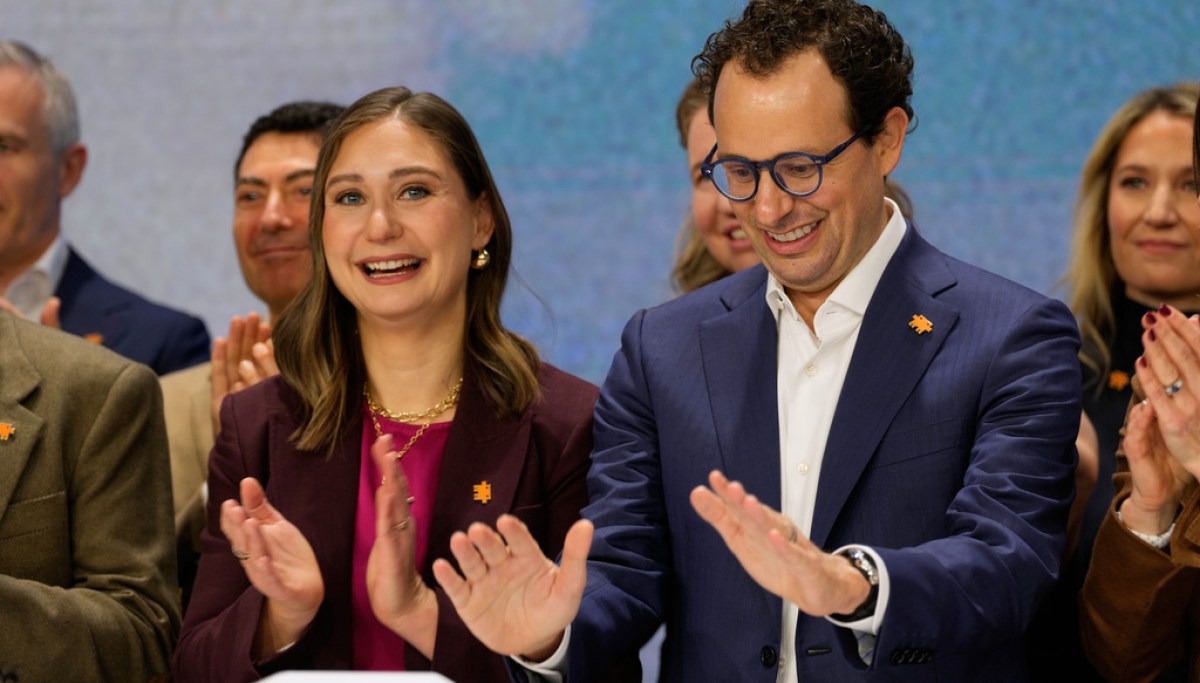
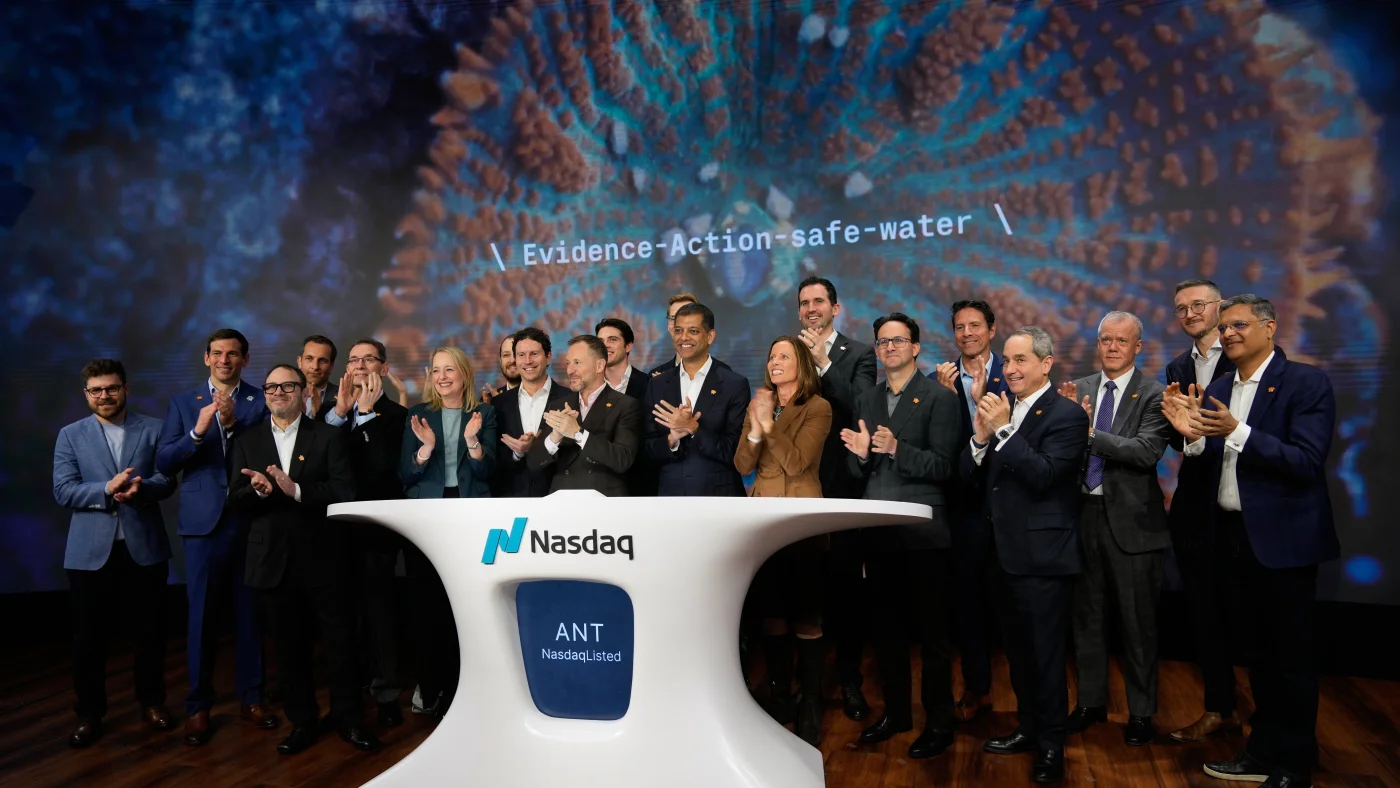
Anthropic made a blockbuster Wall Street debut this week, through which it raised a record-breaking $US81 billion at a $US1.5 trillion valuation. asserted
it → make → valuation
Amodei has projected an optimistic vision for AI’s future in which the technology leads to significant advancements in math and science research while simultaneously warning about the potential risks AI poses. asserted
AI → project → risks
Give feedback · no sign-in needed

No sign-in needed for now. Your note is sent without a name, so it cannot be answered.

History Support