Photo via freebeacon

‘You’re Right’: New York Times ‘Trust’ Editor Posts Video With ‘Stop the Genocide’ Arab Activist

Read the original at freebeacon ↗
Cite

Stoll, I. (2026, November 23). ‘You’re Right’: New York Times ‘Trust’ Editor Posts Video With ‘Stop the Genocide’ Arab Activist. freebeacon. https://freebeacon.com/media/youre-right-new-york-times-trust-editor-posts-video-with-stop-the-genocide-arab-activist/

Dated from the outlet's own feed. Check the original for its byline.

freebeacon · collected 2026-11-23 · by Ira Stoll

Quick Summary

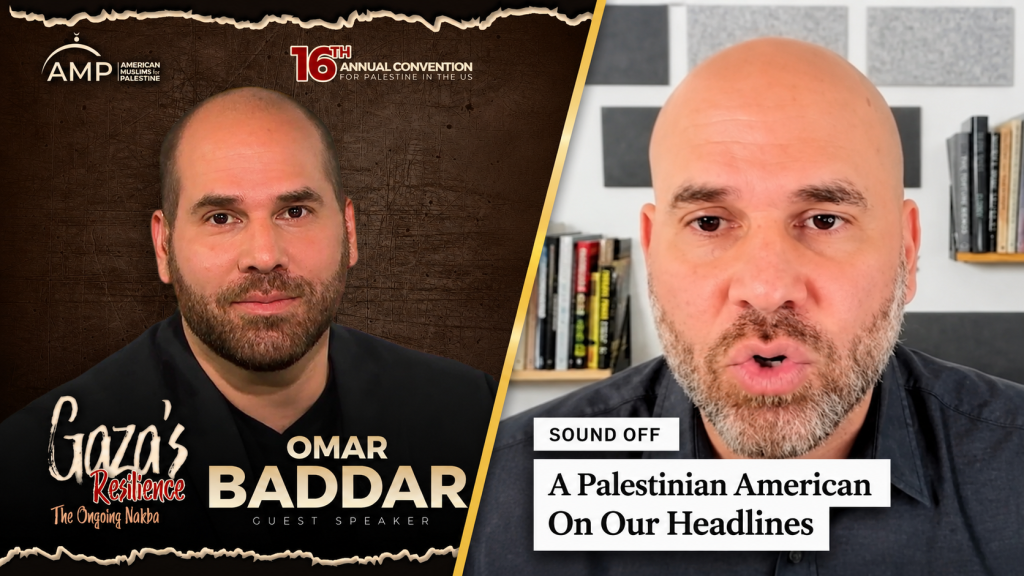
Patrick Healy, the New York Times’ assistant managing editor for standards and trust, posted a 13-minute video where he engages with Omar Baddar, an Arab-American activist. Baddar criticizes the Times for insufficiently addressing Palestinian suffering and equates Israel's actions to apartheid and genocide. Healy, while pushing back somewhat, acknowledges some of Baddar’s criticisms and does not refute his severe claims against Israeli officials, including Prime Minister Netanyahu.
Written by AI on 2026-11-23, from this article's own text only (the story summary below draws on all the coverage).

AI analysis

Story summary

The New York Times assistant managing editor for standards and trust, Patrick Healy, posted a 13-minute video conversation with Arab-American activist Omar Baddar on November 23, 2026. Baddar criticizes the Times for not being critical enough of Israel's treatment of Palestinians, stating that the violence and occupation have become normalized and "invisible." Healy acknowledges some of Baddar's points but does not fully agree, potentially damaging the Times' credibility with pro-Israel readers. Baddar is described as a Palestinian American political analyst and a member of the National Policy Council at the Arab American Institute. This video is part of a series where the Times engages with readers critical of its coverage, raising concerns about the paper's impartiality.

Written for “You're Right Video Controversy” on 2026-11-23, grounded in this article and the 0 other(s) covering the same event.
Why this leaning score
The model judged this article politically coded and scored it -0.65, but 1 quote(s) could not be found in the article and the other 3 are attributed speech rather than the article's own narration, so the score is not published.
Written under an earlier scoring contract, which gave a paragraph rather than checkable quotes. Re-analysing this article replaces it.
Leaning score withheld for article 173261: no verified evidence · logged 2026-11-23

Compared with similar articles

This article reads unscored and hedges 4% of its claims. Each row says how that neighbour differs.
freebeacon
Hedges 6 of 57 claims Outlet record 95/100
“The articles describe different events: one is about NBC News Boss attending a CPJ gala, while the other is about a New York Times editor posting a video conversation with an activist.”

Story

You're Right Video Controversy
Politics · 1 article(s) covering the same event.
How this article was measured signals, leaning charts, publisher record, byline, topics and claims

Signals How these are calculated →

Claims extracted
56
sentences that state something as happening or true
Uncertain
4%
2 of 56 hedged ("reportedly", "may", "according to")
Leaning
withheld
no quote in the article backed the model's score
Publisher signals
95/100
freebeacon's corrections and hedging, across everything collected from it. Not a measure of accuracy.
Outlets on this story
1
Politics
Same framing elsewhere
1
articles that frame the event the way this one does
Analyzed 2026-11-23 · how these are computed

How this is being covered How these are calculated →

Article leaning vs. publisher reliability
Source leaning vs. consistency

Publisher

freebeacon · 91 article(s) · 0 correction(s) detected
No corrections detected for this publisher. That may mean careful reporting, or simply that nothing has been checked.

Who wrote this

Ira Stoll
9 article(s) here · 1 carrying a prediction
"It seems missing, largely missing at least I would say, from the New York Times coverage on this issue ... which I read as reluctance to be critical of Israel."
In the majority, we will investigate the banks and powerful institutions who enabled Epstein’s activities."
Islam will be the world’s largest religion in less than a decade, and by 2070, Muslims will outnumber Christians by more than 600 million adherents, a major new report from the Pew Research Center forecasts.
New York area police unions and politicians are denouncing Mayor Zohran Mamdani’s decision to disband the New York Police Department’s Strategic Response Group, a police unit that had both counterterrorism and protest-response functions.
Senator Elizabeth Warren, the Democrat from Massachusetts who is set to take over as chairman of the Committee on Banking, Housing, and Urban Affairs, is trying to block General Motors from a $20 billion stock buyback plan.
2026-11-13 · assertive framing · Senator Warren Versus GM Shareholders
For a "conservative" organization, it sure collects a lot of money from far-left foundations like the Omidyar Network Fund, the Rockefeller Foundation, and the William and Flora Hewlett Foundation.
Would a genuinely "old school" class let a strike cancel learning for students?
Election results from a series of state ballot initiatives on tax issues suggest that the wave of Democratic victories may be more about gas prices and anti-Trump sentiment than any overwhelming voter enthusiasm for "tax the rich" policies.
Even readers who have followed the war closely may find themselves cheered to recall that during a few days in December 2024, after Bashar Assad’s Iran-allied regime in Syria was toppled, “Israel destroyed the major assets of the Syrian military: Chemical weapons, air-defense batteries, combat aircraft, helicopters, drones, the naval fleet, weapons stockpiles, production facilities, and even tanks.”
Also by Ira Stoll
Senator Warren Versus GM Shareholders
2026-11-13 · freebeacon
Nothing else under this byline is closely related to this article, so these are simply their most recent.
All 9 articles by Ira Stoll →

Topics

Israel Israeli New York Times Palestinian Times

Subjects

Times ORG · 10× Baddar PERSON · 8× Healy PERSON · 5× Israel GPE · 5× Gaza GPE · 4× Palestinian NORP · 4× Israeli NORP · 3× New York Times ORG · 3× American NORP · 2× Netanyahu PERSON · 2×

Narrative

The New York Times assistant managing editor for standards and trust, Patrick Healy, has posted a 13-minute video conversation with an Arab-American activist in which the activist complains about how "Israeli occupation and the violence of that occupation against Palestinians has been so normalized, has been going on for so long, that it has become somewhat invisible.
framing: assertive · carried by 1 article(s) · first seen 2026-11-23
"It seems missing, largely missing at least I would say, from the New York Times coverage on this issue ... which I read as reluctance to be critical of Israel."

Claims (56 extracted, 2 hedged)

The New York Times assistant managing editor for standards and trust, Patrick Healy, has posted a 13-minute video conversation with an Arab-American activist in which the activist complains about how "Israeli occupation and the violence of that occupation against Palestinians has been so normalized, has been going on for so long, that it has become somewhat invisible. asserted
it → post → Palestinians
During the conversation, framed as part of a series in which the Times engages with readers critical of its coverage, Healy gently pushes back but also concedes some of the activist’s points, in the process throwing some of his own hardworking colleagues under the bus and damaging whatever trust the paper had with pro-Israel readers. asserted
paper → frame → readers
To pro-Israel readers—and, actually, to anyone with any working brain cells who has been paying the slightest bit of attention to what the paper is publishing—the Times hasn’t been rendering Palestinian suffering "invisible," it has instead been singlemindedly obsessing over it. asserted
it → work → it
The activist, Omar Baddar, is identified by the Times in a video as "a Palestinian American political analyst and a member of the National Policy Council at the Arab American Institute." asserted
activist → identify → Institute
The Times gave him 13 minutes to sound off about how its coverage is too friendly to Israel. asserted
coverage → give → Israel
Baddar accuses the Times of trying to "whitewash some of the worst crimes in history." asserted
Baddar → accuse → history
In the Times video, Baddar likens Israel to racist American segregationists and to the perpetrators of the genocide in Rwanda. asserted
Baddar → liken → Rwanda
"When we think of the American South in the 1950s, nobody calls that the era of the black-white conflict in America. asserted
nobody → think → America
We call it the era of Jim Crow segregation. asserted
We → call → segregation
We define it by the injustice that was driving the issue at the time." asserted
that → define → time
"There is a consensus about the fact that Israel is guilty of the crime of apartheid and now in the past couple of years of the crime of genocide," Baddar says. asserted
Baddar → be → genocide
"It seems missing, largely missing at least I would say, from the New York Times coverage on this issue ... which I read as reluctance to be critical of Israel." asserted
I → seem → Israel
In the Times video, Baddar also—unchallenged by Healy—describes Israel’s prime minister, Benjamin Netanyahu, as "a man who is accused of genocide. asserted
who → describe → genocide
This is a man who has an I.C.C. warrant out for his arrest for war crimes. ... asserted
who → have → crimes
Essentially, you know, he has enacted a policy of mass murdering Palestinian journalists in Gaza by the hundreds." asserted
he → know → hundreds
Baddar called Netanyahu "a monstrous character." asserted
Baddar → call → Netanyahu
Healy, visible in a split screen format, nods his head while Baddar makes these false accusations against Netanyahu. asserted
Baddar → nod → Netanyahu
Healy defends a Times headline and says for the most part the paper gets them right, but in the text portion of the piece, he cedes some ground to Baddar. asserted
he → defend → Baddar
Baddar says, "If there is ever a Hamas attack on Israelis, that always makes headlines. asserted
that → say → headlines
There’s always a sense of the story, the human angle, who these people are, in a way that you’ve had now virtually daily Israeli attacks on Gaza still ongoing during the so-called cease-fire. asserted
attacks → ’ → fire
We don’t see that same level of humanization. asserted
We → see → humanization
It doesn’t break news. asserted
It → break → news
We don’t know who these children are who are getting killed day in and day out. asserted
who → know → ?
And sometimes it is about what’s missing." asserted
what → miss → ?
Healy replies, "You make a fair point about humanization. asserted
You → reply → humanization
It has been such a challenge for us over the last few years of not being able to get New York Times reporters into Gaza. asserted
It → get → Gaza
We pressed the Israeli government on this. asserted
We → press → this
We have covered, I think, really powerfully, including with a Palestinian reporter on the ground in Gaza who works for us, the issues of hunger, of famine, of death, mass casualties there. asserted
who → cover → casualties
But you’re right, we’re not able to go in and bear witness and tell the stories of individuals as deeply as we want." asserted
we → ’re → individuals
The Times was so eager to "humanize" the famine issue that it ran not one but two front-page photos of emaciated-appearing children who actually had separate, preexisting medical conditions. asserted
who → humanize → conditions
The Times later ran an editors’ note about one such child, Mohammed Zakaria al-Mutawaq, but used another one, of Najwa Hussein Hajjaj, without mentioning the condition. asserted
Times → run → condition
Pictures highlighted by David Collier showed Mohammed’s mother and brother appearing normal. asserted
mother → highlight → Collier
After Baddar accuses the Times of helping Israel "whitewash some of the worst crimes in history," Healy replies in the video, "Omar, I wanted you to have the last word. asserted
you → accuse → word
I really appreciate you talking to me about this. asserted
you → appreciate → this
The Times eliminated the "Public Editor" role that Healy’s newsletter is sort of helping to revive in part because it fueled internal acrimony. asserted
it → eliminate → acrimony
The Times has a photographer, Saher Alghorra, in Gaza who won a Pulitzer Prize this year. asserted
who → have → Prize
Subsequent Times coverage has featured stories like: To pay for his wedding, Saeed Kafarneh, 21, worked for several months doing odd jobs and selling gas tanks and cartons of aid he received from relief groups to raise about $2,000. "We worked so hard to make it happen," Mr. Kafarneh said. asserted
Kafarneh → feature → 2,000
"But thank God, we did it." asserted
we → thank → it
Last month, Mr. Kafarneh married his wife, Nermeen Abdul Hadi, in a displaced persons’ camp in the central Gaza Strip, where Mr. Kafarneh’s family had been sheltering. asserted
family → marry → Strip
On the day of the ceremony, Mr. Kafarneh and his relatives decorated a large tent donated by a Pakistani aid organization, setting up lights and arranging flowers. asserted
Kafarneh → decorate → flowers
…and 16 more, not listed.

Give feedback · no sign-in needed

No sign-in needed for now. Your note is sent without a name, so it cannot be answered.

History Support