In early 2019, I was working for Human Rights Watch.
asserted
I → work → Watch
A few months earlier, a UN fact-finding mission on Myanmar had concluded that the evidence of atrocities against the Rohingya called for investigating and prosecuting Myanmar military leaders for genocide, crimes against humanity, and war crimes.
asserted
evidence → find → humanity
At the time, it felt impossibly distant.
asserted
it → feel → time
I approached diplomats in New York and officials in national capitals with an idea: What if a country which is party to the Genocide Convention asked the ICJ to hold Myanmar itself responsible under the treaty?
asserted
Myanmar → approach → treaty
The legal experts were intrigued.
asserted
experts → intrigue → ?
The political attachés rolled their eyes.
asserted
attachés → roll → eyes
Nobody wanted to touch the idea with a 10-foot pole.
asserted
Nobody → want → pole
But Abubacarr Tambadou, the Attorney General of Gambia at the time, had found his own compelling reason to act.
asserted
Tambadou → find → reason
During a visit to a refugee camp in Bangladesh, he was deeply moved by harrowing testimonies of Rohingya survivors, whose accounts reminded him of atrocities he had encountered as a prosecutor before the International Criminal Tribunal for Rwanda.
asserted
he → move → Rwanda
His determination to act on what he heard helped set in motion Gambia’s case before the ICJ.
asserted
he → act → ICJ
My colleagues and I at Human Rights Watch worked closely with Gambian officials, Rohingya activists, and other civil society groups to advance the effort, both before and after the case was filed.
asserted
case → work → effort
Eleven other countries later intervened in the proceedings to argue how the Genocide Convention should be interpreted.
asserted
Convention → intervene → proceedings
On Thursday, the International Court of Justice held Myanmar responsible for committing genocide against the Rohingya minority in northern Rakhine state in 2017.
asserted
Myanmar → hold → 2017
The landmark ruling, in a case brought by Gambia, is the first time the Court has found a state directly responsible for violating the 1948 Genocide Convention, and is expected to have significant ramifications for international law and other cases of genocide litigated in the court.
asserted
state → bring → court
A brief history of Rohingya
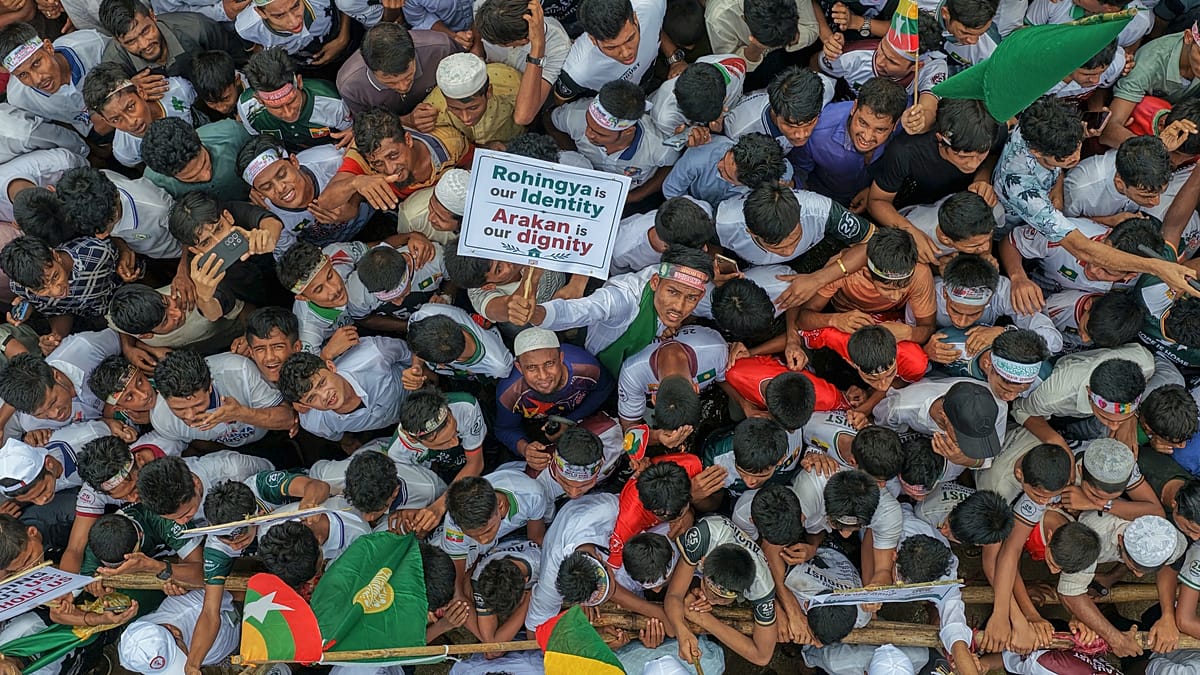
The Rohingya, a predominantly Muslim ethnic minority from Myanmar’s Rakhine State, had long lived with limited access to education, healthcare, and freedom of movement.
asserted
Rohingya → live → movement
Myanmar labeled them as “illegal immigrants,” carrying out military attacks in the 1970s and 1990s to drive hundreds of thousands of Rohingya into Bangladesh.
asserted
Myanmar → label → Bangladesh
In 1982, Myanmar passed a citizenship law excluding the Rohingya from a list of ethnic groups formally recognized by the government and effectively denying them citizenship.
asserted
Myanmar → pass → citizenship
In the early 2010s, several bouts of ethnic tensions and violence erupted in Rakhine State and morphed into a “coordinated campaign to forcibly relocate or remove the state’s Muslims,” according to a 2013 Human Rights Watch report.
uncertain
bouts → erupt → report
The 2012 attacks brought about a period of increased repression and persecution of Rohingya that laid the groundwork for more brutal military campaigns in 2016 and 2017.
asserted
that → bring → 2016
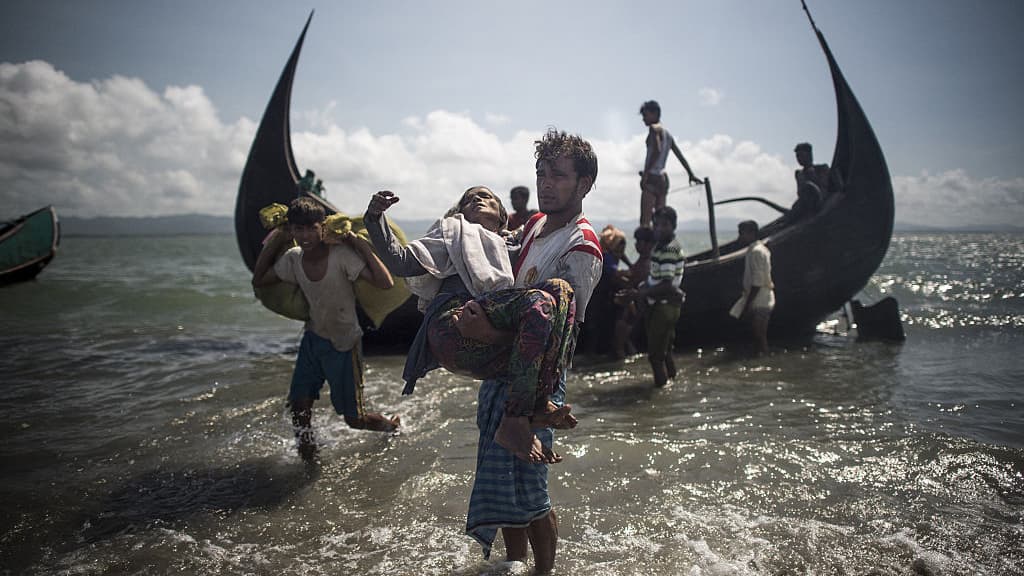
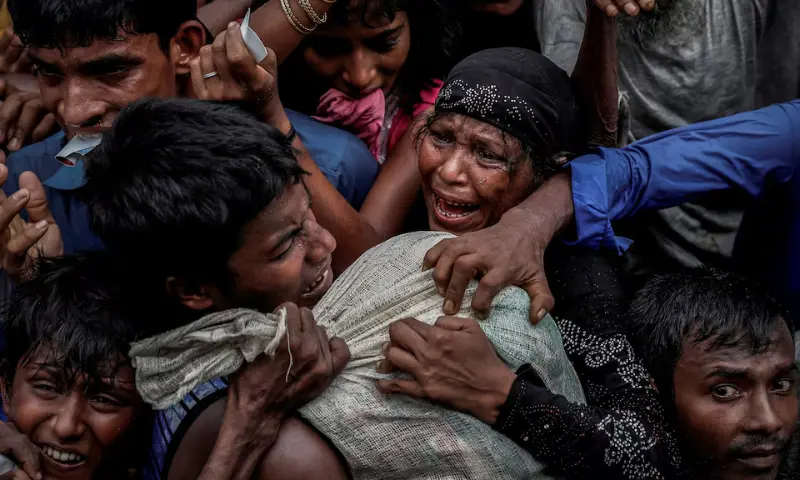
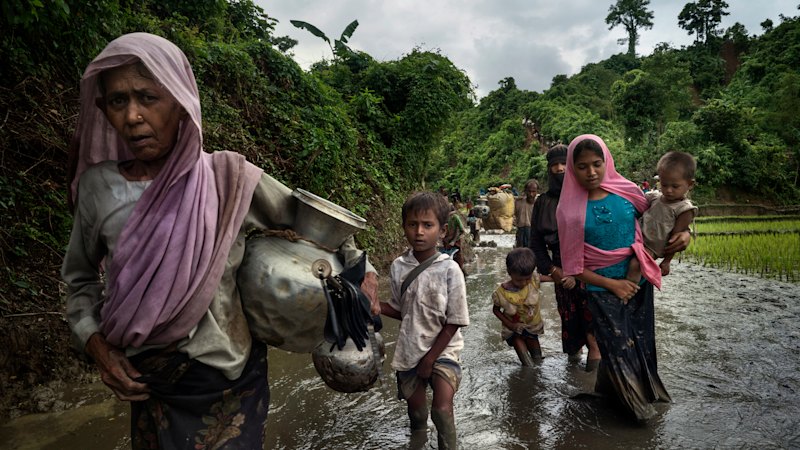
In August and September 2017, Myanmar’s security forces killed thousands of Rohingya men, women, and children in Rakhine State, destroyed hundreds of Rohingya villages, and forced more than 700,000 Rohingya to flee to neighboring Bangladesh.
asserted
forces → kill → Bangladesh
On Sep. 2, 2017, at the height of the military campaign, Senior General Min Aung Hlaing, the Myanmar army chief, described the Rohingya as a longstanding “problem” and an “unfinished job.”
asserted
Hlaing → describe → problem
His soldiers openly referred to them as animals and called for violence against them.
asserted
soldiers → refer → them
The military’s campaign of physical destruction was accompanied by a sustained effort to strip the Rohingya of their identity and their very humanity.
asserted
campaign → accompany → identity
The legal bar to proving the crime of genocide is exceptionally high.
asserted
bar → prove → genocide
On Nov. 11, 2019, Gambia filed a case at the ICJ in The Hague alleging that Myanmar had failed to fulfill its obligations under the Genocide Convention regarding the Rohingya in Rakhine State.
asserted
Myanmar → file → State
The case hinged on the singular question of intention, which is crucial to defining genocide: Did Myanmar’s security forces commit acts of collective violence against the Rohingya with “intent to destroy, in whole or in part, a national, ethnical, racial or religious group, as such.”
asserted
forces → hinge → group
In previous cases, the court had ruled that even widespread killings and forced displacement did not necessarily constitute genocide.
asserted
killings → rule → genocide
To establish genocidal intent from a pattern of conduct, it must be the only reasonable conclusion supported by the evidence.
asserted
it → establish → evidence
Gambia argued that Myanmar’s atrocities were not simply the excesses of a counterinsurgency campaign, but part of a deliberate effort to destroy the Rohingya as a group.
asserted
atrocities → argue → group
Its case drew on UN investigations, survivor testimony, accounts from former Myanmar soldiers, and satellite imagery documenting mass killings including young children and infants, sexual violence, and the destruction of hundreds of Rohingya villages.
asserted
case → draw → villages
To establish genocidal intent, Gambia pointed to the deliberate targeting of Rohingya civilians, the coordinated nature and extreme brutality of the attacks, the use of sexual violence, decades of discriminatory policies, hate speech by military leaders, and its failure to hold those responsible to account.
asserted
those → establish → account
It argued that these were not isolated atrocities, but part of a sustained campaign against the Rohingya, and that the evidence, taken together, left no reasonable explanation other than an intent to destroy them, at least in part.
asserted
evidence → argue → part
Myanmar denied responsibility for its atrocities, portrayed its campaign of “ethnic cleansing” as a counterterrorism operation, and insisted that the violence did not establish an intent to destroy the Rohingya.
asserted
violence → deny → Rohingya
Lawyers for Myanmar even argued that its security forces had the opportunity to “kill a larger number” of Rohingya if that had been their intent.
asserted
that → argue → Rohingya
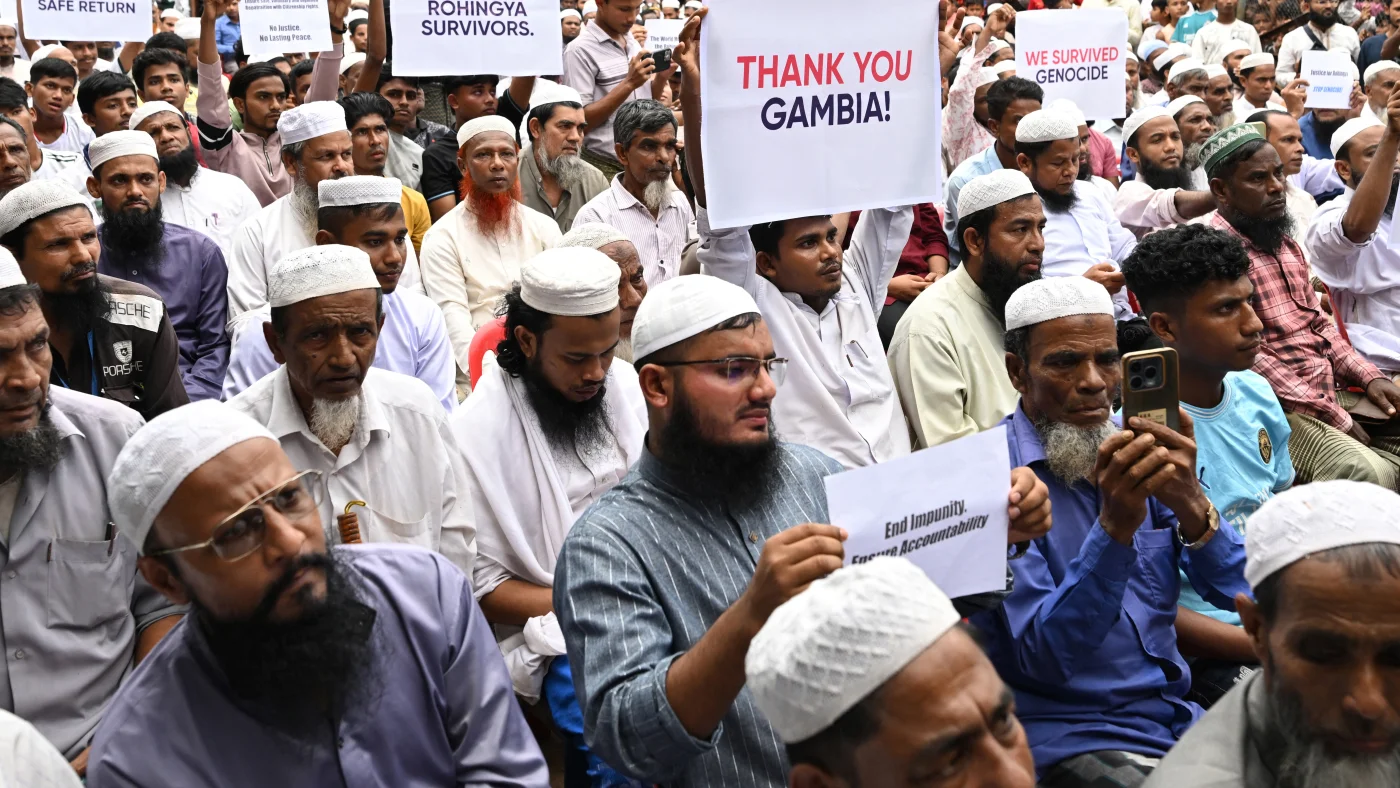
On Thursday, the ICJ ruled by nine votes to six that Myanmar had committed genocide against the Rohingya in northern Rakhine state.
asserted
Myanmar → rule → state
The court decisively rejected Myanmar’s argument that counterinsurgency alone could explain the conduct of its military and other security forces and affirmed what Rohingya survivors have maintained for years.
uncertain
survivors → reject → years
Its judgment marks a monumental victory for the survivors, whose struggle for justice and a safe return home continues.
asserted
struggle → mark → justice
The judgment reaffirmed that when genocidal intent is inferred from a pattern of conduct, that intent must be the only reasonable inference from the evidence as a whole.
asserted
intent → reaffirm → whole
It also clarified that a state can pursue military or security objectives and still act with genocidal intent.
asserted
state → clarify → intent
The court evaluated evidence from multiple sources, from the findings of UN investigators and experts to witness statements and direct testimonies, to determine whether genocide had occurred.
asserted
genocide → evaluate → statements
…and 14 more, not listed.
 The Aporia