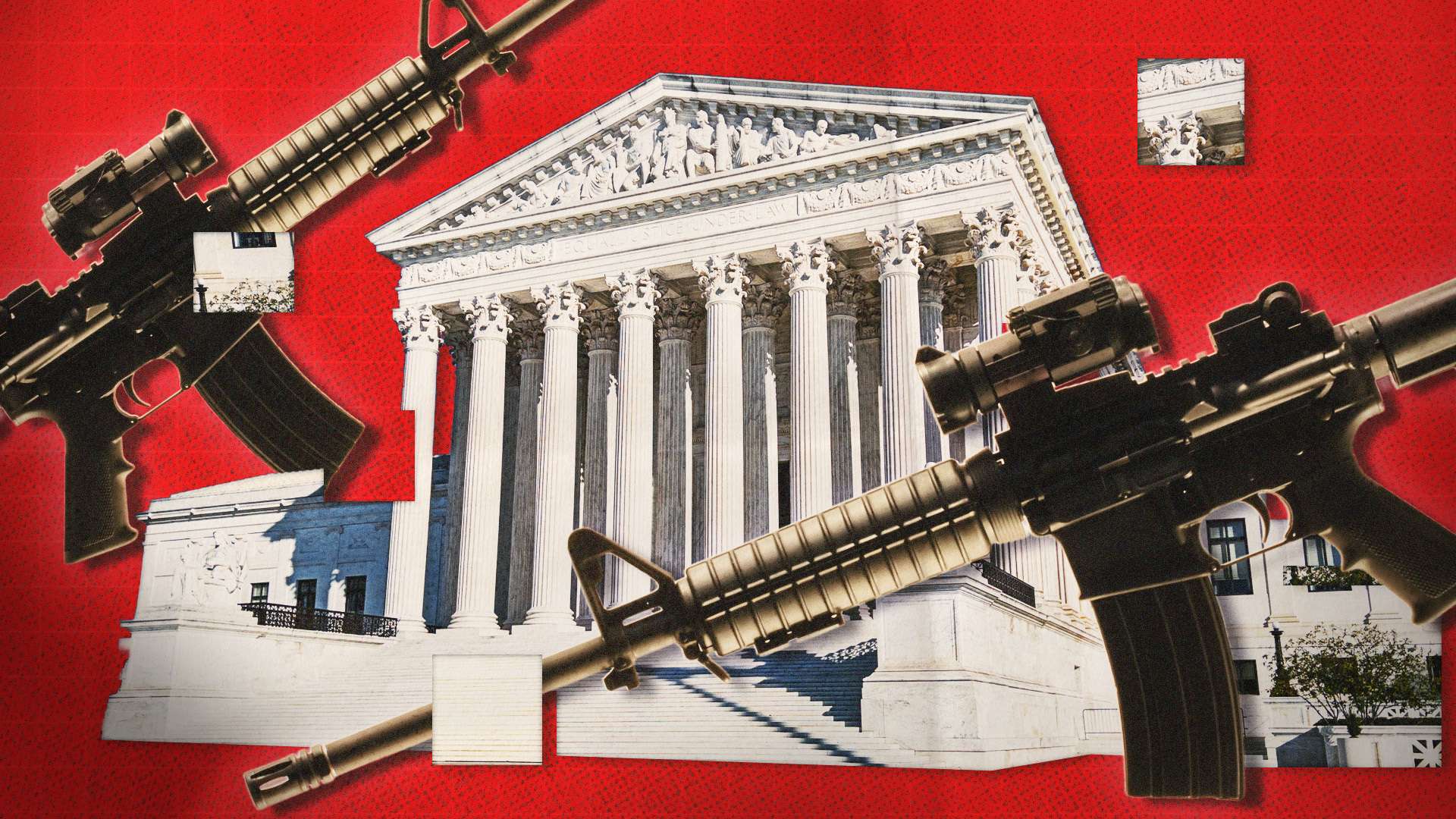
Second Amendment Roundup, II: Much Ado About Bowie Knives

Read the original at Reason ↗
Cite

Halbrook, S. (2026, November 24). Second Amendment Roundup, II: Much Ado About Bowie Knives. Reason. https://reason.com/volokh/2026/11/23/second-amendment-roundup-ii-much-ado-about-bowie-knives/

Dated from the outlet's own feed. Check the original for its byline.

Reason · collected 2026-11-24 · by Stephen Halbrook

Quick Summary

Cook County and Connecticut are arguing in the Viramontes and Grant cases that historical restrictions on Bowie knives can serve as a precedent for banning modern "assault weapons." They contend that since 19th-century laws regulated Bowie knives, similar regulations on contemporary firearms are justified. However, amicus briefs from the NRA, NSSF, Senator Ted Cruz, and the U.S. argue that these historical knife regulations do not support modern bans. They point out that most states allowed the purchase and open carry of Bowie knives, with restrictions mainly on concealed carry. Moreover, they argue that since historical laws did not ban Bowie knives outright, such bans cannot be used to justify modern firearm restrictions.
Written by AI on 2026-11-24, from this article's own text only (the story summary below draws on all the coverage).

AI analysis

Story summary

The Second Amendment has recently been at the center of debates regarding the legality of carrying Bowie knives, with states like Texas and Connecticut arguing over their historical and current status as protected arms. In the case of Cook County v. Viramontes and Grant, Connecticut is using 19th-century restrictions on Bowie knives as a precedent to ban modern firearms classified as "assault weapons." This argument hinges on the idea that if common-use knives like Bowie knives can be banned, then semiautomatic rifles should also be restricted under the Second Amendment. However, legal scholars and experts like Stephen Halbrook argue that knives, like any tool, can be used for both lawful and unlawful purposes, and that the historical context of medieval society, where people commonly carried knives for self-defense, suggests that such weapons should not be banned simply because of their potential misuse.

Written for “Second Amendment Roundup” on 2026-11-25, grounded in this article and the 0 other(s) covering the same event.

Compared with similar articles

This article reads unscored and hedges 4% of its claims. Each row says how that neighbour differs.
Reason
Leans strongly right Hedges 3 of 48 claims Outlet record 65/100
“The articles discuss different aspects of the legal arguments surrounding gun control and the Second Amendment, but do not describe the same specific incident or event.”

Story

Second Amendment Roundup
Politics · 1 article(s) covering the same event.
How this article was measured signals, leaning charts, publisher record, byline, topics and claims

Signals How these are calculated →

Claims extracted
26
sentences that state something as happening or true
Uncertain
4%
1 of 26 hedged ("reportedly", "may", "according to")
Leaning
withheld
no quote in the article backed the model's score
Publisher signals
65/100
Reason's corrections and hedging, across everything collected from it. Not a measure of accuracy.
Outlets on this story
1
Politics
Same framing elsewhere
1
articles that frame the event the way this one does
Analyzed 2026-11-24 · how these are computed

How this is being covered How these are calculated →

Article leaning vs. publisher reliability
Source leaning vs. consistency

Publisher

Reason · 1521 article(s) · 5 correction(s) detected
Running correction rate · 5 correction(s)

Who wrote this

Stephen Halbrook
9 article(s) here · 1 carrying a prediction
If Bowie knives in common use by law-abiding citizens may be banned, the argument goes, so too may semiautomatic rifles.
The brief continues, "Under the common-use-only approach, if Congress had extended that legislation in 2004, AR-15s would never have entered into common use—and thus could be banned today."
And I suspect the bench and the bar will be the better for it.
2026-11-23 · assertive framing · Second Amendment Roundup: AR-15 Film Redux.
I suspect that one of the film's biggest contributions to the public discourse on semiautomatic firearms will be its easy-to-understand graphics and animations.
His devastation would have been far worse had not Giamanco intervened.
Mostly law professors | Sometimes contrarian | Often libertarian | Always independent Dr. Angus McClellan has just posted 151 pages of "Additional Research on Comprehensive Security and Sensitive Places" showing that at the Founding armed security was tied to each of Bruen's three sensitive places where arms could be restricted.
Footnote 9 did not create a gaping Second Amendment exemption for states to exploit with new creative restrictions that would otherwise fail Bruen's test.
When the petition was granted, Judge Stephen A. Higginson wrote a dissent, stating: "In the context of § 922 convictions alone, such a holding would raise several immediate questions.
In 1968, Congress defined "firearm" in the Gun Control Act to include "any weapon … which will or is designed to or may readily be converted to expel a projectile by the action of an explosive" and "the frame or receiver of any such weapon."
Also by Stephen Halbrook
Nothing else under this byline is closely related to this article, so these are simply their most recent.
All 9 articles by Stephen Halbrook →

Topics

Bowie NSSF Br. 21 States U.S. the Second Amendment

Subjects

Bruen PERSON · 4× Heller PERSON · 4× Cockrum PERSON · 2× Nunn PERSON · 2× State ORG · 2× States GPE · 2× U.S. GPE · 2× Cook County GPE · 1× Grant PERSON · 1× Viramontes PERSON · 1×

Narrative

"And Texas's Cockrum v. State held a Bowie knife to be a protected arm—"[t]he right to carry a bowie-knife for lawful defense is secured, and must be admitted"— while sustaining an enhanced penalty for its abuse, treating the weapon's dangerousness as a reason to regulate its misuse, not a reason to deny that it was an arm.
framing: assertive · carried by 1 article(s) · first seen 2026-11-24
If Bowie knives in common use by law-abiding citizens may be banned, the argument goes, so too may semiautomatic rifles.
2026-11-24 · Reason
Second Amendment Roundup, II: Much Ado About Bowie Knives · assertive framing

Claims (26 extracted, 1 hedged)

In Viramontes and Grant, Cook County and Connecticut argue that 19th century restrictions on Bowie knives provide historical analogues under Bruen for banning what they call "assault weapons." asserted
they → argue → what
They further contend that the widespread use of Bowie knives disproves application of the Heller test that arms in common use are protected by the Second Amendment. asserted
arms → contend → Amendment
If Bowie knives in common use by law-abiding citizens may be banned, the argument goes, so too may semiautomatic rifles. uncertain
rifles → abide → citizens
To paraphrase Freud, sometimes a knife is just a knife. asserted
knife → paraphrase → Freud
Knives generally have a point and an edge on one side, sometimes also an edge on the other. asserted
Knives → have → other
Any knife can be used for good or bad. asserted
knife → use → ?
Bruen distinguished heavy weapons of war like lancegays from daggers, noting that in medieval society "[a]lmost everyone carried a knife or a dagger in his belt," "[c]ivilians wore them for self-protection," and "the smaller medieval weapons … strike us as most analogous to modern handguns. asserted
weapons → distinguish → handguns
No doubt Bowie knives were in use as tools for skinning game and self-defense, and ruffians are said to have carried them concealed. asserted
ruffians → skin → them
But for a variety of reasons, it's unnecessary to decide whether Bowie knives met the Heller test of being in common use. asserted
knives → decide → use
First, a few States' restrictions are not enough to establish a historical tradition. asserted
restrictions → establish → tradition
Under Heller, a handful of outlier laws cannot justify a ban. asserted
handful → justify → ban
"Most States regulated Bowie knives in some manner, but, except in a few outlier jurisdictions, adults were free to buy, possess, and openly carry them. asserted
adults → regulate → them
Regulations typically restricted concealed carry, sales to minors, or imposed enhanced penalties for criminal misuse." asserted
Regulations → restrict → misuse
Second, "No State banned Bowie-knife possession in the nineteenth century." asserted
State → ban → century
"And one of the only laws that likely did actually ban Bowie knives (along with pistols and an array of other items) is the same 1837 Georgia law that was promptly held unconstitutional other than as applied to concealed carry—because it was too restrictive to comply with the Second Amendment. asserted
it → ban → Amendment
These were concealed-carry restrictions, not complete bans. asserted
These → conceal → ?
"This Court has already concluded that restrictions on concealed carry cannot justify carry bans, see Bruen, 597 U.S. at 48-49, 53-55, let alone possession bans, see Heller, 554 U.S. at 628-29." asserted
restrictions → conclude → 628
Third, the same laws covered handguns. asserted
laws → cover → handguns
"If those laws justified rifle bans, then handgun bans would be justified all the more, because they typically also regulated handguns but not long guns." asserted
they → justify → handguns
Where Bowie-knife restrictions were upheld, courts applied the same standard Petitioners advance here: arms in common use for lawful purposes are protected, while weapons used only by criminals are not. asserted
weapons → uphold → criminals
As Judge Richardson's dissent in Bianchi explains, it does not matter that courts sometimes disagreed about whether Bowie knives were in fact in common use, because they were applying the same yardstick. asserted
they → explain → yardstick
"State courts have long applied the common-use test to judge such laws under state constitutional provisions securing the right to bear arms." asserted
courts → apply → arms
Fourth, even a court that viewed the Bowie knife as exceptionally deadly held that the right to carry it was protected. asserted
right → view → it
"And Texas's Cockrum v. State held a Bowie knife to be a protected arm—"[t]he right to carry a bowie-knife for lawful defense is secured, and must be admitted"— while sustaining an enhanced penalty for its abuse, treating the weapon's dangerousness as a reason to regulate its misuse, not a reason to deny that it was an arm. asserted
it → hold → misuse
Cockrum is the mirror image of the decision below: alleged dangerousness bore on regulation, not on coverage." asserted
dangerousness → allege → coverage
The historical answer to misuse was punishing criminals, not disarming law-abiding citizens "[T]he evil must be prevented by the penitentiary and gallows, and not by a general deprivation of a constitutional privilege." asserted
evil → punish → privilege

Give feedback · no sign-in needed

No sign-in needed for now. Your note is sent without a name, so it cannot be answered.

History Support