That is 0 articles you have read today.
The Aporia is free and carries no advertising, so readers are the only
thing paying for it. If you are getting this much out of it, a small
donation is what keeps it independent.
You have read 0 articles today.
That is more than the 15 a day The Aporia gives away,
and well past what it can carry on nothing. Your allowance resets at
midnight.
There is no advertising here and nothing about you is sold, so readers
are the only thing paying for it. If the site is worth this much of
your day, it is worth a few dollars.
Everything else stays open: the front page, the
directory and search do
not count against this, and neither does re-opening something you have
already read today.
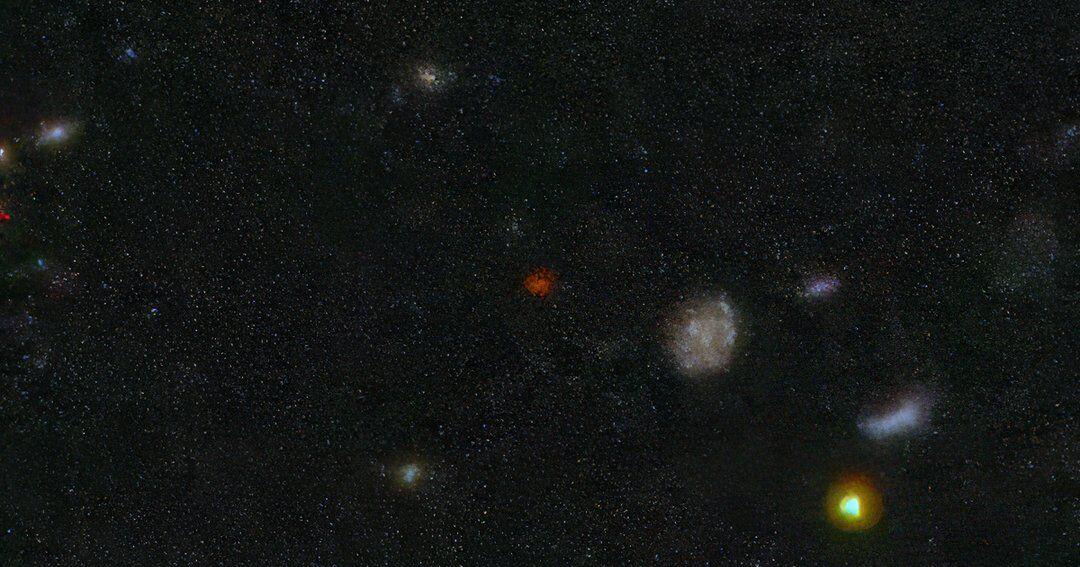
Photo via Toronto Star
Scientists discover quasar formed within a mere 630 million years of the Big Bang, setting a record
Dunn, M. (2026, November 24). Scientists discover quasar formed within a mere 630 million years of the Big Bang, setting a record. Toronto Star. https://www.thestar.com/news/world/scientists-discover-quasar-formed-within-a-mere-630-million-years-of-the-big-bang-setting-a-record/article_d592b044-9003-50db-b049-a42b4fb389cc.html
Dunn, Marcia. “Scientists discover quasar formed within a mere 630 million years of the Big Bang, setting a record.” Toronto Star, 24 Nov. 2026, https://www.thestar.com/news/world/scientists-discover-quasar-formed-within-a-mere-630-million-years-of-the-big-bang-setting-a-record/article_d592b044-9003-50db-b049-a42b4fb389cc.html.
Dunn, Marcia. “Scientists discover quasar formed within a mere 630 million years of the Big Bang, setting a record.” Toronto Star, November 24, 2026. https://www.thestar.com/news/world/scientists-discover-quasar-formed-within-a-mere-630-million-years-of-the-big-bang-setting-a-record/article_d592b044-9003-50db-b049-a42b4fb389cc.html.
Dated from the outlet's own feed. Check the original for its byline.
Toronto Star
· collected 2026-11-24 · by Marcia Dunn
Quick Summary
Scientists have identified the most distant quasar, located just 630 million years after the Big Bang, according to a report by a German-led team. This discovery sets a new record for the earliest known formation of a quasar, which consists of a supermassive black hole at the center of a galaxy. The finding is significant in the context of the 13.8 billion-year history of the universe, as it indicates the rapid development of such structures shortly after the Big Bang.
Written by AI on 2026-11-24,
from this article's own text only (the story summary below draws on all the coverage).
Scientists have discovered the most distant quasar yet, located within 630 million years of the Big Bang, setting a new record. This quasar, the core of a galaxy with a black hole at its center, is the earliest known quasar, pushing back the cosmic timeline by nearly 40 million years compared to previous records. Led by a German team and using observations from the European Space Agency’s Euclid telescope, the discovery provides insights into the early universe and its development. Launched in 2023, Euclid aims to study dark matter and dark energy, helping scientists understand the expansion of the universe. This significant leap in cosmic time is a major breakthrough in the study of the universe's early history.
Written for “Newly Found Farthest Quasar” on 2026-11-24,
grounded in this article and the 4 other(s) covering the same event.
How they differ
5 outlets covered “Newly Found Farthest Quasar”.
What each outlet says
One AI summary per outlet of its latest article on this story, written from that article alone and checked against it. Open the article for the outlet's own words.
Toronto StarThis outlet24 Nov
Scientists have identified the most distant quasar, located just 630 million years after the Big Bang, according to a report by a German-led team. This discovery sets a new record for the earliest known formation of a quasar, which consists of a supermassive black hole at the center of a galaxy. The finding is significant in the context of the 13.8 billion-year history of the universe, as it indicates the rapid…
Scientists discover quasar formed within a mere 630 million years of the Big Bang, setting a record (this article)New York Post24 Nov

Scientists have discovered a quasar that formed just 630 million years after the Big Bang, setting a new record. Led by Julien Wolf from the European Southern Observatory, the team identified this quasar using data from the Euclid telescope, which is mapping galaxies to understand dark matter and dark energy. The black hole at the center of this quasar has a mass equivalent to 360 million suns, making it…
Scientists have discovered the most distant quasar, dating back to 630 million years after the Big Bang, making it the oldest known quasar. This find, led by Julien Wolf from the European Southern Observatory, breaks previous records by nearly 40 million years. The quasar, named Dun Aonghasa, was identified using data from the Euclid telescope and confirmed by the Hubble and Webb space telescopes. Its central black…
Astronomers have discovered the oldest-known quasar, dating back 13.1 billion years, when the universe was less than 5% of its current age, about 630 million years after the Big Bang. This quasar, named Dún Aonghasa, is powered by a supermassive black hole 360 million times the mass of the sun, setting a new record by 40 million years over the previous oldest quasar. The discovery, published in Astronomy and…
Astronomers have discovered the oldest known quasar, which dates back to more than 13.1 billion years ago, shortly after the Big Bang. The quasar, named Dún Aonghasa, was identified using the European Space Agency’s Euclid telescope and confirmed with additional observations from ground-based and space telescopes. This quasar, located about 40 million years earlier than the previous record holder, provides evidence…
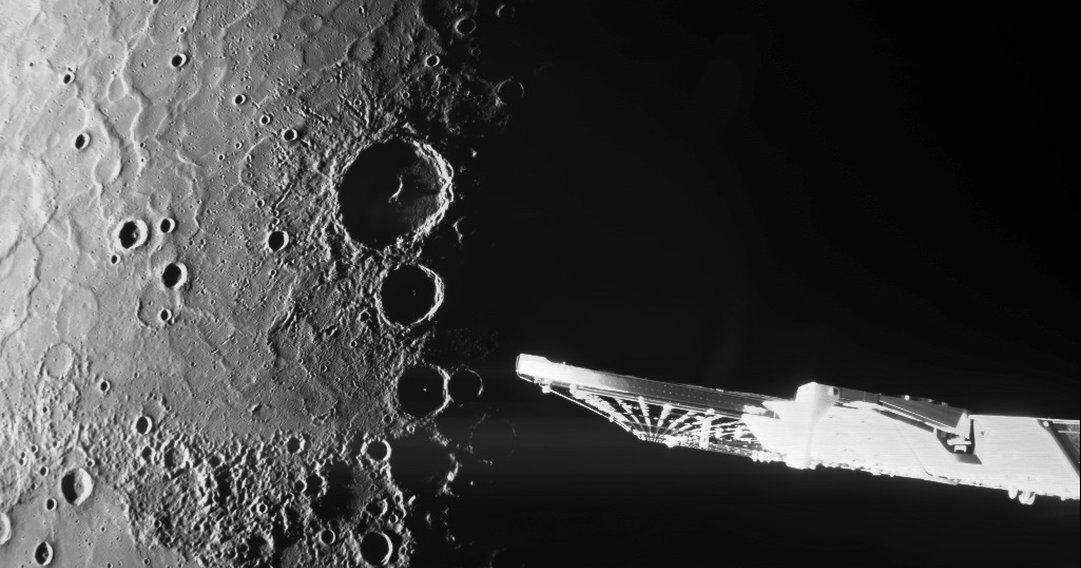
The linked robotic explorers — one European, the other Japanese — will separate from one another next month in order to map and study the scorching little planet from different altitudes.
NASA could not confirm the newest distance record until the signal reached the control team at California’s Jet Propulsion Laboratory via the deep space telescope near Madrid.
When Voyager 1 reaches that remarkable milestone on Wednesday, its radio signals will take precisely 24 hours traveling at the speed of light to reach Earth — in other words, one light-day.
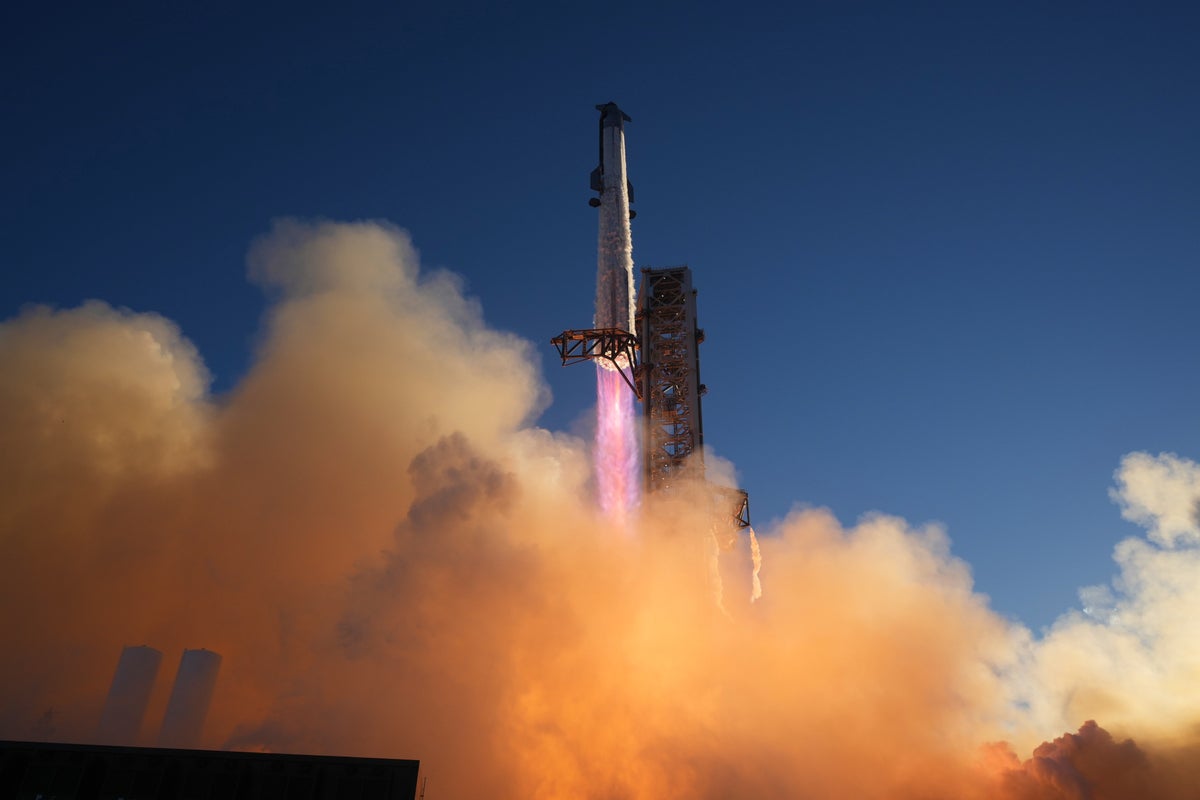
If all goes well, the massive booster will return to its Texas pad six minutes after blasting off and the bullet-shaped spacecraft will steer there the next day.
Five of the world’s space agencies joined forces for the five-year mission that will attempt to land a robotic prospector plus a rover on Phobos, the larger and closer of Mars’ two pint-sized moons.
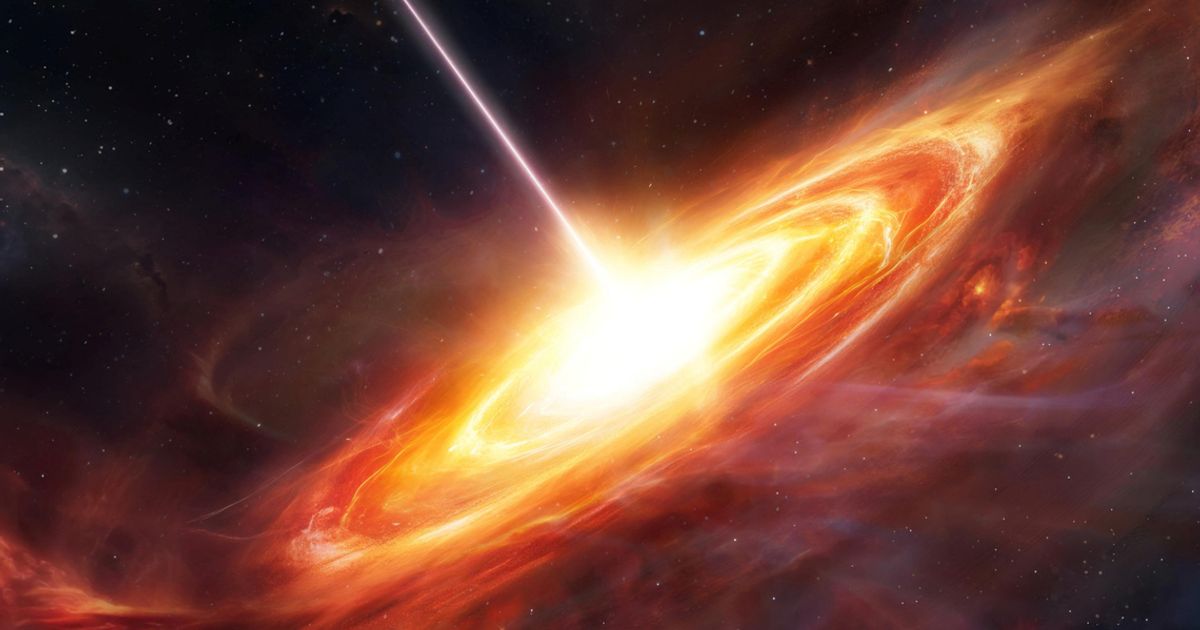
Scientists have discovered the most distant quasar yet, the core of a galaxy with a slow-chomping black hole at its center dating back to nearly the dawn of the universe.
asserted
Scientists → discover → universe
The quasar formed within 630 million years of the universe-forming Big Bang, a German-led team reported Tuesday.
asserted
team → form → Bang
That’s considered a very early development in the 13.8 billion-year history of the cosmos, and it smashes previous records.
asserted
it → consider → records
Give feedback · no sign-in needed
No sign-in needed for now. Your note is sent without a name, so it cannot be answered.