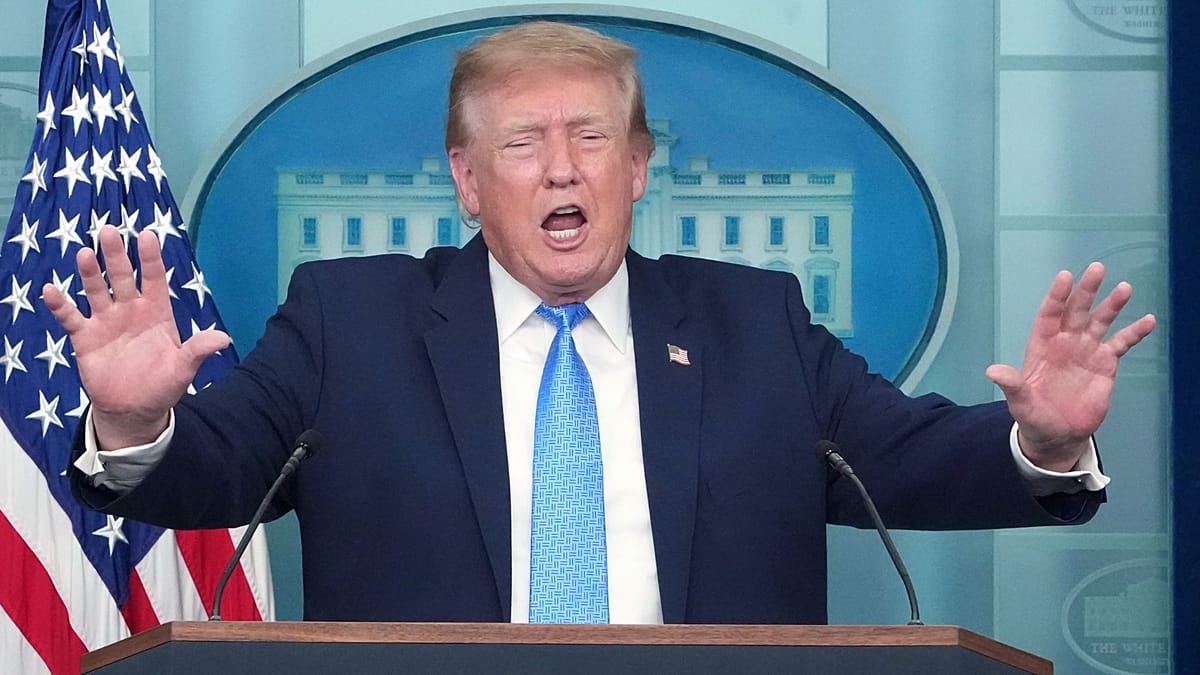
Photo via Euronews

Iran orders Hormuz closed 'further day by day' as Qatar seeks to revive peace talks

Read the original at Euronews ↗
Cite

Kamiar, B., & Mirmohammadsadeghi, F. (2026, November 24). Iran orders Hormuz closed 'further day by day' as Qatar seeks to revive peace talks. Euronews. https://www.euronews.com/2026/11/24/iran-orders-hormuz-closed-further-day-by-day-as-qatar-seeks-to-revive-peace-talks

Dated from the outlet's own feed. Check the original for its byline.

Euronews · collected 2026-11-24 · by Babak Kamiar, Farhad Mirmohammadsadeghi

Quick Summary

Iran's army commander-in-chief, Major General Amir Hatami, ordered his navy to gradually close the Strait of Hormuz until the United States meets Tehran’s conditions, threatening severe consequences if the US initiates further military action. The elite IRGC reported that three oil tankers, while under US escort, had hit naval mines in the strait, though the Joint Maritime Information Centre stated these claims were unconfirmed. Meanwhile, Qatar’s prime minister pressed for renewed peace talks between the US and Iran.
Written by AI on 2026-11-24, from this article's own text only (the story summary below draws on all the coverage).

AI analysis

Story summary

As of November 24, 2026, Iran's army commander-in-chief, Major General Amir Hatami, ordered his navy to close the Strait of Hormuz "further day by day" until the United States meets Tehran's conditions. General Hatami warned that any new US military action would result in retaliation that would be "more severe, more crushing and without geographical limitation." He cited orders from Ayatollah Mojtaba Khamenei and emphasized that until Iran's seven conditions are fulfilled, the strait will not be opened and will instead face stronger control.

The Islamic Revolutionary Guard Corps (IRGC) claimed that three oil tankers in the Strait of Hormuz hit mines while under US escort, causing "powerful explosions," though the Joint Maritime Information Centre stated this report was unconfirmed. Meanwhile, Qatar's prime minister urged US officials to restart peace talks.

Written for “Iran Threatens Hormuz Closure” on 2026-11-25, grounded in this article and the 0 other(s) covering the same event.

Compared with similar articles

This article reads unscored and hedges 21% of its claims. Each row says how that neighbour differs.
Al Jazeera
Leans left Hedges 7 of 36 claims Outlet record 60/100
“The articles describe different aspects of the situation involving Iran and the Strait of Hormuz, but they are reporting on distinct events and timeframes.”
Euronews
Hedges 1 of 10 claims Outlet record 60/100
“The articles discuss related situations involving the Strait of Hormuz and Iran's response to the US blockade, but they describe different specific incidents on different dates.”
Al Jazeera
Leans right Hedges 3 of 17 claims Outlet record 60/100
“While both articles discuss incidents in the Strait of Hormuz involving Iran and tankers, Article A specifically reports on two tankers hit by unidentified projectiles on a Saturday, whereas Article B discusses Iran's order to close the Strait 'further day by day' and claims of three tankers hit by mines, on a Monday.”
Toronto Star
Leans left Hedges 2 of 20 claims Outlet record 65/100
“While both articles discuss Iran's stance on talks with the US and mention the Strait of Hormuz, they describe different specific times and actions: Article A covers Iran's navy commander's statement on Monday to close the strait 'day by day,' while Article B focuses on Iran's chief negotiator's statement on Tuesday about conditions for talks.”
Euronews
Hedges 1 of 20 claims Outlet record 60/100
“The articles describe different actions and timelines related to Iran's naval activities and US sanctions, with Article A focusing on the preparation and movement of tankers from Kharg Island, while Article B discusses Iran's threats to close the Strait of Hormuz and reports of mines in the strait.”
Semafor
Leans left Hedges 2 of 6 claims Outlet record 70/100
“The articles describe different phases or actions related to the broader conflict, but do not clearly refer to the exact same specific incident at the same time.”
Al Jazeera
Leans right Hedges 0 of 2 claims Outlet record 60/100
“Article A reports on oil tankers catching fire in the Strait of Hormuz, while Article B discusses Iran's threat to close the Strait of Hormuz and claims about US-escorted tankers hitting mines, which are separate events.”
Al Jazeera
Hedges 0 of 2 claims Outlet record 60/100
“While both articles mention the same incident of ships hitting mines in the Strait of Hormuz, Article B focuses more on Iran's subsequent threat to close the strait and the push for peace talks, indicating a shift in events beyond the initial incident.”
Al Jazeera
Hedges 7 of 35 claims Outlet record 60/100
“While both articles discuss Iran's threats to close the Strait of Hormuz and attacks on tankers, they describe different aspects and sources of information, suggesting they are covering related but distinct parts of the ongoing situation.”
Al Jazeera
Leans strongly left Hedges 3 of 24 claims Outlet record 60/100
“The articles describe different phases of the same situation but do not report on the exact same specific event at the same time.”

Story

Iran Threatens Hormuz Closure
Politics · 1 article(s) covering the same event.
How this article was measured signals, leaning charts, publisher record, byline, topics and claims

Signals How these are calculated →

Claims extracted
19
sentences that state something as happening or true
Uncertain
21%
4 of 19 hedged ("reportedly", "may", "according to")
Leaning
withheld
no quote in the article backed the model's score
Publisher signals
60/100
Euronews's corrections and hedging, across everything collected from it. Not a measure of accuracy.
Outlets on this story
1
Politics
Same framing elsewhere
1
articles that frame the event the way this one does
Analyzed 2026-11-24 · how these are computed

How this is being covered How these are calculated →

Article leaning vs. publisher reliability
Source leaning vs. consistency

Publisher

Euronews · 1632 article(s) · 1 correction(s) detected
Running correction rate · 1 correction(s)

Who wrote this

Babak Kamiar
12 article(s) here · 1 carrying a prediction
Iran's army commander-in-chief ordered his navy on Monday to close the Strait of Hormuz "further day by day" until Washington meets Tehran's conditions, warning that any new US military action would draw blows that were "more severe, more crushing and without geographical limitation." "Until the seven conditions of the Islamic Republic of Iran are fulfilled, not only will the Strait of Hormuz not be opened, it must be closed further day by day, conditions for the enemy must become more difficult, and stronger control will be exercised over it," Major General Amir Hatami said, addressing senior commanders of Iran's armed forces.
Foreign ministry spokesman Esmaeil Baghaei called the blockade an "act of crime" a day after Trump said Iranian ships trying to break it would go "to the bottom of the sea".
After CENTCOM affirmed it would maintain the naval blockade of the Strait of Hormuz and block the IRGC’s land and Caspian routes, Russia called this special taskforce a 'clear violation of international law'.
Ahmad Bakhshayesh Ardestani, a member of Iranian parliament’s security committee, said Iran would fire on any European base used against it, including in Italy and Germany.
"We have stated that, if Iran's demands are met, it would be possible to restore security to the Strait of Hormuz and resume the negotiating process within a short period," he added.
Iran's Revolutionary Guard warned that vessels “violating” its designated routes would be pursued and "punished" anywhere in the region, as maritime agencies reported two further strikes on commercial ships in the Persian Gulf.
Iran's military insisted it retained full control of Hormuz and the foreign minister said the strait could reopen within seven days if Tehran's conditions were met, after US Treasury Secretary Bessent said Iran had not loaded a single barrel of crude onto tankers in September.
"At one of these schools many pupils have not enrolled because it is opposite a police station and their parents worry that if the war starts again their children will not be safe there," Maryam told Euronews.
Given Iran's population of roughly 90 million, 32 million would represent nearly 35% of the country's total population.
Tehran warned that any disruption of the embassy's work would engage Sweden's international responsibility under the 1961 Vienna Convention on Diplomatic Relations.
Also by Babak Kamiar
Nothing else under this byline is closely related to this article, so these are simply their most recent.
All 12 articles by Babak Kamiar →
Farhad Mirmohammadsadeghi
10 article(s) here · 1 carrying a prediction
Iran's army commander-in-chief ordered his navy on Monday to close the Strait of Hormuz "further day by day" until Washington meets Tehran's conditions, warning that any new US military action would draw blows that were "more severe, more crushing and without geographical limitation." "Until the seven conditions of the Islamic Republic of Iran are fulfilled, not only will the Strait of Hormuz not be opened, it must be closed further day by day, conditions for the enemy must become more difficult, and stronger control will be exercised over it," Major General Amir Hatami said, addressing senior commanders of Iran's armed forces.
Amid growing speculation that Iran could attempt to break the US' naval blockade of its ports, MarineTraffic data appeared to show an Iranian tanker called "Khat-Shekan" sailing through the Strait of Hormuz.
Iran denied media reports based on US intelligence that it may be planning a dirty bomb attack in the US capital, with questions swirling about its actual intentions or real capabilities for such an act, but Trump issued a strong warning against Tehran "because they happen to be crazy."
We are seeing positive momentum toward an end to this conflict, and will ensure that America's interests are at all times protected," Trump said.
We could finish them off."
The Guards also accused CENTCOM's commander of "fantasy" and warned that any ship or vessel that cooperates with the US military, "disobeys Iranian regulations for the Strait of Hormuz and enters the unauthorised area, will inevitably hit a mine.
The initiative comes despite Trump’s recent declaration that his administration was not negotiating with Iran and his repeated warnings that further military action could be imminent.
In May, the UAE had denied reports that Netanyahu secretly visited the country, after Netanyahu's own office said he had met with the UAE president during the war with Iran.
The Wall Street Journal, citing US officials, reported on Friday that Trump had refused a proposal for a seven-day ceasefire and the reopening of the Strait, telling his aides that he expected to resume a bombing campaign against Iran after the US' midterm elections in November.
Iran launched missiles at US targets in Jordan following the tanker strikes, according to Iranian state-run television. "Given the malign actions of the terrorist US military in targeting several oil tankers of the Islamic Republic of Iran, we warn all tanker crews in the area of the ports of Kuwait and Bahrain, which host these terrorists and are partners in their aggression, to leave their vessels immediately, whether at anchorage or at the quays, as they will be targeted," IRGC said.
Also by Farhad Mirmohammadsadeghi
Nothing else under this byline is closely related to this article, so these are simply their most recent.
All 10 articles by Farhad Mirmohammadsadeghi →

Topics

IRGC Iran Qatar Washington the Joint Maritime Information Centre

Subjects

Iran GPE · 8× Qatar GPE · 5× Washington GPE · 5× IRGC ORG · 4× Tehran GPE · 4× Vance PERSON · 3× Iranian NORP · 2× Rubio PERSON · 2× the Joint Maritime Information Centre ORG · 2× the United States GPE · 2×

Narrative

Iran's army commander-in-chief ordered his navy on Monday to close the Strait of Hormuz "further day by day" until Washington meets Tehran's conditions, warning that any new US military action would draw blows that were "more severe, more crushing and without geographical limitation." "Until the seven conditions of the Islamic Republic of Iran are fulfilled, not only will the Strait of Hormuz not be opened, it must be closed further day by day, conditions for the enemy must become more difficult, and stronger control will be exercised over it," Major General Amir Hatami said, addressing senior commanders of Iran's armed forces.
framing: mixed · carried by 1 article(s) · first seen 2026-11-24
Iran's army commander-in-chief ordered his navy on Monday to close the Strait of Hormuz "further day by day" until Washington meets Tehran's conditions, warning that any new US military action would draw blows that were "more severe, more crushing and without geographical limitation." "Until the seven conditions of the Islamic Republic of Iran are fulfilled, not only will the Strait of Hormuz not be opened, it must be closed further day by day, conditions for the enemy must become more difficult, and stronger control will be exercised over it," Major General Amir Hatami said, addressing senior commanders of Iran's armed forces.

Claims (19 extracted, 4 hedged)

The IRGC claimed three tankers hit mines in the crucial strait while under US escort, which the Joint Maritime Information Centre said was unconfirmed, as Qatar's prime minister pressed Rubio and Vance to restart talks. uncertain
minister → claim → talks
Iran's army commander-in-chief ordered his navy on Monday to close the Strait of Hormuz "further day by day" until Washington meets Tehran's conditions, warning that any new US military action would draw blows that were "more severe, more crushing and without geographical limitation." "Until the seven conditions of the Islamic Republic of Iran are fulfilled, not only will the Strait of Hormuz not be opened, it must be closed further day by day, conditions for the enemy must become more difficult, and stronger control will be exercised over it," Major General Amir Hatami said, addressing senior commanders of Iran's armed forces. asserted
Hatami → order → forces
Citing orders from Ayatollah Mojtaba Khamenei, Hatami added that if the US "commits a new folly and starts another war, in the new phase the blows will be more severe, more crushing and without geographical limitation." asserted
blows → cite → limitation
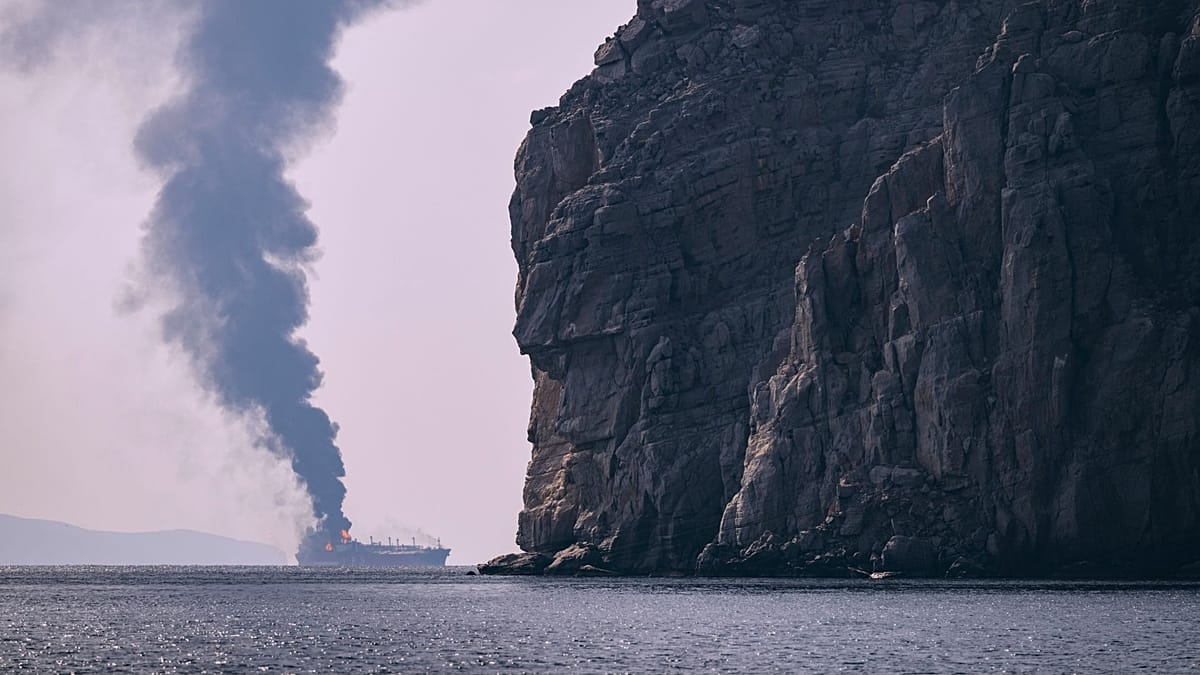
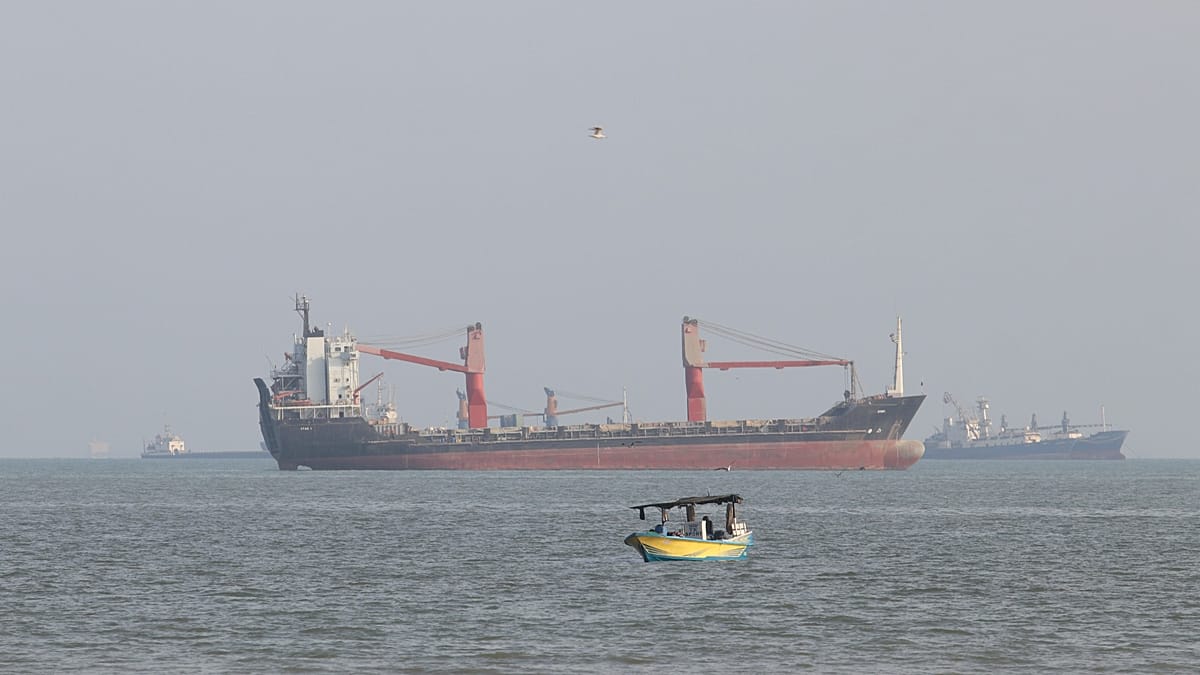
The elite paramilitary IRGC said on Monday that three oil tankers in the Strait of Hormuz suffered "powerful explosions and massive fires" after hitting naval mines. asserted
tankers → say → mines
One tanker was hit off the southern shores and two more in the east of the strait, "while under extensive air escort by the US army," an IRGC statement said. asserted
statement → hit → army
The IRGC said it would publish images of the explosions and warned shipowners that "military escort by the US army is no substitute for compliance with maritime regulations." asserted
escort → say → regulations
The Joint Maritime Information Centre (JMIC), in a report covering 19 to 21 November, said it recorded 114 passages through the strait "with the assistance of the United States" and that claims of tankers hitting naval mines were unconfirmed. uncertain
claims → cover → mines
Iranian Parliament Speaker Mohammad Bagher Ghalibaf said Washington was seeking to impose a neither-war-nor-peace situation on Tehran, threatening there were "military ways to break the blockade that, God willing, we will pursue in the near future." As head of the Iranian delegation in the Islamabad talks, Ghalibaf said there would be no further negotiations or action before Washington moved. asserted
Washington → say → talks
"Before the implementation of Iran's seven conditions there will be no action and no negotiation, and in response to the enemy's moves we are also ready to give a decisive answer and to change the geography of the battlefield in the event of an enemy mistake," Ghalibaf said. asserted
Ghalibaf → give → mistake
Foreign ministry spokesman Esmaeil Baghaei told reporters a naval blockade was "tantamount to military aggression" and that Iran had "the right in this regard to use any available means to defend itself." asserted
Iran → tell → itself
"We will certainly not tolerate this situation, and we will use all our tools to confront this US aggression," he said. asserted
he → tolerate → aggression
Qatar wants both sides at the table Qatar's Prime Minister Mohammed bin Abdulrahman Al Thani visited Washington on Monday and met US Secretary of State Marco Rubio and Vice President JD Vance to discuss efforts to restart negotiations between Tehran and Washington. asserted
Minister → want → Tehran
After his talks with Rubio, Al Thani said the region "cannot bear a renewed escalation of tensions between the United States and Iran" and that Doha was working to bring both sides back to the table. asserted
Doha → say → table
Qatar and the US were also seeking to strengthen their military cooperation, he said. asserted
he → seek → cooperation
According to AP, citing a source familiar with the proceedings, the meeting with Vance lasted about 10 minutes. uncertain
meeting → accord → minutes
The visit followed US President Donald Trump's statement on Sunday that military strikes on Iran could resume after the New Year. uncertain
strikes → follow → Year
Trump had said earlier this month that he had asked Vance to shift his focus from Iran to domestic policy. asserted
he → say → policy
In recent days, Iran has attacked US military bases in Bahrain and Kuwait on several occasions, and Tehran's armed forces have reported almost daily that tankers it describes as violators have struck naval mines. asserted
it → attack → mines
Qatar hosts the largest US military base in the Middle East and the regional headquarters of CENTCOM, and plays a key mediation role between Tehran and Washington. asserted
Qatar → host → Tehran

Give feedback · no sign-in needed

No sign-in needed for now. Your note is sent without a name, so it cannot be answered.

History Support