Photo via The Straits Times

French prosecutors and regulators step up scrutiny on smart glasses

Read the original at The Straits Times ↗
Cite

The Straits Times. (2026, September 18). French prosecutors and regulators step up scrutiny on smart glasses. The Straits Times. https://www.straitstimes.com/world/europe/french-prosecutors-and-regulators-step-up-scrutiny-on-smart-glasses

Dated when The Aporia collected the article, usually within hours of publication. Check the original for its exact date and byline.

The Straits Times · collected 2026-09-18 · by The Straits Times
Content note This article describes sexual violence.

Quick Summary

Paris prosecutors have initiated a criminal investigation into suspected sexual harassment involving smart glasses, following complaints related to an online trend of secretly filming women on the street. French data protection authorities report receiving complaints from businesses about workplace use of these devices, which raise privacy concerns. Meta and EssilorLuxottica's smart glasses, with a global market share of around 76%, have sold 7 million units in 2025 and are experiencing exponential growth, but their popularity is leading to increased scrutiny over issues like sexual harassment and illicit surveillance.
Written by AI on 2026-09-18, from this article's own text only (the story summary below draws on all the coverage).
See how they differ ↓

AI analysis

Story summary

Paris prosecutors opened criminal probes into suspected sexual harassment involving smart glasses after receiving complaints that women were secretly filmed on the street without their consent. The French data protection authorities have also received numerous business-related complaints about these devices. Meta’s smart glasses, developed in collaboration with EssilorLuxottica and marketed under brands like Ray-Ban, dominate the global market with a 76% share and sold approximately 7 million units in 2025 alone. However, their widespread use has sparked international concerns over privacy violations, harassment, and illicit surveillance. In Britain, some cinemas have banned smart glasses, while a German consumer advocacy group filed criminal complaints against Meta citing privacy laws. This scrutiny highlights growing global efforts to address the social impacts of emerging technology.

Written for “Smart Glasses Privacy Probe France” on 2026-11-21, grounded in this article and the 2 other(s) covering the same event.

How they differ

2 outlets covered “Smart Glasses Privacy Probe France”.

What each outlet says

One AI summary per outlet of its latest article on this story, written from that article alone and checked against it. Open the article for the outlet's own words.

The Straits TimesThis outlet18 Sep

Paris prosecutors have initiated a criminal investigation into suspected sexual harassment involving smart glasses, following complaints related to an online trend of secretly filming women on the street. French data protection authorities report receiving complaints from businesses about workplace use of these devices, which raise privacy concerns. Meta and EssilorLuxottica's smart glasses, with a global market…

French prosecutors and regulators step up scrutiny on smart glasses (this article)2 articles from The Straits Times on this story
South China Morning Post23 Sep

French prosecutors are investigating complaints about individuals secretly filming women on the street without consent using smart glasses. These investigations follow reports of non-consensual footage being published online. The probes stem from concerns raised over the use of technology like Meta’s commercially successful Ray-Ban smart spectacles, which have sold 7 million pairs in 2025. Other tech companies such…

In France, prosecutors probe secret filming of women with smart glasses →

Compared with similar articles

This article reads unscored and hedges 12% of its claims. Each row says how that neighbour differs.
South China Morning Post
Hedges 0 of 3 claims Outlet record 62/100
The Straits Times
Leans left Hedges 2 of 22 claims Outlet record 64/100
“While both articles discuss prosecutors opening probes into smart glasses for secret filming and sexual harassment, they are reported on different dates (September 18 vs. September 22), suggesting distinct events or updates.”

Story

Smart Glasses Privacy Probe France
Technology · 3 article(s) covering the same event. See how they differ ↑
How this article was measured signals, leaning charts, publisher record, byline, topics and claims

Signals How these are calculated →

Claims extracted
24
sentences that state something as happening or true
Uncertain
12%
3 of 24 hedged ("reportedly", "may", "according to")
Leaning
not political
takes no side on a contested political question
Publisher signals
64/100
The Straits Times's corrections and hedging, across everything collected from it. Not a measure of accuracy.
Outlets on this story
3
Technology
Same framing elsewhere
1
articles that frame the event the way this one does
Analyzed 2026-09-18 · how these are computed

How this is being covered How these are calculated →

Article leaning vs. publisher reliability
Source leaning vs. consistency

Publisher

The Straits Times · 5634 article(s) · 7 correction(s) detected
Running correction rate · 7 correction(s)

Who wrote this

The Straits Times
3888 article(s) here · 1 carrying a prediction
He told groups of subordinates that they had become so rich that he couldn’t motivate them simply with money, according to three people who spoke on the condition of anonymity to discuss confidential conversations.
The closed freeway lanes recall stems from unusual circumstances where a Waymo vehicle may enter and continue driving in a closed freeway lane, the company said, adding it is still working on the recall remedy.
Araqchi says Iran wants diplomacy to end war; Trump says terms unacceptable Nov 20 - Iran's Foreign Minister Abbas Araqchi said Tehran still hoped diplomacy could end its war with the United States, while US President Donald Trump said Iran wanted a deal but one that was not acceptable to him.
While You Were Sleeping: 5 stories you might have missed, Nov 21, 2026 Trump, Xi agree military AI decisions should involve humans US President Donald Trump and Chinese President Xi Jinping agreed humans should always be involved in military decisions that use artificial intelligence technologies, even as the two countries compete for AI supremacy, Treasury Secretary Scott Bessent said on Nov 20.
US Vice President Vance declines to say he would have ordered Iran strikes WASHINGTON, Nov 20 - US Vice President JD Vance on Friday declined to say whether he would have authorized strikes on Iran to prevent the country from developing a nuclear weapon, sidestepping President Donald Trump's calls for him to say the attacks were necessary and that he would carry them out again.
Some would blame Ottawa for the trade conflict while others pointed the finger at Washington.
Whoever wins will have to tackle multiple crises, including several wars, cutbacks in US contributions to the UN, and the 193-member body's declining political relevance as Washington has pulled out of dozens of its agencies.
I don’t think any human was about to find this,” Conrey said, adding that he believed “there will be simpler ways to do it.” The Riemann Hypothesis is one of seven Millennium Prize Problems selected by the Clay Mathematics Institute in 2000, which offers US$1 million (S$1.28 million) for a solution to each. Under the institute’s rules, a solution must be published in a peer-reviewed journal and withstand two years of scrutiny.
If the hearing proceeds as planned, it would mark Huang's first public testimony since stepping down as Nvidia's chief executive on November 12.
Denmark’s foreign minister on Nov 20 said Moscow’s defence attache in Copenhagen would be expelled after Russia was suspected of being behind an attempted assassination of a Ukrainian rapper.
Also by The Straits Times
Nothing else under this byline is closely related to this article, so these are simply their most recent.
All 3888 articles by The Straits Times →

Topics

CNIL EssilorLuxottica French Meta PARIS

Subjects

Meta ORG · 4× CNIL ORG · 3× French NORP · 3× PARIS GPE · 3× EssilorLuxottica ORG · 2× Britain GPE · 1× Essilor ORG · 1× German NORP · 1× Germany GPE · 1× Reuters ORG · 1×

Narrative

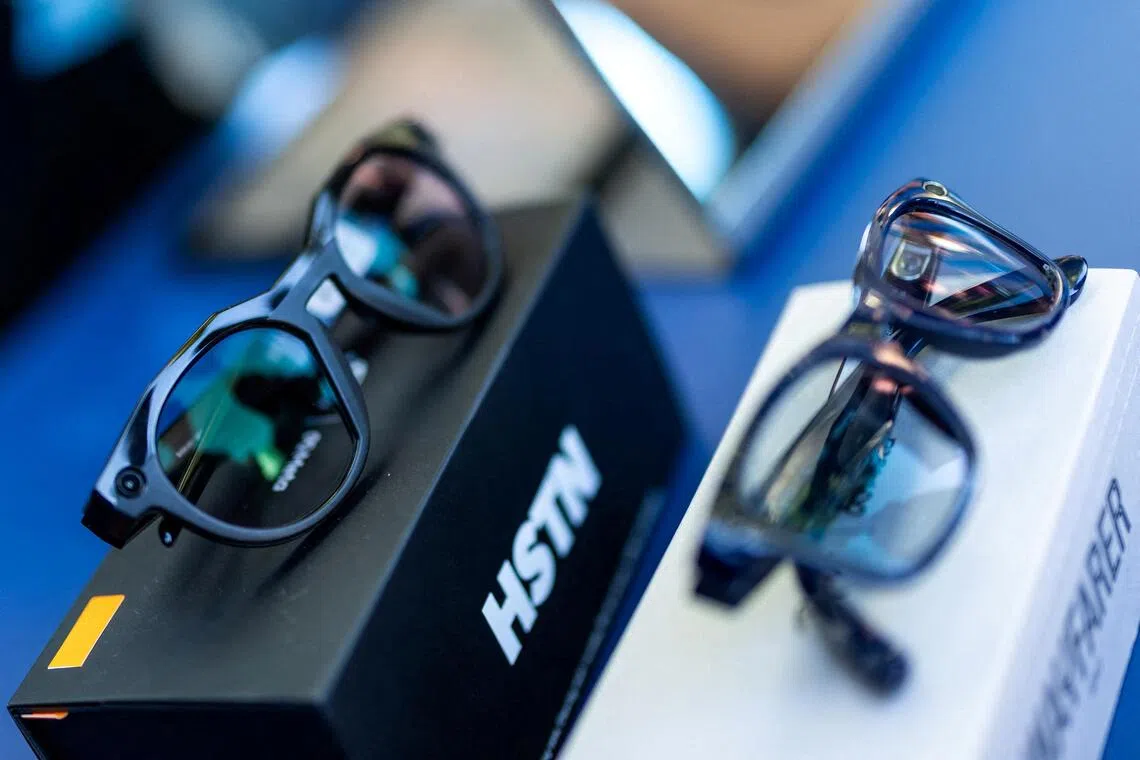
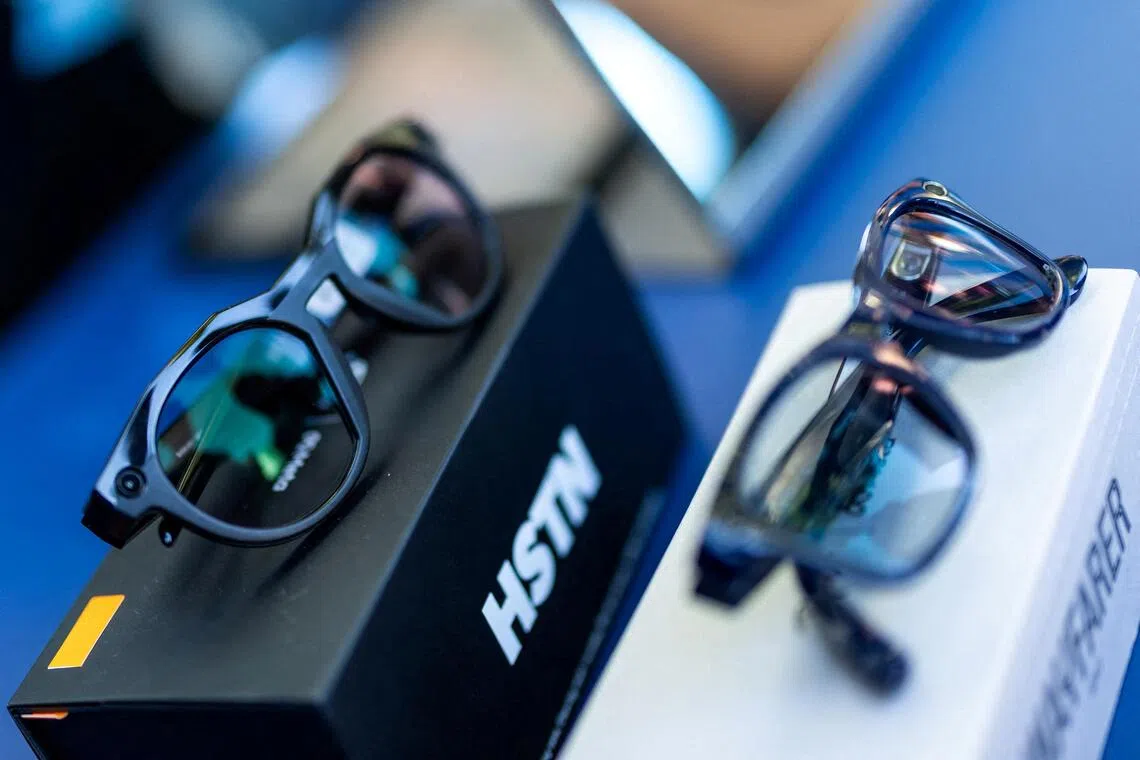
French prosecutors and regulators step up scrutiny on smart glasses PARIS – Paris prosecutors have opened a criminal probe into suspected sexual harassment involving smart glasses, while French data protection authorities have received complaints from businesses, as countries around the world grapple with the devices’ social impact.
framing: assertive · carried by 1 article(s) · first seen 2026-09-18
It declined to give more details, but said its cybercrime unit tested the devices two weeks ago to gain a better understanding of the potential crimes that smart glasses could be used to commit.
2026-09-18 · The Straits Times
French prosecutors and regulators step up scrutiny on smart glasses · assertive framing

Claims (24 extracted, 3 hedged)

French prosecutors and regulators step up scrutiny on smart glasses PARIS – Paris prosecutors have opened a criminal probe into suspected sexual harassment involving smart glasses, while French data protection authorities have received complaints from businesses, as countries around the world grapple with the devices’ social impact. asserted
countries → step → impact
There are several smart glasses available, but US tech giant Meta’s glasses made in collaboration with EssilorLuxottica are the market leader, with a roughly 76 per cent share globally. asserted
glasses → be → share
Meta’s AI-enabled glasses, which have a small embedded camera allowing the wearer to record discreetly, have been a global hit, selling 7 million units in 2025. asserted
wearer → enable → 2025
Essilor’s latest sales figures point to “exponential growth” in 2026. asserted
figures → point → 2026
But their success has led to growing international scrutiny from prosecutors, regulators, rights groups and companies over issues including sexual harassment, corporate wrongdoing and illicit surveillance. asserted
success → lead → harassment
Some cinemas in Britain have banned smart glasses, and a German consumer advocacy group has filed a criminal complaint against Meta and other companies involved in selling the devices in Germany, citing privacy laws. asserted
group → ban → laws
The Paris prosecutor’s office told Reuters it had recently opened at least one criminal probe following sexual harassment complaints related to a social media trend of using smart glasses to film women on the street, without their consent, and posting the videos online. asserted
it → tell → videos
The prosecutors did not specify the brand of devices used. asserted
prosecutors → specify → devices
It declined to give more details, but said its cybercrime unit tested the devices two weeks ago to gain a better understanding of the potential crimes that smart glasses could be used to commit. uncertain
glasses → decline → that
A Meta spokesperson said the company had “built privacy into our AI glasses from the ground up”, adding that “we will keep strengthening our protections as our glasses become even more capable”. asserted
glasses → say → protections
EssilorLuxottica declined to comment. asserted
EssilorLuxottica → decline → ?
CNIL, France’s data protection authority, said it had received under 10 complaints around smart glasses being used in the workplace. asserted
it → say → workplace
It did not disclose which brands. asserted
It → disclose → ?
It also said it was being increasingly contacted by businesses wanting to know whether they could ban smart glasses at work. uncertain
they → say → work
Australia said on Sept 17 it is considering barring the use of camera-equipped smart glasses in government workplaces due to privacy and security concerns, in what it said could be the first ban of its kind. uncertain
it → say → kind
Smart glasses pose “real challenges” in terms of informing people that they are being filmed and getting consent when needed, said CNIL’s head of economic affairs Nacera Bekhat. asserted
head → pose → affairs
AI-enabled wearable devices are regulated by the European Union’s AI Act and the General Data Protection Regulation, or GDPR, which set rules on how people’s personal data can be used. asserted
data → enable → rules
Though French law provides privacy protections – including penalties of up to a year in prison or a €45,000 (S$66,000) fine – for recording the image of a person in a private place without their consent, enforcement can be difficult, particularly when content is quickly disseminated online, CNIL and other legal sources said. asserted
CNIL → provide → consent
A small light in the devices’ frames indicates that filming is taking place, but rights groups said that shifts the responsibility of avoiding being filmed onto the individual. asserted
that → indicate → individual
“Seeing a light come on doesn’t mean that you consent to being filmed, nor to have your image distributed to thousands of people afterwards,” said Ines Legendre, legal expert at internet safety organisation e-Enfance. asserted
Legendre → see → Enfance
Women are the primary target of abuse done using smart glasses, rights groups say. asserted
groups → do → glasses
Ines Girard, who runs projects relating to technology-facilitated gender-based violence at feminist organisation Hubertine Auclert, said the tech industry should do more to prevent abuse. asserted
industry → run → abuse
“We can’t respond to a surveillance technology by telling the people being surveilled that they should be more vigilant,” she said. asserted
she → respond → people
“This places an additional burden on these individuals, particularly women, gender minorities and people already exposed to violence, online abuse and scrutiny in public spaces.” asserted
This → place → spaces
Give feedback · no sign-in needed

No sign-in needed for now. Your note is sent without a name, so it cannot be answered.

History Support