The Trump Administration on Wednesday proposed sweeping new tariffs on 14 major trading partners, including China and the European Union, threatening to reignite global trade tensions.
asserted
Administration → propose → tensions
China is set to be hit with the highest rate, facing tariffs of up to 20% on most covered goods.
asserted
China → set → goods
The rate could potentially rise to 40% if Beijing fails to honor the trade truce agreed upon between Beijing and Washington last year.
uncertain
Beijing → rise → Beijing
The proposed tariffs follow an investigation led by U.S. Trade Representative Jamieson Greer’s office into what it described as unfair trade practices and excess manufacturing capacity that have placed American manufacturers at a disadvantage.
asserted
that → propose → disadvantage
The levies are meant to discourage excess capacity and production in sectors that “are unreasonable and burden or restrict U.S. commerce.”
asserted
that → mean → commerce
A spokesperson for the European Commission told TIME it will “study the findings” of the report shared by the U.S. Trade Representative (USTR), but pushed back against any suggestion of Europe’s contribution to excess manufacturing.
asserted
it → tell → manufacturing
“We strongly reject the premise that Europe is a source of structural overcapacity.
asserted
Europe → reject → overcapacity
To the contrary, Europe is among those most exposed to overcapacity,” the spokesperson said.
asserted
spokesperson → expose → overcapacity
“The E.U. and the U.S. share a real concern about global overcapacity, much of it state-driven and concentrated in third countries.
asserted
much → share → countries
We regret the lack of joint action.”
asserted
We → regret → action
The European Commission will continue engaging with the U.S. Administration on the implementation of the joint trade agreement signed August 2025, the spokesperson said.
asserted
spokesperson → continue → agreement
“Under the Joint Statement, the 15% all-inclusive ceiling applies to E.U. goods.
asserted
ceiling → apply → goods
We expect any measure from this investigation to respect it in full, including when combined with existing duties,” they added.
asserted
they → expect → duties
The U.S. tariffs also target other major economies, including key U.S. allies Japan and South Korea, which face rates of up to 15%.
asserted
which → target → %
India, Singapore, Switzerland, Indonesia, Malaysia, Cambodia, Thailand, Vietnam, Taiwan, and Bangladesh are also included in the sweeping tariffs unveiled on Thanksgiving eve.
asserted
India → include → eve
The levies for these countries remain between 15% to upwards of 25%, with the notable exception of Vietnam, which may face tariffs of up to 35%.
uncertain
which → remain → %
Further determinations concerning Mexico and Norway are still being considered.
asserted
determinations → concern → Mexico
The Trump Administration also announced a separate proposal seeking to increase tariffs on Brazil, targeting the country's sugar and aircraft exports.
asserted
Administration → announce → exports
The Trump Administration said it would impose the tariffs under Section 301 of the Trade Act of 1974, which permits the government to investigate unfair trade practices abroad and impose tariffs via the executive branch through its findings.
asserted
which → say → findings
The Administration previously announced two investigations in March as it sought ways to revive the tariffs struck down by the Supreme Court in February.
asserted
it → announce → February
“The 301 is a very powerful tool, empowering the executive branch to act against other countries when they find something that can arguably be described as an unreasonable discriminatory burden and restrict U.S. commerce,” Kathleen Clausen, a professor at Georgetown Law, tells TIME.
asserted
Clausen → empower → TIME
“This President likes tariffs, and he
asserted
President → like → tariffs
likes 301 as a means of applying them, as a means of addressing these barriers and discriminatory practices that, as he sees them, of our trading partners,” she adds, pointing to the fact that there have already been seven investigations by the USTR under the second Trump Administration, while there were only three during former President Joe Biden’s term.
asserted
she → like → term
Despite the sweeping proposals, Greer played down concerns that the new tariffs could disrupt the global economy.
uncertain
tariffs → play → economy
“We’ve talked to our trading partners about this—they know what we’re proposing,” Greer told CNBC.
asserted
Greer → talk → CNBC
“I think a lot of this is baked in, and I don’t think any of these would actually take effect earlier than a couple months from now.”
asserted
any → think → months
The earliest the Administration expects the tariffs to take effect is January 2027, with the proposals first subject to a public comment process and hearings.
asserted
proposals → expect → process
Any “interested persons” have until Jan. 5, 2027, to submit written comments or requests to appear at the hearings, alongside a summary of their proposed testimony.
asserted
persons → have → testimony
Anyone can theoretically submit a request for a hearing or a written comment, says Clausen.
asserted
Clausen → submit → hearing
However, she notes that “businesses and related workers groups that are principally affected by these actions are the type of expertise and constituency that would typically be invited to provide oral testimony at the hearing.”
asserted
that → note → hearing
In those instances, “by law, the USTR must respond to the comment, not individually, but en masse, where they must address those comments in their determination.
asserted
they → respond → determination
However, she notes that even if there is strong opposition amongst these consultations that may not deter the office of the USTR to go ahead with the implementation of these tariffs.
uncertain
that → note → tariffs
Beijing, ahead of the announcement, reiterated its opposition to "trade wars" and dismissed allegations that it was contributing to global manufacturing overcapacity.
asserted
it → reiterate → overcapacity
"The so-called 'overcapacity' is a false issue, and China opposes using it as an excuse for political manipulation," Chinese Foreign Ministry spokesperson Guo Jiakun said, urging the world's two largest economies to maintain stable relations.
asserted
Jiakun → call → relations
“A way of seeing what happened today is that this is a way to put pressure on our trading partners to be tougher on China,” argues Clausen.
asserted
Clausen → see → China
“The USTR's feeling is that trading partners have not come to the table prepared to take enough action to combat these problems, either their own or directly with China over the years, and so stronger action was needed to be taken,” she says.
asserted
she → come → years
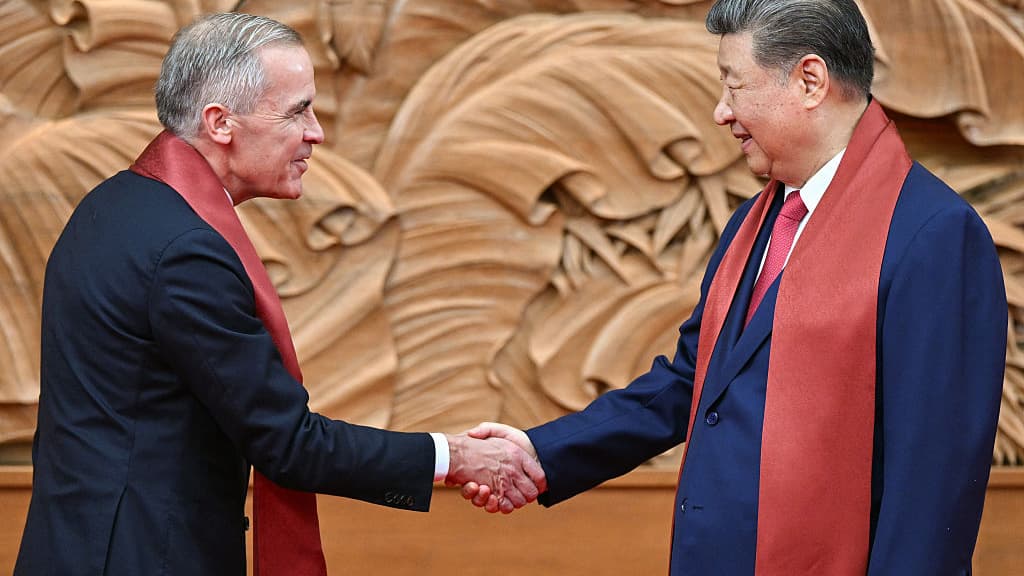
The latest tariff proposals, with their heightened focus on China, come just days after Trump and Chinese President Xi Jinping struck a friendly tone during the President's visit to China for the Asia-Pacific Economic Cooperation (APEC) summit.
asserted
Trump → heighten → summit
The two leaders joined Russian President Vladimir Putin for a historic trilateral sit-down.
asserted
leaders → join → down
Trump and Xi are expected to meet again in December, when Trump hosts world leaders in Miami for the G20 summit.
asserted
Trump → expect → summit
Clausen points out that under Section 301 the U.S. government must request a consultation with other foreign governments where these tariffs could be used as a bargaining chip in future trade negotiations.
uncertain
tariffs → point → negotiations
…and 16 more, not listed.

 The Aporia