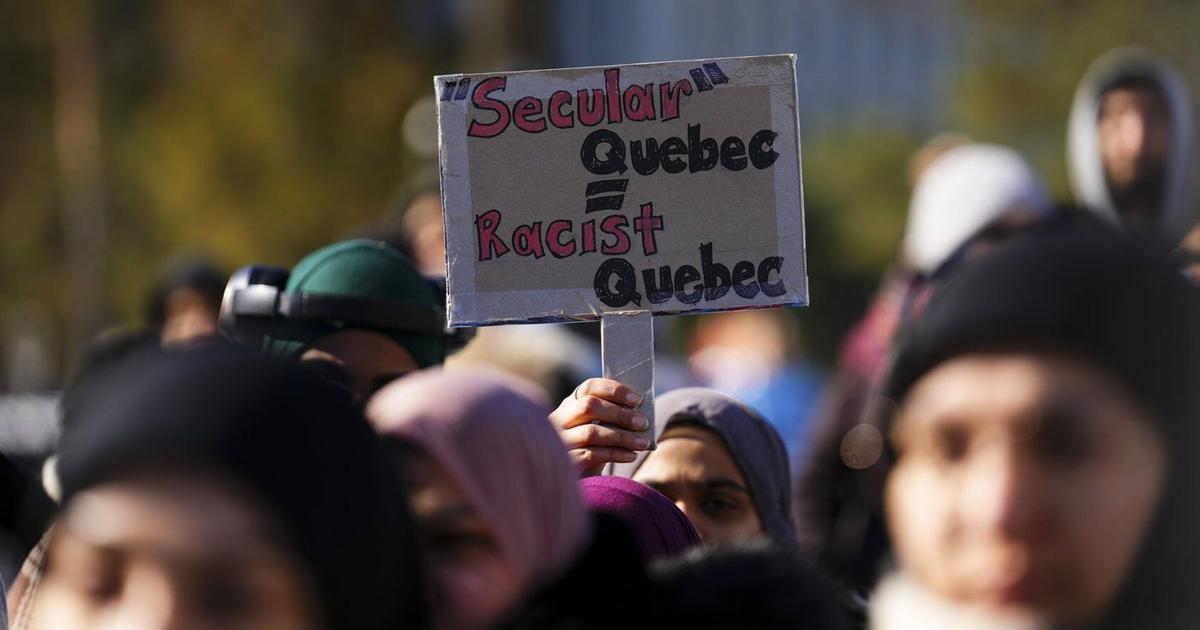
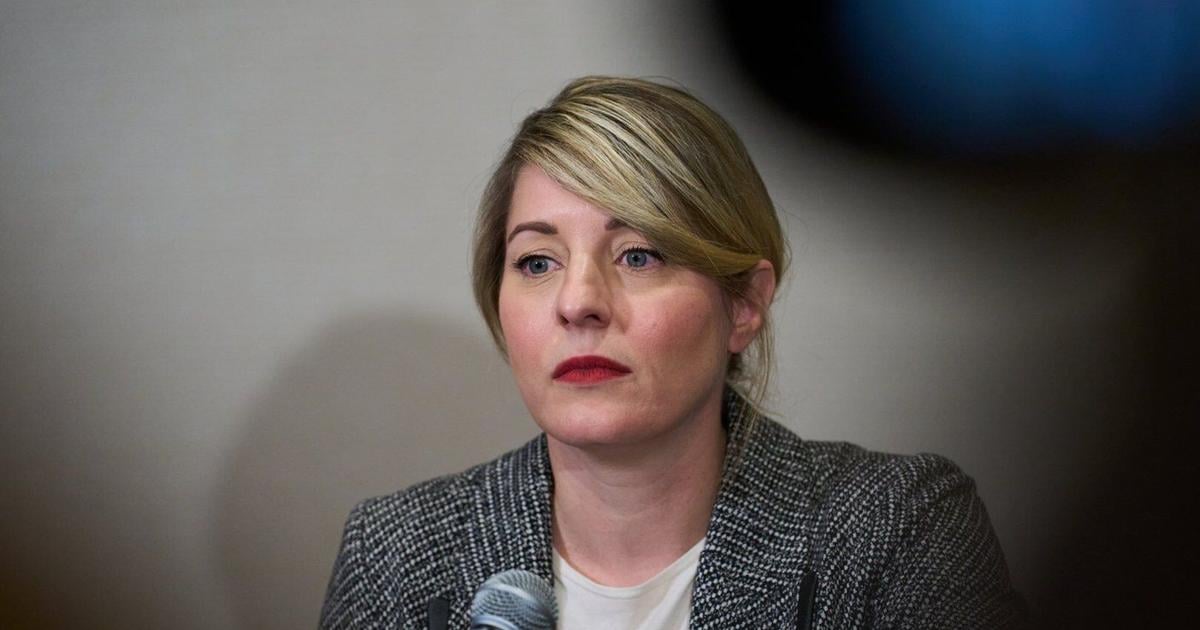
Photo via Toronto Star

Why a Supreme Court ruling on a secularism law could reverberate across Canadian politics

Read the original at Toronto Star ↗
Cite

Taylor, S. (2026, November 26). Why a Supreme Court ruling on a secularism law could reverberate across Canadian politics. Toronto Star. https://www.thestar.com/politics/federal/why-a-supreme-court-ruling-on-a-secularism-law-could-reverberate-across-canadian-politics/article_9b253d2c-4494-4659-9d0e-53cfee39b03e.html

Dated from the outlet's own feed. Check the original for its byline.

Toronto Star · collected 2026-11-26 · by Stephanie Taylor

Quick Summary

The Supreme Court of Canada is scheduled to rule on Quebec’s use of the notwithstanding clause, which allows the government to override certain Charter rights, in relation to Bill 21, a law banning religious symbols for public sector workers. This decision could significantly impact federal-provincial relations, especially in provinces like Alberta and Saskatchewan, which have also employed the clause. The case involves arguments from five other provincial governments and the federal government, with the potential outcome affecting debates on minority rights, gender equality, and religious freedom.
Written by AI on 2026-11-26, from this article's own text only (the story summary below draws on all the coverage).
See how they differ ↓

AI analysis

Story summary

The Supreme Court of Canada has largely upheld Quebec's controversial Bill 21, which bans public sector workers from wearing religious symbols, in a landmark ruling released on November 27, 2026. The court's decision, by a narrow margin, maintains most of the law's provisions despite objections from critics who argue it disproportionately targets religious minorities, particularly Muslim women who wear the hijab. The law, passed in 2019, had faced legal challenges from various groups, including female Muslim, Sikh, and Catholic teachers, who claimed it violated their constitutional rights. The court ruled that a Canadian court can declare a law inconsistent with the rights Charter even when the notwithstanding clause is invoked, but declined to do so in this case, upholding Quebec’s right to legislate under the clause.

Written for “Supreme Court Rules On Quebec Secularism Law” on 2026-11-27, grounded in this article and the 18 other(s) covering the same event.

How they differ

9 outlets covered “Supreme Court Rules On Quebec Secularism Law”.

What each outlet says

One AI summary per outlet of its latest article on this story, written from that article alone and checked against it. Open the article for the outlet's own words.

Toronto StarThis outlet26 Nov

The Supreme Court of Canada is scheduled to rule on Quebec’s use of the notwithstanding clause, which allows the government to override certain Charter rights, in relation to Bill 21, a law banning religious symbols for public sector workers. This decision could significantly impact federal-provincial relations, especially in provinces like Alberta and Saskatchewan, which have also employed the clause. The case…

Why a Supreme Court ruling on a secularism law could reverberate across Canadian politics (this article)4 articles from Toronto Star on this story
The Globe and Mail27 Nov

The Supreme Court of Canada is set to deliver a landmark ruling today regarding Quebec’s secularism law, Bill 21, which bans religious symbols for certain public servants. The court’s judgment will address the limits of governments’ ability to use the notwithstanding clause to override Charter protections. The decision is expected to have significant implications across Canada, particularly in Quebec, where the law…

Morning Update: The stakes in Bill 21 →4 articles from The Globe and Mail on this story
CBC27 Nov

The Supreme Court of Canada is set to release its ruling on Quebec's secularism law, Bill 21, at 9:45 a.m. ET. The law prohibits public sector employees in positions of authority, such as teachers and police officers, from wearing religious symbols and mandates that they keep their faces uncovered while providing services. The case, which involved 51 interveners, has been highly contentious, with debates centered…

Supreme Court set to deliver ruling on Quebec's secularism law →3 articles from CBC on this story
Toronto Sun27 Nov

The Supreme Court of Canada has upheld Quebec’s Bill 21, which bans religious symbols for public servants, except for a provision that bans face coverings for members of the National Assembly, which the court found unconstitutional. The decision was made by a single vote, with three judges arguing that the law’s core provisions violate the Charter’s guarantee of equality between the sexes. The ruling allows…

Supreme Court upholds Quebec’s Bill 21 religious symbols ban →2 articles from Toronto Sun on this story
Global News27 Nov

Premiers from across Canada are awaiting a Supreme Court ruling on Quebec’s secularism law, Bill 21, which bans public servants in authoritative roles from wearing religious symbols. The ruling, expected Friday, may determine the extent to which provinces can use Section 33 of the Constitution to shield their laws from Charter challenges. Quebec Premier Paul St-Pierre Plamondon emphasized the notwithstanding…

Premiers await Supreme Court ruling on Quebec’s secularism law →2 articles from Global News on this story
The Hindu27 Nov

On November 27, 2026, Canada's Supreme Court ruled on a Quebec law prohibiting certain public sector employees from wearing religious symbols. Passed in 2019, the law sparked intense legal debate over its impact on religious freedom and secularism. The case tests the extent to which provinces can use the "notwithstanding clause" to override constitutional protections, a move previously made by other conservative…

Canada’s top court rules on Quebec secularism law in landmark case →
Show 3 more outlets
The Straits Times27 Nov

Canada’s Supreme Court is set to rule on Quebec’s Bill 21, which bans public servants from wearing religious symbols. The court’s decision, expected on November 27, will impact debates on religious freedom and secularism in Quebec and potentially affect Prime Minister Mark Carney’s efforts to unite the country. The law, passed in 2019, restricts teachers, police officers, and other public servants from displaying…

Canada's Supreme Court to rule on Quebec's law on religious symbols in test of Canadian unity →
BBC27 Nov

Canada's Supreme Court has largely upheld Quebec's Bill 21, which prohibits public sector workers from wearing religious symbols such as the hijab and cross. The law was challenged by groups arguing it violates fundamental rights, particularly those of Muslim, Sikh, and Catholic teachers. The court ruled that Quebec's use of the "notwithstanding clause" is valid for most of the law but found that the provision…

Canada's top court largely upholds Quebec ban on religious symbols for public servants →
Al Jazeera27 Nov

Canada’s Supreme Court has largely upheld Quebec’s secularism law, Bill 21, which prohibits public sector employees from wearing religious symbols while at work. The court ruled on Friday that the ban applies to most public employees but cannot be enforced against elected members of Quebec’s National Assembly due to infringement on their democratic rights. The decision also clarifies that governments can invoke the…

Canada’s top court largely upholds Quebec’s religious symbols ban →

Where they agree and split

Framing

How the first headlines put it

Stated as fact4
An achievement1
The headlines (5)

Why a Supreme Court ruling on a secularism law could reverberate across Canadian politics Toronto Star · stated as fact

What's at stake as Canada's top court ruling on Quebec secularism law looms CBC · stated as fact

LILLEY: Supreme Court setting Canada up for a crisis if it rewrites Constitution Toronto Sun · stated as fact

Supreme Court set to rule on Quebec secularism law in landmark Charter case Global News · stated as fact

The historic stakes in Friday’s landmark Supreme Court ruling on the Charter and Quebec’s Bill 21 The Globe and Mail · an achievement

Words to watch (1)

LILLEY: Supreme Court setting Canada up for a crisis if it rewrites Constitution Toronto Sun

The full story: what happened, how it changed, and all 19 articles →

Compared with similar articles

This article reads leans right and hedges 31% of its claims. Each row says how that neighbour differs.
The Globe and Mail
Leans left further left than this Hedges 9 of 98 claims Outlet record 52/100
Toronto Star
Hedges 1 of 2 claims Outlet record 64/100
Toronto Sun
Leans right Hedges 3 of 29 claims Outlet record 96/100
Global News
Centre further left than this Hedges 4 of 23 claims Outlet record 63/100
The Hindu
Leans right Hedges 2 of 20 claims Outlet record 72/100
The Straits Times
Hedges 2 of 20 claims Outlet record 64/100
Global News
Leans right Hedges 1 of 9 claims Outlet record 63/100
Toronto Star
Leans right Hedges 0 of 7 claims Outlet record 64/100
Toronto Sun
Leans right Hedges 0 of 11 claims Outlet record 96/100
CBC News
Leans right Hedges 4 of 30 claims Outlet record 70/100

Story

Supreme Court Rules On Quebec Secularism Law
Politics · 19 article(s) covering the same event. Compare every outlet's account →
How this article was measured signals, leaning charts, publisher record, byline, topics and claims

Signals How these are calculated →

Claims extracted
35
sentences that state something as happening or true
Uncertain
31%
11 of 35 hedged ("reportedly", "may", "according to")
Leaning
Leans right
of the writing, not the subject · beta estimate
Publisher signals
64/100
Toronto Star's corrections and hedging, across everything collected from it. Not a measure of accuracy.
Outlets on this story
19
Politics
Same framing elsewhere
1
articles that frame the event the way this one does
Analyzed 2026-11-26 · how these are computed

How this is being covered How these are calculated →

Article leaning vs. publisher reliability
Source leaning vs. consistency

Publisher

Toronto Star · 18573 article(s) · 35 correction(s) detected
Running correction rate · 35 correction(s)
2026-11-17
Correction
2026-10-26
Correction
2026-10-24
Correction
2026-10-07
Correction
2026-09-24
Correction

Who wrote this

Stephanie Taylor
38 article(s) here · 1 carrying a prediction
“Making the exercise of the override power subject to a prior judicial decision would upset the delicate balance at the heart of our constitutional model,” the decision read.
The Supreme Court of Canada is set to release a decision Friday that could ignite a powder keg under federal-provincial relations.
The new Congress, controlled by Democrats after their landslide victories over Trump’s Republicans this month, will also be installed in January, although Trump will retain veto power over what comes out of Congress, setting the stage for potential battles.
Following a meeting Thursday with the company’s Canadian CEO and others, Joly said Friday that she would work with the Ontario government and Unifor to propose additional ideas directly to Stellantis’s global CEO.
On immigration, Poilievre asserted that Carney’s government would “cook the books” on the country’s immigration levels and was guilty of “insanity” for maintaining numbers higher than the earlier years of his predecessor.
Government House Leader Steven MacKinnon confirmed to reporters that the levels outlining how many newcomers the Liberals plan to allow into the country into the foreseeable future will be included in the budget book.
2026-11-05 · assertive framing · Immigration to be Included in today’s budget
It’s t-minus five hours until Finance Minister François-Philippe Champagne stands to present the federal budget in the House of Commons, but he’s teasing out what will be its main theme.
2026-11-05 · assertive framing · Canadians will see themselves in this budget
As Premier Danielle Smith looks to turn the page on the vote that has unleashed a torrent of anger toward her in a province set to go to the polls next year, the most entrenched of the independence leaders want a second referendum — this time on her leadership.
When Smith speaks at 8:45 p.m. EDT, she will do so to a province divided by the referendum but united in its anger: some resent that the vote happened at all, while others are angry that she chose Canada’s side.
Submitting this form below will send a message to your email with a link to change your password.
Also by Stephanie Taylor
Nothing else under this byline is closely related to this article, so these are simply their most recent.
All 38 articles by Stephanie Taylor →

Topics

Alberta Constitution OTTAWA Quebec Saskatchewan

Subjects

Quebec GPE · 4× Alberta GPE · 3× Saskatchewan GPE · 3× Canadians NORP · 2× Carney PERSON · 2× OTTAWA GPE · 2× Ontario GPE · 2× Susan Delacourt PERSON · 2× Mark Carney‘s PERSON · 1× The Supreme Court of Canada ORG · 1×

Narrative

“The question is whether they will maintain (the clause) essentially roughly as was agreed in 1982, or whether they will impose some new restraint on it that people haven’t seen before,” said Dwight Newman, an expert in constitutional law who teaches at the University of Saskatchewan.
framing: mixed · carried by 1 article(s) · first seen 2026-11-26
The Supreme Court of Canada is set to release a decision Friday that could ignite a powder keg under federal-provincial relations.

Claims (35 extracted, 11 hedged)

The Supreme Court of Canada is set to release a decision Friday that could ignite a powder keg under federal-provincial relations. uncertain
that → set → relations
The case concerns Bill 21, a controversial Quebec law that bans the wearing of religious symbols by certain public sector workers. asserted
that → concern → workers
But the issue of national significance in the case is the tool Quebec used to pass the law: Section 33 of the Charter of Rights and Freedoms, the so-called notwithstanding clause, which governments can use to override certain Charter rights for renewable periods of five years. asserted
governments → use → years
Any move by the court to impose limits on the use of the notwithstanding clause, or provide guidance on its use, would mark a first since the Constitution Act, 1982, and could touch off a political firestorm for Prime Minister Mark Carney‘s government. uncertain
move → impose → government
A ruling perceived as limiting Quebec’s ability to legislate within the federation would likely be fiercely opposed by Premier Paul St-Pierre Plamondon and his Parti Québécois government, potentially setting the stage for Quebec to defy Canada’s top court. In Alberta and Saskatchewan, where governments have used the notwithstanding clause to restrict children’s use of preferred pronouns in schools, any new limits could inflame concerns over the centralization of power in Ottawa and its institutions at the expense of provincial legislatures. uncertain
limits → perceive → legislatures
Then comes the ruling’s potential impact on debates over minority rights, gender equality and religious freedom. asserted
impact → come → rights
Here’s a look at what’s at stake: asserted
what → ’ → stake
Provinces argue clause allows for ‘debate’ asserted
clause → argue → debate
Carney has built his entire prime ministership around regard for the rule of law and institutions, Susan Delacourt writes. asserted
Delacourt → build → law
Carney has built his entire prime ministership around regard for the rule of law and institutions, Susan Delacourt writes. asserted
Delacourt → build → law
Dozens of intervenors and parties presented arguments in the case through written submissions and over three days in oral arguments this past spring, including five other provincial governments and the federal government. asserted
Dozens → present → governments
“The question is whether they will maintain (the clause) essentially roughly as was agreed in 1982, or whether they will impose some new restraint on it that people haven’t seen before,” said Dwight Newman, an expert in constitutional law who teaches at the University of Saskatchewan. asserted
who → maintain → Saskatchewan
“That’s a pretty major question, just in terms of our approach to the Constitution.” asserted
That → ’ → Constitution
The notwithstanding clause was created as a compromise to satisfy provincial governments that balked at the notion of the courts, not legislatures, having the ultimate say in what the rights of Canadians would be. asserted
rights → create → Canadians
Provinces such as Ontario, Alberta and Saskatchewan, all of which have used the clause pre-emptively before their laws were challenged in court, have urged the Supreme Court to protect that override power. asserted
laws → use → power
They warn that placing limits on the notwithstanding clause risks upending the deal that saw the provinces sign on to the Constitution in the first place. asserted
provinces → warn → place
“Simply put,” said the submission from Alberta’s attorney general, “there would have been no Charter” without the notwithstanding clause. asserted
submission → put → clause
Saskatchewan pushed back against claims that using the notwithstanding clause tramples on Canadians’ rights, arguing that it “enables legislatures to open certain social and moral questions to public debate, outside of the courtroom.” uncertain
it → push → courtroom
It maintains that “certain matters are, by their very nature, non-justiciable,” and that “heightened democratic scrutiny” was already baked into the provision, as use of the override must be publicly declared — and expires after five years if it is not proactively renewed. asserted
it → maintain → years
Ontario rejected criticism of its pre-emptive use of the notwithstanding clause, warning the imposition of limits would “sterilize” it. asserted
imposition → reject → it
“If new requirements are desirable, the proper way to add them is through constitutional amendment, not judicial interpretation,” its submission said. asserted
submission → add → amendment
What do the law’s opponents want? asserted
opponents → want → What
For Eric Freeman, acting legal director for Egale Canada, which has been against use of the clause for laws affecting those who identify as LGBTQ, a win would be recognition by the court that some “guardrails” are needed. asserted
guardrails → act → court
“A guardrail will at least help to provide assurances that provincial governments and the federal Parliament can’t use the notwithstanding clause in ways that are totally inconsistent with the very idea of Charter and Constitutional rights,” Freeman told the Star. asserted
Freeman → help → Star
While the clause may remain intact, Freeman would like conditions imposed on its use “to make sure that it can’t be used in particularly egregious ways.” Failing that, critics would at the very least like to see courts offer “declaratory relief”— a formal recognition that rights have indeed been violated, albeit legally – when the notwithstanding clause has been invoked. uncertain
clause → remain → relief
They believe such recognition would serve to better inform the public. asserted
recognition → believe → public
Canadian Civil Liberties Association director Harini Sivalingam acknowledges that in this case, such recognition would amount to a “hollow victory” because nothing about the law would be changed. asserted
nothing → acknowledge → law
But Sivalingam also believes a declaration by the court that rights have been infringed carries power, in that it could raise awareness ahead of the next election, which the five-year limit on notwithstanding clause overrides is meant to capture. uncertain
limit → believe → overrides
“The idea of the declaration is that maybe it could have some influence in the public electorate in knowing that, ‘Hey, your government is enacting these laws that are violating rights — what could be next?’ uncertain
what → have → rights
“It could be your right to protest. uncertain
It → protest → ?
It could be your right to have an abortion.” What does Mark Carney think? Once uncertain
Carney → think → What
ruling comes down, the prime minister will no longer be able to say that it’s inappropriate for him to comment on the Quebec law because a challenge to it is before the court. asserted
challenge → come → court
Whether Carney believes the secularism law is an unjustifiable violation of individuals’ rights remains unclear. uncertain
law → believe → rights
The Bloc has called on him to clearly state his position. asserted
Bloc → call → position
Whatever he eventually says will be heard far and wide in Quebec, where public opinion polling has suggested he enjoys considerable popularity, and where three of six byelections he has called for Dec.7 will be held. uncertain
he → say → popularity
Give feedback · no sign-in needed

No sign-in needed for now. Your note is sent without a name, so it cannot be answered.

History Support