Photo via Toronto Sun

LILLEY: Supreme Court setting Canada up for a crisis if it rewrites Constitution

Read the original at Toronto Sun ↗
Cite

Lilley, B. (2026, November 26). LILLEY: Supreme Court setting Canada up for a crisis if it rewrites Constitution. Toronto Sun. https://torontosun.com/opinion/columnists/supreme-court-must-not-rewrite-constitution

Dated from the outlet's own feed. Check the original for its byline.

Toronto Sun · collected 2026-11-26 · by Brian Lilley

Quick Summary

The Supreme Court is set to decide on Quebec’s controversial Bill 21, which bans religious symbols for public sector employees. The case revolves around whether the court will uphold the use of the notwithstanding clause, which allows governments to override certain rights in the Charter of Rights and Freedoms. The article argues that the court should not limit or abolish the clause, which was a part of the constitutional package agreed upon by premiers during the patriation process.
Written by AI on 2026-11-27, from this article's own text only (the story summary below draws on all the coverage).
See how they differ ↓

AI analysis

Story summary

The Supreme Court of Canada has largely upheld Quebec's controversial Bill 21, which bans public sector workers from wearing religious symbols, in a landmark ruling released on November 27, 2026. The court's decision, by a narrow margin, maintains most of the law's provisions despite objections from critics who argue it disproportionately targets religious minorities, particularly Muslim women who wear the hijab. The law, passed in 2019, had faced legal challenges from various groups, including female Muslim, Sikh, and Catholic teachers, who claimed it violated their constitutional rights. The court ruled that a Canadian court can declare a law inconsistent with the rights Charter even when the notwithstanding clause is invoked, but declined to do so in this case, upholding Quebec’s right to legislate under the clause.

Written for “Supreme Court Rules On Quebec Secularism Law” on 2026-11-27, grounded in this article and the 18 other(s) covering the same event.

How they differ

9 outlets covered “Supreme Court Rules On Quebec Secularism Law”.

What each outlet says

One AI summary per outlet of its latest article on this story, written from that article alone and checked against it. Open the article for the outlet's own words.

Toronto SunThis outlet26 Nov

The Supreme Court is set to decide on Quebec’s controversial Bill 21, which bans religious symbols for public sector employees. The case revolves around whether the court will uphold the use of the notwithstanding clause, which allows governments to override certain rights in the Charter of Rights and Freedoms. The article argues that the court should not limit or abolish the clause, which was a part of the…

LILLEY: Supreme Court setting Canada up for a crisis if it rewrites Constitution (this article)2 articles from Toronto Sun on this story
Toronto Star27 Nov

The Supreme Court of Canada has upheld Quebec’s secularism law, which prohibits public sector workers from wearing religious symbols, ruling that the use of the notwithstanding clause was valid. The court’s unanimous decision, delivered on Friday, confirmed that Quebec could invoke the clause to override certain Charter rights without a prior legal challenge. The ruling also clarifies that courts can declare rights…

Supreme Court upholds Quebec's use of notwithstanding clause for secularism law →4 articles from Toronto Star on this story
The Globe and Mail27 Nov

The Supreme Court of Canada is set to deliver a landmark ruling today regarding Quebec’s secularism law, Bill 21, which bans religious symbols for certain public servants. The court’s judgment will address the limits of governments’ ability to use the notwithstanding clause to override Charter protections. The decision is expected to have significant implications across Canada, particularly in Quebec, where the law…

Morning Update: The stakes in Bill 21 →4 articles from The Globe and Mail on this story
CBC27 Nov

The Supreme Court of Canada is set to release its ruling on Quebec's secularism law, Bill 21, at 9:45 a.m. ET. The law prohibits public sector employees in positions of authority, such as teachers and police officers, from wearing religious symbols and mandates that they keep their faces uncovered while providing services. The case, which involved 51 interveners, has been highly contentious, with debates centered…

Supreme Court set to deliver ruling on Quebec's secularism law →3 articles from CBC on this story
Global News27 Nov

Premiers from across Canada are awaiting a Supreme Court ruling on Quebec’s secularism law, Bill 21, which bans public servants in authoritative roles from wearing religious symbols. The ruling, expected Friday, may determine the extent to which provinces can use Section 33 of the Constitution to shield their laws from Charter challenges. Quebec Premier Paul St-Pierre Plamondon emphasized the notwithstanding…

Premiers await Supreme Court ruling on Quebec’s secularism law →2 articles from Global News on this story
The Hindu27 Nov

On November 27, 2026, Canada's Supreme Court ruled on a Quebec law prohibiting certain public sector employees from wearing religious symbols. Passed in 2019, the law sparked intense legal debate over its impact on religious freedom and secularism. The case tests the extent to which provinces can use the "notwithstanding clause" to override constitutional protections, a move previously made by other conservative…

Canada’s top court rules on Quebec secularism law in landmark case →
Show 3 more outlets
The Straits Times27 Nov

Canada’s Supreme Court is set to rule on Quebec’s Bill 21, which bans public servants from wearing religious symbols. The court’s decision, expected on November 27, will impact debates on religious freedom and secularism in Quebec and potentially affect Prime Minister Mark Carney’s efforts to unite the country. The law, passed in 2019, restricts teachers, police officers, and other public servants from displaying…

Canada's Supreme Court to rule on Quebec's law on religious symbols in test of Canadian unity →
BBC27 Nov

Canada's Supreme Court has largely upheld Quebec's Bill 21, which prohibits public sector workers from wearing religious symbols such as the hijab and cross. The law was challenged by groups arguing it violates fundamental rights, particularly those of Muslim, Sikh, and Catholic teachers. The court ruled that Quebec's use of the "notwithstanding clause" is valid for most of the law but found that the provision…

Canada's top court largely upholds Quebec ban on religious symbols for public servants →
Al Jazeera27 Nov

Canada’s Supreme Court has largely upheld Quebec’s secularism law, Bill 21, which prohibits public sector employees from wearing religious symbols while at work. The court ruled on Friday that the ban applies to most public employees but cannot be enforced against elected members of Quebec’s National Assembly due to infringement on their democratic rights. The decision also clarifies that governments can invoke the…

Canada’s top court largely upholds Quebec’s religious symbols ban →

Where they agree and split

Framing

How the first headlines put it

Stated as fact4
An achievement1
The headlines (5)

Why a Supreme Court ruling on a secularism law could reverberate across Canadian politics Toronto Star · stated as fact

What's at stake as Canada's top court ruling on Quebec secularism law looms CBC · stated as fact

LILLEY: Supreme Court setting Canada up for a crisis if it rewrites Constitution Toronto Sun · stated as fact

Supreme Court set to rule on Quebec secularism law in landmark Charter case Global News · stated as fact

The historic stakes in Friday’s landmark Supreme Court ruling on the Charter and Quebec’s Bill 21 The Globe and Mail · an achievement

Words to watch (1)

LILLEY: Supreme Court setting Canada up for a crisis if it rewrites Constitution Toronto Sun

The full story: what happened, how it changed, and all 19 articles →

Compared with similar articles

This article reads leans right and hedges 10% of its claims. Each row says how that neighbour differs.
Toronto Star
Leans right Hedges 11 of 35 claims Outlet record 64/100
The Globe and Mail
Leans right Hedges 4 of 39 claims Outlet record 52/100
CBC News
Leans right Hedges 4 of 30 claims Outlet record 70/100
Toronto Star
Hedges 1 of 2 claims Outlet record 64/100
Global News
Centre further left than this Hedges 4 of 23 claims Outlet record 63/100
Toronto Star
Hedges 1 of 2 claims Outlet record 64/100
The Straits Times
Hedges 2 of 20 claims Outlet record 64/100
The Globe and Mail
Leans right Hedges 3 of 37 claims Outlet record 52/100
Toronto Star
Leans right Hedges 0 of 7 claims Outlet record 64/100
BBC News
Leans left further left than this Hedges 0 of 8 claims Outlet record 67/100

Story

Supreme Court Rules On Quebec Secularism Law
Politics · 19 article(s) covering the same event. Compare every outlet's account →
How this article was measured signals, leaning charts, publisher record, byline, topics and claims

Signals How these are calculated →

Claims extracted
29
sentences that state something as happening or true
Uncertain
10%
3 of 29 hedged ("reportedly", "may", "according to")
Leaning
Leans right
of the writing, not the subject · beta estimate
Publisher signals
96/100
Toronto Sun's corrections and hedging, across everything collected from it. Not a measure of accuracy.
Outlets on this story
19
Politics
Same framing elsewhere
1
articles that frame the event the way this one does
Analyzed 2026-11-27 · how these are computed

How this is being covered How these are calculated →

Article leaning vs. publisher reliability
Source leaning vs. consistency

Publisher

Toronto Sun · 938 article(s) · 0 correction(s) detected
No corrections detected for this publisher. That may mean careful reporting, or simply that nothing has been checked.

Who wrote this

Brian Lilley
19 article(s) here · 1 carrying a prediction
On Friday, Canadians will find out whether the Supreme Court has rewritten the Constitution on its own or allowed a bad law to stand.
This is not only a prohibited gun in Canada; Cameron had no firearms licence, and transporting it the way he was, including that it was loaded, is also an offence. These are offences that could have seen Cameron spend up to 14 years in jail.
Many in the policing world would rather we didn’t and many in the media world have long tried to convince us that self-defence is an American idea, not a Canadian reality.
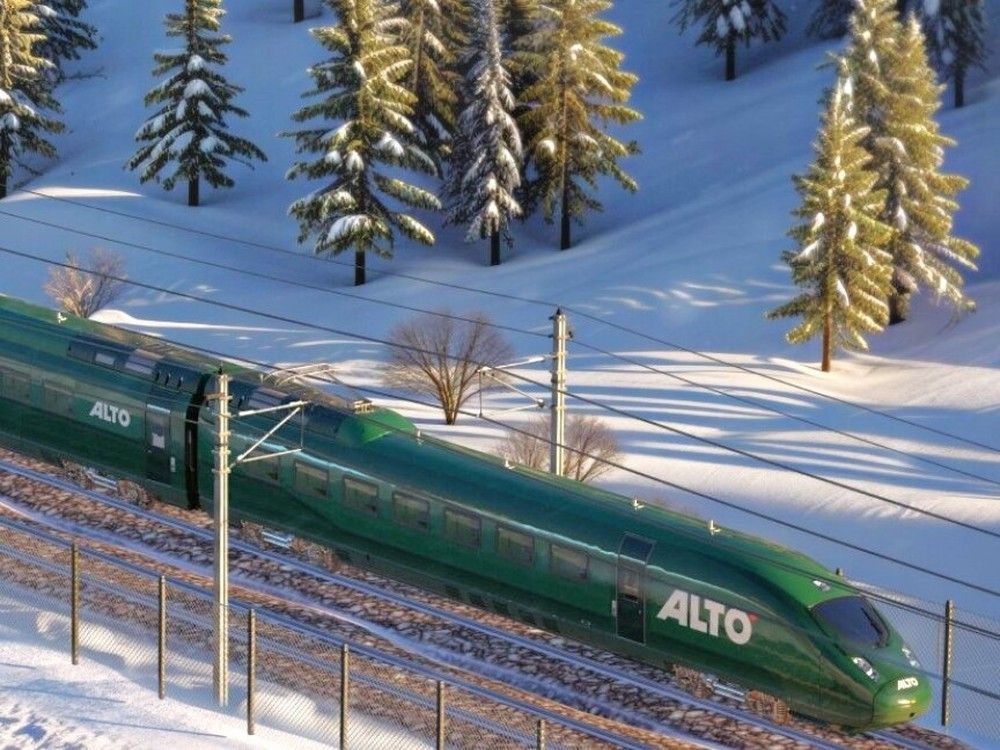
The prime minister and his team are under fire this week over reports that measures that would repeal parts of the Expropriation Act when it comes to Alto, the high-speed rail project, are buried in the budget bill.
The bill comes due Under the proposals, which will head to full council on Dec. 9, your cellphone bill would go up by $2 per month, which for a family of four works out to $96 per year.
He knows that the PC party and Doug Ford will come after him for his ties to the Justin Trudeau government.
At a meeting of the Advisory Committee on Canada-U.S. Economic Relations, Janice Charette wanted to know whether the government could count on members to sell any deal Ottawa arrives at with Washington.
Navdeep Bains was the frontrunner when he entered the race back in May.
On Saturday, Ontario Liberals will decide whether that finally changes.
Industry Minister Melanie Joly will meet Friday with Ontario Premier Doug Ford, Unifor and Stellantis.
Also by Brian Lilley
Nothing else under this byline is closely related to this article, so these are simply their most recent.
All 19 articles by Brian Lilley →

Topics

Canadians Constitution Quebec Section 33 the Supreme Court

Subjects

the Supreme Court ORG · 7× Quebec GPE · 5× Peckford PERSON · 4× Brian Peckford PERSON · 1× Canadians NORP · 1× Mark Carney PERSON · 1× Newfoundland and Labrador GPE · 1× Pierre Elliott Trudeau PERSON · 1× the English Montreal School Board ORG · 1× the Full Comment Podcast ORG · 1×

Narrative

In a case fronted by the English Montreal School Board and supported by opponents of the notwithstanding clause, the Supreme Court is being asked to rewrite the charter to get rid of or curtail the power of the section.
framing: assertive · carried by 1 article(s) · first seen 2026-11-27
On Friday, Canadians will find out whether the Supreme Court has rewritten the Constitution on its own or allowed a bad law to stand.

Claims (29 extracted, 3 hedged)

On Friday, Canadians will find out whether the Supreme Court has rewritten the Constitution on its own or allowed a bad law to stand. asserted
law → find → own
Neither outcome is good, but one is worse and I fear that’s where the court is headed. asserted
court → fear → ?
On the face of it, Case 41231 is about Quebec’s law banning religious symbols or garb being worn by civil servants. asserted
symbols → ban → servants
In reality, it’s about the future of Section 33 of the Charter of Rights and Freedoms, also known as the notwithstanding clause. asserted
it → ’ → clause
Quebec’s Bill 21, officially called An Act Respecting the Laicity of the State, seeks to establish that Quebec is a secular and not religious state. asserted
Quebec → call → State
It bans civil servants from wearing visible crosses or crucifixes on the job, bans kippahs, turbans and, of course, hijabs and niqabs. asserted
It → ban → course
The idea of the state dictating how people dress in daily life should be abhorrent to anyone who values individual liberty. asserted
who → dictate → liberty
I’ve been speaking out against Bill 21 since it was introduced and then passed into law in 2019. asserted
it → speak → 2019
The law is clearly a violation of the Charter of Rights in many ways, but the Quebec government used the notwithstanding clause, meaning those violations could not be considered by the courts. uncertain
violations → use → courts
In a case fronted by the English Montreal School Board and supported by opponents of the notwithstanding clause, the Supreme Court is being asked to rewrite the charter to get rid of or curtail the power of the section. asserted
Court → front → section
Even the Mark Carney government waded into this mess to ask the Supreme Court to limit the powers of the clause. asserted
government → wad → clause
“Repeated declarations under s. 33 could amount, at a certain point, to abolishing the very right or freedom in question,” the federal government factum to the Supreme Court says. uncertain
government → repeat → Court
Limiting it isn’t interpreting the charter, it’s rewriting it. asserted
it → limit → it
Others would like to see it outright abolished. asserted
it → like → ?
It is not their job to amend the charter or the Constitution; we have a political process for that, perhaps a difficult one, but a process nonetheless. asserted
we → amend → that
“It’s not in the Constitution,” Brian Peckford said of the idea the clause could be limited. uncertain
clause → ’ → idea
The last man standing Peckford was the premier of Newfoundland and Labrador from 1979 to 1989. asserted
Peckford → stand → 1989
He was part of the group of premiers who took part in the talks to patriate the Constitution and enact the charter. asserted
who → take → charter
As the last living signatory to the agreements that made these changes possible, Peckford pushed back against the idea that the notwithstanding clause was never meant to be used or only used sparingly. asserted
clause → live → idea
He admitted that Pierre Elliott Trudeau didn’t want the clause, but that most premiers did and wouldn’t have agreed to the constitutional package without it. asserted
premiers → admit → it
Peckford defended the notwithstanding clause as democratic, saying it can’t just be a decision of the government or cabinet; it must go to the legislature every five years. asserted
it → defend → legislature
“They are forced to go to their legislature and get it approved by the legislature. asserted
it → force → legislature
And then it’s only good for five years. asserted
it → ’ → years
And if they want to continue it, they got to go back and go to the legislature again. asserted
they → want → legislature
So it’s extremely democratic,” Peckford said in an episode of the Full Comment Podcast earlier this year. asserted
Peckford → ’ → Podcast
Crisis of their own making If the Supreme Court decides that it will rewrite the Constitution in this way, it will be setting the country up for a crisis. asserted
it → decide → crisis
It will be usurping the rights and privileges of Parliament and of provincial legislatures across the country. asserted
It → usurp → country
If the judges act as I fear they will, they will also be breathing new life into separatist movements in Quebec and Alberta. asserted
they → act → Quebec
This should be a no-go zone for the court, but under Chief Justice Richard Wagner the Supreme Court has shown that it recognizes no limits to its hubris. asserted
it → show → hubris
Give feedback · no sign-in needed

No sign-in needed for now. Your note is sent without a name, so it cannot be answered.

History Support