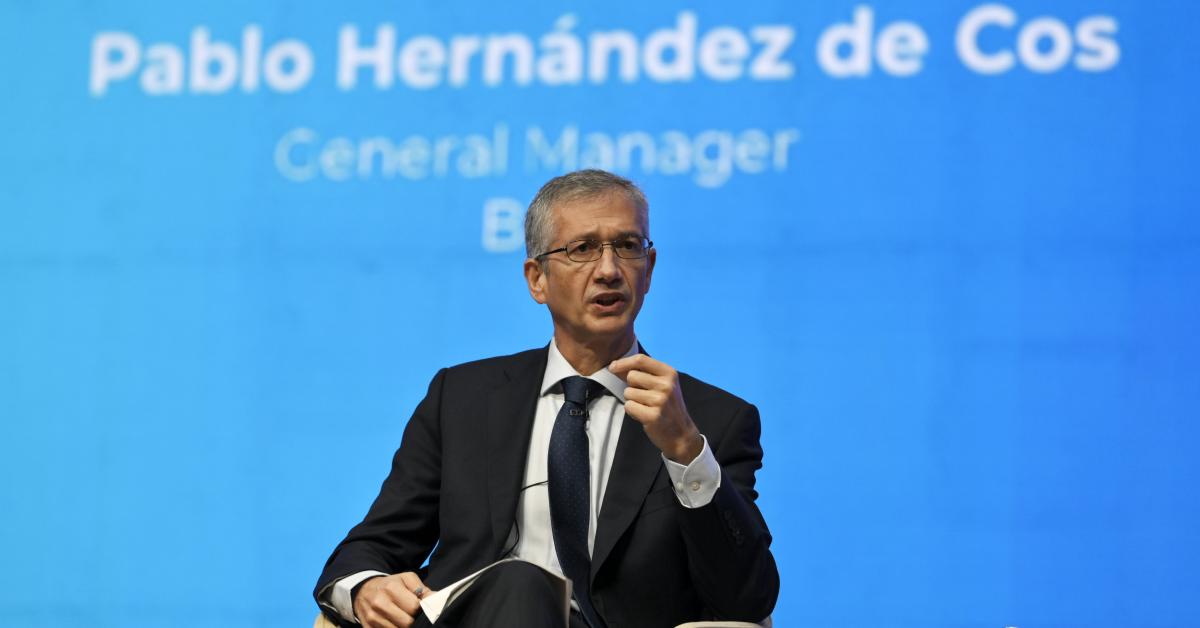
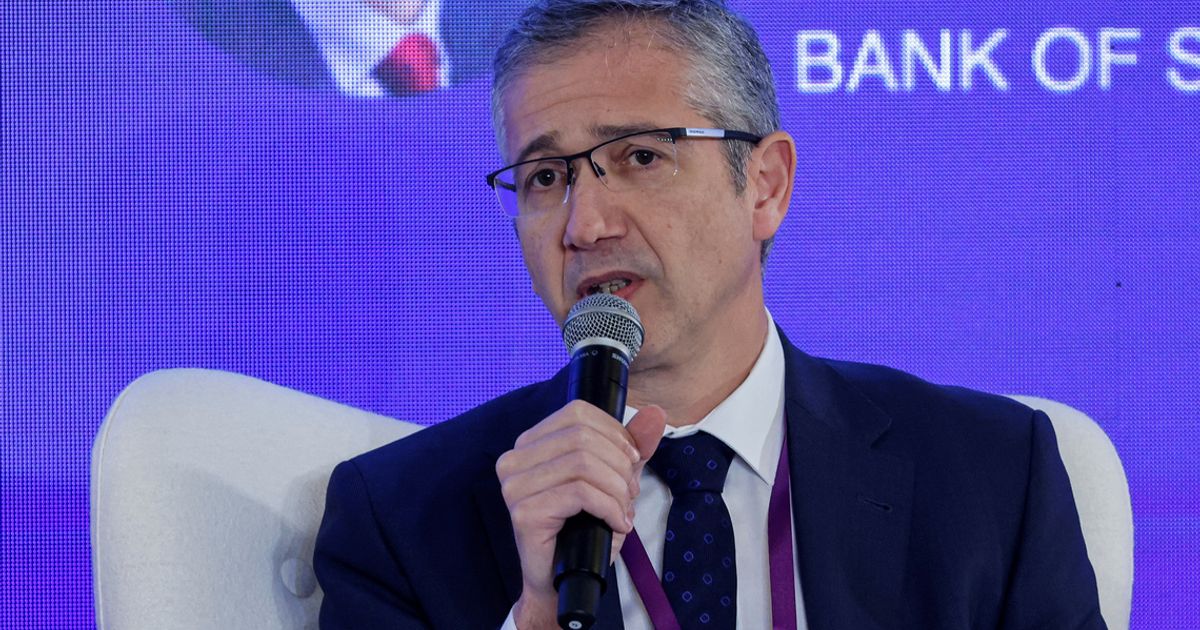
Spain’s Pablo Hernandez de Cos poised to succeed Christine Lagarde as European Central Bank president
AI
asserted
Cos → poise → president
Pablo Hernandez de Cos is set to become European Central Bank (ECB) president, directing the region’s fight against inflation and possible bond turmoil.
asserted
Cos → set → inflation
With the Dutch government aligning with the consensus of European peers after previously pushing for its own candidate, leaders meeting in Brussels are poised to nominate the 55-year-old Spaniard later on Nov 26.
asserted
leaders → align → Nov
He will succeed Christine Lagarde, who will end her term early to leave the institution on Feb 7.
asserted
who → succeed → Feb
While Hernandez de Cos will still need to testify to the European Parliament, its opinion is not binding, and the political agreement now in train means his appointment as president is essentially assured.
asserted
appointment → need → president
That would hand Spain the ECB’s top role for the first time, coinciding with the transformation of the euro area’s fourth-largest member from a one-time victim of the region’s past debt crisis to become its best-performing major economy.
asserted
That → hand → crisis
Hernandez de Cos, a former governor of the Bank of Spain who is now chief of the Bank for International Settlements (BIS), will oversee monetary policy in a region of 21 member states and 350 million people.
asserted
who → oversee → states
So far, ECB officials have put the onus on Paris to solve fiscal issues, but if rising yields begin to impede the effectiveness of their monetary policy, a decision on whether to step in may be needed.
uncertain
decision → put → policy
Hernandez de Cos was already firmly on track to win the role after securing the backing of France and Germany in recent weeks over the rival candidacy of former Dutch central bank president Klaas Knot.
asserted
Cos → win → Knot
The appointment will be the most important element to one of the biggest reshuffles of the ECB’s six-strong Executive Board since the institution’s inception more than 25 years ago, installing a new management team before French elections in spring.
asserted
appointment → instal → spring
The result means the euro will enter its fourth decade without Germany ever having had the presidency.
asserted
Germany → mean → presidency
It had little chance of winning it this time, with two of its nationals still set to hold key roles in coming years: Ursula von der Leyen at the helm of the European Commission and Claudia Buch running the ECB’s bank watchdog.
asserted
two → have → watchdog
Berlin opted instead to go for the chief economist position and nominated Princeton University professor Markus Brunnermeier to succeed incumbent Philip Lane when his term ends in May 2027.
uncertain
term → opt → May
France, which has had the presidency twice, picked former minister and Organisation for Economic Cooperation and Development chief economist Laurence Boone to join the ECB board.
asserted
Boone → have → board
She will get the markets’ portfolio that becomes available after Germany’s Isabel Schnabel exits in January – a position that may prove key in the event of a bond crisis.
uncertain
that → get → crisis
As a consequence of Brunnermeier’s start in June, Germany will have no seat on the board for the five months from Schnabel’s departure in January, a potentially crucial period if market turbulence erupts around France’s budget and elections.
asserted
turbulence → have → budget
“I’m not hoping for a crisis anytime soon, but the interesting aspect for markets is what kind of direction the ECB toolkit will be taken in,” said Michala Marcussen, chief economist at Societe Generale.
asserted
Marcussen → hop → Generale
“The president of course does not make decisions in isolation, but the president has an important role in guiding and pushing on the toolkit.”
Hernandez de Cos holds a doctorate in economics and a degree in law.
The former chair of the Basel Committee on Banking Supervision was widely deemed more dovish than Knot on monetary policy, but has a track record of preaching fiscal rectitude in Spain.
asserted
chair → make → Spain
In a recent interview De Cos said central banks must “remain vigilant about inflation risks” stemming from high-energy prices, while also signalling concern over high levels of borrowing by some nations.
asserted
banks → say → nations
He started his career at Spain’s central bank in the late 1990s before working as an adviser to the ECB’s Executive Board from 2004 to 2007.
De Cos then led the Bank of Spain as governor for a non-renewable six-year term that started in 2018.
asserted
that → start → 2018
The exit of the BIS chief opens up another high-level position in the global central-banking community less than two years after the last change at that institution.
asserted
exit → open → institution
It is unclear if Europe will be able to retain that top job against competition from global peers.
uncertain
Europe → retain → peers

 The Aporia