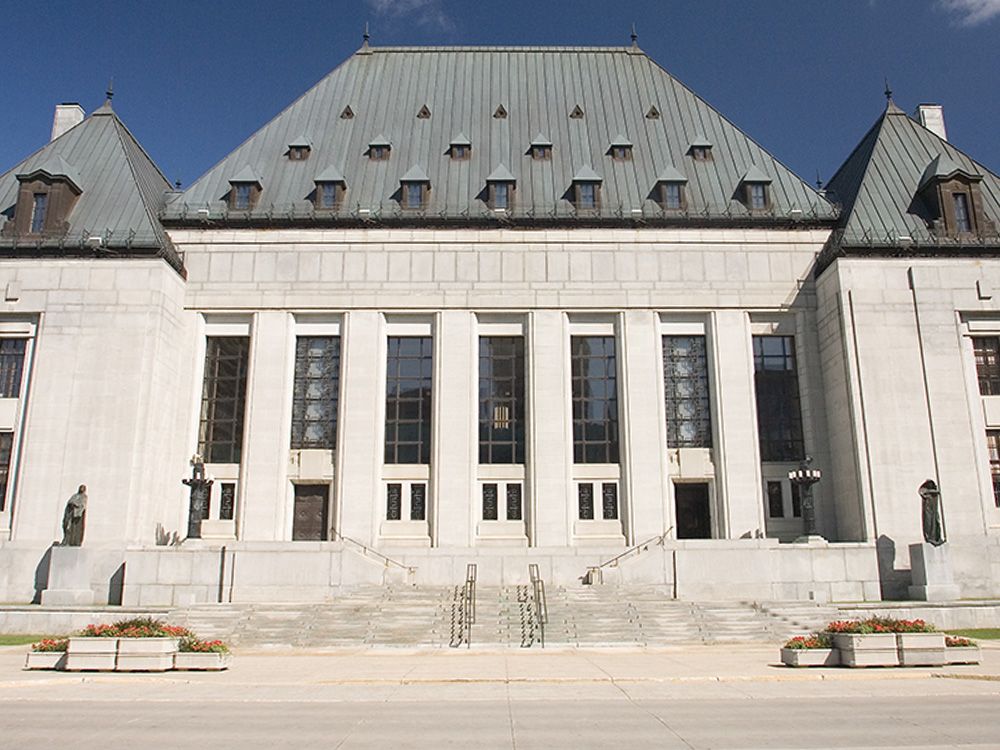
The Supreme Court upheld the notwithstanding clause Friday, but don’t mistake that for the end of the fight.
asserted
Court → uphold → fight
In many ways, it’s just the beginning.
asserted
it → ’ → ways
The ruling was split several ways, with some judges supporting the use of the clause, others suggesting it should be constrained, and one judge choosing not to offer an opinion.
asserted
judge → split → opinion
All of this means there will be future litigation, further attempts by activists to use the courts to strip away the notwithstanding clause.
asserted
All → mean → clause
On the face of it, Friday’s ruling was about Quebec’s Bill 21, An Act Respecting the Laicity of the State.
asserted
ruling → respect → State
This law bans many public servants from wearing religious symbols while at work, such as a cross, a turban, a yarmulke or a hijab.
asserted
law → ban → cross
No government should be doing this, but Quebec enacted the notwithstanding clause, also known as Section 33 of the Charter, to suspend those rights protections.
asserted
Quebec → do → protections
What this case was really about was an attempt by opponents of Section 33 of the Charter to use the courts to amend the Constitution.
asserted
was → use → Constitution
They failed – but only for now.
asserted
They → fail → ?
Buried within this decision are the seeds of a poison fruit that they will come back to harvest in future challenges.
More than Bill 21
Chief Justice Richard Wagner wrote the part of the decision that left Bill 21 and the notwithstanding clause intact.
asserted
that → bury → Bill
He even rejected the idea that judges should declare that rights had been violated even though the invocation of Section 33 meant they could do little about it.
uncertain
they → reject → it
“To impose substantive conditions not found anywhere in the text of s. 33, or to authorize the courts to continue ruling on rights that have been validly overridden, would undo the historical compromise from which the Charter emerged,” Wagner wrote.
asserted
Wagner → impose → which
“The Court should not arrogate to itself, under the guise of constitutional interpretation, a power that the Constitution purposely does not confer on it.
asserted
Constitution → arrogate → it
To do so would be to claim the same type of unlimited power that our constitutional order based on the rule of law cannot tolerate.”
uncertain
order → claim → law
He went in the opposite direction of what I had suspected of him.
asserted
I → go → him
Unfortunately, only Justices Côté and Rowe fully concurred with his findings.
asserted
Côté → concur → findings
In a case heard by seven judges, that’s not a majority.
asserted
that → hear → judges
Justice Kasirer agreed that Bill 21 and Section 33 were valid but split with them on whether judges can or should make declarations that rights are being violated when Section 33 is invoked.
asserted
Section → agree → declarations
Given that the three remaining judges also agreed on declarations, that means going forward judges can opine on these matters and declare rights violated while offering no mechanism for correcting the violation.
asserted
judges → give → violation
Cracks in the ruling
Justice Sheila Martin may have said she doesn’t need to fully answer questions about putting limits on Section 33, but she clearly stated that her opinion is no.
uncertain
opinion → say → Section
“My colleagues say that there are additional substantive limits on s. 33 that transcend the text of the Charter itself.
asserted
that → say → Charter
Respectfully, I disagree,” Justice Martin wrote.
asserted
Martin → disagree → ?
“I am unconvinced that there are other or additional limits on the use of the notwithstanding clause that do not arise from s. 33 itself.
asserted
that → be → s.
I do not see a clear source from which the proposed limits derive.
asserted
limits → see → which
That leaves Justices Andromache Karakatsanis and Michelle O’Bonsawin, who believe the Supreme Court should be imposing limits.
asserted
Court → leave → limits
Early in their arguments, they put forward the often-claimed but false idea that the notwithstanding clause may be in the Charter but that it was only “intended to be invoked only in rare circumstances.”
uncertain
it → put → circumstances
That claim is highly political and not supported by the historical record.
uncertain
claim → support → record
The judges also write that Section 33 cannot shield laws that “extinguish constitutional rights beyond its prescribed five-year limit.”
asserted
that → write → limit
And yet the Charter clearly allows that when the five-year window expires, “Parliament or the legislature of a province may re-enact a declaration.”
uncertain
Parliament → allow → declaration
Justices Karakatsanis and O’Bonsawin clearly want to put limits on the notwithstanding clause.
asserted
Karakatsanis → want → clause
They also argue that it cannot shield laws that are incompatible with “the fundamental character of Canada’s free and democratic society.”
asserted
that → argue → society
That vague phrase simply opens the door for future cases to claim that Section 2 rights being violated by the use of the notwithstanding clause are incompatible with “the fundamental character of Canada’s free and democratic society.”
uncertain
rights → open → society
In March 2027, the court will hear a case regarding Saskatchewan’s pronoun policy in schools involving trans children.
asserted
court → hear → children
We can expect some of these same arguments to come up, along with new arguments informed by the words of Justices Karakatsanis and O’Bonsawin.
asserted
some → expect → Karakatsanis
The fight over Section 33 is just getting started.
asserted
fight → start → Section

 The Aporia