That is 0 articles you have read today.
The Aporia is free and carries no advertising, so readers are the only
thing paying for it. If you are getting this much out of it, a small
donation is what keeps it independent.
You have read 0 articles today.
That is more than the 15 a day The Aporia gives away,
and well past what it can carry on nothing. Your allowance resets at
midnight.
There is no advertising here and nothing about you is sold, so readers
are the only thing paying for it. If the site is worth this much of
your day, it is worth a few dollars.
Everything else stays open: the front page, the
directory and search do
not count against this, and neither does re-opening something you have
already read today.
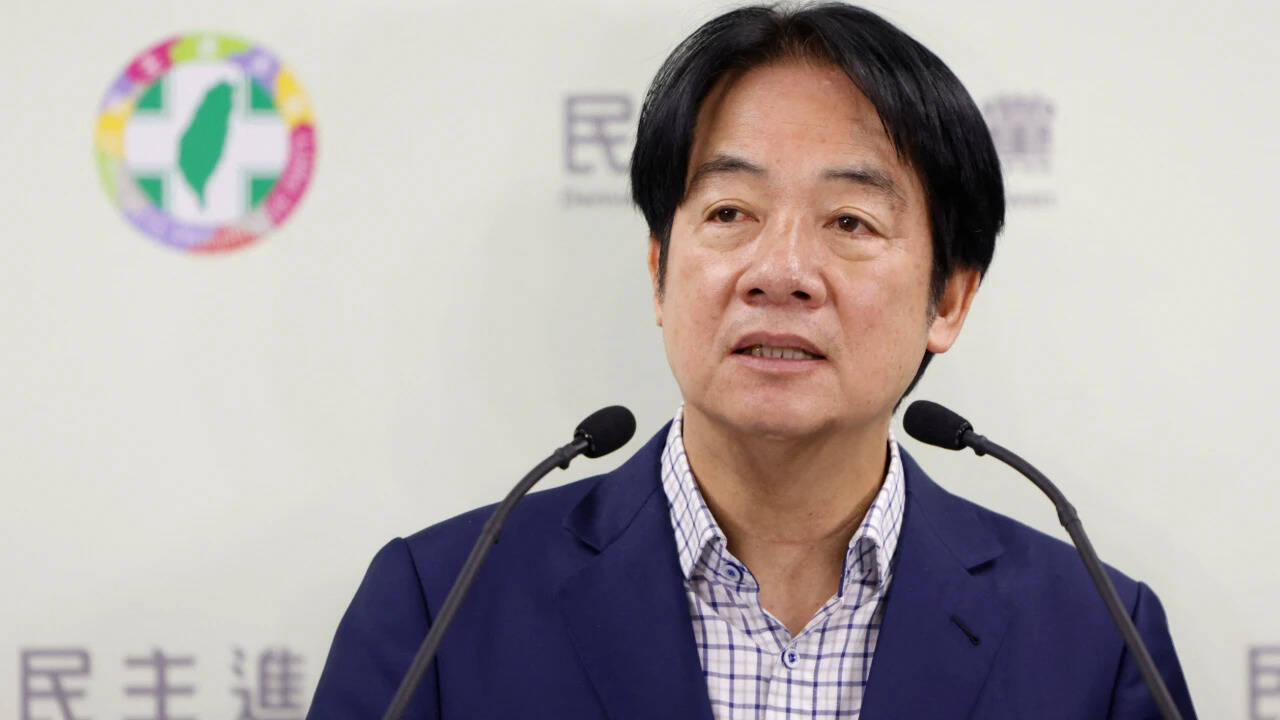
Photo via Toronto Star
Taiwan votes to end 'nuclear-free homeland' policy and reopen door to nuclear power use
Wu, H. (2026, November 29). Taiwan votes to end 'nuclear-free homeland' policy and reopen door to nuclear power use. Toronto Star. https://www.thestar.com/news/world/asia/taiwan-votes-to-end-nuclear-free-homeland-policy-and-reopen-door-to-nuclear-power-use/article_fcf6577e-0448-57bc-b6aa-15a5c41b8cf4.html
Wu, Huizhong. “Taiwan votes to end 'nuclear-free homeland' policy and reopen door to nuclear power use.” Toronto Star, 29 Nov. 2026, https://www.thestar.com/news/world/asia/taiwan-votes-to-end-nuclear-free-homeland-policy-and-reopen-door-to-nuclear-power-use/article_fcf6577e-0448-57bc-b6aa-15a5c41b8cf4.html.
Wu, Huizhong. “Taiwan votes to end 'nuclear-free homeland' policy and reopen door to nuclear power use.” Toronto Star, November 29, 2026. https://www.thestar.com/news/world/asia/taiwan-votes-to-end-nuclear-free-homeland-policy-and-reopen-door-to-nuclear-power-use/article_fcf6577e-0448-57bc-b6aa-15a5c41b8cf4.html.
Dated from the outlet's own feed. Check the original for its byline.
Toronto Star
· collected 2026-11-29 · by Huizhong Wu
Quick Summary
Taiwanese voters in Saturday's local elections decided to overturn the "nuclear-free homeland" policy, which mandated the closure of nuclear power plants. This move was spearheaded by the opposition Nationalist Party, or KMT, who argue that allowing the use of nuclear power will stimulate economic growth.
Written by AI on 2026-11-29,
from this article's own text only (the story summary below draws on all the coverage).
Voters in Taiwan overwhelmingly supported a referendum on November 28, 2026, to abandon the country’s “nuclear-free homeland” policy, which required the phase-out of nuclear energy. The referendum, initiated by the opposition Kuomintang (KMT) and held alongside local elections, received 61.99% of the valid votes, with a turnout of 62.79%. A total of 7,434,677 voters supported the proposal compared to 4,557,768 who opposed it. This decision, which surpasses the required threshold of one-quarter of Taiwan’s eligible electorate, now gives the government a mandate to reconsider the use of nuclear power. While the referendum does not automatically mean an immediate return to nuclear power, the KMT argues that it could provide a stable and low-carbon electricity supply for Taiwan’s rapidly expanding semiconductor and AI industries, whose energy demands are increasing significantly.
Written for “Taiwan Votes on Nuclear Power” on 2026-11-29,
grounded in this article and the 3 other(s) covering the same event.
Why this leaning score
This article does not take a side on a contested political
question, so it has no leaning score. That is an
answer rather than a gap: a match report or a rescue can be warmly
or critically written without being left or right, and scoring it
anyway is how approval of a subject gets recorded as a political
position.
No political leaning scored for article 188155 · logged 2026-11-29
How they differ
4 outlets covered “Taiwan Votes on Nuclear Power”.
What each outlet says
One AI summary per outlet of its latest article on this story, written from that article alone and checked against it. Open the article for the outlet's own words.
Toronto StarThis outlet29 Nov
Taiwanese voters in Saturday's local elections decided to overturn the "nuclear-free homeland" policy, which mandated the closure of nuclear power plants. This move was spearheaded by the opposition Nationalist Party, or KMT, who argue that allowing the use of nuclear power will stimulate economic growth.
Taiwan votes to end 'nuclear-free homeland' policy and reopen door to nuclear power use (this article)Al Jazeera27 Nov
Taiwan is holding a referendum on whether to revive its nuclear power industry during local elections on Saturday. This vote comes after the country shut down its last operational reactor 18 months ago. The opposition Kuomintang (KMT) and the Taiwan People’s Party (TPP) support the referendum, while the ruling Democratic Progressive Party (DPP) opposes it, citing safety concerns and environmental commitments. The…
On November 28, 2026, Taiwan voters approved a referendum initiated by the Opposition Nationalist Party (KMT) to end the island's "nuclear-free homeland" policy, which phased out nuclear power plants. The referendum, which passed with support from the KMT and their coalition partner, the Taiwan People's Party, aims to boost the economy and support industries like AI and semiconductors by ensuring a stable power…
Taiwanese voters approved a referendum to reconsider the use of nuclear power, reversing the ruling Democratic Progressive Party’s “nuclear-free homeland” policy. The referendum, initiated by the opposition Kuomintang, received 61.99% of the vote, with 7,434,677 voters in favor compared to 4,557,768 against. While the result provides a political mandate to explore nuclear power, it does not guarantee an immediate…
Leans strongly right
Hedges 3 of 17 claimsOutlet record 60/100
“The articles describe different aspects of the same day's events in Taiwan: one focuses on China's reaction to the local elections and the other on the referendum results regarding nuclear energy policy.”
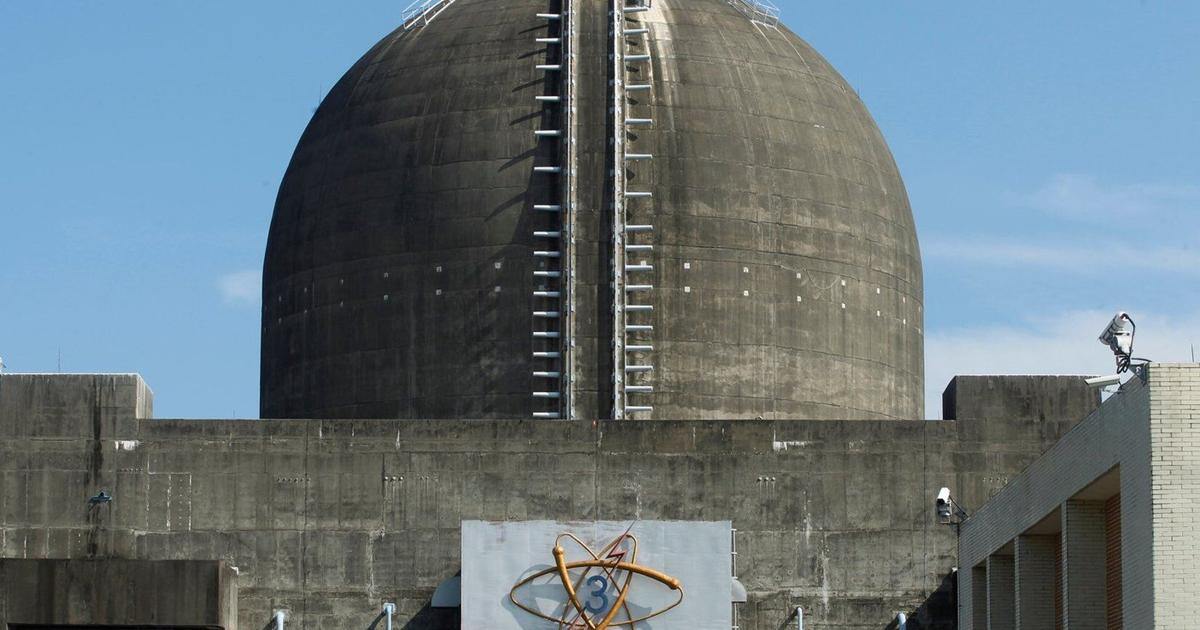
A majority of Taiwan residents who voted in Saturday’s local elections chose to abandon a policy that phased out the island’s nuclear power plants, a change that the opposition Nationalist Party has said will boost the economy.
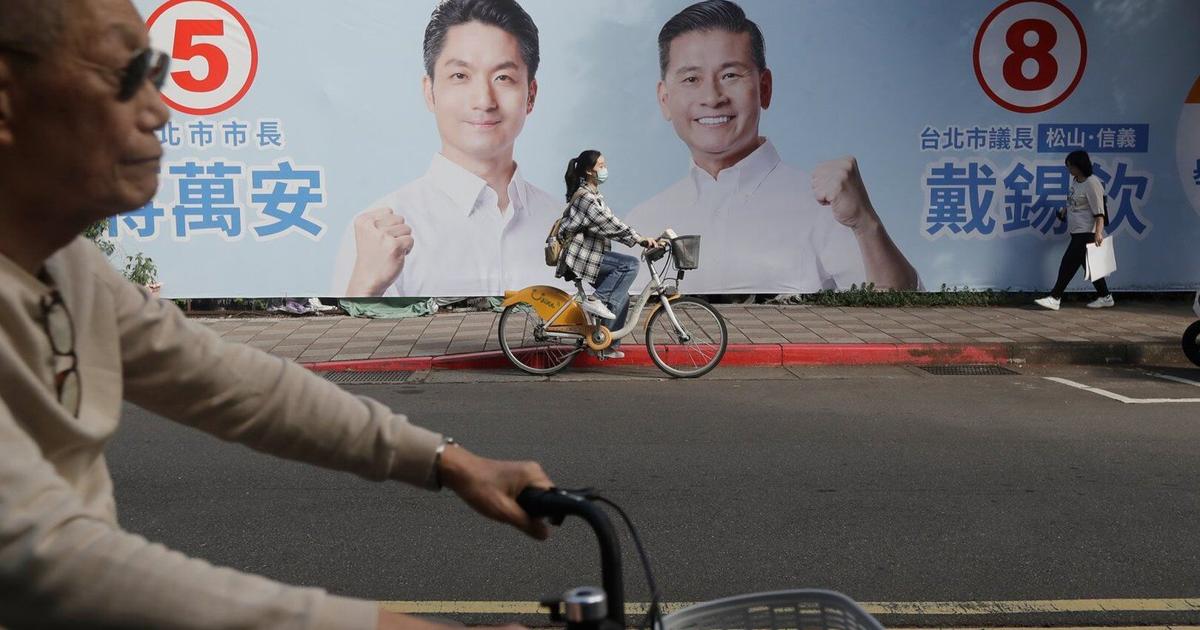
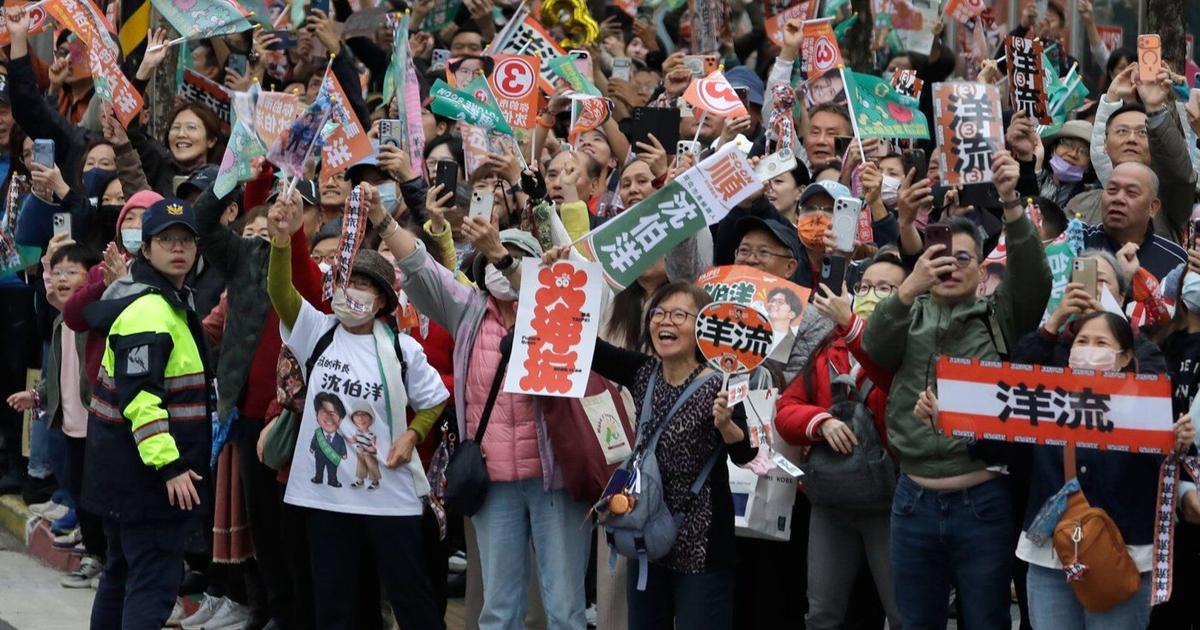
Taiwan is choosing mayors, council members and other local leaders across its 22 cities and counties in an election Saturday that’s been surprisingly competitive in some of its major cities.
Taiwan will choose mayors, council members and other local leaders across its 22 cities and counties Saturday, in elections focused largely on local issues but also drawing attention from China, which claims the self-governed island as its territory.
The trilateral meeting on Thursday produced no major breakthroughs, but the image of the three leaders seated at an enormous round table with Xi at the center and Trump to his left and Putin to his right will become part of diplomatic history.
Taiwan is likely to be overshadowed as presidents Xi Jinping and Donald Trump are expected to meet on the sidelines of the Asia Pacific Economic Forum this week, even as the threat from China evolves and grows stronger.
Taiwan is likely to be overshadowed as presidents Xi Jinping and Donald Trump are expected to meet on the sidelines of the Asia Pacific Economic Forum this week, even as the threat from China evolves and grows stronger.
While the leaders gathering for joint talks will mark a singular moment, analysts say expectations are low that the talks will lead to major breakthroughs and say they will be heavier in symbolism than substance.
"We are elated to welcome Ping Ping and Fu Shuang and could not be more excited about sharing that joy with our Members, guests, city, and community in the coming weeks.
While attending a three-day summit in Washington with US president Donald Trump, Chinese president Xi Jinping stated that the bears would arrive in Atlanta over the coming days.
While in Washington for a three-day summit with U.S. President Donald Trump, Chinese President Xi Jinping announced that the pandas would arrive in Atlanta in the coming days.
framing: assertive ·
carried by 1 article(s) ·
first seen 2026-11-29
A majority of Taiwan residents who voted in Saturday’s local elections chose to abandon a policy that phased out the island’s nuclear power plants, a change that the opposition Nationalist Party has said will boost the economy.
A majority of Taiwan residents who voted in Saturday’s local elections chose to abandon a policy that phased out the island’s nuclear power plants, a change that the opposition Nationalist Party has said will boost the economy.
asserted
Party → vote → economy
The referendum question initiated by the Nationalist Party, called the Kuomintang or KMT, asked voters if they wanted to scrap a policy called “nuclear-free homeland,” which required the island to phase out nuclear energy.
asserted
which → initiate → energy
Give feedback · no sign-in needed
No sign-in needed for now. Your note is sent without a name, so it cannot be answered.
 The Aporia