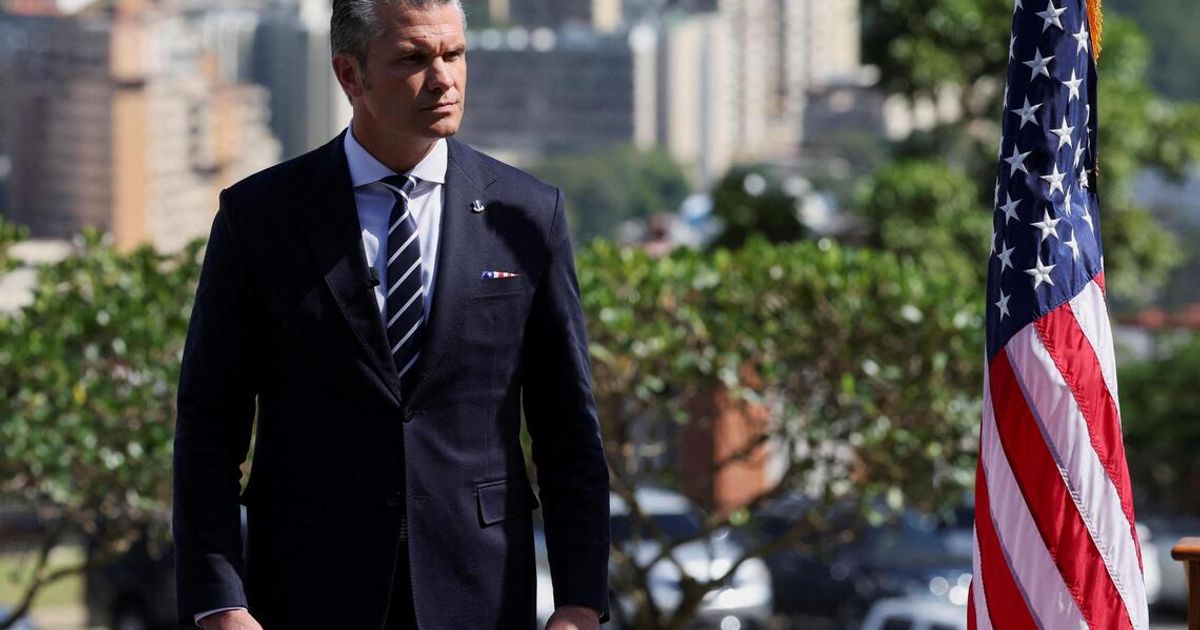
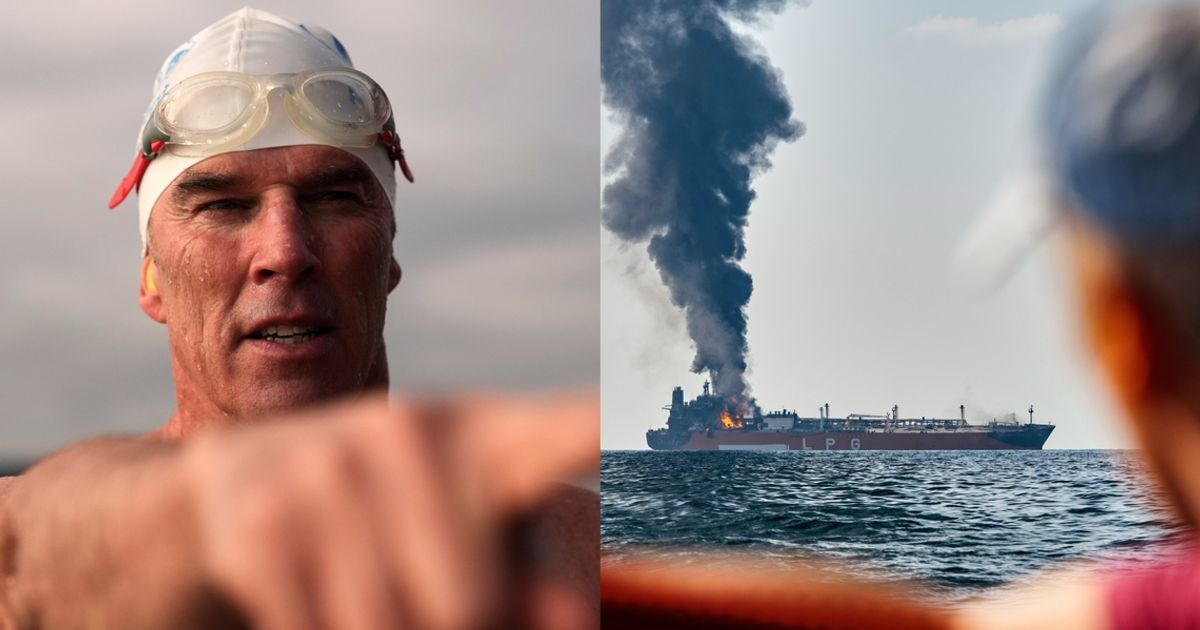
Photo via The Straits Times

After six months, the Iran war has reached its endgame – a costly stalemate

Read the original at The Straits Times ↗
Cite

The Straits Times. (2026, August 27). After six months, the Iran war has reached its endgame – a costly stalemate. The Straits Times. https://www.straitstimes.com/world/middle-east/after-six-months-the-iran-war-has-reached-its-endgame-a-costly-stalemate

Dated when The Aporia collected the article, usually within hours of publication. Check the original for its exact date and byline.

The Straits Times · collected 2026-08-27 · by The Straits Times

Quick Summary

After six months, the Iran war has reached its endgame - a costly stalemate, with Tehran still holding power despite economic pressure from the US. The US Treasury Secretary announced new sanctions on Aug 24, cutting off financial lifelines to Iran's economy and restricting oil exports, but experts say this may not be enough to break the stalemate. According to Aaron David Miller, a former US diplomat, the Trump administration is "desperate" in its efforts to find a way out of the conflict, while others believe that Iran could increase pressure on Gulf states to negotiate a diplomatic solution. The US claims it holds all the cards and is cutting off every financial lifeline to Iran's regime, but experts say the balance of power may be more complex than initially thought.
Written by AI on 2026-08-27, from this article's own text only (the story summary below draws on all the coverage).
See how they differ ↓

AI analysis

Story summary

As of August 31, 2026, a reinstated US naval blockade off Iran's southern coast is severely disrupting trade and causing significant economic hardship in Iran, with inflation nearing 70% and food prices surging by an unprecedented 128% compared to pre-war levels. The blockade has halted over 80% of Iran’s heavy imports and non-oil exports, leading to a nearly 40% drop in non-oil trade since the start of the conflict.

The economic war, which began with military conflicts involving the United States, Israel, and Iran, includes aggressive sanctions targeting Iranian officials and facilitators. US Treasury Secretary Scott Bessent has vowed to "sever every economic lifeline" sustaining the regime until Tehran stands alone, aiming to isolate Iran economically. However, this strategy is facing resistance; Iran's foreign minister, Abbas Araghchi, emphasized during high-level meetings in Tehran with Qatari officials that diplomatic negotiations can resume only if the US abandons its aggressive pressure tactics.

Meanwhile, internal military assessments warn President Trump’s administration that continuing the war against Iran is unsustainable and depletes America's defense capabilities elsewhere. A classified report from top military brass suggests that keeping all options open for further military action limits training and missions globally.

Written for “Trump's Iran War Stalemate” on 2026-11-21, grounded in this article and the 14 other(s) covering the same event.

How they differ

12 outlets covered “Trump's Iran War Stalemate”.

What each outlet says

One AI summary per outlet of its latest article on this story, written from that article alone and checked against it. Open the article for the outlet's own words.

The Straits TimesThis outlet27 Aug

After six months, the Iran war has reached its endgame - a costly stalemate, with Tehran still holding power despite economic pressure from the US. The US Treasury Secretary announced new sanctions on Aug 24, cutting off financial lifelines to Iran's economy and restricting oil exports, but experts say this may not be enough to break the stalemate. According to Aaron David Miller, a former US diplomat, the Trump…

After six months, the Iran war has reached its endgame – a costly stalemate (this article)
Zeteo28 Aug

The article reports on how US President Donald Trump's efforts to influence or dominate Iran have failed in various ways over the past six months, despite his administration's initial optimism for regime change or collapse. Key numbers mentioned include 40 days of intense February-April bombing, which failed to prevent Iranian attacks on regional shipping, and at least a third of ships transiting the Strait of…

How Trump Lost the Iran War in Every Way Possible in Less Than 6 Months →2 articles from Zeteo on this story
Mother Jones31 Aug

US Defense Secretary Pete Hegseth's top military brass have privately warned him that the ongoing war in Iran is unsustainable and draining America's defense capabilities. According to a classified report, keeping troops on high alert for potential further attacks has limited their ability to train and deploy elsewhere, with only a quarter of the Navy's destroyer fleet ready to deploy due to extended deployments…

New Report: Hegseth’s Own Military Brass Warn the Iran War Is Unsustainable →2 articles from Mother Jones on this story
The Independent28 Aug

Iranian Foreign Minister Abbas Araghchi stated after meeting with Qatari Prime Minister Sheikh Mohammed bin Abdulrahman Al Thani in Tehran that diplomatic negotiations with Washington are possible if the US abandons its aggressive pressure strategy. The US has launched an "economic D-day" against Iran, imposing secondary sanctions to cut off access to global markets, but China continues to import Iranian crude oil…

Iran-US war latest: Tehran tells Trump ‘pressure on us won’t work’ after meeting US ally Qatar →2 articles from The Independent on this story
Washington Examiner24 Aug

The article discusses three geopolitical confrontations - Ukraine, Venezuela, and Iran - to illustrate the importance of engaging an adversary both externally and internally to achieve a desired political outcome. The Trump administration's operation in Venezuela succeeded because it had cultivated key figures within the Venezuelan regime before launching military action, allowing for a smooth transition after…

Trump is setting himself up to fail in Iran for the same reason he won in Venezuela →
The Bulwark24 Aug

Former US General Michael Wood joins Bill Kristol in a discussion about the implications of Trump's Iran war policy on US military strength, but this is not a straightforward news article - it appears to be an opinion piece or analysis featuring two commentators rather than a factual report. There are no specific numbers mentioned regarding damage or costs. The conversation centers on the perceived weakening of…

Trump’s War Has Left America Weaker (w/ Michael Wood) | Bulwark on Sunday →
Show 6 more outlets
NPR25 Aug

The article reports on the latest development in the US-Iran conflict, where the Trump administration has launched a new sanctions campaign against Iran, aiming to sever its economic lifelines. According to US Treasury Secretary Scott Bessent, this campaign will put pressure on countries that continue to do business with Iran. The past efforts by US administrations, including the Trump's first, have been ineffective…

Can Trump's economic war against Iran do what airstrikes and negotiations couldn't? →
The Free Press26 Aug

The ongoing conflict with Iran is being referred to as the "Tantric War" due to its prolonged nature and series of promised but delayed strategic climaxes. Scott Bessent, a US official, has described the new campaign targeting Iran as "Operation Economic Outcast", which involves targeted and discreet economic sanctions rather than military action. The campaign aims to cut off Iran's ability to smuggle oil and evade…

The Tantric War →
CBS News28 Aug

The article reports on the six-month anniversary of the Iran war, with no end in sight. President Trump insists that Iran is "begging to make a deal", while Iranian officials push back against US economic pressure. The Strait of Hormuz remains a key concern, with Adm. Brad Cooper claiming it's clear of sea mines and shipping lanes are open, but only 24 oil tankers transited the strait recently, compared to the…

Iran war hits 6-month mark with no end in sight →
Los Angeles Times28 Aug

US President Trump has been making contradictory statements about the ongoing war with Iran over the past six months, initially boasting of a victory but later threatening to bomb Iran into the Stone Age. According to Pentagon data, at least 18 US forces have been killed and 758 wounded in the conflict. The article highlights Trump's shifting narrative on Iran's new leadership, which he has variously described as…

'We won.' 'Winding down.' 'Close to over.' Six months of Trump on the Iran war →
The Hindu28 Aug

Iranian Foreign Minister Abbas Araghchi warned the US on Friday that pressure is ineffective against Iran, calling for Washington to honor its commitments under a June memorandum of understanding. The conflict between the two countries began in late February and has continued with sporadic attacks despite an April ceasefire. Iranian ports remain blocked due to US sanctions, which Tehran insists will not be lifted…

Iran warns Washington that pressure ‘doesn’t work’ →
Euronews31 Aug

Iranian citizens describe how the reinstated US naval blockade has crippled their country's trade and daily life. The blockade has disrupted over 80% of Iran's heavy imports and non-oil exports, leading to 70% inflation and a surge in food prices by 128%. Gisoo, a 45-year-old shipping specialist, says that only one out of ten cargo ships arriving from China reaches Iran due to logistical issues. The blockade has…

Exclusive: US naval blockade is paralysing daily life, Iranians tell Euronews →

Compared with similar articles

This article reads leans left and hedges 19% of its claims. Each row says how that neighbour differs.
Mother Jones
Leans strongly right further right than this Hedges 1 of 7 claims Outlet record 60/100
The Tantric War Same event
The Free Press
Leans strongly right further right than this Hedges 3 of 13 claims Outlet record 96/100
CBS News
Hedges 4 of 60 claims Outlet record 66/100
Los Angeles Times
Leans right further right than this Hedges 10 of 120 claims Outlet record 95/100
Mother Jones
Leans strongly left further left than this Hedges 4 of 11 claims Outlet record 60/100
CBS News
Leans right further right than this Hedges 16 of 136 claims Outlet record 66/100
“The dates and details described in each article suggest they are reporting on different stages of a larger conflict, with Article A mentioning newly announced sanctions and Article B describing a stalemate six months into the war.”
ABC News (US)
Leans strongly left further left than this Hedges 0 of 5 claims Outlet record 65/100
“Article A mentions threats and a tanker struck by a projectile, while Article B discusses a war that has been ongoing for six months with no mention of a tanker or projectile”
The Straits Times
Leans left Hedges 1 of 18 claims Outlet record 64/100
“The dates and content suggest two distinct phases of a conflict, with Article A mentioning a US threat on August 24, while Article B describes the aftermath six months later”
The Bulwark
Leans strongly left further left than this Hedges 0 of 4 claims
“Article A does not mention an actual war with Iran, while Article B describes a war that started six months ago”
Al Jazeera
Hedges 6 of 35 claims Outlet record 60/100
“Article A discusses US threat of economic sanctions against Iran, while Article B describes a six-month long war between the US and Israel against Iran with a stalemate outcome”

Story

Trump's Iran War Stalemate
Politics · 15 article(s) covering the same event. See how they differ ↑
How this article was measured signals, leaning charts, publisher record, byline, topics and claims

Signals How these are calculated →

Claims extracted
37
sentences that state something as happening or true
Uncertain
19%
7 of 37 hedged ("reportedly", "may", "according to")
Leaning
Leans left
of the writing, not the subject · beta estimate
Publisher signals
64/100
The Straits Times's corrections and hedging, across everything collected from it. Not a measure of accuracy.
Outlets on this story
15
Politics
Same framing elsewhere
1
articles that frame the event the way this one does
Analyzed 2026-08-27 · how these are computed

How this is being covered How these are calculated →

Article leaning vs. publisher reliability
Source leaning vs. consistency

Publisher

The Straits Times · 5679 article(s) · 7 correction(s) detected
Running correction rate · 7 correction(s)

Who wrote this

The Straits Times
3972 article(s) here · 1 carrying a prediction
• The former president is clinically stable and conscious but there is no forecasted discharge at this time
2026-11-21 · assertive framing · Brazil ex-President Jair Bolsonaro taken to ICU
The environmental consequences of this war will last for generations,” Lewis Pugh wrote in a post on his website.
He predicts that pairing more use of these Wolbachia mosquitoes with existing steps to fight mosquito-borne disease could “knock dengue down to much lower levels” in many places.
Gharibabadi echoed remarks by Iranian Foreign Minister Abbas Araqchi in an interview with the state-owned Iran newspaper that Tehran still hoped diplomacy could end its war with the United States.
The Estonian police said on Nov 20 the closure would “make it harder for Russian intelligence services to recruit and influence people, and help prevent sanctions evasion”.
2026-11-21 · assertive framing · Queues in Russian town as Estonia border closure looms
COP31 climate summit risks failure as talks go deep into overtime ANTALYA, Turkey, Nov 21 - The COP31 climate summit will either produce a good deal or no deal at all, the European Union's top climate official said on Saturday as talks stretched deep into overtime.
He was considered one of the leaders of the Beltran Leyva cartel, which had reportedly allied with the Los Mayors faction of the powerful Sinaloa Cartel.
Trump told European leaders they were spending a lot on Ukraine, Zelenskiy says KYIV, Nov 21 - US President Donald Trump told European leaders this week they were spending a lot on the war in Ukraine and could use that money at home if a peace deal were reached with Russia, Ukrainian President Volodymyr Zelenskiy said on Saturday.
Denmark would present its proposals at a meeting of EU ambassadors in Brussels on Monday.
NATO will defend every inch of Polish territory, Rutte says WARSAW, Nov 21 - NATO will defend every inch of Polish territory, NATO Secretary General Mark Rutte said in Warsaw, a day after Poland said Russia violated its airspace with three objects that were probably two missiles and a drone.
Also by The Straits Times
Brazil ex-President Jair Bolsonaro taken to ICU
2026-11-21 · The Straits Times
Nothing else under this byline is closely related to this article, so these are simply their most recent.
All 3972 articles by The Straits Times →

Topics

BEIRUT Iran Iranian Tehran Washington

Subjects

Iran GPE · 13× Iranian NORP · 5× Washington ORG · 5× Tehran GPE · 4× China GPE · 2× Trump PERSON · 2× BEIRUT GPE · 1× Donald Trump PERSON · 1× India GPE · 1× Israeli NORP · 1×

Narrative

A threat by US President Donald Trump to impose crippling new sanctions on Iran faces a fundamental problem: Tehran is betting he will not take the final step to break the stalemate: aggressively enforcing secondary sanctions on the countries keeping its economy afloat, foremost among them China and India.
framing: assertive · carried by 1 article(s) · first seen 2026-08-27
A threat by US President Donald Trump to impose crippling new sanctions on Iran faces a fundamental problem: Tehran is betting he will not take the final step to break the stalemate: aggressively enforcing secondary sanctions on the countries keeping its economy afloat, foremost among them China and India.
2026-08-27 · The Straits Times
After six months, the Iran war has reached its endgame – a costly stalemate · assertive framing

Claims (37 extracted, 7 hedged)

After six months, the Iran war has reached its endgame – a costly stalemate AI generated BEIRUT – The Iran war has reached its endgame: a costly stalemate. asserted
war → reach → endgame
Six months after US and Israeli forces attacked Iran, killing its supreme leader and maiming his son and successor, the Iranian government is under economic siege, but it still holds power and believes it has time on its side. asserted
it → attack → side
A threat by US President Donald Trump to impose crippling new sanctions on Iran faces a fundamental problem: Tehran is betting he will not take the final step to break the stalemate: aggressively enforcing secondary sanctions on the countries keeping its economy afloat, foremost among them China and India. asserted
he → impose → them
Washington’s latest measures, announced on Aug 24, mark a new phase in the conflict that began on Feb 28, shifting the battlefield from missiles and air strikes to Iran’s oil revenues, banks and trading partners. asserted
that → announce → revenues
Treasury Secretary Scott Bessent has said the United States will cut off the financial lifelines sustaining Iran’s economy, while a US-led naval blockade restricts Tehran’s oil exports and access to hard currency. asserted
blockade → say → currency
“The (Trump) administration is groping in a sort of desperate fashion to try to find a pathway out of this,” said Aaron David Miller, a former US diplomat and senior fellow at Carnegie Endowment. asserted
Miller → grope → Endowment
Bessent invoked the 1944 D-Day landings in France during World War II when he unveiled the sanctions, but Miller said: “To me, this isn’t D-Day. asserted
this → invoke → me
It’s Desperation Day. asserted
It → ’ → ?
I don’t think the administration is any closer to finding a way out of this.” asserted
administration → think → this
Michael Knights, head of research at Horizon Engage, a New York-based strategic advisory, said the blockade may prove more consequential than the sanctions themselves because Iran’s immediate challenge is no longer how to survive economic pressure but how to break out of it. uncertain
challenge → base → it
Tehran has spent decades adapting to sanctions and endured previous “maximum pressure” campaigns without altering its behaviour, he said. asserted
he → spend → behaviour
Mounting economic pressure, he said, may increase Iran’s incentive to raise the cost of the confrontation for its adversaries by pressuring Gulf states, particularly Saudi Arabia, to push Washington towards a diplomatic off-ramp. uncertain
he → mount → ramp
Knights said Iran could increasingly adopt the model used by its Houthi allies in the Red Sea: periodic attacks, intermittent negotiations and a prolonged campaign of disruption short of all-out war, potentially targeting shipping, ports, energy infrastructure or other critical assets to make the conflict increasingly costly for Gulf states to tolerate. uncertain
states → say → shipping
Washington rejects that assessment and says the balance of power is in its favour. asserted
balance → reject → favour
“The Iranian economy is in free fall, and the regime’s military has been decimated,” US State Department spokesman Tommy Pigott said in response to questions for this article. asserted
Pigott → decimate → article
“President Trump holds all the cards, and we are cutting off every financial lifeline the regime has remaining.” asserted
regime → hold → lifeline
Replay of a tired playbook Alan Eyre, a former US diplomat who worked on Iran, questioned whether Washington has the international support and bureaucratic machinery to make the sanctions stick. asserted
sanctions → work → support
He said that unlike the multilateral campaign preceding the 2015 nuclear deal between Tehran and major powers, which curbed Iran’s nuclear programme in exchange for lifting sanctions, the latest measures rely on public threats rather than sustained diplomacy with allies and trading partners. asserted
measures → say → allies
Iranian officials dismiss the US strategy as a replay of a playbook that has already failed. asserted
that → dismiss → playbook
One senior Iranian official told Reuters that countries such as China would not stop cooperating with Iran simply to serve US interests. asserted
countries → tell → interests
Some political analysts say the strategy faces a deeper flaw: From North Korea to Russia and Iran itself, sanctions have rarely forced governments to abandon goals they view as existential for their survival. asserted
they → say → survival
The senior Iranian official said Tehran believes Washington’s broader objective is to fuel domestic discontent in the hope that economic hardship could eventually translate into political unrest, but that the “maximum pressure” campaign failed during Trump’s first term and would fail again. “If the pressure increases, Iran’s approach will change too,” he said, adding that Gulf Arab governments understood that squeezing Tehran further could put them at greater risk as well. uncertain
squeezing → say → risk
It may be the risk that worsening hardship again spills into mass unrest, according to insiders and an Iranian official. uncertain
hardship → worsen → insiders
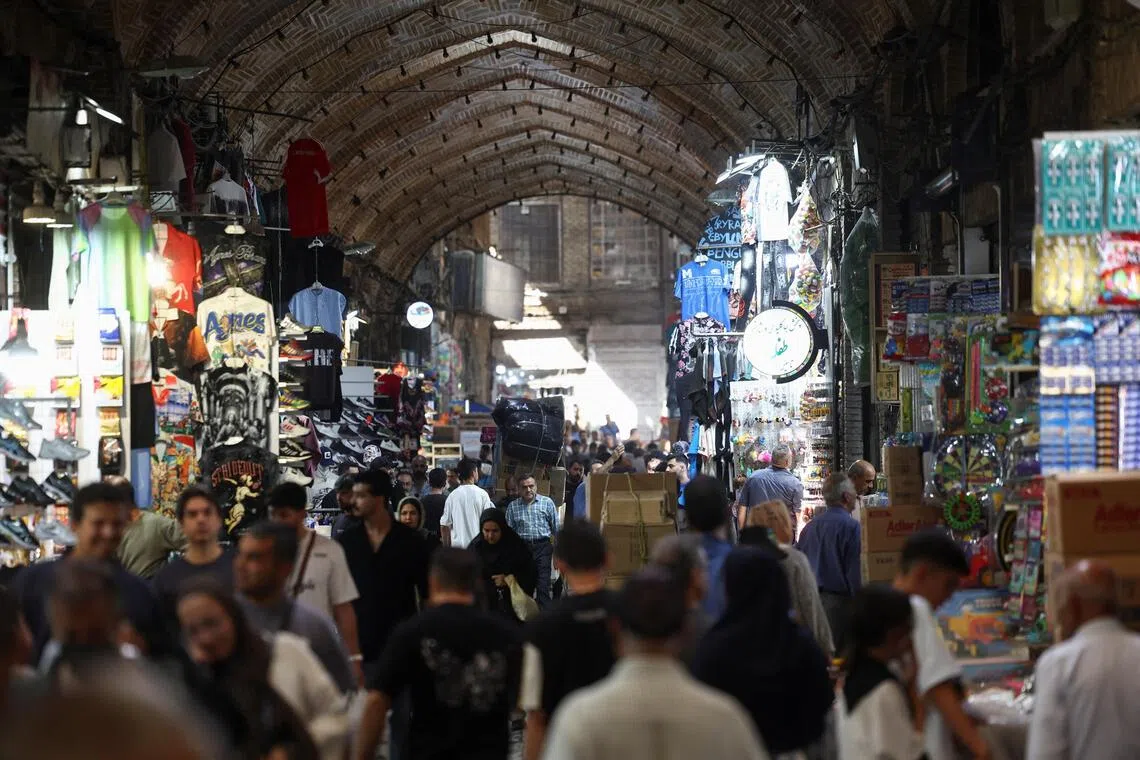
Annual inflation reached 66 per cent in July, while consumer prices were 87.9 per cent higher than a year earlier, according to Iran’s Statistical Centre. uncertain
prices → reach → Centre
Food prices rose 128 per cent year on year. asserted
prices → rise → year
President Masoud Pezeshkian acknowledged the severity of the squeeze last week, saying: “Our problems have multiplied several times over, while our income has also fallen.” asserted
income → acknowledge → squeeze
Economic grievances have repeatedly erupted into nationwide protests in recent years. asserted
grievances → erupt → years
In January, demonstrations over economic hardship were crushed by the Revolutionary Guards and the Basij militia, with thousands killed. asserted
thousands → crush → Guards
The appointment this month of Hossein Taeb, a key architect of previous crackdowns, to lead the Basij was one of the clearest signs yet of official concern about renewed unrest, a former reformist official said. asserted
official → lead → unrest
The Basij, a paramilitary force affiliated with the Revolutionary Guards, has repeatedly been deployed by Iran’s clerical rulers to suppress protests. asserted
Basij → affiliate → protests
That points to a paradox at the heart of Washington’s strategy: Sanctions may deepen Iran’s economic damage without forcing its rulers to change course. uncertain
Sanctions → point → course
The leadership has historically answered domestic unrest with repression, and external pressure with threats of retaliation abroad. asserted
leadership → answer → retaliation
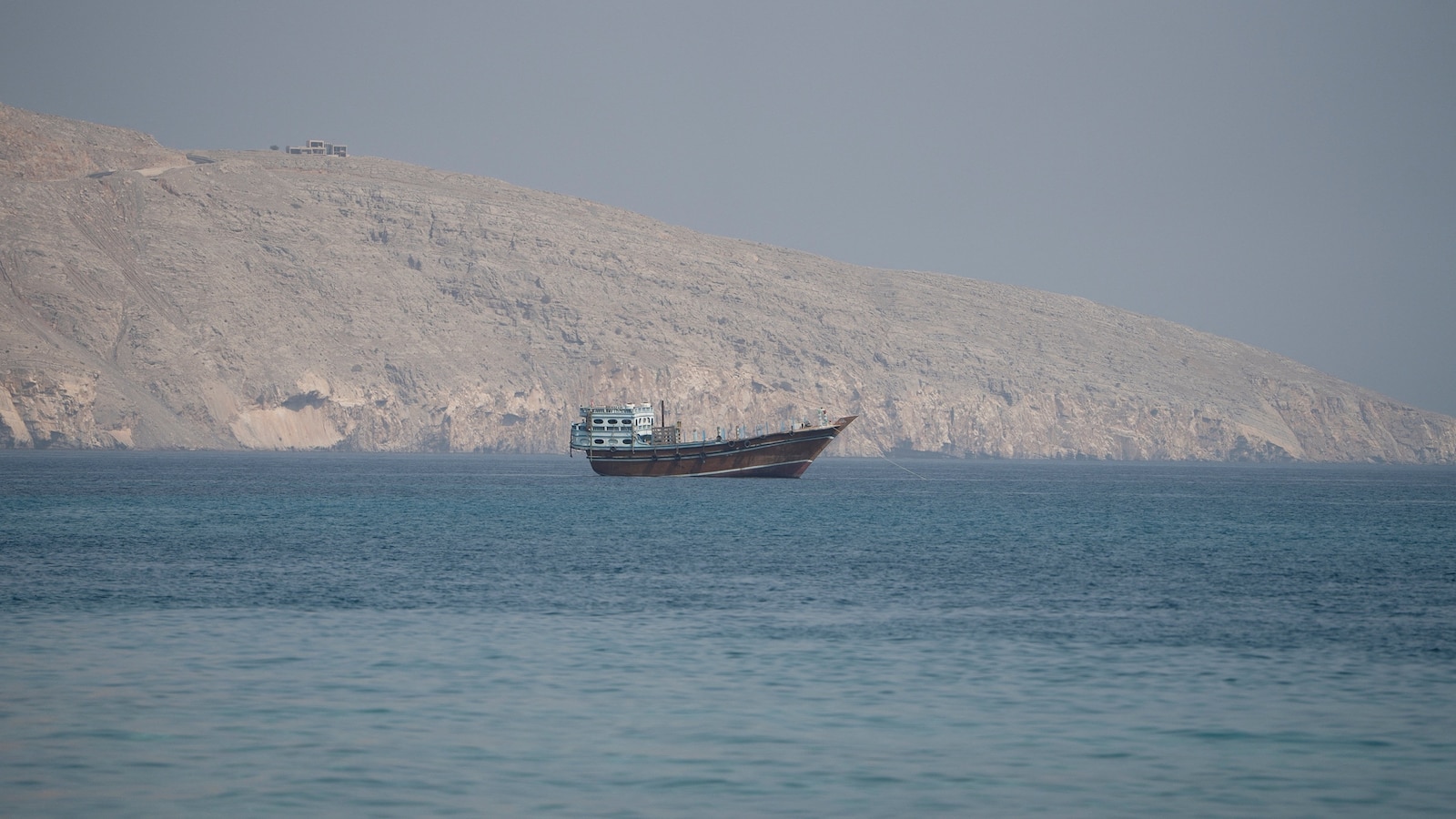
They prefer economic and diplomatic pressure to another round of war, but fear an outcome that enables Iran to declare victory while retaining the ability to disrupt traffic through the Strait of Hormuz, a vital global oil supply route that Tehran has effectively blocked, pushing up global oil prices. asserted
Tehran → prefer → prices
Abdulaziz Sager, chairman of the Saudi-based Gulf Research Center, said Gulf governments are unconvinced that sanctions alone can rapidly alter Iran’s behaviour, given the leadership’s resilience and ability to maintain internal control. asserted
sanctions → base → control
Significant political change, or the collapse of Iran’s theocratic leadership, he said, is unlikely to come quickly. asserted
he → say → leadership
The result is a dangerous impasse if mediated talks fail to produce a breakthrough. asserted
talks → mediate → breakthrough
Washington wants Iran to abandon its leverage over Hormuz without conceding Tehran a role in managing the waterway, Iran wants the US naval blockade lifted without appearing to surrender, and Gulf states want the conflict contained without letting Iran emerge as the victor. asserted
Iran → want → victor
Give feedback · no sign-in needed

No sign-in needed for now. Your note is sent without a name, so it cannot be answered.

History Support