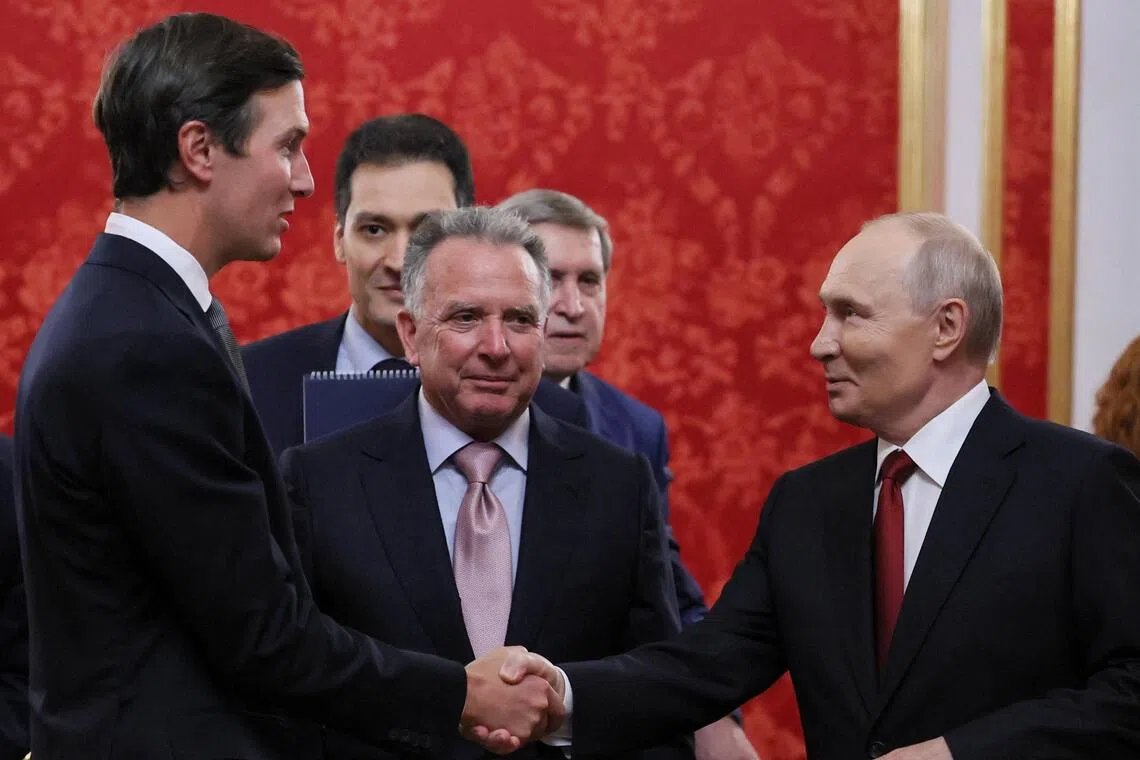
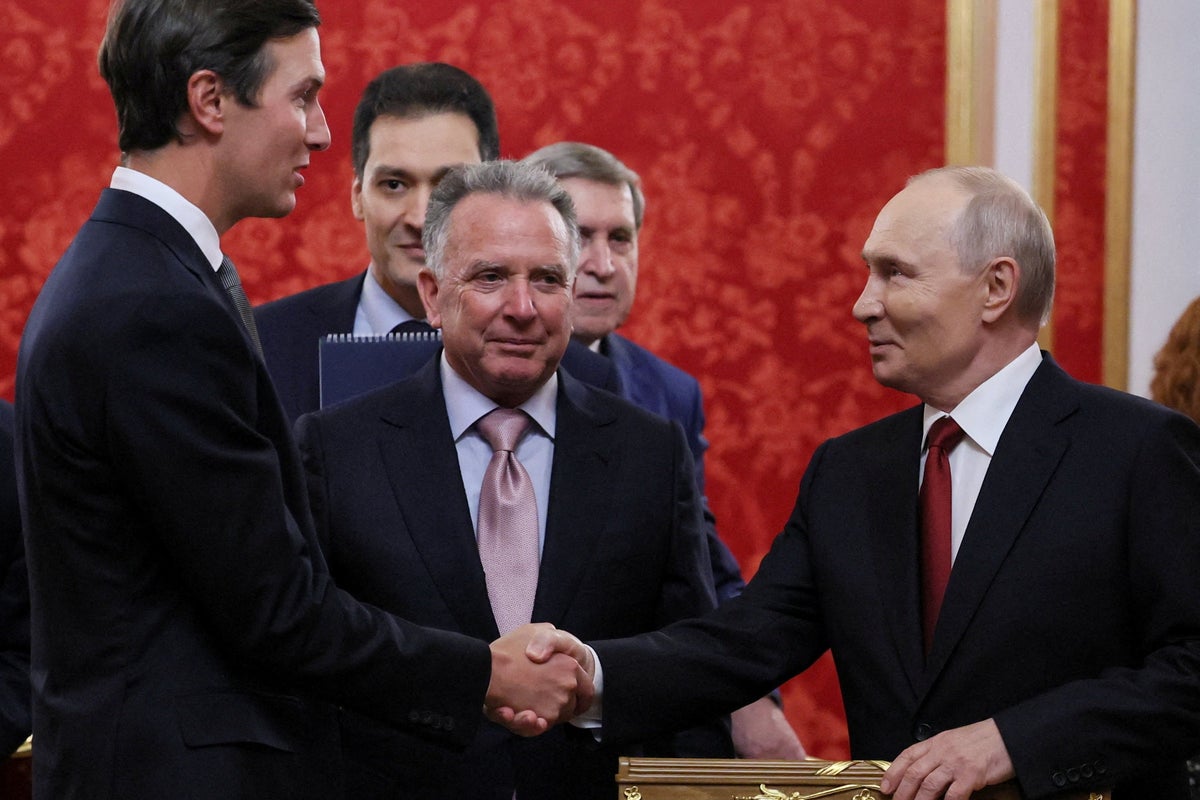
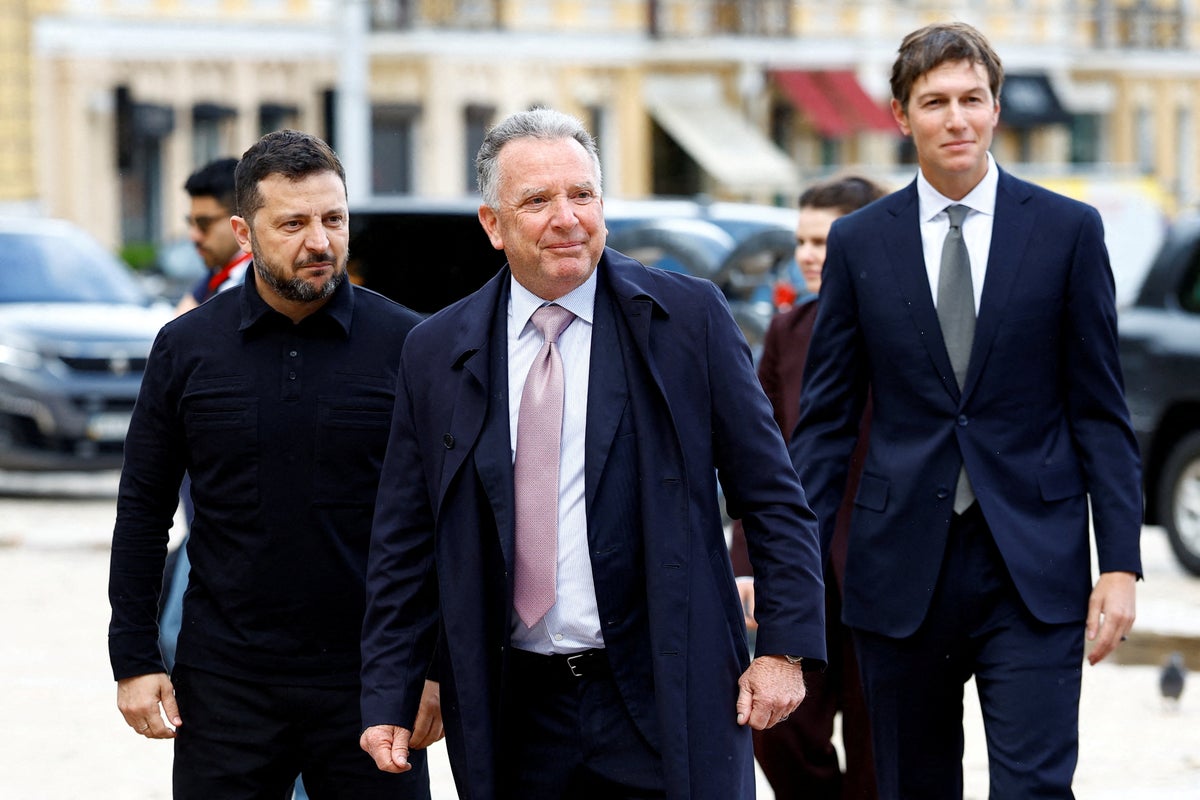
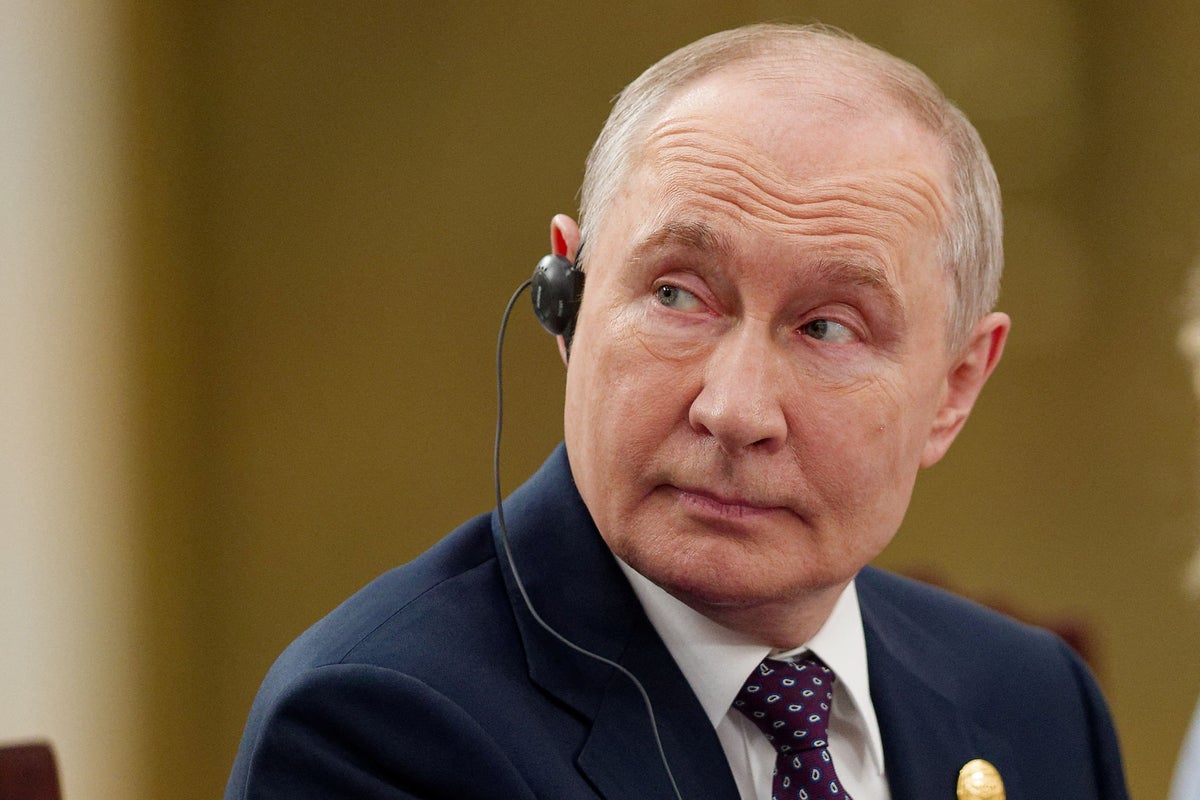
Photo via The Independent

Germany once cosied up to Putin. Now they are Russia’s public enemy number one in Europe

Read the original at The Independent ↗
Cite

Kidwai, S. (2026, September 3). Germany once cosied up to Putin. Now they are Russia’s public enemy number one in Europe. The Independent. https://www.independent.co.uk/news/world/europe/germany-russia-relations-war-ukraine-b3044102.html

Dated when The Aporia collected the article, usually within hours of publication. Check the original for its exact date and byline.

The Independent · collected 2026-09-03 · by Suha Kidwai

Quick Summary

In 2004, former German Chancellor Gerhard Schröder expressed support for Russian President Vladimir Putin's democratic ambitions, but analysts now say this cooperation has turned into an "all-time low". The current relationship between Germany and Russia is at a critical point after Russia threatened Germany with military strikes over allegations of a failed drone attack. According to the article, Germany's economy greatly benefited from imports of cheap Russian gas through pipelines like Nord Stream, but these ties are now under scrutiny as Berlin takes measures against Moscow. Analysts warn that this deterioration in relations between Moscow and Berlin is crucial for the future of Ukraine and Europe.
Written by AI on 2026-09-03, from this article's own text only (the story summary below draws on all the coverage).
See how they differ ↓

AI analysis

Story summary

In February 2022, Russia invaded Ukraine, leading Germany to abandon its decades-long policy of energy partnership with Russia centered around the Nord Stream gas pipeline. The German chancellor at the time, Olaf Scholz, announced a significant shift in foreign and security policy, termed the Zeitenwende. This marked a dramatic end to the spirit of cooperation that had existed between Germany and Russia since World War II.

In August 2023, tensions escalated when a drone loaded with explosives was found near a Ukrainian cargo plane at Leipzig/Halle Airport in Germany. The German government accused Russia of being behind this attack, prompting Berlin to summon Moscow's ambassador for condemnation. In response, the Russian Security Council deputy chairman Dmitry Medvedev threatened direct military strikes against Germany.

Several European countries have reported suspicious fires and attacks on defense facilities, with Italy, Estonia, and Poland among those targeted. The British government also summoned a senior Russian diplomat to protest the Leipzig incident, aligning with Germany’s stance that such actions are part of a broader campaign by Russia aimed at undermining support for Ukraine.

NATO has warned it will not tolerate hybrid war tactics against its members. In September 2023, Matthew Whitaker, the US ambassador to NATO, emphasized that the Leipzig attack was particularly concerning due to the risk it posed to critical infrastructure and energy assets. Germany is now planning a national "cyberdome" to detect hacking attempts and has increased police capabilities for drone defense.

Meanwhile, Russia continues to deny any involvement in these incidents and has retaliated by closing some diplomatic offices in Germany, with Foreign Minister Sergey Lavrov accusing Germany of moving towards direct military confrontation.

Written for “Russia Hybrid War Europe Responses” on 2026-11-20, grounded in this article and the 15 other(s) covering the same event.

How they differ

10 outlets covered “Russia Hybrid War Europe Responses”.

What each outlet says

One AI summary per outlet of its latest article on this story, written from that article alone and checked against it. Open the article for the outlet's own words.

The IndependentThis outlet3 Sep

In 2004, former German Chancellor Gerhard Schröder expressed support for Russian President Vladimir Putin's democratic ambitions, but analysts now say this cooperation has turned into an "all-time low". The current relationship between Germany and Russia is at a critical point after Russia threatened Germany with military strikes over allegations of a failed drone attack. According to the article, Germany's economy…

Germany once cosied up to Putin. Now they are Russia’s public enemy number one in Europe (this article)
The Straits Times6 Sep

Germany's Interior Minister Alexander Dobrindt announced plans to strengthen defenses against drone attacks, cyber intrusions, and other forms of Russian sabotage after a failed airport attack last month. According to Dobrindt, Russia's hybrid attacks are now a "part of daily reality" that will increase but can be defended against. The plan includes expanding police mobile drone defense capabilities, allowing…

Germany plans anti-sabotage shield after airport drone attack, Bild reports →3 articles from The Straits Times on this story
The Hindu6 Sep

Russian Foreign Minister Sergei Lavrov accused Germany's government of wanting war again, drawing parallels to the start of World War II, after Berlin blamed Moscow for a drone attack on Leipzig airport. In an interview published on September 6, 2026, Lavrov dismissed the accusation and claimed that Germany was acting like Nazi-era Germany. The incident is part of ongoing tensions between Russia and its allies in…

Germany ‘wants war again’, Russia FM says, dismissing drone accusations →2 articles from The Hindu on this story
BBC7 Sep

The British Chambers of Commerce is calling for the pension triple lock to be scrapped, citing Britain's "ailing economy" as a reason. The business group represents over 65,000 firms and suggests using savings from scrapping the triple lock to tackle youth unemployment. Intelligence officials are warning that Europe is "losing the battle" against Russia's "hybrid" war, with last month's failed drone attack on…

The Papers: 'Losing battle to halt Russia's 'hybrid' war' and 'Oh chute!' →2 articles from BBC on this story
Semafor7 Sep

Russian Foreign Minister accused Germany of declaring war after Berlin attributed an attempted airport drone attack to Russia. NATO officials believe this incident is part of a larger campaign of sabotage and cyberattacks by the Kremlin, with some defense officials stating that the West has been unable to deter these low-level attacks. The rise of populist right-wing movements in Europe is complicating the response…

Russian hybrid tactics of sabotage and cyberattacks stoke fear →2 articles from Semafor on this story
Deutsche Welle13 Sep

Germany's Goethe-Institut is closing its Russian branches by September 13, 2026, in response to escalating political tensions following sanctions imposed after an alleged drone attack on Leipzig airport. The closure impacts cultural exchange and education services, with concerns raised about the inability of Russians to take German language exams or access library resources. DW received anonymous responses from…

Russians on the Goethe-Institut: 'Hostage to politics' →2 articles from Deutsche Welle on this story
Show 4 more outlets
Evening Standard4 Sep

US President Donald Trump claims that Russian President Vladimir Putin is not planning to attack NATO territory, despite a recent drone strike bid at Leipzig airport in Germany. The incident was condemned by the British Government and other European countries as a "reckless attack" likely sponsored by Russia. The Kremlin has denied involvement, but Germany and Brussels have accused Moscow of running a campaign of…

Putin not looking to attack Nato territory, says Trump despite drone strike bid →
South China Morning Post6 Sep

Germany's Interior Minister Alexander Dobrindt announced plans for a broad package of measures to strengthen defenses against Russian sabotage, including cyber attacks and drone attacks, after a failed airport attack last month. The plan includes establishing a "cyberdome" with digital sensors to detect hacking attempts and expanding police mobile drone defense capabilities. According to the ministry spokesperson…

Germany plans anti-sabotage shield after airport drone attack →
ABC News (AU)6 Sep

Russian Foreign Minister Sergei Lavrov has accused Germany of declaring war on Russia after the German government attributed last month's drone incident at Leipzig Airport to Moscow. This comes as part of a broader response from Russia, with Lavrov labeling accusations that Moscow was involved in the attack "the start of a real war". The German government has already implemented security measures in response…

Russia calls Leipzig drone attack accusations 'start of real war' →
Times of India6 Sep

Security experts warn that Russia's campaign of covert pressure in Europe may escalate into attempts to kill senior defense officials and other prominent targets. A suspected Russian drone attack at Leipzig/Halle Airport in Germany on August 4 has raised concerns that Moscow may be planning more aggressive actions. Experts predict an increase in "state terrorism" on German soil, with potential targets including…

From drones to assassins: Russia's hybrid war in Europe could turn deadly, experts warn →

Where they agree and split

Agreed

AI · cited, from two or more outlets

  • Germany's economy benefited from cheap Russian gas imports leading to the construction of the Nord Stream pipeline under the Baltic Sea.13

Disputed

Picked by our model, which is sometimes wrong

  • Russia's Lavrov accused Germany of moving towards a direct confrontation with Russia after the closure of some diplomatic offices following the drone incident at Leipzig airport, while Germany closed Russian cultural centers in response to the attack.45

Framing

How the first headlines put it

  • The Independent highlights a shift from Germany's past friendly stance towards Russia to its current adversarial relationship, while The Straits Times focuses on the diplomatic tensions and accusations between Russia and Germany.14
  • South China Morning Post emphasizes Germany’s plans for anti-sabotage measures following a drone attack, whereas Deutsche Welle highlights the closure of cultural institutes as a result of deteriorating relations.35
Stated as fact2
The headlines (2)

Germany once cosied up to Putin. Now they are Russia’s public enemy number one in Europe The Independent · stated as fact

Britain summons Russian charge d'affaires over Leipzig airport attack The Hindu · stated as fact

The full story: what happened, how it changed, and all 16 articles →

Compared with similar articles

This article reads leans left and hedges 6% of its claims. Each row says how that neighbour differs.
ABC News (AU)
Leans right further right than this Hedges 1 of 24 claims Outlet record 67/100
The Straits Times
Leans right further right than this Hedges 2 of 18 claims Outlet record 64/100
“The events described in both articles are related to Russia's actions in Ukraine, but they cover different meetings and statements by Putin at different times”
The Independent
Leans left Hedges 2 of 40 claims Outlet record 59/100
“Article A discusses a historical context between Germany and Putin, while Article B describes the actual invasion of Ukraine in February 2022”
Semafor
Leans right further right than this Hedges 0 of 5 claims Outlet record 64/100
“Article A mentions a general shift in Germany's relationship with Putin, while Article B specifically describes an alleged drone attack on a Leipzig airport”
The Independent
Hedges 3 of 46 claims Outlet record 59/100
“The articles cover related but separate events: Article A discusses the historical relationship between Germany and Putin from 2004, while Article B reports on a recent confrontation in Kyiv about Trump's envoys meeting with Putin.”
TIME
Leans strongly left further left than this Hedges 6 of 45 claims Outlet record 60/100
“Article A mentions Gerhard Schröder's comments on Putin in 2004, while Article B reports on an election result in Saxony-Anhalt involving a different party and date, making them unrelated events”
Daily Mail
Leans strongly right further right than this Hedges 13 of 51 claims Outlet record 69/100
“Article B discusses historical comments by German Chancellor Gerhard Schröder on Putin in 2004, while Article A reports on current insider claims about Putin's plans to escalate the war in Ukraine”
The Straits Times
Leans right further right than this Hedges 1 of 27 claims Outlet record 64/100
“Article A refers to comments from Gerhard Schröder in 2004, while Article B reports on a meeting between Putin and US envoys in 2026 about the Ukraine situation”
The Independent
Hedges 1 of 54 claims Outlet record 59/100
“Article A discusses an opinion of Gerhard Schröder on Vladimir Putin in 2004, while Article B reports on a meeting between US envoys and Putin in 2026”
The Hindu
Hedges 0 of 11 claims Outlet record 60/100
“Article A discusses historical relations between Germany and Russia in 2004, while Article B reports on a recent drone attack on Leipzig airport in 2026”

Story

Russia Hybrid War Europe Responses
Politics · 16 article(s) covering the same event. Compare every outlet's account →
How this article was measured signals, leaning charts, publisher record, byline, topics and claims

Signals How these are calculated →

Claims extracted
35
sentences that state something as happening or true
Uncertain
6%
2 of 35 hedged ("reportedly", "may", "according to")
Leaning
Leans left
of the writing, not the subject · beta estimate
Publisher signals
59/100
The Independent's corrections and hedging, across everything collected from it. Not a measure of accuracy.
Outlets on this story
16
Politics
Same framing elsewhere
1
articles that frame the event the way this one does
Analyzed 2026-09-03 · how these are computed

How this is being covered How these are calculated →

Article leaning vs. publisher reliability
Source leaning vs. consistency

Publisher

The Independent · 4711 article(s) · 10 correction(s) detected
Running correction rate · 10 correction(s)

Who wrote this

Suha Kidwai
44 article(s) here · 1 carrying a prediction
Mr Colby reportedly walked out of the room immediately after delivering his remarks, departing before Ukrainian defence minister Yevhenii Khmara could present a classified battlefield briefing.
Saboteurs crossing the frontier were expected to either be killed during the raid or left with forged documents linking them to Kyiv, sources said.
The response came after US Undersecretary of Defense for Policy Elbridge Colby questioned the effectiveness of Ukrainian strike deep inside Russia, warning that such attacks could strengthen Moscow’s resolve.
The far-right leader promised that hundreds of thousands of people would be able to leave work two to three years earlier than under Mr Macron’s legislation, which gradually lifts the minimum retirement age from 62 to 64.
The scale of any structural damage could not be independently verified, and officials in Kyiv have not yet publicly commented on the reported attack.
Despite the bolstered naval presence, US president Donald Trump has signalled Washington will hold off on ordering fresh strikes – provided there are no new attacks from Tehran or Yemen’s Houthi rebels.
The stockpile essentials you haven’t thought of yet – but will really need in an emergency As bottled water and beans fly off supermarket shelves, are we sacrificing taste for tins?
The casualty spike highlights Moscow's willingness to trade mass infantry losses for incremental territorial gains in the east.
Earlier this month, Trump revealed he had made a deal with Putin to supply Russian diesel to the U.S. in a bid to lower fuel costs. “I have just concluded a highly successful discussion with President Vladimir Putin, of Russia, wherein it was agreed that Russia will immediately supply over 300,000 Tons of Diesel Fuel to the American and Global Marketplace, another 500,000 Tons during the month of November, and 1,000,000 Tons immediately thereafter,” Trump announced Friday afternoon on Truth Social.
Also by Suha Kidwai
Nothing else under this byline is closely related to this article, so these are simply their most recent.
All 44 articles by Suha Kidwai →

Topics

Berlin Germany Russia Russian Ukraine

Subjects

Germany GPE · 11× Russia GPE · 9× Russian NORP · 7× German NORP · 5× Berlin GPE · 4× Moscow GPE · 4× Putin PERSON · 4× Ukraine GPE · 4× Crimea GPE · 2× Kremlin ORG · 2×

Narrative

The energy partnership unravelled in February 2022 after Russia invaded Ukraine, as the construction for Nord Stream 2 collapsed, dismantling decades of trade policy and forcing Germany to seek alternative energy supplies. In response to the invasion, the then chancellor Olaf Scholz announced a fundamental turning point in German foreign and security policy — a pivot termed the Zeitenwende.
framing: assertive · carried by 1 article(s) · first seen 2026-09-03
This strategy, rooted in the post-Cold War doctrine of Ostpolitik, was built on the belief that mutual commercial dependence would guarantee stability and deter Putin from threatening Europe.

Claims (35 extracted, 2 hedged)

Eighteen years before Russian tanks rolled into Ukraine, the then German chancellor Gerhard Schröder was asked for his opinion on President Vladimir Putin. asserted
chancellor → roll → Putin
“I am thoroughly convinced that the Russian president wants to transform Russia into a democracy and that he is doing so out of a deeply held conviction,” he said in 2004. asserted
he → convince → 2004
That same year, Putin was re asserted
Putin → re → ?
His comments underlined a spirit of cooperation and friendship that had grown between the two countries since the end of World War Two. asserted
that → underline → War
Germany’s economy hugely benefited from imports of cheap Russian gas, culminating in the construction of the Nord Stream gas pipeline under the Baltic Sea. asserted
economy → benefit → Sea
That relationship has now hit an all-time low. asserted
relationship → hit → low
On Wednesday, the deputy chairman of Russia’s Security Council, Dmitry Medvedev, threatened Germany with direct military strikes in response to Berlin’s claim that Russia was behind a failed explosive drone attack at Leipzig Airport last month. uncertain
Russia → threaten → Airport
The drone, which was laden with explosives, failed to detonate near a Ukrainian cargo plane. asserted
which → fail → plane
The Kremlin said the accusation was "baseless," but Germany has responded by summoning Moscow's ambassador, ordering the closure of the Russian consulate in Bonn, and shutting down the Russian House cultural institute in Berlin. asserted
Germany → say → Berlin
Germany’s leadership has also signalled plans to crack down on Russia’s maritime shadow fleet and announced support for an expanded European Union sanctions package. asserted
leadership → signal → package
Analysts say the deteriorating relationship between Moscow and Berlin is crucial of the future of Ukraine and Europe. asserted
relationship → say → Ukraine
Below The Independent looks at how one of Putin’s key economic partners became an enemy. asserted
one → look → partners
Germany's relationship with Russia before the war Successive German governments under Schröder and Angela Merkel have sought deep economic integration with Moscow. asserted
governments → seek → Moscow
This strategy, rooted in the post-Cold War doctrine of Ostpolitik, was built on the belief that mutual commercial dependence would guarantee stability and deter Putin from threatening Europe. asserted
dependence → root → Europe
Central to the relationship was a reliance on Russian gas, which saw an enormous amount of fuel sold to Germany at cheap prices. asserted
amount → see → prices
The economic partnership between both states led to the construction of the Nord Stream gas pipelines in 2011, which delivered Russian fuel across the Baltic Sea to Germany. asserted
which → lead → Germany
Ian Bond, the deputy director of The Centre for European Reform (CER), said the signing of the 2015 Minsk II Agreement was another indicator of the strength of Russian-German relations at the time. asserted
signing → say → time
Brokered under Merkel, the deal was widely criticised as effectively signalling Western acceptance of Russia's illegal annexation of Crimea. asserted
deal → broker → Crimea
Berlin refused to sever its economic ties to the Kremlin despite the annexation drawing international condemnation, repeatedly dismissing concerns from Washington and Eastern European allies that their relationship posed a risk to security. By the eve of the 2022 full-scale invasion of Ukraine, Germany was relying on Russia for over 50 percent of its natural gas imports. asserted
Germany → refuse → imports
How did Germany respond to the war? asserted
Germany → respond → war
The energy partnership unravelled in February 2022 after Russia invaded Ukraine, as the construction for Nord Stream 2 collapsed, dismantling decades of trade policy and forcing Germany to seek alternative energy supplies. In response to the invasion, the then chancellor Olaf Scholz announced a fundamental turning point in German foreign and security policy — a pivot termed the Zeitenwende. asserted
chancellor → unravel → policy
The U-turn saw decades of post-WWII military restraint overhauled by an €100 billion fund to modernise German armed forces, send military aid to Kyiv, and systematically end the country’s economic reliance on Moscow. asserted
decades → see → Moscow
For Mr Bond, the war bought a change in the German collective consciousness: “There was a realisation in Germany that Putin’s ambitions were not limited to Crimea and bits of Donbas. asserted
ambitions → buy → Donbas
“Russia is an imperialist power... and I think the Germans took some time to wake up and realise that Europe has a serious Russia problem. asserted
Europe → think → problem
Why has Germany now become Putin's public enemy number one? asserted
Germany → become → ?
The motives behind Russia’s recent hybrid attacks are partly strategic, explained Mr Bond, with Moscow seeking to exploit divisions in Germany over continuing support for Kyiv. asserted
Moscow → explain → Kyiv
State elections are coming up in Germany where the far-right, pro-Russia party, Alternative for Germany (AfD) are topping the polls. asserted
party → come → polls
“With these attacks, it seems like Putin is trying to scare Germans into voting for a party who can show that they won’t have a problem with Russia,” he said. asserted
he → seem → Russia
Mr Bond said that voters opting for a party sympathetic to the Kremlin was a “puzzle” unique to Germany, that was not replicated in eastern European states. asserted
that → say → states
But Putin’s targeting of Germany is not exceptional, cautioned Mr Bond. asserted
Bond → caution → Germany
Several states and institutions have been subject to the Kremlin’s aggression — including Poland and the Baltic states. asserted
states → include → Poland
“Germany is bearing the brunt of recent attacks, but there is quite a lot of this going on,” he said. “The message of this for the rest of Europe and NATO is that, while Russia may not be strong enough to launch direct attacks, it is doing everything it can to destabilise Europe, and try to scare away support for Ukraine.” uncertain
it → bear → Ukraine
Mr Bond warned against potential German appeasement of Putin. asserted
Bond → warn → Putin
“Each one hopes that if he feeds the crocodile enough, the crocodile will eat him last," Mr Bond quoted. asserted
Bond → hop → him
“Here, Putin is hoping that the rest of Europe will believe that if it feeds Ukraine to Russia — it’ll be the end of it all.” asserted
it → hop → it
Give feedback · no sign-in needed

No sign-in needed for now. Your note is sent without a name, so it cannot be answered.

History Support