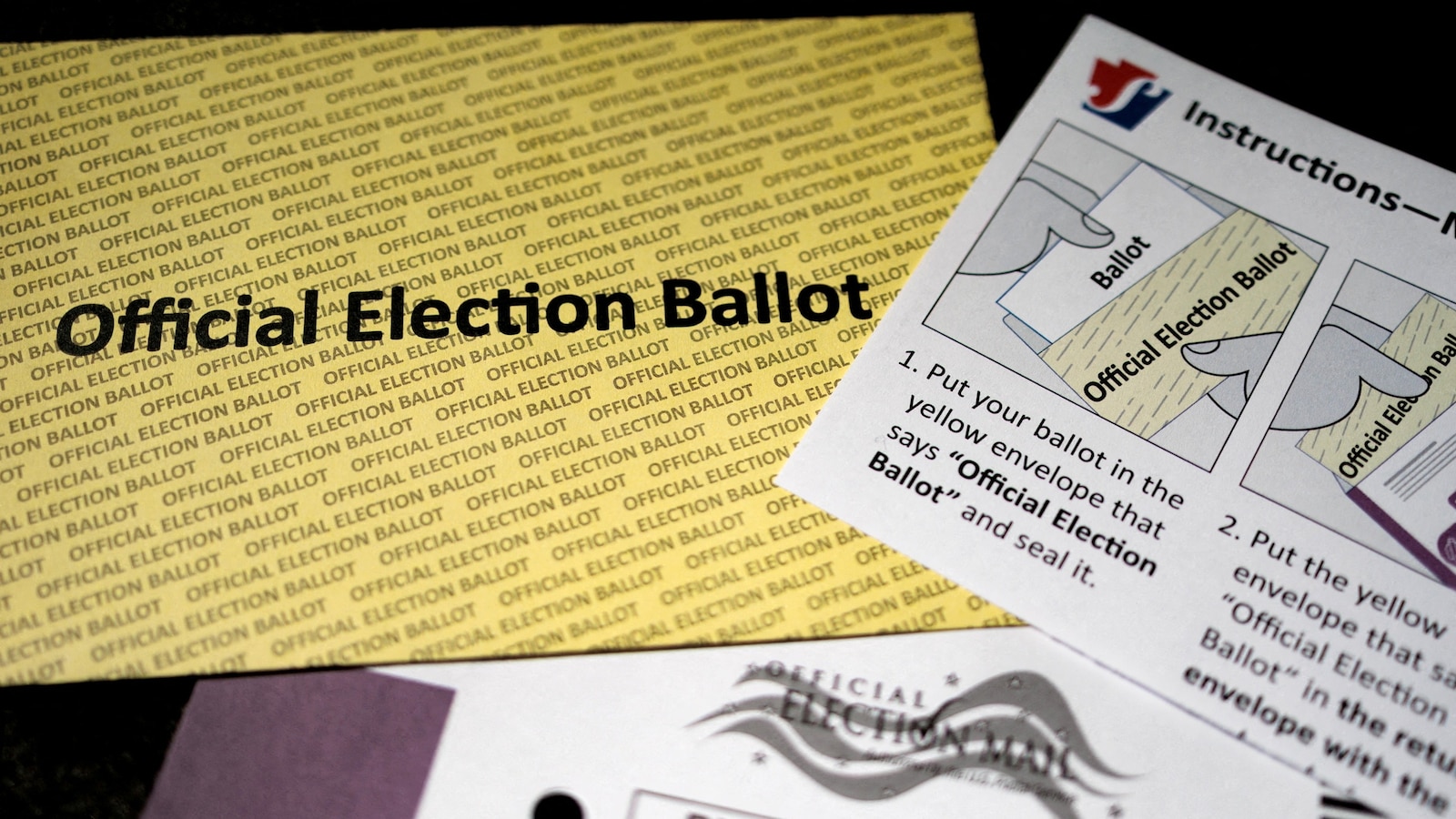
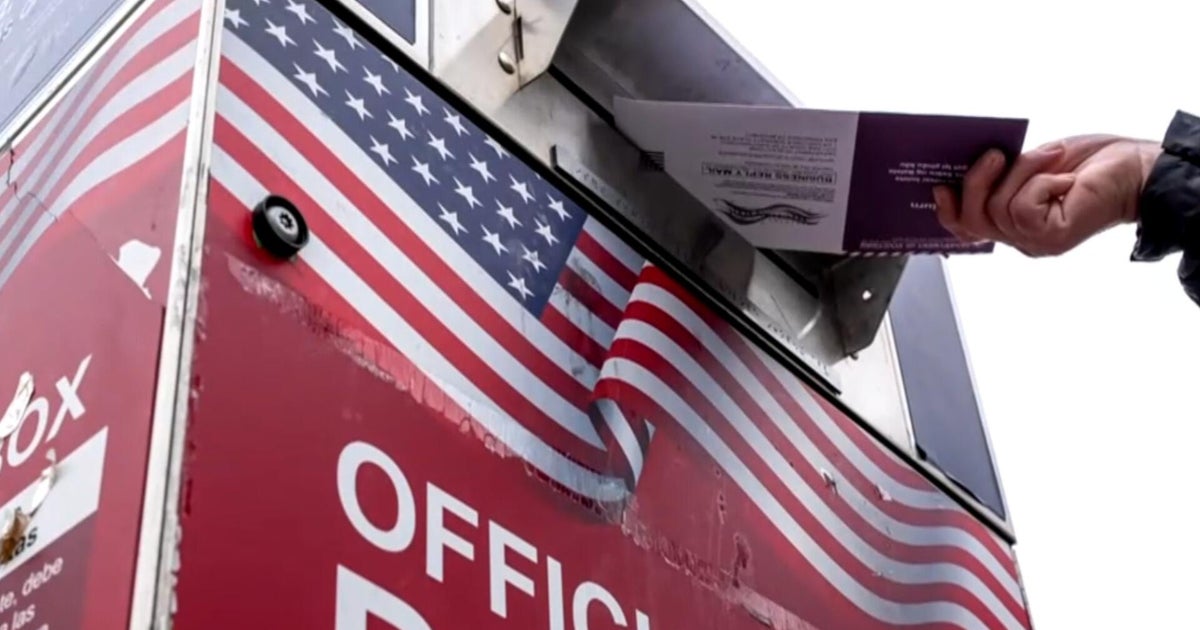
Photo via ProPublica

New Mail Voting Rules Moved Forward Despite USPS Officials’ Concerns About Mass Disenfranchisement

Read the original at ProPublica ↗
Cite

Fifield, J. (2026, September 3). New Mail Voting Rules Moved Forward Despite USPS Officials’ Concerns About Mass Disenfranchisement. ProPublica. https://www.propublica.org/article/mail-voting-usps-officials-concerns-disenfranchisement

Dated when The Aporia collected the article, usually within hours of publication. Check the original for its exact date and byline.

ProPublica · collected 2026-09-03 · by Jen Fifield

Quick Summary

USPS officials expressed concerns that new mail voting rules could delay or block ballots for large numbers of eligible voters, but the rules were implemented anyway. The rules, which were directed by President Trump's March executive order, require states to provide USPS with a list of all eligible voters and use that information to track and potentially block ballots. A whistleblower has come forward warning that the system is untested and error-prone, and could lead to mass disenfranchisement in the upcoming election. The new rules are currently being challenged by voting rights organizations and state officials in court, with a federal judge having temporarily blocked some of the requirements.
Written by AI on 2026-09-03, from this article's own text only (the story summary below draws on all the coverage).
See how they differ ↓

AI analysis

Story summary

Here's a summary of the news story:

The Trump administration has been trying to implement new rules for mail-in voting, which would require states to provide lists of eligible voters to the US Postal Service (USPS) so that they can verify who receives mail-in ballots. However, this move has been met with opposition from states and election officials, who claim it would be "virtually impossible" to comply with these changes in time for the midterm elections.

A federal judge, Massachusetts District Judge Indira Talwani, issued a preliminary injunction on Friday evening blocking the new rules while a legal battle plays out. The Trump administration has already asked the Supreme Court for permission to push the changes through, but it's unclear if this will be allowed.

Meanwhile, North Carolina became the first state to start sending out mail-in ballots on Friday, despite the uncertainty over whether these new federal rules will be allowed to take effect and whether the USPS can implement them in time. Other states are expected to follow suit in the coming days and weeks.

There is also a whistleblower who has warned that there could be "potentially catastrophic problems" with the new system for handling mail-in ballots, which could lead to millions of ballots being undelivered.

Overall, the situation is uncertain and chaotic, with multiple lawsuits and legal battles playing out over these new rules.

Written for “Mail Voting Disputes with Trump” on 2026-11-20, grounded in this article and the 36 other(s) covering the same event.

How they differ

21 outlets covered “Mail Voting Disputes with Trump”.

What each outlet says

One AI summary per outlet of its latest article on this story, written from that article alone and checked against it. Open the article for the outlet's own words.

ProPublicaThis outlet3 Sep

USPS officials expressed concerns that new mail voting rules could delay or block ballots for large numbers of eligible voters, but the rules were implemented anyway. The rules, which were directed by President Trump's March executive order, require states to provide USPS with a list of all eligible voters and use that information to track and potentially block ballots. A whistleblower has come forward warning that…

New Mail Voting Rules Moved Forward Despite USPS Officials’ Concerns About Mass Disenfranchisement (this article)
The Guardian11 Sep

A US appeals court has rejected Donald Trump's bid to impose restrictions on mail-in voting before the November midterms, upholding an injunction issued by a lower court judge last week. The ruling blocks the US Postal Service from tightening rules around postal voting, which would have limited delivery of ballots to voters on approved lists. Three judges nominated by Joe Biden agreed that Trump does not have the…

US appeals court rejects Trump’s bid to restrict mail-in voting before midterms →5 articles from The Guardian on this story
Washington Examiner6 Sep

The Trump administration has appealed to the Supreme Court for the third time over a federal judge's block on mail-in ballot restrictions that were set to take effect before the midterm elections. The Department of Justice argues that the preliminary injunction, which was extended by Judge Indira Talwani on Friday, could cause "confusion and chaos" in the voting process. According to Solicitor General John Sauer…

Trump appeals to Supreme Court for third time over mail-in ballot restrictions →4 articles from Washington Examiner on this story
Los Angeles Times10 Sep

A coalition of 24 states led by California warned the US Supreme Court that implementing new USPS mail ballot rules proposed by President Trump would cause "chaos" and potentially disenfranchise millions of voters. The states argue that compliance with the rules, which include submitting voter lists and using bar-coded envelopes, is impossible ahead of the November election in some states. This could result in…

California, other states warn Supreme Court of 'chaos' if it lets USPS mail ballot rules stand →3 articles from Los Angeles Times on this story
NBC News6 Sep

The Trump administration has asked the Supreme Court for the third time to allow mail ballot restrictions to move forward, despite a federal judge blocking the plan just two days earlier. The rule, issued in March by President Donald Trump, would require states to upload voter information to an online portal and potentially reject ballots sent to or from voters not included in a federal database. U.S. District Judge…

Trump administration asks Supreme Court to allow mail ballot restrictions to move forward for a third time →3 articles from NBC News on this story
CBS News7 Sep

The Trump administration's appeal to the Supreme Court aims to limit mail ballots for the upcoming midterm elections. No specific numbers or details on the proposed restrictions are provided. The article reports that this is the second time the administration has asked the Supreme Court to intervene in mail ballot policies. Taurean Small is reporting live from Bridgewater, New Jersey, where he is traveling with…

Trump administration appeals to Supreme Court again to restrict mail ballots →3 articles from CBS News on this story
Show 15 more outlets
Letters from an American6 Sep

U.S. District Judge Indira Talwani blocked the Trump administration's plan to use the USPS to screen mail-in voters, calling it both illegal and unconstitutional. The lawsuit against the plan was brought by groups defending voting rights, including the League of Women Voters of Massachusetts and 24 states' Democratic attorneys general. The ruling affects millions of American citizens who could have been impacted by…

September 5, 2026 →2 articles from Letters from an American on this story
The Independent6 Sep

The Trump administration has filed its third appeal with the Supreme Court to allow new restrictions on mail ballots ahead of the midterm elections. The restrictions, which were blocked by a federal judge, would require states and local election officials to comply with certain Postal Service directives that have yet to be clarified. Solicitor General John Sauer argued in the filing that allowing the plan to move…

Trump asks Supreme Court to allow new mail ballot restrictions ahead of midterm elections →2 articles from The Independent on this story
Toronto Star6 Sep

The Trump administration has filed its third appeal with the Supreme Court to allow new restrictions on mail ballots ahead of the midterms, after a federal judge blocked the plan earlier this week. The restrictions were set to be enforced by the Postal Service for the November elections. Almost one-third of voters in the US cast mail ballots, making this issue crucial in the upcoming elections where control of…

Trump administration makes another appeal to the Supreme Court to allow mail ballot restrictions →2 articles from Toronto Star on this story
Zeteo31 Aug

The article reports on various events and actions taken by the Trump administration in the past week, as part of a broader pattern of undermining democracy and harming societies worldwide. The key numbers mentioned include over 1,000 stock trades made by President Trump in June, at least 227 deaths resulting from US military strikes since last year, and up to 200,000 visas that may be revoked by the Trump…

This Week in Democracy – Week 84: Trump Admin Plans Largest Visa Revocations in History as ICE Arrests Reach Record High →
NPR4 Sep

The Trump administration has asked the Supreme Court to lift a federal judge's restraining order blocking its plan to restrict mail-in voting, which includes requiring state election officials to provide lists of eligible voters to the USPS before it will deliver mail-in ballots. North Carolina is set to start mailing out absentee ballots today, marking the beginning of this year's midterm voting season. If the…

Trump asks SCOTUS to OK changes to mail-in ballots. And, diesel prices hit record high →
Euronews4 Sep

A federal judge's ruling that mail voting compliance is "practically impossible" has thrown the midterm election into disarray, with voters in North Carolina receiving their mail-in ballots on Friday despite Trump's push to limit the practice. The Trump administration has filed an emergency request with the Supreme Court to lift a lower court's block on an executive order that would restrict mail voting, which…

Trump presses Supreme Court to curb mail voting as ballots begin reaching Americans →
ABC News (US)4 Sep

The Trump administration has filed an emergency appeal with the Supreme Court to implement new U.S. Postal Service mail ballot rules for November, which would require states to submit voter information and use unique barcodes on ballots. The appeal comes after a federal judge temporarily blocked the rules, finding them likely unlawful and potentially disenfranchising millions of voters. A decision from the Supreme…

White House files another SCOTUS emergency appeal over USPS mail ballot rules →
The Straits Times4 Sep

The US midterm elections began on September 4 amidst confusion over President Donald Trump's plan to impose new restrictions on mail-in voting, which could delay or disqualify ballots due to a single barcode problem. A federal judge has blocked some of these restrictions, but Trump is seeking to revive them through the Supreme Court. As a result, voters and election officials are unclear about what rules will govern…

US midterm elections begin with chaos over mail-in voting crackdown →
The Hindu5 Sep

A federal judge has blocked the US Postal Service's attempt to impose stricter rules on mail-in voting ahead of congressional elections in November. Judge Indira Talwani, citing that only Congress can supersede state authority over elections, extended a temporary ban on the rule, which would have required states to provide unique barcodes for all ballots and allowed the USPS to refuse delivery of non-compliant…

U.S. Judge again blocks Postal Service’s mail-in voting restrictions →
Times of India6 Sep

US District Judge Indira Talwani has extended a preliminary injunction blocking President Donald Trump's executive order restricting mail-in voting, preventing the US Postal Service from implementing new procedures ahead of the November midterm elections. The ruling, which follows a lawsuit by 24 state attorneys general, states that implementing the new system would lead to "significant disenfranchisement" of…

Indian-American judge extends block on Trump’s mail-voting curbs ahead of midterm polls →
UPI6 Sep

The Trump administration has asked the Supreme Court for a third time to allow new U.S. Postal Service rules governing mail-in voting to take effect before November's midterm elections. The proposed rules would require states to report qualified voters to the USPS and implement a new ballot envelope design, with potential penalties for non-compliance. A federal judge in Boston has already indefinitely paused the…

Trump administration asks Supreme Court for third time to allow mail-in voting rules →
Al Jazeera6 Sep

The Trump administration has appealed again to the US Supreme Court to allow restrictions on mail-in voting ahead of the midterms in November. The court will consider whether the Postal Service can track and potentially reject mail-in ballots, despite a federal judge's ruling that such moves are likely unconstitutional. According to the Trump administration, their executive order imposes "modest" requirements for…

Trump administration appeals again to US Supreme Court over mail-in voting →
Fox News6 Sep

The Trump administration filed a new appeal with the Supreme Court on Sunday seeking to enforce restrictions on mail ballots, which includes requirements such as using official Election Mail logos and unique barcodes on envelopes. The filing asks the court to stay a preliminary injunction issued by U.S. District Judge Indira Talwani that prevents the Postal Service from enforcing these requirements. The…

Trump admin’s mail-in ballot fight lands back at Supreme Court →
The Dispatch9 Sep

The Trump administration has filed its third appeal with the Supreme Court in less than six weeks to implement a rule allowing the US Postal Service (USPS) to oversee mail ballots, targeting blue states that are opposing it. The disputed USPS list-matching rule would allegedly help with election integrity, but according to this article, such claims are unfounded. No specific numbers or data are cited to support the…

A Mail Voting Fight About Nothing →
Reason11 Sep

A unanimous panel of the US Court of Appeals for the First Circuit has rejected the Trump Administration's motion to stay an injunction blocking implementation of a rule limiting mail-in voting in federal elections. The ruling upheld a district court's determination that the Postal Service rule implementing Trump's order is likely unlawful under the Constitution, which gives states primary authority over election…

First Circuit Refuses to Stay District Court Injunction Against Trump's Executive Order on Mail-In Voting →

Where they agree and split

Agreed

AI · cited, from two or more outlets

  • A federal judge extended the block on Trump's executive order regarding mail-in ballots.23
  • The new rules require states to provide lists of eligible voters for mail ballots and allow USPS to track and potentially reject ballots not included in a federal database.15
Quoted from the coverage (4)

The battle could have major ramifications for this year’s elections, when control of Congress is at stake.

5 outlets

Democratic states and voting rights groups say the changes are unconstitutional.

5 outlets

The filing marks the third time the administration has asked the Supreme Court to intervene in the dispute.

5 outlets

The action comes a day after the Trump administration asked the Supreme Court to override a temporary order issued by Talwani last week halting the rule.

4 outlets

Disputed

Picked by our model, which is sometimes wrong

  • ProPublica reports that the new rules could disenfranchise millions of eligible voters, while Fox News argues allowing the injunction to remain risks 'sowing confusion and chaos'.16

Framing

How the first headlines put it

  • ProPublica highlights USPS officials' concerns about disenfranchisement, whereas NPR includes information on diesel prices in its headline.14
  • The Toronto Star focuses on the federal judge's extension of the block, while Fox News emphasizes the Trump administration’s appeal to the Supreme Court.26
Words to watch (3)

California, other states warn Supreme Court of 'chaos' if it lets USPS mail ballot rules stand Los Angeles Times

First Circuit Refuses to Stay District Court Injunction Against Trump's Executive Order on Mail-In Voting Reason

US midterm elections begin with chaos over mail-in voting crackdown The Straits Times

The full story: what happened, how it changed, and all 37 articles →

Compared with similar articles

This article reads leans strongly left and hedges 18% of its claims. Each row says how that neighbour differs.
The Independent
Hedges 4 of 22 claims Outlet record 59/100
NBC News
Leans strongly left Hedges 2 of 25 claims Outlet record 78/100
The Hindu
Leans strongly left Hedges 4 of 25 claims Outlet record 60/100
September 5, 2026 Same event
Letters from an American
Leans left further right than this Hedges 4 of 52 claims
Euronews
Leans left further right than this Hedges 5 of 15 claims Outlet record 60/100
“Article A discusses the drafting of new mail voting rules and potential concerns about disenfranchisement, while Article B reports on a federal judge's ruling and Trump's push to limit mail voting in response to voter disarray”
Washington Examiner
Leans right further right than this Hedges 5 of 19 claims Outlet record 67/100
“Although both articles describe similar mail-in ballot rule changes, they occur in different states (USPS vs North Carolina) and at slightly different times.”
Toronto Star
Leans left further right than this Hedges 0 of 2 claims Outlet record 64/100
“Article B describes a federal judge's ruling on an executive order, while Article A discusses concerns about new mail voting rules being drafted by USPS officials, indicating they are related but not the same specific event”
The Guardian
Leans left further right than this Hedges 1 of 31 claims Outlet record 64/100
ABC News (US)
Leans left further right than this Hedges 1 of 15 claims Outlet record 67/100
CBS News
Leans strongly left Hedges 2 of 23 claims Outlet record 67/100

Story

Mail Voting Disputes with Trump
Politics · 37 article(s) covering the same event. Compare every outlet's account →
How this article was measured signals, leaning charts, publisher record, byline, topics and claims

Signals How these are calculated →

Claims extracted
38
sentences that state something as happening or true
Uncertain
18%
7 of 38 hedged ("reportedly", "may", "according to")
Leaning
Leans strongly left
of the writing, not the subject · beta estimate
Publisher signals
59/100
ProPublica's corrections and hedging, across everything collected from it. Not a measure of accuracy.
Outlets on this story
37
Politics
Same framing elsewhere
1
articles that frame the event the way this one does
Analyzed 2026-09-03 · how these are computed

How this is being covered How these are calculated →

Article leaning vs. publisher reliability
Source leaning vs. consistency

Publisher

ProPublica · 167 article(s) · 1 correction(s) detected
Running correction rate · 1 correction(s)

Who wrote this

Jen Fifield
2 article(s) here · 1 carrying a prediction
The audit, which is dated Sept. 4 but has not been previously reported, found a lack of training for post office staff on how to properly and expeditiously handle mail ballots, deficiencies in how ballots were tracked and errors leading to delays, all of which risked ballots having incorrect postmarks or otherwise arriving late to election officials, which could lead to their rejection.
Top U.S. Postal Service officials tasked with issuing new regulations on mail voting expressed concerns in internal meetings about how the rules they were drafting could delay or block ballots from reaching large swaths of eligible voters for the upcoming midterms, but the rules moved forward anyway, ProPublica has learned. The revelations about the discussions, from someone familiar with the rulemaking process, come as a separate anonymous federal employee filed a whistleblower disclosure with U.S. Sen. Richard Blumenthal, warning that the new system is untested and error-prone, and could lead to mass disenfranchisement in the upcoming election.
Also by Jen Fifield
Nothing else under this byline is closely related to this article, so these are simply their most recent.

Topics

ProPublica U.S. U.S. Postal Service USPS the Supreme Court

Subjects

USPS ORG · 6× ProPublica ORG · 2× Trump PERSON · 2× the Supreme Court ORG · 2× Democratic NORP · 1× Donald Trump PERSON · 1× Richard Blumenthal PERSON · 1× U.S. GPE · 1× U.S. Postal Service ORG · 1× the Postal Service ORG · 1×

Narrative

USPS officials were tasked with crafting the details of how the new system would work, including the creation of a new portal for states to upload their voters’ information and the back-end software that would allow mail delivery sites and local post offices to track, and potentially block, ballots entering into the mail on their way to voters.
framing: assertive · carried by 1 article(s) · first seen 2026-09-03
Top U.S. Postal Service officials tasked with issuing new regulations on mail voting expressed concerns in internal meetings about how the rules they were drafting could delay or block ballots from reaching large swaths of eligible voters for the upcoming midterms, but the rules moved forward anyway, ProPublica has learned. The revelations about the discussions, from someone familiar with the rulemaking process, come as a separate anonymous federal employee filed a whistleblower disclosure with U.S. Sen. Richard Blumenthal, warning that the new system is untested and error-prone, and could lead to mass disenfranchisement in the upcoming election.

Claims (38 extracted, 7 hedged)

Top U.S. Postal Service officials tasked with issuing new regulations on mail voting expressed concerns in internal meetings about how the rules they were drafting could delay or block ballots from reaching large swaths of eligible voters for the upcoming midterms, but the rules moved forward anyway, ProPublica has learned. The revelations about the discussions, from someone familiar with the rulemaking process, come as a separate anonymous federal employee filed a whistleblower disclosure with U.S. Sen. Richard Blumenthal, warning that the new system is untested and error-prone, and could lead to mass disenfranchisement in the upcoming election. uncertain
system → task → election
The whistleblower described the entire process as “secretive, rushed, chaotic, and fundamentally flawed.” asserted
whistleblower → describe → process
In a March executive order, President Donald Trump directed the Postal Service to create the new rules, including requiring states to give USPS a list of all voters eligible to receive a ballot in the mail and requiring USPS to use those lists to determine which ballots get sent to voters. asserted
ballots → direct → voters
USPS officials were tasked with crafting the details of how the new system would work, including the creation of a new portal for states to upload their voters’ information and the back-end software that would allow mail delivery sites and local post offices to track, and potentially block, ballots entering into the mail on their way to voters. asserted
sites → task → voters
Voting rights organizations, state officials and Democratic political groups filed lawsuits challenging the new rules, and a federal court has temporarily blocked the requirements for states. asserted
court → file → states
The merits of the new rule are expected to reach the Supreme Court before the November election. asserted
merits → expect → election
Even if the Supreme Court allows the plan, though, election officials and experts say that the new system could not be ready in time for this election, given that ballots for people who are in the military or overseas must be sent out this month. uncertain
who → allow → military
During meetings in which top USPS officials discussed how to comply with the executive order, there was much discussion about the controversial nature of what they needed to do, according to the person familiar with the discussions who spoke on the condition of anonymity for fear of reprisals. uncertain
who → discuss → reprisals
The focus was on limiting the impact to voters while also complying. asserted
focus → limit → voters
One repeated concern regarded how to avoid invalidating an entire batch of ballots if one voter among thousands couldn’t be confirmed as eligible. asserted
voter → repeat → thousands
Some in the meetings recommended trying to limit harm to voters by not rejecting the entire batch, according to the person familiar with the discussions. uncertain
Some → recommend → discussions
Despite that, according to the whistleblower who contacted Blumenthal, the directive to reject entire batches if they included just one unverified ballot moved forward. uncertain
they → accord → ballot
“As presently designed, if even one bar code on one single ballot in a bulk-mailing of 10,000 ballots fails to properly scan during the verification process, the entire batch is rejected and sent back to the state — effectively stopping the ballots from being mailed to voters,” the whistleblower wrote. asserted
whistleblower → design → voters
Election clerks raised similar concerns directly to USPS officials just days before the final rule was issued, at a mid-August National Association of Election Officials conference in Kansas City, Missouri, ProPublica has learned. Do You Know More About This Topic? We’re still reporting. asserted
We → raise → Topic
If you know more about the U.S. Postal Service’s efforts to regulate mail voting in the midterms, or other actions by the Trump administration to change how voting happens, please contact me. asserted
voting → know → me
There, an example was given of Maricopa County, Arizona, which often sends out more than 2 million ballots at a time in its initial mailing. asserted
which → give → mailing
USPS officials confirmed it was possible that one ballot with a bad barcode or wrong voter information within the more than 2 million ballots could delay the entire mailing, according to two people who attended the related committee meeting. uncertain
who → confirm → meeting
The Postal Service has defended its final rule in court, stating that it does not intend to seize control of administration of elections and that the rule “need not and should not prevent a single voter from voting by mail.” asserted
rule → defend → mail
In a statement to ProPublica, a Postal Service spokesperson said the agency is carefully reviewing the Blumenthal whistleblower’s concerns and that USPS has spent months developing its system, in a manner consistent with court orders, and will soon provide instructions for how election officials can use it. asserted
officials → say → it
“Regardless of political party or perspective, we share a common goal: ensuring that Americans can have confidence that their election mail will be handled securely and delivered reliably,” the spokesperson said. asserted
spokesperson → share → confidence
Lauren Bis, a White House spokesperson, said in a statement to ProPublica that the process of building software to carry out the new mail ballot checks “is neither complex nor unique for USPS since the Postal Service regularly uses bulk mailing and intelligent mail barcodes for a wide variety of large customers.” asserted
Service → say → customers
“Under President Trump, the federal government is working to ensure safe, transparent, and honest elections,” Bis wrote. asserted
Bis → work → elections
Blumenthal, the Connecticut Democrat who received the whistleblower disclosure, asked the postmaster general for detailed info about the plan in a letter this week. asserted
who → receive → letter
He told reporters on a call Monday that the new USPS rule puts all mail voters at risk, and he accused the administration of being “hellbent on changing the framework of casting ballots in this country, clearly for political reasons.” asserted
he → tell → reasons
Election officials and printing experts have told ProPublica that errors in the system are likely, given how difficult it is to design envelopes with a clear barcode for scanning and to keep voter information up to date. asserted
it → tell → date
Seemingly small details have yet to be worked out that could throw the entire system into chaos, they said, such as what file format to use when uploading voter lists and whether to provide mailing or residential addresses to USPS. uncertain
they → have → USPS
“These are trivial things that create massive problems,” said Jeff Ellington, CEO of Runbeck Election Services, which prints ballots and ballot envelopes for counties. asserted
which → create → counties
Beyond that, he said, most of the counties in the country don’t have the type of barcodes needed to make the system function. asserted
system → say → barcodes
And the Postal Service hasn’t told local election officials how to design new ballot envelopes and get them approved by USPS in this short of a timeframe. asserted
them → tell → timeframe
The Blumenthal whistleblower said the idea that entire batches will be delayed by one mistake is especially concerning because of significant operational problems that exist with the portal that will contain information about eligible voters and the lack of testing of the system. asserted
that → say → system
The whistleblower is concerned about how, while systems typically have a known error rate, there has been no internal acknowledgment that errors will occur in the new mail ballot system, and instead the USPS has adopted a “zero-percent failure policy.” asserted
USPS → have → policy
The whistleblower also alleges that the administration moved forward with steps to create the new system during two initial injunctions from the court, which would have violated the court’s order. asserted
which → allege → order
USPS had stated when issuing its final rule that it was adhering to the injunctions and would not take actions to implement the rule for the 2026 election unless the injunctions were lifted. asserted
injunctions → state → election
Both the whistleblower and the person familiar with discussions about the executive order’s implementation said that the timeline for creating a sophisticated tracking system would typically be at least nine months. asserted
timeline → say → system
The whistleblower’s disclosure says that workers began to work on the system in mid-June and had only weeks before being given a Sept. 1 deadline. asserted
workers → say → deadline
The person familiar with the discussions said it was common for priority projects within USPS to have crunched timelines. asserted
projects → say → timelines
The internal goal, the person said, was to try to implement the new system by that deadline or to show why it couldn’t happen — which was typical of other directives the agency had faced in the past. asserted
agency → say → past
The whistleblower disclosure described confusion as the staff attempted to develop the systems without enough direction, within weeks, and without proper communication, and said several employees referred to the situation as a “shit show.” asserted
employees → describe → show
Give feedback · no sign-in needed

No sign-in needed for now. Your note is sent without a name, so it cannot be answered.

History Support