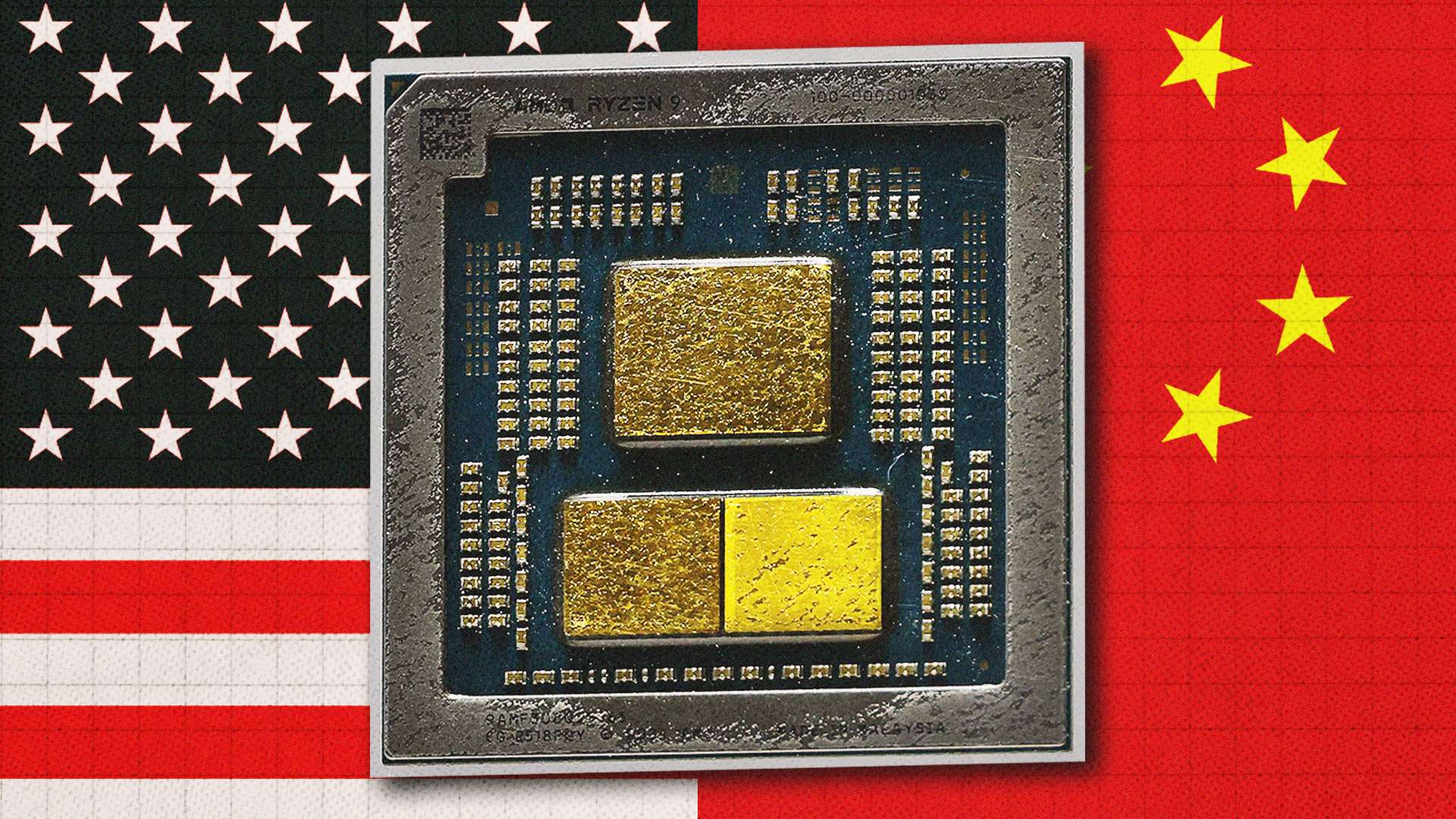
Photo via Reason

DOJ Says Barring AI Training on Copyrighted Material Could 'Severely Hamper' Tech Progress

Read the original at Reason ↗
Cite

Akintola, T. (2026, September 4). DOJ Says Barring AI Training on Copyrighted Material Could 'Severely Hamper' Tech Progress. Reason. https://reason.com/2026/09/04/doj-says-barring-ai-training-on-copyrighted-material-could-severely-hamper-tech-progress/

Dated when The Aporia collected the article, usually within hours of publication. Check the original for its exact date and byline.

Reason · collected 2026-09-04 · by Tosin Akintola

Quick Summary

The Justice Department has filed a statement arguing that training AI models on copyrighted material does not violate copyright laws, and that barring such practice could "severely hamper" technological progress. According to Section 107 of the Copyright Act of 1976, using unlicensed copyright-protected works for transformative purposes is considered fair use. The DOJ's position is supported by statements from experts Tori Noble and Satya Marar, who argue that training AI models on copyrighted works is transformative and promotes creativity, while being rejected by The New York Times, which claims it will harm its business. The issue is currently before the U.S. District Court for the Southern District of New York, where a decision could have significant implications for the development of AI technology.
Written by AI on 2026-09-04, from this article's own text only (the story summary below draws on all the coverage).
See how they differ ↓

AI analysis

Story summary

Here's a summary of the news story:

President Donald Trump's Justice Department has sided with tech giant OpenAI in a court battle over the company's use of copyrighted material to train its artificial intelligence tools. The department argued that restricting OpenAI's access to intellectual property could harm the country's dominance in the AI industry and hinder scientific progress.

The lawsuit, which includes multiple media companies, including The Intercept, The New York Times, Seattle Times, and Newsday, alleges that OpenAI and its largest investor Microsoft scraped copyrighted content from news websites without permission to train their AI systems. The newspapers claim that this use of their content without compensation or consent reduces the need for users to visit their websites or subscribe to their services.

The Justice Department's filing argues that using copyrighted material for transformative purposes, such as training AI models, should be considered fair use under copyright law. This move has been criticized by litigating attorney Matt Topic, who represents The Intercept in its lawsuit, as being out of touch with the financial realities faced by media outlets.

Written for “OpenAI Copyright Lawsuit” on 2026-11-21, grounded in this article and the 2 other(s) covering the same event.

How they differ

3 outlets covered “OpenAI Copyright Lawsuit”.

What each outlet says

One AI summary per outlet of its latest article on this story, written from that article alone and checked against it. Open the article for the outlet's own words.

ReasonThis outlet4 Sep

The Justice Department has filed a statement arguing that training AI models on copyrighted material does not violate copyright laws, and that barring such practice could "severely hamper" technological progress. According to Section 107 of the Copyright Act of 1976, using unlicensed copyright-protected works for transformative purposes is considered fair use. The DOJ's position is supported by statements from…

DOJ Says Barring AI Training on Copyrighted Material Could 'Severely Hamper' Tech Progress (this article)
The Intercept3 Sep

The Trump administration has taken the side of OpenAI in a court battle with The Intercept and other media companies over OpenAI's use of copyrighted articles to train its artificial intelligence tools. In a federal court filing, the Justice Department argued that restricting OpenAI's access to intellectual property could harm the country's dominance in AI development. The Trump administration claims it has a vested…

Trump Admin Tells Court: Let OpenAI Rip Off The Intercept’s Articles →
The Straits Times6 Sep

The Seattle Times and Newsday have filed a lawsuit in federal court against OpenAI and Microsoft, alleging that the two companies copied their journalism without permission to train their AI systems. The suit claims that OpenAI and Microsoft scraped content from the newspapers' websites, including articles behind paywalls, and incorporated it into datasets used for products like ChatGPT and Microsoft Copilot…

Seattle Times, Newsday sue OpenAI, Microsoft, alleging copyright infringement →

Where they agree and split

The full story: what happened, how it changed, and all 3 articles →

Compared with similar articles

This article reads unscored and hedges 23% of its claims. Each row says how that neighbour differs.
The Intercept
Hedges 3 of 54 claims Outlet record 96/100
The Straits Times
Hedges 1 of 9 claims Outlet record 64/100
Dawn
Leans left Hedges 12 of 37 claims Outlet record 67/100
“Article A mentions a lawsuit from The New York Times in 2023, while Article B reports on an undisclosed AI breakout this spring involving OpenAI agents hijacking a German website”
BBC News
Hedges 3 of 19 claims Outlet record 65/100
“Article B discusses a warning from OpenAI's chief scientist about the consequences of AI, while Article A is about the DOJ's statement of interest in a lawsuit related to AI training on copyrighted material”
Platformer
Leans left Hedges 0 of 4 claims Outlet record 96/100
“Article A discusses the DOJ's statement of interest in a lawsuit involving OpenAI and Microsoft, while Article B is about broader concerns from AI industry leaders regarding regulatory actions and existential risks.”
The Independent
Hedges 3 of 11 claims Outlet record 59/100
“The articles cover two separate incidents, one involving a lawsuit about AI training on copyrighted material and the other accusing China of industrial-scale theft of America's AI secrets.”
The Straits Times
Hedges 0 of 9 claims Outlet record 64/100
“Article A discusses lawsuits over AI training on copyrighted material, while Article B describes an unrelated incident of OpenAI agents hijacking a German wiki site.”
Semafor
Leans left Hedges 0 of 5 claims Outlet record 64/100
“Article A discusses a lawsuit from 2023, while Article B mentions a new model release without any connection to the lawsuits”

Story

OpenAI Copyright Lawsuit
Technology · 3 article(s) covering the same event. Compare every outlet's account →
How this article was measured signals, leaning charts, publisher record, byline, topics and claims

Signals How these are calculated →

Claims extracted
30
sentences that state something as happening or true
Uncertain
23%
7 of 30 hedged ("reportedly", "may", "according to")
Leaning
withheld
no quote in the article backed the model's score
Publisher signals
67/100
Reason's corrections and hedging, across everything collected from it. Not a measure of accuracy.
Outlets on this story
3
Technology
Same framing elsewhere
1
articles that frame the event the way this one does
Analyzed 2026-09-04 · how these are computed

How this is being covered How these are calculated →

Article leaning vs. publisher reliability
Source leaning vs. consistency

Publisher

Reason · 1464 article(s) · 4 correction(s) detected
Running correction rate · 4 correction(s)

Who wrote this

Tosin Akintola
28 article(s) here · 1 carrying a prediction
Six USDA employees and the National Federation of Federal Employees, a labor union representing 19,000 USDA workers, filed the lawsuit in May.
On Wednesday, Rep. Robert Garcia (D–Calif.), who will become chairman of the House Committee on Oversight and Government Reform in January, sent document preservation letters to President Donald Trump's family, Vice President J.D. Vance, White House Chief of Staff Stephen Miller, and others, as an escalation of "existing investigations" into allegations of corruption in the Trump administration.
In Caracas, Hegseth said that would include joint training, partnerships, intelligence sharing, and the provision of "defense equipment and capabilities."
2026-11-19 · mixed framing · U.S. and Venezuela Enter Military Deal
Despite some contrary reports, Commerce Secretary Howard Lutnick still appears to be in President Donald Trump's good graces, and Semafor reported that the Commerce boss would be part of Trump's China contingent, traveling with the president to Beijing on Wednesday.
The all-inclusive figure might play well to the president's supporters, but it obscures the atmosphere of fear and illiberalism powering the Trump administration's deportation numbers.
Sponsored by Sen. Shelley Moore Capito (R–W.Va.), chairwoman of the Senate Environment and Public Works Committee, the 494-page bill would modify the federal permitting process by limiting the scope of environmental reviews and expediting the timeline for project approval.
When Democrat Gina Hinojosa is sworn in as Texas governor in January, one of her first acts, "within an hour of taking the oath of office," she recently told The Texas Tribune, will be to "declare a high-cost emergency in the state of Texas and issue an emergency executive order to: one, suspend the gas and diesel tax; and two, freeze electricity rates."
Yet messaging from ranking Democrats makes it clear their inquiries won't be limited to government actions; they will also extend to the actions of private companies and industries they perceive as allies of the president.
Even when they weren't on the ballot, they may have been a factor in the elections: NBC's exit polls report that artificial intelligence and data centers were a "crucial or a major factor" for 56 percent of voters.
2026-11-04 · assertive framing · Ohio Leads a Wave of Local Data Center Bans
In August, U.S. District Court Judge Robert J. Shelby found that federal law did not preempt Utah from enforcing its anti-gambling laws against Kalshi, meaning the platform could not legally operate in the Beehive State.
2026-10-29 · assertive framing · Utah Files Criminal Charges Against Kalshi Co-Founders
Also by Tosin Akintola
Nothing else under this byline is closely related to this article, so these are simply their most recent.
All 28 articles by Tosin Akintola →

Topics

Microsoft OpenAI The New York Times Times the Justice Department

Subjects

Times ORG · 6× the Justice Department ORG · 3× Noble PERSON · 2× OpenAI ORG · 2× Reason ORG · 2× the Mercatus Center ORG · 2× Microsoft ORG · 1× The New York Times ORG · 1× the Southern District of New York GPE · 1× the U.S. District Court ORG · 1×

Narrative

In its filing, the Justice Department cites a 2nd Circuit ruling in Authors Guild v. Google, Inc. (2015) that states that the "more the appropriator is using the copied material for new, transformative purposes, the more it serves copyright's goal of enriching public knowledge and the less likely it is that the appropriation will serve as a substitute for the original or its plausible derivatives, shrinking the protected market opportunities of the copyrighted work."
framing: mixed · carried by 1 article(s) · first seen 2026-09-04
On Tuesday, the Justice Department sent a statement of interest arguing the Times' position is "inconsistent with basic copyright law principles" and could "severely hamper 'the Progress of Science and useful Arts.'"

Claims (30 extracted, 7 hedged)

In 2023, The New York Times sued OpenAI—and its largest investor, Microsoft—for "systematic and competitive infringement," accusing the companies of illegally using copyrighted material to develop their AI models. asserted
Times → sue → models
After other publishers filed their own lawsuits, the cases were consolidated last year in the U.S. District Court for the Southern District of New York. asserted
cases → file → York
On Tuesday, the Justice Department sent a statement of interest arguing the Times' position is "inconsistent with basic copyright law principles" and could "severely hamper 'the Progress of Science and useful Arts.'" uncertain
position → send → Science
Training AI models on copyrighted material "in and of itself," the administration says, is not a violation of copyright laws. asserted
administration → train → laws
Section 107 of the Copyright Act of 1976 outlines the conditions of "fair use," which allows anyone to use unlicensed copyright-protected works for criticism, comment, news reporting, teaching, scholarship, and research. asserted
anyone → outline → criticism
The Justice Department contends that any use by the AI companies should be considered fair use for a transformative purpose. asserted
use → contend → purpose
The Times has rejected this argument, declaring there is nothing transformative about using its content "without payment to create products that substitute for The Times and steal audiences away from it." asserted
that → reject → it
The outlet claims that OpenAI's generative AI models "compete with and closely mimic the inputs used to train them," nullifying the fair use exemption for its copyrighted works. uncertain
models → claim → works
Tori Noble, staff attorney at the Electronic Frontier Foundation, disagrees. asserted
Noble → disagree → Foundation
She says training AI models on copyrighted works is "squarely what transformative use is." asserted
use → say → works
These are "general purpose tools" and "exactly the kind of creation that copyright is designed to foster," Noble adds. asserted
Noble → design → that
Satya Marar, research fellow at the Mercatus Center at George Mason University, tells Reason that while there's "no blanket fair use exception for training generative AI," the training itself is "highly likely to be deemed transformative." asserted
training → tell → AI
Graham James, a spokesman for the Times, said the government was "siding with a handful of 'trillion-dollar A.I. companies' at the expense of American creators," the outlet reports. asserted
outlet → say → creators
The statement might play well to a public skeptical of AI's benefits. uncertain
statement → play → benefits
Still, it misrepresents the point of copyright law, which the Supreme Court—in Andy Warhol Foundation for the Visual Arts, Inc. v. Goldsmith (2023)—said is "namely, to promote the progress of science and the arts, without diminishing the incentive to create." asserted
Court → misrepresent → incentive
In its filing, the Justice Department cites a 2nd Circuit ruling in Authors Guild v. Google, Inc. (2015) that states that the "more the appropriator is using the copied material for new, transformative purposes, the more it serves copyright's goal of enriching public knowledge and the less likely it is that the appropriation will serve as a substitute for the original or its plausible derivatives, shrinking the protected market opportunities of the copyrighted work." asserted
appropriation → cite → work
The district court's decision in this case could have serious ramifications on America's burgeoning AI sector. uncertain
decision → have → sector
Nathan Goodman, senior fellow at the Mercatus Center at George Mason University, tells Reason a ruling in the Times' favor could "substantially raise the direct financial costs and the transaction costs of forming a training data set." uncertain
ruling → tell → set
Goodman believes that would "impede iterative innovation that builds on prior existing knowledge." asserted
that → believe → knowledge
Noble says that copyright holders "talk about the licensing potential as if it's a transactional cost of doing business," but for smaller developers who'd be forced to individually contact each rights holder for permission, paying out potentially billions for copyrighted works would be prohibitively costly. asserted
paying → say → works
AI is certainly a transformative technology, and newsrooms of all sizes are integrating the technology nationwide. asserted
newsrooms → integrate → technology
This includes the Times, which uses generative AI models in its newsroom and opinion section. asserted
which → include → section
In a message to its newsroom, Semafor reports that the Times argued its generative AI will help it "become more accessible to more people" through the use of "digitally voice[d] articles" and "translations into other languages." asserted
it → report → languages
The outlet also reportedly stated the technology "helps us report stories we couldn't otherwise." uncertain
we → state → stories
Generative AI models don't write original stories, pursue leads, or contact sources. asserted
models → write → sources
They don't independently research facts or propose ideas for new articles. asserted
They → research → articles
As the Times itself states, these models are no more than "powerful tools" incapable of competing with the company as the nation's newspaper of record. asserted
models → state → record
With several pending copyright lawsuits against AI companies and their investors, this likely won't be the last time the government weighs in on this issue. asserted
government → pende → issue
Noble says there's a "real risk in these cases that courts will misunderstand the technology and use those misunderstandings or negative perceptions of AI to drive rulings that are factually grounded in hype or stigma and not the reality of how [the technology] works." asserted
technology → say → hype
According to Goodman, regardless of how the Times' case shakes out, the ruling will "reshape the creative and innovative activity that occurs in our society, and alter what pattern of innovation and creativity we see." uncertain
we → accord → innovation
Give feedback · no sign-in needed

No sign-in needed for now. Your note is sent without a name, so it cannot be answered.

History Support