Photo via The Straits Times

How Brazil's election winner could reshape its institutions as vacancies mount

Read the original at The Straits Times ↗
Cite

The Straits Times. (2026, October 2). How Brazil's election winner could reshape its institutions as vacancies mount. The Straits Times. https://www.straitstimes.com/world/how-brazils-election-winner-could-reshape-its-institutions-as-vacancies-mount

Dated when The Aporia collected the article, usually within hours of publication. Check the original for its exact date and byline.

The Straits Times · collected 2026-10-02 · by The Straits Times

Quick Summary

Brazil’s next president will inherit numerous vacancies in key institutions like the Supreme Court, central bank, and economic regulators. This situation could grant significant influence over policy-making to either leftist candidate Luiz Inácio Lula da Silva or right-wing Senator Flavio Bolsonaro, depending on who wins the election set for October 2nd, with a possible runoff later in the month. The delays in filling these positions are attributed to political maneuvering by Congress, which has stalled many nominations submitted during Lula’s current term, leading to unprecedented vacancies and potential politicization of independent bodies designed to remain nonpartisan.
Written by AI on 2026-10-02, from this article's own text only (the story summary below draws on all the coverage).

AI analysis

Story summary

Brazil's next president, in the tight race between leftist incumbent Luiz Inacio Lula da Silva and Senator Flavio Bolsonaro, will inherit an unusually large number of appointments to key institutions, including the Supreme Court, central bank, and economic regulators. This backlog could give the winner significant influence over bodies that shape monetary policy, oversee financial markets, and interpret the constitution. With a runoff election forecasted due to no clear winner in the first round on October 2nd, Claudio Couto, a political scientist at the Fundacao Getulio Vargas, described the situation as "deeply problematic," fearing it could politicize nonpartisan bodies. Meanwhile, Neuriberg Dias of legislative watchdog DIAP noted that nominations and bills are increasingly negotiated among congressional leaders rather than between the president and coalition parties, reflecting a broader shift in Brazilian politics towards a more powerful Congress.

Written for “Brazil Election Winner Policy Changes” on 2026-11-21, grounded in this article and the 0 other(s) covering the same event.

Compared with similar articles

This article reads unscored and hedges 18% of its claims. Each row says how that neighbour differs.
The Straits Times
Hedges 1 of 8 claims Outlet record 64/100
“The articles discuss different aspects of Brazil's election, with Article A focusing on post-election implications for institutional appointments, while Article B reports on polling data and voting trends leading up to the election.”
Al Jazeera
Hedges 0 of 2 claims Outlet record 60/100
“The articles discuss different aspects of Brazil's presidential election—vacancies in institutions for the incoming president versus live updates on voting day.”
Toronto Star
Leans left Hedges 2 of 51 claims Outlet record 64/100
“The articles discuss different aspects of Brazil's election and governance, not a single specific incident.”
The Straits Times
Leans strongly left Hedges 3 of 32 claims Outlet record 64/100
“The articles discuss different aspects of Brazil's political situation without clearly referring to the same specific event or time.”
The Hindu
Hedges 3 of 27 claims Outlet record 60/100
“The articles discuss different aspects of Brazil's political landscape related to its presidential election but do not describe the same specific incident.”
Toronto Star
Hedges 1 of 26 claims Outlet record 64/100
“The articles discuss different aspects of the election: one focuses on the cancellation of a debate between candidates, while the other discusses potential reshaping of institutions by the winning candidate.”
Al Jazeera
Hedges 2 of 16 claims Outlet record 60/100
“The articles describe different aspects related to the Brazilian election but do not report on the same specific incident.”
The Straits Times
Hedges 0 of 11 claims Outlet record 64/100
“The articles discuss different aspects of Brazil's election process, with Article A focusing on potential outcomes after the election based on vacancies, while Article B covers the closing stages of campaigning before the first round vote.”
Al Jazeera
Leans left Hedges 2 of 20 claims Outlet record 60/100
“The articles describe different aspects of the Brazilian election process and do not refer to a single specific event.”
The Hindu
Hedges 0 of 3 claims Outlet record 60/100
“The articles discuss different aspects of Brazil's election, with Article A focusing on potential appointments and influence post-election, while Article B reports on current polling trends before the first-round vote.”

Story

Brazil Election Winner Policy Changes
Politics · 1 article(s) covering the same event.
How this article was measured signals, leaning charts, publisher record, byline, topics and claims

Signals How these are calculated →

Claims extracted
22
sentences that state something as happening or true
Uncertain
18%
4 of 22 hedged ("reportedly", "may", "according to")
Leaning
withheld
no quote in the article backed the model's score
Publisher signals
64/100
The Straits Times's corrections and hedging, across everything collected from it. Not a measure of accuracy.
Outlets on this story
1
Politics
Same framing elsewhere
1
articles that frame the event the way this one does
Analyzed 2026-10-02 · how these are computed

How this is being covered How these are calculated →

Article leaning vs. publisher reliability
Source leaning vs. consistency

Publisher

The Straits Times · 5634 article(s) · 7 correction(s) detected
Running correction rate · 7 correction(s)

Who wrote this

The Straits Times
3888 article(s) here · 1 carrying a prediction
He told groups of subordinates that they had become so rich that he couldn’t motivate them simply with money, according to three people who spoke on the condition of anonymity to discuss confidential conversations.
The closed freeway lanes recall stems from unusual circumstances where a Waymo vehicle may enter and continue driving in a closed freeway lane, the company said, adding it is still working on the recall remedy.
Araqchi says Iran wants diplomacy to end war; Trump says terms unacceptable Nov 20 - Iran's Foreign Minister Abbas Araqchi said Tehran still hoped diplomacy could end its war with the United States, while US President Donald Trump said Iran wanted a deal but one that was not acceptable to him.
While You Were Sleeping: 5 stories you might have missed, Nov 21, 2026 Trump, Xi agree military AI decisions should involve humans US President Donald Trump and Chinese President Xi Jinping agreed humans should always be involved in military decisions that use artificial intelligence technologies, even as the two countries compete for AI supremacy, Treasury Secretary Scott Bessent said on Nov 20.
US Vice President Vance declines to say he would have ordered Iran strikes WASHINGTON, Nov 20 - US Vice President JD Vance on Friday declined to say whether he would have authorized strikes on Iran to prevent the country from developing a nuclear weapon, sidestepping President Donald Trump's calls for him to say the attacks were necessary and that he would carry them out again.
Some would blame Ottawa for the trade conflict while others pointed the finger at Washington.
Whoever wins will have to tackle multiple crises, including several wars, cutbacks in US contributions to the UN, and the 193-member body's declining political relevance as Washington has pulled out of dozens of its agencies.
I don’t think any human was about to find this,” Conrey said, adding that he believed “there will be simpler ways to do it.” The Riemann Hypothesis is one of seven Millennium Prize Problems selected by the Clay Mathematics Institute in 2000, which offers US$1 million (S$1.28 million) for a solution to each. Under the institute’s rules, a solution must be published in a peer-reviewed journal and withstand two years of scrutiny.
If the hearing proceeds as planned, it would mark Huang's first public testimony since stepping down as Nvidia's chief executive on November 12.
Denmark’s foreign minister on Nov 20 said Moscow’s defence attache in Copenhagen would be expelled after Russia was suspected of being behind an attempted assassination of a Ukrainian rapper.
Also by The Straits Times
Nothing else under this byline is closely related to this article, so these are simply their most recent.
All 3888 articles by The Straits Times →

Topics

BRASILIA Brazil Congress Senate the Supreme Court

Subjects

Congress ORG · 6× Lula PERSON · 6× Senate ORG · 6× Brazil GPE · 4× DIAP ORG · 2× BRASILIA GPE · 1× Brazilian NORP · 1× Flavio Bolsonaro PERSON · 1× Luiz Inacio Lula da Silva PERSON · 1× the Supreme Court ORG · 1×

Narrative

Claudio Couto, a political scientist at the Fundacao Getulio Vargas, called the backlog "deeply problematic," saying it risks concentrating appointments in one administration and politicizing "bodies that are meant to remain nonpartisan." STRUCTURAL SHIFT Nominations and bills, once largely negotiated between the president and coalition parties, increasingly hinge on deals among congressional leaders, said Neuriberg Dias, head of legislative watchdog DIAP.
framing: assertive · carried by 1 article(s) · first seen 2026-10-02
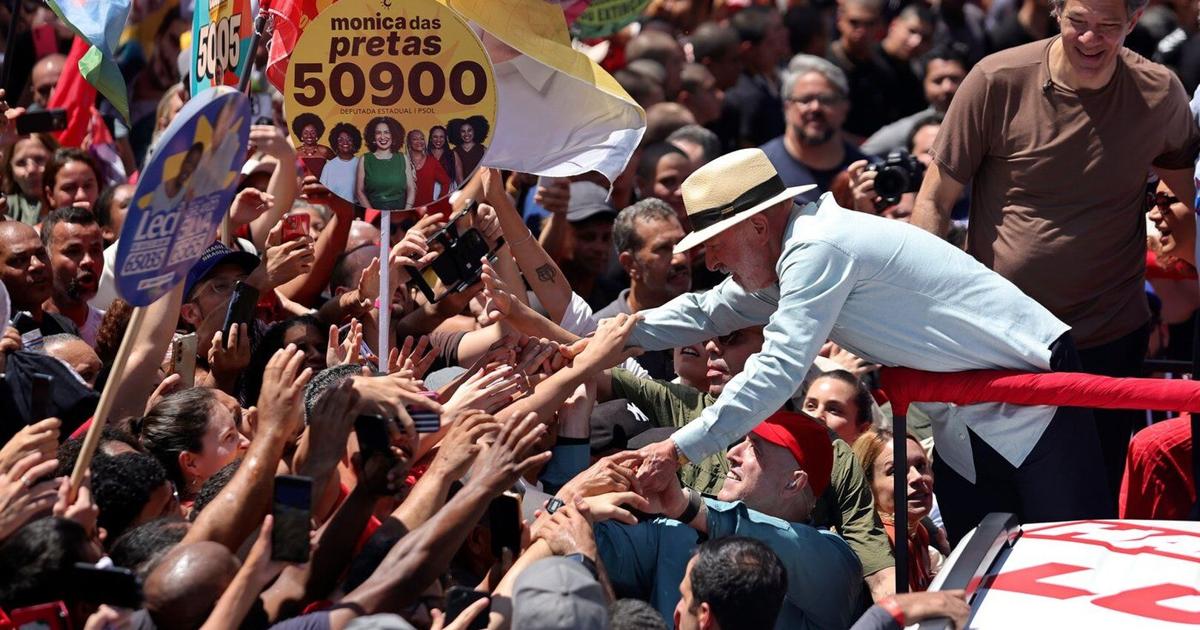
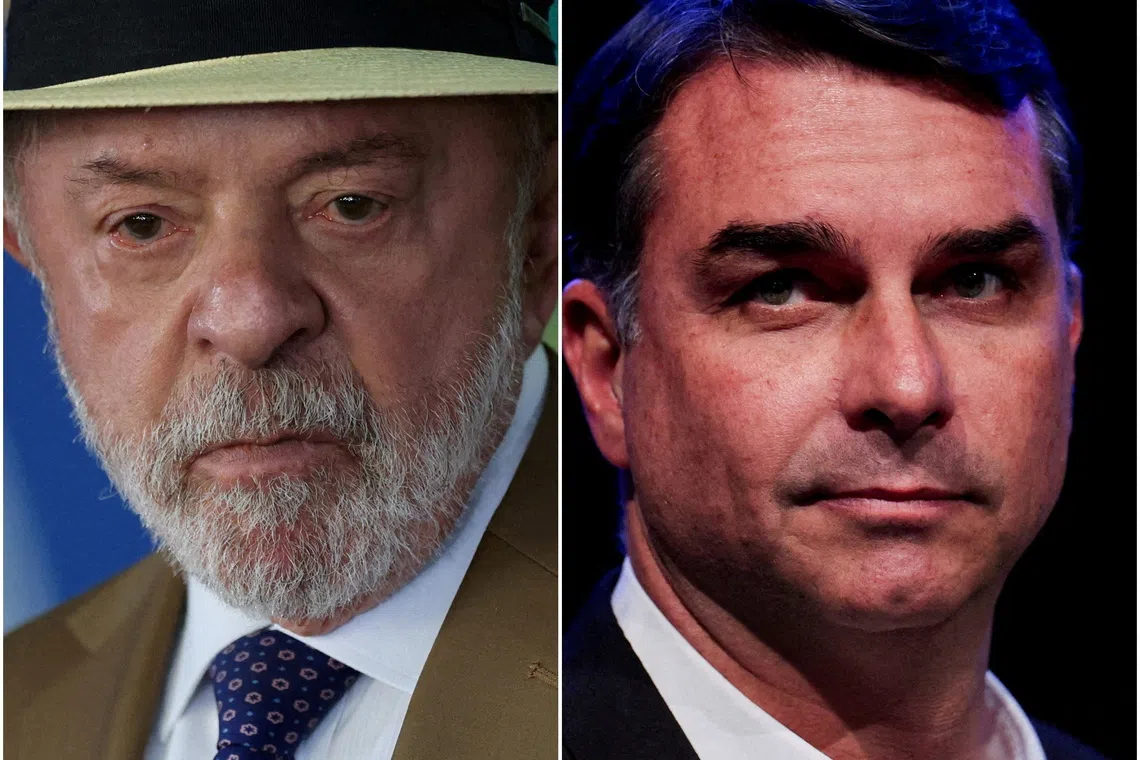
How Brazil's election winner could reshape its institutions as vacancies mount BRASILIA, Oct 2 - Brazil's next president is set to inherit an unusually large number of appointments to the country's most powerful institutions, with vacancies piled up at the Supreme Court, central bank and economic regulators. The growing backlog of unfilled posts means the winner of the tight race between leftist President Luiz Inacio Lula da Silva and Senator Flavio Bolsonaro could gain significant influence over bodies that help shape monetary policy, oversee financial markets and interpret the constitution.
2026-10-02 · The Straits Times
How Brazil's election winner could reshape its institutions as vacancies mount · assertive framing

Claims (22 extracted, 4 hedged)

How Brazil's election winner could reshape its institutions as vacancies mount BRASILIA, Oct 2 - Brazil's next president is set to inherit an unusually large number of appointments to the country's most powerful institutions, with vacancies piled up at the Supreme Court, central bank and economic regulators. The growing backlog of unfilled posts means the winner of the tight race between leftist President Luiz Inacio Lula da Silva and Senator Flavio Bolsonaro could gain significant influence over bodies that help shape monetary policy, oversee financial markets and interpret the constitution. uncertain
that → reshape → constitution
The two candidates will face off in the first round of the electoral contest on Sunday, with a runoff later in the month forecast as the most likely outcome. asserted
candidates → face → outcome
The vacancies reflect a broader shift in Brazilian politics: an increasingly powerful Congress is using confirmation of nominees as a tool for political leverage, eroding the executive branch's room for maneuver. asserted
Congress → reflect → maneuver
A predominantly right-wing Congress has flexed this growing power during Lula's current term by delaying confirmation of a number of his nominees. asserted
Congress → flex → nominees
Lula has also failed to make some nominations. asserted
Lula → fail → nominations
While nominations once went promptly to Senate committees for approval, many nomination processes stalled during the pandemic, awaiting the Senate president's approval. asserted
processes → go → approval
Senate President Davi Alcolumbre has maintained that practice, concentrating power in the Senate and turning what was once a routine step into a political decision, said a person familiar with the process, who requested anonymity. asserted
who → maintain → anonymity
The presidential palace and Alcolumbre's office did not respond to requests for comment. asserted
palace → respond → comment
The use of presidential appointments as political leverage has made the executive reluctant to submit nominees without first gauging their Senate prospects, said Rubens Beçak, a law professor at the University of Sao Paulo. asserted
Beçak → make → Paulo
At the central bank, two board seats, including the economic policy post that oversees forecasts ahead of rate decisions, have been empty since January, a record length of time for those posts to be left open. asserted
posts → include → time
Lula has yet to submit nominees. asserted
Lula → have → nominees
In April, senators rejected Lula's Supreme Court nominee, Solicitor General Jorge Messias, in a historic setback that extended a vacancy now nearly a year old, the longest since Brazil's return to democracy in the 1980s. asserted
that → reject → 1980s
Securities regulator CVM has had board vacancies since late 2024, while antitrust watchdog Cade, lacking its president and two board members, is near its minimum quorum, delaying merger reviews. asserted
Cade → have → reviews
Claudio Couto, a political scientist at the Fundacao Getulio Vargas, called the backlog "deeply problematic," saying it risks concentrating appointments in one administration and politicizing "bodies that are meant to remain nonpartisan." STRUCTURAL SHIFT Nominations and bills, once largely negotiated between the president and coalition parties, increasingly hinge on deals among congressional leaders, said Neuriberg Dias, head of legislative watchdog DIAP. asserted
Dias → call → DIAP
Congress' growing control over spending, he said, has changed the incentives behind executive-legislative bargaining. asserted
he → grow → bargaining
Congressional earmarks — which direct funding to local or pet projects — accounted for 7.5% of effective federal discretionary spending in 2018, but swelled to 21% in 2025, according to Planning Ministry data provided to Reuters. uncertain
which → direct → Reuters
The government's grip on the agenda has in turn weakened. asserted
grip → weaken → turn
Last year, Congress approved 178 bills introduced by legislators and only 50 from the executive. asserted
Congress → approve → executive
In 2007, during Lula's second term, the reverse was true: 142 executive bills versus 52 from Congress, according to DIAP data. uncertain
reverse → accord → data
The 2026 campaign has slowed nominations further, people familiar with the matter said, as lawmakers wait to see whether Lula wins another term. asserted
Lula → slow → term
Voters will also elect all 513 members of the Lower House and two-thirds of the Senate. asserted
Voters → elect → Senate
With power shifting from the presidency to Congress, the election may decide not only who governs Brazil, but how much room the winner will have to appoint officials and shape key institutions. uncertain
winner → shift → institutions

Give feedback · no sign-in needed

No sign-in needed for now. Your note is sent without a name, so it cannot be answered.

History Support