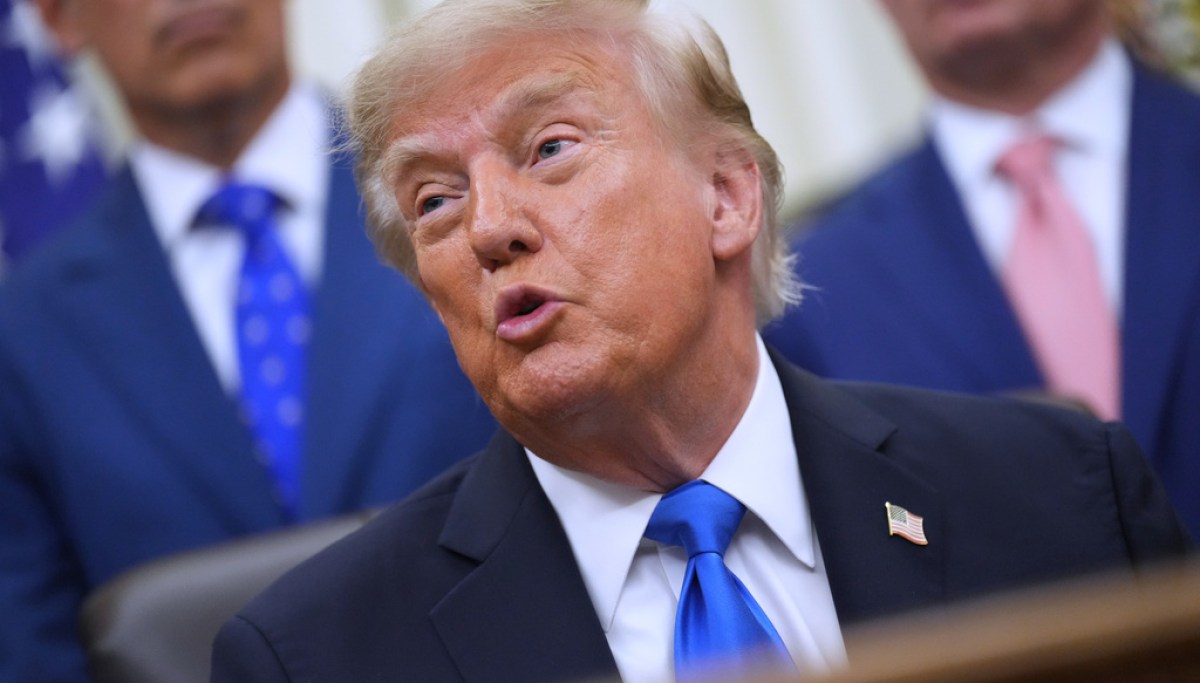
Photo via Washington Examiner

Trump’s big Supreme Court ‘win’ is a trap only Congress can fix

Read the original at Washington Examiner ↗
Cite

Rogers, J. (2026, September 6). Trump’s big Supreme Court ‘win’ is a trap only Congress can fix. Washington Examiner. https://www.washingtonexaminer.com/op-eds/4711871/trump-supreme-court-mail-in-voting-order-save-america-act/

Dated when The Aporia collected the article, usually within hours of publication. Check the original for its exact date and byline.

Washington Examiner · collected 2026-09-06 · by Jay Rogers

Quick Summary

The Supreme Court's unsigned order handed down on Monday stayed an injunction blocking President Trump's executive order on mail-in voting, allowing the administration to continue implementing its plan pending appeal. The key detail is that the court did not rule on the legality of the underlying order, but rather found that a district judge in Boston moved too quickly, issuing a 6-3 decision with Justices Sotomayor, Kagan, and Jackson dissenting. This ruling is being framed as a "procedural win" for Trump, rather than a definitive victory on the merits of his plan. The article suggests that Congress holds the key to resolving this issue, by clarifying its intentions regarding election administration through legislation.
Written by AI on 2026-09-06, from this article's own text only (the story summary below draws on all the coverage).
See how they differ ↓

AI analysis

Story summary

Here's a summary of the news story:

The Trump administration has been trying to implement new rules for mail-in voting, which would require states to provide lists of eligible voters to the US Postal Service (USPS) so that they can verify who receives mail-in ballots. However, this move has been met with opposition from states and election officials, who claim it would be "virtually impossible" to comply with these changes in time for the midterm elections.

A federal judge, Massachusetts District Judge Indira Talwani, issued a preliminary injunction on Friday evening blocking the new rules while a legal battle plays out. The Trump administration has already asked the Supreme Court for permission to push the changes through, but it's unclear if this will be allowed.

Meanwhile, North Carolina became the first state to start sending out mail-in ballots on Friday, despite the uncertainty over whether these new federal rules will be allowed to take effect and whether the USPS can implement them in time. Other states are expected to follow suit in the coming days and weeks.

There is also a whistleblower who has warned that there could be "potentially catastrophic problems" with the new system for handling mail-in ballots, which could lead to millions of ballots being undelivered.

Overall, the situation is uncertain and chaotic, with multiple lawsuits and legal battles playing out over these new rules.

Written for “Mail Voting Disputes with Trump” on 2026-11-20, grounded in this article and the 36 other(s) covering the same event.

How they differ

21 outlets covered “Mail Voting Disputes with Trump”.

What each outlet says

One AI summary per outlet of its latest article on this story, written from that article alone and checked against it. Open the article for the outlet's own words.

Washington ExaminerThis outlet6 Sep

The Supreme Court's unsigned order handed down on Monday stayed an injunction blocking President Trump's executive order on mail-in voting, allowing the administration to continue implementing its plan pending appeal. The key detail is that the court did not rule on the legality of the underlying order, but rather found that a district judge in Boston moved too quickly, issuing a 6-3 decision with Justices…

Trump’s big Supreme Court ‘win’ is a trap only Congress can fix (this article)4 articles from Washington Examiner on this story
The Guardian11 Sep

A US appeals court has rejected Donald Trump's bid to impose restrictions on mail-in voting before the November midterms, upholding an injunction issued by a lower court judge last week. The ruling blocks the US Postal Service from tightening rules around postal voting, which would have limited delivery of ballots to voters on approved lists. Three judges nominated by Joe Biden agreed that Trump does not have the…

US appeals court rejects Trump’s bid to restrict mail-in voting before midterms →5 articles from The Guardian on this story
Los Angeles Times10 Sep

A coalition of 24 states led by California warned the US Supreme Court that implementing new USPS mail ballot rules proposed by President Trump would cause "chaos" and potentially disenfranchise millions of voters. The states argue that compliance with the rules, which include submitting voter lists and using bar-coded envelopes, is impossible ahead of the November election in some states. This could result in…

California, other states warn Supreme Court of 'chaos' if it lets USPS mail ballot rules stand →3 articles from Los Angeles Times on this story
NBC News6 Sep

The Trump administration has asked the Supreme Court for the third time to allow mail ballot restrictions to move forward, despite a federal judge blocking the plan just two days earlier. The rule, issued in March by President Donald Trump, would require states to upload voter information to an online portal and potentially reject ballots sent to or from voters not included in a federal database. U.S. District Judge…

Trump administration asks Supreme Court to allow mail ballot restrictions to move forward for a third time →3 articles from NBC News on this story
CBS News7 Sep

The Trump administration's appeal to the Supreme Court aims to limit mail ballots for the upcoming midterm elections. No specific numbers or details on the proposed restrictions are provided. The article reports that this is the second time the administration has asked the Supreme Court to intervene in mail ballot policies. Taurean Small is reporting live from Bridgewater, New Jersey, where he is traveling with…

Trump administration appeals to Supreme Court again to restrict mail ballots →3 articles from CBS News on this story
Letters from an American6 Sep

U.S. District Judge Indira Talwani blocked the Trump administration's plan to use the USPS to screen mail-in voters, calling it both illegal and unconstitutional. The lawsuit against the plan was brought by groups defending voting rights, including the League of Women Voters of Massachusetts and 24 states' Democratic attorneys general. The ruling affects millions of American citizens who could have been impacted by…

September 5, 2026 →2 articles from Letters from an American on this story
Show 15 more outlets
The Independent6 Sep

The Trump administration has filed its third appeal with the Supreme Court to allow new restrictions on mail ballots ahead of the midterm elections. The restrictions, which were blocked by a federal judge, would require states and local election officials to comply with certain Postal Service directives that have yet to be clarified. Solicitor General John Sauer argued in the filing that allowing the plan to move…

Trump asks Supreme Court to allow new mail ballot restrictions ahead of midterm elections →2 articles from The Independent on this story
Toronto Star6 Sep

The Trump administration has filed its third appeal with the Supreme Court to allow new restrictions on mail ballots ahead of the midterms, after a federal judge blocked the plan earlier this week. The restrictions were set to be enforced by the Postal Service for the November elections. Almost one-third of voters in the US cast mail ballots, making this issue crucial in the upcoming elections where control of…

Trump administration makes another appeal to the Supreme Court to allow mail ballot restrictions →2 articles from Toronto Star on this story
Zeteo31 Aug

The article reports on various events and actions taken by the Trump administration in the past week, as part of a broader pattern of undermining democracy and harming societies worldwide. The key numbers mentioned include over 1,000 stock trades made by President Trump in June, at least 227 deaths resulting from US military strikes since last year, and up to 200,000 visas that may be revoked by the Trump…

This Week in Democracy – Week 84: Trump Admin Plans Largest Visa Revocations in History as ICE Arrests Reach Record High →
ProPublica3 Sep

USPS officials expressed concerns that new mail voting rules could delay or block ballots for large numbers of eligible voters, but the rules were implemented anyway. The rules, which were directed by President Trump's March executive order, require states to provide USPS with a list of all eligible voters and use that information to track and potentially block ballots. A whistleblower has come forward warning that…

New Mail Voting Rules Moved Forward Despite USPS Officials’ Concerns About Mass Disenfranchisement →
NPR4 Sep

The Trump administration has asked the Supreme Court to lift a federal judge's restraining order blocking its plan to restrict mail-in voting, which includes requiring state election officials to provide lists of eligible voters to the USPS before it will deliver mail-in ballots. North Carolina is set to start mailing out absentee ballots today, marking the beginning of this year's midterm voting season. If the…

Trump asks SCOTUS to OK changes to mail-in ballots. And, diesel prices hit record high →
Euronews4 Sep

A federal judge's ruling that mail voting compliance is "practically impossible" has thrown the midterm election into disarray, with voters in North Carolina receiving their mail-in ballots on Friday despite Trump's push to limit the practice. The Trump administration has filed an emergency request with the Supreme Court to lift a lower court's block on an executive order that would restrict mail voting, which…

Trump presses Supreme Court to curb mail voting as ballots begin reaching Americans →
ABC News (US)4 Sep

The Trump administration has filed an emergency appeal with the Supreme Court to implement new U.S. Postal Service mail ballot rules for November, which would require states to submit voter information and use unique barcodes on ballots. The appeal comes after a federal judge temporarily blocked the rules, finding them likely unlawful and potentially disenfranchising millions of voters. A decision from the Supreme…

White House files another SCOTUS emergency appeal over USPS mail ballot rules →
The Straits Times4 Sep

The US midterm elections began on September 4 amidst confusion over President Donald Trump's plan to impose new restrictions on mail-in voting, which could delay or disqualify ballots due to a single barcode problem. A federal judge has blocked some of these restrictions, but Trump is seeking to revive them through the Supreme Court. As a result, voters and election officials are unclear about what rules will govern…

US midterm elections begin with chaos over mail-in voting crackdown →
The Hindu5 Sep

A federal judge has blocked the US Postal Service's attempt to impose stricter rules on mail-in voting ahead of congressional elections in November. Judge Indira Talwani, citing that only Congress can supersede state authority over elections, extended a temporary ban on the rule, which would have required states to provide unique barcodes for all ballots and allowed the USPS to refuse delivery of non-compliant…

U.S. Judge again blocks Postal Service’s mail-in voting restrictions →
Times of India6 Sep

US District Judge Indira Talwani has extended a preliminary injunction blocking President Donald Trump's executive order restricting mail-in voting, preventing the US Postal Service from implementing new procedures ahead of the November midterm elections. The ruling, which follows a lawsuit by 24 state attorneys general, states that implementing the new system would lead to "significant disenfranchisement" of…

Indian-American judge extends block on Trump’s mail-voting curbs ahead of midterm polls →
UPI6 Sep

The Trump administration has asked the Supreme Court for a third time to allow new U.S. Postal Service rules governing mail-in voting to take effect before November's midterm elections. The proposed rules would require states to report qualified voters to the USPS and implement a new ballot envelope design, with potential penalties for non-compliance. A federal judge in Boston has already indefinitely paused the…

Trump administration asks Supreme Court for third time to allow mail-in voting rules →
Al Jazeera6 Sep

The Trump administration has appealed again to the US Supreme Court to allow restrictions on mail-in voting ahead of the midterms in November. The court will consider whether the Postal Service can track and potentially reject mail-in ballots, despite a federal judge's ruling that such moves are likely unconstitutional. According to the Trump administration, their executive order imposes "modest" requirements for…

Trump administration appeals again to US Supreme Court over mail-in voting →
Fox News6 Sep

The Trump administration filed a new appeal with the Supreme Court on Sunday seeking to enforce restrictions on mail ballots, which includes requirements such as using official Election Mail logos and unique barcodes on envelopes. The filing asks the court to stay a preliminary injunction issued by U.S. District Judge Indira Talwani that prevents the Postal Service from enforcing these requirements. The…

Trump admin’s mail-in ballot fight lands back at Supreme Court →
The Dispatch9 Sep

The Trump administration has filed its third appeal with the Supreme Court in less than six weeks to implement a rule allowing the US Postal Service (USPS) to oversee mail ballots, targeting blue states that are opposing it. The disputed USPS list-matching rule would allegedly help with election integrity, but according to this article, such claims are unfounded. No specific numbers or data are cited to support the…

A Mail Voting Fight About Nothing →
Reason11 Sep

A unanimous panel of the US Court of Appeals for the First Circuit has rejected the Trump Administration's motion to stay an injunction blocking implementation of a rule limiting mail-in voting in federal elections. The ruling upheld a district court's determination that the Postal Service rule implementing Trump's order is likely unlawful under the Constitution, which gives states primary authority over election…

First Circuit Refuses to Stay District Court Injunction Against Trump's Executive Order on Mail-In Voting →

Where they agree and split

Agreed

AI · cited, from two or more outlets

  • A federal judge extended the block on Trump's executive order regarding mail-in ballots.23
  • The new rules require states to provide lists of eligible voters for mail ballots and allow USPS to track and potentially reject ballots not included in a federal database.15
Quoted from the coverage (4)

The battle could have major ramifications for this year’s elections, when control of Congress is at stake.

5 outlets

Democratic states and voting rights groups say the changes are unconstitutional.

5 outlets

The filing marks the third time the administration has asked the Supreme Court to intervene in the dispute.

5 outlets

The action comes a day after the Trump administration asked the Supreme Court to override a temporary order issued by Talwani last week halting the rule.

4 outlets

Disputed

Picked by our model, which is sometimes wrong

  • ProPublica reports that the new rules could disenfranchise millions of eligible voters, while Fox News argues allowing the injunction to remain risks 'sowing confusion and chaos'.16

Framing

How the first headlines put it

  • ProPublica highlights USPS officials' concerns about disenfranchisement, whereas NPR includes information on diesel prices in its headline.14
  • The Toronto Star focuses on the federal judge's extension of the block, while Fox News emphasizes the Trump administration’s appeal to the Supreme Court.26
Words to watch (3)

California, other states warn Supreme Court of 'chaos' if it lets USPS mail ballot rules stand Los Angeles Times

First Circuit Refuses to Stay District Court Injunction Against Trump's Executive Order on Mail-In Voting Reason

US midterm elections begin with chaos over mail-in voting crackdown The Straits Times

The full story: what happened, how it changed, and all 37 articles →

Compared with similar articles

This article reads leans left and hedges 3% of its claims. Each row says how that neighbour differs.
Reason
Leans strongly left further left than this Hedges 3 of 23 claims Outlet record 67/100
The Guardian
Hedges 11 of 60 claims Outlet record 64/100
“Article A describes a Supreme Court order from March, while Article B mentions multiple legal challenges to Trump's executive orders, including elections-related ones”
Reason
Outlet record 94/100
“Article A is about historical Supreme Court events from September 3, 2005, while Article B discusses a recent ruling related to mail-in voting in 2026.”
September 3, 2026 Different event
Letters from an American
Leans strongly left further left than this Hedges 5 of 40 claims
“Article A discusses a new USPS rule to act as a gatekeeper for mail-in voting, while Article B mentions a Supreme Court order related to Trump's plan, but also references a separate issue with a 'State Citizenship List'”
The Independent
Hedges 4 of 22 claims Outlet record 59/100
“Article A reports on a federal judge blocking Trump's USPS rules for mail-in ballots, while Article B discusses a Supreme Court decision regarding Trump's plan to use mail-in voting data but does not mention the specific blockage”
The Guardian
Leans left Hedges 1 of 31 claims Outlet record 64/100
“Article A describes a federal judge blocking Donald Trump's executive order on mail-in voting, while Article B mentions a Supreme Court ruling allowing Trump's plan and refers to an unrelated action by a district judge in Boston”
Times of India
Leans left Hedges 4 of 25 claims Outlet record 59/100
“While both articles mention a block on Trump's mail-voting curbs, Article A refers to an earlier Supreme Court order and does not specifically mention Judge Talwani or a district judge in Boston, suggesting they are covering different legal developments”
UPI
Hedges 1 of 13 claims Outlet record 56/100
“Article A describes a Supreme Court order from March, while Article B refers to an emergency application to the Supreme Court on September 6”
The Independent
Leans right further right than this Hedges 2 of 20 claims Outlet record 59/100
The Dispatch
Hedges 0 of 2 claims Outlet record 61/100
“Article A describes a Supreme Court ruling from March, while Article B mentions an appeal to the Supreme Court on Sunday (no date mentioned), indicating they are about different moments in time”

Story

Mail Voting Disputes with Trump
Politics · 37 article(s) covering the same event. Compare every outlet's account →
How this article was measured signals, leaning charts, publisher record, byline, topics and claims

Signals How these are calculated →

Claims extracted
39
sentences that state something as happening or true
Uncertain
3%
1 of 39 hedged ("reportedly", "may", "according to")
Leaning
Leans left
of the writing, not the subject · beta estimate
Publisher signals
67/100
Washington Examiner's corrections and hedging, across everything collected from it. Not a measure of accuracy.
Outlets on this story
37
Politics
Same framing elsewhere
1
articles that frame the event the way this one does
Analyzed 2026-09-06 · how these are computed

How this is being covered How these are calculated →

Article leaning vs. publisher reliability
Source leaning vs. consistency

Publisher

Washington Examiner · 5185 article(s) · 11 correction(s) detected
Running correction rate · 11 correction(s)

Who wrote this

Jay Rogers
24 article(s) here · 1 carrying a prediction
Then-President Joe Biden told reporters in June 2024, “I will not pardon him.”
2026-11-16 · assertive framing · Pardon me, are you a lobbyist?
The checks are small, and U.S. citizens may give from abroad.
2026-11-14 · assertive framing · Pay no attention to the man in Shanghai
I wasn’t in that control room, and Diawara may have a perfectly good explanation.
Hollywood would call it a heist hoax film.
2026-10-30 · assertive framing · Fake robberies, real bills
This week, the justices lifted a court-ordered deadline that would have forced the agency to rule on a Democratic challenge to its political advertising policy before Nov. 3.
2026-10-18 · assertive framing · One ad, one price. Congress should say so
The 6-3 order is temporary, and the justices will hear arguments on Dec. 9.
If you entered illegally, a judge ordered you out, and your homeland won’t take you, America can send you somewhere that will.
Whatever you do, never submit to the extended, adversarial questioning that might reveal what millions of Americans were forced to confront after the June 2024 debate: that the 46th president’s cognitive capacity had been degrading in the most powerful office on Earth.
That timing placed the release squarely inside the window the DOJ’s own election-sensitivity guidance identifies as the highest-risk period for any government action that could appear to influence a vote.
Texas redistricting cost him his primary in May, so this was his last lap.
Also by Jay Rogers
Pardon me, are you a lobbyist?
2026-11-16 · Washington Examiner
Pay no attention to the man in Shanghai
2026-11-14 · Washington Examiner
Fake robberies, real bills
2026-10-30 · Washington Examiner
Nothing else under this byline is closely related to this article, so these are simply their most recent.
All 24 articles by Jay Rogers →

Topics

Congress Democratic Supreme Court Talwani the Postal Service

Subjects

Congress ORG · 4× Talwani ORG · 3× Democratic NORP · 2× the Postal Service ORG · 2× Boston GPE · 1× DHS ORG · 1× Donald Trump PERSON · 1× Supreme Court ORG · 1× Trump PERSON · 1× USCIS ORG · 1×

Narrative

In March, President Donald Trump signed an executive order directing DHS to build a “State Citizenship List” for every state, drawing on USCIS, Social Security, and the SAVE database, and directing the Postal Service to decline mail-in ballots from states that won’t verify eligibility first.
framing: assertive · carried by 1 article(s) · first seen 2026-09-06
On Monday, the court’s conservative majority stayed that injunction, 6-3, with Sotomayor, Kagan, and Jackson dissenting.
2026-09-06 · Washington Examiner
Trump’s big Supreme Court ‘win’ is a trap only Congress can fix · assertive framing

Claims (39 extracted, 1 hedged)

Monday’s Supreme Court order handed the Trump administration a win on mail-in voting. asserted
order → hand → voting
The court didn’t say the president’s plan is lawful. asserted
plan → say → ?
It said a district judge in Boston moved too fast. asserted
judge → say → Boston
That’s the entire ruling, and if Congress mistakes it for a finish line, election integrity loses its only durable win in a decade. asserted
integrity → ’ → decade
Here’s what happened. asserted
what → ’ → ?
In March, President Donald Trump signed an executive order directing DHS to build a “State Citizenship List” for every state, drawing on USCIS, Social Security, and the SAVE database, and directing the Postal Service to decline mail-in ballots from states that won’t verify eligibility first. asserted
that → sign → eligibility
Twenty-three mostly Democratic-led states and the District of Columbia sued. asserted
states → lead → Columbia
In June, U.S. District Judge Indira Talwani, an Obama appointee, ruled the Constitution gives the president no authority to dictate how states run elections, and blocked the order for the plaintiff states. asserted
states → rule → states
On Monday, the court’s conservative majority stayed that injunction, 6-3, with Sotomayor, Kagan, and Jackson dissenting. asserted
Sotomayor → stay → injunction
The unsigned order held only that the suit was premature. asserted
suit → hold → ?
It left the legality of the underlying order undecided. asserted
It → leave → order
I’ve spent 30 years telling clients not to confuse a favorable procedural ruling with a resolved case. asserted
I → spend → case
A stay pending appeal is not a verdict. asserted
stay → pende → ?
Anyone who has sat through a fiduciary-duty deposition knows the difference between winning a motion and winning the case, and this White House just won a motion. asserted
House → sit → motion
The government spent months telling courts the rule wasn’t final, so a lawsuit was premature. asserted
lawsuit → spend → courts
The moment the court agreed and lifted the June stay, the Postal Service published the final rule anyway, Friday night, while a second Talwani injunction from a separate nonprofit lawsuit was still technically in force. asserted
injunction → agree → force
Talwani found the government had violated that order, then lifted it Wednesday anyway, saying she felt compelled by the Supreme Court’s reasoning. asserted
she → find → reasoning
A fresh coalition of two dozen states sued that same day, and by Thursday, Talwani had issued a new two-week restraining order blocking the rule again. asserted
Talwani → sue → rule
The administration keeps winning procedural rounds and losing the ability to implement anything. asserted
administration → keep → anything
That fragility is the point conservatives keep skipping past. asserted
conservatives → skip → ?
Article I gives it to the states first and Congress second. asserted
I → give → states
The Elections Clause says state legislatures set the “Times, Places and Manner” of congressional elections, and Congress “may at any time by Law make or alter such Regulations.” uncertain
Congress → say → Regulations
The court has read that clause broadly for over a century, from Foster v. Love to the National Voter Registration Act cases, but every precedent involves Congress acting through legislation, not a president acting through a memo with a fancy title. asserted
Congress → read → title
An order resting on inherent executive authority will keep drawing injunctions, and a future Democratic administration can rescind it with the stroke of the same pen that created it. asserted
that → rest → it
On the other hand, critics who call noncitizen voting rare aren’t being honest. asserted
who → call → voting
Rare isn’t never, and New Jersey just proved it. asserted
Jersey → prove → it
Gov. Mikie Sherrill (D-NJ) disclosed in July that a Motor Vehicle Commission software error let roughly 6,600 people who had marked themselves noncitizens onto the voter rolls anyway, and close to 400 cast ballots before anyone caught it. asserted
anyone → disclose → it
A financial-services regulator wouldn’t accept a self-certified balance sheet from a firm managing other people’s money. asserted
regulator → accept → money
Voters deserve the same rigor we already demand of a client’s KYC file. asserted
we → deserve → file
The House passed the SAVE Act in February, 218-213, almost entirely along party lines. asserted
House → pass → lines
It fell seven votes short of cloture in the Senate in March and has stalled there since. asserted
It → fall → March
Republicans hold 53 seats there, seven short of the sixty needed to break a filibuster, and one member of their own conference wouldn’t even vote to proceed. asserted
member → hold → conference
Some in the party want to gut the filibuster instead of persuading seven Democrats to cross over, but a rules change today invites a Democratic Senate to reverse it tomorrow, on this bill and every other one. asserted
change → want → bill
A law passed with genuine bipartisan buy-in survives the next election. asserted
law → pass → election
An executive order doesn’t, and a Supreme Court stay on a procedural technicality survives even less. asserted
stay → do → technicality
This ruling bought Republicans time, not a policy. asserted
ruling → buy → time
Congress should spend that time passing the SAVE America Act into permanent law, so the next election doesn’t hinge on which party occupies the Oval Office or which circuit hears the appeal first. asserted
circuit → spend → appeal
He has a Bachelor of Science in criminal justice from Northeastern University and has completed postgraduate studies at UCLA, the University of Pennsylvania, and Harvard. asserted
He → have → Pennsylvania
He writes about issues in finance, constitutional law, national security, human nature, and public policy. asserted
He → write → finance
Give feedback · no sign-in needed

No sign-in needed for now. Your note is sent without a name, so it cannot be answered.

History Support