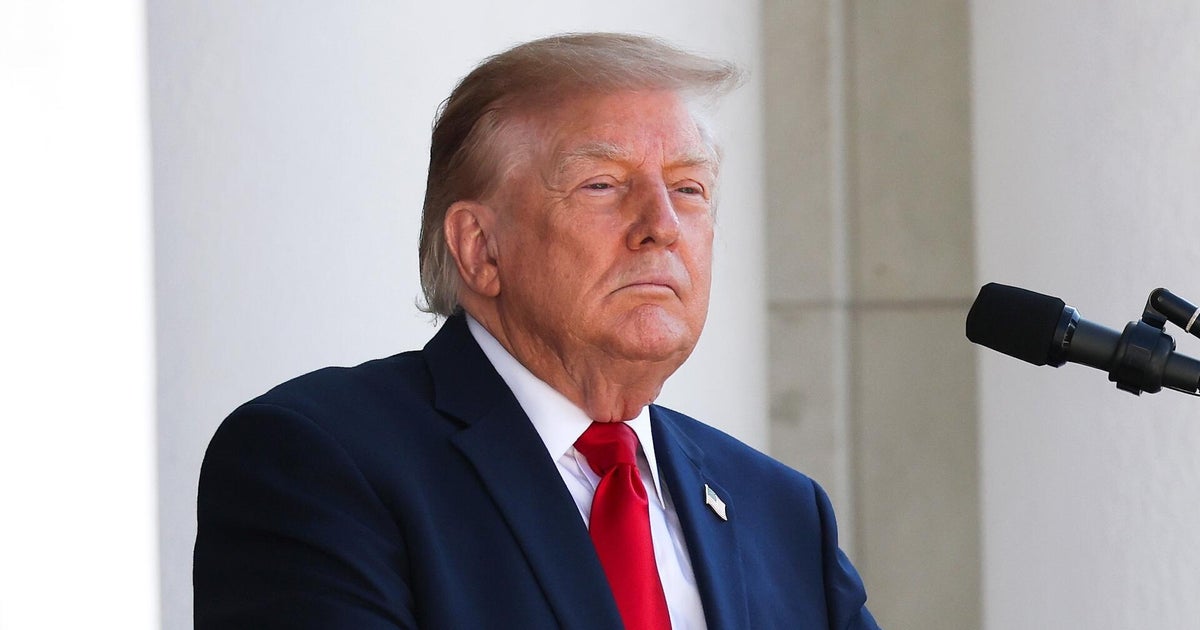
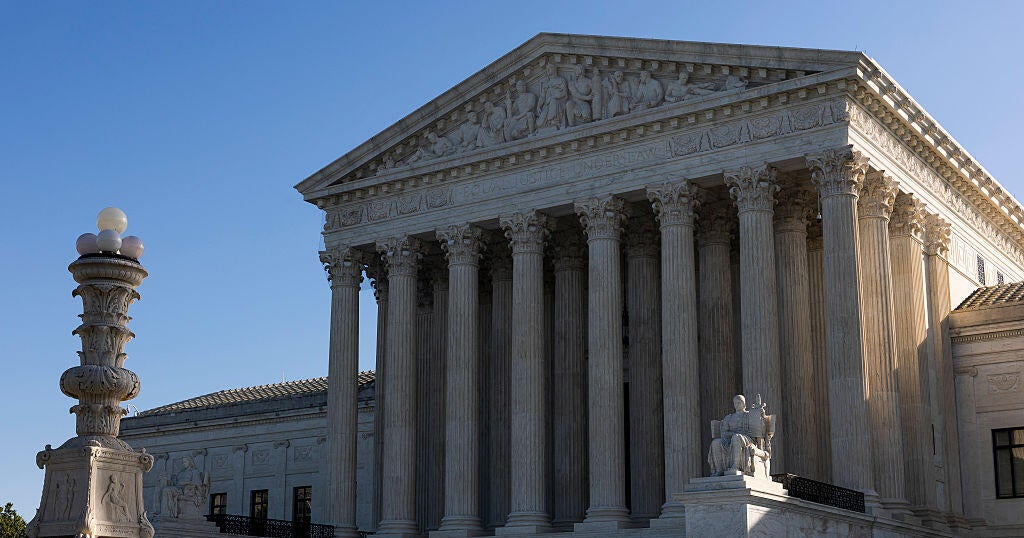
Photo via CBS News

Supreme Court gears up for new term with major cases on climate change, guns

Read the original at CBS News ↗
Cite

Quinn, M. (2026, October 4). Supreme Court gears up for new term with major cases on climate change, guns. CBS News. https://www.cbsnews.com/news/supreme-court-new-term-2026-climate-change-immigration-guns/

Dated when The Aporia collected the article, usually within hours of publication. Check the original for its exact date and byline.

CBS News · collected 2026-10-04 · by Melissa Quinn

Quick Summary

The Supreme Court's new term begins on October 5th and will include significant cases related to climate change and gun laws. One major case involves Suncor Energy v. County Commissioners of Boulder County, where the court will determine if federal law prevents local governments from suing fossil fuel companies over climate impacts in state courts. This decision could affect similar lawsuits across the country and has implications for how responsibility for climate change is assigned to specific industries versus broader national policies.
Written by AI on 2026-10-04, from this article's own text only (the story summary below draws on all the coverage).
See how they differ ↓

AI analysis

Story summary

The Supreme Court opened its new term on Monday by hearing arguments in Suncor Energy v. Boulder County, a landmark case that could determine whether states and local governments can sue oil and gas companies for climate change damages. The case, which began in 2018 when Boulder County sued Exxon Mobil and Suncor Energy, accuses these companies of contributing to climate-related harms through their fossil fuel operations. The lawsuit aims to hold the companies financially responsible for local climate impacts using state tort laws.

If the Supreme Court allows such lawsuits, it could set a precedent for similar cases across the nation, potentially affecting industries that emit carbon and leading to increased costs for consumers due to higher legal liabilities. Conversely, if the court rules against Boulder County, it would limit states' ability to use their courts for addressing national policy issues like climate change through tort law, thereby protecting manufacturers from an expanding patchwork of lawsuits based on complex environmental problems.

Written for “Supreme Court Climate Case” on 2026-11-21, grounded in this article and the 35 other(s) covering the same event.

How they differ

12 outlets covered “Supreme Court Climate Case”.

What each outlet says

One AI summary per outlet of its latest article on this story, written from that article alone and checked against it. Open the article for the outlet's own words.

CBS NewsThis outlet4 Oct

The Supreme Court's new term begins on October 5th and will include significant cases related to climate change and gun laws. One major case involves Suncor Energy v. County Commissioners of Boulder County, where the court will determine if federal law prevents local governments from suing fossil fuel companies over climate impacts in state courts. This decision could affect similar lawsuits across the country and…

Supreme Court gears up for new term with major cases on climate change, guns (this article)7 articles from CBS News on this story
Washington Examiner5 Oct

During a Supreme Court hearing on Suncor Energy v. County Commissioners of Boulder County, Justice Elena Kagan compared Boulder’s climate lawsuit against oil companies to the lawsuits filed against tobacco companies in the 1990s. The case focuses on whether Boulder’s lawsuit can proceed under state law or is preempted by federal regulations regarding air pollution and greenhouse gas emissions. Shanmugam…

Justice Kagan compares Boulder’s climate lawsuit to ‘big tobacco’ lawsuits →9 articles from Washington Examiner on this story
Fox News10 Oct

Energy policy experts warn that a Supreme Court decision in favor of climate change lawsuits against oil companies could lead to the bankruptcy of these firms and significant increases in gas prices. The case, Suncor v. Boulder, centers on whether federal law preempts state legal claims seeking damages from fossil fuel producers for alleged climate-related harms. During oral arguments, Justice Clarence Thomas…

Supreme Court climate case could bankrupt oil companies, send gas prices soaring, experts warn →5 articles from Fox News on this story
NPR5 Oct

Today marks the start of a significant Supreme Court term with arguments in a major climate change case where Boulder, Colorado is suing Suncor and Exxon Mobil for misleading the public about fossil fuel harms. Meanwhile, Brazil's presidential race will head to a runoff between Luiz Inácio Lula da Silva and Flávio Bolsonaro after neither candidate secured enough votes in the first round.

SCOTUS hears major climate change case. And, Brazil's presidential race goes to runoff →3 articles from NPR on this story
NBC News5 Oct

The Supreme Court's new term starts with a case where oil companies seek to dismiss lawsuits filed by cities like Boulder, Colorado, claiming the companies should pay damages for climate change impacts. The lawsuit against Exxon Mobil and Suncor Energy alleges these firms misled consumers about greenhouse gas effects, while the defendants deny wrongdoing and argue that federal jurisdiction, not states, is…

New Supreme Court term begins with a climate change case seeking to hold energy companies liable →3 articles from NBC News on this story
Reason5 Oct

The Supreme Court is set to hear oral arguments in the case of Suncor Energy v. Boulder County on October 9th, where fossil fuel companies are arguing that all state-law-based tort lawsuits regarding climate change damages should be preempted by federal law. This could have significant implications for environmental and climate policy in the United States. The author will discuss this case at two events: one at Penn…

Unpacking the Suncor Oral Argument →2 articles from Reason on this story
Show 6 more outlets
Los Angeles Times5 Oct

During a Supreme Court hearing, justices expressed skepticism about allowing state-based lawsuits against oil producers over climate change damages. Justices Brett Kavanaugh and Elena Kagan suggested that such claims might be preempted by federal law under the Clean Air Act. The case involves Colorado’s ruling that Boulder County can sue for damages in local court, which could impact similar pending litigation in…

Supreme Court sounds wary of state-based climate change suits against oil producers →2 articles from Los Angeles Times on this story
The Straits Times5 Oct

The US Supreme Court is set to hear arguments in Suncor v Boulder on October 5, where plaintiffs from Colorado are suing oil companies for damages related to climate change. The case involves claims that ExxonMobil and Suncor knowingly caused and concealed the dangers of fossil fuels, resulting in significant financial losses due to extreme weather events. At stake is whether federal law pre-empts these state-level…

US Supreme Court hears bid to shut the door on climate suits →
ABC News (US)5 Oct

The Supreme Court's new term starts with significant cases involving climate change, gun rights, and immigration policies. In the climate change case, energy companies Suncor and ExxonMobil seek to block lawsuits in Boulder, Colorado, where local officials claim these companies should contribute financially to damages caused by climate change. The court will also examine challenges to state laws banning certain…

Supreme Court term begins with cases on climate change, immigration and gun rights →
Toronto Star5 Oct

The Supreme Court's new term begins with significant cases addressing climate change, gun control, and immigration policies. Energy companies like Suncor and ExxonMobil are challenging lawsuits in Boulder, Colorado, which seek to hold them financially responsible for damages caused by climate change. Additionally, the court will consider challenges to state laws banning assault-style weapons and Trump's deportation…

A new Supreme Court term begins with cases on climate change, immigration and gun rights →
The Guardian5 Oct

The US Supreme Court will hear arguments on Monday concerning Suncor Energy’s and ExxonMobil’s bid to block climate damage lawsuits brought by Boulder County. Local officials argue that these oil companies should cover some of the costs associated with climate impacts, while the companies assert federal law prevents state courts from handling such cases. If the court rules in favor of the fossil fuel industry, it…

US supreme court to hear big oil’s bid to block climate damage lawsuits →
CBC6 Oct

The U.S. Supreme Court heard arguments on whether local governments can sue oil and gas companies for climate damages in state courts. Boulder, Colorado, is suing Suncor and ExxonMobil to recover costs from climate-related disasters like the Marshall Fire, which caused $2 billion in damage. Chief Justice John Roberts expressed concern about a potential flood of similar lawsuits across the country, while Justice…

What U.S. Supreme Court judges said at a hearing on climate damages from oil and gas →

Where they agree and split

Agreed

AI · cited, from two or more outlets

  • The case involves whether state courts can hear lawsuits against energy companies for damages related to climate change.13
Quoted from the coverage (2)

About a dozen states have banned semiautomatic rifles like AR-15s, which are often called assault weapons.

4 outlets

Justice Elena Kagan compared the climate change lawsuits to previous claims against tobacco and opioid companies brought by states on behalf of their citizens.

4 outlets

Disputed

Picked by our model, which is sometimes wrong

  • CBS News and The Guardian present different perspectives on the potential impact of the Supreme Court's decision, with CBS focusing on the procedural aspects while The Guardian emphasizes the broader implications for climate accountability.13

Framing

How the first headlines put it

  • CBS News and The Straits Times both frame the case as a bid to shut down climate change lawsuits, but CBS focuses more on the procedural aspects while The Straits Times highlights the broader implications.12
  • ABC News frames the Supreme Court's new term with multiple high-profile cases including climate change, immigration, and gun rights, whereas Fox News emphasizes the potential financial impact on oil companies if the court rules in favor of local governments.45
The full story: what happened, how it changed, and all 36 articles →

Compared with similar articles

This article reads unscored and hedges 9% of its claims. Each row says how that neighbour differs.
Reason
Leans left Hedges 4 of 28 claims Outlet record 67/100
“Both articles discuss the upcoming Supreme Court term but mention different cases and issues, indicating they are describing related topics rather than the exact same event.”
Reason
Hedges 18 of 87 claims Outlet record 67/100
“Article A discusses Prof. Adler's amicus brief in Suncor Energy v. Boulder County, while Article B is about the broader start of the Supreme Court's new term and mentions a lawsuit on Monday but does not specify it as being related to Suncor.”
The Guardian
Leans strongly left Hedges 1 of 21 claims Outlet record 64/100
“Article A describes states and cities suing over EPA's repeal of emissions rules, while Article B discusses the Supreme Court's upcoming term with various high-profile cases including climate change disputes.”
The Straits Times
Leans right Hedges 2 of 37 claims Outlet record 64/100
“The articles discuss different aspects and timelines related to the start of the Supreme Court's new term, covering various cases but not focusing on the exact same incident or occurrence.”
NBC News
Hedges 4 of 42 claims Outlet record 78/100
“The articles refer to different aspects of the Supreme Court's upcoming new term: Article A focuses on President Trump's criticisms and previous rulings, while Article B discusses major cases involving climate change, guns, and immigration policies.”
Fox News
Hedges 3 of 56 claims Outlet record 66/100
NPR
Hedges 8 of 51 claims Outlet record 60/100
“Article A discusses the upcoming Supreme Court term, while Article B mentions SCOTUS hearing a major climate change case but also includes unrelated international news about Brazil's presidential race and an incident involving a flydubai flight.”
Reason
Hedges 2 of 10 claims Outlet record 67/100
“Article A discusses general cases for the new Supreme Court term, while Article B focuses specifically on the upcoming Suncor Energy v. Boulder County case involving climate change tort suits.”
CBS News
Hedges 6 of 88 claims Outlet record 66/100
“The articles discuss different aspects of the Supreme Court without describing the same specific incident.”
NBC News
Outlet record 78/100
“Article A discusses the Supreme Court gearing up for its new term, while Article B reports on arguments being heard in a climate change lawsuit during the new term.”

Story

Supreme Court Climate Case
Environment · 36 article(s) covering the same event. Compare every outlet's account →
How this article was measured signals, leaning charts, publisher record, byline, topics and claims

Signals How these are calculated →

Claims extracted
102
sentences that state something as happening or true
Uncertain
9%
9 of 102 hedged ("reportedly", "may", "according to")
Leaning
withheld
no quote in the article backed the model's score
Publisher signals
66/100
CBS News's corrections and hedging, across everything collected from it. Not a measure of accuracy.
Outlets on this story
36
Environment
Same framing elsewhere
1
articles that frame the event the way this one does
Analyzed 2026-10-04 · how these are computed

How this is being covered How these are calculated →

Article leaning vs. publisher reliability
Source leaning vs. consistency

Publisher

CBS News · 5941 article(s) · 11 correction(s) detected
Running correction rate · 11 correction(s)

Who wrote this

Melissa Quinn
47 article(s) here · 1 carrying a prediction
"Critical to Kirkland's willingness to enter into the Truth Social agreement was that it retain absolute discretion in deciding which matters to take and could decline to take matters suggested by the Administration," Wilkinson wrote.
Federal Reserve Governor Lisa Cook will not participate in an upcoming White House hearing to examine allegations she made false statements on mortgage documents unless concerns about the process are first addressed, her lawyer said in a letter to the White House obtained by CBS News.
The Justice Department had warned that if the high court allowed the decision from the U.S. Court of Appeals for the 9th Circuit to stand, as it now has done, it would clear the way for taxpayer dollars to go to research projects promoting DEI initiatives.
This is a breaking story and will be updated.
The Supreme Court on Friday said it will take up a legal fight over President Trump's directive suspending access to the asylum system and other legal protections for migrants illegally crossing the southern border.
said congressional subpoenas could prompt probes from the executive branch.
After seeing success in reshaping the federal judiciary in his first term and the initial two years of his second administration, President Trump and Republicans' campaign to shift the courts to the right could be coming to an end with Democrats poised to take control of the Senate next year.
Justice Ketanji Brown Jackson said she would have denied the Justice Department's request for emergency relief.
, Democrats may be poised to push forward with their court-focused plans after winning control of the House and Senate in theDemocrats are expected to in the Senate and at least , giving them the opportunity to take up legislation that stood no chance of advancing in the GOP-led Congress.
The National Capital Planning Commission voted Thursday to approve plans for President Trump's 250-foot triumphal arch, giving the final go-ahead for the monument that's set to be constructed between the Lincoln Memorial and Arlington National Cemetery.
Also by Melissa Quinn
Nothing else under this byline is closely related to this article, so these are simply their most recent.
All 47 articles by Melissa Quinn →

Topics

Boulder Boulder County Exxon Suncor Energy the Supreme Court

Subjects

the Supreme Court ORG · 9× Boulder GPE · 4× Boulder County GPE · 3× Exxon ORG · 3× Suncor ORG · 3× Colorado GPE · 2× Suncor Energy ORG · 2× Trump PERSON · 2× Washington GPE · 1× the Supreme Court's ORG · 1×

Narrative

In its decision, the 2nd Circuit panel of judges said accepting the administration's interpretation of immigration law would "send a seismic shock through our immigration detention system and society, straining our already overcrowded detention infrastructure, incarcerating millions, separating families, and disrupting communities."
framing: assertive · carried by 1 article(s) · first seen 2026-10-04
The start of the Supreme Court's new term is quickly approaching, with cases involving climate change, President Trump's immigration policies and the Second Amendment among the most high-profile disputes the justices will hear in the coming months.

Claims (102 extracted, 9 hedged)

The start of the Supreme Court's new term is quickly approaching, with cases involving climate change, President Trump's immigration policies and the Second Amendment among the most high-profile disputes the justices will hear in the coming months. asserted
justices → approach → months
But waiting in the wings at the Supreme Court are several legal battles involving Mr. Trump's second-term agenda, which will be discussed by the justices in forthcoming closed-door conferences and, if taken up by the court, decided by the summer of 2027. asserted
which → wait → 2027
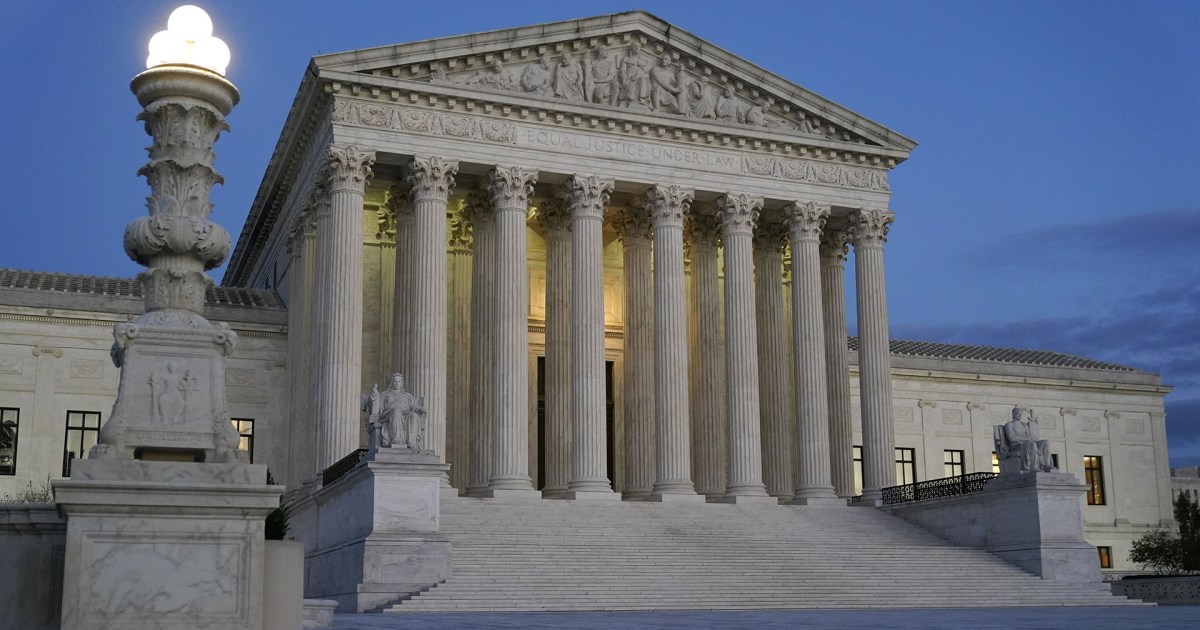
The Supreme Court kicks off its term Monday with arguments involving a lawsuit filed in state court by the city and county of Boulder, Colorado, that seeks to hold energy companies accountable for the effects of global climate change. asserted
companies → kick → change
Here are the big cases that the Supreme Court is poised to decide so far in its upcoming term, which begins Oct. 5: asserted
which → poise → term
Climate change: Suncor Energy v. County Commissioners of Boulder County On the first day of the new term, the Supreme Court will hear arguments in a dispute between Boulder and two energy companies, Suncor Energy and Exxon Mobil. asserted
Court → hear → Boulder
The question before the Supreme Court is a technical one: Whether federal law prevents Boulder County from suing energy companies in state court and claiming that the sale and allegedly deceptive marketing of fossil fuels violates state law. uncertain
sale → prevent → law
The outcome of the case could have significant ramifications for dozens of similar lawsuits brought by states and localities that seek to hold fossil-fuel producers accountable for the effects of climate change. uncertain
producers → have → change
A decision in favor of the energy companies would block Boulder's lawsuit, which is still in its early stages and seeks money damages. asserted
which → block → damages
Lawyers for Exxon and Suncor warn that if the Supreme Court allows these suits to move forward and they are ultimately successful, they would effectively impose a carbon tax on fossil-fuel producers and "bankrupt" the industry. asserted
they → warn → industry
In filings with the Supreme Court, they called climate change "one of the most complex public-policy challenges of our time," resulting from the buildup of greenhouse gases that are emitted by every state and every country. asserted
that → call → state
Those emissions, Suncor and Exxon lawyers said, "cannot be unmixed and traced to their individual sources." asserted
lawyers → say → sources
The case landed at the Supreme Court on appeal from the Colorado Supreme Court, which allowed Boulder's lawsuit to proceed. asserted
lawsuit → land → Court
The high court will also consider whether it has jurisdiction to review that decision. asserted
it → consider → decision
The energy companies warned that if that ruling is upheld and adopted on a nationwide scale, it would give the green light to all 50 states and their municipalities "to ask local courts to establish countless, conflicting climate policies for the Nation." asserted
it → warn → Nation
Lawyers for Boulder County argued that the Constitution allows states to address the harms that arise within their own borders. asserted
that → argue → borders
Whether those harms should be better addressed at the federal level is a decision that rests with Congress, they said. asserted
they → address → Congress
The county officials said the energy companies rushed to the Supreme Court and instead should wait until the state court has issued its final decision in the case before seeking review. asserted
court → say → review
"That climate change is a global problem does not disempower states from redressing its local harms either," they wrote. asserted
they → disempower → harms
"This litigation is not an attempt to solve climate change; it merely asks that petitioners bear their fair share of local costs incurred in part because of their tortious conduct." asserted
petitioners → solve → conduct
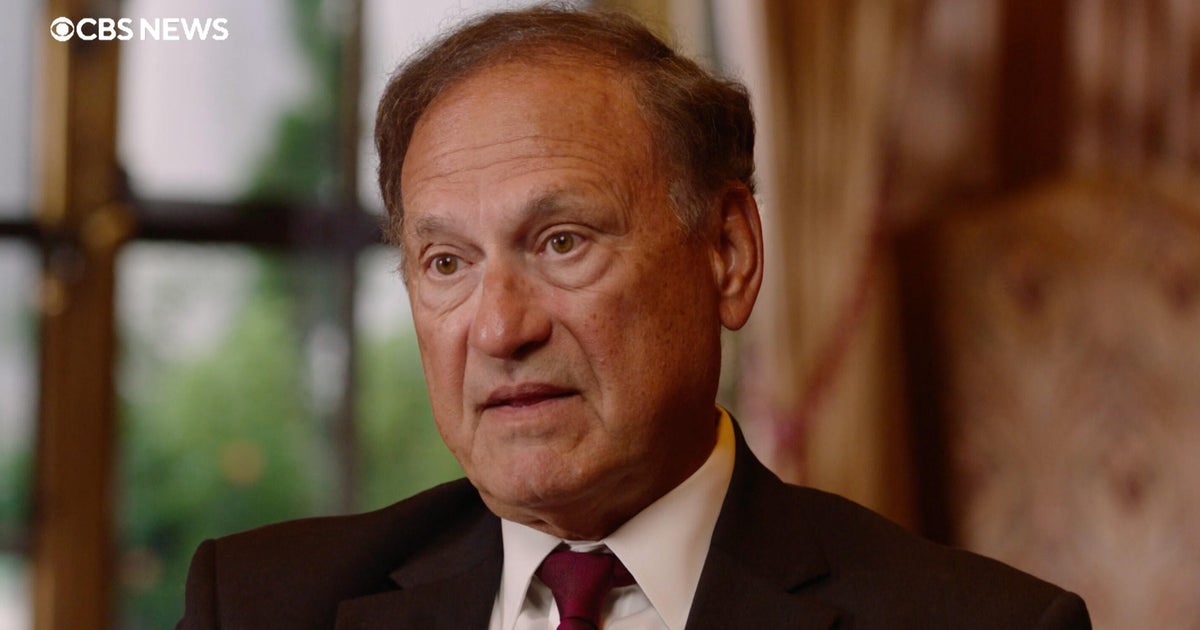
Justice Samuel Alito in the case, according to a letter sent to lawyers for the parties Monday. uncertain
Alito → accord → parties
The letter did not include a reason for his recusal. asserted
letter → include → recusal
In his financial disclosure for 2025, Alito reported owning stocks in two energy companies, ConocoPhillips and Phillips 66, but did not list individual holdings in Exxon or Suncor. asserted
Alito → report → Exxon
On Nov. 3, the justices will convene for arguments in a case involving a Catholic preschool in Colorado that from the state's universal preschool program. asserted
justices → convene → program
The dispute is the latest in which the Supreme Court will consider participation by religious entities in state-funded programs. asserted
Court → consider → programs
Colorado's program provides state funding for families to send their 4-year-olds to the preschool of their choosing. asserted
families → provide → choosing
The program allows all children in the state to receive up to 15 hours of free preschool each week before they enter kindergarten. asserted
they → allow → kindergarten
Families can send their children to public or private preschools, or to faith-based or in-home providers. asserted
Families → send → providers
The law creating the program includes a nondiscrimination provision, which requires all schools to ensure children have the equal opportunity to attend regardless of their or their parents' religious affiliation, race, ethnicity, sexual orientation, gender identity, lack of housing or income level. asserted
children → create → housing
In 2023, the Archdiocese of Denver, which oversees more than 30 Catholic preschools, requested an exemption from the universal preschool program's nondiscrimination rule so it could admit only participating families who adhere to the Catholic Church's teachings, including on gender identity and sexual orientation. uncertain
who → oversee → identity
But the Colorado Department of Early Childhood declined to provide the accommodation. asserted
Department → decline → accommodation
In response, the Archdiocese, two parishes and a family with children who attend parish schools sued and argued they were entitled to an exemption under the First Amendment's Free Exercise Clause. asserted
they → attend → Clause
The plaintiffs said because the universal preschool program created exemptions to the nondiscrimination requirement, it was not neutral and generally applicable. asserted
it → say → requirement
The Supreme Court said in a 1990 decision called Employment Division v. Smith that laws burdening the free exercise of religion generally do not violate the First Amendment as long as they're neutral and generally applicable. asserted
they → say → Amendment
A federal district court sided with the state in June 2024, and the U.S. Court of Appeals for the 10th Circuit upheld that decision, finding that the program's nondiscrimination rule "exists in harmony with the First Amendment" and doesn't violate the plaintiffs' free exercise rights. asserted
rule → side → rights
Gun rights: Viramontes v. Cook County and Grant v. Higgins This latest Second Amendment dispute to arise following the Supreme Court's landmark 2022 decision expanding gun rights involves and similar semiautomatic weapons. asserted
dispute → arise → weapons
The two cases, which will be argued Dec. 2, involve a Connecticut law and an ordinance in Cook County, Illinois. asserted
which → argue → County
Cook County's prohibition was put in place nearly 20 years ago, while Connecticut tightened its rules for semiautomatic firearms after the 2012 mass shooting at Sandy Hook Elementary School. asserted
Connecticut → put → School
More than 10 states and the District of Columbia prohibit AR-15-style semiautomatic weapons. asserted
states → prohibit → weapons
In both of the cases from Illinois and Connecticut, lower courts upheld the bans. asserted
courts → uphold → bans
The appeals courts each applied the new standard for determining the constitutionality of gun restrictions that the Supreme Court laid out in 2022, which requires the government to show that a law is consistent with the nation's historical tradition of firearms regulation. asserted
law → apply → regulation
…and 62 more, not listed.
Give feedback · no sign-in needed

No sign-in needed for now. Your note is sent without a name, so it cannot be answered.

History Support