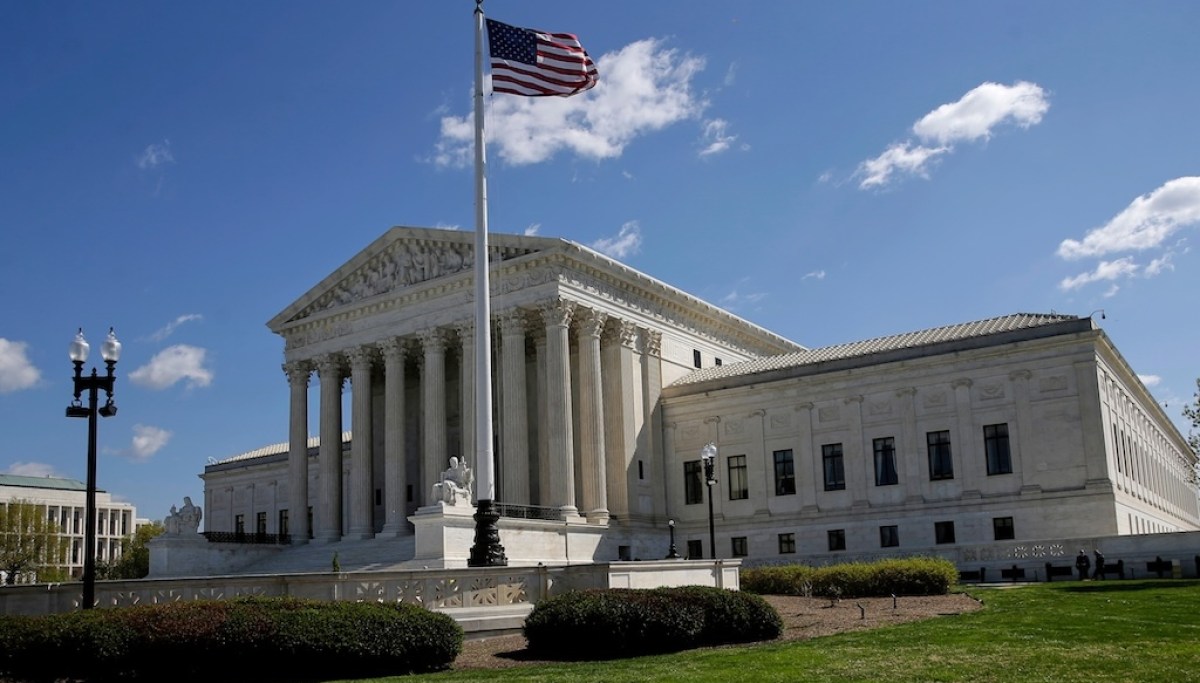
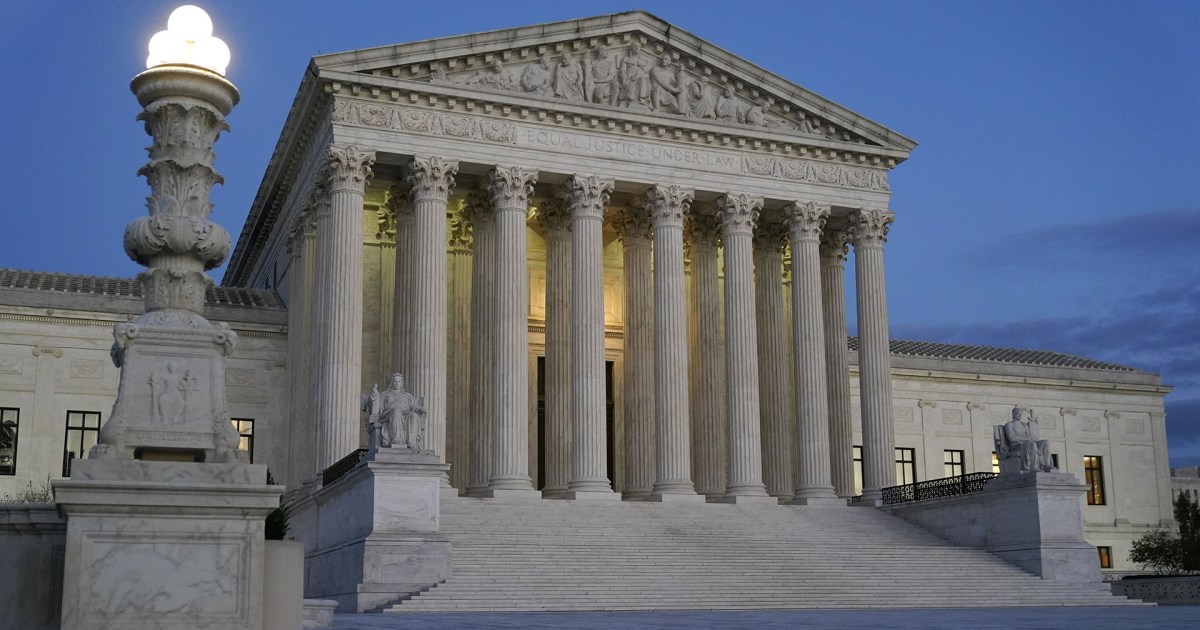
Photo via Los Angeles Times

Supreme Court sounds wary of state-based climate change suits against oil producers

Read the original at Los Angeles Times ↗
Cite

Savage, D. G. (2026, October 5). Supreme Court sounds wary of state-based climate change suits against oil producers. Los Angeles Times. https://www.latimes.com/politics/story/2026-10-05/supreme-court-sounds-wary-of-state-based-climate-change-suits-against-oil-producers

Dated when The Aporia collected the article, usually within hours of publication. Check the original for its exact date and byline.

Los Angeles Times · collected 2026-10-05 · by David G. Savage

Quick Summary

During a Supreme Court hearing, justices expressed skepticism about allowing state-based lawsuits against oil producers over climate change damages. Justices Brett Kavanaugh and Elena Kagan suggested that such claims might be preempted by federal law under the Clean Air Act. The case involves Colorado’s ruling that Boulder County can sue for damages in local court, which could impact similar pending litigation in California and elsewhere.
Written by AI on 2026-10-05, from this article's own text only (the story summary below draws on all the coverage).
See how they differ ↓

AI analysis

Story summary

The Supreme Court opened its new term on Monday by hearing arguments in Suncor Energy v. Boulder County, a landmark case that could determine whether states and local governments can sue oil and gas companies for climate change damages. The case, which began in 2018 when Boulder County sued Exxon Mobil and Suncor Energy, accuses these companies of contributing to climate-related harms through their fossil fuel operations. The lawsuit aims to hold the companies financially responsible for local climate impacts using state tort laws.

If the Supreme Court allows such lawsuits, it could set a precedent for similar cases across the nation, potentially affecting industries that emit carbon and leading to increased costs for consumers due to higher legal liabilities. Conversely, if the court rules against Boulder County, it would limit states' ability to use their courts for addressing national policy issues like climate change through tort law, thereby protecting manufacturers from an expanding patchwork of lawsuits based on complex environmental problems.

Written for “Supreme Court Climate Case” on 2026-11-21, grounded in this article and the 35 other(s) covering the same event.

How they differ

12 outlets covered “Supreme Court Climate Case”.

What each outlet says

One AI summary per outlet of its latest article on this story, written from that article alone and checked against it. Open the article for the outlet's own words.

Los Angeles TimesThis outlet5 Oct

During a Supreme Court hearing, justices expressed skepticism about allowing state-based lawsuits against oil producers over climate change damages. Justices Brett Kavanaugh and Elena Kagan suggested that such claims might be preempted by federal law under the Clean Air Act. The case involves Colorado’s ruling that Boulder County can sue for damages in local court, which could impact similar pending litigation in…

Supreme Court sounds wary of state-based climate change suits against oil producers (this article)2 articles from Los Angeles Times on this story
Washington Examiner5 Oct

During a Supreme Court hearing on Suncor Energy v. County Commissioners of Boulder County, Justice Elena Kagan compared Boulder’s climate lawsuit against oil companies to the lawsuits filed against tobacco companies in the 1990s. The case focuses on whether Boulder’s lawsuit can proceed under state law or is preempted by federal regulations regarding air pollution and greenhouse gas emissions. Shanmugam…

Justice Kagan compares Boulder’s climate lawsuit to ‘big tobacco’ lawsuits →9 articles from Washington Examiner on this story
CBS News6 Oct

The U.S. Supreme Court heard oral arguments regarding an attempt by energy companies to prevent a lawsuit filed by Boulder County and the city of Boulder, Colorado. The plaintiffs aim to hold these companies responsible for damages caused by global climate change. Eight justices participated in the hearing.

U.S. Supreme Court wrestles with bid by energy companies to block major climate suit →7 articles from CBS News on this story
Fox News10 Oct

Energy policy experts warn that a Supreme Court decision in favor of climate change lawsuits against oil companies could lead to the bankruptcy of these firms and significant increases in gas prices. The case, Suncor v. Boulder, centers on whether federal law preempts state legal claims seeking damages from fossil fuel producers for alleged climate-related harms. During oral arguments, Justice Clarence Thomas…

Supreme Court climate case could bankrupt oil companies, send gas prices soaring, experts warn →5 articles from Fox News on this story
NPR5 Oct

Today marks the start of a significant Supreme Court term with arguments in a major climate change case where Boulder, Colorado is suing Suncor and Exxon Mobil for misleading the public about fossil fuel harms. Meanwhile, Brazil's presidential race will head to a runoff between Luiz Inácio Lula da Silva and Flávio Bolsonaro after neither candidate secured enough votes in the first round.

SCOTUS hears major climate change case. And, Brazil's presidential race goes to runoff →3 articles from NPR on this story
NBC News5 Oct

The Supreme Court's new term starts with a case where oil companies seek to dismiss lawsuits filed by cities like Boulder, Colorado, claiming the companies should pay damages for climate change impacts. The lawsuit against Exxon Mobil and Suncor Energy alleges these firms misled consumers about greenhouse gas effects, while the defendants deny wrongdoing and argue that federal jurisdiction, not states, is…

New Supreme Court term begins with a climate change case seeking to hold energy companies liable →3 articles from NBC News on this story
Show 6 more outlets
Reason5 Oct

The Supreme Court is set to hear oral arguments in the case of Suncor Energy v. Boulder County on October 9th, where fossil fuel companies are arguing that all state-law-based tort lawsuits regarding climate change damages should be preempted by federal law. This could have significant implications for environmental and climate policy in the United States. The author will discuss this case at two events: one at Penn…

Unpacking the Suncor Oral Argument →2 articles from Reason on this story
The Straits Times5 Oct

The US Supreme Court is set to hear arguments in Suncor v Boulder on October 5, where plaintiffs from Colorado are suing oil companies for damages related to climate change. The case involves claims that ExxonMobil and Suncor knowingly caused and concealed the dangers of fossil fuels, resulting in significant financial losses due to extreme weather events. At stake is whether federal law pre-empts these state-level…

US Supreme Court hears bid to shut the door on climate suits →
ABC News (US)5 Oct

The Supreme Court's new term starts with significant cases involving climate change, gun rights, and immigration policies. In the climate change case, energy companies Suncor and ExxonMobil seek to block lawsuits in Boulder, Colorado, where local officials claim these companies should contribute financially to damages caused by climate change. The court will also examine challenges to state laws banning certain…

Supreme Court term begins with cases on climate change, immigration and gun rights →
Toronto Star5 Oct

The Supreme Court's new term begins with significant cases addressing climate change, gun control, and immigration policies. Energy companies like Suncor and ExxonMobil are challenging lawsuits in Boulder, Colorado, which seek to hold them financially responsible for damages caused by climate change. Additionally, the court will consider challenges to state laws banning assault-style weapons and Trump's deportation…

A new Supreme Court term begins with cases on climate change, immigration and gun rights →
The Guardian5 Oct

The US Supreme Court will hear arguments on Monday concerning Suncor Energy’s and ExxonMobil’s bid to block climate damage lawsuits brought by Boulder County. Local officials argue that these oil companies should cover some of the costs associated with climate impacts, while the companies assert federal law prevents state courts from handling such cases. If the court rules in favor of the fossil fuel industry, it…

US supreme court to hear big oil’s bid to block climate damage lawsuits →
CBC6 Oct

The U.S. Supreme Court heard arguments on whether local governments can sue oil and gas companies for climate damages in state courts. Boulder, Colorado, is suing Suncor and ExxonMobil to recover costs from climate-related disasters like the Marshall Fire, which caused $2 billion in damage. Chief Justice John Roberts expressed concern about a potential flood of similar lawsuits across the country, while Justice…

What U.S. Supreme Court judges said at a hearing on climate damages from oil and gas →

Where they agree and split

Agreed

AI · cited, from two or more outlets

  • The case involves whether state courts can hear lawsuits against energy companies for damages related to climate change.13
Quoted from the coverage (2)

About a dozen states have banned semiautomatic rifles like AR-15s, which are often called assault weapons.

4 outlets

Justice Elena Kagan compared the climate change lawsuits to previous claims against tobacco and opioid companies brought by states on behalf of their citizens.

4 outlets

Disputed

Picked by our model, which is sometimes wrong

  • CBS News and The Guardian present different perspectives on the potential impact of the Supreme Court's decision, with CBS focusing on the procedural aspects while The Guardian emphasizes the broader implications for climate accountability.13

Framing

How the first headlines put it

  • CBS News and The Straits Times both frame the case as a bid to shut down climate change lawsuits, but CBS focuses more on the procedural aspects while The Straits Times highlights the broader implications.12
  • ABC News frames the Supreme Court's new term with multiple high-profile cases including climate change, immigration, and gun rights, whereas Fox News emphasizes the potential financial impact on oil companies if the court rules in favor of local governments.45
The full story: what happened, how it changed, and all 36 articles →

Compared with similar articles

This article reads unscored and hedges 40% of its claims. Each row says how that neighbour differs.
Los Angeles Times
Hedges 19 of 57 claims Outlet record 95/100
CBS News
Leans left Hedges 13 of 57 claims Outlet record 66/100
The Straits Times
Leans left Hedges 6 of 19 claims Outlet record 64/100
NPR
Hedges 8 of 52 claims Outlet record 60/100
Washington Examiner
Hedges 9 of 22 claims Outlet record 67/100
Washington Examiner
Hedges 7 of 40 claims Outlet record 67/100
Reason
Hedges 2 of 10 claims Outlet record 67/100
The Guardian
Leans left Hedges 5 of 36 claims Outlet record 64/100
NBC News
Outlet record 78/100
CBC News
Leans left Hedges 6 of 41 claims Outlet record 60/100

Story

Supreme Court Climate Case
Environment · 36 article(s) covering the same event. Compare every outlet's account →
How this article was measured signals, leaning charts, publisher record, byline, topics and claims

Signals How these are calculated →

Claims extracted
25
sentences that state something as happening or true
Uncertain
40%
10 of 25 hedged ("reportedly", "may", "according to")
Leaning
withheld
no quote in the article backed the model's score
Publisher signals
95/100
Los Angeles Times's corrections and hedging, across everything collected from it. Not a measure of accuracy.
Outlets on this story
36
Environment
Same framing elsewhere
1
articles that frame the event the way this one does
Analyzed 2026-10-05 · how these are computed

How this is being covered How these are calculated →

Article leaning vs. publisher reliability
Source leaning vs. consistency

Publisher

Los Angeles Times · 341 article(s) · 0 correction(s) detected
No corrections detected for this publisher. That may mean careful reporting, or simply that nothing has been checked.

Who wrote this

David G. Savage
15 article(s) here · 1 carrying a prediction
- At issue in the appeal was whether the administration’s plan could cut off about $150 million in UC research grants.
The ACLU and immigration rights advocates said the right of individuals to seek asylum was recognized in U.S. law and could not be abolished.
- U.S. Customs and Border Protection said it does not plan to build a border wall in Big Bend National Park, but would add new patrol roads and vehicle barriers.
In its latest chapter on religion in schools, the Supreme Court debated Tuesday whether Colorado may fund private preschools for 4-year-olds but exclude Catholic schools that refuse to serve same-sex parents and their children.
- - The court cases have put a spotlight on the state vs. federal divide in election law. - The National Voter Registration Act of 1993 said voters may fill out a registration form by attesting under oath they are citizens.
- Click here to listen to this article - - The Supreme Court gave political parties and their fundraising committees lower rates for broadcast campaign ads. - Justices Sonia Sotomayor and Ketanji Brown Jackson voted to deny the administration’s appeal.
Supreme Court sounds wary of state-based climate change suits against oil producers - Click here to listen to this article - - Several justices suggested that local and state claims against oil companies may be blocked by the federal Clean Air Act. -
In its new term, the court will also hear major cases on immigration and guns.
“At this late date, ordering reversion to the 2025 map in the midst of an ongoing election would usher in electoral chaos,” the justices wrote.
- The decision will aid states that seek to scrub their voter rolls and remove those who are not citizens.
Also by David G. Savage
Nothing else under this byline is closely related to this article, so these are simply their most recent.
All 15 articles by David G. Savage →

Topics

California Clean Air Act Congress Supreme Court the Colorado Supreme Court

Subjects

California GPE · 3× Congress ORG · 2× Supreme Court ORG · 2× The Supreme Court ORG · 2× the Colorado Supreme Court ORG · 2× Boulder County GPE · 1× Brett M. Kavanaugh PERSON · 1× Colorado GPE · 1× Elena Kagan PERSON · 1× WASHINGTON GPE · 1×

Narrative

For much of the two-hour argument, the justices struggled over whether federal law imposes a limit on such lawsuits, or instead whether states and their judges are free to seek damages for the harm they have suffered.
framing: mixed · carried by 1 article(s) · first seen 2026-10-05
Supreme Court sounds wary of state-based climate change suits against oil producers - Click here to listen to this article - - Several justices suggested that local and state claims against oil companies may be blocked by the federal Clean Air Act. -

Claims (25 extracted, 10 hedged)

Supreme Court sounds wary of state-based climate change suits against oil producers - Click here to listen to this article - - Several justices suggested that local and state claims against oil companies may be blocked by the federal Clean Air Act. - uncertain
claims → sound → Act
California and nearly three dozen states and municipalities have filed such claims. uncertain
California → file → claims
The Supreme Court justices sounded wary Monday of state-by-state lawsuits that could impose huge damage verdicts on energy producers for the impact of global climate change. uncertain
that → sound → change
Instead, several of them suggested these local and state claims may be blocked by the federal Clean Air Act. uncertain
claims → suggest → Act
“Interstate air and water pollution are matters for federal law,” said Justice Brett M. Kavanaugh. asserted
Kavanaugh → say → law
“We don’t have to reinvent the wheel. asserted
We → have → wheel
This kind of pollution is a federal matter unless Congress says otherwise.” asserted
Congress → say → pollution
Justice Elena Kagan appeared to agree. asserted
Kagan → appear → ?
State-by-state lawsuits “get in way of how Congress decided to regulate greenhouse gases,” she said. asserted
she → get → gases
At issue before the court was the question of whether cities and states may sue oil and gas producers for the damages inflicted by climate change. California and nearly three dozen states and municipalities have filed such claims, but none have gone to trial. uncertain
none → sue → trial
The outcome of the Colorado case could affect California’s 2023 lawsuit against the five largest oil companies and other similar litigation. uncertain
outcome → affect → companies
Last year, the Colorado Supreme Court ruled that Boulder County may sue for damages in a local court. uncertain
County → rule → court
The Supreme Court agreed to hear an appeal from the oil industry backed by the Trump administration. asserted
Court → agree → administration
Its lawyers argued that the Constitution and federal law do not allow for such claims to be resolved in local courts. uncertain
claims → argue → courts
Chief Justice John G. Roberts sounded skeptical of opening the door to a wave of climate change lawsuits. asserted
Roberts → sound → lawsuits
How would that work out?” he asked a lawyer representing Boulder. asserted
he → work → Boulder
For much of the two-hour argument, the justices struggled over whether federal law imposes a limit on such lawsuits, or instead whether states and their judges are free to seek damages for the harm they have suffered. asserted
they → struggle → harm
They did not signal a clear outcome but most of them sounded as though they leaned toward saying that federal law governs such far-reaching damage claims. uncertain
law → signal → claims
The energy producers turned to the Supreme Court after losing in state court. asserted
producers → turn → court
They hope the high court will shut down more than three dozen lawsuits seeking damages for the impact of climate change. asserted
court → hope → change
So far, judges across the nation have been divided. asserted
judges → divide → nation
Some have ruled that federal law preempts or blocks states and counties from suing under state law. asserted
law → rule → law
But others, including the Colorado Supreme Court, ruled the lawsuits may proceed under state law. uncertain
lawsuits → include → law
Justice Samuel A. Alito, a staunch conservative, said he is sitting out the case, presumably because he owns stock in oil companies that would be affected by a ruling. asserted
that → say → ruling
If the court splits 4-4 and cannot rule, it would be major disappointment for the oil industry because it would allow all the climate-change suits to proceed, at least for now. asserted
suits → split → industry
Give feedback · no sign-in needed

No sign-in needed for now. Your note is sent without a name, so it cannot be answered.

History Support