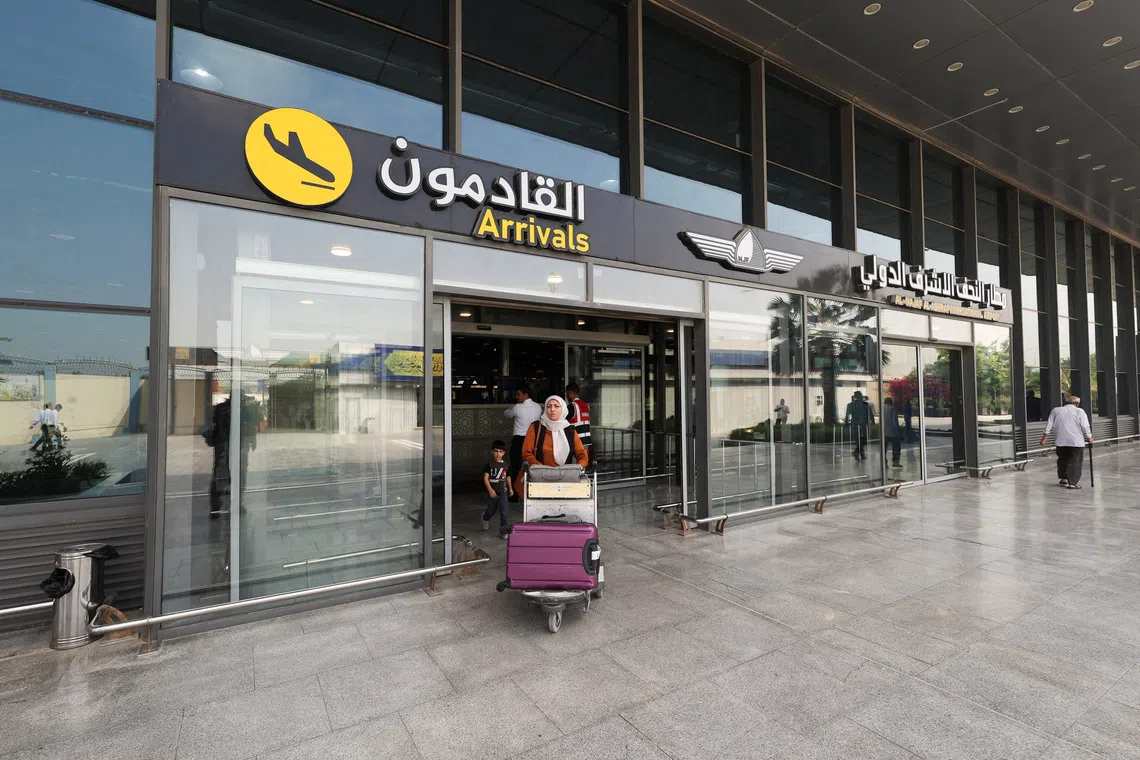
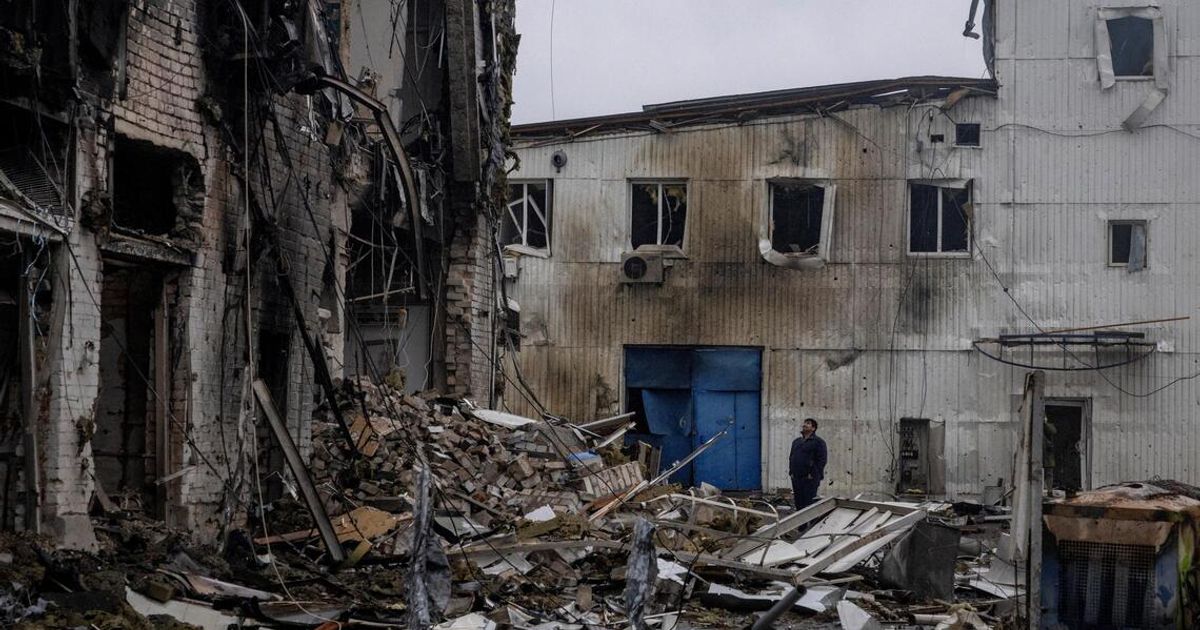
Photo via The Straits Times

No plane, no gain: US aviation sanctions ground ordinary Iranians while missing the regime

Read the original at The Straits Times ↗
Cite

The Straits Times. (2026, October 5). No plane, no gain: US aviation sanctions ground ordinary Iranians while missing the regime. The Straits Times. https://www.straitstimes.com/world/no-plane-no-gain-us-aviation-sanctions-ground-ordinary-iranians-while-missing-the-regime

Dated when The Aporia collected the article, usually within hours of publication. Check the original for its exact date and byline.

The Straits Times · collected 2026-10-05 · by The Straits Times

Quick Summary

The article discusses how U.S. sanctions on Iran's aviation sector are affecting ordinary Iranians like Hossein-Reza, who faces travel restrictions for a trip to the Netherlands. The sanctions, part of Operation Economic Outcast, have disrupted flights to several neighboring countries but not to Russia and China. These measures have created uncertainty and hardship, with some Iranians expressing frustration over unclear goals from the U.S., while others maintain resilience despite economic strain.
Written by AI on 2026-10-05, from this article's own text only (the story summary below draws on all the coverage).

AI analysis

Story summary

In August 2023, the US implemented aviation sanctions as part of Operation Economic Outcast to isolate Iran economically. This move grounded ordinary Iranians like Hossein-Reza, a 40-something documentarist, who faced difficulties booking tickets for his October trip to the Netherlands. Despite significant economic and social turmoil in Iran, including internet blockages and economic devastation, Hossein-Reza remained calm about finding alternative travel routes via road through countries such as Turkey or Armenia. The sanctions aim to pressure the Iranian regime but affect ordinary citizens more directly by disrupting their ability to travel internationally for personal reasons.

Written for “Iran Sanctions Aviation Industry” on 2026-11-20, grounded in this article and the 0 other(s) covering the same event.

Compared with similar articles

This article reads leans left and hedges 4% of its claims. Each row says how that neighbour differs.
The Straits Times
Leans strongly right further right than this Hedges 1 of 10 claims Outlet record 64/100
“The articles describe different sanctions implemented as part of Operation Economic Outcast, with Article A focusing on auto and rail sectors and Article B on aviation sanctions.”
Al Jazeera
Hedges 2 of 19 claims Outlet record 60/100
“Article A reports on a decision allowing Iranian airlines to operate up to 40 daily flights between Iran and Najaf, Iraq, following an exemption by the US. Article B discusses how US aviation sanctions are affecting ordinary Iranians' travel plans.”
New York Post
Leans right further right than this Hedges 3 of 45 claims Outlet record 66/100
“The articles discuss different aspects of US sanctions on Iran's aviation sector and do not describe the same specific incident.”
Fox News
Hedges 8 of 49 claims Outlet record 66/100
“Article A discusses flights operated by sanctioned Iranian airlines landing in Turkey, while Article B focuses on an individual's travel plans being affected by US sanctions.”

Story

Iran Sanctions Aviation Industry
Politics · 1 article(s) covering the same event.
How this article was measured signals, leaning charts, publisher record, byline, topics and claims

Signals How these are calculated →

Claims extracted
67
sentences that state something as happening or true
Uncertain
4%
3 of 67 hedged ("reportedly", "may", "according to")
Leaning
Leans left
of the writing, not the subject · beta estimate
Publisher signals
64/100
The Straits Times's corrections and hedging, across everything collected from it. Not a measure of accuracy.
Outlets on this story
1
Politics
Same framing elsewhere
1
articles that frame the event the way this one does
Analyzed 2026-10-05 · how these are computed

How this is being covered How these are calculated →

Article leaning vs. publisher reliability
Source leaning vs. consistency

Publisher

The Straits Times · 5594 article(s) · 7 correction(s) detected
Running correction rate · 7 correction(s)

Who wrote this

The Straits Times
3846 article(s) here · 1 carrying a prediction
BERLIN, Nov 20 - German Defence Minister Boris Pistorius said on Friday he had apologised for calling Pentagon policy chief Elbridge Colby's opposition to Ukrainian deep strikes into Russia "stupid" but that he would not withdraw his criticism. Tuesday's testy exchange at the NATO alliance's Brussels headquarters exposed a rift between Washington and Europe over Ukraine's military strategy of trying to take the fight inside Russia in the nearly five-year-old war since Moscow's invasion. "In hindsight, I actually think the choice of words was inappropriate – and I didn't really think it was appropriate even shortly after," Pistorius told the Politico news outlet, saying he had used an unfortunate turn of phrase as a non-native speaker in a news conference. "I shouldn't have done that," he noted, adding he had called Colby on Wednesday to discuss the incident.
While not game-changing in themselves, this week’s attacks pile pressure on an already strained logistics network in ways that Russia could struggle to mitigate, two analysts and two Ukrainian commanders said. Hitting the showcase Russian project had a strong symbolic impact, particularly in the build-up to President Vladimir Putin’s unprecedented three-way meeting with US President Donald Trump and Chinese President Xi Jinping on Nov 19.
Climate summits often end with a final text, meant to address how the world will deal with climate change.
Three bridges that cross the Dnipro river were also hit, Mayor Vitali Klitschko said, threatening yet more disruption to daily life in the city.
"Russia will have to answer for this," Jean-Noel Barrot wrote in a post on social media platform X.
Russia accuses Estonia of erecting new 'Iron Curtain' with border closure, says it will respond MOSCOW, Nov 20 - Russian Foreign Ministry spokeswoman Maria Zakharova on Friday accused Estonia of planning to erect a new "Iron Curtain" and said it would respond after Estonia said it would close its border with Russia for at least six months.
The outbreak’s location in a part of eastern Congo already facing a humanitarian crisis could be complicating what scientists are finding, several experts said, and cautioned against drawing early conclusions as data is limited, varied and often difficult to collect.
Two men to stand trial in UK next year over RAF Fairford incident allegedly linked to Iran LONDON, Nov 20 - Two men charged over September's security incident at the RAF Fairford military base, which British and US prosecutors say was orchestrated on behalf of Iran, will stand trial in London in November next year, a judge said on Friday.
VILNIUS – Estonia will close its border crossings with Russia for at least six months from Dec 1 on security grounds, the Baltic country’s government said on Nov 20.
"WE WILL TAKE OUR FUTURE BACK"
Also by The Straits Times
Nothing else under this byline is closely related to this article, so these are simply their most recent.
All 3846 articles by The Straits Times →

Topics

ISTANBUL Iran Iranians Tehran The Straits Times

Subjects

Iran GPE · 7× Iranians NORP · 5× Tehran GPE · 3× ISTANBUL GPE · 2× Iranian NORP · 2× Borzou Daragahi PERSON · 1× Hossein-Reza’s PERSON · 1× Netherlands GPE · 1× The Straits Times ORG · 1× Washington GPE · 1×

Narrative

After a year in Iran that included chaos and gunfire on the streets, warfare in the skies, internet blockages and economic devastation, and questions about the country’s very future, he is taking the travel hiccup in his stride. “I never even try to book a ticket until a day or two before I have to leave,” he said in an interview, on the condition that his full name not be published.
framing: assertive · carried by 1 article(s) · first seen 2026-10-05
Would he be able to find a ticket to Amsterdam, he wondered?

Claims (67 extracted, 3 hedged)

No plane, no gain: US aviation sanctions ground ordinary Iranians while missing the regime Borzou Daragahi asserted
sanctions → ground → regime
Hossein-Reza’s plans to leave Iran for a trip to see friends and family in the Netherlands in October were waylaid by the US imposition of sanctions on the country’s aviation sector in August as part of Operation Economic Outcast – Washington’s attempt to isolate Iran economically. asserted
plans → leave → Iran
Would he be able to find a ticket to Amsterdam, he wondered? asserted
he → find → Amsterdam
Would he be forced to travel by road to neighbouring Turkey or Armenia? asserted
he → force → Turkey
While some respond to such uncertainty with anxiety or even dread, Hossein-Reza, a 40-something documentarist, was relaxed. asserted
Reza → respond → anxiety
After a year in Iran that included chaos and gunfire on the streets, warfare in the skies, internet blockages and economic devastation, and questions about the country’s very future, he is taking the travel hiccup in his stride. “I never even try to book a ticket until a day or two before I have to leave,” he said in an interview, on the condition that his full name not be published. asserted
name → include → condition
The US has placed some of the toughest financial restrictions on Iran ever imposed on an adversary – and the sanctions continue to intensify as the conflict drags on. asserted
conflict → place → adversary
The pressure campaign has gone far beyond travel bans on targeted individuals or sanctions on the weapons trade or dual-use goods to include, since September, punishments of third-country companies that do business with 27 airlines and companies in Iran’s civilian airline sector and restrictions on the country’s auto and rail industry. asserted
that → go → industry
The result has complicated the supply of some crucial medicines into the country as well as any travel and commerce. asserted
result → complicate → country
Flights to a number of neighbouring countries – including Iraq, Azerbaijan and Oman – have been cancelled. asserted
Flights → neighbour → Iraq
However, air travel to Russia and China have not been affected, and sporadic flights to the major air hubs of Istanbul and Dubai continue. asserted
flights → affect → Istanbul
A video posted on social media platform X on Sept 24 showed a flight crew aboard an Iranian Varesh Airlines flight from Tehran to the Tajikistan capital of Dushanbe returning home after its route through Azerbaijani airspace was denied. asserted
route → post → airspace
The severe sanctions on aviation add to what many describe as growing despair and malaise among many ordinary Iranians. asserted
many → add → Iranians
“Iranians will be resilient as long as there is hope,” said one Western diplomat who recently left Tehran. asserted
who → be → Tehran
Hamidreza Ahmadi, a Tehran tech entrepreneur, described growing frustration among ordinary Iranians as they struggle to understand the uncertainties the conflict has thrust upon their lives. asserted
conflict → describe → lives
He described frustration over contradictory statements and goals by US President Donald Trump – from regime change, to a peace deal, to halting a nuclear programme supposedly destroyed in 2025, to reopening the Strait of Hormuz that was already open before the war began. asserted
war → describe → Hormuz
“Geopolitically, everyone’s very, very confused,” he said. asserted
he → ’ → ?
“Like, what do you mean America’s almost out of munitions? asserted
America → mean → munitions
They see Iran is getting weaker. asserted
Iran → see → ?
They feel that. asserted
They → feel → that
But they also see a bunch of Iranian missiles and a bunch of drones landing. asserted
bunch → see → drones
Iranians describe difficulties in securing jobs, with youth unemployment rates estimated to be as high as 50%, a freezing of investment and business expansions, as well as price increases, including for subsidised fuel and petroleum products that are the lifeblood of the Iranian economy. asserted
that → describe → economy
Prices for some drugs have tripled, according to local reports, while food prices have soared. uncertain
prices → triple → reports
Iran’s year-on-year inflation reached 84% in August. asserted
inflation → reach → August
“Sanctions are something that, wherever you are on the political spectrum, affects you on a daily basis, and nobody can see a way out of it,” Ahmadi said in an interview. asserted
Ahmadi → affect → interview
In theory, sanctions are supposed to punish the regime rather than ordinary people. asserted
sanctions → suppose → people
But compliance experts say companies effectively refrain from doing even non-restricted commerce with entities linked to a country as heavily sanctioned as Iran. asserted
companies → say → Iran
“Most companies are going to de-risk and just not assume the legal hurdles that need to be jumped through,” Brett Erickson, founder of Obsidian Risk Advisors, a US consultancy focused on international crime and due diligence, told The Straits Times. asserted
Erickson → go → Times
“And that’s something we see with Gaza and Yemen and so many countries where technically it is allowed. asserted
it → ’ → Gaza
But in reality, we see huge shortfalls as a result of companies not wanting to assume the risk. asserted
companies → see → risk
Pharmaceuticals and foods are specifically excluded from sanctions, but companies often refrain just to avoid the hassles and hurdles of any trade with Iran. asserted
companies → exclude → Iran
Trump administration officials and their supporters know that the sanctions hurt ordinary Iranians. asserted
sanctions → know → Iranians
But this is precisely the goal – raise public frustrations to a level where the people turn on the regime. asserted
people → raise → regime
Beyond sanctions, the US has very few options, experts said. asserted
experts → have → options
“The problem with sanctions is we’ve plucked all the low-hanging fruit,” Alan Eyre, a former US State Department official who was part of the team that negotiated the 2015 nuclear deal with Iran said in an interview. asserted
that → pluck → interview
“We’ve plucked all the high-hanging fruit. asserted
We → pluck → fruit
We’ve cut the tree down. asserted
We → cut → tree
So it’s not as if there are a lot of super-duper effective sanctions that we haven’t used. asserted
we → ’ → that
The latest round of sanctions significantly differs from previous rounds because they focus on an entire sector of the economy, regardless of whether an individual or company is involved in any activity deemed harmful by the US. asserted
individual → differ → US
“It essentially just cuts off the entire industry, regardless of whether it has a nexus to someone who is sanctioned by the US,” said Erickson. asserted
Erickson → cut → US
…and 27 more, not listed.

Give feedback · no sign-in needed

No sign-in needed for now. Your note is sent without a name, so it cannot be answered.

History Support