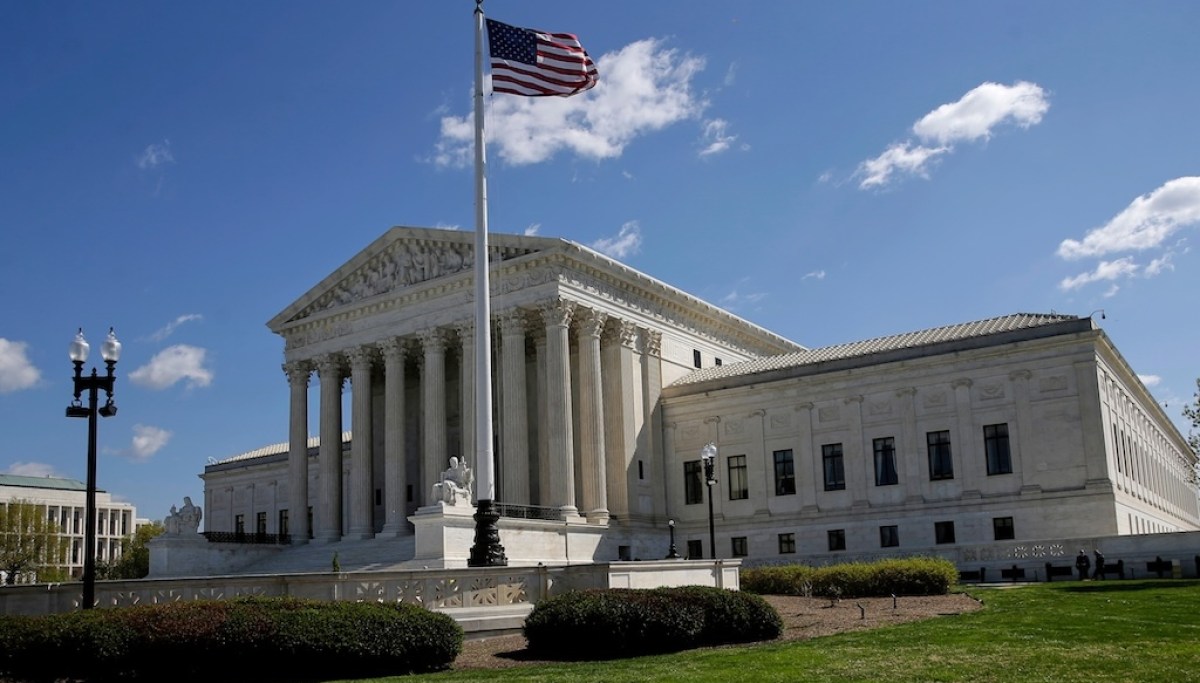
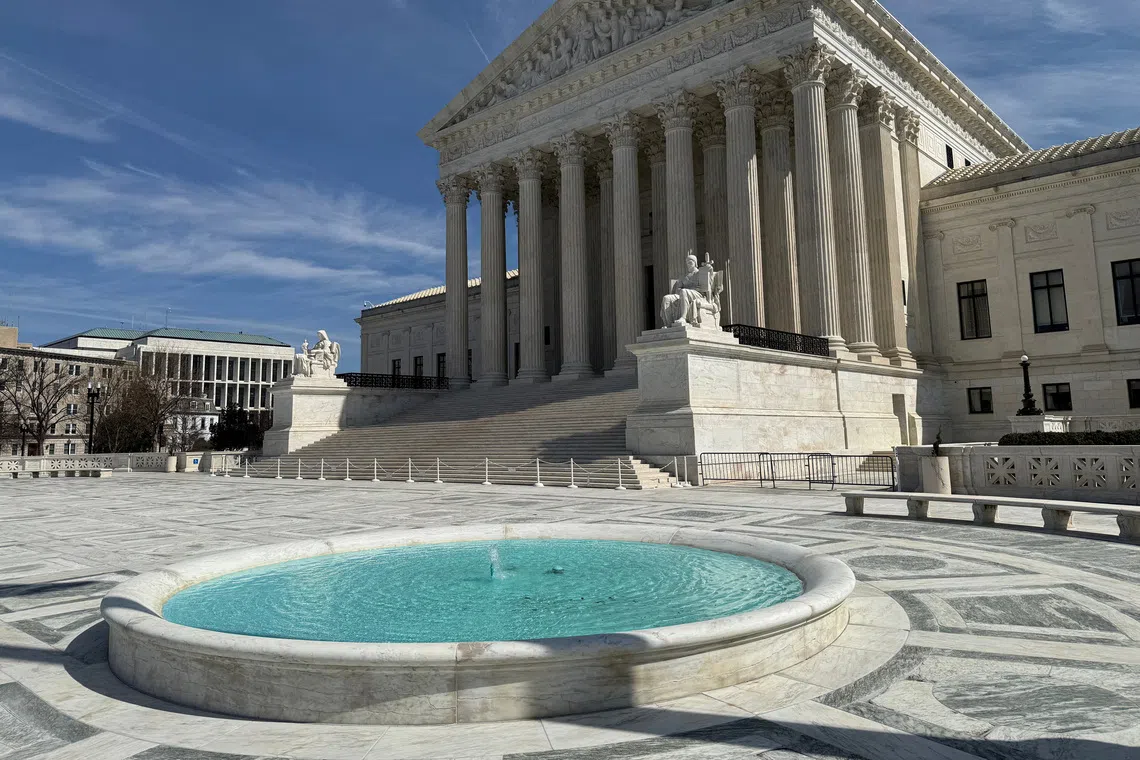
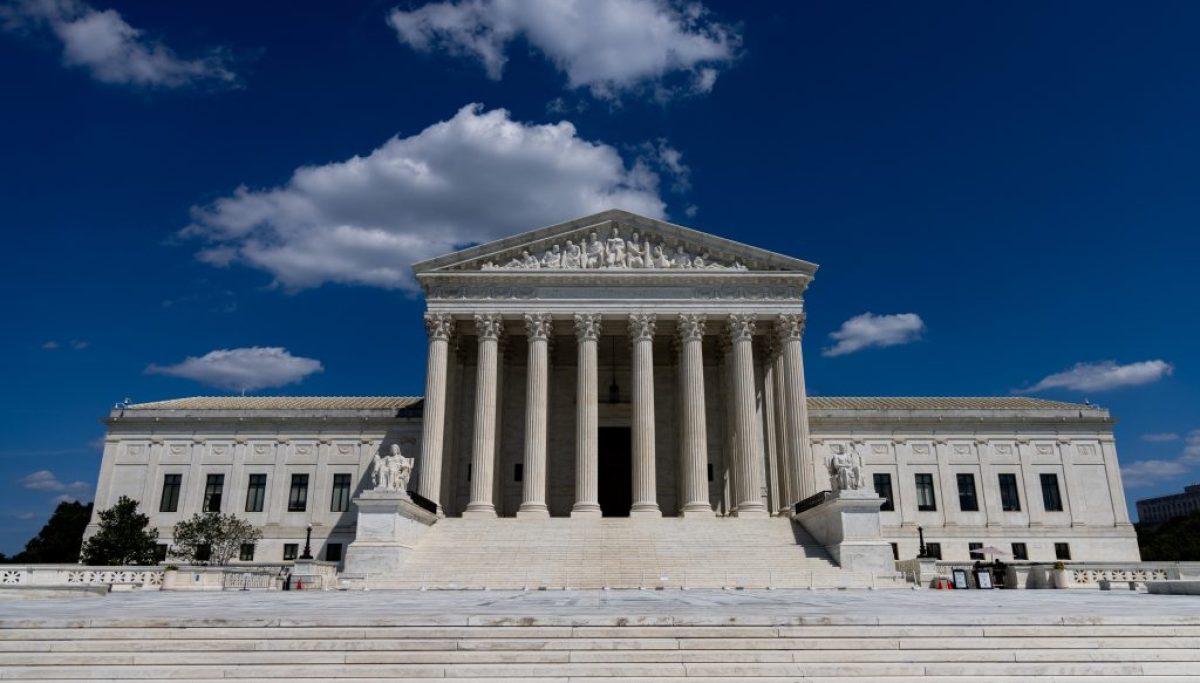
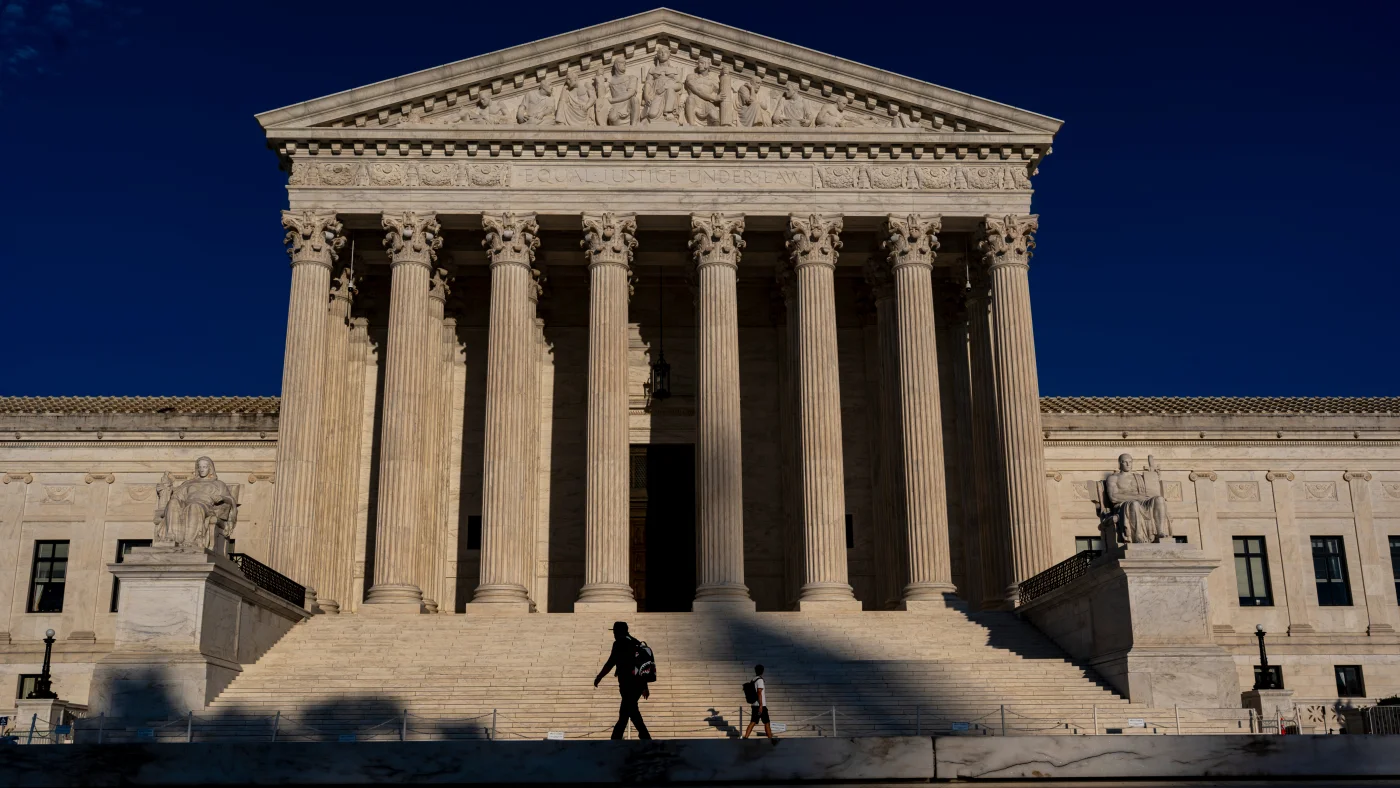
Photo via NPR

Supreme Court's new term kicks off with blockbuster climate change case

Read the original at NPR ↗
Cite

Johnson, C. (2026, October 5). Supreme Court's new term kicks off with blockbuster climate change case. NPR. https://www.npr.org/2026/10/05/nx-s1-5970070/supreme-court-climate-change-boulder-county

Dated when The Aporia collected the article, usually within hours of publication. Check the original for its exact date and byline.

NPR · collected 2026-10-05 · by Carrie Johnson

Quick Summary

The Supreme Court's new term begins with arguments in a case where Boulder County, Colorado, sues Suncor Energy and Exxon Mobil for deception about fossil fuel impacts and contribution to environmental disasters. The lawsuit alleges that these companies knew decades ago about climate change effects but concealed this information, leading to costly events like the 2021 Marshall Fire. Opponents argue that only the federal government should handle such issues due to their broad implications.
Written by AI on 2026-10-05, from this article's own text only (the story summary below draws on all the coverage).
See how they differ ↓

AI analysis

Story summary

The Supreme Court opened its new term on Monday by hearing arguments in Suncor Energy v. Boulder County, a landmark case that could determine whether states and local governments can sue oil and gas companies for climate change damages. The case, which began in 2018 when Boulder County sued Exxon Mobil and Suncor Energy, accuses these companies of contributing to climate-related harms through their fossil fuel operations. The lawsuit aims to hold the companies financially responsible for local climate impacts using state tort laws.

If the Supreme Court allows such lawsuits, it could set a precedent for similar cases across the nation, potentially affecting industries that emit carbon and leading to increased costs for consumers due to higher legal liabilities. Conversely, if the court rules against Boulder County, it would limit states' ability to use their courts for addressing national policy issues like climate change through tort law, thereby protecting manufacturers from an expanding patchwork of lawsuits based on complex environmental problems.

Written for “Supreme Court Climate Case” on 2026-11-21, grounded in this article and the 35 other(s) covering the same event.

How they differ

12 outlets covered “Supreme Court Climate Case”.

What each outlet says

One AI summary per outlet of its latest article on this story, written from that article alone and checked against it. Open the article for the outlet's own words.

NPRThis outlet5 Oct

The Supreme Court's new term begins with arguments in a case where Boulder County, Colorado, sues Suncor Energy and Exxon Mobil for deception about fossil fuel impacts and contribution to environmental disasters. The lawsuit alleges that these companies knew decades ago about climate change effects but concealed this information, leading to costly events like the 2021 Marshall Fire. Opponents argue that only the…

Supreme Court's new term kicks off with blockbuster climate change case (this article)3 articles from NPR on this story
Washington Examiner5 Oct

During a Supreme Court hearing on Suncor Energy v. County Commissioners of Boulder County, Justice Elena Kagan compared Boulder’s climate lawsuit against oil companies to the lawsuits filed against tobacco companies in the 1990s. The case focuses on whether Boulder’s lawsuit can proceed under state law or is preempted by federal regulations regarding air pollution and greenhouse gas emissions. Shanmugam…

Justice Kagan compares Boulder’s climate lawsuit to ‘big tobacco’ lawsuits →9 articles from Washington Examiner on this story
CBS News6 Oct

The U.S. Supreme Court heard oral arguments regarding an attempt by energy companies to prevent a lawsuit filed by Boulder County and the city of Boulder, Colorado. The plaintiffs aim to hold these companies responsible for damages caused by global climate change. Eight justices participated in the hearing.

U.S. Supreme Court wrestles with bid by energy companies to block major climate suit →7 articles from CBS News on this story
Fox News10 Oct

Energy policy experts warn that a Supreme Court decision in favor of climate change lawsuits against oil companies could lead to the bankruptcy of these firms and significant increases in gas prices. The case, Suncor v. Boulder, centers on whether federal law preempts state legal claims seeking damages from fossil fuel producers for alleged climate-related harms. During oral arguments, Justice Clarence Thomas…

Supreme Court climate case could bankrupt oil companies, send gas prices soaring, experts warn →5 articles from Fox News on this story
NBC News5 Oct

The Supreme Court's new term starts with a case where oil companies seek to dismiss lawsuits filed by cities like Boulder, Colorado, claiming the companies should pay damages for climate change impacts. The lawsuit against Exxon Mobil and Suncor Energy alleges these firms misled consumers about greenhouse gas effects, while the defendants deny wrongdoing and argue that federal jurisdiction, not states, is…

New Supreme Court term begins with a climate change case seeking to hold energy companies liable →3 articles from NBC News on this story
Reason5 Oct

The Supreme Court is set to hear oral arguments in the case of Suncor Energy v. Boulder County on October 9th, where fossil fuel companies are arguing that all state-law-based tort lawsuits regarding climate change damages should be preempted by federal law. This could have significant implications for environmental and climate policy in the United States. The author will discuss this case at two events: one at Penn…

Unpacking the Suncor Oral Argument →2 articles from Reason on this story
Show 6 more outlets
Los Angeles Times5 Oct

During a Supreme Court hearing, justices expressed skepticism about allowing state-based lawsuits against oil producers over climate change damages. Justices Brett Kavanaugh and Elena Kagan suggested that such claims might be preempted by federal law under the Clean Air Act. The case involves Colorado’s ruling that Boulder County can sue for damages in local court, which could impact similar pending litigation in…

Supreme Court sounds wary of state-based climate change suits against oil producers →2 articles from Los Angeles Times on this story
The Straits Times5 Oct

The US Supreme Court is set to hear arguments in Suncor v Boulder on October 5, where plaintiffs from Colorado are suing oil companies for damages related to climate change. The case involves claims that ExxonMobil and Suncor knowingly caused and concealed the dangers of fossil fuels, resulting in significant financial losses due to extreme weather events. At stake is whether federal law pre-empts these state-level…

US Supreme Court hears bid to shut the door on climate suits →
ABC News (US)5 Oct

The Supreme Court's new term starts with significant cases involving climate change, gun rights, and immigration policies. In the climate change case, energy companies Suncor and ExxonMobil seek to block lawsuits in Boulder, Colorado, where local officials claim these companies should contribute financially to damages caused by climate change. The court will also examine challenges to state laws banning certain…

Supreme Court term begins with cases on climate change, immigration and gun rights →
Toronto Star5 Oct

The Supreme Court's new term begins with significant cases addressing climate change, gun control, and immigration policies. Energy companies like Suncor and ExxonMobil are challenging lawsuits in Boulder, Colorado, which seek to hold them financially responsible for damages caused by climate change. Additionally, the court will consider challenges to state laws banning assault-style weapons and Trump's deportation…

A new Supreme Court term begins with cases on climate change, immigration and gun rights →
The Guardian5 Oct

The US Supreme Court will hear arguments on Monday concerning Suncor Energy’s and ExxonMobil’s bid to block climate damage lawsuits brought by Boulder County. Local officials argue that these oil companies should cover some of the costs associated with climate impacts, while the companies assert federal law prevents state courts from handling such cases. If the court rules in favor of the fossil fuel industry, it…

US supreme court to hear big oil’s bid to block climate damage lawsuits →
CBC6 Oct

The U.S. Supreme Court heard arguments on whether local governments can sue oil and gas companies for climate damages in state courts. Boulder, Colorado, is suing Suncor and ExxonMobil to recover costs from climate-related disasters like the Marshall Fire, which caused $2 billion in damage. Chief Justice John Roberts expressed concern about a potential flood of similar lawsuits across the country, while Justice…

What U.S. Supreme Court judges said at a hearing on climate damages from oil and gas →

Where they agree and split

Agreed

AI · cited, from two or more outlets

  • The case involves whether state courts can hear lawsuits against energy companies for damages related to climate change.13
Quoted from the coverage (2)

About a dozen states have banned semiautomatic rifles like AR-15s, which are often called assault weapons.

4 outlets

Justice Elena Kagan compared the climate change lawsuits to previous claims against tobacco and opioid companies brought by states on behalf of their citizens.

4 outlets

Disputed

Picked by our model, which is sometimes wrong

  • CBS News and The Guardian present different perspectives on the potential impact of the Supreme Court's decision, with CBS focusing on the procedural aspects while The Guardian emphasizes the broader implications for climate accountability.13

Framing

How the first headlines put it

  • CBS News and The Straits Times both frame the case as a bid to shut down climate change lawsuits, but CBS focuses more on the procedural aspects while The Straits Times highlights the broader implications.12
  • ABC News frames the Supreme Court's new term with multiple high-profile cases including climate change, immigration, and gun rights, whereas Fox News emphasizes the potential financial impact on oil companies if the court rules in favor of local governments.45
The full story: what happened, how it changed, and all 36 articles →

Compared with similar articles

This article reads unscored and hedges 15% of its claims. Each row says how that neighbour differs.
Washington Examiner
Hedges 7 of 40 claims Outlet record 67/100
NBC News
Leans left Hedges 7 of 33 claims Outlet record 78/100
Los Angeles Times
Hedges 19 of 57 claims Outlet record 95/100
Fox News
Hedges 3 of 56 claims Outlet record 66/100
The Straits Times
Leans left Hedges 6 of 19 claims Outlet record 64/100
Toronto Star
Leans left Hedges 1 of 29 claims Outlet record 64/100
Washington Examiner
Leans strongly right Hedges 2 of 34 claims Outlet record 67/100
Reason
Hedges 2 of 10 claims Outlet record 67/100
The Guardian
Leans left Hedges 5 of 36 claims Outlet record 64/100
Los Angeles Times
Hedges 10 of 25 claims Outlet record 95/100

Story

Supreme Court Climate Case
Environment · 36 article(s) covering the same event. Compare every outlet's account →
How this article was measured signals, leaning charts, publisher record, byline, topics and claims

Signals How these are calculated →

Claims extracted
52
sentences that state something as happening or true
Uncertain
15%
8 of 52 hedged ("reportedly", "may", "according to")
Leaning
withheld
no quote in the article backed the model's score
Publisher signals
60/100
NPR's corrections and hedging, across everything collected from it. Not a measure of accuracy.
Outlets on this story
36
Environment
Same framing elsewhere
1
articles that frame the event the way this one does
Analyzed 2026-10-05 · how these are computed

How this is being covered How these are calculated →

Article leaning vs. publisher reliability
Source leaning vs. consistency

Publisher

NPR · 1372 article(s) · 5 correction(s) detected
Running correction rate · 5 correction(s)

Who wrote this

Carrie Johnson
4 article(s) here · 1 carrying a prediction
And they pointed out two other controversial times that judges named outside lawyers to evaluate a bid to dismiss criminal charges: one in the case of former Trump national security adviser Michael Flynn; and another in the case of former New York City Mayor Eric Adams.
On Monday, the Supreme Court will hear his case, which could determine whether federal law enforcement officers can be held to account when they violate constitutional rights.
The dispute could have ramifications far beyond the climate, to other areas where states are trying to hold companies accountable for their alleged harms to local communities.
The court also said it would take up the case for full oral argument in December.
Also by Carrie Johnson
Nothing else under this byline is closely related to this article, so these are simply their most recent.

Topics

Boulder Boulder County Colorado Supreme Court's the United States

Subjects

Boulder GPE · 9× Boulder County GPE · 2× Colorado GPE · 2× Corey Riday-White PERSON · 2× Exxon ORG · 2× McCool PERSON · 2× Suncor ORG · 2× Supreme Court ORG · 2× Supreme Court's ORG · 2× the Center for Climate Integrity ORG · 2×

Narrative

"Pollution by forever chemicals, nuisance suits over AI data centers, opioids litigation, all of these are about the local effects of conduct that runs across borders," Gupta said at a recent briefing sponsored by Georgetown's Supreme Court Institute.
framing: assertive · carried by 1 article(s) · first seen 2026-10-05
The dispute could have ramifications far beyond the climate, to other areas where states are trying to hold companies accountable for their alleged harms to local communities.

Claims (52 extracted, 8 hedged)

Supreme Court's new term kicks off with blockbuster climate change case asserted
term → kick → case
Supreme Court's new term kicks off with blockbuster climate change case asserted
term → kick → case
A new Supreme Court term begins Monday with arguments in a blockbuster case about the reach of state power. asserted
term → begin → power
Boulder, Colo., is suing two big energy companies, arguing they deceived people about the harms of fossil fuels and contributed to disasters that cost Boulder a lot of time and money. asserted
that → sue → time
The dispute could have ramifications far beyond the climate, to other areas where states are trying to hold companies accountable for their alleged harms to local communities. uncertain
companies → have → communities
In 2018, Boulder County slapped the giant energy companies Suncor Energy and Exxon Mobil with a lawsuit. asserted
County → slap → lawsuit
Boulder argued the companies and a trade group knew decades ago that fossil fuels would hurt the environment, raising the risk of floods, extreme heat and wildfires. asserted
fuels → argue → floods
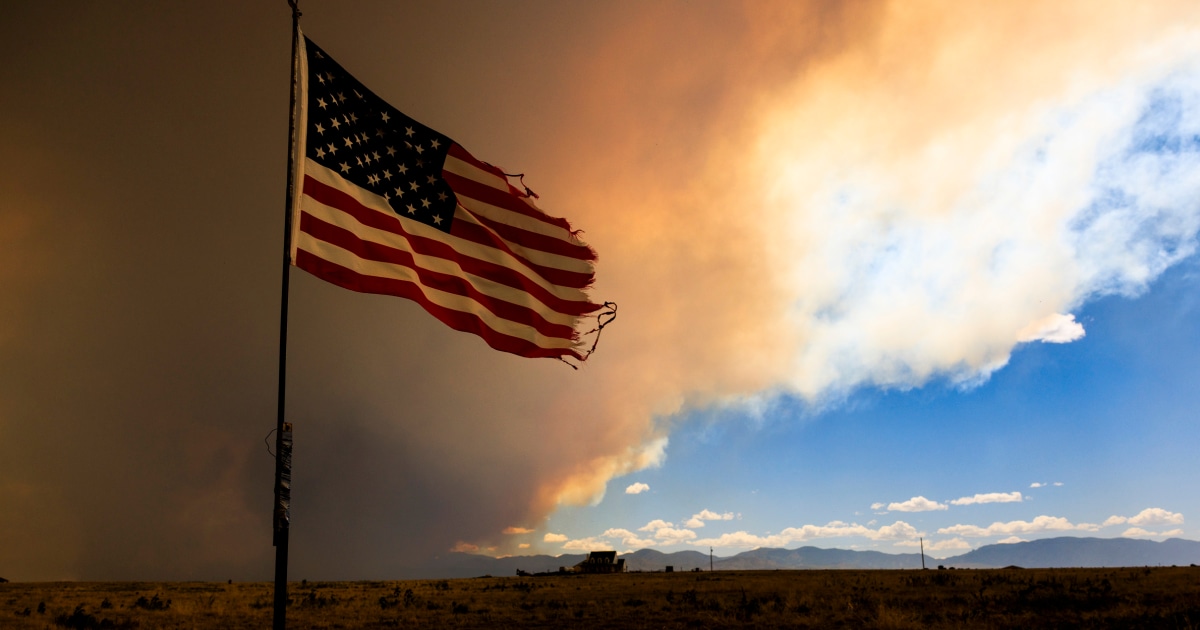
Three years later, in late December 2021, the Marshall Fire swept across the county. asserted
Fire → sweep → county
Daryl McCool left her home southeast of Boulder so fast she couldn't remember whether she locked the front door. asserted
she → leave → door
As it turned out, that didn't matter. asserted
that → turn → ?
"There's basically nothing left," McCool said. asserted
McCool → be → ?
"A 2,000-degree fire burns everything, like coins were melted, bicycles melted." asserted
bicycles → burn → everything
The historic 1901 house where she raised her son had turned to ash. asserted
she → raise → ash
McCool spent years helping her neighbors file insurance papers and apply for grants to rebuild their homes. asserted
neighbors → spend → homes
Now, she tries to educate people about the human costs of climate change. asserted
she → try → change
Who has power to grapple with climate change Corey Riday-White is legal director at the Center for Climate Integrity. asserted
White → grapple → Integrity
It supports communities trying to hold oil companies responsible for environmental harms. asserted
companies → support → harms
"This case represents whether or not we believe as a society that corporations should be held to the same standards that all of us are, right?" Riday-White said. asserted
White → represent → us
"If you know you are going to cause harm, and you don't tell someone, then you should help clean up that harm." asserted
you → know → harm
Boulder's lawsuit has not gone to trial; it's still in the early stages in the Colorado court system. asserted
it → go → system
But the energy companies are asking the U.S. Supreme Court to throw out the case now. asserted
companies → ask → case
The companies say only the federal government has the power and expertise to grapple with something as big as climate change. asserted
government → say → change
To let Boulder's case proceed, they say, would have huge implications. asserted
they → let → implications
"This is about whether a bunch of rich hippies in Boulder County are allowed to dictate environment and energy policy to the entire rest of the world," Zywicki said in a recent webinar about the case. asserted
Zywicki → allow → case
Exxon referred NPR to the company's court filings. asserted
Exxon → refer → filings
Suncor didn't respond to an email requesting comment. asserted
Suncor → respond → comment
The Trump administration is siding with the energy companies, arguing global warming is a global issue. "Essentially Boulder claims that Colorado can reach around the United States, the entirety of the United States, and to my mind, regulate production everywhere by attaching liability to it," said Sai Prakash, a law professor at the University of Virginia who filed a friend of the court brief backing Suncor and Exxon. uncertain
who → side → Suncor
"It Boulder can attach liability to these two companies … asserted
Boulder → attach → companies
I think it can attach liability to thousands of others as well," Prakash said. asserted
Prakash → think → others
Seeking to recover past and future costs Boulder argues it's not suing to regulate greenhouse gas emissions. asserted
it → seek → emissions
Rather, it says, it wants to recover past and future costs of repairs, emergency services, and property damage. asserted
it → say → repairs
Dozens of similar cases where states and municipalities are suing energy giants have been moving through the courts at early stages. asserted
states → sue → stages
Any Supreme Court ruling could have repercussions for many of them. uncertain
ruling → have → them
Jonathan Adler, a law professor at the College of William and Mary, points out in court papers that Congress has the authority to override state laws here, but federal lawmakers haven't done anything. asserted
lawmakers → point → anything
Corey Riday-White, of the Center for Climate Integrity, said for the justices interested in ruling based on the text of the Constitution or federal statutes, there is not much to support Suncor and Exxon. asserted
White → say → Suncor
"They want the court to say, you can't bring any of these cases in court because this is the purview of the federal government," Riday-White said. asserted
White → want → government
"The problem is the big oil companies can't point to any legal doctrine, any statute, any part of the Constitution that backs up that finding. asserted
that → point → finding
" How the court decides to draw the lines on state power could influence a lot more than climate litigation, according to Deepak Gupta, who regularly argues before the high court. uncertain
who → decide → court
"Pollution by forever chemicals, nuisance suits over AI data centers, opioids litigation, all of these are about the local effects of conduct that runs across borders," Gupta said at a recent briefing sponsored by Georgetown's Supreme Court Institute. asserted
Gupta → run → Institute
The conservative supermajority on the Supreme Court may be uncomfortable letting state juries decide some of these pressing issues. uncertain
juries → let → issues
…and 12 more, not listed.

Give feedback · no sign-in needed

No sign-in needed for now. Your note is sent without a name, so it cannot be answered.

History Support