Photo via CBC News

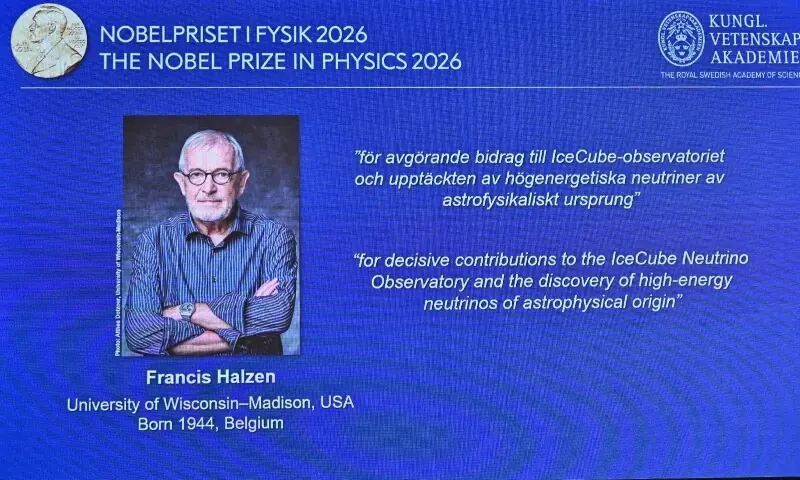
Belgian physicist awarded Nobel Prize for pioneering work tracking neutrino particles at South Pole

Read the original at CBC News ↗
Cite

Belgian physicist awarded Nobel Prize for pioneering work tracking neutrino particles at South Pole. (2026, October 6). CBC News. https://www.cbc.ca/news/world/nobel-award-physics-9.7369209?cmp=rss

Dated when The Aporia collected the article, usually within hours of publication. Check the original for its exact date and byline.

CBC News · collected 2026-10-06 · by CBC

Quick Summary

Francis Halzen, a Belgian physicist, was awarded the Nobel Prize in Physics for his work on the IceCube Neutrino Observatory at the South Pole. This observatory, which became operational in 2011 and spans one cubic kilometre of glacial ice, helped detect high-energy neutrinos from space. The prize includes a sum of 12 million Swedish crowns ($1.7 million CAD). Halzen's contribution was highlighted for his visionary proposal to capture neutrinos at the South Pole since 1988, which led to groundbreaking discoveries about these elusive cosmic particles.
Written by AI on 2026-10-06, from this article's own text only (the story summary below draws on all the coverage).
See how they differ ↓

AI analysis

Story summary

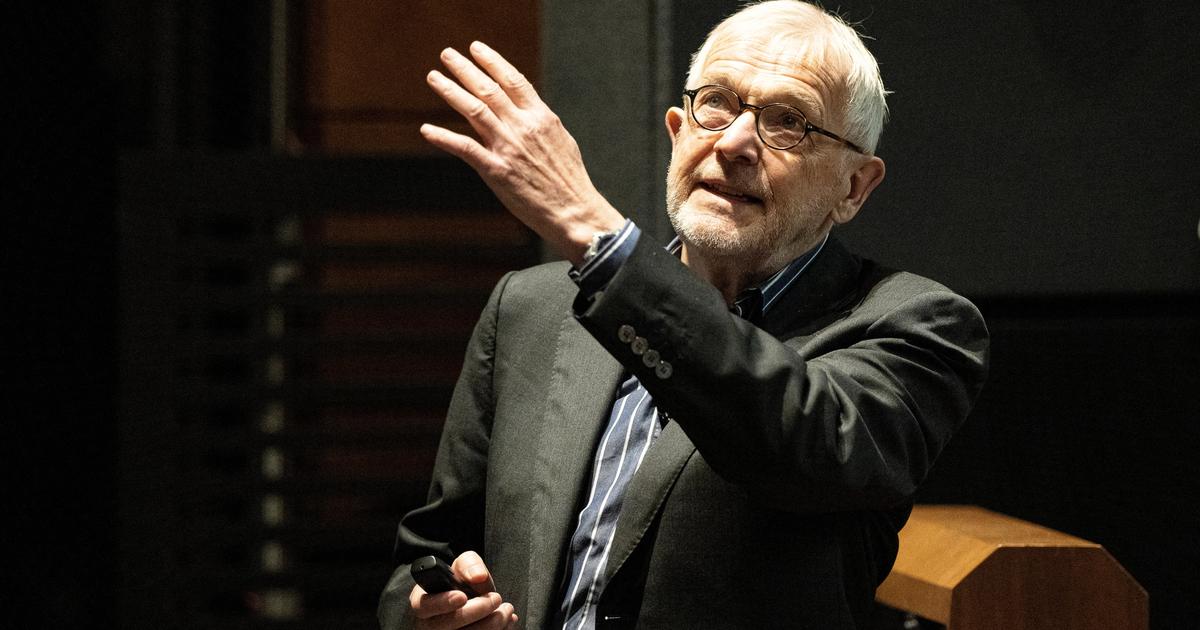
On Tuesday, Francis Halzen, a Belgian physicist and professor at the University of Wisconsin-Madison, was awarded the Nobel Prize in Physics for his groundbreaking work on the IceCube Neutrino Observatory located at the South Pole. The observatory uses a cubic kilometer of Antarctic ice to detect high-energy neutrinos from space, shedding light on distant cosmic phenomena. Halzen's contributions were recognized as "decisive" by the Royal Swedish Academy of Sciences, which noted his visionary approach and scientific leadership since first proposing the concept in 1988. The prize includes a sum of 12 million Swedish kronor (approximately $1.2 million).

Written for “Neutrino Research Nobel Prize” on 2026-11-21, grounded in this article and the 9 other(s) covering the same event.

How they differ

9 outlets covered “Neutrino Research Nobel Prize”.

What each outlet says

One AI summary per outlet of its latest article on this story, written from that article alone and checked against it. Open the article for the outlet's own words.

CBCThis outlet6 Oct

Francis Halzen, a Belgian physicist, was awarded the Nobel Prize in Physics for his work on the IceCube Neutrino Observatory at the South Pole. This observatory, which became operational in 2011 and spans one cubic kilometre of glacial ice, helped detect high-energy neutrinos from space. The prize includes a sum of 12 million Swedish crowns ($1.7 million CAD). Halzen's contribution was highlighted for his visionary…

Belgian physicist awarded Nobel Prize for pioneering work tracking neutrino particles at South Pole (this article)
Dawn6 Oct

Belgian physicist Francis Halzen won the Nobel Prize in Physics for his work on subatomic particles at the South Pole. The prize recognized his contributions to the IceCube Neutrino Observatory and the discovery of high-energy neutrinos from space. Halzen, a professor at the University of Wisconsin-Madison, was praised for his vision and leadership in developing an observatory that uses a cubic kilometre of ice…

Nobel physics prize honours work on 'ghost messengers from space' →2 articles from Dawn on this story
Toronto Star6 Oct

The Royal Swedish Academy of Sciences in Stockholm will announce the Nobel Prize in physics on Tuesday. Last year, the prize was awarded to three scientists for their work on quantum tunneling, which has applications in technologies like MRI machines and contributes to advancements in cellphone technology and computer processing speed.

Nobel Prize in physics to be awarded in Stockholm →
NBC News6 Oct

The Royal Swedish Academy of Sciences in Stockholm will announce the Nobel Prize in physics on Tuesday. Last year's award recognized research into quantum tunneling with practical applications in technology like MRI machines and cellphones. The prizes this week also include chemistry and literature awards, followed by the peace prize and economics prize later in October. Each laureate receives 12 million Swedish…

Nobel Prize in physics to be awarded in Stockholm →
BBC6 Oct

Belgian physicist Francis Halzen has received the Nobel Prize in Physics for his work on the IceCube observatory, located at the South Pole. The observatory uses a cubic kilometre of ice equipped with light sensors to detect cosmic neutrinos, which provide insights into high-energy phenomena in space. The Royal Swedish Academy of Sciences highlighted Halzen's visionary approach and leadership in developing this…

'Ghost particles' from space telescope wins physics Nobel →
NPR6 Oct

Francis Halzen won the Nobel Prize in physics for his work on high-energy neutrinos from space, specifically through his contributions to the IceCube Neutrino Observatory at the South Pole. Mark Pearce of the Nobel Committee praised Halzen's leadership and scientific vision that led to a new kind of astronomy. Born in Belgium and now 82 years old, Halzen expressed surprise upon receiving the award. The prize…

Francis Halzen wins Nobel Prize in physics for work on high-energy neutrinos from space →
Show 3 more outlets
The Globe and Mail6 Oct

Francis Halzen, a University of Wisconsin-Madison professor, has been awarded the Nobel Prize in Physics for his pioneering work on the IceCube Neutrino Observatory at the South Pole. The observatory, completed in 2011 and using one cubic kilometer of Antarctic ice to detect high-energy neutrinos from space, marked a significant advancement in particle astrophysics. Halzen expressed surprise at winning, noting that…

Neutrino experiment pioneer Francis Halzen wins Nobel Prize in Physics →
New York Post6 Oct

Francis Halzen won the 2026 Nobel Prize in physics for his work with high-energy neutrinos of astrophysical origin through the IceCube Neutrino Observatory at the South Pole. Mark Pearce, chair of the Nobel Committee for Physics, praised Halzen's leadership and scientific vision that led to new discoveries in astronomy. Born in Belgium and now 82 years old, Halzen expressed surprise at winning but hoped it would aid…

Francis Halzen wins Nobel Prize in physics for work on high-energy neutrinos of astrophysical origin →
Semafor6 Oct

Francis Halzen, a Belgian-American scientist, received the 2026 Nobel Prize in Physics for his groundbreaking work on neutrinos, often referred to as "ghost particles," at the South Pole. He established an ice laboratory there that uses the unique clarity of Antarctic ice to detect these subatomic particles, which typically pass undetected through matter. Halzen emphasized that while his discovery was significant…

Nobel Prize in Physics awarded to ‘ghost particle’ scientist →

Where they agree and split

Framing

How the first headlines put it

Stated as fact9
The headlines (9)

Particle physics, astrophysics and 'invisibility cloak' tipped for physics Nobel Dawn · stated as fact

Nobel Prize in physics to be awarded in Stockholm Toronto Star · stated as fact

Nobel Prize in physics to be awarded in Stockholm NBC News · stated as fact

'Ghost particles' from space telescope wins physics Nobel BBC · stated as fact

Belgian physicist awarded Nobel Prize for pioneering work tracking neutrino particles at South Pole CBC · stated as fact

Francis Halzen wins Nobel Prize in physics for work on high-energy neutrinos from space NPR · stated as fact

Neutrino experiment pioneer Francis Halzen wins Nobel Prize in Physics The Globe and Mail · stated as fact

Francis Halzen wins Nobel Prize in physics for work on high-energy neutrinos of astrophysical origin New York Post · stated as fact

Nobel Prize in Physics awarded to ‘ghost particle’ scientist Semafor · stated as fact

The full story: what happened, how it changed, and all 10 articles →

Compared with similar articles

This article reads unscored and hedges 5% of its claims. Each row says how that neighbour differs.
BBC News
Hedges 0 of 5 claims Outlet record 65/100
Dawn
Hedges 1 of 19 claims Outlet record 67/100
NPR
Hedges 1 of 18 claims Outlet record 60/100
The Globe and Mail
Hedges 0 of 12 claims Outlet record 51/100
New York Post
Hedges 1 of 19 claims Outlet record 66/100
Semafor
Hedges 1 of 4 claims Outlet record 64/100

Story

Neutrino Research Nobel Prize
Science · 10 article(s) covering the same event. Compare every outlet's account →
How this article was measured signals, leaning charts, publisher record, byline, topics and claims

Signals How these are calculated →

Claims extracted
20
sentences that state something as happening or true
Uncertain
5%
1 of 20 hedged ("reportedly", "may", "according to")
Leaning
not political
takes no side on a contested political question
Publisher signals
60/100
CBC News's corrections and hedging, across everything collected from it. Not a measure of accuracy.
Outlets on this story
10
Science
Same framing elsewhere
1
articles that frame the event the way this one does
Analyzed 2026-10-06 · how these are computed

How this is being covered How these are calculated →

Article leaning vs. publisher reliability
Source leaning vs. consistency

Publisher

CBC News · 971 article(s) · 2 correction(s) detected
Running correction rate · 2 correction(s)

Who wrote this

No reporter is named on this article, beyond the feed's “CBC”.

Topics

American Belgian Canadian Stockholm Swedish

Subjects

Francis Halzen PERSON · 3× Halzen ORG · 3× Belgian NORP · 2× Canadian NORP · 2× Nobel ORG · 2× Swedish NORP · 2× American NORP · 1× Stockholm GPE · 1× the Royal Swedish Academy of Sciences ORG · 1× the University of Wisconsin–Madison ORG · 1×

Narrative

Belgian physicist awarded Nobel Prize for pioneering work tracking neutrino particles at South Pole Francis Halzen helped develop the IceCube Neutrino Observatory in Antarctica Belgian American particle physicist Francis Halzen was announced as the winner of the 2026 Nobel Prize in Physics on Tuesday in Stockholm.
framing: assertive · carried by 1 article(s) · first seen 2026-10-06
The Nobel Prize in Chemistry will be announced Wednesday, the literature prize on Thursday and the peace prize on Friday.

Claims (20 extracted, 1 hedged)

Belgian physicist awarded Nobel Prize for pioneering work tracking neutrino particles at South Pole Francis Halzen helped develop the IceCube Neutrino Observatory in Antarctica Belgian American particle physicist Francis Halzen was announced as the winner of the 2026 Nobel Prize in Physics on Tuesday in Stockholm. asserted
Halzen → award → Stockholm
Halzen, 82, was recognized for "decisive contributions to the IceCube Neutrino Observatory and the discovery of high-energy neutrinos of astrophysical origin," the award-giving body said. asserted
body → recognize → origin
The observatory is located at Amundsen–Scott South Pole Station in Antarctica. asserted
observatory → locate → Antarctica
The winners of the Nobel physics prize are selected annually by the Royal Swedish Academy of Sciences and receive a prize sum totalling 12 million Swedish crowns ($1.7 million Cdn). asserted
winners → select → crowns
"Francis Halzen first presented his vision for capturing neutrinos at the South Pole in 1988," the academy said in a news statement. asserted
academy → present → statement
"When a neutrino collides with an atomic nucleus, it produces a flash of light that can be tracked by sensors in the clear glacial ice. asserted
that → collide → ice
Canadian lab tracks neutrinos to study mysteries of universe IceCube detector in Antarctica observes high-energy neutrinos asserted
detector → track → neutrinos
The IceCube, which covers an entire cubic kilometre, became operational in 2011. asserted
which → cover → 2011
Halzen, affiliated for several decades with the University of Wisconsin–Madison in the U.S., told the academy by phone he was "delighted" and "surprised" by the announcement, which came as he was attending a conference in Italy. asserted
he → affiliate → Italy
They spew from stars like the sun and trillions zip through our bodies every second. asserted
trillions → spew → bodies
Scientists can't glimpse the mysterious ghost particles on their own. asserted
Scientists → glimpse → own
Instead, they measure what happens when the tiny particles collide with other bits of matter, producing flashes of light or charged particles. asserted
particles → measure → light
Halzen studied a rare gang of neutrinos that scientists consider messengers from the cosmos, offering clues to how the universe evolved. The discovery of neutrino oscillations was recognized by the Swedish academy in 2015, with Canadian scientist Dr. Neil McDonald sharing in the Nobel physics prize that year. asserted
McDonald → study → prize
The Nobel Prize in Chemistry will be announced Wednesday, the literature prize on Thursday and the peace prize on Friday. asserted
Prize → announce → Friday
The economics prize will be announced Oct. 12. asserted
prize → announce → ?
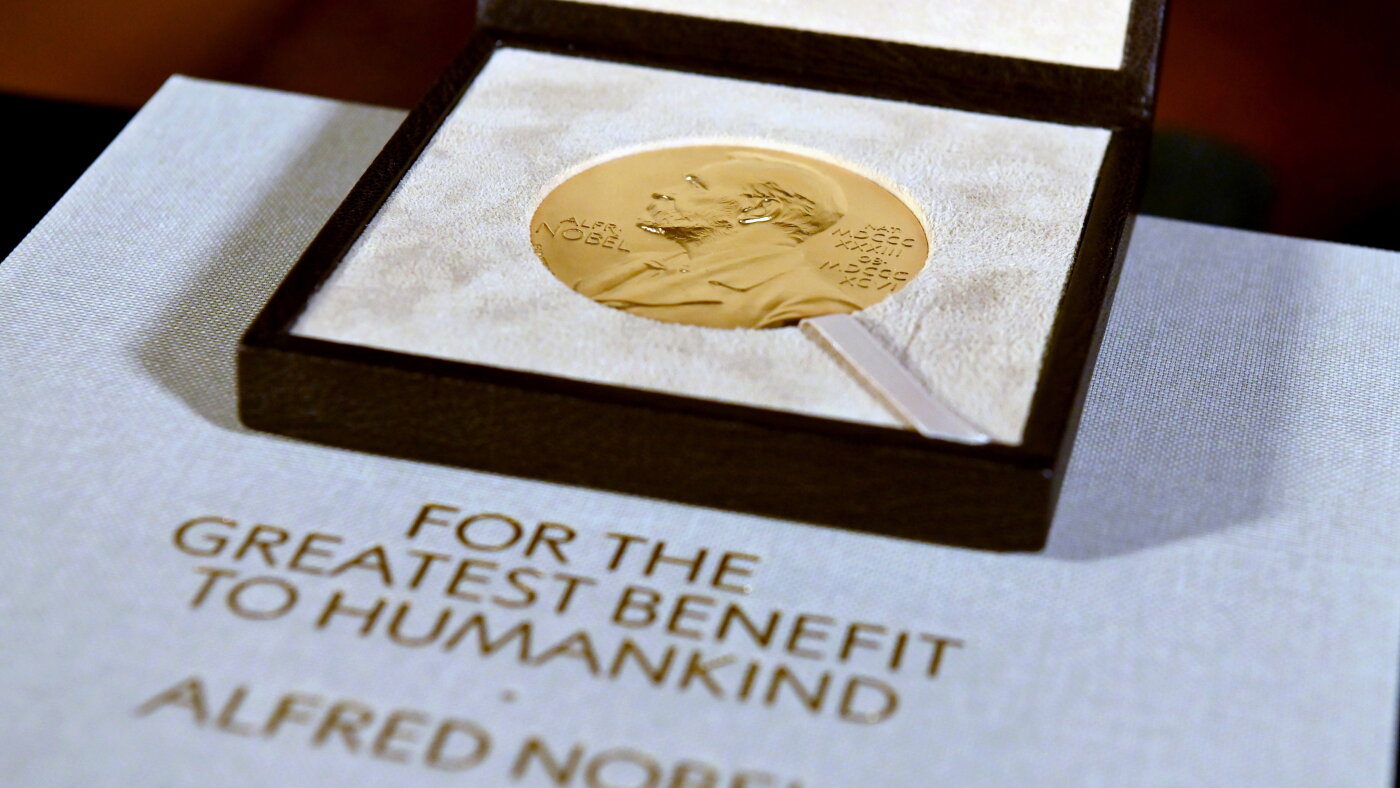
The Nobel Prize was created by wealthy Swedish chemist and entrepreneur Alfred Nobel, who in his will dictated that the bulk of his estate should be used to fund "prizes to those who, during the preceding year, have conferred the greatest benefit to humankind. asserted
who → create → humankind
" Nobel Prize in Medicine awarded to scientists who pioneered work in optogenetics Mark Carney for Nobel Peace Prize? asserted
who → award → Prize
Nobel is best known as the inventor of dynamite, but also wrote poetry and drama and could speak Russian, French, English and German by the age of 17. uncertain
Nobel → know → 17
The five original prize categories reflect the interests closest to his heart. asserted
categories → reflect → heart
The Nobel prizes are presented to the laureates on Dec. 10, the anniversary of Nobel's death. asserted
prizes → present → death
Give feedback · no sign-in needed

No sign-in needed for now. Your note is sent without a name, so it cannot be answered.

History Support