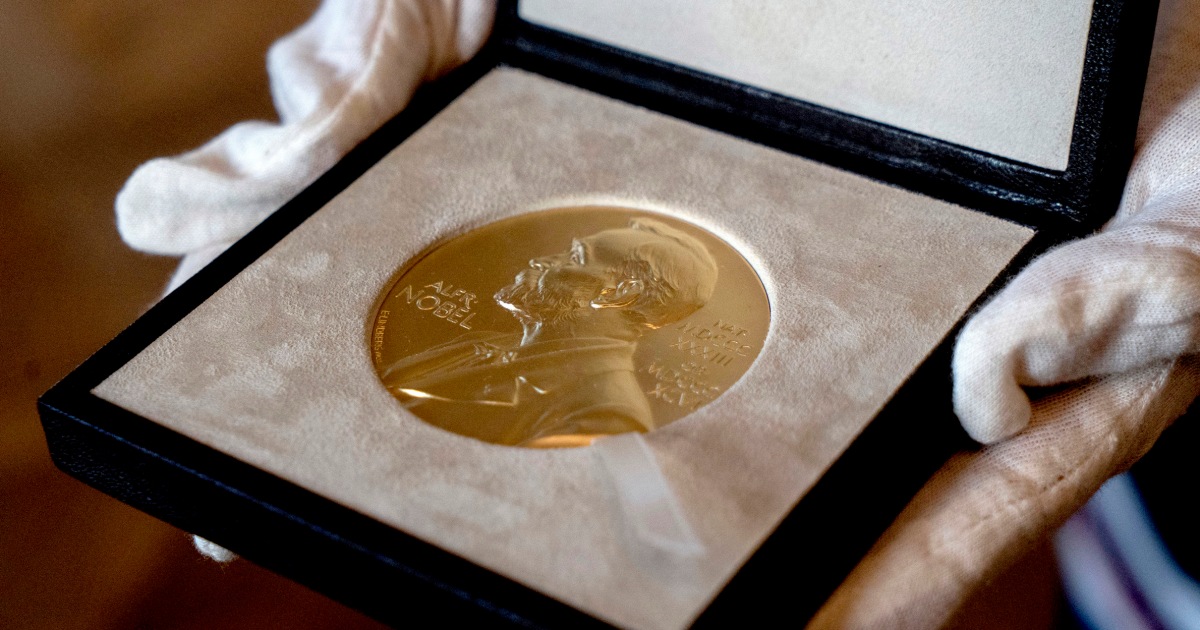
Photo via New York Post

Francis Halzen wins Nobel Prize in physics for work on high-energy neutrinos of astrophysical origin

Read the original at New York Post ↗
Cite

Associated Press. (2026, October 6). Francis Halzen wins Nobel Prize in physics for work on high-energy neutrinos of astrophysical origin. New York Post. https://nypost.com/2026/10/06/world-news/francis-halzen-wins-nobel-prize-in-physics-for-work-on-high-energy-neutrinos-of-astrophysical-origin/

Dated when The Aporia collected the article, usually within hours of publication. Check the original for its exact date and byline.

New York Post · collected 2026-10-06 · by Associated Press

Quick Summary

Francis Halzen won the 2026 Nobel Prize in physics for his work with high-energy neutrinos of astrophysical origin through the IceCube Neutrino Observatory at the South Pole. Mark Pearce, chair of the Nobel Committee for Physics, praised Halzen's leadership and scientific vision that led to new discoveries in astronomy. Born in Belgium and now 82 years old, Halzen expressed surprise at winning but hoped it would aid future research proposals. The prize includes a monetary award of approximately $1.2 million.
Written by AI on 2026-10-06, from this article's own text only (the story summary below draws on all the coverage).
See how they differ ↓

AI analysis

Story summary

On Tuesday, Francis Halzen, a Belgian physicist and professor at the University of Wisconsin-Madison, was awarded the Nobel Prize in Physics for his groundbreaking work on the IceCube Neutrino Observatory located at the South Pole. The observatory uses a cubic kilometer of Antarctic ice to detect high-energy neutrinos from space, shedding light on distant cosmic phenomena. Halzen's contributions were recognized as "decisive" by the Royal Swedish Academy of Sciences, which noted his visionary approach and scientific leadership since first proposing the concept in 1988. The prize includes a sum of 12 million Swedish kronor (approximately $1.2 million).

Written for “Neutrino Research Nobel Prize” on 2026-11-21, grounded in this article and the 9 other(s) covering the same event.

How they differ

9 outlets covered “Neutrino Research Nobel Prize”.

What each outlet says

One AI summary per outlet of its latest article on this story, written from that article alone and checked against it. Open the article for the outlet's own words.

New York PostThis outlet6 Oct

Francis Halzen won the 2026 Nobel Prize in physics for his work with high-energy neutrinos of astrophysical origin through the IceCube Neutrino Observatory at the South Pole. Mark Pearce, chair of the Nobel Committee for Physics, praised Halzen's leadership and scientific vision that led to new discoveries in astronomy. Born in Belgium and now 82 years old, Halzen expressed surprise at winning but hoped it would aid…

Francis Halzen wins Nobel Prize in physics for work on high-energy neutrinos of astrophysical origin (this article)
Dawn6 Oct

Belgian physicist Francis Halzen won the Nobel Prize in Physics for his work on subatomic particles at the South Pole. The prize recognized his contributions to the IceCube Neutrino Observatory and the discovery of high-energy neutrinos from space. Halzen, a professor at the University of Wisconsin-Madison, was praised for his vision and leadership in developing an observatory that uses a cubic kilometre of ice…

Nobel physics prize honours work on 'ghost messengers from space' →2 articles from Dawn on this story
Toronto Star6 Oct

The Royal Swedish Academy of Sciences in Stockholm will announce the Nobel Prize in physics on Tuesday. Last year, the prize was awarded to three scientists for their work on quantum tunneling, which has applications in technologies like MRI machines and contributes to advancements in cellphone technology and computer processing speed.

Nobel Prize in physics to be awarded in Stockholm →
NBC News6 Oct

The Royal Swedish Academy of Sciences in Stockholm will announce the Nobel Prize in physics on Tuesday. Last year's award recognized research into quantum tunneling with practical applications in technology like MRI machines and cellphones. The prizes this week also include chemistry and literature awards, followed by the peace prize and economics prize later in October. Each laureate receives 12 million Swedish…

Nobel Prize in physics to be awarded in Stockholm →
BBC6 Oct

Belgian physicist Francis Halzen has received the Nobel Prize in Physics for his work on the IceCube observatory, located at the South Pole. The observatory uses a cubic kilometre of ice equipped with light sensors to detect cosmic neutrinos, which provide insights into high-energy phenomena in space. The Royal Swedish Academy of Sciences highlighted Halzen's visionary approach and leadership in developing this…

'Ghost particles' from space telescope wins physics Nobel →
CBC6 Oct

Francis Halzen, a Belgian physicist, was awarded the Nobel Prize in Physics for his work on the IceCube Neutrino Observatory at the South Pole. This observatory, which became operational in 2011 and spans one cubic kilometre of glacial ice, helped detect high-energy neutrinos from space. The prize includes a sum of 12 million Swedish crowns ($1.7 million CAD). Halzen's contribution was highlighted for his visionary…

Belgian physicist awarded Nobel Prize for pioneering work tracking neutrino particles at South Pole →
Show 3 more outlets
NPR6 Oct

Francis Halzen won the Nobel Prize in physics for his work on high-energy neutrinos from space, specifically through his contributions to the IceCube Neutrino Observatory at the South Pole. Mark Pearce of the Nobel Committee praised Halzen's leadership and scientific vision that led to a new kind of astronomy. Born in Belgium and now 82 years old, Halzen expressed surprise upon receiving the award. The prize…

Francis Halzen wins Nobel Prize in physics for work on high-energy neutrinos from space →
The Globe and Mail6 Oct

Francis Halzen, a University of Wisconsin-Madison professor, has been awarded the Nobel Prize in Physics for his pioneering work on the IceCube Neutrino Observatory at the South Pole. The observatory, completed in 2011 and using one cubic kilometer of Antarctic ice to detect high-energy neutrinos from space, marked a significant advancement in particle astrophysics. Halzen expressed surprise at winning, noting that…

Neutrino experiment pioneer Francis Halzen wins Nobel Prize in Physics →
Semafor6 Oct

Francis Halzen, a Belgian-American scientist, received the 2026 Nobel Prize in Physics for his groundbreaking work on neutrinos, often referred to as "ghost particles," at the South Pole. He established an ice laboratory there that uses the unique clarity of Antarctic ice to detect these subatomic particles, which typically pass undetected through matter. Halzen emphasized that while his discovery was significant…

Nobel Prize in Physics awarded to ‘ghost particle’ scientist →

Where they agree and split

Framing

How the first headlines put it

Stated as fact9
The headlines (9)

Particle physics, astrophysics and 'invisibility cloak' tipped for physics Nobel Dawn · stated as fact

Nobel Prize in physics to be awarded in Stockholm Toronto Star · stated as fact

Nobel Prize in physics to be awarded in Stockholm NBC News · stated as fact

'Ghost particles' from space telescope wins physics Nobel BBC · stated as fact

Belgian physicist awarded Nobel Prize for pioneering work tracking neutrino particles at South Pole CBC · stated as fact

Francis Halzen wins Nobel Prize in physics for work on high-energy neutrinos from space NPR · stated as fact

Neutrino experiment pioneer Francis Halzen wins Nobel Prize in Physics The Globe and Mail · stated as fact

Francis Halzen wins Nobel Prize in physics for work on high-energy neutrinos of astrophysical origin New York Post · stated as fact

Nobel Prize in Physics awarded to ‘ghost particle’ scientist Semafor · stated as fact

The full story: what happened, how it changed, and all 10 articles →

Compared with similar articles

This article reads unscored and hedges 5% of its claims. Each row says how that neighbour differs.
NPR
Hedges 1 of 18 claims Outlet record 60/100
The Globe and Mail
Hedges 0 of 12 claims Outlet record 51/100
Toronto Star
Hedges 0 of 2 claims Outlet record 64/100
BBC News
Hedges 0 of 5 claims Outlet record 65/100
Dawn
Hedges 1 of 19 claims Outlet record 67/100
Semafor
Hedges 1 of 4 claims Outlet record 64/100
Dawn
Hedges 6 of 23 claims Outlet record 67/100
NBC News
Hedges 0 of 5 claims Outlet record 78/100
“Article A describes the announcement of the Nobel Prize in physics, while Article B specifically reports on Francis Halzen winning the prize for his work. They describe related but different stages of the same day's event.”

Story

Neutrino Research Nobel Prize
Science · 10 article(s) covering the same event. Compare every outlet's account →
How this article was measured signals, leaning charts, publisher record, byline, topics and claims

Signals How these are calculated →

Claims extracted
19
sentences that state something as happening or true
Uncertain
5%
1 of 19 hedged ("reportedly", "may", "according to")
Leaning
not political
takes no side on a contested political question
Publisher signals
66/100
New York Post's corrections and hedging, across everything collected from it. Not a measure of accuracy.
Outlets on this story
10
Science
Same framing elsewhere
1
articles that frame the event the way this one does
Analyzed 2026-10-06 · how these are computed

How this is being covered How these are calculated →

Article leaning vs. publisher reliability
Source leaning vs. consistency

Publisher

New York Post · 21675 article(s) · 41 correction(s) detected
Running correction rate · 41 correction(s)

Who wrote this

Associated Press
803 article(s) here · 1 carrying a prediction
The fourth-round pick from Clemson would make his first NFL start if Smith can’t go, but that doesn't appear to be the case this week.
Journalists and observers reported delays of more than 30 minutes before being able to enter the death chamber where Dennes’ final statements would be read and the execution would take place.
The legislation’s sweeping changes would shorten the timeline to start big energy projects and make sure data centers pay for the energy they use.
Published Nov. 20, 2026, 4:22 a.m. ET Russia launched missiles and drones across Kyiv overnight that killed three people, injured nine others and damaged bridges and transport infrastructure, local authorities said Friday. “We will respond to these attacks, and I want everyone to be clear about that,” Putin told reporters Thursday in China, where he attended a summit with the Chinese and US presidents.
Published Nov. 19, 2026, 10:16 p.m. ET The U.S. Army decided to delay Friday’s detonation of several tons of bomb-making chemicals in southeast Iowa after an outpouring of public concern that a cloud of lead dust could cause environmental contamination and health problems.
Kirsten Davies, chief information officer at the Defense Department, will fill the role, according to social media posts by several members of Trump’s cabinet.
Employees cannot realistically opt out of reading emails from their agency director, and the messages could coerce them to hide their own faith or feel pressure to adopt Rollins’ Christian faith, Thompson ruled.
Reinaldo Dennes, 70, was set to receive a lethal injection about an hour later at a prison in Texas and become the ninth person executed by that state this year.
Plans by the US army to detonate about 5 tons of bomb-making chemicals that have become unusable and might explode if moved have residents in south-east Iowa worried that a cloud of lead dust could cause environmental contamination and health problems.
The pardon comes after Manfred issued a sweeping decision last May that opened a pathway for Rose to be considered for baseball’s Hall of Fame.
Wire or desk byline, not an individual reporter.
Also by Associated Press
Nothing else under this byline is closely related to this article, so these are simply their most recent.
All 803 articles by Associated Press →

Topics

Associated Press Belgium Italy the Nobel Committee for Physics the University of Wisconsin–Madison

Subjects

Francis Halzen PERSON · 3× Halzen ORG · 3× the University of Wisconsin–Madison ORG · 2× Associated Press ORG · 1× Belgium GPE · 1× Italy GPE · 1× Mark Pearce PERSON · 1× The Associated Press ORG · 1× U.S. GPE · 1× the Nobel Committee for Physics ORG · 1×

Narrative

Last year, three scientists won the Nobel Prize in physics for research on the strange behavior of subatomic particles called quantum tunneling that enabled the ultrasensitive measurements achieved by MRI machines and laid the groundwork for better cellphones and faster computers.
framing: assertive · carried by 1 article(s) · first seen 2026-10-06
Halzen said it was predicted before that he would win the Nobel Prize but the announcement still made him feel “strange.”

Claims (19 extracted, 1 hedged)

Francis Halzen wins Nobel Prize in physics for work on high-energy neutrinos of astrophysical origin By asserted
Halzen → win → origin
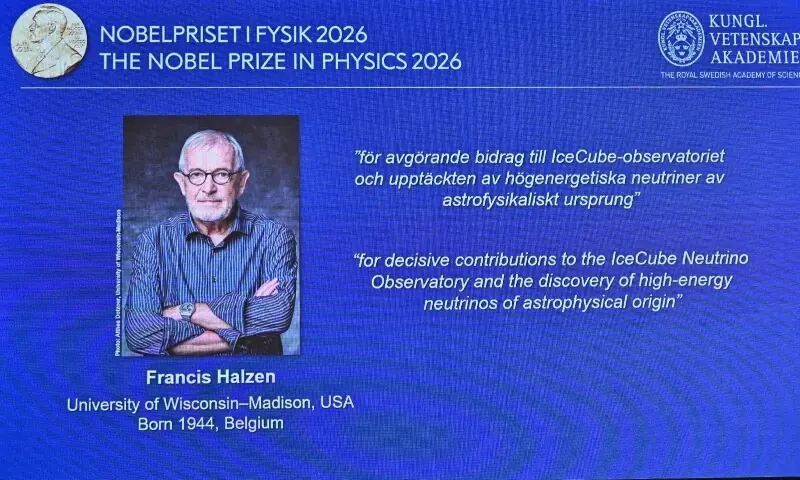
Francis Halzen won the Nobel Prize in physics on Tuesday for his contributions to the IceCube Neutrino Observatory and his discovery of high-energy neutrinos of astrophysical origin. asserted
Halzen → win → origin
“Francis Halzen has led an international team of researchers and engineers who have provided us with a fantastic instrument. asserted
who → lead → instrument
His tenacity and scientific vision has paved the way for a new kind of astronomy,” Mark Pearce, chair of the Nobel Committee for Physics, said in a news release. asserted
Pearce → pave → release
“It was a great surprise and I obviously didn’t expect it,” Halzen said, speaking to the committee by phone from Italy, in a call broadcast at the news conference to announce the winner. asserted
Halzen → expect → winner
Halzen said it was predicted before that he would win the Nobel Prize but the announcement still made him feel “strange.” asserted
him → say → Prize
“I’m working on a proposal and I hope winning this will help getting it approved,” he said to chuckles. asserted
he → work → chuckles
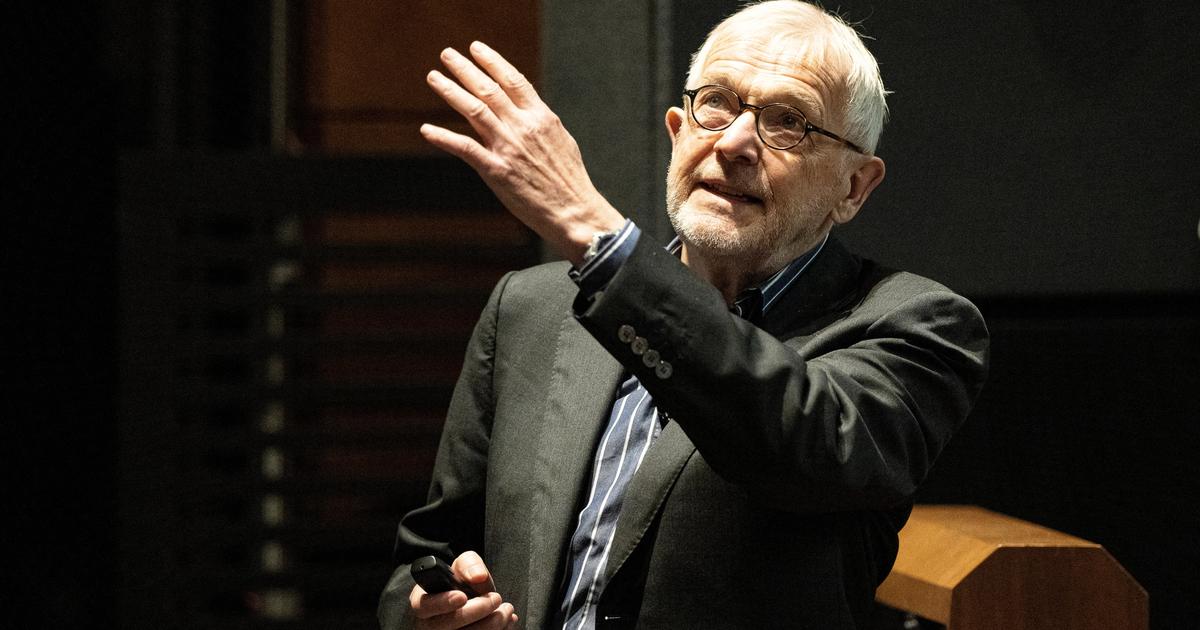
Born in Belgium, the 82-year-old scientist is affiliated with the University of Wisconsin–Madison in the U.S. Efforts by The Associated Press to reach him were not immediately successful. asserted
Efforts → bear → him
The IceCube Neutrino Observatory is a research facility located at the South Pole in Antarctica, according to its website, and the University of Wisconsin–Madison is its lead institution. uncertain
University → locate → Wisconsin
Yet they are everywhere: they spew from stars like the sun and trillions zip through our bodies every second. asserted
trillions → spew → bodies
Scientists can’t glimpse the mysterious ghost particles zooming around on their own. asserted
Scientists → glimpse → own
Instead, they measure what happens when the tiny particles collide with other bits of matter, producing flashes of light or charged particles. asserted
particles → measure → light
Halzen studied a rare gang of neutrinos that scientists consider messengers from the cosmos, offering clues to how the universe evolved. asserted
universe → study → clues
His research into capturing neutrinos at the South Pole dates back to the 1980s. asserted
research → capture → 1980s
The Royal Swedish Academy of Sciences announced the award in Stockholm. asserted
Academy → announce → Stockholm
Last year, three scientists won the Nobel Prize in physics for research on the strange behavior of subatomic particles called quantum tunneling that enabled the ultrasensitive measurements achieved by MRI machines and laid the groundwork for better cellphones and faster computers. asserted
that → win → cellphones
The announcements of this year’s prizes began Monday with the Nobel Prize in medicine being awarded to three scientists whose work led to a tool that uses light to help unravel how the brain works. asserted
brain → begin → light
This week’s awards continue Wednesday with the chemistry prize and literature on Thursday. asserted
awards → continue → Thursday
After Friday’s peace prize is awarded, the Nobel Memorial Prize in Economic Sciences will be announced on Monday. asserted
Prize → award → Monday
Give feedback · no sign-in needed

No sign-in needed for now. Your note is sent without a name, so it cannot be answered.

History Support