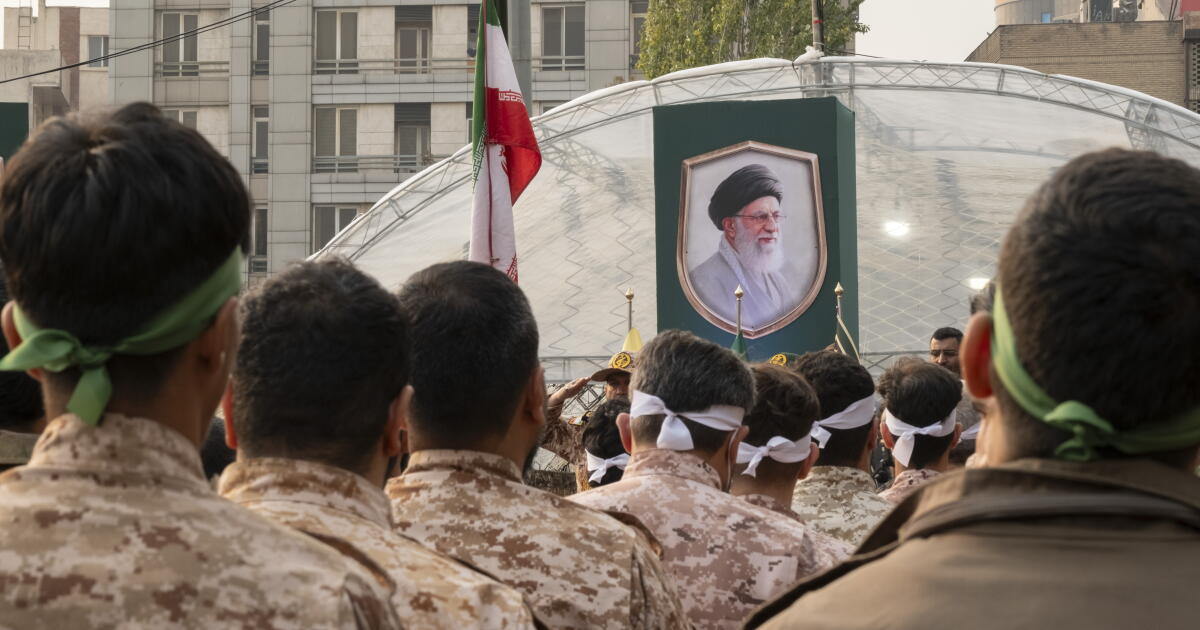
Photo via Los Angeles Times

War was supposed to crush Iran's 'Axis of Resistance.' Instead, it's bloodied but unbroken

Read the original at Los Angeles Times ↗
Cite

Bulos, N. (2026, September 6). War was supposed to crush Iran's 'Axis of Resistance.' Instead, it's bloodied but unbroken. Los Angeles Times. https://www.latimes.com/world-nation/story/2026-08-18/war-has-left-irans-axis-of-resistance-bloodied-but-unbroken

Dated when The Aporia collected the article, usually within hours of publication. Check the original for its exact date and byline.

Los Angeles Times · collected 2026-09-06 · by Nabih Bulos

Quick Summary

The US-led war against Iran's "Axis of Resistance" was supposed to weaken or eliminate its proxies in the Middle East, but nearly six months into the conflict, these groups have shown surprising resilience. Analysts say the axis' locally based fighters and shared battlefield know-how create a durable challenge for Washington and its allies. Despite some losses, key members such as Hamas and Hezbollah remain in place, and the Islamic Republic has even gained leverage by closing the Strait of Hormuz. The axis is now considered stronger than ever, with one Iranian parliament member claiming it's "in the strongest condition they have ever been in the history of their resistance."
Written by AI on 2026-09-07, from this article's own text only (the story summary below draws on all the coverage).
See how they differ ↓

AI analysis

Story summary

Mohammad Ghaemi, an analyst, stated that Iran views its military actions primarily as a means for coercive negotiation rather than as a standalone objective. Iran's foreign minister is set to meet with Gulf state ministers in Oman next week to discuss ensuring the safety of commercial shipping through the Strait of Hormuz, though any agreement would likely require U.S. approval due to the ongoing naval blockade against Iran.

U.S. President Donald Trump declared that the war with Iran will end immediately after the midterms on November 3, asserting his defense of military actions aimed at preventing Tehran from developing a nuclear weapon. Despite these assurances, rising oil prices—Brent crude reached over $100 per barrel—are expected to negatively impact Republicans' electoral chances in upcoming midterms.

Vice President J.D. Vance confirmed that the U.S. is investigating reports of civilian casualties during a recent strike on a wedding celebration in Iran's Kuhestak region, where at least five people were killed and dozens injured. Iranian state media reported the incident, while Reuters independently verified footage showing a residential building attack during a wedding.

The United States and Iran have exchanged missile and drone attacks this week after an earlier lull in hostilities since July. Reports indicate that six Iranian military personnel, including three pilots, died in U.S.-led airstrikes; however, the U.S. has expressed skepticism about these casualty claims from Iranian state media. The investigation into the wedding strike is ongoing.

Oil prices surged following escalating conflicts between the United States and Iran. Brent crude reached its highest since May 22 at $101.21 per barrel on September 9, while West Texas Intermediate settled at $96.05. Despite these price increases, major oil companies like Chevron Corporation, TotalEnergies SE, Exxon Mobil Corporation, Eni S.p.A., and BP p.l.c. have been trading assets rather than adding new drilling operations in response to geopolitical tensions.

Written for “Iran Attacks After US Hits Tankers” on 2026-11-20, grounded in this article and the 107 other(s) covering the same event.

How they differ

31 outlets covered “Iran Attacks After US Hits Tankers”.

What each outlet says

One AI summary per outlet of its latest article on this story, written from that article alone and checked against it. Open the article for the outlet's own words.

Los Angeles TimesThis outlet6 Sep

The US-led war against Iran's "Axis of Resistance" was supposed to weaken or eliminate its proxies in the Middle East, but nearly six months into the conflict, these groups have shown surprising resilience. Analysts say the axis' locally based fighters and shared battlefield know-how create a durable challenge for Washington and its allies. Despite some losses, key members such as Hamas and Hezbollah remain in…

War was supposed to crush Iran's 'Axis of Resistance.' Instead, it's bloodied but unbroken (this article)2 articles from Los Angeles Times on this story
The Straits Times7 Sep

US and Iranian strikes on ships in the Strait of Hormuz have led to a significant decline in maritime traffic in the area, with an average of only 10 commodity ships transiting the strait per day over the past 10 days, the lowest since May. The number of vessels passing through the strait has been declining since September 4, when it was more than 15, and is now down to as low as six on September 5. Data from…

Hormuz traffic dips to lowest since May after US, Iranian strikes on ships →9 articles from The Straits Times on this story
NBC News10 Sep

President Donald Trump made a speech at the Republican party's midterm convention in Dallas, using the war with Iran as a campaign issue. He claimed that the war will end "very shortly after the election", despite it being in its seventh month and polls showing 69% of Americans disapprove of his handling of the war. Several attendees at the convention expressed support for Trump's actions, citing concerns about Iran…

Trump says the war in Iran will end after Election Day →8 articles from NBC News on this story
Al Jazeera7 Sep

Iran's Supreme National Security Council Secretary Mohsen Rezaei announced plans to establish a restricted zone in the Strait of Hormuz, a global energy chokepoint. The new zone will reportedly start from the US Navy's blockade line and include areas of the Persian Gulf. According to Rezaei, any ship entering this zone will be placed on Iran's sanctions list. No details were provided on the zone's precise boundaries…

Can Iran enforce a restricted zone in the Strait of Hormuz? →7 articles from Al Jazeera on this story
Dawn9 Sep

Benchmark Brent crude oil futures rose past $100 a barrel on Wednesday, hitting a six-week high due to intensifying conflict in the Middle East. The price increase is attributed to concerns about oil flows from the region and supply risks that have mounted since the Iran war began on February 28. Brent crude prices have risen by a quarter since early last month, with some banks, including Goldman Sachs and HSBC…

Brent crude rises above $100 a barrel as Middle East conflict intensifies →6 articles from Dawn on this story
CBS News10 Sep

Multiple US military aircraft were damaged in Iranian strikes on Muwaffaq Salti Air Base in Jordan overnight Tuesday into Wednesday local time. According to sources with direct knowledge of the matter, one A-10 Thunderbolt lost a wing and roughly eight F-15s sustained light damage, but were reportedly put back into service. No US deaths have been reported in the strikes on Jordan, which followed retaliatory attacks…

Multiple U.S. military aircraft damaged in Iranian strikes on base in Jordan, sources say →6 articles from CBS News on this story
Show 25 more outlets
The Hindu6 Sep

Iran claimed Sunday that it struck an unmanned US vessel attempting to enter the Strait of Hormuz, but the US military denied the attack as a "total lie." The US Energy Secretary Chris Wright said around 9 million barrels of oil per day are currently passing through the strait, which is crucial for global oil and natural gas shipments. This number is significantly lower than pre-conflict levels, but still sufficient…

Iran claims strike on U.S. ship in Hormuz but Washington denies it →6 articles from The Hindu on this story
The Independent7 Sep

Iran's Supreme National Security Council head Mohsen Rezaei announced plans to establish an "exclusion zone" outside the Strait of Hormuz within the next few days. The zone will target vessels attempting to transit the waterway and will extend from the US naval blockade line, stretching into the Persian Gulf. This comes after a week of escalating tensions between Iran and the US, which have traded strikes on ships…

Iran-US war latest: Tehran vows to extend ‘exclusion zone’ near Strait of Hormuz after US strikes on tankers →6 articles from The Independent on this story
Euronews10 Sep

US President Donald Trump said Iran's economy is "destroyed" due to ongoing war with the US, citing 300% inflation. Six months into the conflict, Iranians are struggling to afford basic food items as fuel prices have doubled overnight and the national currency has plummeted. The Iranian rial has lost over 63% of its value against the dollar since March, with the free-market exchange rate for the US dollar breaching…

'The country is falling apart': Iranians tell Euronews how war emptied their wallets →5 articles from Euronews on this story
Semafor10 Sep

US President Donald Trump claims that a war with Iran would end "immediately" after the midterm elections in November, contradicting warnings from his own advisors and outside experts. Top White House officials have reportedly told Trump that Iran would continue to resist US actions through at least January 2029. Experts agree that Iran's economy is resilient enough to withstand US pressure, allowing its elite to…

Trump sees end to Iran war “immediately” after midterm elections →5 articles from Semafor on this story
Time10 Sep

President Donald Trump stated that the US and Israel's war with Iran will end "immediately after" the midterm elections. According to Trump, Iran is on the verge of collapse but its government is holding out in hopes of influencing the election results. The ongoing conflict has driven up energy prices, with the global benchmark oil price reaching $100 a barrel for the first time since July and gasoline reaching a…

Trump Promises End to Iran War After Midterms →4 articles from Time on this story
BBC10 Sep

US President Donald Trump has said he believes the Iran war will continue until after the November midterm elections, predicting that oil prices will drop afterwards. He made these comments on Wednesday and repeated them at a Republican Party convention in Texas, where he also tried to energize his party ahead of the elections. The conflict, which began in February, has seen significant increases in oil prices, with…

Iran war won't end until after crucial November elections, says Trump →4 articles from BBC on this story
The Guardian6 Sep

Iranian state media has revised the death toll from a reported US missile strike in Sirik, southern Iran, to four people. The attack, which occurred at a wedding celebration, is also claimed to have resulted in civilian casualties. US Central Command has released footage of its own attacks on Iranian military targets, including missile and drone strikes. Iran subsequently retaliated by firing missiles towards Jordan.

Iran retaliates after US missile strike reportedly hits wedding – video →3 articles from The Guardian on this story
CBC10 Sep

Iran fired missiles at a US base in Jordan and attacked several ships near the Strait of Hormuz, escalating tensions with the US and causing oil prices to surge back over $100 per barrel. The price of Brent crude has breached $100 for the first time since July, while gas prices in the US have increased 26% from last year to an average of $4.15 per gallon. The attacks follow a series of tit-for-tat exchanges between…

Renewed U.S.-Iran exchanges send oil price back over $100 US for first time in several weeks →3 articles from CBC on this story
South China Morning Post6 Sep

Iran's Supreme National Security Council is planning to announce an "exclusion zone" outside the Strait of Hormuz, which will extend into the Persian Gulf. The new zone will be aimed at vessels attempting to transit the waterway and entering this area will result in being placed on Iran's sanctions list. According to Mohsen Rezaei, Iran's security chief, the zone should be announced within days or weeks. Over 20 US…

Iran plans new ‘exclusion zone’ outside Strait of Hormuz after ship attacks →3 articles from South China Morning Post on this story
Washington Examiner9 Sep

The article suggests that President Donald Trump use Iran's frozen billions as leverage against Tehran, rather than immediately confiscating them. The key proposal is for a Congressional-approved fund that would gradually release Iranian assets if Tehran complies with certain conditions, such as ending attacks on US and partner targets. The plan would aim to help repair damaged infrastructure in Gulf countries and…

Trump, don’t just seize Iran’s billions. Weaponize them →3 articles from Washington Examiner on this story
The Bulwark4 Sep

A recording from The Bulwark's live video shows that Trump made a comment in which he referred to 18 deaths as "small potatoes". No specific context or information about the situation surrounding these deaths is provided in the article. There are no key numbers mentioned outside of the number of deaths, and the article primarily serves as an advertisement for The Bulwark's subscription service rather than a news…

BREAKING: Trump Says 18 Deaths Are “Small Potatoes” | Command Post →2 articles from The Bulwark on this story
Deutsche Welle12 Sep

US President Donald Trump addressed the Republican midterm convention in Dallas, asserting that Iran's war efforts will end after the November elections due to their inability to sustain it further. Meanwhile, oil prices surged above $100 per barrel as tensions escalated with new strikes involving US and Iranian forces in the Persian Gulf. According to Mohammad Ghaedi from George Washington University, Iran is…

Iran pursues cautious escalation ahead of US midterms →2 articles from Deutsche Welle on this story
NPR9 Sep

The U.S. military destroyed five Iranian oil tankers in the Gulf of Oman, with Iran retaliating by targeting U.S. troops in Jordan. The U.S. has now struck eight Iranian crude tankers since Saturday as part of its efforts to weaken Iran's economy. Brent crude oil prices have risen above $100 a barrel as a result of the conflict. The move is part of a broader strategy by the U.S. to pressure Iran, although the exact…

U.S. military destroys 5 Iranian oil tankers. And, the Smithsonian head resigns →2 articles from NPR on this story
National Post6 Sep

Iran's top negotiator Mohammad Bagher Ghalibaf threatened a more forceful response to US attacks after Iran targeted American warships in the latest round of clashes, which have been ongoing for six months. According to Ghalibaf, any aggression against Iran's interests will receive a "faster, more intense and more painful response". The conflict has resulted in US strikes on three oil tankers linked to Iran's…

Iran warns U.S. of ‘more painful response’ after oil tanker strikes →2 articles from National Post on this story
The Globe and Mail5 Sep

Survivors of a recent strike are recalling the events surrounding it from their hospital beds in Iran. Five people were killed and dozens were injured in the strike at a wedding event in southern Iran. The incident occurred recently, although no specific date is mentioned. The survivors' accounts provide a firsthand account of the explosions that took place.

Injured people in Iran hospital recall strikes that killed five at wedding in south of country →2 articles from The Globe and Mail on this story
Global News6 Sep

The US military has denied claims by Iran that it struck an unmanned American vessel in the Strait of Hormuz on Sunday, calling the claim a "total lie". The incident occurred amid ongoing tensions between the two countries, with both sides trading blows in the region. According to US Energy Secretary Chris Wright, around 9 million barrels of oil per day pass through the Strait of Hormuz, which is crucial for global…

U.S. says claim Iran struck unmanned ship in Strait of Hormuz ‘total lie’ →2 articles from Global News on this story
Toronto Star11 Sep

The largest oil companies in the world, including Chevron, TotalEnergies, Exxon Mobil, Eni, and BP, did not increase drilling activities when crude prices broke above $100, but instead traded assets and made acquisitions in countries like Venezuela. During the past three weeks, Brent crude rose 3.4% to $101.21 and West Texas Intermediate rose 3.3% to $96.05 due to escalating tensions between the US and Iran in the…

Brent Broke $100 and the Majors Went Shopping in Venezuela →2 articles from Toronto Star on this story
ABC News (AU)6 Sep

US Secretary of Defense Pete Hegseth has been quietly extending troop deployments into 2027, suggesting the conflict with Iran may drag on for another year. President Donald Trump has reportedly considered declaring the war over despite neither side having achieved its main objectives, including preventing Iran from acquiring nuclear weapons and regime change. The Strait of Hormuz, a crucial waterway used to…

Running out of cards, Trump weighs declaring the Iran war over →2 articles from ABC News (AU) on this story
Persuasion4 Sep

This opinion piece argues that America's assessment of its adversaries' strength is often flawed and based on incomplete or misleading information. The author points out historical examples, such as the Soviet Union's supposedly rapid economic growth during the Cold War, which was later revealed to be exaggerated. According to the article, China's economic takeoff from $1 trillion in 1990 to $16 trillion in 2022 is…

Why America Is Losing the New Cold War →
Letters from an American4 Sep

Military leaders, including the heads of the Army, Navy, and Air Force, are warning Defense Secretary Pete Hegseth that a plan to continue large-scale operations in Iran is unsustainable due to troop deployment fatigue. Over 50,000 troops have been kept on high alert for months under pressure from former President Trump's insistence on maintaining military options against Iran. The leaders of the Navy, US European…

August 31, 2026 →
Zeteo4 Sep

The article reports on a media campaign by President Donald Trump's administration to portray the Iran war as going well, which is disputed by multiple U.S. government officials. According to four officials and one Trump adviser, the widespread belief within the federal government, including the Pentagon, is that the U.S. is losing the conflict. The officials are criticizing the White House's propaganda efforts as a…

‘We Aren’t Winning’: Don’t Believe Team Trump’s Iran War Propaganda →
New York Post6 Sep

Iran claimed it struck an unmanned US vessel trying to enter the Strait of Hormuz on Sunday, but the US has not confirmed the attack. The incident is part of a renewed escalation between the two countries that began with US and Israeli attacks on Iran on February 28. At least five people were killed earlier in the week during a US bombardment of southern Iran. The conflict has continued despite a ceasefire agreement…

Iran claims strike on unmanned US vessel in Strait of Hormuz as attacks intensify →
UPI6 Sep

The US military struck three Iranian oil tankers on Saturday in retaliation for Iranian attacks on a US aircraft carrier and guided missile destroyer. The targeted ships were M/T Downy, M/T Stark 1, and M/T Kylo (also known as Noxen), with the motor tanker Kylo being completely destroyed. According to CENTCOM commander Adm. Brad Cooper, the strike was intended to impose an economic cost on Iran by targeting its oil…

U.S. strikes 3 Iranian oil tankers after Iran fires at Navy ships →
The Free Press8 Sep

The article discusses a shift in Donald Trump's approach to Iran following the death of Senator Lindsey Graham, who advocated for a more forceful strategy against Tehran. According to the article, Trump was previously considering following Graham's advice, including taking Kharg Island and inflicting significant damage on Iran. However, at the urging of regional allies, Trump stood down from what would have been the…

Trump Is Charting a New Course on Iran →
ABC News (US)9 Sep

Oil prices have surpassed $100 per barrel for the first time since July as global tensions between Iran and the US escalate. According to benchmark Brent crude oil prices, they climbed by approximately 2.7% on Wednesday to around $100.57 per barrel. The price hike is attributed to ongoing conflict in the region, including a recent statement from the US Central Command that destroyed five Iranian oil tankers…

Oil prices climb over $100 per barrel as US war in Iran continues →

Compared with similar articles

This article reads leans left and hedges 2% of its claims. Each row says how that neighbour differs.
Dawn
Leans strongly right further right than this Hedges 12 of 30 claims Outlet record 67/100
Al Jazeera
Leans left Hedges 7 of 55 claims Outlet record 60/100
The Independent
Hedges 1 of 16 claims Outlet record 59/100
ABC News (AU)
Leans right further right than this Hedges 2 of 23 claims Outlet record 67/100
“The articles mention war on Iran but report different aspects of it: one discusses Iran's retaliation threat and its establishment of a 'prohibited zone', while the other focuses on the impact of the war on Iran's proxies”
Al Jazeera
Hedges 5 of 31 claims Outlet record 60/100
“Article A describes Iranian tankers being hit by US military force, while Article B discusses the impact of war on Iran's proxies in the Middle East and their resilience”
Los Angeles Times
Hedges 5 of 47 claims Outlet record 95/100
CBS News
Hedges 32 of 290 claims Outlet record 67/100
“Article A discusses a general assessment of Iran's 'Axis of Resistance' after nearly six months of war, while Article B specifically reports on an incident where Iranian strikes damaged US jets in Jordan”
Euronews
Hedges 2 of 60 claims Outlet record 60/100
“Article A discusses the military impact of the war on Iran's proxies, while Article B focuses on its economic impact on Iranian citizens”
Deutsche Welle
Leans left Hedges 10 of 45 claims Outlet record 95/100
Persuasion
Leans left Hedges 1 of 45 claims
“Article A discusses general US foreign policy mistakes, while Article B focuses on a specific conflict with Iran and its proxies”

Story

Iran Attacks After US Hits Tankers
Politics · 108 article(s) covering the same event. See how they differ ↑
How this article was measured signals, leaning charts, publisher record, byline, topics and claims

Signals How these are calculated →

Claims extracted
45
sentences that state something as happening or true
Uncertain
2%
1 of 45 hedged ("reportedly", "may", "according to")
Leaning
Leans left
of the writing, not the subject · beta estimate
Publisher signals
95/100
Los Angeles Times's corrections and hedging, across everything collected from it. Not a measure of accuracy.
Outlets on this story
108
Politics
Same framing elsewhere
1
articles that frame the event the way this one does
Analyzed 2026-09-07 · how these are computed

How this is being covered How these are calculated →

Article leaning vs. publisher reliability
Source leaning vs. consistency

Publisher

Los Angeles Times · 336 article(s) · 0 correction(s) detected
No corrections detected for this publisher. That may mean careful reporting, or simply that nothing has been checked.

Who wrote this

Nabih Bulos
12 article(s) here · 1 carrying a prediction
The Strava leaks could also be used to determine base layouts to a high degree of accuracy.
In last month’s election, Eisenkot’s opposition bloc, which includes several parties, gained 48 seats, and picked up 19 more after Arab-led parties said they will support him, for a total of 67.
- - At a Persian Gulf security summit in Bahrain, diplomats warned that a renewed U.S.-Iran war could be more destructive.
The lineup was announced months ago, with top-flight stars in tennis, DJing, comedy and more set to descend on the Saudi capital for a 10-week run of events known as Riyadh Season.
The operation would continue, he said, “until the country is liberated from the control of terrorist militias.”
For decades, the relationship between Saudi Arabia and the U.S. has centered on an often-mentioned but rarely tested supposition: If the kingdom were attacked, America would come to its rescue.
Central Command said the anti-ISIS mission would continue, with the coalition now headquartered in Jordan.
“You hear so much about Bab el-Mandeb, you’d think we would be like New York, with skyscrapers and money,” said Saleh, a 58-year-old resident who, like all people interviewed here, refused to give their full name to avoid reprisals.
BEIRUT — It had been one year, eight months and 27 days since Atallah al-Drimly said goodbye to his son that Saturday morning in 2024, when Mahmoud insisted he could no longer stay away from the home he had fled and started walking north toward Gaza City.
They entered the depots and stole everything they could,” said Umaima Abdul-Rahman Al-Sanusi, one of the museum’s curators, as her eyes scanned a shattered display case.
Also by Nabih Bulos
Nothing else under this byline is closely related to this article, so these are simply their most recent.
All 12 articles by Nabih Bulos →

Topics

Hamas Hezbollah Iran Syria U.S.

Subjects

Iran GPE · 10× Israel GPE · 6× U.S. GPE · 6× Hamas ORG · 5× Hezbollah ORG · 4× Syria GPE · 4× Gaza GPE · 2× Israeli NORP · 2× Lebanon GPE · 2× Yemen GPE · 2×

Narrative

Hamas and Hezbollah remain stubbornly in place, with the latter maintaining its lethality, even as Iraqi militias — defying Baghdad’s attempts at defanging them — have launched attacks on America’s Persian Gulf allies. And though Assad has been ousted from Syria, the Houthis in Yemen now threaten to restart their long-running feud with Saudi Arabia and seal another crucial choke point — the Bab al Mandab strait linking the Red Sea and Gulf of Aden.
framing: assertive · carried by 1 article(s) · first seen 2026-09-07
The thinking was that with the axis’ “tentacles” weakened, if not vanquished, all that would remain, as Israeli and U.S. officials often said, would be the “head of the octopus” — Iran. But it now appears reports of the axis’ unraveling are exaggerated.

Claims (45 extracted, 1 hedged)

War was supposed to crush Iran’s ‘Axis of Resistance.’ asserted
War → suppose → Resistance
Instead, it’s bloodied but unbroken - Click here to listen to this article - - One goal of the war on Iran was to weaken, if not eliminate, its proxies in the Middle East, such as Hezbollah in Lebanon and Hamas in Gaza. asserted
goal → ’ → Gaza
Iran’s proxies have definitely been weakened in nearly six months of war, but they also have proved to be surprisingly resilient. - asserted
they → weaken → war
Analysts say the axis’ locally based fighters and shared battlefield know-how create a durable, multifront challenge that Washington and its allies struggle to confront. asserted
Washington → say → that
When the U.S. launched the Iran war nearly six months ago, it was to be the coup de grace in dismantling the “Axis of Resistance,” an Iran-led alliance of armed groups and governments arrayed against the United States and Israel. asserted
it → launch → States
The axis included not just the militant groups Hamas and Hezbollah, but Yemen’s Houthi rebels, militias in Syria and Iraq and the government of Syria’s then-dictator Bashar Assad. asserted
axis → include → dictator
The thinking was that with the axis’ “tentacles” weakened, if not vanquished, all that would remain, as Israeli and U.S. officials often said, would be the “head of the octopus” — Iran. But it now appears reports of the axis’ unraveling are exaggerated. asserted
reports → weaken → unraveling
The Islamic Republic, far from capitulating under the U.S. and Israel’s withering assault, has compounded its leverage by closing the Strait of Hormuz. asserted
Republic → capitulate → Hormuz
Hamas and Hezbollah remain stubbornly in place, with the latter maintaining its lethality, even as Iraqi militias — defying Baghdad’s attempts at defanging them — have launched attacks on America’s Persian Gulf allies. And though Assad has been ousted from Syria, the Houthis in Yemen now threaten to restart their long-running feud with Saudi Arabia and seal another crucial choke point — the Bab al Mandab strait linking the Red Sea and Gulf of Aden. asserted
Houthis → remain → Aden
Such a move would further roil already skittish energy markets. asserted
move → roil → markets
A day after Trump hailed the two-week ceasefire, reversing course on his threat to escalate, the only country spared from attack appeared to be Iran itself. “Never has the Resistance Axis been as strong as it is today,” wrote Ali Khezrian, a hard-liner who is a member of the Iranian parliament’s National Security and Foreign Policy Committee, in a post on X on Saturday. asserted
who → hail → Saturday
Though Syria was a big loss “that must be compensated,” he said, the rest of the axis’ members were “in the strongest condition they have ever been in the history of their resistance.” asserted
they → compensate → resistance
Analysts say statements such as Khezrian’s overstate the case, but they nevertheless acknowledge the axis has proved more resilient than expected. asserted
axis → say → case
Although there is little doubt the axis is diminished compared with what it was a few years ago, “there’s now a period of a slow dawning realization that the way it’s built has made it able to match the moment,” said Peter Salisbury, a professor at Columbia University’s School of International and Public Affairs who recently published a report on the axis’ evolution for the Century Foundation think tank. asserted
who → be → tank
In June, the U.S. and Iran signed a memorandum of understanding that called for a 60-day end of hostilities to allow time to negotiate an end to the conflict. asserted
that → sign → conflict
The memorandum expired Monday and efforts to end the war appear to be at a standstill. asserted
efforts → expire → standstill
But when the U.S. and Israel attacked Iran on Feb. 28, it appeared to be an opportune moment to strike. asserted
it → attack → Feb.
For decades, Tehran had poured billions of dollars funding, training and arming militias across the Middle East that shared its enmity toward the U.S. and Israel, establishing what analysts called a “ring of fire” around Israel, along with a forward line of defense that would help defend Iran in case of American or Israeli attack. But after the Hamas-led attack on Oct. 7, 2023, Israel went on the offensive. asserted
Israel → pour → offensive
Even as it annihilated Hamas in Gaza, it pummeled Hezbollah in Lebanon, decimating the group’s much-vaunted arsenal and killing the upper echelons of its leadership. asserted
it → annihilate → leadership
Since an October ceasefire, Israel has shifted the Yellow Line west, boosting its control from 53% to about 64% of the Gaza Strip. asserted
Israel → shift → Strip
When the Houthis began hitting Israel and Red Sea shipping, the U.S. deployed its navy to fight back, leading the rebel group to accept a truce, and Israeli strikes forced the group’s senior leaders underground. asserted
strikes → begin → leaders
In Iraq, militias did little more than the occasional halfhearted attack on U.S. bases in the country. asserted
militias → do → country
Assad’s Syria, meanwhile, collapsed in 2024 under the weight of a rebel offensive, denying Tehran an essential land corridor to Hezbollah and the only state partner in the axis aside from Iran. “Our actions are taking apart the axis brick by brick,” said a triumphant-sounding Israeli Prime Minister Benjamin Netanyahu near the end of 2024. asserted
Minister → collapse → 2024
By June 2025, Netanyahu and President Trump had launched the 12-day war against Iran, and with only a feeble response from the axis’ other members, the decades of blood and treasure Iran invested in the axis seemed a waste. asserted
Iran → launch → axis
Then in February, Netanyahu attacked once more, Trump in tow. asserted
Trump → attack → tow
All of which is why the axis’ resurgence has come as a surprise. asserted
resurgence → come → surprise
Since the start of Epic Fury, as the war on Iran was called, the various axis members have swung into action: Iraqi militias have lobbed drones and rockets on U.S. bases in the country and have been blamed for attacks on Saudi Arabia, a claim they deny. uncertain
they → call → Arabia
The Houthis, though they mostly stayed out of the fight in the beginning, started their own blockade on Saudi shipping in July. asserted
they → stay → July
Iran says it is working to finalize a joint statement with Oman on a plan to manage shipping through the Strait of Hormuz. asserted
it → say → Hormuz
But the most unexpected turn has come from Hezbollah. asserted
turn → come → Hezbollah
Thought to be an all but spent force only a few months ago, it has put up a vigorous defense against Israel’s ground invasion in Lebanon, incorporated new tactics and weapons — including drones — in its combat doctrine. asserted
it → think → doctrine
It also appears to have largely sidestepped the Israeli intelligence infiltration that killed its senior leadership in recent years. asserted
that → appear → years
That regeneration power, said Ramzy Mardini, the founder of Geopol Labs, a Middle East-based geopolitical risk advisory firm, is the central and most important characteristic of the axis. asserted
Mardini → say → axis
Although many dismiss the members as mere proxies of Iran, they are instead “deeply rooted groups embedded within social bases, political movements and state institutions.” asserted
they → dismiss → bases
“What looks like a resurgence is better understood as resilience. asserted
looks → look → resilience
These organizations have the capacity to absorb enormous losses, adapt, and revive their capabilities and membership, even when it appears they have been permanently degraded or destroyed,” Mardini said. asserted
Mardini → have → capabilities
“We tend to assume their resilience and capabilities are externally procured when, in fact, much of that power is locally produced,” he said. asserted
he → tend → power
Salisbury agreed, adding that axis members are also able to call on the pool of knowledge shared among them; experience fielding weapons in one theater can inform fighting in another. asserted
experience → agree → another
The collective result has been a multifront conundrum that the U.S. and Israel cannot easily solve without incurring costs their allies are unwilling to bear. asserted
allies → solve → costs
“Iran has a hybrid strategy in the current war,” wrote Mahdi Mohammadi, a senior advisor to Iran’s chief negotiator, in a post on X. “We are not fighting on one front and we are not using one tool. asserted
we → have → tool
…and 5 more, not listed.
Give feedback · no sign-in needed

No sign-in needed for now. Your note is sent without a name, so it cannot be answered.

History Support