Photo via Reason

Ruben Gallego's Plan To Save America's Middle Class: Higher Taxes and More Unions

Read the original at Reason ↗
Cite

Akintola, T. (2026, October 7). Ruben Gallego's Plan To Save America's Middle Class: Higher Taxes and More Unions. Reason. https://reason.com/2026/10/07/ruben-gallegos-plan-to-save-americas-middle-class-higher-taxes-and-more-unions/

Dated when The Aporia collected the article, usually within hours of publication. Check the original for its exact date and byline.

Reason · collected 2026-10-07 · by Tosin Akintola

Quick Summary

No summary of this article yet; the story summary below covers the event.
See how they differ ↓

AI analysis

Story summary

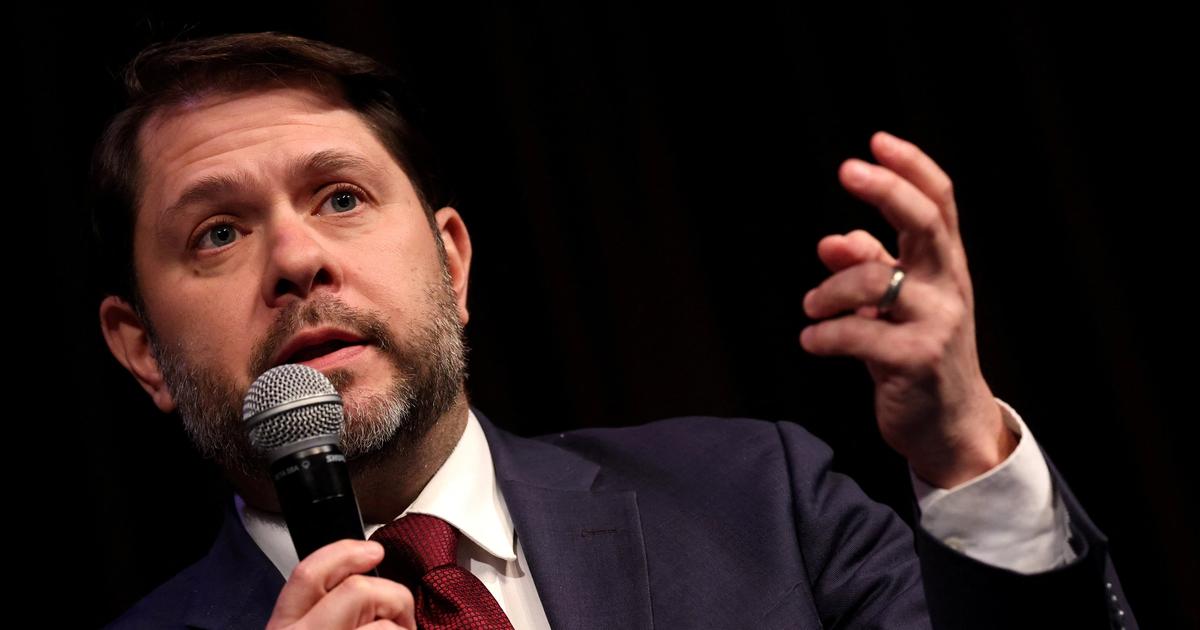
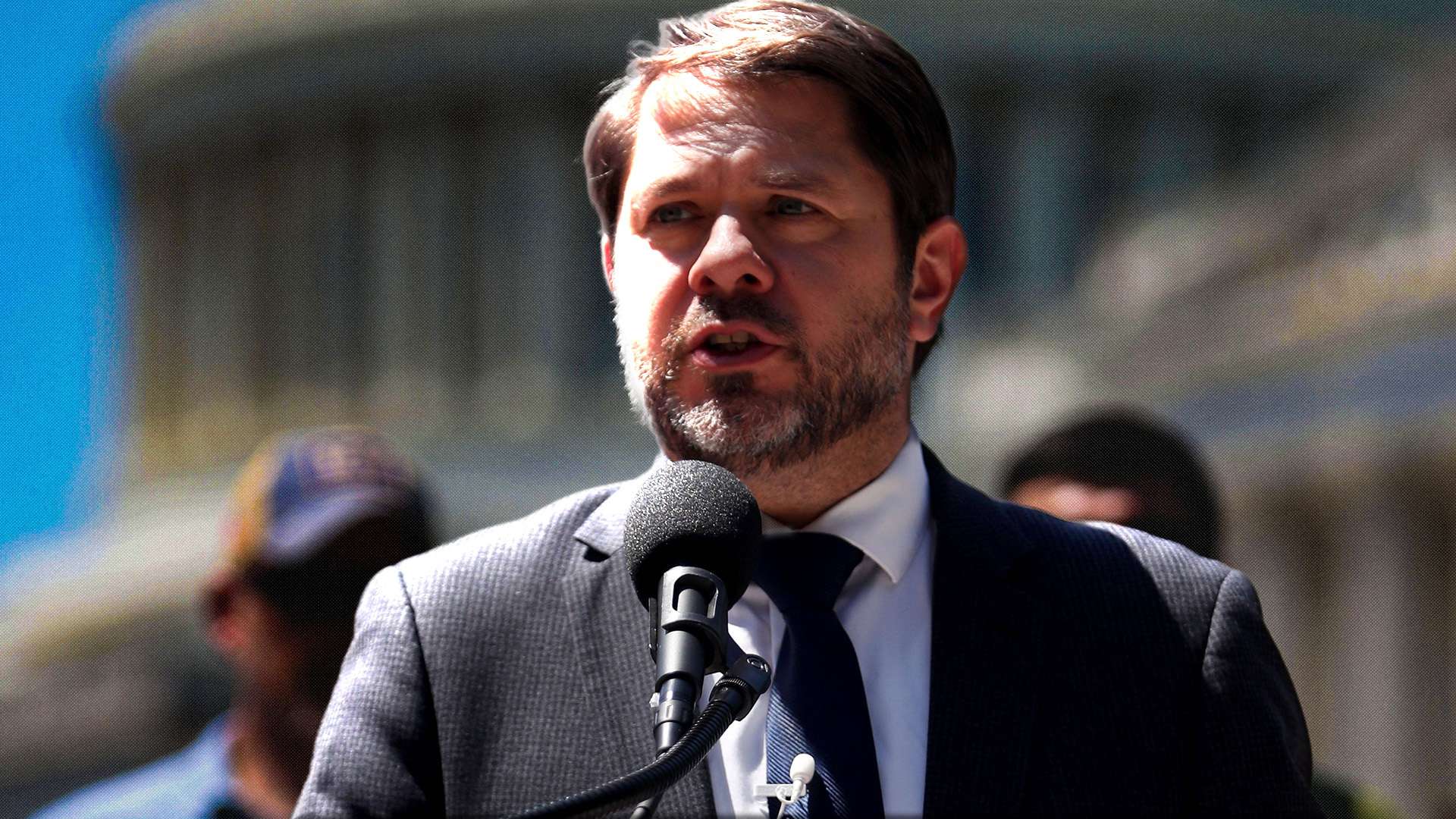
Ruben Gallego, a Democratic senator from Arizona, unveiled an ambitious economic plan aimed at protecting workers amid the rise of artificial intelligence. The plan includes raising the minimum wage to $20 per hour and tying it to inflation, promoting sectoral bargaining agreements for industry-wide labor standards, requiring companies to provide paid leave, and increasing overtime pay from time-and-a-half to double. Gallego also proposed a New Deal-style public service jobs program funded by taxes on AI companies and data centers. The senator's goal is to address the anxieties of American workers who feel their hard work no longer translates into adequate financial support or job security in the face of technological advancements and economic shifts.

Written for “Gallego's Economic Agenda” on 2026-11-20, grounded in this article and the 2 other(s) covering the same event.

How they differ

3 outlets covered “Gallego's Economic Agenda”.

What each outlet says

One AI summary per outlet of its latest article on this story, written from that article alone and checked against it. Open the article for the outlet's own words.

Semafor7 Oct

Ruben Gallego, an Arizona senator, unveiled a comprehensive policy agenda aimed at protecting workers from the impacts of artificial intelligence (AI) and economic changes. The plan includes raising the minimum wage to $20 per hour, increasing overtime pay to double the regular rate, and introducing taxes on data centers and automated jobs to fund federal public works programs. Gallego’s proposals reflect his intent…

Gallego rolls out ambitious plan to insulate workers against AI →
NBC News7 Oct

Sen. Ruben Gallego, D-Ariz., announced a new economic plan aimed at addressing concerns about artificial intelligence and the decline in middle-class jobs. The plan includes boosting the minimum wage to $20 per hour and creating public service jobs funded by taxes on AI companies and data centers. Gallego, who is considering a presidential run in 2028, emphasizes that his proposals are designed to help workers…

Sen. Ruben Gallego rolls out an economic agenda as he weighs a 2028 White House bid →

Where they agree and split

Framing

How the first headlines put it

Stated as fact3
The headlines (3)

Gallego rolls out ambitious plan to insulate workers against AI Semafor · stated as fact

Sen. Ruben Gallego rolls out an economic agenda as he weighs a 2028 White House bid NBC News · stated as fact

Ruben Gallego's Plan To Save America's Middle Class: Higher Taxes and More Unions Reason · stated as fact

The full story: what happened, how it changed, and all 3 articles →

Compared with similar articles

This article reads unscored and hedges 16% of its claims. Each row says how that neighbour differs.
NBC News
Leans strongly left Hedges 5 of 45 claims Outlet record 78/100
Semafor
Leans strongly left Hedges 0 of 29 claims Outlet record 64/100
Semafor
Hedges 0 of 13 claims Outlet record 64/100
“The articles discuss different topics within the broader context of Democratic policies, with Article A focusing on Senator Ruben Gallego's plan to rebuild America's middle class and Article B discussing strategies for Democrats to win the Latino vote.”

Story

Gallego's Economic Agenda
Politics · 3 article(s) covering the same event. Compare every outlet's account →
How this article was measured signals, leaning charts, publisher record, byline, topics and claims

Signals How these are calculated →

Claims extracted
25
sentences that state something as happening or true
Uncertain
16%
4 of 25 hedged ("reportedly", "may", "according to")
Leaning
withheld
no quote in the article backed the model's score
Publisher signals
67/100
Reason's corrections and hedging, across everything collected from it. Not a measure of accuracy.
Outlets on this story
3
Politics
Same framing elsewhere
1
articles that frame the event the way this one does
Analyzed 2026-10-07 · how these are computed

How this is being covered How these are calculated →

Article leaning vs. publisher reliability
Source leaning vs. consistency

Publisher

Reason · 1449 article(s) · 4 correction(s) detected
Running correction rate · 4 correction(s)

Who wrote this

Tosin Akintola
27 article(s) here · 1 carrying a prediction
On Wednesday, Rep. Robert Garcia (D–Calif.), who will become chairman of the House Committee on Oversight and Government Reform in January, sent document preservation letters to President Donald Trump's family, Vice President J.D. Vance, White House Chief of Staff Stephen Miller, and others, as an escalation of "existing investigations" into allegations of corruption in the Trump administration.
In Caracas, Hegseth said that would include joint training, partnerships, intelligence sharing, and the provision of "defense equipment and capabilities."
2026-11-19 · mixed framing · U.S. and Venezuela Enter Military Deal
Despite some contrary reports, Commerce Secretary Howard Lutnick still appears to be in President Donald Trump's good graces, and Semafor reported that the Commerce boss would be part of Trump's China contingent, traveling with the president to Beijing on Wednesday.
The all-inclusive figure might play well to the president's supporters, but it obscures the atmosphere of fear and illiberalism powering the Trump administration's deportation numbers.
Sponsored by Sen. Shelley Moore Capito (R–W.Va.), chairwoman of the Senate Environment and Public Works Committee, the 494-page bill would modify the federal permitting process by limiting the scope of environmental reviews and expediting the timeline for project approval.
When Democrat Gina Hinojosa is sworn in as Texas governor in January, one of her first acts, "within an hour of taking the oath of office," she recently told The Texas Tribune, will be to "declare a high-cost emergency in the state of Texas and issue an emergency executive order to: one, suspend the gas and diesel tax; and two, freeze electricity rates."
Yet messaging from ranking Democrats makes it clear their inquiries won't be limited to government actions; they will also extend to the actions of private companies and industries they perceive as allies of the president.
Even when they weren't on the ballot, they may have been a factor in the elections: NBC's exit polls report that artificial intelligence and data centers were a "crucial or a major factor" for 56 percent of voters.
2026-11-04 · assertive framing · Ohio Leads a Wave of Local Data Center Bans
In August, U.S. District Court Judge Robert J. Shelby found that federal law did not preempt Utah from enforcing its anti-gambling laws against Kalshi, meaning the platform could not legally operate in the Beehive State.
2026-10-29 · assertive framing · Utah Files Criminal Charges Against Kalshi Co-Founders
If onion futures contracts were legal, farmers could rely on market expectations instead of planting crops based on last year's prices.
Also by Tosin Akintola
Nothing else under this byline is closely related to this article, so these are simply their most recent.
All 27 articles by Tosin Akintola →

Topics

America American Ariz. Vt. the Congressional Budget Office

Subjects

Gallego PERSON · 11× America GPE · 1× American NORP · 1× Ariz. GPE · 1× Bernie Sanders PERSON · 1× CBO ORG · 1× Ruben Gallego PERSON · 1× Vt. GPE · 1× an Office of Worker Advocacy ORG · 1× the Congressional Budget Office ORG · 1×

Narrative

In 2023, when Sen. Bernie Sanders (I–Vt.) and a group of progressive lawmakers proposed to raise the minimum wage to $17 per hour within five years, the Congressional Budget Office (CBO) found that the plan would increase the budget deficit, lead to "higher prices for goods and services," increase social welfare spending, and lead to 700,000 fewer jobs by 2029.
framing: assertive · carried by 1 article(s) · first seen 2026-10-07
And that might be the tamest idea in this sprawling populist platform.

Claims (25 extracted, 4 hedged)

In a 32-page plan unveiled Wednesday, Sen. Ruben Gallego (D–Ariz.) claims that the American dream is being blocked by officials who have "let billionaires and giant corporations create our unbalanced economic system." uncertain
billionaires → unveil → system
To "rebuild" America's middle class, Gallego calls for establishing "a New Deal–style public service jobs program" that "funds jobs that allow AI-displaced workers to help families and serve communities. asserted
workers → rebuild → communities
And that might be the tamest idea in this sprawling populist platform. uncertain
that → sprawl → platform
It's unlikely that any of Gallego's plans will actually be signed into law anytime soon. asserted
any → sign → law
But his proposals do provide some insight into what policies progressive candidates could be offering in 2028. uncertain
candidates → provide → 2028
Gallego's plan calls on the government to mandate higher pay rates for overtime and holiday work, expanded unemployment insurance, and sick, vacation, and family leave. asserted
plan → call → overtime
He wants higher taxes on capital gains, plus a new "corporate 'robot' tax" to discourage companies from using automation. asserted
He → want → automation
He would "require employers and workers to bargain over workplace technology," ostensibly placing employees on equal footing with owners in deciding the direction of a private enterprise. asserted
He → require → enterprise
Indeed, to "protect workers," Gallego would consider banning "complete automation," would place "hard caps on technology deployment," and would institute requirements for "human operators." asserted
Gallego → protect → operators
While that might protect jobs in the short run, it could cripple the companies that employ many of those workers—autonomous ride-sharing and delivery companies, of course, and also the autonomous manufacturing companies critical to the aerospace, healthcare, software, and defense industries. uncertain
that → protect → industries
Gallego would ban mergers involving companies worth more than $100 billion, use the tax code to discourage large mergers, and "expand antitrust statutes to scrutinize serial small merger rollups." asserted
Gallego → ban → rollups
This would probably have the opposite of the intended effect: Rather than operate in the red, employers would cut jobs to pay taxes and shutter businesses altogether. asserted
employers → have → businesses
Gallego also calls for a $20 federal minimum wage. asserted
Gallego → call → wage
In 2023, when Sen. Bernie Sanders (I–Vt.) and a group of progressive lawmakers proposed to raise the minimum wage to $17 per hour within five years, the Congressional Budget Office (CBO) found that the plan would increase the budget deficit, lead to "higher prices for goods and services," increase social welfare spending, and lead to 700,000 fewer jobs by 2029. asserted
plan → propose → 2029
With Gallego pushing for a higher federal minimum wage in less time (three years, rather than five), the impacts are sure to be worse. asserted
impacts → push → five
He plans to "triple union density by 2035" by "automatically certifying a union if over 50 percent of workers have signed authorization cards, banning companies from holding captive audience meetings, granting all workers collective bargaining rights, and expanding career pathways into union work." asserted
percent → plan → work
Under federal labor law, employees can already vote to form unions if 30 percent of employees agree. asserted
percent → vote → employees
Workers can also bypass the election process entirely and ask for voluntary recognition if over 50 percent sign authorization cards. asserted
percent → bypass → cards
Gallego's plan would create new bureaucracies for those union workers to exploit, such as a "Worker Empowerment Corps" and an "Office of Worker Advocacy," and would institute "whole-of-government labor enforcement collaborations" that would bring the force of several federal agencies against employers that violate his labor laws. asserted
that → create → laws
Ironically given his misgivings about data centers and AI, Gallego proposes integrating AI into systems that monitor workers' rights enforcement. asserted
that → give → enforcement
In addition to raising taxes on capital gains, foreign profits, and stock buybacks, Gallego would explore a new 10 percent excise tax on data centers and a tax on the revenues of large AI companies to pay for his ideas. asserted
Gallego → raise → ideas
Of course, many data centers don't generate revenue in the traditional sense right now; as of November 2025, the leading AI companies had invested 16 times more than they earned in revenue. asserted
they → generate → revenue
The senator's plan is called "Saving the Middle Class and Restoring the American Dream." asserted
plan → call → Dream
But most Americans define the American dream as having "freedom of choice in how to live." asserted
Americans → define → choice
Gallego would instead give the government more control over people's lives. asserted
Gallego → give → lives
Give feedback · no sign-in needed

No sign-in needed for now. Your note is sent without a name, so it cannot be answered.

History Support