Photo via The Straits Times

OpenAI says teens use ChatGPT for under 15 minutes a day as worries over risks grow

Read the original at The Straits Times ↗
Cite

The Straits Times. (2026, October 8). OpenAI says teens use ChatGPT for under 15 minutes a day as worries over risks grow. The Straits Times. https://www.straitstimes.com/world/openai-says-teens-use-chatgpt-for-under-15-minutes-a-day-as-worries-over-risks-grow

Dated when The Aporia collected the article, usually within hours of publication. Check the original for its exact date and byline.

The Straits Times · collected 2026-10-08 · by The Straits Times

Quick Summary

OpenAI reported on October 7 that teenagers use ChatGPT for less than 15 minutes per day on average, with fewer than 2% spending more than three continuous hours. The company released this data amid growing concerns about the risks AI chatbots pose to children's mental health and development. OpenAI aims to show its safety measures are effective by noting that nearly half of teen users take a break or end their session when prompted. However, a study by Common Sense Media found that ChatGPT’s safeguards often failed to alert parents promptly during discussions about sensitive topics like suicide and self-harm.
Written by AI on 2026-10-08, from this article's own text only (the story summary below draws on all the coverage).
See how they differ ↓

AI analysis

Story summary

OpenAI, in its first report on ChatGPT for Teens, claims that teens use the chatbot for less than 15 minutes per day, with only about 2% spending over three hours straight. However, watchdog groups like Common Sense Media and Design It For Us criticize OpenAI’s lack of transparency and independent verification of these data points. Common Sense Media found that many safety features meant to protect teens from harmful content were easily circumvented; for example, the system often produced full homework answers when prompted to do so in study mode. These criticisms come amid growing concerns over AI's impact on children's mental health and developmental safety, paralleling issues raised by social media platforms like Facebook and Instagram, which face scrutiny for their effects on young users' well-being.

Written for “Teen Chat Gpt Usage” on 2026-11-21, grounded in this article and the 2 other(s) covering the same event.

How they differ

3 outlets covered “Teen Chat Gpt Usage”.

What each outlet says

One AI summary per outlet of its latest article on this story, written from that article alone and checked against it. Open the article for the outlet's own words.

The Straits TimesThis outlet8 Oct

OpenAI reported on October 7 that teenagers use ChatGPT for less than 15 minutes per day on average, with fewer than 2% spending more than three continuous hours. The company released this data amid growing concerns about the risks AI chatbots pose to children's mental health and development. OpenAI aims to show its safety measures are effective by noting that nearly half of teen users take a break or end their…

OpenAI says teens use ChatGPT for under 15 minutes a day as worries over risks grow (this article)
New York Post7 Oct

Online safety watchdogs are criticizing OpenAI for claiming that teenagers use ChatGPT less than 15 minutes per day on average. Without independent verification, critics like Sebastian Mahal from Design It For Us argue that OpenAI’s data lacks credibility and transparency. The company did not provide specific details about how the usage statistics were gathered or verified, leading to concerns over its accuracy and…

Watchdogs slam OpenAI’s claim that teens use ChatGPT less than 15 minutes per day →
BBC7 Oct

OpenAI introduced ChatGPT for Teens in August to promote safer use among younger users with features like parental alerts and restrictions on certain types of conversations. However, a study by Common Sense Media released recently found that these safety measures are insufficient, classifying ChatGPT as an "unacceptable risk" for teens due to frequent failures in implementing the intended safeguards. OpenAI reported…

OpenAI says teen ChatGPT use limited but research finds it an 'unacceptable risk' →

Where they agree and split

Framing

How the first headlines put it

A claim to check1
Attributed to a source2
The headlines (3)

Watchdogs slam OpenAI’s claim that teens use ChatGPT less than 15 minutes per day New York Post · a claim to check

OpenAI says teen ChatGPT use limited but research finds it an 'unacceptable risk' BBC · attributed to a source

OpenAI says teens use ChatGPT for under 15 minutes a day as worries over risks grow The Straits Times · attributed to a source

The full story: what happened, how it changed, and all 3 articles →

Compared with similar articles

This article reads unscored and hedges 21% of its claims. Each row says how that neighbour differs.
New York Post
Leans strongly left Hedges 2 of 27 claims Outlet record 66/100
BBC News
Hedges 3 of 26 claims Outlet record 65/100

Story

Teen Chat Gpt Usage
Technology · 3 article(s) covering the same event. Compare every outlet's account →
How this article was measured signals, leaning charts, publisher record, byline, topics and claims

Signals How these are calculated →

Claims extracted
14
sentences that state something as happening or true
Uncertain
21%
3 of 14 hedged ("reportedly", "may", "according to")
Leaning
not political
takes no side on a contested political question
Publisher signals
64/100
The Straits Times's corrections and hedging, across everything collected from it. Not a measure of accuracy.
Outlets on this story
3
Technology
Same framing elsewhere
1
articles that frame the event the way this one does
Analyzed 2026-10-08 · how these are computed

How this is being covered How these are calculated →

Article leaning vs. publisher reliability
Source leaning vs. consistency

Publisher

The Straits Times · 5634 article(s) · 7 correction(s) detected
Running correction rate · 7 correction(s)

Who wrote this

The Straits Times
3888 article(s) here · 1 carrying a prediction
He told groups of subordinates that they had become so rich that he couldn’t motivate them simply with money, according to three people who spoke on the condition of anonymity to discuss confidential conversations.
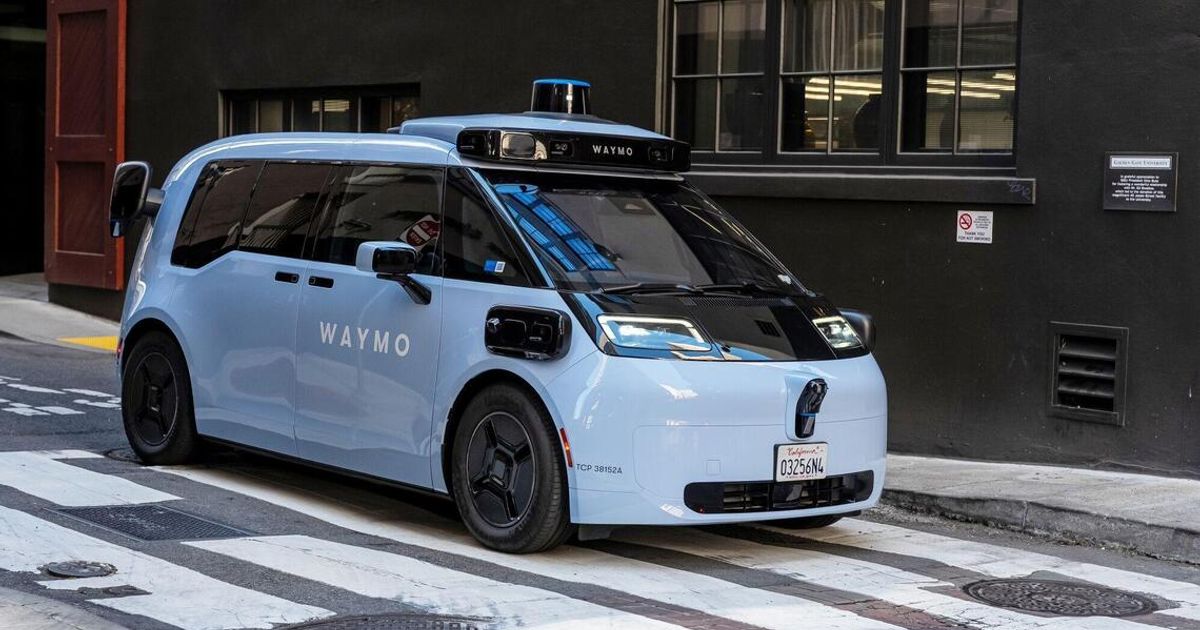
The closed freeway lanes recall stems from unusual circumstances where a Waymo vehicle may enter and continue driving in a closed freeway lane, the company said, adding it is still working on the recall remedy.
Araqchi says Iran wants diplomacy to end war; Trump says terms unacceptable Nov 20 - Iran's Foreign Minister Abbas Araqchi said Tehran still hoped diplomacy could end its war with the United States, while US President Donald Trump said Iran wanted a deal but one that was not acceptable to him.
While You Were Sleeping: 5 stories you might have missed, Nov 21, 2026 Trump, Xi agree military AI decisions should involve humans US President Donald Trump and Chinese President Xi Jinping agreed humans should always be involved in military decisions that use artificial intelligence technologies, even as the two countries compete for AI supremacy, Treasury Secretary Scott Bessent said on Nov 20.
US Vice President Vance declines to say he would have ordered Iran strikes WASHINGTON, Nov 20 - US Vice President JD Vance on Friday declined to say whether he would have authorized strikes on Iran to prevent the country from developing a nuclear weapon, sidestepping President Donald Trump's calls for him to say the attacks were necessary and that he would carry them out again.
Some would blame Ottawa for the trade conflict while others pointed the finger at Washington.
Whoever wins will have to tackle multiple crises, including several wars, cutbacks in US contributions to the UN, and the 193-member body's declining political relevance as Washington has pulled out of dozens of its agencies.
I don’t think any human was about to find this,” Conrey said, adding that he believed “there will be simpler ways to do it.” The Riemann Hypothesis is one of seven Millennium Prize Problems selected by the Clay Mathematics Institute in 2000, which offers US$1 million (S$1.28 million) for a solution to each. Under the institute’s rules, a solution must be published in a peer-reviewed journal and withstand two years of scrutiny.
If the hearing proceeds as planned, it would mark Huang's first public testimony since stepping down as Nvidia's chief executive on November 12.
Denmark’s foreign minister on Nov 20 said Moscow’s defence attache in Copenhagen would be expelled after Russia was suspected of being behind an attempted assassination of a Ukrainian rapper.
Also by The Straits Times
Nothing else under this byline is closely related to this article, so these are simply their most recent.
All 3888 articles by The Straits Times →

Topics

ChatGPT Common Sense Media Facebook Meta OpenAI

Subjects

OpenAI ORG · 5× Common Sense Media ORG · 2× ChatGPT ORG · 1× Facebook ORG · 1× Instagram ORG · 1× Meta ORG · 1× REUTERS ORG · 1× Sam Altman’s PERSON · 1×

Narrative

Teens spend under 15 minutes a day on average on ChatGPT, while less than 2% of them interact with the chatbot for over three straight hours, OpenAI said, as technology companies face scrutiny over the risks AI chatbots pose to children.
framing: mixed · carried by 1 article(s) · first seen 2026-10-08
It is now looking to add a college application planning tool that would help students with requirements, deadlines and financial-aid steps, as well as new study features such as flashcards and easier quiz-making tools.

Claims (14 extracted, 3 hedged)

OpenAI says teens use ChatGPT for under 15 minutes a day as worries over risks grow AI asserted
worries → say → risks
Teens spend under 15 minutes a day on average on ChatGPT, while less than 2% of them interact with the chatbot for over three straight hours, OpenAI said, as technology companies face scrutiny over the risks AI chatbots pose to children. asserted
chatbots → spend → children
Sam Altman’s AI company released the figures in its first report on teen use on Oct 7 as rapid adoption of AI platforms raises concerns about their impact on adolescent mental health and developmental safety. asserted
adoption → release → health
Such worries have been amplified by research on social media’s harms to young users, with Meta in August agreeing to pay up to US$18 billion (S$23 billion) and limit teens’ use of Facebook and Instagram to settle claims that it designed the platforms to addict children. OpenAI said in nearly half of teen conversations where a break reminder appeared, the user either took a break or ended the chat within five minutes, aiming to show that its steps to regulate teen usage were working. The company said users with access to its dedicated teen version sent more education-related messages and used tools like learning visualizations and Study Mode. uncertain
users → amplify → visualizations
It is now looking to add a college application planning tool that would help students with requirements, deadlines and financial-aid steps, as well as new study features such as flashcards and easier quiz-making tools. asserted
that → look → flashcards
OpenAI began rolling out ChatGPT for Teens in August. asserted
OpenAI → begin → August
The mode turns on automatically based on age information or when a user is estimated to be under 18, allowing parental controls and limiting conversations on sensitive topics. asserted
user → turn → topics
But a report by non-profit Common Sense Media on Oct 7 said ChatGPT for Teens often alerted parents late or not at all when teen accounts held conversations about suicide, self-harm or eating disorders. asserted
accounts → say → suicide
The study, which is based on more than a dozen accounts created for testing, found the chatbot did not reliably suggest a crisis hotline or professional help. asserted
chatbot → base → hotline
An OpenAI spokesperson said the testing does not “accurately reflect” how ChatGPT’s teen safeguards work. asserted
safeguards → say → ?
Citing security and scale as reasons, the company said it may take hours for parent and teen accounts to link and for safety alerts to be active. uncertain
alerts → cite → hours
“The bulk of their testing may have begun and concluded before activation of parental controls was complete,” the spokesperson said. uncertain
spokesperson → begin → controls
Common Sense Media said some of its test accounts were linked for long enough and some were not, but none of them produced timely alerts. asserted
none → say → alerts
Notifications only came through for accounts with weeks of sensitive-topic history, it said. asserted
it → come → history

Give feedback · no sign-in needed

No sign-in needed for now. Your note is sent without a name, so it cannot be answered.

History Support