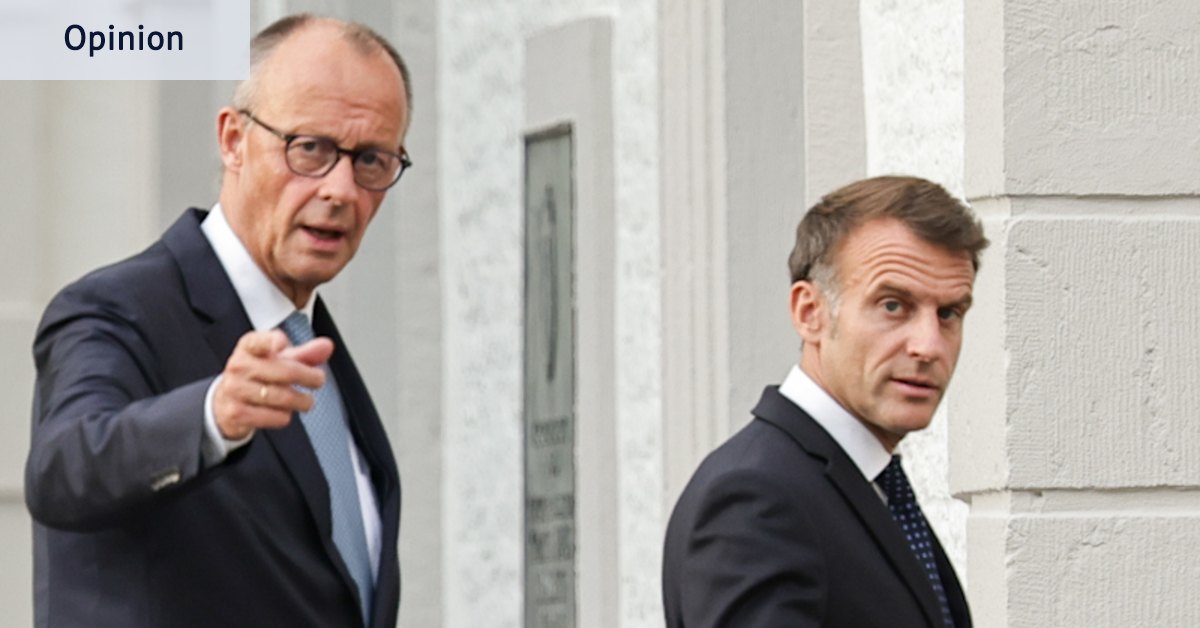
Photo via The Sydney Morning Herald

Europe raids Trump’s tool box for new ‘trade bazooka’ against China

Read the original at The Sydney Morning Herald ↗
Cite

Bartholomeusz, S. (2026, October 8). Europe raids Trump’s tool box for new ‘trade bazooka’ against China. The Sydney Morning Herald. https://www.smh.com.au/business/markets/europe-raids-trump-s-tool-box-for-new-trade-bazooka-against-china-20261008-p613rp.html?ref=rss&utm_medium=rss&utm_source=rss_feed

Dated when The Aporia collected the article, usually within hours of publication. Check the original for its exact date and byline.

The Sydney Morning Herald · collected 2026-10-08 · by Stephen Bartholomeusz

Quick Summary

European Union trade negotiators led by Commissioner Maros Sefcovic are meeting with Chinese officials amid growing concerns over China’s widening trade surplus with the EU, which stood at €360.6 billion last year and has increased further this year. France and Germany have formed an unusual alliance to push for new trade measures against China, including a proposed “last resort” instrument that could instantly restrict market access, reflecting a shift in traditionally free-trading Germany’s stance due to job losses in its auto industry from Chinese competition.
Written by AI on 2026-10-08, from this article's own text only (the story summary below draws on all the coverage).
See how they differ ↓

AI analysis

Story summary

As of October 10, 2026, EU trade negotiators led by Maroš Šefčovič reached an agreement in Beijing to reduce Chinese exports of hybrid and plug-in hybrid cars to Europe by more than half over four years. The deal came after two days of intense talks aimed at addressing the €1 billion-a-day trade deficit between the EU and China, a significant source of economic anxiety for European nations.

The negotiations were prompted by concerns that cheap Chinese imports are de-industrializing European economies, particularly in sectors like automotive manufacturing where companies such as Volkswagen have announced job cuts. The agreement limits Chinese hybrid car shipments to 350,000 units per year, increasing annually at 6%, well below the projected 800,000 vehicles expected by 2026 without intervention.

While seen as a crucial step in rebalancing trade relations, the deal addresses only part of the broader issues facing the EU and China, leaving much of the $1 billion-a-day deficit unresolved. European officials view this as a "paradigm shift" marking a new approach to negotiations, but acknowledge that it is merely the first step towards more comprehensive reforms needed to address structural trade imbalances.

Written for “EU-China Trade Talks Hybrid Cars” on 2026-11-20, grounded in this article and the 15 other(s) covering the same event.

How they differ

11 outlets covered “EU-China Trade Talks Hybrid Cars”.

What each outlet says

One AI summary per outlet of its latest article on this story, written from that article alone and checked against it. Open the article for the outlet's own words.

Sydney Morning HeraldThis outlet8 Oct

European Union trade negotiators led by Commissioner Maros Sefcovic are meeting with Chinese officials amid growing concerns over China’s widening trade surplus with the EU, which stood at €360.6 billion last year and has increased further this year. France and Germany have formed an unusual alliance to push for new trade measures against China, including a proposed “last resort” instrument that could instantly…

Europe raids Trump’s tool box for new ‘trade bazooka’ against China (this article)
South China Morning Post12 Oct

EU and China reached an unexpected trade deal following weeks of negotiations, marking a shift in their tense relationship. The agreement includes strict quotas on Chinese hybrid car exports to Europe, limiting them to 350,000 units annually with annual increases capped at 6%, falling short of the projected 800,000 vehicles by 2026. Additionally, China agreed to lower tariffs on various European goods, and Brussels…

How China and the EU pressed pause on trade war – and what it took to get there →4 articles from South China Morning Post on this story
The Independent9 Oct

China and the European Union concluded two days of high-level trade talks in Beijing aimed at addressing growing economic imbalances, particularly China's significant trade surplus with the EU, which reached 360 billion euros last year. During the discussions, EU envoy Maros Sefcovic emphasized the need for tangible outcomes to rebalance trade and expressed concern over Chinese exports affecting European industries…

China and EU trade envoys seek ways to ease tensions over growing imbalances →2 articles from The Independent on this story
Semafor11 Oct

The European Union and China have agreed to cut Chinese imports of hybrid vehicles into Europe by half as part of a deal reached on Friday. This agreement aims to prevent a trade conflict but addresses only a small portion of the EU’s concerns regarding its significant trade deficit with China, which amounts to $1 billion per day. In August, Chinese brands made up one in four European hybrid sales, outpacing…

China, EU reach agreement to reduce Chinese hybrid vehicle imports →2 articles from Semafor on this story
The Guardian7 Oct

EU trade negotiators led by Commissioner Maroš Šefčovič are traveling to China for crucial talks aimed at reducing China’s substantial trade surplus with Europe, particularly concerning cheap hybrid electric car imports. These negotiations, set to begin on Thursday and extend into Friday, focus on establishing a pilot agreement that could restrict Chinese exports in the automotive sector. The EU has warned of…

EU negotiators head to China hoping to curb cheap imports of hybrid electric cars →
Al Jazeera8 Oct

European Trade Commissioner Maros Sefcovic has begun two-day trade talks in Beijing with Chinese Commerce Minister Wang Wentao, focusing on the EU's daily trade deficit exceeding €1 billion. The discussions come amid escalating tensions over Chinese export curbs on rare earths and increased competition from Chinese car manufacturers. Both sides are considering unilateral measures: the EU wants China to accept a cap…

EU-China trade talks begin in Beijing amid escalating pressure →
Show 5 more outlets
Euronews8 Oct

EU Trade Commissioner Maroš Šefčovič is in Beijing for a two-day visit aimed at rebalancing EU-China trade relations, which have become increasingly imbalanced over the past decade. US Senator Marco Rubio, during his visit to Athens for the US-Greece Strategic Dialogue, urged Europe to "wake up" from what he described as a long slumber regarding strategic issues. Meanwhile, in France, student protests continue with…

Europe Today: Rubio urges Europe to wake up as EU trade chief begins key China trip →
Toronto Star8 Oct

The European Union is sending its top trade envoy, Maroš Šefčovič, to Beijing for talks with Chinese Commerce Minister Wang Wentao amid growing concerns over the EU's $410 billion trade deficit with China. The delegation aims to address China’s economic practices that are seen as threatening core industrial sectors within the EU, following a European Parliament resolution advocating for stricter measures against…

EU sends envoy to Beijing as rising exports from China raise economic anxiety →
The Hindu8 Oct

The EU is sending its top trade envoy, Maros Sefcovic, to China for a two-day meeting with Chinese Commerce Minister Wang Wentao on October 8-9, 2026. This comes amid growing concern over the $410 billion annual trade deficit and the threat of job losses in key industries due to subsidized Chinese exports. EU lawmakers voted overwhelmingly to toughen their stance towards China, emphasizing economic reciprocity and…

EU sends envoy to Beijing as rising exports from China raise economic anxiety →
Daily Mail8 Oct

European Commissioner for Trade and Economic Security Maros Sefcovic began two-day talks in Beijing aimed at addressing an unsustainable daily trade deficit of around €1 billion between China and the EU. During these discussions, Sefcovic highlighted the need for improved market access for European businesses while boosting economic security. Meanwhile, Chinese officials warned that Europe lacks the capacity to…

EU and Beijing heading for trade war as Brussels slams 'unsustainable' $1billion-a-day deficit - but China warns: 'Trade war? Let them try →
The Straits Times10 Oct

China has agreed to reduce its exports of hybrid and plug-in hybrid cars to Europe by more than half over four years as part of a deal reached during intense trade talks in Beijing on October 9. The agreement, brokered between Chinese officials and the EU’s trade commissioner Maros Sefcovic, aims to ease tensions and potentially avoid a significant trade conflict between the two economic powerhouses.

China agrees to cut exports of hybrid cars to Europe. Is this a rare trade win for the EU? →

Where they agree and split

Agreed

AI · cited, from two or more outlets

  • EU trade negotiators are in China for two days of talks aimed at addressing the growing trade deficit and curbing Chinese exports of cheap hybrid electric cars into Europe.12
  • The main focus of the negotiations is a 'proof of concept' pilot agreement involving cars, which could be scaled up for other sectors in the coming months.13
Quoted from the coverage (4)

In a debate Tuesday in European Parliament in Strasbourg, lawmakers overwhelmingly expressed anxiety alongside defiance over trade with China.

4 outlets

On Wednesday, they voted 454 to 86 on a resolution to toughen up on China that centered on a call for “economic reciprocity and a proportionate EU response if China does not open its markets.”

4 outlets

Despite the seeming European unity this week, it remains unclear what the EU can or is willing to do.

4 outlets

France’s High Commission for Strategy and Planning in February called for swift action, like 30% tariffs on many of China’s exports, and a devaluation of the euro against the Chinese currency.

4 outlets

Disputed

Picked by our model, which is sometimes wrong

  • The extent of the agreement reached between the EU and China varies; while The Straits Times reports a specific cap on Chinese hybrid car exports to Europe, other sources provide less detail or no specifics about the deal's terms.43

Framing

How the first headlines put it

  • The Guardian frames the event as EU negotiators heading to China with a specific aim of curbing hybrid car imports, while The Sydney Morning Herald presents it as part of broader efforts to address economic anxiety and potential job losses.15
  • Al Jazeera emphasizes the ongoing diplomatic efforts and discussions over trade barriers, whereas South China Morning Post highlights a surprise trade deal reached after intense negotiations.26
Stated as fact2
The headlines (2)

EU negotiators head to China hoping to curb cheap imports of hybrid electric cars The Guardian · stated as fact

Last chance saloon: EU presses China for a sign to prove trade talks can work South China Morning Post · stated as fact

Words to watch (1)

EU and Beijing heading for trade war as Brussels slams 'unsustainable' $1billion-a-day deficit - but China warns: 'Trade war? Let them try Daily Mail

The full story: what happened, how it changed, and all 16 articles →

Compared with similar articles

This article reads leans right and hedges 20% of its claims. Each row says how that neighbour differs.
The Independent
Leans right Hedges 3 of 42 claims Outlet record 59/100
Al Jazeera
Hedges 2 of 22 claims Outlet record 60/100
South China Morning Post
Hedges 1 of 4 claims Outlet record 62/100
Euronews
Hedges 0 of 13 claims Outlet record 60/100
Toronto Star
Leans right Hedges 3 of 40 claims Outlet record 64/100
The Hindu
Leans right Hedges 3 of 40 claims Outlet record 60/100
Semafor
Leans right Hedges 1 of 4 claims Outlet record 64/100
The Independent
Leans left further left than this Hedges 3 of 14 claims Outlet record 59/100
Toronto Star
Leans right Hedges 0 of 3 claims Outlet record 64/100
“The articles describe different aspects of ongoing trade tensions between China and the EU, with Article A reporting a specific anti-dumping investigation launched by China and Article B discussing broader trade negotiations in response to these tensions.”

Story

EU-China Trade Talks Hybrid Cars
Politics · 16 article(s) covering the same event. Compare every outlet's account →
How this article was measured signals, leaning charts, publisher record, byline, topics and claims

Signals How these are calculated →

Claims extracted
46
sentences that state something as happening or true
Uncertain
20%
9 of 46 hedged ("reportedly", "may", "according to")
Leaning
Leans right
of the writing, not the subject · beta estimate
Publisher signals
61/100
The Sydney Morning Herald's corrections and hedging, across everything collected from it. Not a measure of accuracy.
Outlets on this story
16
Politics
Same framing elsewhere
1
articles that frame the event the way this one does
Analyzed 2026-10-08 · how these are computed

How this is being covered How these are calculated →

Article leaning vs. publisher reliability
Source leaning vs. consistency

Publisher

The Sydney Morning Herald · 7733 article(s) · 16 correction(s) detected
Running correction rate · 16 correction(s)

Who wrote this

Stephen Bartholomeusz
29 article(s) here · 1 carrying a prediction
Nvidia has delivered a third-quarter result that outperformed expectations, raised its forecasts for the current quarter and was very bullish about its prospects in its next financial year.
Donald Trump “wouldn’t mind” if he regained the role.
If you were looking for a single barometer of the state of the world – or of a particular copper-rich sector – it would be hard to go past the copper price.
It now appears inevitable that the Fed will deliver its second rate rise in this cycle – the first was in September – after the US inflation rate came in above expectations for the third successive month.
If he were to be removed – either by his board, which has said it will conduct an inquiry, or by external pressure – could Nvidia function as effectively?
The “blue tsunami” that destroyed Republican control of Congress last week may have a silver lining for some of the key companies caught up in the scramble for artificial intelligence supremacy and for investors exposed to what appeared to be a swelling bubble.
Musk quipped on his X social media platform that his “election-interfering space lasers didn’t work,” but it was another post that shows the real damage that the failure of his efforts to influence the outcome of the elections will do.
The midterm elections could knock out one, if not two, of the pillars supporting that dominance.
Those “concepts” could produce even more trade friction.
2026-11-03 · assertive framing · Trump has lost control of his war with Canada
Alphabet and Meta have, between them, raised almost $US90 billion of new equity since June and have programs that could raise a further $US100 billion.
2026-11-02 · assertive framing · Wall Street on edge after $1.4 trillion wipeout
Also by Stephen Bartholomeusz
Nothing else under this byline is closely related to this article, so these are simply their most recent.
All 29 articles by Stephen Bartholomeusz →

Topics

China Chinese France German Germany

Subjects

China GPE · 10× Chinese NORP · 4× France GPE · 4× Germany GPE · 4× European NORP · 3× German NORP · 2× Macron PERSON · 2× Merz PERSON · 2× Beijing GPE · 1× European Union ORG · 1×

Narrative

The increasing concerns about the unbalanced trade relationship have brought about an unlikely alliance between France, traditionally one of the more protectionist of the major European countries, and Germany, historically a free trader and opponent of measures to restrict imports from China.
framing: assertive · carried by 1 article(s) · first seen 2026-10-08
A delegation of European Union trade negotiators is in Beijing, hoping to avert what could be a full-scale trade confrontation with China.
2026-10-08 · The Sydney Morning Herald
Europe raids Trump’s tool box for new ‘trade bazooka’ against China · assertive framing

Claims (46 extracted, 9 hedged)

A delegation of European Union trade negotiators is in Beijing, hoping to avert what could be a full-scale trade confrontation with China. uncertain
what → hop → China
The talks on Thursday and Friday between a team headed by EU Trade Commissioner Maros Sefcovic and his Chinese counterpart Wang Wentao are taking place amid Europe’s fears that a swelling flood of cheap Chinese imports is de-industrialising its economies. Last asserted
flood → head → economies
So far this year, China’s exports to the EU are up 15 per cent and the surplus has swollen by as much as 23 per cent. asserted
surplus → swell → cent
Sefcovic has called the widening trade imbalance “unsustainable” and a threat to Europe’s social model. asserted
Sefcovic → call → model
The increasing concerns about the unbalanced trade relationship have brought about an unlikely alliance between France, traditionally one of the more protectionist of the major European countries, and Germany, historically a free trader and opponent of measures to restrict imports from China. asserted
concerns → increase → China
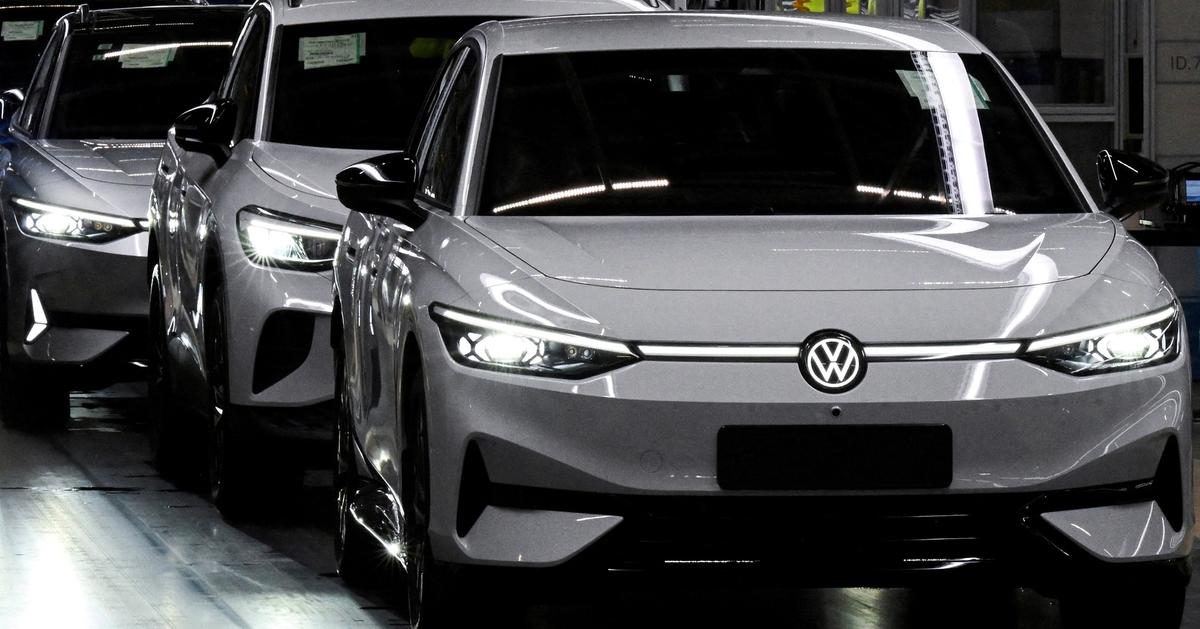
With imports of Chinese electric vehicles and plug-in hybrids cutting a swathe through the German auto industry – Volkswagen has recently announced the closure of four of its major factories, with about 100,000 of job losses – German Chancellor Friedrich Merz has joined France’s Emmanuel Macron in calling for the creation of a new “last resort” trade instrument that could instantly cut off access to the EU market. uncertain
that → plug → market
The risk for China is that if it continues to wipe out other countries’ manufacturing sectors and jobs, others might hold their noses and join the protectionist US president. uncertain
others → continue → president
That’s a major shift in Germany’s stance. asserted
That → ’ → stance
Historically, it opposed trade restrictions because it was a major exporter to China and its companies had invested heavily in China’s industries via joint ventures. asserted
companies → oppose → ventures
Now its own industries are being decimated by an industrial base it helped develop. asserted
it → decimate → base
The letter sent by Macron and Merz to European Commission (EC) President Ursula von der Leyen on Monday implored her to expand the EU’s arsenal of trade weapons in response to the increased “weaponisation of trade, systemic market-distorting practices and global macroeconomic imbalances.” asserted
letter → send → trade
The EU already has what has been described as its “trade bazooka” – its “anti-coercion instrument” -- but has never used it. asserted
what → have → it
That instrument allows EU officials to impose tariffs and other trade restrictions if they determine another government is using economic coercion against the bloc. asserted
government → allow → bloc
The move, however, requires the support of more than half the EU’s 27 member countries representing at least 65 per cent of the EU population, which is a steep hurdle. asserted
which → require → population
Merz and Macron’s proposed new instrument could be activated instantly by the EC, unless the member states voted to revoke it, lowering the hurdle. uncertain
states → propose → hurdle
It would also allow the EC to move far quicker. asserted
EC → allow → ?
France and Germany also proposed a “diversification” instrument, which would let the EC impose a cap on the percentage of imports from one country allowed in various product categories. asserted
EC → propose → categories
The obvious concern for France, Germany and the rest of the EU is that if they were to restrict Chinese imports or increase tariffs on them, China would respond by cutting off access to strategic minerals like rare earths and magnets, where it has introduced a licensing system. asserted
it → restrict → system
The new tool would give the EC the ability to shut China out of its biggest and richest market. asserted
tool → give → market
In effect, the European leaders are seeking to create something akin to the Section 301 powers that Donald Trump has invoked in the US to recreate the global tariff regime knocked out by the US Supreme Court earlier this year. asserted
Trump → seek → Court
That section of the US Trade Act gives a president the authority to impose trade penalties in response to unfair trade practices. asserted
section → give → practices
The current flashpoint in the EU-China relationship is the devastation of the European car industry by China’s electric vehicle and, more particularly, plug-in hybrid manufacturers. asserted
flashpoint → plug → vehicle
Only two years ago, the EU imposed tariffs ranging from 7.8 to 35.3 per cent – on top of a general 10 per cent tariff on imported cars – on Chinese EVs. asserted
EU → impose → EVs
But the duties didn’t cover plug-in hybrids, where EU imports more than doubled last year. asserted
imports → cover → hybrids
This year, Chinese hybrids account for almost half of all new EU sales of plug-ins. asserted
hybrids → account → ins
It’s not just electric cars, however. asserted
It → ’ → ?
Europe’s green technology, steel, chemicals, pharmaceuticals, machine tools and aerospace sectors are also being swamped by Chinese imports. asserted
technology → swamp → imports
Even the UK, albeit under the threat of facing restrictions to its own trade with the EU, is considering imposing hefty tariffs on imports of cars and chemicals from China. asserted
UK → face → China
The EU also wants China to lower some of its own tariff and non-tariff barriers to EU imports. asserted
China → want → imports
China will, of course, resist the European pressure. asserted
China → resist → pressure
And it has its own powerful trade instrument – cutting off access to the rare earths and magnets vital to most advanced manufactures. asserted
it → have → manufactures
It might, however, be prepared to make some concessions rather than risk being shut out of its key developed world market entirely. uncertain
It → prepare → market
Sacrificing its value-added tax rebate for exported EVs might be a start, knowing that the sprawling and disparate nature of the EU membership makes it difficult to build consensus for anything even mildly controversial. uncertain
it → sacrifice → anything
A ban on imports from China, or caps on its market shares, would be tricky to achieve. asserted
ban → achieve → shares
America decided during Trump’s first term that China was using unfair tactics – state and local government subsidies, below-market finance and central direction to dominate strategic sectors – and began the initial trade war. asserted
China → decide → war
Unfortunately, Trump’s fixation on tariffs meant he extended the trade war to the rest of the world in his second term, alienating many of America’s closest allies that might have joined the US in pressuring China to change its ways. uncertain
that → mean → ways
There’s good reason for the EU and other economies that, like Australia, are open and dependent on a relatively free global trading environment to be concerned about China’s exports. asserted
that → ’ → exports
The collapse of China’s property market more than five years ago has undermined its domestic economy, leaving it increasingly reliant on exports to drive economic growth. asserted
collapse → undermine → growth
Beijing has resisted external calls for a major stimulus program to drive greater domestic consumption and domestic growth, which has led to significant over-capacity relative to the weak domestic demand – and a tide of exports as its companies redirect their sales. asserted
companies → resist → sales
Last year China had a trade surplus of about $US1.2 trillion ($1.7 trillion), or about four times its surplus in 2020. asserted
China → have → 2020
…and 6 more, not listed.
Give feedback · no sign-in needed

No sign-in needed for now. Your note is sent without a name, so it cannot be answered.

History Support