Photo via The Straits Times

UN warns against technology used to read citizens’ minds

Read the original at The Straits Times ↗
Cite

The Straits Times. (2026, October 9). UN warns against technology used to read citizens’ minds. The Straits Times. https://www.straitstimes.com/world/un-warns-against-technology-used-to-read-citizens-minds

Dated when The Aporia collected the article, usually within hours of publication. Check the original for its exact date and byline.

The Straits Times · collected 2026-10-09 · by The Straits Times

Quick Summary

On October 8, the UN secretary-general warned about potential abuses of neurotechnologies that could allow governments to access and manipulate citizens' minds, threatening fundamental human rights such as privacy and freedom of thought. The report suggests that without proper regulation, these technologies might be misused in criminal justice systems, leading to issues like arbitrary detentions and mental state alterations. To address these risks, the UN recommends strict regulations and requiring explicit consent for using neurotechnology in legal contexts.
Written by AI on 2026-10-09, from this article's own text only (the story summary below draws on all the coverage).

AI analysis

Story summary

On October 8, Antonio Guterres, the secretary-general of the United Nations, warned for the first time about the dangers posed by neurotechnologies that could allow governments to access and manipulate citizens' brains. These technologies raise concerns over potential abuses in criminal justice settings, such as extracting information from suspects or predicting future crimes. The UN Human Rights Office's report highlights risks including arbitrary detentions and privacy infringements. It recommends establishing regulations consistent with international law and treating thoughts as "highly sensitive personal data," requiring explicit consent for their use.

Written for “Mind Reading Technology Warning” on 2026-11-21, grounded in this article and the 0 other(s) covering the same event.

Compared with similar articles

This article reads unscored and hedges 18% of its claims. Each row says how that neighbour differs.
Washington Examiner
Hedges 1 of 33 claims Outlet record 67/100
“The articles discuss different aspects of advanced technology and its implications; one focuses on President Trump's term 'super intelligence' while the other is about a UN warning regarding neurotechnologies.”
Toronto Star
Leans left Hedges 1 of 2 claims Outlet record 65/100
“The articles describe different concerns related to AI and neurotechnology from distinct sources (NYC council hearing vs UN secretary-general).”

Story

Mind Reading Technology Warning
Technology · 1 article(s) covering the same event.
How this article was measured signals, leaning charts, publisher record, byline, topics and claims

Signals How these are calculated →

Claims extracted
28
sentences that state something as happening or true
Uncertain
18%
5 of 28 hedged ("reportedly", "may", "according to")
Leaning
withheld
no quote in the article backed the model's score
Publisher signals
64/100
The Straits Times's corrections and hedging, across everything collected from it. Not a measure of accuracy.
Outlets on this story
1
Technology
Same framing elsewhere
1
articles that frame the event the way this one does
Analyzed 2026-10-09 · how these are computed

How this is being covered How these are calculated →

Article leaning vs. publisher reliability
Source leaning vs. consistency

Publisher

The Straits Times · 5679 article(s) · 7 correction(s) detected
Running correction rate · 7 correction(s)

Who wrote this

The Straits Times
3972 article(s) here · 1 carrying a prediction
• The former president is clinically stable and conscious but there is no forecasted discharge at this time
2026-11-21 · assertive framing · Brazil ex-President Jair Bolsonaro taken to ICU
The environmental consequences of this war will last for generations,” Lewis Pugh wrote in a post on his website.
He predicts that pairing more use of these Wolbachia mosquitoes with existing steps to fight mosquito-borne disease could “knock dengue down to much lower levels” in many places.
Gharibabadi echoed remarks by Iranian Foreign Minister Abbas Araqchi in an interview with the state-owned Iran newspaper that Tehran still hoped diplomacy could end its war with the United States.
The Estonian police said on Nov 20 the closure would “make it harder for Russian intelligence services to recruit and influence people, and help prevent sanctions evasion”.
2026-11-21 · assertive framing · Queues in Russian town as Estonia border closure looms
COP31 climate summit risks failure as talks go deep into overtime ANTALYA, Turkey, Nov 21 - The COP31 climate summit will either produce a good deal or no deal at all, the European Union's top climate official said on Saturday as talks stretched deep into overtime.
He was considered one of the leaders of the Beltran Leyva cartel, which had reportedly allied with the Los Mayors faction of the powerful Sinaloa Cartel.
Trump told European leaders they were spending a lot on Ukraine, Zelenskiy says KYIV, Nov 21 - US President Donald Trump told European leaders this week they were spending a lot on the war in Ukraine and could use that money at home if a peace deal were reached with Russia, Ukrainian President Volodymyr Zelenskiy said on Saturday.
Denmark would present its proposals at a meeting of EU ambassadors in Brussels on Monday.
NATO will defend every inch of Polish territory, Rutte says WARSAW, Nov 21 - NATO will defend every inch of Polish territory, NATO Secretary General Mark Rutte said in Warsaw, a day after Poland said Russia violated its airspace with three objects that were probably two missiles and a drone.
Also by The Straits Times
Brazil ex-President Jair Bolsonaro taken to ICU
2026-11-21 · The Straits Times
Nothing else under this byline is closely related to this article, so these are simply their most recent.
All 3972 articles by The Straits Times →

Topics

California Chile the Technical University of Munich the UN Human Rights Office the United Nations

Subjects

Indian NORP · 2× Antonio Guterres PERSON · 1× California GPE · 1× Chile GPE · 1× Jeremy Laurence PERSON · 1× Jonathan Moens PERSON · 1× Marcello Ienca PERSON · 1× the Technical University of Munich ORG · 1× the UN Human Rights Office ORG · 1× the United Nations ORG · 1×

Narrative

To address such threats, the report lists a number of recommendations, including establishing regulations consistent with international law, recognising thoughts as “highly sensitive personal data” and requiring explicit consent for the use of neurotechnology in criminal justice settings.
framing: assertive · carried by 1 article(s) · first seen 2026-10-09
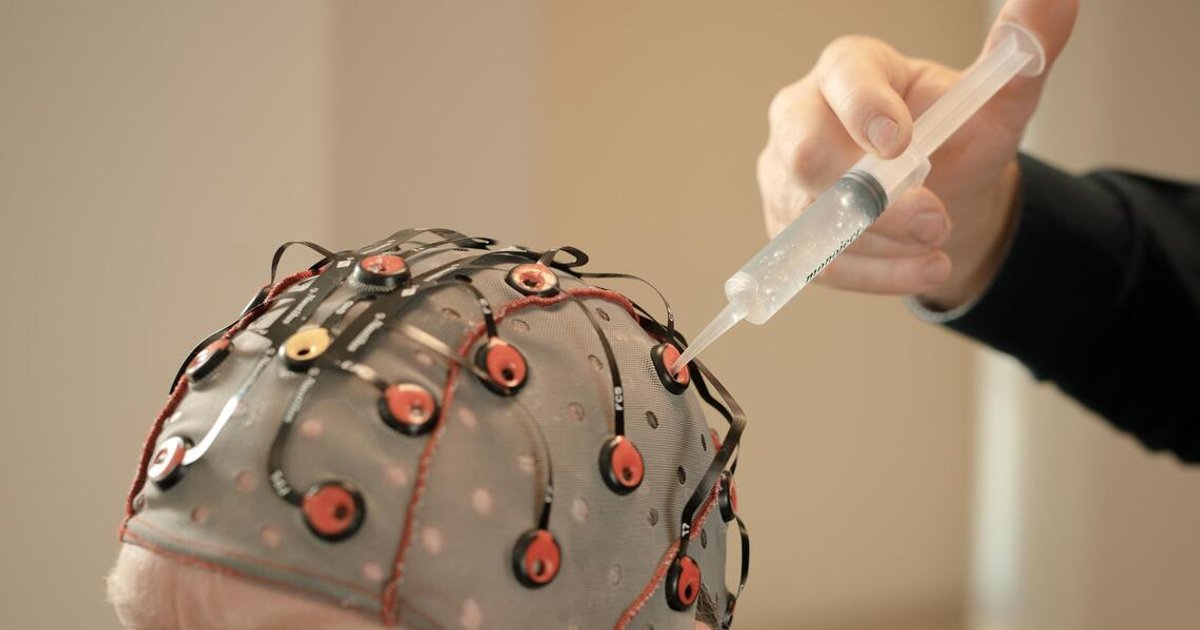
The scenarios sound like science fiction: police officers accessing data contained in suspects’ brains to forcefully extract information, or to predict if offenders might plan to commit future crimes.
2026-10-09 · The Straits Times
UN warns against technology used to read citizens’ minds · assertive framing

Claims (28 extracted, 5 hedged)

UN warns against technology used to read citizens’ minds Jonathan Moens AI generated asserted
AI → warn → minds
The scenarios sound like science fiction: police officers accessing data contained in suspects’ brains to forcefully extract information, or to predict if offenders might plan to commit future crimes. uncertain
offenders → sound → crimes
But the secretary-general of the United Nations warned on Oct 8 for the first time that neurotechnologies are advancing so rapidly that governments’ ability to access and manipulate people’s brains could one day pose a threat to fundamental human rights. uncertain
ability → warn → rights
The abuse of future technologies, Secretary-General Antonio Guterres warned, could lead to arbitrary detentions, the alteration of people’s mental states and infringements on privacy. uncertain
Guterres → warn → privacy
“Neurotechnology, including new and emerging forms, raises profound human rights challenges when applied to the administration of justice,” the secretary-general wrote. asserted
general → include → justice
“Its expansion beyond clinical settings into investigative, judicial and correctional contexts introduces significant risks, alongside potential benefits.” asserted
expansion → introduce → benefits
To address such threats, the report lists a number of recommendations, including establishing regulations consistent with international law, recognising thoughts as “highly sensitive personal data” and requiring explicit consent for the use of neurotechnology in criminal justice settings. asserted
report → address → settings
Human rights officials said the document was an important step towards raising global awareness of the issue and that it could help countries develop laws to prevent the abuse of such technology. uncertain
it → say → technology
“This gives states an opportunity to establish clear rules to regulate the use of neurotechnology, based on human rights, before they become routine in investigations, courts and prisons,” said Jeremy Laurence, a spokesperson for the UN Human Rights Office. asserted
Laurence → give → Office
The report, some rights activists said, broadens the traditional understanding of freedom of thought, which has largely focused on freedom of expression, to include keeping one’s innermost ideas private. asserted
which → say → ideas
“It’s no longer just about the classical ways through which freedom of thought is evoked,” said Marcello Ienca, a professor of ethics and neuroscience at the Technical University of Munich. asserted
Ienca → ’ → Munich
The UN’s interest comes amid a growing global push to protect brain data. asserted
interest → come → data
Chile in 2012 enshrined protections for brain activity in its constitution. asserted
Chile → enshrine → constitution
And several states, including California, Colorado and Montana, have passed laws protecting neural data. asserted
states → include → data
Similar measures have been proposed in Argentina, Brazil, Colombia and Mexico. asserted
measures → propose → Argentina
But while some countries are working to protect citizens’ neural data, others are already attempting to access it. asserted
others → work → it
In India, the police have for two decades used a technology called Brain Electrical Oscillation Signature – or BEOS – to determine whether a suspect may have been involved in a crime. uncertain
suspect → use → crime
The scientific basis for this technology, which reads brain waves, is scant. asserted
which → read → waves
Results from BEOS tests are inadmissible as evidence in Indian courts, but the technology has been applied in hundreds of high-stakes cases, including those of murder, rape and terrorism. asserted
technology → apply → murder
BEOS has not been validated by the international scientific community. asserted
BEOS → validate → community
And a committee established by the Indian government to review BEOS concluded in 2008 that it was “sub-optimal”. asserted
it → establish → 2008
Not all neurotechnologies are being developed as tools of the state. asserted
neurotechnologies → develop → state
Many have been brought to the consumer market as wearable health and wellness gadgets that can help users monitor their stress, sleep and focus. asserted
users → bring → stress
But those too, experts warned, are subject to few regulations. asserted
experts → warn → regulations
The Neurorights Foundation analyzed the privacy policies of 30 consumer neurotechnology companies in 2024 and found that most did not have limits on how they used customers’ brain data. asserted
they → analyze → data
More than half of those companies, the foundation said, explicitly allowed user data to be shared with third parties. asserted
data → say → parties
Neurotechnologies have also become powerful clinical tools for patients who have suffered severe brain or spinal cord injuries. asserted
who → become → injuries
Brain-computer interfaces have helped paralysed patients to write sentences by imagining handwriting, as well as to move robotic limbs and to play chess online just by thinking. asserted
interfaces → help → chess

Give feedback · no sign-in needed

No sign-in needed for now. Your note is sent without a name, so it cannot be answered.

History Support