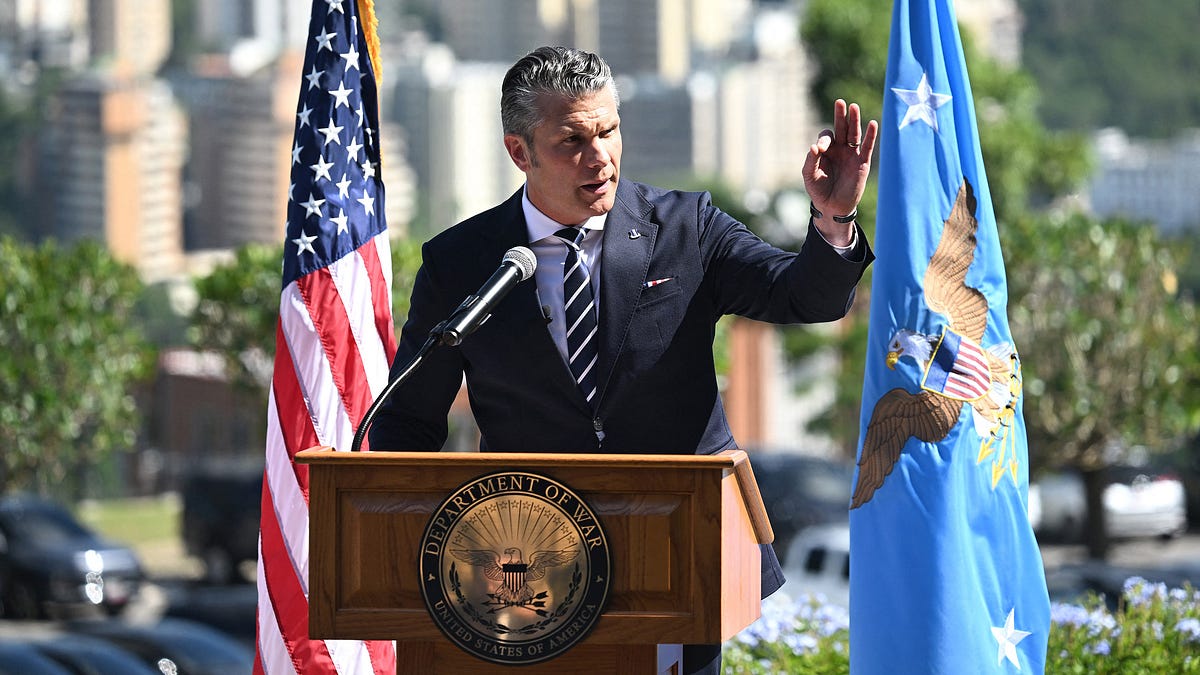
Photo via The Bulwark

If You Think You Know How the Iran War Ends, Think Again

Read the original at The Bulwark ↗
Cite

Hertling, M. (2026, October 9). If You Think You Know How the Iran War Ends, Think Again. The Bulwark. https://www.thebulwark.com/p/what-if-the-iran-war-doesnt-go-how-washington-wants-yemen-houthis-saudi-ethiopia-tigray-eritrea-djibouti-mandab-egypt

Dated when The Aporia collected the article, usually within hours of publication. Check the original for its exact date and byline.

The Bulwark · collected 2026-10-09 · by Mark Hertling commentary

Quick Summary

The article discusses President Trump's declaration that the war with Iran is nearing its end, questioning such certainty based on the unpredictable nature of warfare and geopolitical dynamics. The author, citing personal military experience, warns against assuming control over future events in conflict zones like Yemen and around key maritime chokepoints like the Strait of Hormuz and Bab al-Mandab. These areas are crucial for global trade and security, and any instability there could prolong conflicts and complicate American strategic objectives in the region.
Written by AI on 2026-10-09, from this article's own text only (the story summary below draws on all the coverage).

AI analysis

Story summary

President Trump declared that the war with Iran is nearing its end and posed a choice between a "nice way" or a "not-so-nice way" of concluding it. Despite his previous assertions, he admitted in a statement on Thursday that there would be no attacks on Iran before the Midterm Elections on November 3rd. This announcement followed reports suggesting that the White House and military were preparing for additional strikes against Iran prior to the elections. Mark Hertling, an experienced military analyst, questioned Trump's certainty given the unpredictable nature of warfare and the potential for unexpected enemy actions or developments.

Written for “Iran War Speculation” on 2026-11-20, grounded in this article and the 0 other(s) covering the same event.

Compared with similar articles

This article reads leans left and hedges 15% of its claims. Each row says how that neighbour differs.
Fox News
Hedges 3 of 22 claims Outlet record 66/100
“Article A discusses President Trump's declaration about the end of the Iran war, while Article B reports on Iranian Supreme Leader Khamenei's defiance against attacks and U.S. military actions.”
Al Jazeera
Hedges 0 of 2 claims Outlet record 60/100
“The articles discuss different aspects of the broader conflict between Iran and the US, with Article A focusing on Yemen's military operations against the Houthis backed by Iran, while Article B discusses President Trump's statements about the ongoing war with Iran.”
Washington Examiner
Hedges 2 of 60 claims Outlet record 67/100
“The articles discuss different stages of a hypothetical or ongoing situation related to Iran, but do not describe the same specific incident at the same time.”
The Straits Times
Hedges 3 of 34 claims Outlet record 64/100
“The articles describe different aspects of the ongoing conflict with different focal points, one focusing on a VP's comments about nuclear enrichment reductions while the other discusses President Trump's statements and uncertainty about the war's end.”
CBS News
Hedges 0 of 2 claims Outlet record 67/100
“The articles cover different perspectives and time points of the ongoing conflict with Iran, rather than a single specific incident.”
The Bulwark
Leans left Hedges 3 of 81 claims
“The articles discuss different aspects of broader geopolitical issues involving Iran and America, rather than a single specific incident.”
South China Morning Post
Leans left Hedges 0 of 6 claims Outlet record 62/100
“The articles discuss different aspects of the ongoing conflict with Iran, one focusing on Iran's stance against a military solution and another on President Trump's comments about the war's end. They are not reporting on the same specific incident.”
The Independent
Hedges 1 of 45 claims Outlet record 59/100
“The articles discuss different aspects of the conflict between Iran and the US, with Article A focusing on a specific claim by an Iranian commander about US forces' withdrawal, while Article B discusses President Trump's statements about ending the war.”
The Independent
Leans strongly right further right than this Hedges 6 of 41 claims Outlet record 59/100
“The articles refer to different statements by Trump regarding the Iran situation, with Article A reporting on a statement during a rally in San Antonio about not wanting a peace deal, and Article B discussing his declaration that the war is almost over.”
Midterm break Different event
Dawn
Leans strongly left further left than this Hedges 2 of 21 claims Outlet record 67/100
“The articles refer to different aspects of the Iran situation; Article A discusses President Trump's declaration about how the war will end, while Article B focuses on his promise not to launch a fresh attack before midterm elections.”

Story

Iran War Speculation
Politics · 1 article(s) covering the same event.
How this article was measured signals, leaning charts, publisher record, byline, topics and claims

Signals How these are calculated →

Claims extracted
61
sentences that state something as happening or true
Uncertain
15%
9 of 61 hedged ("reportedly", "may", "according to")
Leaning
Leans left
expected in commentary, which argues a position · beta estimate
Publisher signals
not measured
these signals count newsroom corrections; Commentary has none to count
Outlets on this story
1
Politics
Same framing elsewhere
1
articles that frame the event the way this one does
Analyzed 2026-10-09 · how these are computed

How this is being covered How these are calculated →

Article leaning vs. publisher reliability
Source leaning vs. consistency

Publisher

The Bulwark · 746 article(s) · 0 correction(s) detected
No corrections detected for this publisher. That may mean careful reporting, or simply that nothing has been checked.

Who wrote this

Mark Hertling
20 article(s) here · 1 carrying a prediction
To really understand whether Americans should be concerned about this report would require knowing more about the credibility of the anonymous sources and the nature of their information.
2026-11-20 · assertive framing · The Dirty Bomb’s Real Power Is Fear
Chávez was distancing himself from the United States and establishing closer ties with Cuba—and in the coming years would develop increasingly close relationships with Russia, China, and Iran.
2026-11-19 · assertive framing · A Military Deal With Venezuela Is the Easy Part
His recent number-one bestseller, Ransom, features asymmetric drone attacks that will seem eerily familiar to readers following security news from Europe, where headlines this month told of myriad bomb threats to commercial aircraft, forcing flight diversions, emergency landings, and even the scrambling of NATO fighter aircraft.
2026-11-17 · assertive framing · Putin’s Asymmetric War on Europe
I didn’t really understand what military service meant before I put on the uniform—what it demanded, or how profoundly it could shape lives.
2026-11-11 · assertive framing · What Veterans Day Has Taught Me
They also examine how Hegseth has turned the job of Secretary of Defense into a partisan political operation, why he has failed to grow into the role, and what an impeachment fight could mean for the Pentagon.
WHEN THE HOUSE RETURNS FROM RECESS, it will almost certainly vote on impeachment articles against Secretary of Defense Pete Hegseth.
2026-11-09 · assertive framing · Pete Hegseth’s Failure to Learn
A recording from The Bulwark’s live video Ben Parker and Lt. Gen. Mark Hertling (Ret.) break down Tucker Carlson’s alarming claims that the Trump administration could be preparing a nuclear strike on Iran.
After a disconcerting soliloquy about prison rape and child abuse, Miller promised that “children will be taught to love America, children will be taught to be patriots.
That is true, but nothing close to the whole truth, and so misleading that I worry it may cause some Americans—including policymakers—to arrive at unrealistic and dangerous conclusions about what kind of threat the Houthis pose to American interests and what American policy toward them should be.
2026-10-28 · assertive framing · America’s Other Middle East War
He repeated his argument: “I am in the process of negotiating Peace in the war between Russia and Ukraine, and don’t want to do anything that will drive, foolishly, Russia away from the bargaining table.
2026-10-20 · assertive framing · Siding With Russia Is a Double Betrayal
Also by Mark Hertling
The Dirty Bomb’s Real Power Is Fear
2026-11-20 · The Bulwark
Putin’s Asymmetric War on Europe
2026-11-17 · The Bulwark
What Veterans Day Has Taught Me
2026-11-11 · The Bulwark
Nothing else under this byline is closely related to this article, so these are simply their most recent.
All 20 articles by Mark Hertling →

Topics

Iran Saudi YEMEN the United States the White House

Subjects

Iran GPE · 5× Saudi NORP · 4× YEMEN PERSON · 3× American NORP · 2× Ethiopia GPE · 2× Houthis NORP · 2× the United States GPE · 2× Houthi NORP · 1× TRUMP PERSON · 1× the White House ORG · 1×

Narrative

Following reporting that the White House and military were preparing a new round of attacks on Iran before the midterms, the president announced Thursday that “we will not be attacking Iran at any time prior to the Midterm Elections to be held in the United States on November 3rd.”
framing: assertive · carried by 1 article(s) · first seen 2026-10-09
The unequivocalness of the president’s prediction—made months into a war he repeatedly said would last only days—set off alarm bells in my head.
2026-10-09 · The Bulwark
If You Think You Know How the Iran War Ends, Think Again · assertive framing

Claims (61 extracted, 9 hedged)

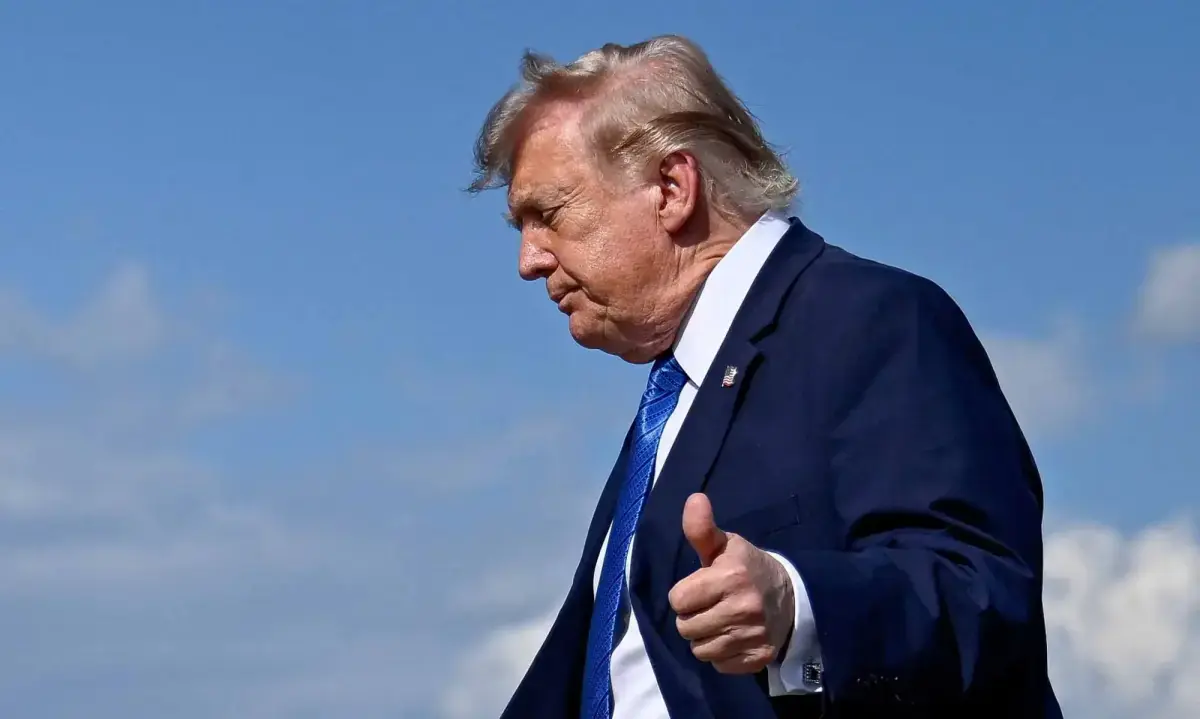
PRESIDENT TRUMP DECLARED YET AGAIN this week that the war with Iran is almost over. asserted
war → declare → Iran
“We have to finish up,” he said. asserted
he → have → ?
“And it’s only a question of which way: Do we want to do it the nice way or the not-so-nice way?” asserted
we → ’ → it
The unequivocalness of the president’s prediction—made months into a war he repeatedly said would last only days—set off alarm bells in my head. asserted
he → make → head
My experience in combat and in planning for operations and global contingencies taught me always to question when I or anyone else expressed certainty about the future—especially as it concerns war. asserted
it → teach → war
Iran has suffered enormous military and economic damage, and the United States has demonstrated overwhelming conventional military superiority. asserted
States → suffer → superiority
But that doesn’t mean we know how this will end. asserted
this → mean → ?
Following reporting that the White House and military were preparing a new round of attacks on Iran before the midterms, the president announced Thursday that “we will not be attacking Iran at any time prior to the Midterm Elections to be held in the United States on November 3rd.” asserted
we → follow → 3rd
This, too, suggests the president feels utter confidence about how events will unfold. uncertain
events → suggest → confidence
What if the enemy doesn’t do what we expect him to do? asserted
him → do → what
What if an operation takes longer than anticipated, an ally refuses to cooperate, another adversary sees an opportunity, or a seemingly unrelated crisis suddenly affects our operation? asserted
crisis → take → operation
Most importantly, what if one of the assumptions on which the entire plan is based turns out to be wrong? asserted
plan → base → which
They look beyond the immediate area where forces are fighting to the larger area where events may occur that could eventually affect the mission. uncertain
that → look → mission
A commander who focuses exclusively on the enemy directly to their front is eventually going to be surprised. asserted
who → focus → front
That’s why I would be uncomfortable today with any prediction that the Middle East war is about to end. asserted
war → ’ → prediction
YEMEN IS THE FIRST PLACE I would look for reasons why the war might continue for months or years. uncertain
war → look → months
After Houthi gains along Yemen’s Red Sea coast last month, Saudi-supported Yemeni government forces launched a counteroffensive and have retaken some territory along the Bab al-Mandab Strait. asserted
forces → support → Strait
Saudi airpower, backed by American intelligence, has played a major role in that offensive. asserted
airpower → back → offensive
They have responded with ballistic missiles and drones against Saudi targets, including King Khalid International Airport in Riyadh, as well as oil refineries and economic infrastructure. asserted
They → respond → Riyadh
Glance at any map of the region and the problem becomes obvious. asserted
problem → glance → region
The Strait of Hormuz sits on one side of the Arabian Peninsula and Bab al-Mandab sits on the other. asserted
Mandab → sit → other
Hormuz controls access between the Persian Gulf and the Arabian Sea, while Bab al-Mandab connects the Indian Ocean with the Red Sea, the Suez Canal, and Europe. asserted
Mandab → control → Sea
That generates another round of what-if questions. asserted
That → generate → questions
What if the Houthis cannot defeat Saudi-backed forces on land but can still make passage through Bab al-Mandab prohibitively dangerous? asserted
passage → defeat → Mandab
What if missiles, drones, or mines convince commercial shipping companies and their insurers that the Red Sea is simply not worth the risk, and ships begin diverting around the Cape of Good Hope, increasing shipping times, fuel consumption, and costs? asserted
ships → convince → times
The military campaign might be going well in Iran, while the strategic and economic consequences of the war worsen. uncertain
consequences → go → war
Djibouti, Eritrea, Ethiopia, Sudan, and Egypt rarely play major roles in American foreign policy, but tensions among them are rising at the same time the war on the Arabian side of the Red Sea is expanding. asserted
war → play → Sea
Ethiopia is again experiencing serious fighting in the northern province of Tigray, producing the worst violence in that country since the catastrophic 2020–2022 civil war in which between 100,000 and 800,000 people were killed. asserted
people → experience → which
Ethiopia and Eritrea have severed diplomatic relations, and Eritrean forces are reportedly more than 60 miles into Ethiopian territory. uncertain
forces → sever → territory
The Ethiopian government has accused Eritrea, Sudan, and Egypt of supporting its opponents—allegations all three governments deny. asserted
governments → accuse → allegations
Egypt and Ethiopia have expelled diplomats, and the African Union has publicly warned Ethiopia, Eritrea, and Egypt to exercise restraint. asserted
Union → expel → restraint
Ethiopia wants reliable access to the Red Sea, which it lost at the end of its sixteen-year civil war in 1991 when Eritrea became an independent state. asserted
Eritrea → want → 1991
Ethiopia, with more than 130 million people, understandably considers dependable maritime access an economic and strategic interest. asserted
access → consider → people
Eritrea sees the issue differently, because Ethiopian access to the sea is likely to come at Eritrea’s expense. asserted
access → see → expense
What happens if the fighting inside Ethiopia spills across the Eritrean border? asserted
fighting → happen → border
What if both sides of the Bab al-Mandab become the settings for combat at the same time, and passage through the Suez Canal is cut off? asserted
passage → become → Canal
What knock-on effects will that have for America’s on-again-off-again conflict with the Houthis, for America’s security partners in Egypt and Saudi Arabia, and for the world’s patience in allowing these major waterways to be semi-strangled indefinitely? asserted
waterways → knock → patience
Cairo has its own long-running dispute with Ethiopia over the Grand Ethiopian Renaissance Dam and the waters of the Nile. asserted
Cairo → have → Nile
Egypt, Eritrea, Sudan, and Somalia have also been drawing closer in their positions on Red Sea security. asserted
Egypt → draw → security
None of that means Egypt—with a population of 120 million—is preparing for war with Ethiopia, but a military planner looking beyond the immediate area of operations would certainly put Egypt into an area of concern. asserted
planner → mean → concern
…and 21 more, not listed.

Give feedback · no sign-in needed

No sign-in needed for now. Your note is sent without a name, so it cannot be answered.

History Support