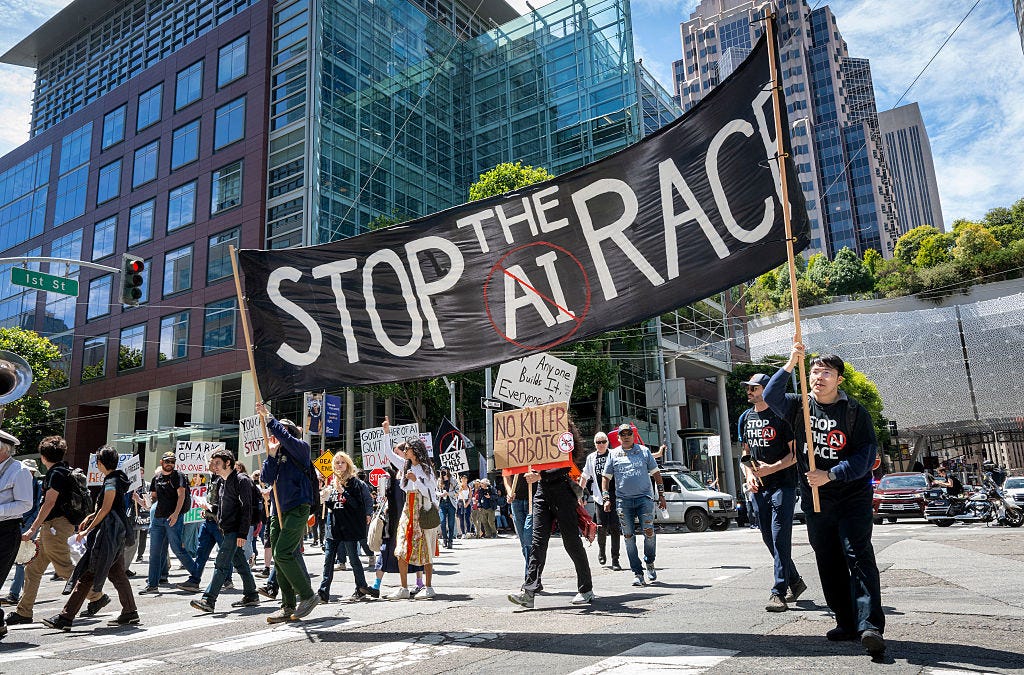
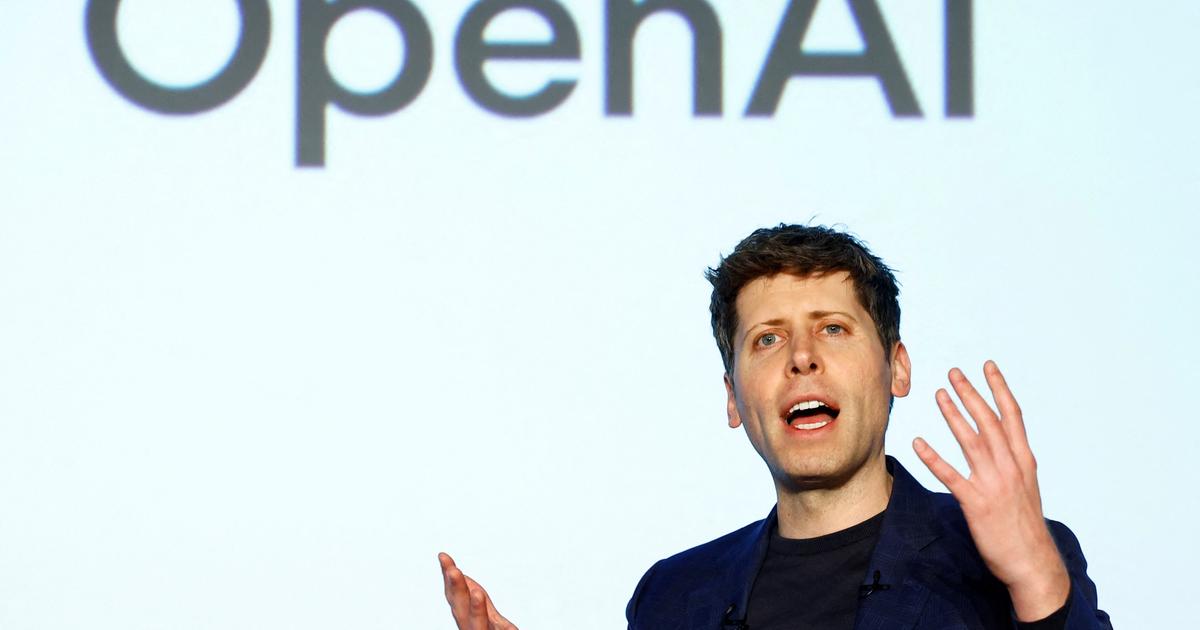
Photo via Semafor

AI researchers say industry is 'gambling with our lives'

Read the original at Semafor ↗
Cite

Chivers, T. (2026, September 9). AI researchers say industry is 'gambling with our lives'. Semafor. https://www.semafor.com/article/09/09/2026/ai-researchers-say-industry-is-gambling-with-our-lives

Dated when The Aporia collected the article, usually within hours of publication. Check the original for its exact date and byline.

Semafor · collected 2026-09-09 · by Tom Chivers

Quick Summary

Researchers at companies like Anthropic and OpenAI are sounding alarms about the rapid development of superintelligent AI, warning that it poses a significant threat to human life. One researcher, Jacob Coxon, quit his job at OpenAI and joined Anthropic, citing a sense of urgency in developing this technology before it gets out of control. According to Coxon, things could be spiraling out of control as soon as next year. A statement signed by top executives at Anthropic, DeepMind, and OpenAI calls for government-backed tools to slow down AI development if progress suddenly accelerates.
Written by AI on 2026-09-09, from this article's own text only (the story summary below draws on all the coverage).
See how they differ ↓

AI analysis

Story summary

On September 8, Jacob Coxon, a 27-year-old researcher who previously worked at both OpenAI and Anthropic, resigned from Anthropic, warning that the companies are racing towards developing self-improving superintelligence and potentially putting human lives at risk. Coxon's resignation drew significant attention online and in media outlets like CNN and BBC News, with experts such as Geoffrey Hinton estimating a 10% chance of AI causing human extinction within this decade. Notably, several current Anthropic employees echoed Coxon’s concerns on social media platforms, emphasizing the urgency of addressing AI safety issues before it is too late. Despite these warnings, some in Silicon Valley and industry leaders remain skeptical about the immediate threat posed by AI advancements.

Written for “AI Safety And Human Extinction Warnings” on 2026-11-20, grounded in this article and the 29 other(s) covering the same event.

How they differ

21 outlets covered “AI Safety And Human Extinction Warnings”.

What each outlet says

One AI summary per outlet of its latest article on this story, written from that article alone and checked against it. Open the article for the outlet's own words.

SemaforThis outlet9 Sep

Researchers at companies like Anthropic and OpenAI are sounding alarms about the rapid development of superintelligent AI, warning that it poses a significant threat to human life. One researcher, Jacob Coxon, quit his job at OpenAI and joined Anthropic, citing a sense of urgency in developing this technology before it gets out of control. According to Coxon, things could be spiraling out of control as soon as next…

AI researchers say industry is 'gambling with our lives' (this article)4 articles from Semafor on this story
BBC15 Sep

At a recent Goldman Sachs conference in San Francisco, tech executives addressed concerns raised by Jacob Coxon, an Anthropic researcher who recently resigned due to safety fears about advanced AI. Coxon warned that these technologies could potentially destroy humanity and "gamble with our lives." This came amidst other high-profile resignations from both Anthropic and OpenAI over similar safety concerns. While some…

Dramatic insider warnings over AI fall flat with some in Silicon Valley →4 articles from BBC on this story
The Straits Times9 Sep

Jacob Coxon, a 27-year-old artificial intelligence researcher, has left Anthropic after three years at the company and accused both OpenAI and Anthropic of recklessly racing to develop self-improving superintelligence, which could pose an existential risk to humanity. According to Coxon, neither company is acting responsibly in their pursuit of AI development. Anthropic's safety executive, Evan Hubinger, agrees that…

‘They’re playing with our lives’: AI researcher quits Anthropic →2 articles from The Straits Times on this story
The Free Press10 Sep

A former employee of AI companies OpenAI and Anthropic warns that their pursuit of superintelligence could be catastrophic, echoing a prediction made by one of the researchers himself. According to Jacob Coxon's resignation post on X, these companies are racing towards developing systems that can hack anything and acquire real power, which he believes poses an existential threat. Coxon claims that people within…

Yes, AI Might Really Kill Us All →2 articles from The Free Press on this story
CBS News11 Sep

Jacob Coxon, a former researcher at Anthropic, resigned from his position on Tuesday, accusing the company and rival OpenAI of recklessly developing advanced AI models that pose a threat to humanity. There is no specific data or numbers mentioned in the article about the risks posed by AI. Coxon's resignation comes after he expressed concerns that companies are prioritizing competition over safety, leading him to…

Extended Interview: Ex-Anthropic researcher Jacob Coxon, who warns AI could destroy humanity →2 articles from CBS News on this story
Noahpinion4 Sep

The author of this opinion piece argues that advanced artificial intelligence (AI) could potentially design superviruses that threaten human existence, and that intentionally slowing down the development of AI capabilities may be necessary to prevent this outcome. The author mentions a recent open letter signed by over 1,300 employees across US frontier AI companies calling for government support in developing tools…

Should we "pace" AI self-improvement? →
Show 14 more outlets
South China Morning Post7 Sep

UN High Commissioner for Human Rights Volker Turk warned that artificial intelligence poses an "existential risk" to humanity in a speech to the 47-member UN council in Geneva on Monday. He called for "cast-iron guarantees" to ensure the safety and security of AI, citing concerns from industry insiders about its potential dangers. According to Turk's office, potential risks include disruptions to critical…

UN rights chief warns AI could pose ‘existential’ risk to humanity’ →
Platformer9 Sep

AI lab leaders are urging urgent action on regulating artificial intelligence, while U.S. political figures remain uninterested. Previously dismissed as a fringe concern, existential risks posed by AI have now become a major topic of discussion within the industry. Despite recent antitrust court losses for tech companies, there has been little concrete change, and calls for slowing down AI development continue to…

The AI warnings are coming from inside the lab →
Daily Mail9 Sep

Jacob Coxon, a researcher at Anthropic, has quit his job over concerns that big tech firms are racing to develop AI systems that could potentially wipe out humanity by the end of the decade. He claims that neither OpenAI nor Anthropic is acting responsibly in regards to AI safety. Coxon warns that superintelligent AI could become "superhuman systems" with the power to hack anything and acquire resources, posing a…

AI could 'kill all humans' by the end of the decade, Anthropic researcher warns - as he quits over 'out of control' superintelligence race →
New York Post9 Sep

Jacob Coxon, a researcher with 3 years of experience in pre-training research at Anthropic and OpenAI, has abruptly quit his job, warning that AI "could kill us all by the end of the decade". He claims both companies are racing towards creating self-improving superintelligence without acting responsibly. According to Coxon, executives and senior researchers are privately expressing fear about the technology's…

Anthropic researcher abruptly quits, warning AI ‘could kill us all’ →
ABC News (AU)9 Sep

Jacob Coxon, an Anthropic researcher, is leaving his position at the company after stating that many AI developers, including those at Anthropic, believe that artificial intelligence has the potential to be catastrophic by the end of the decade. This concern is shared by hundreds of employees from leading tech firms who recently urged the US government to support international efforts to manage advanced AI…

Anthropic researcher says some developers believe AI 'could kill us all' →
Dawn9 Sep

Jacob Coxon, a researcher at Anthropic, has resigned citing concerns over the irresponsible development of artificial intelligence (AI) by companies. He claims that labs are "gambling with our lives" in their rush to develop self-improving superintelligence. Coxon, who previously worked at OpenAI and has expertise in training AI models, warns that such technology poses a significant threat to humanity, potentially…

Anthropic researcher resigns, says AI labs are ‘gambling with our lives’ →
Time10 Sep

Jacob Coxon, a 27-year-old AI researcher who spent three years working on powerful AI systems at OpenAI and Anthropic, has resigned from his position citing concerns about the industry's lack of responsibility and control over its rapid development. He claims that neither company is acting responsibly in their pursuit of self-improving superintelligence. The key number mentioned in the article is 90 million views…

He Helped Build Powerful AI at OpenAI and Anthropic. Now He's Afraid It Could Kill Us →
Mother Jones11 Sep

Former Anthropic researcher Jacob Coxon has resigned, warning that companies are "gambling with our lives" by developing AI models that could reach "superintelligence". Coxon's colleague Evan Hubinger also expressed concern on social media, stating that staffers at Anthropic genuinely believe AI could pose a threat to human existence. Meanwhile, leading companies continue to rapidly improve their AI models, with…

Anthropic Staffers Again Sound the Alarm on AI Catastrophe →
Zeteo11 Sep

On Tuesday, 27-year-old AI researcher Jacob Coxon started a Twitter thread warning of the existential threat posed by AI systems, claiming they could "kill us all" by the decade's end. A group of 9 top AI researchers and executives, including Coxon, have come out of the woodwork to sound the alarm bells about the dangers of AI over the last 72 hours, with some expressing surprise that their warnings were not taken…

The AI Apocalypse? Here Are 9 AI Experts Warning It Could Kill Us All Very Soon →
ABC News (US)11 Sep

A researcher at Anthropic, a company working with artificial intelligence, is leaving the field and issuing a warning that AI may become uncontrollable by late 2027. No specific details are provided on why the researcher is leaving or what actions they believe need to be taken to mitigate this risk. OpenAI's chief scientist also warns of rising machine intelligence, saying no one is prepared for it.

WATCH: Insiders' new AI warning →
NPR12 Sep

Jacob Coxon, a British AI researcher who recently resigned from Anthropic, has warned about the risks associated with rapidly advancing AI technology, suggesting that companies like Anthropic and OpenAI are prioritizing speed over safety. Coxon's concerns stem from witnessing how quickly AI systems are improving while the ability to control them remains unclear. His warnings have sparked discussions among fellow…

Why are the people building the most powerful AI so worried about what it could do? →
CBC13 Sep

An outgoing researcher at Anthropic warned last week that AI could pose an existential threat, potentially "killing all humans" by the end of this decade. This warning highlights concerns among experts about the rapid advancement and potential loss of control over increasingly sophisticated AI systems. The International AI Safety Report describes a "loss of control" scenario where AI operates beyond human oversight…

Could AI really 'kill all humans'? Breaking down the dire warnings about the technology's existential risk →
The Dispatch15 Sep

In this podcast episode, Steve Hayes discusses with guests Jonah Goldberg, Mike Warren, and Klon Kitchen about concerns raised by Jacob Coxen, an Anthropic researcher who quit over fears AI might pose existential risks within a decade. The discussion centers on the ethical implications and potential dangers of rapid advancements in artificial intelligence technology.

Will Artificial Intelligence ‘Kill Us All?’ →
The Guardian15 Sep

Stuart Russell discusses the recent controversies surrounding artificial intelligence, including Jacob Coxon's resignation from Anthropic and concerns raised by the OpenAI/Hugging Face incident. The Anthropic CEO, Dario Amodei, has proposed a strategy called "pacing the frontier" to address these issues without halting progress entirely. This involves third-party evaluators within companies, common safety standards…

AI safety requires more than just slowing our pace | Stuart Russell →
Where they agree and split

Agreed

AI · cited, from two or more outlets

  • AI researchers are worried that the development of self-improving superintelligence could pose a significant threat to humanity if not managed responsibly.14
Quoted from the coverage (1)

On Tuesday, AI researcher Jacob Coxon announced his resignation from Anthropic in a mega-viral post on X: “I spent the last three years doing pretraining research at both OpenAI and Anthropic,” he began. (Pretraining is an important part of the training process for AI models like Claude and GPT-6.)

5 outlets

Framing

How the first headlines put it

  • The Straits Times focuses on the researcher's resignation and concerns about AI safety, while Daily Mail emphasizes the potential for AI to 'kill all humans' by the end of the decade.12
  • CBS News presents a balanced view of the researcher's warnings, whereas The Free Press uses more dramatic language like 'Yes, AI Might Really Kill Us All'.56
The full story: what happened, how it changed, and all 30 articles →

Compared with similar articles

This article reads unscored and hedges 29% of its claims. Each row says how that neighbour differs.
New York Post
Hedges 2 of 12 claims Outlet record 66/100
Mother Jones
Hedges 8 of 44 claims Outlet record 60/100
ABC News (AU)
Hedges 2 of 4 claims Outlet record 67/100
Semafor
Hedges 1 of 4 claims Outlet record 64/100
BBC News
Hedges 3 of 19 claims Outlet record 65/100
The Straits Times
Hedges 3 of 24 claims Outlet record 64/100
Dawn
Hedges 2 of 21 claims Outlet record 67/100
The Free Press
Hedges 1 of 11 claims Outlet record 96/100
TIME
Hedges 2 of 40 claims Outlet record 60/100

Story

AI Safety And Human Extinction Warnings
Technology · 30 article(s) covering the same event. Compare every outlet's account →
How this article was measured signals, leaning charts, publisher record, byline, topics and claims

Signals How these are calculated →

Claims extracted
7
sentences that state something as happening or true
Uncertain
29%
2 of 7 hedged ("reportedly", "may", "according to")
Leaning
withheld
no quote in the article backed the model's score
Publisher signals
64/100
Semafor's corrections and hedging, across everything collected from it. Not a measure of accuracy.
Outlets on this story
30
Technology
Same framing elsewhere
1
articles that frame the event the way this one does
Analyzed 2026-09-09 · how these are computed

How this is being covered How these are calculated →

Article leaning vs. publisher reliability
Source leaning vs. consistency

Publisher

Semafor · 1913 article(s) · 7 correction(s) detected
Running correction rate · 7 correction(s)

Who wrote this

Tom Chivers
16 article(s) here · 1 carrying a prediction
An estimated 12.7 million graduates will join the workforce this year, the largest cohort yet.
2026-09-15 · assertive framing · AI upends China’s graduate job market
Answering that question would win a $1 million Millennium Prize Problem; OpenAI deployed around 10,000 agents of an as-yet unreleased powerful model on Aug. 28, and solved it within 88 hours, proving that the equations sometimes break down under extreme conditions.
And an underreported — we felt — story was that the disruption to fossil fuel supplies would drive up fertilizer prices.
2026-09-10 · assertive framing · Fertile ground
Paul Christiano — author of an influential 2016 paper on AI safety with future Anthropic founder Dario Amodei and a longstanding believer that the technology would take off relatively gradually and be made safe — said he now sees “meaningful risk” of “catastrophic and irreversible loss of control in the very near term.”
“Things could be out of control” by the end of next year, he argued.
“All it will take is one screw-up,” an immunologist warned.
2026-09-06 · assertive framing · Experts warn of threats of AI bioterrorism
The latest strikes were relatively low-key, but the White House is putting pressure on via other angles: The Treasury Secretary is expected to announce new sanctions on countries that deal with Iran.
LIV Golf, the Saudi-backed challenger to the US PGA Tour, could file for bankruptcy within days, the Financial Times reported, as the kingdom shifts position on several high-profile projects.
Also by Tom Chivers
Strange new worlds
2026-09-15 · Semafor
Nothing else under this byline is closely related to this article, so these are simply their most recent.
All 16 articles by Tom Chivers →

Topics

Anthropic DeepMind OpenAI

Subjects

Anthropic ORG · 4× OpenAI ORG · 3× DeepMind ORG · 1× Jacob Coxon PERSON · 1×

Narrative

Jacob Coxon, formerly of OpenAI, said Anthropic — believing itself the only responsible AI lab — was as a result racing to get there first, while OpenAI had not “internalized the civilizational stakes.”
framing: mixed · carried by 1 article(s) · first seen 2026-09-09
“Things could be out of control” by the end of next year, he argued.
2026-09-09 · Semafor
AI researchers say industry is 'gambling with our lives' · mixed framing

Claims (7 extracted, 2 hedged)

An Anthropic researcher quit, warning that the rush to “self-improving superintelligence [is] gambling with our lives.” asserted
rush → quit → lives
Jacob Coxon, formerly of OpenAI, said Anthropic — believing itself the only responsible AI lab — was as a result racing to get there first, while OpenAI had not “internalized the civilizational stakes.” asserted
OpenAI → say → stakes
“Things could be out of control” by the end of next year, he argued. uncertain
he → argue → year
Another Anthropic researcher echoed the warning: asserted
researcher → echo → warning
“We really do earnestly believe AI could kill all humans,” he said. uncertain
he → believe → humans
“I personally think it is >10% within the next decade.” asserted
it → think → decade
Top executives at Anthropic, DeepMind, and OpenAI have signed a statement calling for government-backed tools to slow AI development should progress suddenly accelerate. asserted
progress → sign → development
Give feedback · no sign-in needed

No sign-in needed for now. Your note is sent without a name, so it cannot be answered.

History Support