Photo via Washington Examiner

Supreme Court reverses ‘inappropriate’ ruling in FCC fight over favorable campaign ad rate rules

Read the original at Washington Examiner ↗
Cite

Birle, J. (2026, October 14). Supreme Court reverses ‘inappropriate’ ruling in FCC fight over favorable campaign ad rate rules. Washington Examiner. https://www.washingtonexaminer.com/news/supreme-court/4766308/supreme-court-reverses-ruling-fcc-fight-favorable-campaign-ad-rate-rules/

Dated from the outlet's own feed. Check the original for its byline.

Washington Examiner · collected 2026-10-14 · by Jack Birle

Quick Summary

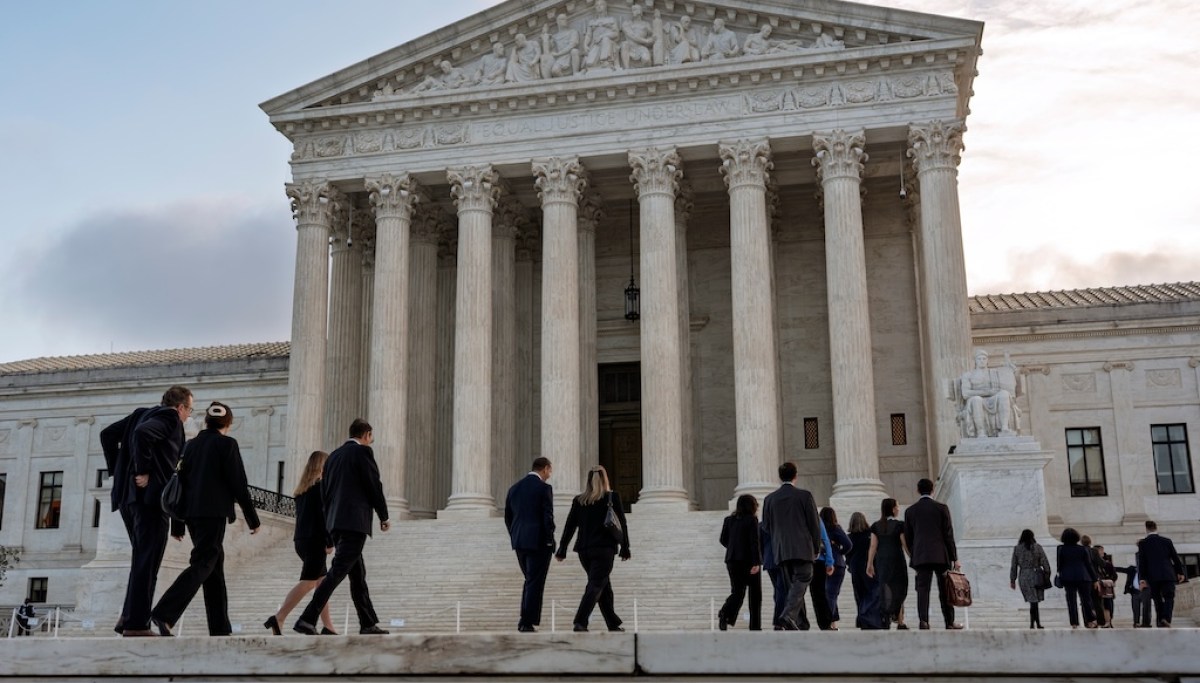
The Supreme Court ruled 7-2 to reverse a Fourth Circuit decision that would have compelled the Federal Communications Commission (FCC) to issue a final ruling on a revised rule allowing political parties and joint fundraising committees access to favorable television advertising rates. The case involved Democratic congressional candidates challenging the FCC’s revised rule, which Republicans support due to their funding advantages at the party level. Chief Justice John Roberts had temporarily halted the Fourth Circuit’s order while the Supreme Court considered the emergency petition; this recent ruling upholds the FCC's discretion in setting its own procedures and timeline for issuing such rulings.
Written by AI on 2026-10-14, from this article's own text only (the story summary below draws on all the coverage).
See how they differ ↓

AI analysis

Story summary

The Supreme Court ruled 7-2 on October 14, 2026, to halt a lower court ruling by the U.S. Court of Appeals for the 4th Circuit, which would have forced the FCC to issue a final ruling on revised rules allowing political parties and joint fundraising committees access to more favorable television advertisement rates typically reserved for individual candidates. This decision benefits Republicans in the run-up to midterm elections as it allows them to purchase campaign ads at lower rates than previously restricted by federal law. The case was brought forward by Democratic congressional candidates aiming to maintain their funding advantage over individual candidates, while Republicans sought to leverage their significant cash advantages at the party level. Justices Sonia Sotomayor and Ketanji Brown Jackson were among the dissenting votes against the decision.

Written for “Supreme Court Rules On FCC Ad Rates” on 2026-11-21, grounded in this article and the 2 other(s) covering the same event.

How they differ

2 outlets covered “Supreme Court Rules On FCC Ad Rates”.

What each outlet says

One AI summary per outlet of its latest article on this story, written from that article alone and checked against it. Open the article for the outlet's own words.

Washington ExaminerThis outlet14 Oct

The Supreme Court ruled 7-2 to reverse a Fourth Circuit decision that would have compelled the Federal Communications Commission (FCC) to issue a final ruling on a revised rule allowing political parties and joint fundraising committees access to favorable television advertising rates. The case involved Democratic congressional candidates challenging the FCC’s revised rule, which Republicans support due to their…

Supreme Court reverses ‘inappropriate’ ruling in FCC fight over favorable campaign ad rate rules (this article)2 articles from Washington Examiner on this story
Los Angeles Times14 Oct

The Supreme Court ruled in favor of Republicans, allowing political parties and their fundraising committees to receive lower rates for broadcast campaign ads during the midterm election period. Justices Sotomayor and Jackson dissented, while the decision was based on a FCC ruling made under Republican control that did not provide public explanation or debate. This outcome is seen as providing an advantage to…

Supreme Court sides with Republicans in dispute over cost of campaign ads →

Compared with similar articles

This article reads unscored and hedges 6% of its claims. Each row says how that neighbour differs.
Daily Mail
Hedges 1 of 19 claims Outlet record 69/100
“The articles describe different legal actions related to campaign ads and FCC rules, not the same specific incident.”
Los Angeles Times
Leans left Hedges 0 of 31 claims Outlet record 95/100
Washington Examiner
Leans left Hedges 0 of 10 claims Outlet record 67/100

Story

Supreme Court Rules On FCC Ad Rates
Politics · 3 article(s) covering the same event. See how they differ ↑
How this article was measured signals, leaning charts, publisher record, byline, topics and claims

Signals How these are calculated →

Claims extracted
17
sentences that state something as happening or true
Uncertain
6%
1 of 17 hedged ("reportedly", "may", "according to")
Leaning
not political
takes no side on a contested political question
Publisher signals
67/100
Washington Examiner's corrections and hedging, across everything collected from it. Not a measure of accuracy.
Outlets on this story
3
Politics
Same framing elsewhere
1
articles that frame the event the way this one does
Analyzed 2026-10-14 · how these are computed

How this is being covered How these are calculated →

Article leaning vs. publisher reliability
Source leaning vs. consistency

Publisher

Washington Examiner · 5254 article(s) · 11 correction(s) detected
Running correction rate · 11 correction(s)

Who wrote this

Jack Birle
55 article(s) here · 1 carrying a prediction
The Supreme Court ruled 6-3 earlier this year in Trump v. Slaughter that the president could fire officials at most independent agencies within the executive branch, but held 5-4 in the case Trump v. Cook that the Federal Reserve was uniquely insulated from the broad at-will firing power the president enjoys over the executive branch.
The Supreme Court will hear a major Second Amendment case over state assault weapons bans next month, but Justice Clarence Thomas is calling on the high court to consider another major legal war over gun laws in the coming terms.
“Implicit bias training” is a type of diversity, equity, and inclusion program, which proponents argue educates people about bias they may have against different races or people of the opposite sex, while opponents claim it pushes a hard-left view of race and sex.
President Donald Trump has touted plans to renovate East Potomac Golf Links and build a “World Class Championship Golf Course,” posting plans last month that would remove the popular public access and paths along the golf course on Hains Point.
The Supreme Court announced Friday it will hear a case over the legality of President Donald Trump’s January 2025 executive order that largely barred people from applying for asylum at the southern border.
A Utah judge ruled on Monday that Tyler Robinson will go to trial in 2028 on murder charges related to the September 2025 killing of conservative activist Charlie Kirk.
As Sen. Cindy Hyde-Smith (R-MS) narrowly trails her Democratic challenger Scott Colom by just a few hundred votes in the unexpectedly close Senate race in Mississippi, Republicans are now hoping a Supreme Court loss on late-arriving mail ballots earlier this year will help save their senator from being the latest victim of the blue tsunami.
President Donald Trump’s first term in office was highlighted by the avalanche of judicial nominees he was able to get confirmed to the bench, but with Democrats set to take control of the Senate in January, the race is on to push through nominations before time runs out next year.
The coalition of Catholic schools argued that asking them to admit families who do not follow Catholic teachings would sacrifice their beliefs, which they say violates their First Amendment rights.
Also by Jack Birle
Nothing else under this byline is closely related to this article, so these are simply their most recent.
All 55 articles by Jack Birle →

Topics

Commission Democratic FCC The Supreme Court the 4th Circuit

Subjects

FCC ORG · 6× Commission ORG · 5× The Supreme Court ORG · 3× Democratic NORP · 2× the 4th Circuit ORG · 2× Republicans NORP · 1× The Fourth Circuit’s ORG · 1× the Federal Communications Commission ORG · 1× the Fourth Circuit ORG · 1× the U.S. Court of Appeals ORG · 1×

Narrative

The high court ruled 7-2 to halt a ruling by the U.S. Court of Appeals for the 4th Circuit that would have forced the FCC to issue a final ruling on a revised rule allowing political parties and joint fundraising committees to access the same, more favorable television advertisement rates that are typically reserved for political candidates.
framing: assertive · carried by 1 article(s) · first seen 2026-10-14
The high court ruled 7-2 to halt a ruling by the U.S. Court of Appeals for the 4th Circuit that would have forced the FCC to issue a final ruling on a revised rule allowing political parties and joint fundraising committees to access the same, more favorable television advertisement rates that are typically reserved for political candidates.

Claims (17 extracted, 1 hedged)

The Supreme Court handed the Federal Communications Commission a victory on Wednesday in a legal battle over who is entitled to favorable advertising rates in the closing weeks of the costly, hotly contested midterm elections. asserted
who → hand → elections
The high court ruled 7-2 to halt a ruling by the U.S. Court of Appeals for the 4th Circuit that would have forced the FCC to issue a final ruling on a revised rule allowing political parties and joint fundraising committees to access the same, more favorable television advertisement rates that are typically reserved for political candidates. asserted
that → rule → candidates
The Democratic congressional candidates who brought the challenge are hoping to strike down the revised rule due to their cash advantage with individual candidates, while Republicans have pushed for the new rule due to their significant cash advantage at the party level. asserted
Republicans → bring → level
“The Fourth Circuit’s decision to issue an ‘extraordinary’ writ was inappropriate under the circumstances. asserted
decision → issue → circumstances
The Communications Act requires the Commission to act on every application it receives, but it does not obligate the Commission to act within a particular timeframe. asserted
it → require → timeframe
The Commission may exercise its discretion to set its own procedures and schedule for resolving such applications,” the justices’ per curiam ruling said. uncertain
ruling → exercise → applications
“Undeterred, the Fourth Circuit issued a mandamus order requiring the Commission to issue a final decision on the candidates’ application just five months after it was filed and within just 48 hours—all while the Commission’s deliberation process was still ongoing. asserted
process → issue → hours
Our system of separation of powers does not allow the Judiciary to meddle in ‘the workings of a coordinate branch of the Government’ in this manner.” asserted
Judiciary → allow → manner
“To comply with the mandamus order, the FCC must triage its ongoing deliberation process and prepare a final order on an extremely expedited timeline. asserted
FCC → comply → timeline
That the mandamus order requires the FCC to abandon its deliberation process is itself an injury that cannot be remedied after the fact. asserted
that → require → fact
The FCC thus satisfies the stay factors,” the majority ruling said. asserted
ruling → satisfy → factors
Justices Sonia Sotomayor and Ketanji Brown Jackson dissented from the ruling but did not elaborate on their decision to dissent. asserted
Sotomayor → dissent → decision
The 4th Circuit’s ruling was set to take effect last Friday, but Chief Justice John Roberts halted the lower court’s order temporarily last week while the full Supreme Court considered the emergency petition. asserted
Court → set → petition
The emergency petition was the second time the legal battle had made its way to the Supreme Court in as many months. asserted
battle → make → months
In September, the Supreme Court ruled 8-1 that the 4th Circuit had prematurely halted the rule, finding that the FCC must issue a decision on the Democratic candidates’ petition for review before the appeals court can get involved. asserted
court → rule → review
The battle over the FCC’s favorable ad rate rule is the latest election-related fight to make its way to the Supreme Court’s emergency docket in recent months. asserted
battle → relate → months
The other major fight on the emergency docket over the past several months has been regarding the Trump administration’s new mail ballot order, which the high court allowed to remain blocked through the midterm elections. asserted
court → regard → elections
Give feedback · no sign-in needed

No sign-in needed for now. Your note is sent without a name, so it cannot be answered.

History Support