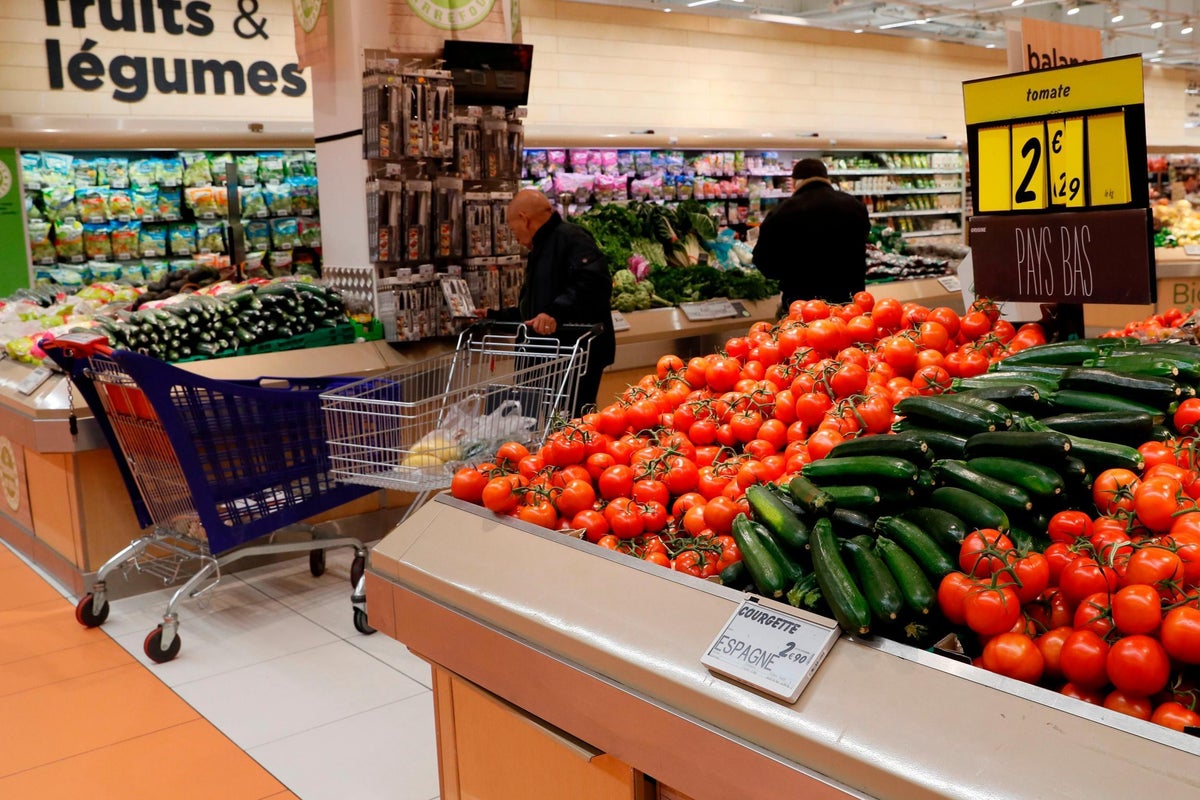
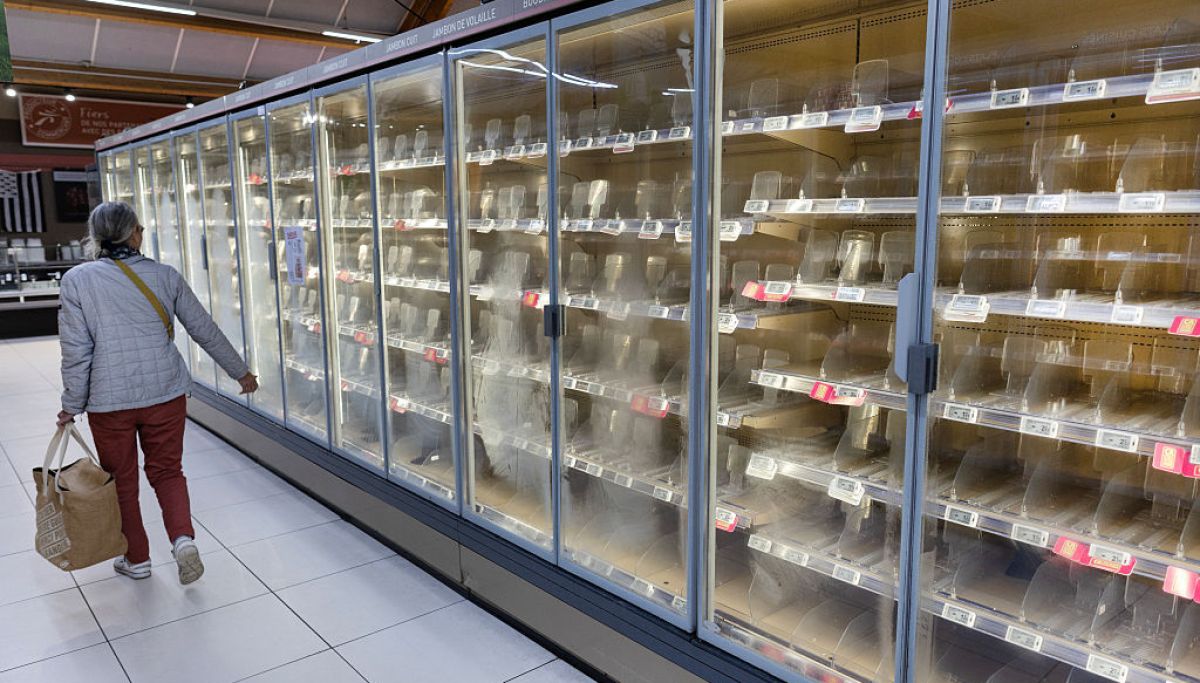
Photo via The Guardian

Not cool: who hacked France’s supermarket fridges?

Read the original at The Guardian ↗
Cite

Paris, K. W. i. (2026, October 17). Not cool: who hacked France’s supermarket fridges? The Guardian. https://www.theguardian.com/world/2026/oct/17/who-hacked-frances-supermarket-fridges

Dated from the outlet's own feed. Check the original for its byline.

The Guardian · collected 2026-10-17 · by Kim Willsher in Paris

Quick Summary

Hackers recently conducted a cyber-attack in France, remotely increasing temperatures in thousands of supermarket refrigeration units across up to 700 stores from various chains like Intermarché and Carrefour. The digital thermostats were pushed to dangerous levels, causing food spoilage and some fires before shop staff could reset them; one freezer reportedly reached 80C (176F). The attack is seen as a serious incident of political sabotage by experts who suspect it may be the work of either state actors like Iran or Russia, or activist groups aiming to create instability.
Written by AI on 2026-10-17, from this article's own text only (the story summary below draws on all the coverage).
See how they differ ↓

AI analysis

Story summary

On October 12, 2026, hackers launched a sophisticated cyberattack on supermarket refrigeration systems across France, causing temperatures to soar to 50°C (122°F) and spoiling millions of euros worth of food. The attack affected more than 700 stores, including major chains like Intermarché, Coopérative U, E.Leclerc, Carrefour, and Monoprix. Hackers reprogrammed cooling regulators to continuously defrost units overnight, leading to significant inventory losses and some fires. Dominique Schelcher, head of Coopérative U, called it an "extremely serious and unprecedented" incident. The Paris prosecutor's office initiated a criminal investigation into the cyberattack, which France is also investigating in coordination with European counterparts due to potential broader risks.

Written for “French Supermarket Refrigerator Cyberattacks” on 2026-11-21, grounded in this article and the 11 other(s) covering the same event.

How they differ

10 outlets covered “French Supermarket Refrigerator Cyberattacks”.

What each outlet says

One AI summary per outlet of its latest article on this story, written from that article alone and checked against it. Open the article for the outlet's own words.

The GuardianThis outlet17 Oct

Hackers recently conducted a cyber-attack in France, remotely increasing temperatures in thousands of supermarket refrigeration units across up to 700 stores from various chains like Intermarché and Carrefour. The digital thermostats were pushed to dangerous levels, causing food spoilage and some fires before shop staff could reset them; one freezer reportedly reached 80C (176F). The attack is seen as a serious…

Not cool: who hacked France’s supermarket fridges? (this article)
CBC14 Oct

Hackers exploited outdated firmware in refrigeration control systems made by Danfoss, Copeland, and Dixell, causing temperatures in hundreds of French supermarkets to rise as high as 50°C, spoiling food and posing fire risks. This incident highlights the vulnerability of internet-connected devices and underscores the need for regular software updates and robust cybersecurity measures.

A fridge hack spoiled food in hundreds of French supermarkets. Cybersecurity experts say it's a wake-up call →2 articles from CBC on this story
Al Jazeera13 Oct

French supermarkets experienced a series of cyberattacks that targeted internet-connected refrigeration systems made by Danish manufacturer Danfoss. The attacks caused temperatures to rise as high as 50 degrees Celsius, leading to significant food spoilage and some fires in more than 500 shops across the country. Affected retailers include E-Leclerc, Intermarché, Carrefour, Monoprix, and Cooperative U, with losses…

French fridge fright: Why supermarkets have become target for hackers →2 articles from Al Jazeera on this story
The Independent12 Oct

Hackers recently launched a cyberattack in France that targeted refrigeration systems in over 150 supermarkets, causing millions of euros in damage by raising temperatures inside fridges to around 50°C overnight. The affected retailers include Intermarché, E.Leclerc, and Super U, with one pair of stores estimating losses at €270,000 (£225,000). Security experts believe the hackers exploited vulnerabilities in remote…

Hackers target fridges in French supermarkets in ‘unprecedented’ cyberattack to spoil food →
BBC12 Oct

A cyber attack hit hundreds of French supermarkets, causing refrigeration units to heat up to 50C (120F), spoiling food worth millions of euros. The attack affected at least 100 Coopérative U stores and over 300 Intermarché and Netto locations. Two supermarkets in Alsace reported losses of €270,000 (£228,000) each, indicating the total damage could be substantial. The Paris prosecutor's office has opened an…

French supermarket fridges heated to 50C in 'unprecedented' cyber attack →
Washington Examiner12 Oct

Hackers have remotely increased the temperatures of refrigerators in French supermarkets, causing them to exceed 120 degrees and leading to food spoilage and fires. The attack affected hundreds of stores nationwide, with Coopérative U CEO Dominique Schelcher characterizing it as a threat to French food security. An investigation is underway by ANSSI, the national cybersecurity agency, and the Paris prosecutor’s…

Hackers target refrigerators at French supermarkets, overheating them and causing fires →
Show 3 more outlets
The Hindu13 Oct

Hackers raised temperatures in refrigerators and freezers at hundreds of French supermarkets overnight on October 12, 2026, reaching up to 50 degrees Celsius. This caused fires and food spoilage, affecting major retailers like Carrefour and Monoprix, with estimates suggesting losses could amount to tens of millions of euros. Prime Minister Sebastien Lecornu has ordered an investigation by France’s National…

Hackers heat French supermarket fridges, sparking fires and spoiling food →
ABC News (AU)13 Oct

French authorities are investigating a large-scale cyber attack on supermarkets where hackers increased temperatures in fridges and freezers, leading to millions of euros worth of food spoilage. The incident involved about 150 stores owned by Les Mousquetaires, who operate Intermarche. Researchers suggest that attackers accessed systems through vulnerabilities in third-party software or outdated firmware rather than…

How third-party systems leave supermarkets vulnerable to cyber attacks →
Fox News18 Oct

Cybersecurity expert John Walsh warns that American businesses and critical infrastructure could face similar threats as those experienced by French supermarkets last week, where hackers caused millions of dollars in damage by tampering with refrigeration systems. Walsh suggests that outdated and unsecured technology in U.S. utilities and other essential services makes them vulnerable to such attacks, emphasizing…

Hackers could already be inside American utilities, cyber experts warn of 'Trojan Horse' threat →

Where they agree and split

Agreed

AI · cited, from two or more outlets

  • The cyberattack affected hundreds of retail locations across France, causing food losses and fires.32
Quoted from the coverage (1)

Carrefour said 80 of its supermarkets were hit, while Monoprix, which operates about 490 stores in France, said five per cent of its stores were affected.

4 outlets

Disputed

Picked by our model, which is sometimes wrong

  • The Independent reported that the attack left more than 150 supermarkets facing millions of euros in damages, while other outlets did not specify exact numbers.13
  • Some sources mentioned specific temperatures like 80C (176F) and others reported a range up to 50 degrees Celsius.52

Framing

How the first headlines put it

  • The Independent focused on the 'unprecedented' nature of the cyberattack, while Washington Examiner emphasized fires caused by the attack.13
  • CBC and The Guardian highlighted the spoilage of food, whereas Al Jazeera framed it as a warning about vulnerabilities in supermarket systems.256
Stated as fact7
The headlines (7)

Hackers target fridges in French supermarkets in ‘unprecedented’ cyberattack to spoil food The Independent · stated as fact

French supermarket fridges heated to 50C in 'unprecedented' cyber attack BBC · stated as fact

Hackers target refrigerators at French supermarkets, overheating them and causing fires Washington Examiner · stated as fact

Cyberattack defrosts French supermarket freezers, spoiling food at 100s of stores CBC · stated as fact

Cyberattack on French supermarkets causes fires, millions in losses Al Jazeera · stated as fact

Hackers heat French supermarket fridges, sparking fires and spoiling food The Hindu · stated as fact

How third-party systems leave supermarkets vulnerable to cyber attacks ABC News (Australia) · stated as fact

The full story: what happened, how it changed, and all 12 articles →

Compared with similar articles

This article reads unscored and hedges 8% of its claims. Each row says how that neighbour differs.
The Hindu
Hedges 3 of 32 claims Outlet record 78/100
The Independent
Hedges 1 of 11 claims Outlet record 59/100
Al Jazeera
Hedges 8 of 39 claims Outlet record 60/100
Washington Examiner
Hedges 1 of 14 claims Outlet record 67/100
BBC News
Hedges 4 of 13 claims Outlet record 65/100
CBC News
Hedges 3 of 26 claims Outlet record 72/100
Al Jazeera
Hedges 0 of 3 claims Outlet record 60/100
ABC News (AU)
Hedges 14 of 49 claims Outlet record 67/100
CBS News
Hedges 0 of 1 claims Outlet record 66/100

Story

French Supermarket Refrigerator Cyberattacks
Technology · 12 article(s) covering the same event. Compare every outlet's account →
How this article was measured signals, leaning charts, publisher record, byline, topics and claims

Signals How these are calculated →

Claims extracted
52
sentences that state something as happening or true
Uncertain
8%
4 of 52 hedged ("reportedly", "may", "according to")
Leaning
not political
takes no side on a contested political question
Publisher signals
64/100
The Guardian's corrections and hedging, across everything collected from it. Not a measure of accuracy.
Outlets on this story
12
Technology
Same framing elsewhere
1
articles that frame the event the way this one does
Analyzed 2026-10-17 · how these are computed

How this is being covered How these are calculated →

Article leaning vs. publisher reliability
Source leaning vs. consistency

Publisher

The Guardian · 3767 article(s) · 8 correction(s) detected
Running correction rate · 8 correction(s)

Who wrote this

Kim Willsher in Paris
6 article(s) here · 1 carrying a prediction
To La Pérouse’s dismay, Captain Arthur Phillip and Britain’s First Fleet had beaten him to the Australian coast – inhabited by an Indigenous population for tens of thousands of years – by just six days.
As police escorted the defendants into court from the cells where they had been held since their arrest, it was clear that, apart from black clothing, they could not be categorised.
“The two most feasible scenarios are either it was a group of youngsters or activists who wanted to blow up a few freezers to prove what they could do, or it was a destabilising attack, what we call sabotage, by internal or external state actors,” he said.
2026-10-17 · assertive framing · Not cool: who hacked France’s supermarket fridges?
Garnier’s opera house was commissioned by Napoleon III and opened in January 1875 in the presence of European royals and political figures including the then lord mayor of London, Sir William Cotton.
The prime minister, Sébastien Lecornu, said earlier that escalating the demonstrations would be “irresponsible”.
She urges those who believe they may be victims to contact the Centre of Excellence on Substance-Facilitated Assaults (CRAFS).
Also by Kim Willsher in Paris
Nothing else under this byline is closely related to this article, so these are simply their most recent.
All 6 articles by Kim Willsher in Paris →

Topics

Coopérative U France Intermarché Normandy Paris

Subjects

France GPE · 3× Coopérative U ORG · 2× Danfoss ORG · 2× Intermarché ORG · 2× Paris GPE · 2× Carrefour ORG · 1× Issy-les-Moulineaux GPE · 1× Leclerc PERSON · 1× Monoprix ORG · 1× Normandy GPE · 1×

Narrative

If shop managers first assumed it was an isolated failure, it soon became clear up to 700 stores – including those from the Intermarché, Coopérative U, Carrefour, Leclerc and Monoprix chains along with a number of smaller independent shops – had been victims of a cyber-attack.
framing: assertive · carried by 1 article(s) · first seen 2026-10-17
“The two most feasible scenarios are either it was a group of youngsters or activists who wanted to blow up a few freezers to prove what they could do, or it was a destabilising attack, what we call sabotage, by internal or external state actors,” he said.
2026-10-17 · The Guardian
Not cool: who hacked France’s supermarket fridges? · assertive framing

Claims (52 extracted, 4 hedged)

Shortly before midnight last Sunday, the digital thermostats controlling hundreds of supermarket cold aisles across France began to flicker and rise. asserted
thermostats → control → France
In a “bizarre and unprecedented” cyber-attack, hackers had remotely overridden the temperature settings on thousands of freezers, fridges and chiller cabinets pushing them from as low as -27C (-16.6F) to well over 50C (122F). asserted
hackers → override → 50C
Over the next four to six hours, the food inside first defrosted, then slowly began to cook. asserted
food → defrost → hours
Shop staff arriving early to restock shelves reported catching a blast of hot air, like opening an oven, when they went to fill freezers. asserted
they → arrive → freezers
One Normandy supermarket reported a number of its freezers had been pushed to 80C (176F). asserted
number → report → 80C
In certain stores, the extreme temperature rise had sparked fires triggering sprinklers and water damage. asserted
rise → spark → sprinklers
“It was a catastrophe,” said one worker at the large Intermarché supermarket in the south-west suburb of Issy-les-Moulineaux in Paris. asserted
worker → say → Paris
“They pushed the freezers here up to 62C. asserted
They → push → freezers
Everything had to be thrown away. asserted
Everything → have → ?
After removing tons of spoiled food, staff at the store worked until almost midnight on Monday to reorder and restock shelves. asserted
staff → remove → shelves
“Thankfully, we were able to get things almost back to normal the same day,” another shop worker added. asserted
worker → get → ?
“But we had to clear out everything in the freezers.” asserted
we → have → freezers
If shop managers first assumed it was an isolated failure, it soon became clear up to 700 stores – including those from the Intermarché, Coopérative U, Carrefour, Leclerc and Monoprix chains along with a number of smaller independent shops – had been victims of a cyber-attack. asserted
stores → assume → attack
Dominique Schelcher, the president of Coopérative U, said 80 of its 2,000 supermarkets had been targeted. asserted
80 → say → supermarkets
In my entire professional career, I’ve never seen anything like it,” the shocked executive told French radio. asserted
executive → see → radio
The Paris public prosecutor’s office immediately opened an investigation into the latest in a series of cyber-attacks that have made France the most hacked country in Europe. asserted
France → open → Europe
Gérôme Billois, a partner in the cybersecurity and technology company Wavestone, said the hack had the hallmarks of political sabotage. asserted
hack → say → sabotage
“The two most feasible scenarios are either it was a group of youngsters or activists who wanted to blow up a few freezers to prove what they could do, or it was a destabilising attack, what we call sabotage, by internal or external state actors,” he said. uncertain
he → want → actors
“As for the attack’s signature, the most likely scenario is still a destabilisation attack – one designed to convey the message to populations that they are not safe, to convey the impression that the government is falling apart, and ultimately to instil fear. asserted
government → design → fear
The hackers had pirated the controllers supplied by the Danish company Danfoss that controls the freezers and fridges. asserted
that → pirate → freezers
Most supermarket cold aisles are connected to the internet to allow remote maintenance and alerts for system failures. asserted
aisles → connect → failures
Initial investigations suggest the hackers disabled alarm systems before tampering with the thermostats, or extended the defrost programme by several hours to avoid triggering alarms. asserted
hackers → suggest → alarms
Danfoss said it had identified security flaws last year and had “long recommended” that customers install updates or replace obsolete unsupported systems. asserted
customers → say → systems
The affected refrigeration units were “running outdated firmware”, it said. asserted
it → run → firmware
In the days following the first wave of attacks, France’s cyber-attack alert centre ANSSI confirmed supermarkets using controllers from two other companies were also targeted. asserted
supermarkets → follow → companies
Marta Rybczyńska, a cybersecurity specialist and researcher, said she had found previous security warnings about old supermarket freezers running out-of-date software and newer models not having firmware updated. asserted
firmware → say → software
“Some of these freezers hadn’t been supported by the manufacturers for several years and there were notices saying they should be replaced. asserted
they → support → years
Other freezers were newer but the software hadn’t been updated,” Rybczyńska said. asserted
Rybczyńska → update → ?
“The hackers found these weaknesses and used them.” asserted
hackers → find → them
She added: “Many of the freezers appear to have been running with a default password. asserted
Many → add → password
The hackers were able to modify or turn off the alerts so the shops only realised when the first person arrived in the morning and saw the damage that had been done. asserted
that → modify → damage
The most recent French cyber-attack mirrors a similar incident in the US in August when connected fridges and freezers at a dozen military commissaries – on-base food stores – went into unscheduled defrost cycles overnight causing massive food loss. asserted
fridges → mirror → loss
France is the most heavily pirated country in Europe by the volume of records exposed by hackers, according to the cybersecurity and risk management company Upguard. uncertain
France → pirate → company
In the last three years, hackers have breached France’s health system, France Travail, the government-run jobseekers agency, the National Agency for Identity Documents (ANTS) and most of the big mobile phone companies. asserted
hackers → breach → companies
This summer, the economy and finance ministry lost the personal and fiscal records of 678,000 taxpayers to a series of cyber-attacks. asserted
ministry → lose → attacks
Billois says France has fallen behind in addressing cybersecurity and has still not adopted the EU’s Cyber Resilience Act (2024) that introduced mandatory security for internet-connected devices. asserted
that → say → devices
“It’s a text that’s not political and that everyone agrees on but is delayed because there’s always more urgent legislation or there are quibbles about amendments, and this has been a disaster,” he said. asserted
he → ’ → amendments
In the UK, the cyber security and resilience (network and information systems) bill to tackle cyber threats, is wending a similarly tortuous way through parliament. asserted
bill → tackle → parliament
However, it fails to directly cover the food industry. asserted
it → fail → industry
Supermarket boss Schelcher was quick to shift the blame for the attack on to unnamed refrigeration contractors who maintain the cold aisle equipment. asserted
who → shift → equipment
…and 12 more, not listed.
Give feedback · no sign-in needed

No sign-in needed for now. Your note is sent without a name, so it cannot be answered.

History Support