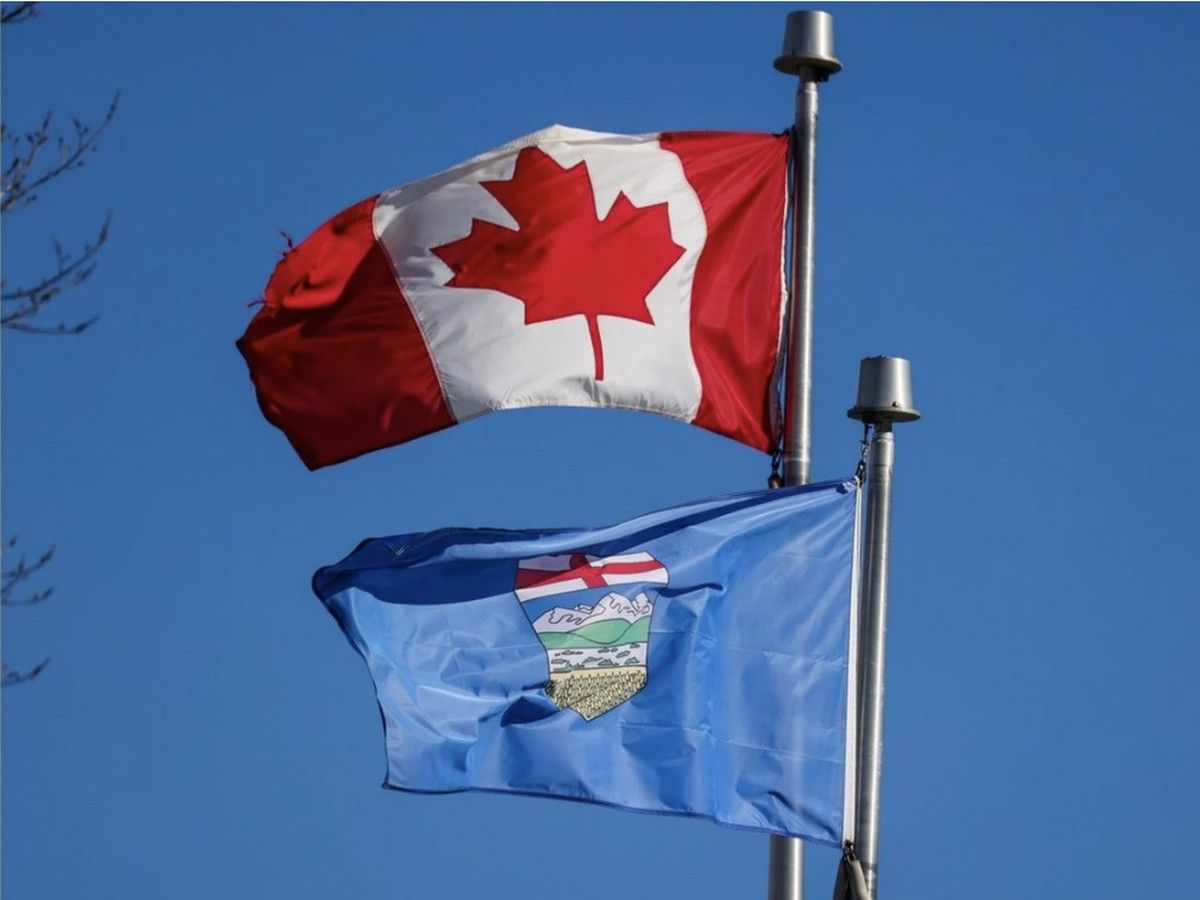
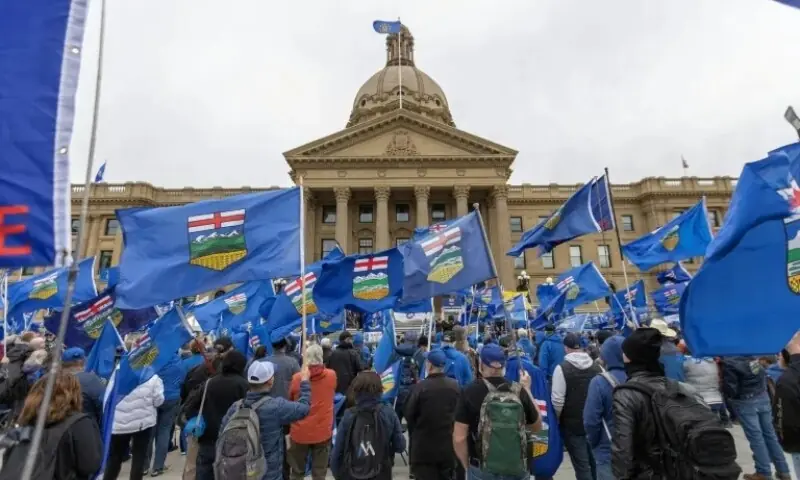
Photo via Toronto Star

Alberta's 'message' will be loud and clear

Read the original at Toronto Star ↗
Cite

Alberta's 'message' will be loud and clear. (2026, October 17). Toronto Star. https://www.thestar.com/opinion/letters-to-the-editor/alberta-s-message-will-be-loud-and-clear/article_120bcf87-d242-4d20-8830-6b6ee7211e8a.html

Dated from the outlet's own feed. Check the original for its byline.

Toronto Star · collected 2026-10-17 · by Unknown

Quick Summary

The article discusses a plebiscite in Alberta where voters are being urged to cast ballots as a "message" to Ottawa about provincial grievances, potentially exaggerating support for separatism. The author argues that Albertans should view this vote as an opportunity to understand the level of support for separation within their own province rather than interpreting it as a message directed at the federal government.
Written by AI on 2026-10-17, from this article's own text only (the story summary below draws on all the coverage).
See how they differ ↓

AI analysis

Story summary

On October 19, 2026, Albertans voted in a referendum that included ten questions, primarily focusing on immigration and constitutional issues. The last question asked if the Government of Alberta should commence legal steps to hold a second binding referendum on separation from Canada. Voting began with advance polls on October 13 at 311 polling stations.

The results released later showed that three-quarters of Albertans voted against pursuing separation, with strong support for remaining in Canada. However, there was a noticeable rural-urban divide, where questions pertaining to immigration and constitutional changes garnered more support from rural areas compared to urban centers like Calgary and Edmonton.

Premier Danielle Smith's request for "strong mandates" on the nine ballot questions did not materialize as expected, with most provincial ridings rejecting many of the proposed measures. This has left her government hesitant about swift action despite winning majorities in some areas related to immigration policies.

Written for “Alberta Referendum Results” on 2026-11-22, grounded in this article and the 104 other(s) covering the same event.

How they differ

19 outlets covered “Alberta Referendum Results”.

What each outlet says

One AI summary per outlet of its latest article on this story, written from that article alone and checked against it. Open the article for the outlet's own words.

Toronto StarThis outlet17 Oct

The article discusses a plebiscite in Alberta where voters are being urged to cast ballots as a "message" to Ottawa about provincial grievances, potentially exaggerating support for separatism. The author argues that Albertans should view this vote as an opportunity to understand the level of support for separation within their own province rather than interpreting it as a message directed at the federal government.

Alberta's 'message' will be loud and clear (this article)30 articles from Toronto Star on this story
Global News23 Oct

Following Alberta’s referendum where a majority voted for policies limiting access to provincially funded services based on immigration status, union representatives are highlighting the contributions of immigrant workers rather than focusing on costs. Faduma Ahmed from the United Food and Commercial Workers Local 401 at Cargill’s abattoir in High River emphasized that these workers, many of whom hold temporary…

Advocates flag contributions, not costs, of newcomers in Alberta referendum aftermath →14 articles from Global News on this story
The Globe and Mail23 Oct

Danielle Smith, Alberta’s Premier, faced mixed results from Monday’s provincial referendum regarding immigration control and constitutional amendments. While proposals related to immigration received narrow majorities between 52% and 55%, those for constitutional changes fell short at below 50%. The proposal for proof-of-citizenship requirements garnered the highest support with 58%. These outcomes highlight a…

Mixed results on Alberta referendum questions highlight urban-rural divide →14 articles from The Globe and Mail on this story
CBC27 Oct

Alberta's recent referendum saw most provincial ridings reject Danielle Smith’s ballot questions, despite her seeking strong mandates for her proposals. Of the nine questions, seven would have lost in a riding-by-riding contest, with only Questions 1 and 5 receiving majority support. Edmonton and Calgary showed particular opposition to restricting services for temporary residents, while rural areas largely supported…

Nopes to the nine? Blue walls? Five takeaways from Alberta's referendum results →12 articles from CBC on this story
National Post25 Oct

This article compiles letters discussing Alberta's recent referendum on sovereignty. Writers express mixed views: while some see it as a positive development that may prompt federal attention to Western Canada, others fear it could embolden separatist movements elsewhere, like Quebec. One letter criticizes U.S. Ambassador Pete Hoekstra for lecturing Canadian politicians about interfering in American politics, citing…

Letters: The good and bad of Alberta’s vote →8 articles from National Post on this story
Euronews21 Oct

Alberta voters overwhelmingly rejected starting the process toward separation from Canada in a recent referendum, with about 75% supporting unity. This outcome gives Prime Minister Mark Carney a boost as he pushes for national unity amid US President Donald Trump’s trade war and annexation threats, which have rallied Canadians around their flag. Edmonton voter Shawn Campbell explained his vote: “It sends a message…

Alberta’s “no” to separation gives Carney a boost as Trump pressure unites Canadians →4 articles from Euronews on this story
Show 13 more outlets
BBC20 Oct

Albertans have voted overwhelmingly to stay part of Canada in a recent referendum, with over two-thirds of voters choosing unity despite calls for separation from some groups. Prime Minister Mark Carney celebrated the outcome as a victory for national unity, while provincial leader Danielle Smith acknowledged the results and suggested a path forward. Proponents of independence had argued that Alberta’s economic…

Alberta votes overwhelmingly to remain part of Canada →3 articles from BBC on this story
CBS News20 Oct

Voters in Alberta rejected a proposal to start the process toward independence from Canada, with 76% choosing to remain part of the country and only 23% supporting the path towards separation. The referendum was held due to tensions between Alberta and the Canadian federal government over issues like oil regulations and trade policies. Despite some support for separatism, particularly among conservatives who feel…

Voters reject separation of Alberta from Canada in referendum →2 articles from CBS News on this story
Al Jazeera20 Oct

In Alberta's first-ever independence referendum on Monday, 76% of voters chose to remain part of Canada, with results showing an overwhelming support for staying within the country. This outcome is seen as a significant victory for Canadian Prime Minister Mark Carney, who campaigned against separation, while disappointing those advocating for Alberta’s independence due to long-standing grievances with Ottawa. The…

Alberta rejects separation referendum: What’s next for Canadian province? →2 articles from Al Jazeera on this story
The Guardian20 Oct

Alberta voters rejected a proposal to initiate a process toward independence from Canada, with CBC projecting that about 76% of votes supported remaining in Canada while only 23% favored beginning the separation process. With over a million votes counted early Tuesday morning and nearly a third of ballots tallied, this outcome marks a significant victory for Canadian unity and Prime Minister Mark Carney. The ballot…

Alberta voters reject plan for referendum to leave Canada, CBC projects →2 articles from The Guardian on this story
The Straits Times20 Oct

On October 19, Canada awaited results from a divisive independence vote in Alberta, with less than one-quarter of voters reportedly supporting separation according to polls. Mitch Sylvestre, leader of the separatist movement, remained optimistic despite low polling numbers, stating his goal was to ignite provincial spirit regardless of initial outcomes. With 3.1 million eligible voters and 1.4 million advance…

Canada awaits result in Alberta independence vote →2 articles from The Straits Times on this story
Dawn19 Oct

Alberta is holding a non-binding referendum on Monday where residents will vote on ten questions related to separation from Canada and provincial governance. Premier Danielle Smith announced this after months of campaigning by separatists who argue that Alberta's wealth subsidizes other parts of the country and hinders its economy. The final question asks if Albertans want to remain in Canada or start a process for…

What does Alberta's referendum on separation from Canada mean? →2 articles from Dawn on this story
The Independent20 Oct

Voters in Alberta, Canada's oil-rich province, decisively rejected a move toward independence, with CBC projecting that about 76 percent of voters supported remaining within Canada, while only 23 percent backed the process towards separation. More than one million votes were counted from over 1.35 million cast, representing 43 percent of eligible voters. The vote reflects deep-seated tensions between Alberta and the…

Alberta rejects independence and votes to remain in Canada, CBC projects →2 articles from The Independent on this story
NPR20 Oct

In Alberta’s recent referendum, voters overwhelmingly rejected proposals toward provincial independence with 76% supporting remaining part of Canada and only 23% backing the process for potential separation. The vote came as tensions rose due to U.S. President Donald Trump's trade policies and annexation threats. Despite strong sentiment against Ottawa in some circles, a majority of Albertans chose unity, reflecting…

Alberta voters reject a move toward independence in referendum backing Canadian unity →2 articles from NPR on this story
South China Morning Post20 Oct

Alberta voters rejected the idea of separating from Canada in an overwhelming referendum, with 77% supporting staying within the country while 23% favored initiating a path toward separation. Early results provided a significant boost for Canadian Prime Minister Mark Carney's efforts to maintain national unity amid tensions with the US over trade and annexation threats.

Alberta voters choose Canada over independence in boost for Carney →2 articles from South China Morning Post on this story
Washington Examiner18 Oct

Alberta residents are set to vote in a referendum on October 19 that could lead to discussions about the province's potential independence from Canada. The ballot does not directly decide Alberta’s separation but asks if the provincial government should initiate the necessary steps for a future binding referendum on independence. This vote has significant implications for Canada's political structure and its…

What to know about the Alberta referendum on leaving Canada →
Fox News19 Oct

Alberta residents started voting on Monday in a non-binding referendum to decide if the western-Canadian province should separate from Canada. The poll involves about three million eligible voters amid tensions following recent military incidents in Alberta. Despite a majority of decided voters favoring remaining in Canada according to polls, nearly 30% support initiating the process for a binding referendum on…

Alberta holds non-binding separation vote as independence fight grips Canada →
New York Post20 Oct

Alberta residents voted to remain part of Canada in a recent referendum, with 76% supporting unity as initial results showed. The nonbinding vote, announced by Premier Danielle Smith in May, came amid growing calls for separation from a small but vocal group advocating for Alberta’s independence due to perceived economic injustices and bureaucratic impediments from the federal government. Prime Minister Mark Carney…

Alberta votes to remain part of Canada, rejects independence →
Daily Mail20 Oct

Alberta, Canada’s oil-rich province, voted overwhelmingly against separation from the country in a recent referendum, with 76% of voters supporting unity. Despite this outcome, Albertans also approved measures to tighten immigration laws and restrict access to social benefits for non-permanent residents. The vote reflects ongoing tensions between Alberta and the federal government over environmental policies and…

Oil-rich Canadian province of Alberta votes to remain part of the country... but demands immigration is slashed and voter ID laws are tightened →

Where they agree and split

Agreed

AI · cited, from two or more outlets

  • The referendum vote was not a direct decision on independence but would have set Alberta on a path toward a future vote on separation if passed.35
  • More than two-thirds of voters in the province chose to remain part of Canada rather than pushing for independence according to unofficial results from Elections Alberta.45
Quoted from the coverage (4)

With more than 1 million votes counted, about 76% supported remaining in Canada, compared with 23% who backed beginning a process that could lead to separation.

8 outlets

Prime Minister Mark Carney said on Tuesday that "it's a great result for Canada" and he is "thrilled that Albertans have chosen unity".

8 outlets

Alberta Premier Danielle Smith, a conservative, said she voted against independence but called the referendum to settle an issue that has divided the province.

6 outlets

Carney, who grew up in Alberta, has called the referendum “a dangerous bluff” as US President Donald Trump imposes punishing tariffs and levels annexation threats aimed – the prime minister says – at breaking Canadian resolve.

6 outlets

Disputed

Picked by our model, which is sometimes wrong

  • Separatist leaders vow to continue fighting for separation despite the referendum results, whereas Prime Minister Carney celebrates unity.45

Framing

How the first headlines put it

  • The Toronto Star frames the event as a timeline of events leading up to the vote, while CBS News presents it as a decisive rejection of separation.13
  • CBC highlights the rural-urban divide on additional referendum questions, whereas The Globe and Mail focuses on presenting the results of those nine other questions.67
The full story: what happened, how it changed, and all 105 articles →

Compared with similar articles

This article reads unscored and hedges 6% of its claims. Each row says how that neighbour differs.
Global News
Hedges 6 of 31 claims Outlet record 63/100
Global News
Hedges 1 of 12 claims Outlet record 63/100
“Article A discusses Prime Minister Carney's Thanksgiving message regarding Alberta's upcoming separation referendum on October 19, while Article B comments on the significance of the actual vote taking place a few days later.”
CBC News
Hedges 1 of 34 claims Outlet record 70/100
“Article A describes the opening of advance polling for the Alberta referendum, while Article B discusses the broader implications and messaging behind the referendum vote.”
Global News
Hedges 1 of 25 claims Outlet record 63/100
“The articles describe different stages or aspects of the Alberta referendum rather than the same specific incident at a single time and place.”
CBC News
Hedges 2 of 44 claims Outlet record 70/100
“The articles discuss different aspects of the Alberta separatism debate without focusing on a single specific incident or occurrence.”
National Post
Leans left Hedges 5 of 34 claims Outlet record 60/100
“The articles discuss different aspects of Albertans' sentiment towards their relationship with Canada and upcoming votes, but do not describe the same specific incident or occurrence.”
The Globe and Mail
Leans left Hedges 4 of 64 claims Outlet record 51/100
“The articles discuss different aspects of the Alberta separatist movement and do not describe the same specific incident or occurrence.”
CBC News
Leans left Hedges 2 of 28 claims Outlet record 70/100
“The articles discuss different aspects of the Alberta referendum; one urges voters to participate and the other reports on voting delays in a northern hamlet.”
CBC News
Hedges 6 of 84 claims Outlet record 70/100
“The articles discuss Alberta's relationship with Ottawa but cover different aspects: one focuses on a vote or plebiscite to gauge support for separatism, while the other discusses historical and current political conflicts and recent moves by Premier.”
Dawn
Leans right Hedges 1 of 26 claims Outlet record 65/100

Story

Alberta Referendum Results
Politics · 105 article(s) covering the same event. Compare every outlet's account →
How this article was measured signals, leaning charts, publisher record, byline, topics and claims

Signals How these are calculated →

Claims extracted
51
sentences that state something as happening or true
Uncertain
6%
3 of 51 hedged ("reportedly", "may", "according to")
Leaning
withheld
no quote in the article backed the model's score
Publisher signals
65/100
Toronto Star's corrections and hedging, across everything collected from it. Not a measure of accuracy.
Outlets on this story
105
Politics
Same framing elsewhere
1
articles that frame the event the way this one does
Analyzed 2026-10-17 · how these are computed

How this is being covered How these are calculated →

Article leaning vs. publisher reliability
Source leaning vs. consistency

Publisher

Toronto Star · 16786 article(s) · 32 correction(s) detected
Running correction rate · 32 correction(s)
2026-11-17
Correction
2026-10-26
Correction
2026-10-24
Correction
2026-10-07
Correction
2026-09-24
Correction

Who wrote this

No reporter is named on this article, beyond the feed's “Unknown”.

Topics

Albertans Ontario Ottawa Pro-Canada Toronto

Subjects

Toronto GPE · 4× Albertans NORP · 3× Ontario GPE · 3× Cleveland-Cliffs ORG · 2× Harris PERSON · 2× Ont GPE · 2× Ottawa GPE · 2× Alberta GPE · 1× Pro-Canada NORP · 1× Quebec GPE · 1×

Narrative

That body has not had any credibility since Ford appointed Mike Harris to the order in 2021 — the same Harris who, when he was elected premier 30 years ago, cancelled 17,000 social-housing units and gave funds to his business friends who were supposed to get the private sector to build the needed housing.
framing: assertive · carried by 1 article(s) · first seen 2026-10-17
The separatists will, of course, declare all “Yes” votes to be pro-separation.
2026-10-17 · Toronto Star
Alberta's 'message' will be loud and clear · assertive framing

Claims (51 extracted, 3 hedged)

Pro-Canada Albertans, who by all accounts constitute the vast majority of Alberta’s voting population, are being urged to “send a message” to Ottawa in this preliminary vote in a way that’s reminiscent of the “knife at the throat” tactics used by Quebec separatists in another era. asserted
that → constitute → era
But if there is a message to be sent, it should not go to Ottawa. asserted
it → be → Ottawa
It should be sent to Albertans. asserted
It → send → Albertans
It’s in everyone’s interest to learn exactly how separatism stands, and this vote is their opportunity to find out. asserted
vote → ’ → interest
The separatists will, of course, declare all “Yes” votes to be pro-separation. asserted
votes → declare → course
Their “send a message” stratagem is a well-worn ploy to exaggerate their level of popular support. asserted
stratagem → send → support
No, it’s in Albertans’ interest to approach the plebiscite exactly as it will be seen the next day: a definitive answer as to who wants to cease being a Canadian. asserted
who → ’ → plebiscite
As for grievances about federalism, those are serious and complex, and they deserve a much forum for debate. asserted
they → deserve → debate
James McFarlane, Toronto Out of order of Ontario Paul Godfrey should not lose any sleep at having been dumped by Premier Doug Ford from the Order of Ontario council. asserted
Godfrey → lose → council
That body has not had any credibility since Ford appointed Mike Harris to the order in 2021 — the same Harris who, when he was elected premier 30 years ago, cancelled 17,000 social-housing units and gave funds to his business friends who were supposed to get the private sector to build the needed housing. asserted
sector → have → housing
Harris then cut social assistance rates, and those cuts have not been restored. asserted
cuts → cut → rates
He also cut spending on health, education, social services and public infrastructure — including by privatizing water testing. asserted
He → cut → testing
Meanwhile, in 2026, Ontario cannot make its social contribution commitments to Toronto and other municipalities, resulting in higher rates of homelessness and poverty. asserted
Ontario → make → homelessness
David Walsh, Toronto Mind the funding gaps Eric Lombardi’s recent column on public disorder in Toronto resonated with me owing to an experience I had taking the TTC this past weekend. asserted
I → mind → TTC
A woman who appeared unwell became violent toward other passengers. asserted
who → appear → passengers
She lit a scarf on fire, assaulted an elderly man and a young man, screamed profanities, spat in my face and struck me on the head after I intervened to protect other passengers. asserted
I → light → passengers
Moments like this make it clear that we can support people who are struggling with addiction while still insisting on basic safety and order in our shared public spaces. asserted
who → make → spaces
Leaving riders to manage this alone is neither compassionate nor sustainable. asserted
Leaving → leave → this
The layoffs have begun and will total approximately 500 workers in Hamilton and at the Lake Erie facility. asserted
layoffs → begin → facility
Industry Minister Mélanie Joly is prepared to wait an answer from Cleveland-Cliffs, but it is unlikely to reverse the current and pending hardships these workers, their families and their communities must bear. asserted
workers → prepare → hardships
Cleveland-Cliffs knows full well that its plan will be finalized well before any court decision could be rendered. uncertain
decision → know → ?
Canadians who care about these workers and their communities should be demanding that the federal government, supported by the Ontario government, work to nationalize these facilities as we have done in the past in other industries. asserted
we → care → industries
We can make it work. asserted
it → make → ?
We have the skilled workers and the materials. asserted
We → have → workers
If we fail to act swiftly, it will effectively signal that Canada is defenceless and up for grabs. asserted
Canada → fail → grabs
All-access passages Beth Kaplan aptly describes the plight of senior citizens who experience a fall. asserted
who → describe → fall
Falling down her stairs at home took away her independence and made her unable to do her usual activities. asserted
her → fall → activities
Kaplan said she used the grab-bar in her shower for the first time and pointed out that she needed to retrofit her house against further bodily decline. asserted
she → say → decline
She wouldn’t have to do that if every home were built according to universal design principles, which make homes suitable for all people of all ages and abilities via accessibility features that are inexpensive to build when included in the design stage. uncertain
that → have → stage
Building codes must be changed at all levels to require universal design in all units in new multi-unit housing developments, because many of us are just one fall away from Kaplan’s predicament. asserted
many → change → predicament
Carol Damioli, Toronto Collaborators (the good kind) Carolyn Whitzman’s proposal to expand Toronto’s acquisition of affordable rental housing offers a practical foundation for action. asserted
proposal → expand → action
Preserving homes and preventing displacement both deserve attention alongside new construction. asserted
Preserving → preserve → construction
The next question is how we connect these housing initiatives with the people, services and financing needed to ensure they succeed. asserted
they → connect → people
Housing, health care, mental-health supports, employment and neighbourhood safety are interconnected, yet responsibility is spread across institutions with different mandates and budgets. asserted
responsibility → spread → mandates
Municipal leadership can bring governments, housing providers, businesses, researchers and residents together around a shared implementation plan. asserted
leadership → bring → plan
That means diagnosing gaps in how institutions work together, assigning responsibilities, aligning resources and publicly measuring results. asserted
institutions → mean → results
Toronto’s mayoral candidates should be able to explain what they’re proposing and how they’ll deliver it. asserted
they → explain → it
This city is full of valuable expertise and has some promising initiatives. asserted
city → have → initiatives
Collaboration could help turn individual successes into lasting improvements for the whole city. uncertain
Collaboration → help → city
Jeff Wilson, Puslinch, Ont. A toast to the host I thoroughly enjoyed reading Cathrin Bradbury’s column on the death of the dinner party. asserted
I → read → party
…and 11 more, not listed.
Give feedback · no sign-in needed

No sign-in needed for now. Your note is sent without a name, so it cannot be answered.

History Support