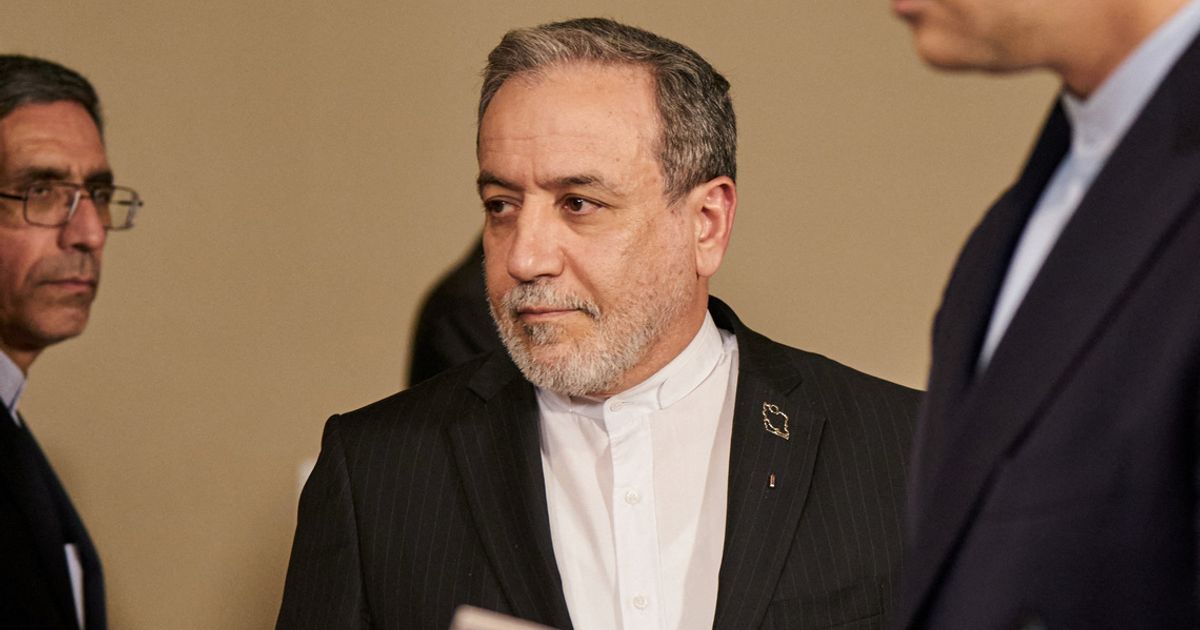
Photo via The Straits Times

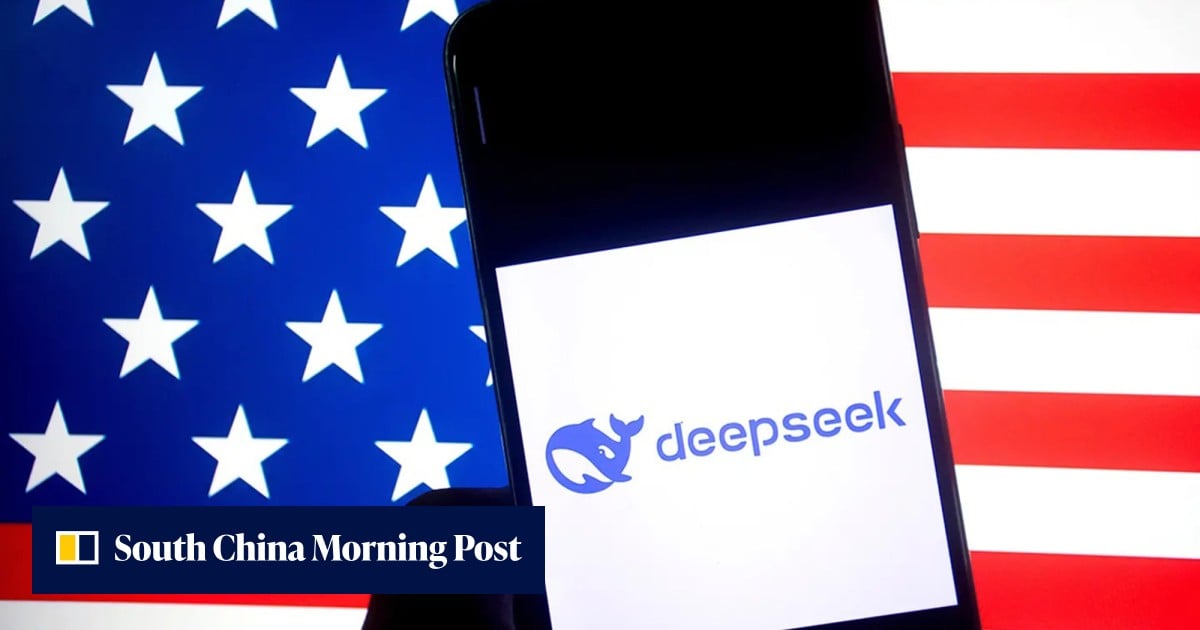
US banning Chinese AI DeepSeek from government agency IT systems

Read the original at The Straits Times ↗
Cite

The Straits Times. (2026, October 19). US banning Chinese AI DeepSeek from government agency IT systems. The Straits Times. https://www.straitstimes.com/world/united-states/us-banning-chinese-ai-deepseek-from-government-agency-it-systems

Dated from the outlet's own feed. Check the original for its byline.

The Straits Times · collected 2026-10-19 · by The Straits Times

Quick Summary

The US Department of Homeland Security (DHS) has ordered the removal of DeepSeek products and third-party services that use the Chinese AI model from all US civilian agency IT systems. This ban also prohibits future acquisition of DeepSeek products by these agencies due to concerns over potential data transfer to China and security vulnerabilities. DHS cited multiple threat vectors, including the risk of transferring sensitive information and producing actionable intelligence on US persons or government agencies. Several other US federal agencies and states have already banned the use of DeepSeek.
Written by AI on 2026-10-19, from this article's own text only (the story summary below draws on all the coverage).
See how they differ ↓

AI analysis

Story summary

As of October 19, 2026, the U.S. Department of Homeland Security (DHS) has ordered federal civilian agencies to remove AI software developed by DeepSeek, a Chinese company, from government IT systems due to national security concerns. The directive also bans future acquisitions of DeepSeek products and services. DHS cited "multiple threat vectors" posed by DeepSeek models, including the potential for transferring sensitive data to the People’s Republic of China (PRC) if used by U.S. government employees or vendors. Additionally, DHS warned that DeepSeek models may contain malware or other security vulnerabilities, which could produce actionable intelligence on US persons and agencies. This decision follows previous bans implemented by various U.S. agencies, including the Department of Commerce and the Navy.

Written for “US Banning China's DeepSeek AI” on 2026-11-21, grounded in this article and the 2 other(s) covering the same event.

How they differ

3 outlets covered “US Banning China's DeepSeek AI”.

What each outlet says

One AI summary per outlet of its latest article on this story, written from that article alone and checked against it. Open the article for the outlet's own words.

The Straits TimesThis outlet19 Oct

The US Department of Homeland Security (DHS) has ordered the removal of DeepSeek products and third-party services that use the Chinese AI model from all US civilian agency IT systems. This ban also prohibits future acquisition of DeepSeek products by these agencies due to concerns over potential data transfer to China and security vulnerabilities. DHS cited multiple threat vectors, including the risk of…

US banning Chinese AI DeepSeek from government agency IT systems (this article)
New York Post19 Oct

The Department of Homeland Security has instructed federal civilian agencies to remove AI products developed by China’s DeepSeek, citing multiple threat vectors that could lead to sensitive data transfer to China. The ban includes prohibiting future purchases and use of any third-party services based on DeepSeek technology. This action follows similar measures taken by the Commerce Department, US Navy, and New York…

DHS cracks down on China’s DeepSeek as AI competition intensifies: ‘Multiple threat vectors’ →
South China Morning Post20 Oct

The U.S. government has directed federal civilian agencies to remove products and services from Chinese firm DeepSeek, citing national security risks. The Department of Homeland Security issued a directive on Monday prohibiting further purchases and use of any third-party services built using DeepSeek’s AI models. This action is based on concerns that the company's technology could lead to data transfer to China or…

US orders DeepSeek removed from federal systems, citing national security risks →

Where they agree and split

Framing

How the first headlines put it

Stated as fact3
The headlines (3)

US banning Chinese AI DeepSeek from government agency IT systems The Straits Times · stated as fact

DHS cracks down on China’s DeepSeek as AI competition intensifies: ‘Multiple threat vectors’ New York Post · stated as fact

US orders DeepSeek removed from federal systems, citing national security risks South China Morning Post · stated as fact

The full story: what happened, how it changed, and all 3 articles →

Compared with similar articles

This article reads leans right and hedges 27% of its claims. Each row says how that neighbour differs.
South China Morning Post
Leans right Hedges 1 of 3 claims Outlet record 62/100
New York Post
Leans right Hedges 2 of 14 claims Outlet record 66/100
Semafor
Hedges 3 of 4 claims Outlet record 64/100
“Article A discusses potential export controls by China, while Article B reports on a specific US ban on Chinese AI DeepSeek within government IT systems.”
South China Morning Post
Leans right Hedges 3 of 9 claims Outlet record 62/100
“Article A describes a specific ban on Chinese AI DeepSeek by US agencies, while Article B discusses broader US-China talks and cooperation in AI.”

Story

US Banning China's DeepSeek AI
Politics · 3 article(s) covering the same event. Compare every outlet's account →
How this article was measured signals, leaning charts, publisher record, byline, topics and claims

Signals How these are calculated →

Claims extracted
15
sentences that state something as happening or true
Uncertain
27%
4 of 15 hedged ("reportedly", "may", "according to")
Leaning
Leans right
of the writing, not the subject · beta estimate
Publisher signals
64/100
The Straits Times's corrections and hedging, across everything collected from it. Not a measure of accuracy.
Outlets on this story
3
Politics
Same framing elsewhere
1
articles that frame the event the way this one does
Analyzed 2026-10-19 · how these are computed

How this is being covered How these are calculated →

Article leaning vs. publisher reliability
Source leaning vs. consistency

Publisher

The Straits Times · 5634 article(s) · 7 correction(s) detected
Running correction rate · 7 correction(s)

Who wrote this

The Straits Times
3888 article(s) here · 1 carrying a prediction
He told groups of subordinates that they had become so rich that he couldn’t motivate them simply with money, according to three people who spoke on the condition of anonymity to discuss confidential conversations.
The closed freeway lanes recall stems from unusual circumstances where a Waymo vehicle may enter and continue driving in a closed freeway lane, the company said, adding it is still working on the recall remedy.
Araqchi says Iran wants diplomacy to end war; Trump says terms unacceptable Nov 20 - Iran's Foreign Minister Abbas Araqchi said Tehran still hoped diplomacy could end its war with the United States, while US President Donald Trump said Iran wanted a deal but one that was not acceptable to him.
While You Were Sleeping: 5 stories you might have missed, Nov 21, 2026 Trump, Xi agree military AI decisions should involve humans US President Donald Trump and Chinese President Xi Jinping agreed humans should always be involved in military decisions that use artificial intelligence technologies, even as the two countries compete for AI supremacy, Treasury Secretary Scott Bessent said on Nov 20.
US Vice President Vance declines to say he would have ordered Iran strikes WASHINGTON, Nov 20 - US Vice President JD Vance on Friday declined to say whether he would have authorized strikes on Iran to prevent the country from developing a nuclear weapon, sidestepping President Donald Trump's calls for him to say the attacks were necessary and that he would carry them out again.
Some would blame Ottawa for the trade conflict while others pointed the finger at Washington.
Whoever wins will have to tackle multiple crises, including several wars, cutbacks in US contributions to the UN, and the 193-member body's declining political relevance as Washington has pulled out of dozens of its agencies.
I don’t think any human was about to find this,” Conrey said, adding that he believed “there will be simpler ways to do it.” The Riemann Hypothesis is one of seven Millennium Prize Problems selected by the Clay Mathematics Institute in 2000, which offers US$1 million (S$1.28 million) for a solution to each. Under the institute’s rules, a solution must be published in a peer-reviewed journal and withstand two years of scrutiny.
If the hearing proceeds as planned, it would mark Huang's first public testimony since stepping down as Nvidia's chief executive on November 12.
Denmark’s foreign minister on Nov 20 said Moscow’s defence attache in Copenhagen would be expelled after Russia was suspected of being behind an attempted assassination of a Ukrainian rapper.
Also by The Straits Times
Nothing else under this byline is closely related to this article, so these are simply their most recent.
All 3888 articles by The Straits Times →

Topics

Chinese DHS DeepSeek FCC WASHINGTON

Subjects

Chinese NORP · 8× DHS ORG · 4× FCC ORG · 3× WASHINGTON GPE · 2× Homeland Security Department ORG · 1× Navy ORG · 1× New York GPE · 1× PRC GPE · 1× The US ORG · 1× the Department of Commerce ORG · 1×

Narrative

In July, the FCC voted to bar sales of devices in the US that contain key hardware from Chinese companies deemed to be national security risks and has proposed to prohibit US telecommunications carriers from interconnecting with Chinese telecom firms deemed national security risks.
framing: mixed · carried by 1 article(s) · first seen 2026-10-19
DHS said DeepSeek models pose “multiple threat vectors” and raised concerns that use of the product “may result in the transfer of sensitive data to the PRC if used by US government employees or vendors”.
2026-10-19 · The Straits Times
US banning Chinese AI DeepSeek from government agency IT systems · mixed framing

Claims (15 extracted, 4 hedged)

US banning Chinese AI DeepSeek from government agency IT systems AI generated asserted
AI → ban → systems
The US Homeland Security Department (DHS) is ordering the removal of DeepSeek products and third-party services using the Chinese AI model from US civilian agency IT systems, according to a notice published on Oct 19. uncertain
Department → order → Oct
The department is also banning acquisition of DeepSeek products and third-party services developed using DeepSeek by US civilian government agencies. asserted
department → ban → agencies
DHS said DeepSeek models pose “multiple threat vectors” and raised concerns that use of the product “may result in the transfer of sensitive data to the PRC if used by US government employees or vendors”. uncertain
use → say → employees
DHS also said use of DeepSeek by government agencies “could produce actionable intelligence on US persons and/or government agencies. uncertain
use → say → persons
The models themselves may contain malware or other security vulnerabilities”. uncertain
models → contain → malware
In a July memo made public on Oct 19, DHS told federal agencies to monitor flows of traffic in and out of government websites to address potential risks from DeepSeek. asserted
DHS → make → DeepSeek
Previously, several US agencies, including the Department of Commerce and the Navy, have banned the use of DeepSeek on government devices. asserted
agencies → include → devices
Multiple states including New York, Tennessee, and Virginia have taken similar steps. asserted
states → include → steps
The Chinese Embassy in Washington did not immediately comment. asserted
Embassy → comment → Washington
The Trump administration has taken a series of steps to crack down on Chinese tech companies. asserted
administration → take → companies
The Federal Communications Commission (FCC) will vote on Oct 29 to bar all Chinese labs from testing electronic devices such as smartphones, cameras and computers for use in the US. asserted
Commission → vote → US
In 2025, 82% of US electronics were tested in China. asserted
% → test → China
In December, the FCC banned import of all new models of Chinese drones and also banned imports of new models of Chinese-made consumer routers, the boxes connecting computers, phones and smart devices to the internet. asserted
FCC → ban → internet
In July, the FCC voted to bar sales of devices in the US that contain key hardware from Chinese companies deemed to be national security risks and has proposed to prohibit US telecommunications carriers from interconnecting with Chinese telecom firms deemed national security risks. asserted
that → vote → firms
Give feedback · no sign-in needed

No sign-in needed for now. Your note is sent without a name, so it cannot be answered.

History Support