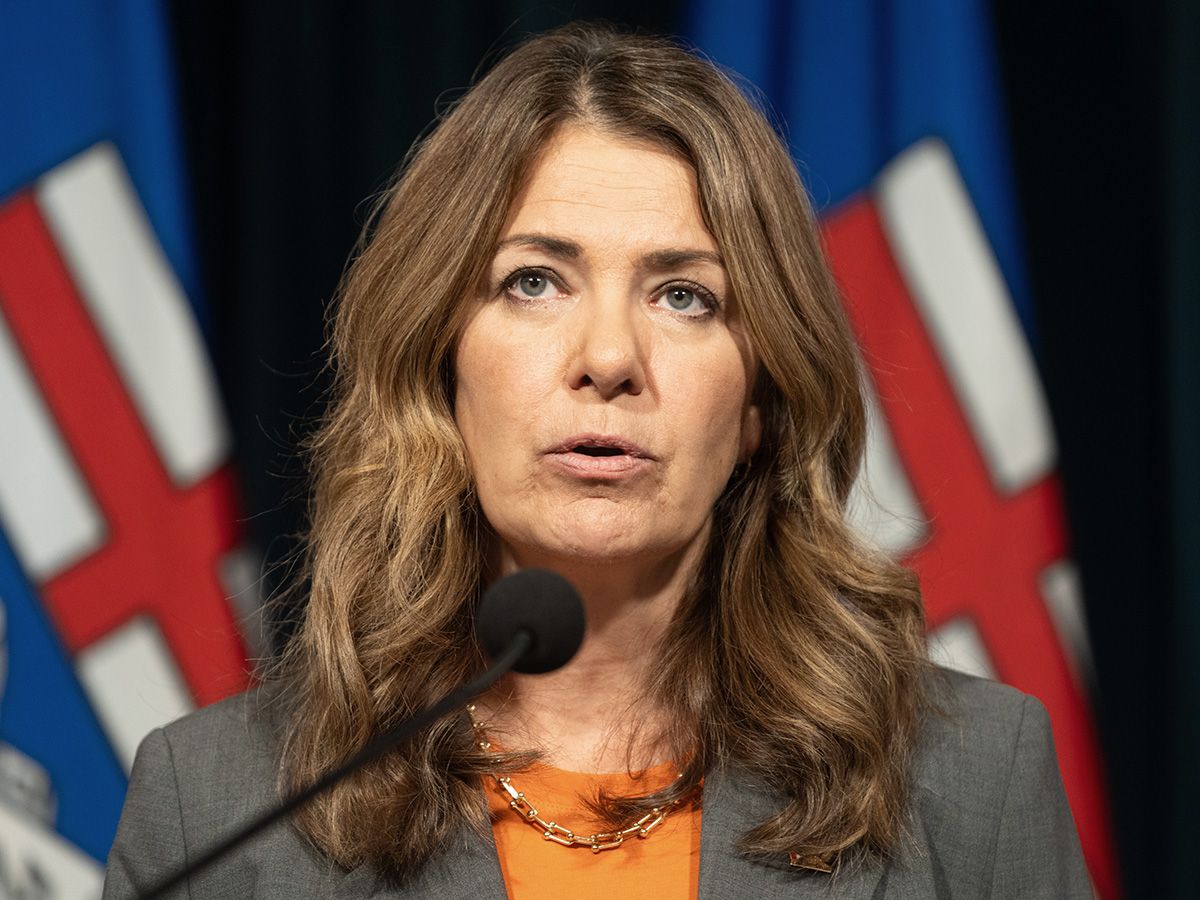
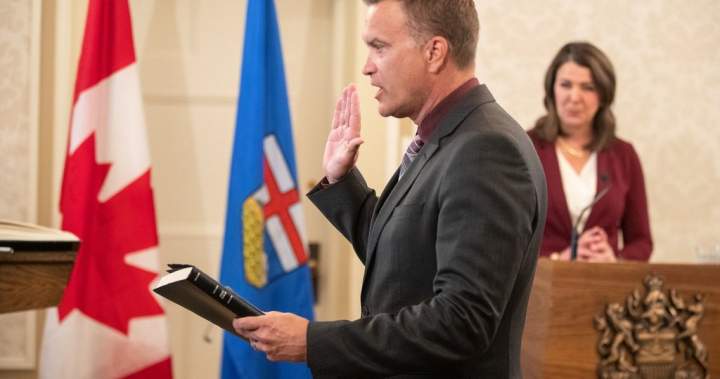
Photo via The Globe and Mail

Smith vows to push for more Alberta autonomy

Read the original at The Globe and Mail ↗
Cite

Scace, M. (2026, October 21). Smith vows to push for more Alberta autonomy. The Globe and Mail. https://www.theglobeandmail.com/canada/alberta/article-smith-vows-to-push-for-more-alberta-autonomy/

Dated from the outlet's own feed. Check the original for its byline.

The Globe and Mail · collected 2026-10-21 · by Matthew Scace

Quick Summary

Premier Danielle Smith of Alberta vowed to push for more provincial autonomy from the federal government despite Albertans voting overwhelmingly to remain part of Canada. On Tuesday night, she stated her intention to use every legal and political tool available to protect Alberta’s interests while pledging not to hold another separation referendum during her tenure. The article reports that about 75% of voters supported remaining in Canada, reflecting public opinion polls over the past year. Smith emphasized cooperation with Prime Minister Mark Carney but also warned of a strong response if Ottawa interferes with Alberta's rights.
Written by AI on 2026-10-21, from this article's own text only (the story summary below draws on all the coverage).
See how they differ ↓

AI analysis

Story summary

On October 19, 2026, Albertans voted in a referendum that included ten questions, primarily focusing on immigration and constitutional issues. The last question asked if the Government of Alberta should commence legal steps to hold a second binding referendum on separation from Canada. Voting began with advance polls on October 13 at 311 polling stations.

The results released later showed that three-quarters of Albertans voted against pursuing separation, with strong support for remaining in Canada. However, there was a noticeable rural-urban divide, where questions pertaining to immigration and constitutional changes garnered more support from rural areas compared to urban centers like Calgary and Edmonton.

Premier Danielle Smith's request for "strong mandates" on the nine ballot questions did not materialize as expected, with most provincial ridings rejecting many of the proposed measures. This has left her government hesitant about swift action despite winning majorities in some areas related to immigration policies.

Written for “Alberta Referendum Results” on 2026-11-20, grounded in this article and the 104 other(s) covering the same event.

How they differ

19 outlets covered “Alberta Referendum Results”.

What each outlet says

One AI summary per outlet of its latest article on this story, written from that article alone and checked against it. Open the article for the outlet's own words.

The Globe and MailThis outlet21 Oct

Premier Danielle Smith of Alberta vowed to push for more provincial autonomy from the federal government despite Albertans voting overwhelmingly to remain part of Canada. On Tuesday night, she stated her intention to use every legal and political tool available to protect Alberta’s interests while pledging not to hold another separation referendum during her tenure. The article reports that about 75% of voters…

Smith vows to push for more Alberta autonomy (this article)14 articles from The Globe and Mail on this story
Toronto Star23 Oct

A union representative from Cargill’s beef processing plant near Calgary warns of potential labour shortages if recent Alberta referendum proposals limiting access to or charging for provincially funded services based on immigration status are implemented. With 98% of polls reporting, the referendum narrowly passed with slim majority support for these changes, despite Premier Danielle Smith's government arguing that…

Advocates flag contributions, not costs, of newcomers in Alberta referendum aftermath →30 articles from Toronto Star on this story
Global News23 Oct

Following Alberta’s referendum where a majority voted for policies limiting access to provincially funded services based on immigration status, union representatives are highlighting the contributions of immigrant workers rather than focusing on costs. Faduma Ahmed from the United Food and Commercial Workers Local 401 at Cargill’s abattoir in High River emphasized that these workers, many of whom hold temporary…

Advocates flag contributions, not costs, of newcomers in Alberta referendum aftermath →14 articles from Global News on this story
CBC27 Oct

Alberta's recent referendum saw most provincial ridings reject Danielle Smith’s ballot questions, despite her seeking strong mandates for her proposals. Of the nine questions, seven would have lost in a riding-by-riding contest, with only Questions 1 and 5 receiving majority support. Edmonton and Calgary showed particular opposition to restricting services for temporary residents, while rural areas largely supported…

Nopes to the nine? Blue walls? Five takeaways from Alberta's referendum results →12 articles from CBC on this story
National Post25 Oct

This article compiles letters discussing Alberta's recent referendum on sovereignty. Writers express mixed views: while some see it as a positive development that may prompt federal attention to Western Canada, others fear it could embolden separatist movements elsewhere, like Quebec. One letter criticizes U.S. Ambassador Pete Hoekstra for lecturing Canadian politicians about interfering in American politics, citing…

Letters: The good and bad of Alberta’s vote →8 articles from National Post on this story
Euronews21 Oct

Alberta voters overwhelmingly rejected starting the process toward separation from Canada in a recent referendum, with about 75% supporting unity. This outcome gives Prime Minister Mark Carney a boost as he pushes for national unity amid US President Donald Trump’s trade war and annexation threats, which have rallied Canadians around their flag. Edmonton voter Shawn Campbell explained his vote: “It sends a message…

Alberta’s “no” to separation gives Carney a boost as Trump pressure unites Canadians →4 articles from Euronews on this story
Show 13 more outlets
BBC20 Oct

Albertans have voted overwhelmingly to stay part of Canada in a recent referendum, with over two-thirds of voters choosing unity despite calls for separation from some groups. Prime Minister Mark Carney celebrated the outcome as a victory for national unity, while provincial leader Danielle Smith acknowledged the results and suggested a path forward. Proponents of independence had argued that Alberta’s economic…

Alberta votes overwhelmingly to remain part of Canada →3 articles from BBC on this story
CBS News20 Oct

Voters in Alberta rejected a proposal to start the process toward independence from Canada, with 76% choosing to remain part of the country and only 23% supporting the path towards separation. The referendum was held due to tensions between Alberta and the Canadian federal government over issues like oil regulations and trade policies. Despite some support for separatism, particularly among conservatives who feel…

Voters reject separation of Alberta from Canada in referendum →2 articles from CBS News on this story
Al Jazeera20 Oct

In Alberta's first-ever independence referendum on Monday, 76% of voters chose to remain part of Canada, with results showing an overwhelming support for staying within the country. This outcome is seen as a significant victory for Canadian Prime Minister Mark Carney, who campaigned against separation, while disappointing those advocating for Alberta’s independence due to long-standing grievances with Ottawa. The…

Alberta rejects separation referendum: What’s next for Canadian province? →2 articles from Al Jazeera on this story
The Guardian20 Oct

Alberta voters rejected a proposal to initiate a process toward independence from Canada, with CBC projecting that about 76% of votes supported remaining in Canada while only 23% favored beginning the separation process. With over a million votes counted early Tuesday morning and nearly a third of ballots tallied, this outcome marks a significant victory for Canadian unity and Prime Minister Mark Carney. The ballot…

Alberta voters reject plan for referendum to leave Canada, CBC projects →2 articles from The Guardian on this story
The Straits Times20 Oct

On October 19, Canada awaited results from a divisive independence vote in Alberta, with less than one-quarter of voters reportedly supporting separation according to polls. Mitch Sylvestre, leader of the separatist movement, remained optimistic despite low polling numbers, stating his goal was to ignite provincial spirit regardless of initial outcomes. With 3.1 million eligible voters and 1.4 million advance…

Canada awaits result in Alberta independence vote →2 articles from The Straits Times on this story
Dawn19 Oct

Alberta is holding a non-binding referendum on Monday where residents will vote on ten questions related to separation from Canada and provincial governance. Premier Danielle Smith announced this after months of campaigning by separatists who argue that Alberta's wealth subsidizes other parts of the country and hinders its economy. The final question asks if Albertans want to remain in Canada or start a process for…

What does Alberta's referendum on separation from Canada mean? →2 articles from Dawn on this story
The Independent20 Oct

Voters in Alberta, Canada's oil-rich province, decisively rejected a move toward independence, with CBC projecting that about 76 percent of voters supported remaining within Canada, while only 23 percent backed the process towards separation. More than one million votes were counted from over 1.35 million cast, representing 43 percent of eligible voters. The vote reflects deep-seated tensions between Alberta and the…

Alberta rejects independence and votes to remain in Canada, CBC projects →2 articles from The Independent on this story
NPR20 Oct

In Alberta’s recent referendum, voters overwhelmingly rejected proposals toward provincial independence with 76% supporting remaining part of Canada and only 23% backing the process for potential separation. The vote came as tensions rose due to U.S. President Donald Trump's trade policies and annexation threats. Despite strong sentiment against Ottawa in some circles, a majority of Albertans chose unity, reflecting…

Alberta voters reject a move toward independence in referendum backing Canadian unity →2 articles from NPR on this story
South China Morning Post20 Oct

Alberta voters rejected the idea of separating from Canada in an overwhelming referendum, with 77% supporting staying within the country while 23% favored initiating a path toward separation. Early results provided a significant boost for Canadian Prime Minister Mark Carney's efforts to maintain national unity amid tensions with the US over trade and annexation threats.

Alberta voters choose Canada over independence in boost for Carney →2 articles from South China Morning Post on this story
Washington Examiner18 Oct

Alberta residents are set to vote in a referendum on October 19 that could lead to discussions about the province's potential independence from Canada. The ballot does not directly decide Alberta’s separation but asks if the provincial government should initiate the necessary steps for a future binding referendum on independence. This vote has significant implications for Canada's political structure and its…

What to know about the Alberta referendum on leaving Canada →
Fox News19 Oct

Alberta residents started voting on Monday in a non-binding referendum to decide if the western-Canadian province should separate from Canada. The poll involves about three million eligible voters amid tensions following recent military incidents in Alberta. Despite a majority of decided voters favoring remaining in Canada according to polls, nearly 30% support initiating the process for a binding referendum on…

Alberta holds non-binding separation vote as independence fight grips Canada →
New York Post20 Oct

Alberta residents voted to remain part of Canada in a recent referendum, with 76% supporting unity as initial results showed. The nonbinding vote, announced by Premier Danielle Smith in May, came amid growing calls for separation from a small but vocal group advocating for Alberta’s independence due to perceived economic injustices and bureaucratic impediments from the federal government. Prime Minister Mark Carney…

Alberta votes to remain part of Canada, rejects independence →
Daily Mail20 Oct

Alberta, Canada’s oil-rich province, voted overwhelmingly against separation from the country in a recent referendum, with 76% of voters supporting unity. Despite this outcome, Albertans also approved measures to tighten immigration laws and restrict access to social benefits for non-permanent residents. The vote reflects ongoing tensions between Alberta and the federal government over environmental policies and…

Oil-rich Canadian province of Alberta votes to remain part of the country... but demands immigration is slashed and voter ID laws are tightened →

Where they agree and split

Agreed

AI · cited, from two or more outlets

  • The referendum vote was not a direct decision on independence but would have set Alberta on a path toward a future vote on separation if passed.35
  • More than two-thirds of voters in the province chose to remain part of Canada rather than pushing for independence according to unofficial results from Elections Alberta.45
Quoted from the coverage (4)

With more than 1 million votes counted, about 76% supported remaining in Canada, compared with 23% who backed beginning a process that could lead to separation.

8 outlets

Prime Minister Mark Carney said on Tuesday that "it's a great result for Canada" and he is "thrilled that Albertans have chosen unity".

8 outlets

Alberta Premier Danielle Smith, a conservative, said she voted against independence but called the referendum to settle an issue that has divided the province.

6 outlets

Carney, who grew up in Alberta, has called the referendum “a dangerous bluff” as US President Donald Trump imposes punishing tariffs and levels annexation threats aimed – the prime minister says – at breaking Canadian resolve.

6 outlets

Disputed

Picked by our model, which is sometimes wrong

  • Separatist leaders vow to continue fighting for separation despite the referendum results, whereas Prime Minister Carney celebrates unity.45

Framing

How the first headlines put it

  • The Toronto Star frames the event as a timeline of events leading up to the vote, while CBS News presents it as a decisive rejection of separation.13
  • CBC highlights the rural-urban divide on additional referendum questions, whereas The Globe and Mail focuses on presenting the results of those nine other questions.67
The full story: what happened, how it changed, and all 105 articles →

Compared with similar articles

This article reads unscored and hedges 0% of its claims. Each row says how that neighbour differs.
Global News
Hedges 1 of 65 claims Outlet record 63/100
National Post
Hedges 4 of 28 claims Outlet record 60/100
CBC News
Hedges 4 of 24 claims Outlet record 72/100
“The articles cover different aspects of Premier Danielle Smith's stance and actions following an Alberta referendum vote, rather than a single specific incident.”
The Globe and Mail
Leans right Hedges 0 of 13 claims Outlet record 51/100
“The articles describe different aspects of Premier Smith's actions post-referendum: one focuses on her stance towards Ottawa for more autonomy, while the other is about her handling of separatist factions within her party.”
CBC News
Leans right Hedges 3 of 67 claims Outlet record 72/100
“The articles describe different events: Article A covers Smith's post-referendum pledge for more autonomy on October 21, while Article B reports an interview on October 24 where she addresses separatists within her party.”
Toronto Star
Leans right Hedges 0 of 4 claims Outlet record 64/100
“Article A describes the context leading up to Premier Smith's live address regarding the referendum results, while Article B reports on her actual televised address a day after the vote.”
The Globe and Mail
Hedges 3 of 38 claims Outlet record 51/100
“Article A describes the results and context of the referendum, while Article B covers Premier Smith's reaction and future plans post-referendum.”
Global News
Leans left Hedges 1 of 7 claims Outlet record 63/100
“The articles describe different events related to the referendum outcome but do not cover the exact same occurrence.”
Global News
Hedges 0 of 26 claims Outlet record 63/100
“The articles describe different events: one is about Premier Smith's stance on Alberta autonomy after a referendum, while the other announces new affordability and consumer protection measures.”
BBC News
Hedges 3 of 30 claims Outlet record 65/100
“Article A describes the voting day for whether to hold a referendum on separation, while Article B discusses the results and aftermath of that vote.”

Story

Alberta Referendum Results
Politics · 105 article(s) covering the same event. Compare every outlet's account →
How this article was measured signals, leaning charts, publisher record, byline, topics and claims

Signals How these are calculated →

Claims extracted
46
sentences that state something as happening or true
Uncertain
0%
0 of 46 hedged ("reportedly", "may", "according to")
Leaning
withheld
no quote in the article backed the model's score
Publisher signals
51/100
The Globe and Mail's corrections and hedging, across everything collected from it. Not a measure of accuracy.
Outlets on this story
105
Politics
Same framing elsewhere
1
articles that frame the event the way this one does
Analyzed 2026-10-21 · how these are computed

How this is being covered How these are calculated →

Article leaning vs. publisher reliability
Source leaning vs. consistency

Publisher

The Globe and Mail · 1294 article(s) · 50 correction(s) detected
Running correction rate · 50 correction(s)

Who wrote this

Matthew Scace
30 article(s) here · 1 carrying a prediction
Alberta Premier Danielle Smith’s government has introduced legislation that will force a vote on a proposed new electoral map that contains controversial changes to key provincial ridings and has fuelled accusations of gerrymandering.
“When you’re on the opposite side of the world it’s just about the last thing you would expect,” he told The Globe and Mail.
They might have a different level of intensity, but they’re not outliers.”
Ms. Smith’s governing United Conservative Party voted on Wednesday night to approve a motion that will result in the government creating a bill to put the map into law.
Premier Danielle Smith is rejecting allegations that an independent panel has torqued the province’s electoral map to favour her United Conservative Party, saying the recommended changes to redraw the boundaries are reasonable and would give voters better representation.
Mr. McClure said Elections Alberta’s resources are strained and pursuing a different avenue would protect “the readiness and successful delivery of Alberta’s next provincial general election.”
Alberta’s electoral boundaries are expected to be tabled in the provincial legislature on Monday and, if approved, would be used for next year’s election.
Two days after the vote, Ms. Smith asked members to accept the result and said that those wishing to turn the UCP into a separatist party would not be welcome.
Alberta’s new electoral boundaries are expected to be released next week, setting up a contentious battle over the map that will define the province’s political playing field for the next decade – a process that has been plagued by accusations of gerrymandering.
Alberta Premier Danielle Smith appears to have fended off a leadership challenge and is looking to smother discord within her United Conservative Party by requiring those seeking a seat on its provincial board to pledge they will respect the majority vote against holding a separation referendum.
Also by Matthew Scace
Nothing else under this byline is closely related to this article, so these are simply their most recent.
All 30 articles by Matthew Scace →

Topics

Alberta Albertans Canada Canadian Ottawa

Subjects

Albertans NORP · 7× Smith PERSON · 7× Alberta GPE · 5× Canada GPE · 5× Ottawa ORG · 4× Carney ORG · 3× Calgary GPE · 2× Canadian NORP · 1× Danielle Smith PERSON · 1× Mark Carney PERSON · 1×

Narrative

Carving out greater autonomy for Alberta has been Ms. Smith’s governing thesis since she became Premier in September, 2022, and motivated her decision to put the other nine questions to the electorate. Elections Alberta was still counting those ballots on Tuesday and few questions appeared to receive an overwhelming mandate from Albertans.
framing: assertive · carried by 1 article(s) · first seen 2026-10-21
Ms. Smith said she will work co-operatively with her federal counterparts, but also issued a warning to Prime Minister Mark Carney.
2026-10-21 · The Globe and Mail
Smith vows to push for more Alberta autonomy · assertive framing

Claims (46 extracted, 0 hedged)

A day after Albertans voted overwhelmingly to remain a part of Canada, Premier Danielle Smith heralded progress with Ottawa but remained defiant in her plan to extract more autonomy from the federal government, even as she pledged not to hold another separation referendum while in office. asserted
she → vote → office
Ms. Smith said she will work co-operatively with her federal counterparts, but also issued a warning to Prime Minister Mark Carney. asserted
she → say → Carney
“We will use every legal and political tool at our disposal to protect and advance the interests of Albertans,” she said in a televised address on Tuesday night. asserted
she → use → night
“And when Ottawa interferes with those rights, we will be unrelenting in our response.” asserted
we → interfere → response
Ms. Smith encouraged Albertans to turn the page on separatism and said that, under her watch, the province wouldn’t hold another referendum on the issue. asserted
province → encourage → issue
“Yesterday, Albertans made their choice. asserted
Albertans → make → choice
Today, we begin the next chapter,” she said. asserted
she → begin → chapter
On Monday, roughly 75 per cent of voters in the province endorsed remaining in Canada without moving toward holding a future separation referendum. asserted
cent → endorse → referendum
The result mirrored more than a year of public-opinion polling on the issue and was met with relief from federalists and business leaders, many of whom had issued grave warnings about the dangers of a binding separation vote. asserted
many → mirror → vote
Alberta’s referendum – the first time the province has put a secession question to voters – emerged over the past year as one of the greatest stress tests of national unity in decades. asserted
province → put → decades
It added to two active threats to Canadian sovereignty: the recent election of a minority separatist government in Quebec, and U.S. President Donald Trump’s tariff war and musings about annexation. asserted
It → add → annexation
The separation debate has roiled Alberta’s political arena, and started to emerge as the province’s dominant issue in March, 2025, after Ms. Smith threatened an “unprecedented national unity crisis” if Mr. Carney didn’t repeal a list of environmental laws she believed were stifling Alberta’s energy sector. asserted
she → roil → sector
A month later, she lowered the threshold needed for citizens to put questions to the electorate in a referendum. asserted
citizens → lower → referendum
After two separatist petitions hit roadblocks in the courts, Ms. Smith announced this spring that Albertans would be asked to pick between two options: remain in Canada or start the process toward a binding separation referendum. asserted
Albertans → hit → referendum
The relationship grew particularly strained during former prime minister Justin Trudeau’s decade in office. asserted
relationship → grow → office
Addressing the quarter of the electorate who voted to hold a binding separation referendum, Ms. Smith said on Tuesday that those Albertans hold “legitimate frustrations.” asserted
Albertans → address → frustrations
“You need to know that your voices have been heard. asserted
voices → need → ?
,” she said. asserted
she → say → ?
Relations between Alberta and Ottawa have thawed under Mr. Carney. asserted
Relations → thaw → Carney
Together, he and Ms. Smith have pursued building a bitumen pipeline to the West Coast, holding it up as proof Canada can work. asserted
Canada → pursue → proof
The two campaigned side by side for the remain camp last week in Red Deer. asserted
two → campaign → Deer
Ms. Smith’s support for remaining in Canada has not satisfied many of her critics, who’ve accused her of catering to separatists that public-opinion polls say make up a large chunk of her United Conservative Party base. asserted
polls → remain → base
Political strategists say the referendum has weighed down her popularity, underlined in September by a shocking by-election loss to the Alberta NDP in one of the safest conservative seats in Calgary. asserted
referendum → say → Calgary
Mr. Carney said on Tuesday on Parliament Hill that he was “thrilled” with the referendum result: “They’ve chosen to continue to take care of each other, to move forward together with purpose, high ambition.” asserted
They → say → purpose
Conservative Leader Pierre Poilievre celebrated the outcome as well, telling reporters in Calgary that it’s time to “focus on unity for everyone.” asserted
it → celebrate → everyone
Separatists, meanwhile, were left licking their wounds after failing to muster support for their cause. asserted
Separatists → leave → cause
Mitch Sylvestre, chief executive of the Alberta Prosperity Project, said in an interview on Tuesday that he’s now focusing on getting more separatist allies on the UCP board and as party nominees for the next provincial election, scheduled for October, 2027, at the latest. asserted
he → say → latest
“We need some of our people to become MLAs,” he said. asserted
he → need → people
Now, attention is likely to shift toward the nine other proposals on Albertans’ referendum ballots on issues of immigration policy and constitutional changes. asserted
attention → shift → policy
Carving out greater autonomy for Alberta has been Ms. Smith’s governing thesis since she became Premier in September, 2022, and motivated her decision to put the other nine questions to the electorate. Elections Alberta was still counting those ballots on Tuesday and few questions appeared to receive an overwhelming mandate from Albertans. asserted
questions → carve → Albertans
With 90 per cent of polls reporting, 54 per cent of voters had endorsed Alberta taking increased control over immigration. asserted
Alberta → report → immigration
Meanwhile, a slim majority – roughly 51 per cent – had rejected a proposal to let provinces opt out of federal programs without losing the associated funding. asserted
provinces → reject → funding
In her TV address, Ms. Smith declared victory on the immigration proposals and said she’ll wait for the results on the constitutional questions before making a decision on how to proceed. asserted
she → declare → decision
Some corners in Alberta’s business community have voiced concern over the immigration questions, saying the province’s proposals would increase the cost of labour and make it harder to attract talent. asserted
it → voice → talent
While the results of those questions were unsettled on Tuesday, Mr. Carney signalled that he is willing to work with provinces on immigration, which is already a shared priority between the two levels of government. asserted
which → unsettle → government
“Where we go from here needs to be established in co-operation with the provinces, and that’s very much the spirit of at least one of the questions,” he told reporters. asserted
he → go → reporters
Prime Minister Mark Carney thanked Albertans for taking part in the 'democratic process,' saying on Tuesday the vote to reject the referendum question on separation is a 'great result' for the country. asserted
vote → thank → country
He was less absolute about reopening the Constitution. asserted
He → reopen → Constitution
Ms. Smith’s constitutional proposals, besides needing federal co-operation, would require support from seven of the 10 provinces, comprising half the national population. asserted
proposals → need → population
It’s long ... asserted
It → ’ → ?
…and 6 more, not listed.
Give feedback · no sign-in needed

No sign-in needed for now. Your note is sent without a name, so it cannot be answered.

History Support