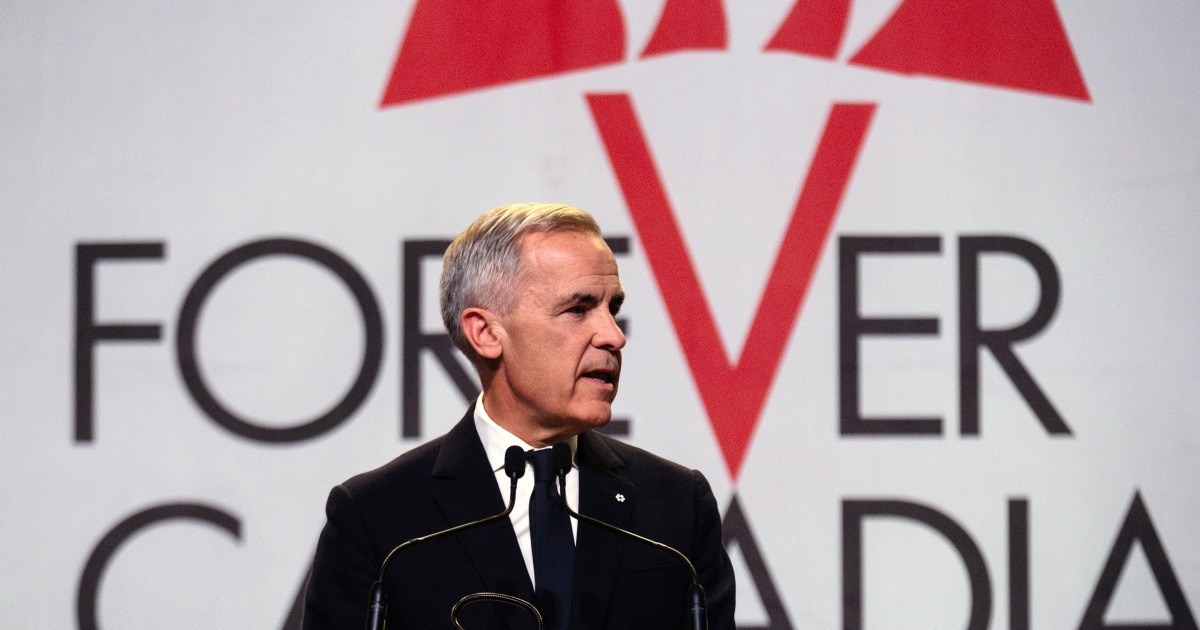
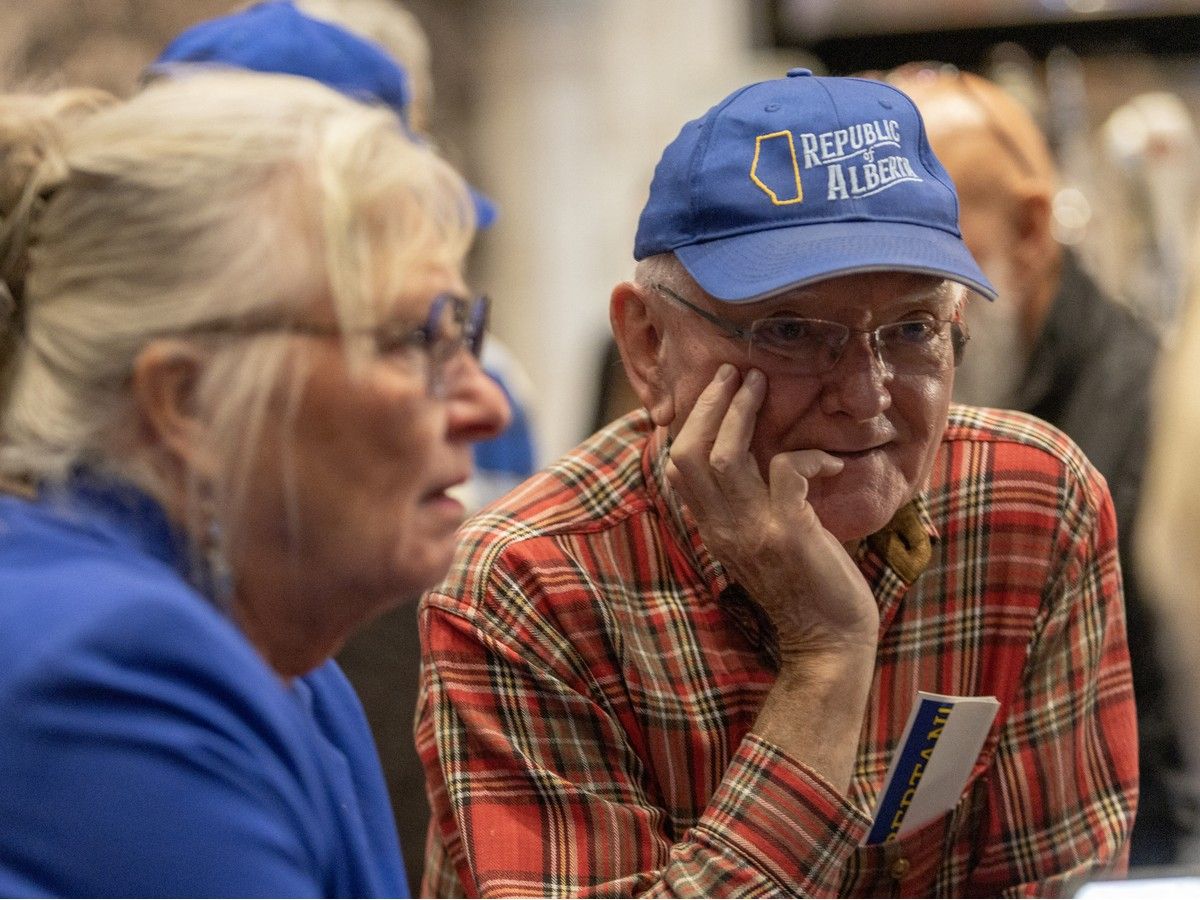
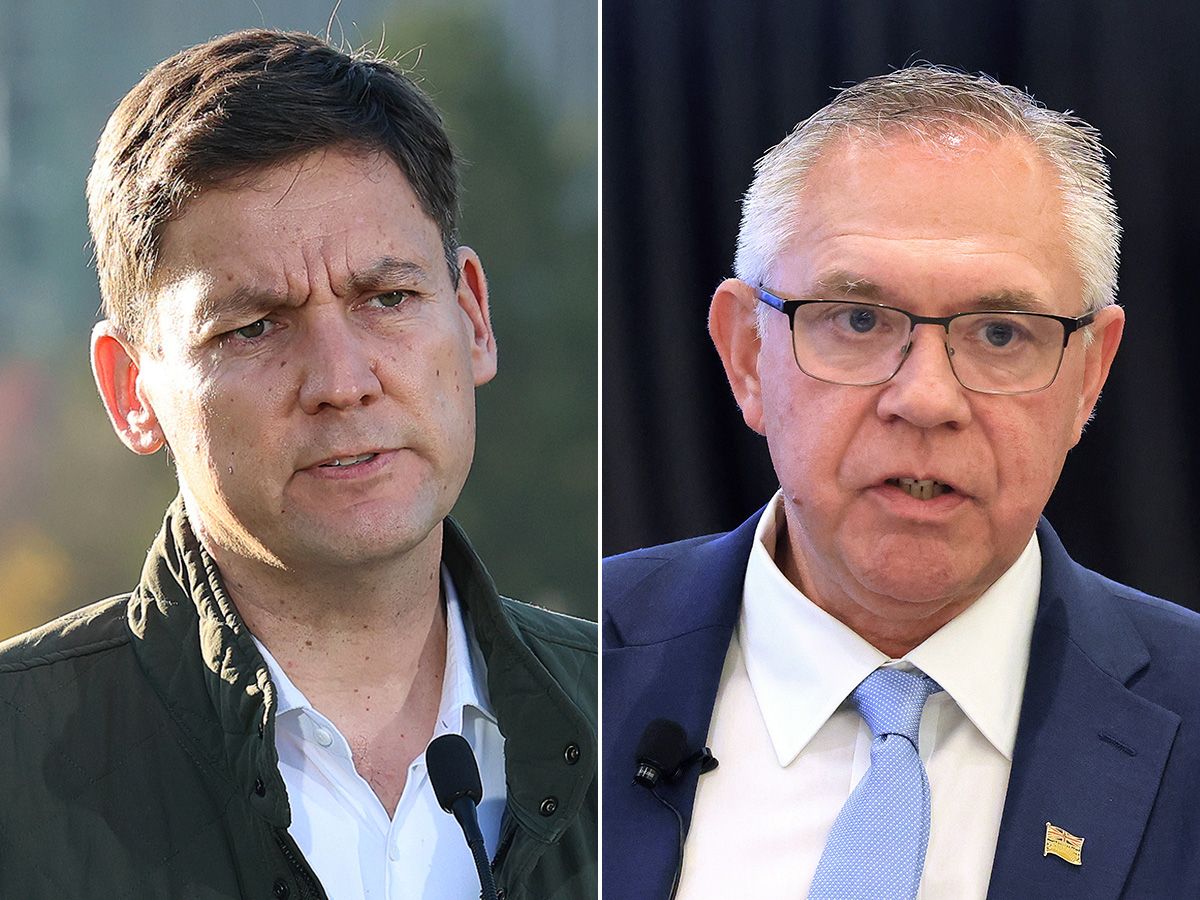
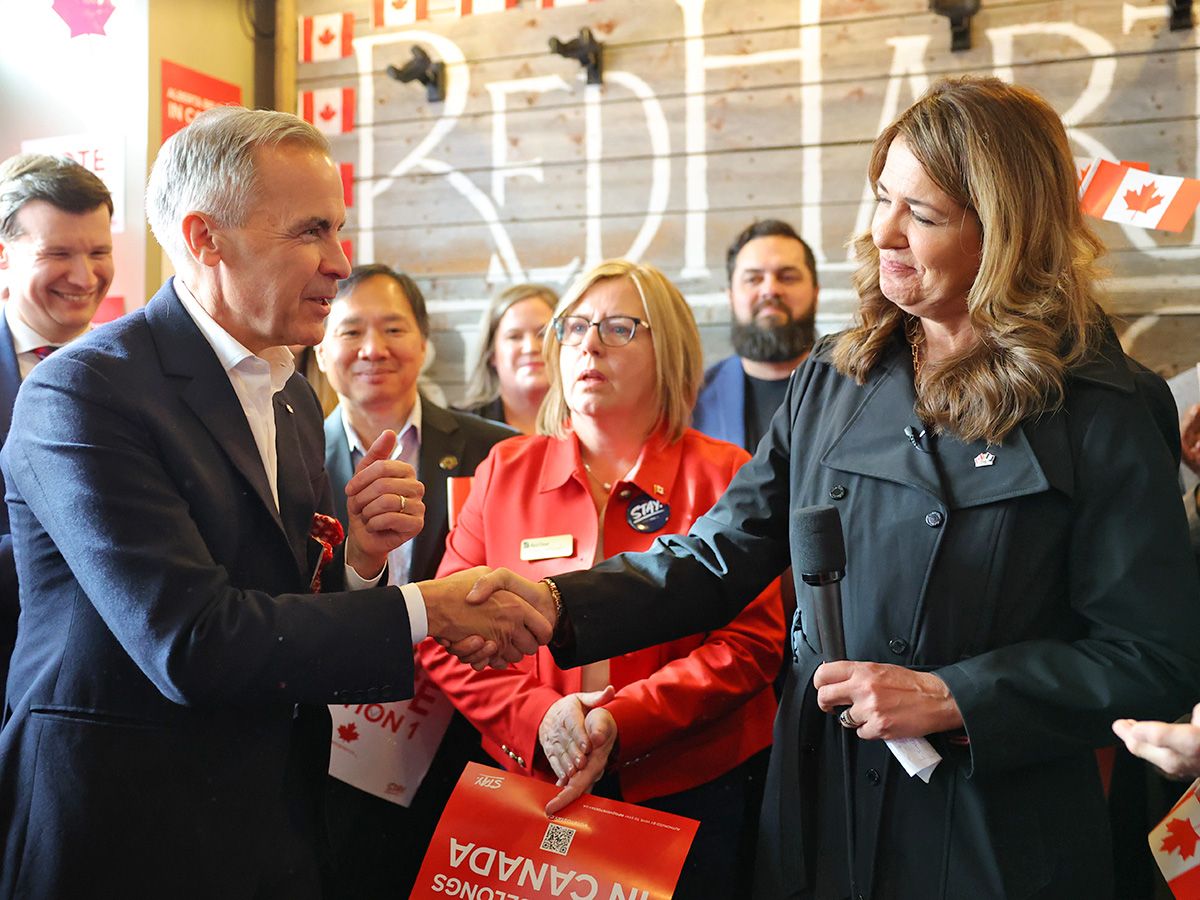
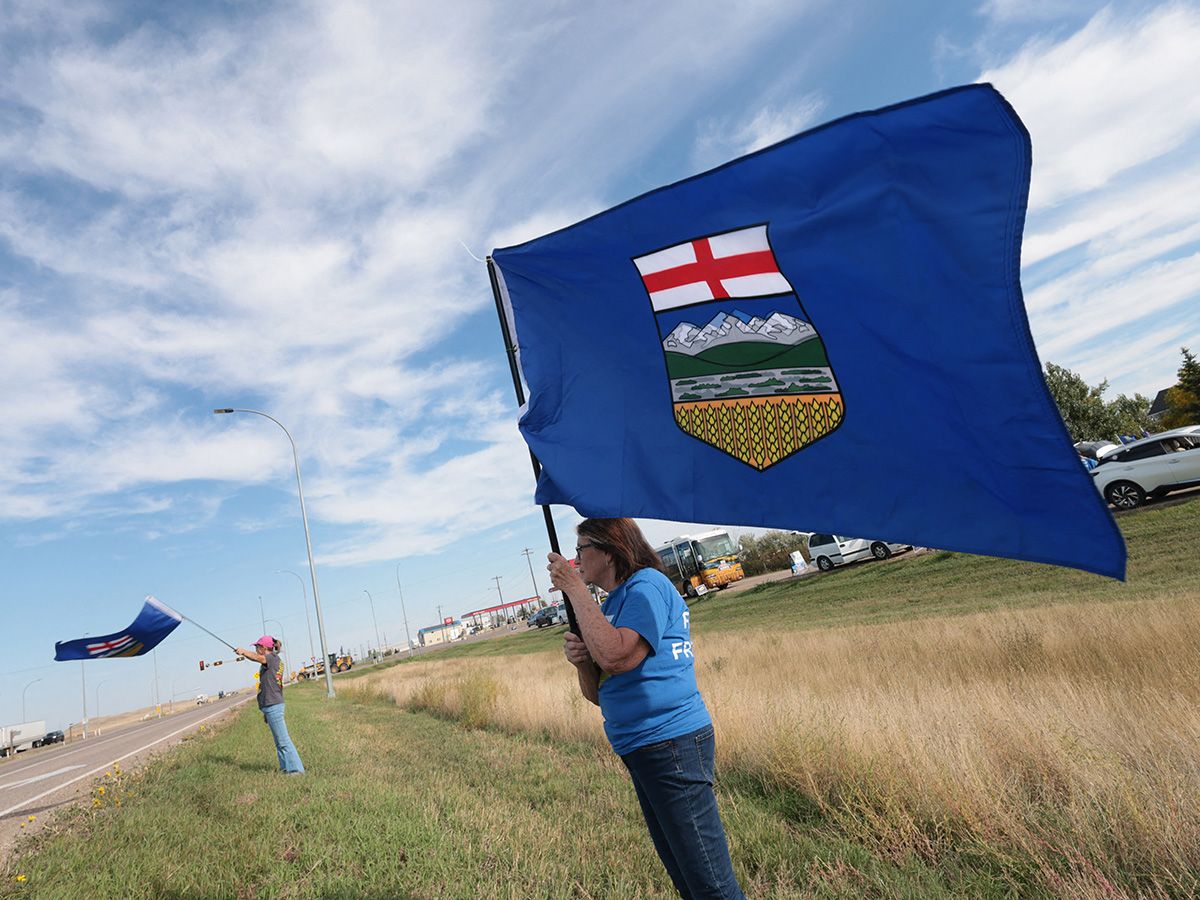
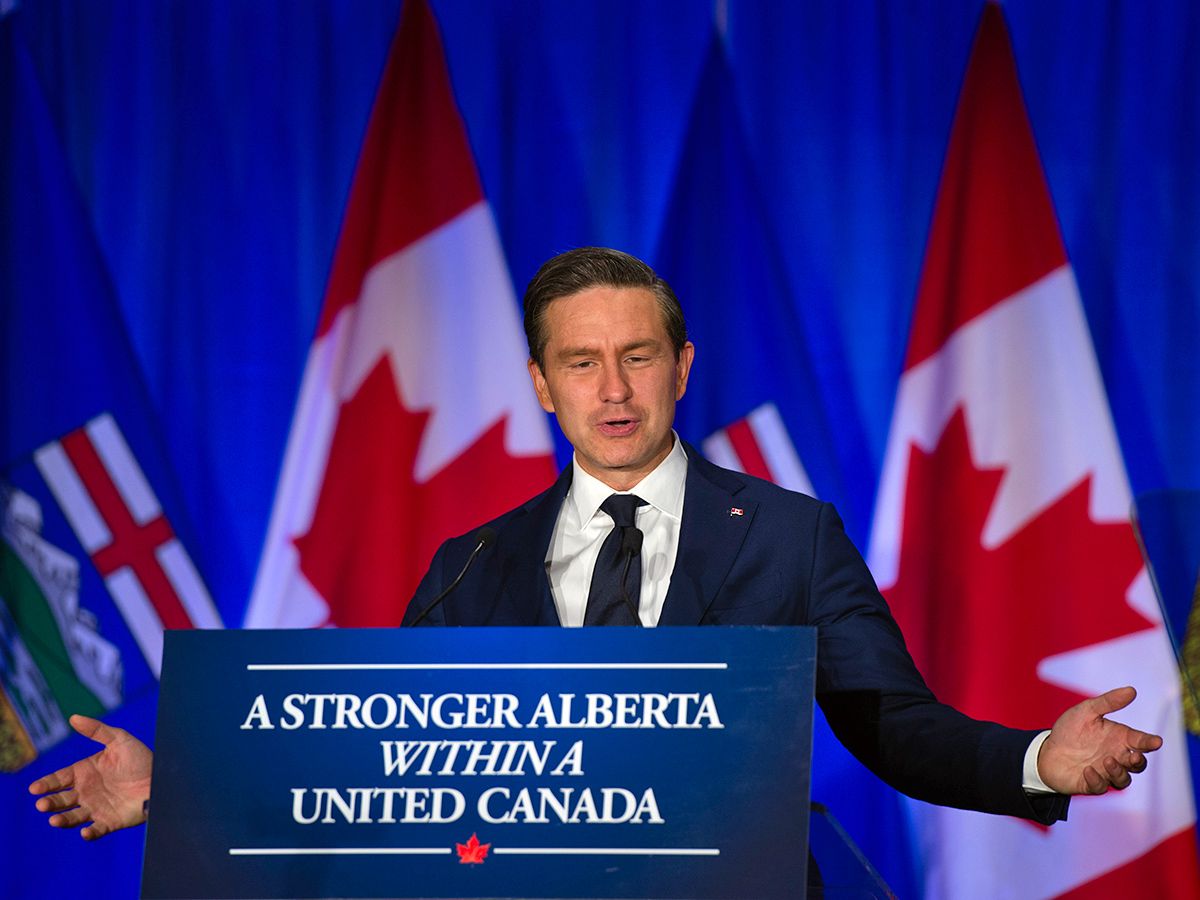
Photo via National Post

Danielle Smith makes plea to separatists in televised speech, vows no more secession referendums

Read the original at National Post ↗
Cite

Snyder, J. (2026, October 21). Danielle Smith makes plea to separatists in televised speech, vows no more secession referendums. National Post. https://nationalpost.com/news/danielle-smith-referendum-speech

Dated from the outlet's own feed. Check the original for its byline.

National Post · collected 2026-10-21 · by Jesse Snyder

Quick Summary

No summary of this article yet; the story summary below covers the event.
See how they differ ↓

AI analysis

Story summary

On October 19, 2026, Albertans voted in a referendum that included ten questions, primarily focusing on immigration and constitutional issues. The last question asked if the Government of Alberta should commence legal steps to hold a second binding referendum on separation from Canada. Voting began with advance polls on October 13 at 311 polling stations.

The results released later showed that three-quarters of Albertans voted against pursuing separation, with strong support for remaining in Canada. However, there was a noticeable rural-urban divide, where questions pertaining to immigration and constitutional changes garnered more support from rural areas compared to urban centers like Calgary and Edmonton.

Premier Danielle Smith's request for "strong mandates" on the nine ballot questions did not materialize as expected, with most provincial ridings rejecting many of the proposed measures. This has left her government hesitant about swift action despite winning majorities in some areas related to immigration policies.

Written for “Alberta Referendum Results” on 2026-11-20, grounded in this article and the 104 other(s) covering the same event.

How they differ

19 outlets covered “Alberta Referendum Results”.

What each outlet says

One AI summary per outlet of its latest article on this story, written from that article alone and checked against it. Open the article for the outlet's own words.

National PostThis outlet25 Oct

This article compiles letters discussing Alberta's recent referendum on sovereignty. Writers express mixed views: while some see it as a positive development that may prompt federal attention to Western Canada, others fear it could embolden separatist movements elsewhere, like Quebec. One letter criticizes U.S. Ambassador Pete Hoekstra for lecturing Canadian politicians about interfering in American politics, citing…

Letters: The good and bad of Alberta’s vote →8 articles from National Post on this story
Toronto Star23 Oct

A union representative from Cargill’s beef processing plant near Calgary warns of potential labour shortages if recent Alberta referendum proposals limiting access to or charging for provincially funded services based on immigration status are implemented. With 98% of polls reporting, the referendum narrowly passed with slim majority support for these changes, despite Premier Danielle Smith's government arguing that…

Advocates flag contributions, not costs, of newcomers in Alberta referendum aftermath →30 articles from Toronto Star on this story
Global News23 Oct

Following Alberta’s referendum where a majority voted for policies limiting access to provincially funded services based on immigration status, union representatives are highlighting the contributions of immigrant workers rather than focusing on costs. Faduma Ahmed from the United Food and Commercial Workers Local 401 at Cargill’s abattoir in High River emphasized that these workers, many of whom hold temporary…

Advocates flag contributions, not costs, of newcomers in Alberta referendum aftermath →14 articles from Global News on this story
The Globe and Mail23 Oct

Danielle Smith, Alberta’s Premier, faced mixed results from Monday’s provincial referendum regarding immigration control and constitutional amendments. While proposals related to immigration received narrow majorities between 52% and 55%, those for constitutional changes fell short at below 50%. The proposal for proof-of-citizenship requirements garnered the highest support with 58%. These outcomes highlight a…

Mixed results on Alberta referendum questions highlight urban-rural divide →14 articles from The Globe and Mail on this story
CBC27 Oct

Alberta's recent referendum saw most provincial ridings reject Danielle Smith’s ballot questions, despite her seeking strong mandates for her proposals. Of the nine questions, seven would have lost in a riding-by-riding contest, with only Questions 1 and 5 receiving majority support. Edmonton and Calgary showed particular opposition to restricting services for temporary residents, while rural areas largely supported…

Nopes to the nine? Blue walls? Five takeaways from Alberta's referendum results →12 articles from CBC on this story
Euronews21 Oct

Alberta voters overwhelmingly rejected starting the process toward separation from Canada in a recent referendum, with about 75% supporting unity. This outcome gives Prime Minister Mark Carney a boost as he pushes for national unity amid US President Donald Trump’s trade war and annexation threats, which have rallied Canadians around their flag. Edmonton voter Shawn Campbell explained his vote: “It sends a message…

Alberta’s “no” to separation gives Carney a boost as Trump pressure unites Canadians →4 articles from Euronews on this story
Show 13 more outlets
BBC20 Oct

Albertans have voted overwhelmingly to stay part of Canada in a recent referendum, with over two-thirds of voters choosing unity despite calls for separation from some groups. Prime Minister Mark Carney celebrated the outcome as a victory for national unity, while provincial leader Danielle Smith acknowledged the results and suggested a path forward. Proponents of independence had argued that Alberta’s economic…

Alberta votes overwhelmingly to remain part of Canada →3 articles from BBC on this story
CBS News20 Oct

Voters in Alberta rejected a proposal to start the process toward independence from Canada, with 76% choosing to remain part of the country and only 23% supporting the path towards separation. The referendum was held due to tensions between Alberta and the Canadian federal government over issues like oil regulations and trade policies. Despite some support for separatism, particularly among conservatives who feel…

Voters reject separation of Alberta from Canada in referendum →2 articles from CBS News on this story
Al Jazeera20 Oct

In Alberta's first-ever independence referendum on Monday, 76% of voters chose to remain part of Canada, with results showing an overwhelming support for staying within the country. This outcome is seen as a significant victory for Canadian Prime Minister Mark Carney, who campaigned against separation, while disappointing those advocating for Alberta’s independence due to long-standing grievances with Ottawa. The…

Alberta rejects separation referendum: What’s next for Canadian province? →2 articles from Al Jazeera on this story
The Guardian20 Oct

Alberta voters rejected a proposal to initiate a process toward independence from Canada, with CBC projecting that about 76% of votes supported remaining in Canada while only 23% favored beginning the separation process. With over a million votes counted early Tuesday morning and nearly a third of ballots tallied, this outcome marks a significant victory for Canadian unity and Prime Minister Mark Carney. The ballot…

Alberta voters reject plan for referendum to leave Canada, CBC projects →2 articles from The Guardian on this story
The Straits Times20 Oct

On October 19, Canada awaited results from a divisive independence vote in Alberta, with less than one-quarter of voters reportedly supporting separation according to polls. Mitch Sylvestre, leader of the separatist movement, remained optimistic despite low polling numbers, stating his goal was to ignite provincial spirit regardless of initial outcomes. With 3.1 million eligible voters and 1.4 million advance…

Canada awaits result in Alberta independence vote →2 articles from The Straits Times on this story
Dawn19 Oct

Alberta is holding a non-binding referendum on Monday where residents will vote on ten questions related to separation from Canada and provincial governance. Premier Danielle Smith announced this after months of campaigning by separatists who argue that Alberta's wealth subsidizes other parts of the country and hinders its economy. The final question asks if Albertans want to remain in Canada or start a process for…

What does Alberta's referendum on separation from Canada mean? →2 articles from Dawn on this story
The Independent20 Oct

Voters in Alberta, Canada's oil-rich province, decisively rejected a move toward independence, with CBC projecting that about 76 percent of voters supported remaining within Canada, while only 23 percent backed the process towards separation. More than one million votes were counted from over 1.35 million cast, representing 43 percent of eligible voters. The vote reflects deep-seated tensions between Alberta and the…

Alberta rejects independence and votes to remain in Canada, CBC projects →2 articles from The Independent on this story
NPR20 Oct

In Alberta’s recent referendum, voters overwhelmingly rejected proposals toward provincial independence with 76% supporting remaining part of Canada and only 23% backing the process for potential separation. The vote came as tensions rose due to U.S. President Donald Trump's trade policies and annexation threats. Despite strong sentiment against Ottawa in some circles, a majority of Albertans chose unity, reflecting…

Alberta voters reject a move toward independence in referendum backing Canadian unity →2 articles from NPR on this story
South China Morning Post20 Oct

Alberta voters rejected the idea of separating from Canada in an overwhelming referendum, with 77% supporting staying within the country while 23% favored initiating a path toward separation. Early results provided a significant boost for Canadian Prime Minister Mark Carney's efforts to maintain national unity amid tensions with the US over trade and annexation threats.

Alberta voters choose Canada over independence in boost for Carney →2 articles from South China Morning Post on this story
Washington Examiner18 Oct

Alberta residents are set to vote in a referendum on October 19 that could lead to discussions about the province's potential independence from Canada. The ballot does not directly decide Alberta’s separation but asks if the provincial government should initiate the necessary steps for a future binding referendum on independence. This vote has significant implications for Canada's political structure and its…

What to know about the Alberta referendum on leaving Canada →
Fox News19 Oct

Alberta residents started voting on Monday in a non-binding referendum to decide if the western-Canadian province should separate from Canada. The poll involves about three million eligible voters amid tensions following recent military incidents in Alberta. Despite a majority of decided voters favoring remaining in Canada according to polls, nearly 30% support initiating the process for a binding referendum on…

Alberta holds non-binding separation vote as independence fight grips Canada →
New York Post20 Oct

Alberta residents voted to remain part of Canada in a recent referendum, with 76% supporting unity as initial results showed. The nonbinding vote, announced by Premier Danielle Smith in May, came amid growing calls for separation from a small but vocal group advocating for Alberta’s independence due to perceived economic injustices and bureaucratic impediments from the federal government. Prime Minister Mark Carney…

Alberta votes to remain part of Canada, rejects independence →
Daily Mail20 Oct

Alberta, Canada’s oil-rich province, voted overwhelmingly against separation from the country in a recent referendum, with 76% of voters supporting unity. Despite this outcome, Albertans also approved measures to tighten immigration laws and restrict access to social benefits for non-permanent residents. The vote reflects ongoing tensions between Alberta and the federal government over environmental policies and…

Oil-rich Canadian province of Alberta votes to remain part of the country... but demands immigration is slashed and voter ID laws are tightened →

Where they agree and split

Agreed

AI · cited, from two or more outlets

  • The referendum vote was not a direct decision on independence but would have set Alberta on a path toward a future vote on separation if passed.35
  • More than two-thirds of voters in the province chose to remain part of Canada rather than pushing for independence according to unofficial results from Elections Alberta.45
Quoted from the coverage (4)

With more than 1 million votes counted, about 76% supported remaining in Canada, compared with 23% who backed beginning a process that could lead to separation.

8 outlets

Prime Minister Mark Carney said on Tuesday that "it's a great result for Canada" and he is "thrilled that Albertans have chosen unity".

8 outlets

Alberta Premier Danielle Smith, a conservative, said she voted against independence but called the referendum to settle an issue that has divided the province.

6 outlets

Carney, who grew up in Alberta, has called the referendum “a dangerous bluff” as US President Donald Trump imposes punishing tariffs and levels annexation threats aimed – the prime minister says – at breaking Canadian resolve.

6 outlets

Disputed

Picked by our model, which is sometimes wrong

  • Separatist leaders vow to continue fighting for separation despite the referendum results, whereas Prime Minister Carney celebrates unity.45

Framing

How the first headlines put it

  • The Toronto Star frames the event as a timeline of events leading up to the vote, while CBS News presents it as a decisive rejection of separation.13
  • CBC highlights the rural-urban divide on additional referendum questions, whereas The Globe and Mail focuses on presenting the results of those nine other questions.67
The full story: what happened, how it changed, and all 105 articles →

Compared with similar articles

This article reads unscored and hedges 14% of its claims. Each row says how that neighbour differs.
Global News
Hedges 1 of 65 claims Outlet record 63/100
The Globe and Mail
Hedges 0 of 46 claims Outlet record 51/100
The Globe and Mail
Leans right Hedges 1 of 51 claims Outlet record 51/100
“The articles describe different events occurring on distinct days: Article A covers a rally in Red Deer on October 17th, while Article B discusses Premier Smith's post-referendum speech on October 21st.”
NBC News
Leans right Hedges 0 of 35 claims Outlet record 78/100
“Article A describes Carney's final appeal before the referendum, while Article B reports on Smith's response after the referendum results.”
Toronto Star
Leans right Hedges 18 of 130 claims Outlet record 64/100
“The articles describe different events: one focuses on Dennis Modry's vision for Alberta's economic independence and his discussions with the Trump Administration, while the other covers Danielle Smith's televised speech about mending relations with Canada after a secession referendum.”
Global News
Hedges 6 of 31 claims Outlet record 63/100
“Article A describes the context and expected outcome of an upcoming referendum, while Article B reports on Premier Danielle Smith's reaction and comments following the actual voting results from the previous day.”
National Post
Hedges 6 of 36 claims Outlet record 60/100
“The articles describe different points in time and distinct events related to the referendum: Article A covers the results of Monday's vote, while Article B reports on the premier's address the following day.”
Toronto Star
Leans right Hedges 0 of 4 claims Outlet record 64/100
CBC News
Centre Hedges 0 of 4 claims Outlet record 72/100
“Article A describes Premier Smith's televised speech and plea following a referendum vote, while Article B discusses broader political challenges facing Danielle Smith and her party.”
Toronto Star
Outlet record 64/100
“Article A describes Premier Danielle Smith's speech after the referendum, while Article B refers to Graeme MacKay's cartoon about Alberta voters rejecting separation from Canada.”

Story

Alberta Referendum Results
Politics · 105 article(s) covering the same event. Compare every outlet's account →
How this article was measured signals, leaning charts, publisher record, byline, topics and claims

Signals How these are calculated →

Claims extracted
28
sentences that state something as happening or true
Uncertain
14%
4 of 28 hedged ("reportedly", "may", "according to")
Leaning
withheld
no quote in the article backed the model's score
Publisher signals
60/100
National Post's corrections and hedging, across everything collected from it. Not a measure of accuracy.
Outlets on this story
105
Politics
Same framing elsewhere
1
articles that frame the event the way this one does
Analyzed 2026-10-21 · how these are computed

How this is being covered How these are calculated →

Article leaning vs. publisher reliability
Source leaning vs. consistency

Publisher

National Post · 1242 article(s) · 2 correction(s) detected
Running correction rate · 2 correction(s)

Who wrote this

Jesse Snyder
7 article(s) here · 1 carrying a prediction
British Columbia voters headed to the polls on Saturday, closing out an unusually turbulent election period that could see the Conservative party take power in a surprising upset, potentially unseating the province’s NDP premier following his highly unpopular snap election call.
“And I want to make it clear tonight that for as long as I am premier, I will honour this mandate from Albertans and will not be holding another referendum on this issue,” she said.
A collection of other political hangers-on, including Calgary Mayor Jeromy Farkas and Liberal MP Matt Jeneroux, also attended the event.
In his speech, called “the anarcho-capitalist case for Alberta,” he advocates for a system of government by the same name, which would privatize all aspects of society.
“Separation will not solve those problems.”
Public support for the Liberal government had hit fresh lows, and a decade of activist policymaking under the former prime minister had reinforced the province’s longtime skepticism that Ottawa could properly represent its interests.
2026-09-15 · assertive framing · Alberta’s separatists have a Mark Carney problem
“The numbers make it clear that Canada’s founders and entrepreneurs are leaving in droves — and they are taking the future value they will generate with them,” said Lucy Hargreaves, co-founder of the business advocacy group Build Canada, who issued a call to action in the form of a LinkedIn essay that triggered an online conversation about the trend.
Also by Jesse Snyder
Nothing else under this byline is closely related to this article, so these are simply their most recent.
All 7 articles by Jesse Snyder →

Topics

Alberta Albertans Canada Confederation Ottawa

Subjects

Alberta GPE · 10× Albertans NORP · 5× Canada GPE · 5× Ottawa ORG · 5× Smith PERSON · 4× Confederation ORG · 1× Danielle Smith PERSON · 1× Justin Trudeau PERSON · 1× Liberal-NDP ORG · 1× Mark Carney PERSON · 1×

Narrative

“Although results are still coming in, it appears that Albertans have directed the provincial government to take greater control over immigration so we can moderate the extraordinary population growth our province has experienced and prioritize jobs and opportunities for Albertans and Canadians,” Smith said.
framing: assertive · carried by 1 article(s) · first seen 2026-10-21
“And I want to make it clear tonight that for as long as I am premier, I will honour this mandate from Albertans and will not be holding another referendum on this issue,” she said.

Claims (28 extracted, 4 hedged)

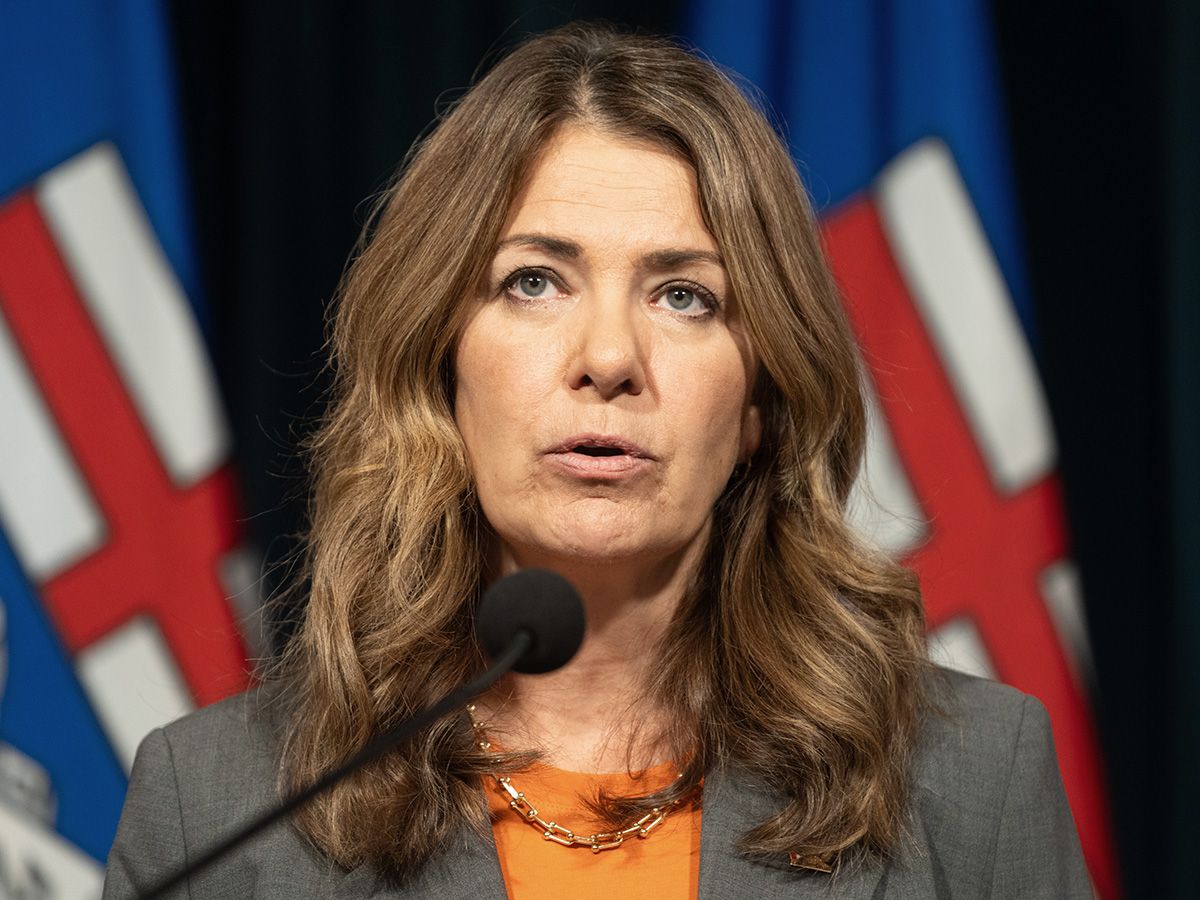
In a province-wide address on Tuesday evening, Alberta Premier Danielle Smith vowed not to hold another referendum on the secession issue, while also urging separatist voters to “believe and hope in Canada again” following Monday’s referendum results. asserted
Smith → vow → results
In her first public remarks since referendum polls closed, the premier again sought to elevate the various deals and major projects her government has signed with Prime Minister Mark Carney in an effort to mend Alberta’s fractured relationship with Ottawa. asserted
government → close → Ottawa
Her comments came one day after Albertans voted with a decisive three-to-one margin to reject a proposal to hold a second legally-binding vote on whether to leave Confederation. asserted
Albertans → come → Confederation
“And I want to make it clear tonight that for as long as I am premier, I will honour this mandate from Albertans and will not be holding another referendum on this issue,” she said. asserted
she → want → issue
“It is time to move forward together as a strong and free Alberta within a united Canada.” asserted
It → move → Canada
As of 7:00 p.m. MT on Tuesday, more than 1.95 million votes had been counted on the referendum’s 10th question, which asked whether Alberta should stay in Canada (Option 1) or hold a second vote on the matter (Option 2). asserted
Alberta → count → matter
Seventy-five per cent voted to stay in Canada while 25 per cent opted for the second option, with 90 per cent of voting stations reporting results. asserted
cent → vote → results
Smith, who could now face an internal political reckoning from the very base of pro-independence supporters who helped get her elected, also made a plea to the one out of every four Albertans who supported Option 2. uncertain
who → face → Option
“You love this province, and you want your family and neighbours to have every opportunity to succeed,” she said. asserted
she → love → opportunity
“Many of you view Ottawa as having threatened your freedoms and blocked your path to prosperity. asserted
Many → view → prosperity
I acknowledge the legitimate frustrations you’ve felt — most especially during the Justin Trudeau Liberal-NDP coalition years.” asserted
you → acknowledge → years
The premier based her optimism on a claim that the country has “changed significantly” in the last 1.5 years, evident in Ottawa’s newfound support for expanding oil and gas exports and its recent decision to desginate Alberta’s proposed West Coast oil pipeline as being in the national interest. uncertain
country → base → interest
In recent months, Smith and Carney have announced various major projects like oil project, a proposed passenger rail line between Edmonton and Calgary, and a recent $8-billion commitment toward four military bases in the provinces. asserted
Smith → announce → provinces
“So tonight I want to invite every Albertan who may still feel hopeless or frustrated with the past direction of our country, to believe and hope in Canada again,” Smith said. uncertain
Smith → want → Canada
“We are reversing course away from a lost decade and towards a bright future with Alberta’s prosperity at its centre.” asserted
We → reverse → centre
The premier called for patience among Alberta’s most disillusioned voters, who have for decades raised concerns over Ottawa’s mistreatment of the province. asserted
who → call → province
Many Albertans have long accused the federal government of choking off personal freedoms, overstepping its jurisdictional boundaries and enacting restrictive environmental policies that stifled oil and gas sector growth, and Smith suggested that frustrations over those matters won’t dissapear overnight. uncertain
frustrations → accuse → matters
“I am well aware that not every grievance Alberta has with Ottawa has been resolved,” she said. asserted
she → have → Ottawa
But I am also convinced that the federal government is no longer targeting and trying to phase out and eliminate Alberta’s largest economic sectors as they attempted to do under the previous prime minister (Trudeau).” asserted
they → target → minister
The premier also commented on the results from the referendum’s other nine questions, for which Albertans seemed mostly poised to support. asserted
Albertans → comment → which
Five of the 10 referendum questions focused on immigration rates, and proposed giving Alberta more control over immigration and limiting access to some public services for non-permanent residents, among other things. asserted
Five → focus → things
Voters seemed likely to support each of those five questions as of 7:00 p.m. MT, as well as supporting other constitutional questions proposing to, for example, work with provinces to abolish the federal Senate. asserted
Voters → seem → Senate
“Although results are still coming in, it appears that Albertans have directed the provincial government to take greater control over immigration so we can moderate the extraordinary population growth our province has experienced and prioritize jobs and opportunities for Albertans and Canadians,” Smith said. asserted
Smith → come → Albertans
“They have given us direction to ensure temporary residents pay a portion of the cost of public services used by themselves and their families. asserted
residents → give → themselves
They have spoken in favour of requiring proof of Canadian citizenship in order to vote.” asserted
They → speak → citizenship
She said her UCP government would “continue to boldly assert our province’s autonomy” through provincial rights guaranteed to the provinces under the constitution. asserted
government → say → constitution
“We will use every legal and political tool at our disposal to protect and advance the interests of Albertans,” she said. asserted
she → use → Albertans
“And when Ottawa interferes with those rights, we will be unrelenting in our response.” asserted
we → interfere → response
Give feedback · no sign-in needed

No sign-in needed for now. Your note is sent without a name, so it cannot be answered.

History Support