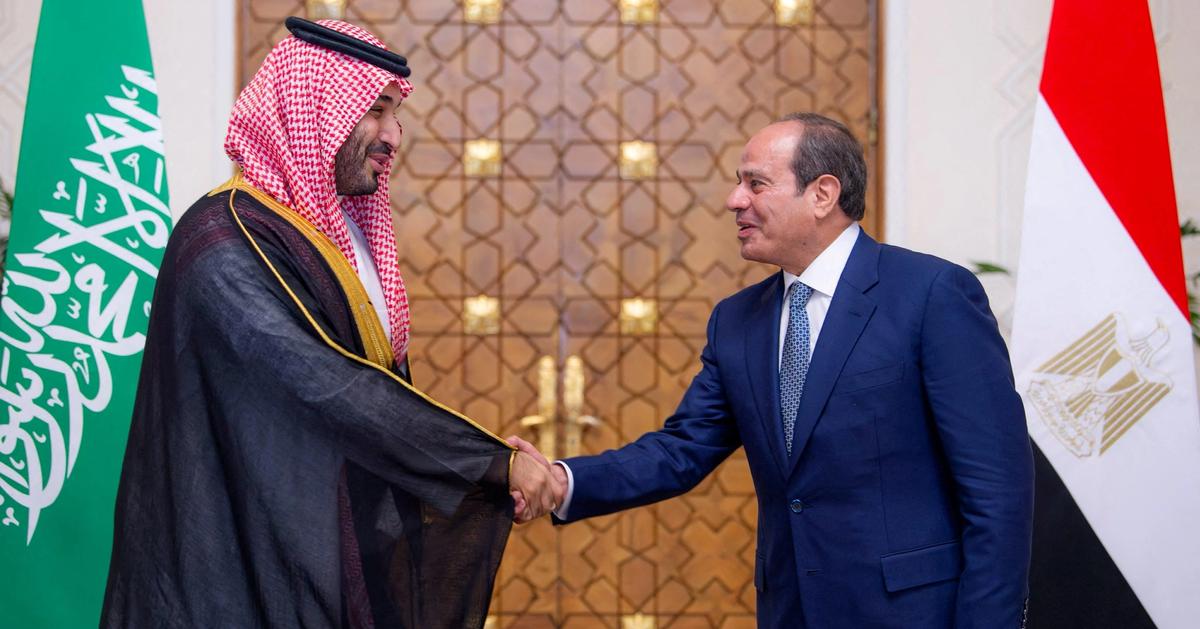
Photo via Dawn

Makkah pact clarity

Read the original at Dawn ↗
Cite

Makkah pact clarity. (2026, October 22). Dawn. https://www.dawn.com/news/2038882/makkah-pact-clarity

Dated from the outlet's own feed. Check the original for its byline.

Dawn · collected 2026-10-22 · by Editorial

Quick Summary

The Makkah Joint Defence Agreement between Pakistan, Saudi Arabia, and Turkey has been clarified with the release of its text, revealing that it is primarily a defensive pact without provisions for offensive actions. The agreement includes commitments to joint defence production, intelligence sharing, and military interoperability but does not obligate any country to participate in ongoing conflicts like the Saudi-Houthi war in Yemen. Turkish officials emphasized that their involvement would be limited to self-defense measures only. Meanwhile, Pakistan is mediating between Iran and other regional powers to prevent further escalation, while concerns remain about potential aggressive actions from the United States and Israel towards Iran.
Written by AI on 2026-10-22, from this article's own text only (the story summary below draws on all the coverage).
See how they differ ↓

AI analysis

Story summary

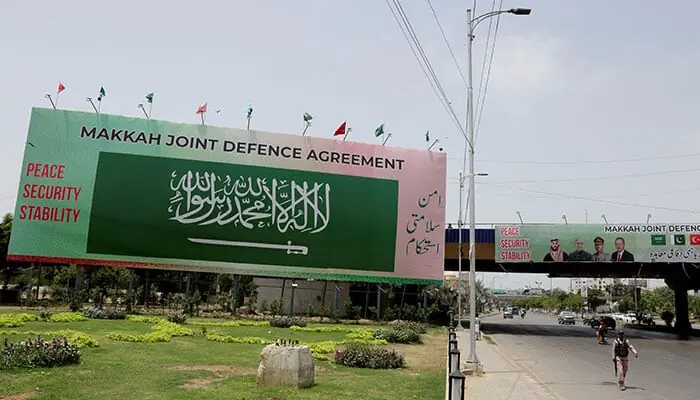
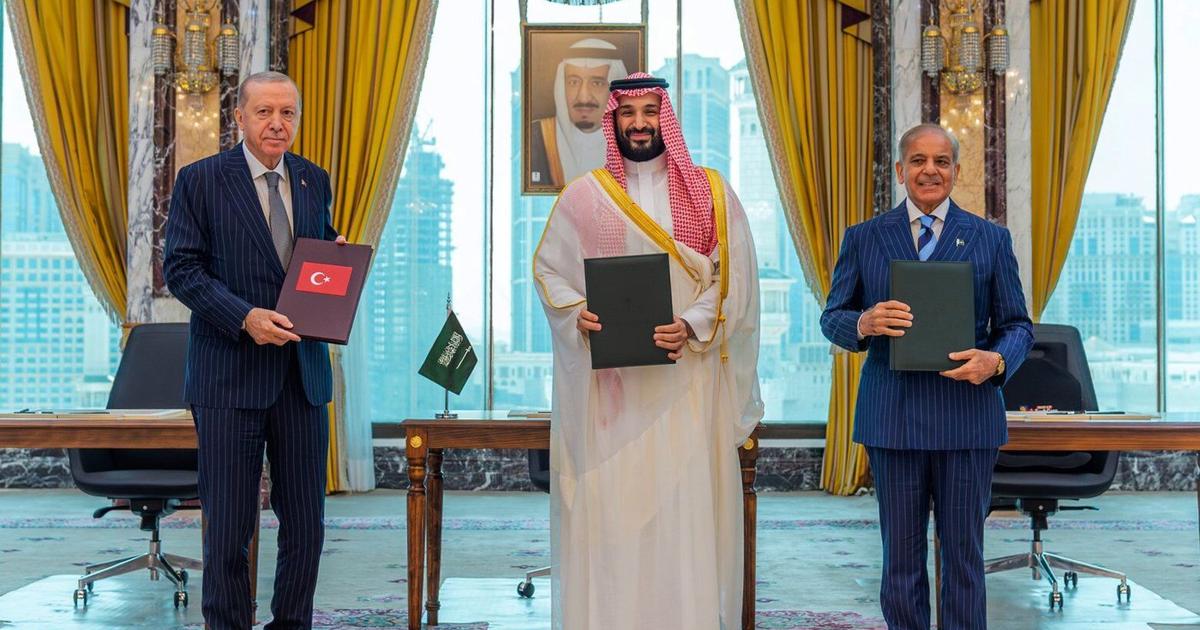
Turkish President Recep Tayyip Erdogan, Saudi Crown Prince Mohammed bin Salman, and Pakistani Prime Minister Shehbaz Sharif signed the Makkah Joint Defence Agreement in August 2025, aiming to bolster cooperation among Pakistan, Saudi Arabia, and Turkey as regional powers amid increasing uncertainty due to conflicts with Iran. The agreement includes provisions for collective defense against external attacks, mirroring NATO’s Article 5, but explicitly excludes offensive actions.

In addition to the Makkah pact, Pakistan has also signed multiple other defense agreements since September 2025, including the Strategic Mutual Defence Agreement (SMDA) with Saudi Arabia and a separate agreement with Kuwait. The Badr Memorandum of Understanding was signed by Pakistan, Turkey, Qatar, and Indonesia in Doha on October 17, focusing on joint defense production, technology transfer, research, and development to reduce reliance on Western arms sales.

These agreements aim to enhance regional security and strategic autonomy for the participating nations while fostering industrial cooperation and interoperability among their armed forces. The text of the Makkah Joint Defence Agreement emphasizes defensive measures and excludes commitments to offensive operations or sending troops abroad, addressing concerns about involvement in conflicts like the Saudi-Houthi war in Yemen.

The proliferation of these defense pacts reflects a broader trend in the Middle East toward diversifying security partnerships amid growing doubts about traditional US-led arrangements. Despite this fragmentation, there is an emphasis on building mutual defense capabilities without necessarily aligning with existing blocs or committing to aggressive military engagements beyond self-defense.

Written for “Makkah Defence Alliance Pact” on 2026-11-21, grounded in this article and the 7 other(s) covering the same event.

How they differ

4 outlets covered “Makkah Defence Alliance Pact”.

What each outlet says

One AI summary per outlet of its latest article on this story, written from that article alone and checked against it. Open the article for the outlet's own words.

DawnThis outlet22 Oct

The Makkah Joint Defence Agreement between Pakistan, Saudi Arabia, and Turkey has been clarified with the release of its text, revealing that it is primarily a defensive pact without provisions for offensive actions. The agreement includes commitments to joint defence production, intelligence sharing, and military interoperability but does not obligate any country to participate in ongoing conflicts like the…

Makkah pact clarity (this article)5 articles from Dawn on this story
Al Jazeera21 Oct

Qatar, Turkiye, Pakistan, and Indonesia signed a memorandum of understanding in Doha on Wednesday to deepen their defense industry cooperation. The agreement, named "Badr," aims to enhance joint production, technology transfers, and integrated supply chains among the four countries, reflecting regional efforts to diversify security partnerships due to ongoing tensions between the US-Israel alliance and Iran. Experts…

How Qatar, Turkiye, Pakistan and Indonesia are deepening defence ties →
Toronto Star21 Oct

Turkey, Saudi Arabia, and Pakistan signed a mutual defense agreement in Mecca aimed at bolstering regional security against threats like those posed by Iran-backed Houthi rebels in Yemen. Turkey has asked its parliament to ratify the pact, which mirrors NATO’s Article 5 by committing all three countries to view an armed attack on one as an attack on all. The deal involves increasing cooperation and defense…

How the Mecca defense agreement between Turkey, Pakistan and Saudi Arabia will work →
South China Morning Post27 Oct

Turkey, Pakistan, Qatar, and Indonesia have formed an alliance called the Badr defence pact, aiming to reduce dependence on Western arms and avoid associated political conditions. Signed in Doha on Wednesday, the memorandum of understanding outlines plans for these nations to collaborate on integrating their defense industries and supply chains.

Why are Turkey, Pakistan, Qatar and Indonesia joining forces? →

Where they agree and split

Framing

How the first headlines put it

Stated as fact3
The headlines (3)

Makkah alliance binds partners to decade-long pact Dawn · stated as fact

How Qatar, Turkiye, Pakistan and Indonesia are deepening defence ties Al Jazeera · stated as fact

How the Mecca defense agreement between Turkey, Pakistan and Saudi Arabia will work Toronto Star · stated as fact

The full story: what happened, how it changed, and all 8 articles →

Compared with similar articles

This article reads leans strongly left and hedges 7% of its claims. Each row says how that neighbour differs.
Dawn
Hedges 5 of 37 claims Outlet record 66/100
Al Jazeera
Hedges 1 of 21 claims Outlet record 60/100
“The articles discuss different topics related to defense agreements and authorizations but do not describe the same specific incident.”
Al Jazeera
Hedges 0 of 5 claims Outlet record 60/100
“Article A reports el-Sisi's vow to defend Saudi Arabia from Houthi attacks, while Article B discusses the details and clarity of a trilateral defense agreement. These are different events occurring at distinct times.”
Toronto Star
Hedges 1 of 42 claims Outlet record 65/100
The Guardian
Leans left further right than this Hedges 2 of 20 claims Outlet record 64/100
“The articles discuss different events related to defense pacts and warnings against military strikes on Iran, occurring at different times and places.”
Dawn
Hedges 1 of 10 claims Outlet record 66/100
“Article A discusses the clarity provided by the text of a trilateral defence agreement between Pakistan, Saudi Arabia, and Turkey, while Article B reports on a joint statement from foreign ministers discussing regional conflicts and diplomatic efforts in Istanbul.”
Semafor
Hedges 3 of 5 claims Outlet record 64/100
“Article A discusses the clarity provided by the text of the Makkah Joint Defence Agreement, while Article B reports on a separate meeting between officials from the pact countries and Iranian leaders to ease regional tensions.”
Al Jazeera
Hedges 3 of 24 claims Outlet record 60/100
“The articles describe different events: one discusses the clarity provided by the text of the Makkah Joint Defence Agreement, while the other reports on a meeting in Tehran between officials from Pakistan, Saudi Arabia, and Turkey to discuss regional security issues.”
The Hindu
Hedges 0 of 2 claims Outlet record 78/100
“Article A discusses the release and clarification of the Makkah Joint Defence Agreement text, while Article B reports on a subsequent meeting involving Iran and the signatories to discuss cooperation.”
Semafor
Leans strongly right further right than this Hedges 0 of 5 claims Outlet record 64/100
“Article A describes Egypt's pledge to support Saudi Arabia in the Houthi conflict, while Article B discusses the details and clarity of a trilateral defense agreement between Pakistan, Saudi Arabia, and Turkey.”

Story

Makkah Defence Alliance Pact
Politics · 8 article(s) covering the same event. Compare every outlet's account →
How this article was measured signals, leaning charts, publisher record, byline, topics and claims

Signals How these are calculated →

Claims extracted
14
sentences that state something as happening or true
Uncertain
7%
1 of 14 hedged ("reportedly", "may", "according to")
Leaning
Leans strongly left
of the writing, not the subject · beta estimate
Publisher signals
66/100
Dawn's corrections and hedging, across everything collected from it. Not a measure of accuracy.
Outlets on this story
8
Politics
Same framing elsewhere
1
articles that frame the event the way this one does
Analyzed 2026-10-22 · how these are computed

How this is being covered How these are calculated →

Article leaning vs. publisher reliability
Source leaning vs. consistency

Publisher

Dawn · 3521 article(s) · 6 correction(s) detected
Running correction rate · 6 correction(s)

Who wrote this

No reporter is named on this article, beyond the feed's “Editorial”.

Topics

Iran Israel Pakistan Saudi Arabia Yemen

Subjects

Pakistan GPE · 4× Iran GPE · 3× Israel GPE · 3× Yemen GPE · 3× Iranian NORP · 2× Saudi Arabia GPE · 2× Tehran GPE · 2× Tel Aviv GPE · 2× Turkiye GPE · 2× Washington GPE · 2×

Narrative

The abrasive US war secretary — who is no proponent of peace and dialogue — was recently in Israel, while the Israeli prime minister, who will be fighting for his political survival in next week’s elections, has said he and President Donald Trump need to ‘eliminate’ the “Iranian regime”.
framing: assertive · carried by 1 article(s) · first seen 2026-10-22
While Article 2 says that an “externally originating armed attack” on any of the signatories will be considered an attack on all, triggering the right of self-defence under the UN Charter, the agreement is silent on offensive action.
2026-10-22 · Dawn
Makkah pact clarity · assertive framing

Claims (14 extracted, 1 hedged)

THERE had been much speculation about what exactly the trilateral Makkah Joint Defence Agreement entails, other than general commitments about the collective defence of Pakistan, Saudi Arabia, and Turkiye. asserted
Agreement → entail → Pakistan
While Article 2 says that an “externally originating armed attack” on any of the signatories will be considered an attack on all, triggering the right of self-defence under the UN Charter, the agreement is silent on offensive action. asserted
agreement → say → action
This should settle questions about the extent of involvement of the pact allies in the ongoing Saudi-Houthi war, and any future engagement. asserted
This → settle → war
That it is a purely defensive arrangement was also echoed by the Turkish foreign minister. asserted
is → echo → minister
He stressed it was not an “offensive agreement”, and ruled out sending his country’s troops to a foreign theatre. asserted
it → stress → theatre
Other salient features of the pact include joint defence production, intelligence sharing and the interoperability of forces. asserted
features → include → forces
While the defence of Saudi Arabia is important, Pakistan, Turkiye, and other regional states should continue efforts to find a negotiated solution to the Yemen conflict — both between the Saudis and Houthis and within Yemen. asserted
Pakistan → continue → Yemen
In a related development, Pakistan’s chief of defence forces was in Tehran on Tuesday to try and prevent further escalation on the war front. asserted
chief → relate → front
The message from Tehran is that the US should accept Iran’s seven-point proposal if talks are to restart. asserted
talks → accept → proposal
The abrasive US war secretary — who is no proponent of peace and dialogue — was recently in Israel, while the Israeli prime minister, who will be fighting for his political survival in next week’s elections, has said he and President Donald Trump need to ‘eliminate’ the “Iranian regime”. asserted
he → fight → regime
Even the sincerest effort to bring peace to the Gulf, Yemen, and the wider Middle East will come to naught if the US and Israel continue with their provocative behaviour. asserted
US → bring → behaviour
A strike on Iran after the Israeli and US elections would be a massive blunder, and if there are any mature advisers left in Washington, they should talk the US president out of making any such move, besides warning Tel Aviv against such arrogant action. asserted
they → be → action
Iran may be under pressure, but as the past several months have shown, it has the capacity to withstand considerable pain inflicted on it by the US and Israel. uncertain
it → show → US
Fresh aggression can kick off a firestorm that will be in no one’s control, hence it is best to abandon such reckless plans. asserted
it → kick → plans
Give feedback · no sign-in needed

No sign-in needed for now. Your note is sent without a name, so it cannot be answered.

History Support