Photo via Times of India

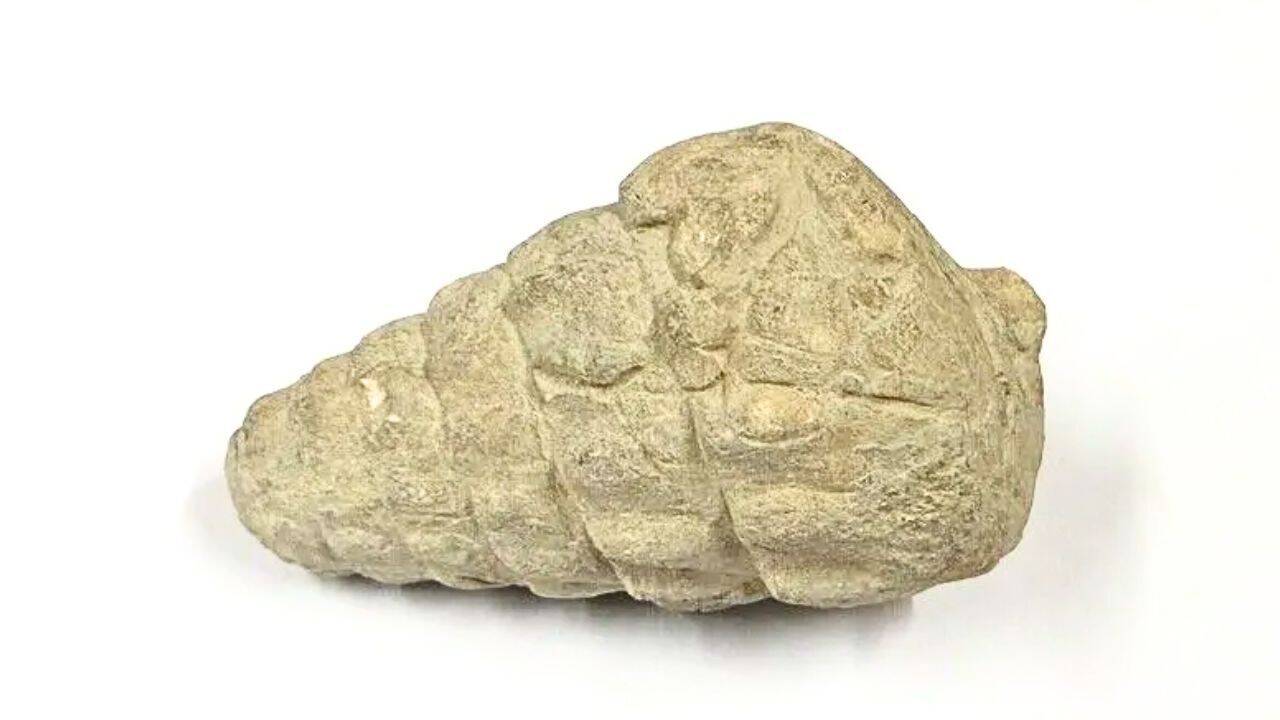
A 66-million-year-old gastropod fossil was found at a 5,000-year-old settlement in Ankara

Read the original at Times of India ↗
Cite

TOI World Desk. (2026, September 15). A 66-million-year-old gastropod fossil was found at a 5,000-year-old settlement in Ankara. Times of India. https://timesofindia.indiatimes.com/world/rest-of-world/a-66-million-year-old-gastropod-fossil-was-found-at-a-5000-year-old-settlement-in-ankara-ancient-inhabitants-may-have-brought-it-there/articleshow/134255537.cms

Dated when The Aporia collected the article, usually within hours of publication. Check the original for its exact date and byline.

Times of India · collected 2026-09-15 · by TOI World Desk

Quick Summary

Archaeologists in Ankara, Turkey, discovered a 66-million-year-old gastropod fossil during excavations at Kulhoyuk in the Oyaca neighborhood of Golbasi district. The fossil dates back to one of the final phases of the Tethys Sea, an ancient body of water that covered parts of Central Anatolia around 250 million years ago. Researchers theorize that the ancient inhabitants of Kulhoyuk may have brought the fossil there from elsewhere, raising questions about its significance and how it was preserved for thousands of years before modern discovery.
Written by AI on 2026-09-15, from this article's own text only (the story summary below draws on all the coverage).

AI analysis

Story summary

A 66-million-year-old gastropod fossil was discovered at an archaeological site in Kulhoyuk, located in the Oyaca neighborhood of Ankara's Golbasi district, Turkey. Researchers believe this specimen dates to one of the final phases of the Tethys Sea, an ancient body of water that began forming about 250 million years ago and once covered parts of Central Anatolia. The fossil was found during excavations at a site where an ancient settlement existed for around 5,000 years, but the gastropod lived millions of years before the establishment of this settlement. According to the Anadolu Agency, it's possible that the fossil was originally found elsewhere and later brought to Kulhoyuk by its early inhabitants. This discovery connects the site's archaeological history with a much older geological period, providing insights into the region’s ancient environment.

Written for “Ancient Fossil Discovery Turkey” on 2026-11-02, grounded in this article and the 0 other(s) covering the same event.

Story

📰 Ancient Fossil Discovery Turkey
Science · 1 article(s) covering the same event.

Compared with similar articles

Nothing to compare against. No article is close enough to this one for the pipeline to have linked or judged the pair.
How this article was measured signals, leaning charts, publisher record, byline, topics and claims

Signals How these are calculated →

Claims extracted
31
sentences that state something as happening or true
Uncertain
16%
5 of 31 hedged ("reportedly", "may", "according to")
Leaning
not political
takes no side on a contested political question
Publisher signals
59/100
Times of India's corrections and hedging, across everything collected from it. Not a measure of accuracy.
Outlets on this story
1
Science
Same framing elsewhere
1
articles that frame the event the way this one does
Analyzed 2026-09-15 · how these are computed

How this is being covered How these are calculated →

Article leaning vs. publisher reliability
Source leaning vs. consistency

Publisher

Times of India · 3941 article(s) · 3 correction(s) detected
Running correction rate · 3 correction(s)

Who wrote this

TOI World Desk
1376 article(s) here · 1 carrying a prediction
🔮 Hundreds of polar bears are expected to gather near the Canadian town of Churchill in Manitoba as temperatures fall and the animals wait for Hudson Bay to freeze.
🔮 Together they would support the reforestation of Mutuba trees in Uganda for three years.
🔮 In the letter, he apologised for forgetting to send his greetings earlier and expressed hope that they would meet the following year again.
🔮 Meeker told Signal Akron that the sculpture contained details that people could continue discovering over time.
🔮 The possibility that the farm could eventually reach another generation now seems less remote.
🔮 According to his plea agreement, he repeatedly gave investors false information about how their money would be used.
🔮 The couple challenged the move in court, and a judge subsequently ordered that the fence could not be removed or relocated while the legal dispute continued.
🔮 According to the court's ruling, available on Justia under Lampton Securities Partnership, LLP v. Louisville-Jefferson County Metro Government, the landowner had not obtained a final decision from the relevant authorities about what could be built on the property.
🔮 In one incident in May 2025, Scotty took the child out of school without informing Jill or the school.
🔮 The idea was met with resistance from administrators who believed it would be too complicated to implement.
Wire or desk byline, not an individual reporter.
Also by TOI World Desk
Nothing else under this byline is closely related to this article, so these are simply their most recent.
All 1376 articles by TOI World Desk →

Topics

Ankara Kulhoyuk Oyaca Turkey the Anadolu Agency

Subjects

Kulhoyuk GPE · 14× Ankara GPE · 5× Turkey GPE · 2× Ankara University ORG · 1× Derya Yilmaz Tekin PERSON · 1× Hittite NORP · 1× Oyaca GPE · 1× Turkish PERSON · 1× the Anadolu Agency ORG · 1× the Culture and Tourism Ministry ORG · 1×

Narrative

How is the fossil connected to the ancient Tethys Sea The fossil is believed to date to one of the final phases of the Tethys Sea, an ancient body of water that began forming about 250 million years ago and once covered parts of Central Anatolia.
framing: assertive · carried by 1 article(s) · first seen 2026-09-15
🔮 According to the Anadolu Agency of Turkey, the specimen may have been found elsewhere and later brought to Kulhoyuk by the settlement’s ancient inhabitants.

Claims (31 extracted, 5 hedged)

A 66-million-year-old gastropod fossil has been discovered at an archaeological site in Ankara, Turkey. asserted
fossil → discover → Ankara
Excavators uncovered the fossil during work at Kulhoyuk in the Oyaca neighbourhood of Ankara’s Golbasi district. asserted
Excavators → uncover → district
Researchers believe it dates to one of the final phases of the Tethys Sea, an ancient body of water that once covered parts of Central Anatolia. asserted
that → believe → Anatolia
The creature existed millions of years before the settlement was established about 5,000 years ago. asserted
settlement → exist → years
According to the Anadolu Agency of Turkey, the specimen may have been found elsewhere and later brought to Kulhoyuk by the settlement’s ancient inhabitants. uncertain
specimen → accord → inhabitants
What was the 66-million-year-old fossil found in Ankara asserted
fossil → find → Ankara
The fossil belongs to a gastropod, a group of mollusks that includes snails and slugs. asserted
that → belong → snails
It was discovered during archaeological excavations at Kulhoyuk, in Ankara’s Golbasi district. asserted
It → discover → district
Researchers believe the specimen dates to one of the final phases of the Tethys Sea. asserted
specimen → believe → Sea
The ancient sea began forming about 250 million years ago and once covered parts of Central Anatolia. asserted
sea → form → Anatolia
The fossil therefore predates the settlement by millions of years. asserted
fossil → predate → years
The discovery connects Kulhoyuk’s archaeological history with a much older geological past and gives researchers another clue about the site’s history. asserted
discovery → connect → history
What makes the fossil’s presence at Kulhoyuk rare The fossil, however, is about 66 million years old, long before people lived at Kulhoyuk. asserted
people → make → Kulhoyuk
The gastropod therefore belonged to a much earlier period than the settlement’s inhabitants. asserted
gastropod → belong → inhabitants
Researchers are considering whether ancient residents may have found the fossil elsewhere before bringing it to Kulhoyuk. uncertain
residents → consider → Kulhoyuk
This would make the discovery different from a fossil found in the geological setting where it originally formed. asserted
it → make → setting
It also leaves researchers with questions about how the specimen reached the settlement and why its ancient inhabitants may have chosen to keep it there. uncertain
inhabitants → leave → it
Mystery behind the fossil’s presence at Kulhoyuk Researchers are considering whether people living at Kulhoyuk thousands of years ago found the fossil elsewhere and brought it to the settlement. asserted
people → consider → settlement
However, this remains a possibility rather than a confirmed explanation for how it got there. asserted
it → remain → ?
Researchers would need to establish where the fossil came from and why ancient inhabitants may have decided to keep it at the site. uncertain
inhabitants → need → site
Its age adds another layer to the mystery, since the people at Kulhoyuk were handling an object that had formed millions of years before their time. asserted
that → add → time
The discovery has opened another area of investigation into how the fossil reached the settlement and what significance it may have held for those who lived there. uncertain
who → open → those
How is the fossil connected to the ancient Tethys Sea The fossil is believed to date to one of the final phases of the Tethys Sea, an ancient body of water that began forming about 250 million years ago and once covered parts of Central Anatolia. asserted
that → connect → Anatolia
The gastropod lived along the shores of this sea about 66 million years ago before eventually becoming fossilised. asserted
gastropod → live → sea
Its discovery at Kulhoyuk therefore connects the archaeological site with a much older landscape shaped by the ancient sea. asserted
discovery → connect → sea
The finding does not indicate that the settlement existed during that period. asserted
settlement → indicate → period
Instead, it offers a glimpse into the region’s geological past, long before communities were established at Kulhoyuk. asserted
communities → offer → Kulhoyuk
How are discoveries helping researchers understand Kulhoyuk The fossil is the latest notable discovery from Kulhoyuk, where archaeological excavations have been underway since 2021. asserted
excavations → help → 2021
Archaeologists recently found what they described as the earliest-known seed remains of Ankara’s distinctive ‘Sevgi Cicegi’, or Love Flower, inside a 4,000-year-old Hittite vessel. asserted
they → find → vessel
The excavation programme is backed by the Turkish presidency and led by Associate Professor Derya Yilmaz Tekin on behalf of Ankara University and the Culture and Tourism Ministry. asserted
programme → back → University
The work is continuing to uncover evidence from the site and its long history. asserted
work → continue → site

💬Give feedback
🕘History 🎫Support