Photo via Toronto Star

What to know about the weapons and tactics blamed for injuring French protesters

Read the original at Toronto Star ↗
Cite

Corbet, S., & Mcneil, S. (2026, October 23). What to know about the weapons and tactics blamed for injuring French protesters. Toronto Star. https://www.thestar.com/news/world/europe/what-to-know-about-the-weapons-and-tactics-blamed-for-injuring-french-protesters/article_fe66628c-2489-57a7-8861-6f34bd9d6be8.html

Dated from the outlet's own feed. Check the original for its byline.

Toronto Star · collected 2026-10-23 · by Sylvie Corbet, Sam Mcneil

Quick Summary

French police are facing criticism over their riot-control tactics during recent protests against rising living costs and poor school conditions, which resulted in serious injuries to several teenagers. The police use various weapons including batons, tear gas, sound grenades, foam-round launchers, and strobe lights on shields, while electric stun guns are prohibited for crowd control. Critics argue that these methods have been overly aggressive, leading to calls from human rights groups for bans on certain equipment like foam-round launchers and stun grenades due to their potential for causing severe injuries or permanent disabilities.
Written by AI on 2026-10-23, from this article's own text only (the story summary below draws on all the coverage).

AI analysis

Story summary

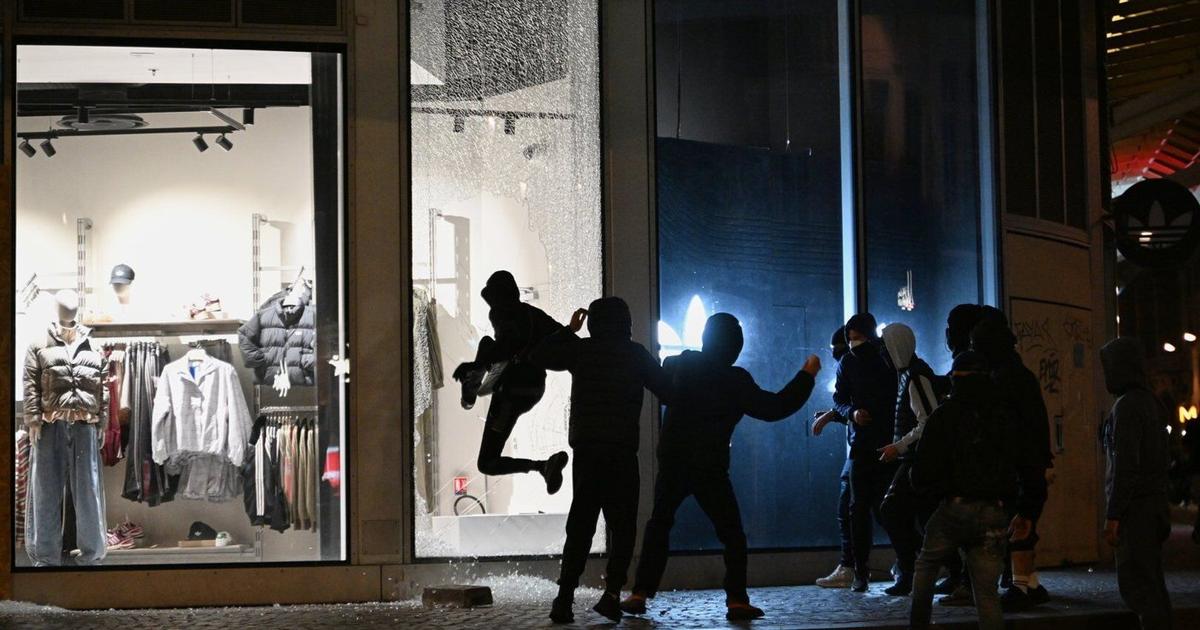
As of October 28, 2026, France is experiencing widespread urban unrest following massive student-led demonstrations that began on October 17. In Paris and other cities like Marseille and Lyon, rioting has led to over 3,000 businesses being attacked or looted. The protests have spread across Europe, with students in Spain, Portugal, Italy, and France participating. French Prime Minister Sebastien Lecornu vowed a "massive" police deployment for new demonstrations planned on October 24, while the government has decided to reinforce police forces with troops due to failures in controlling last weekend's violence.

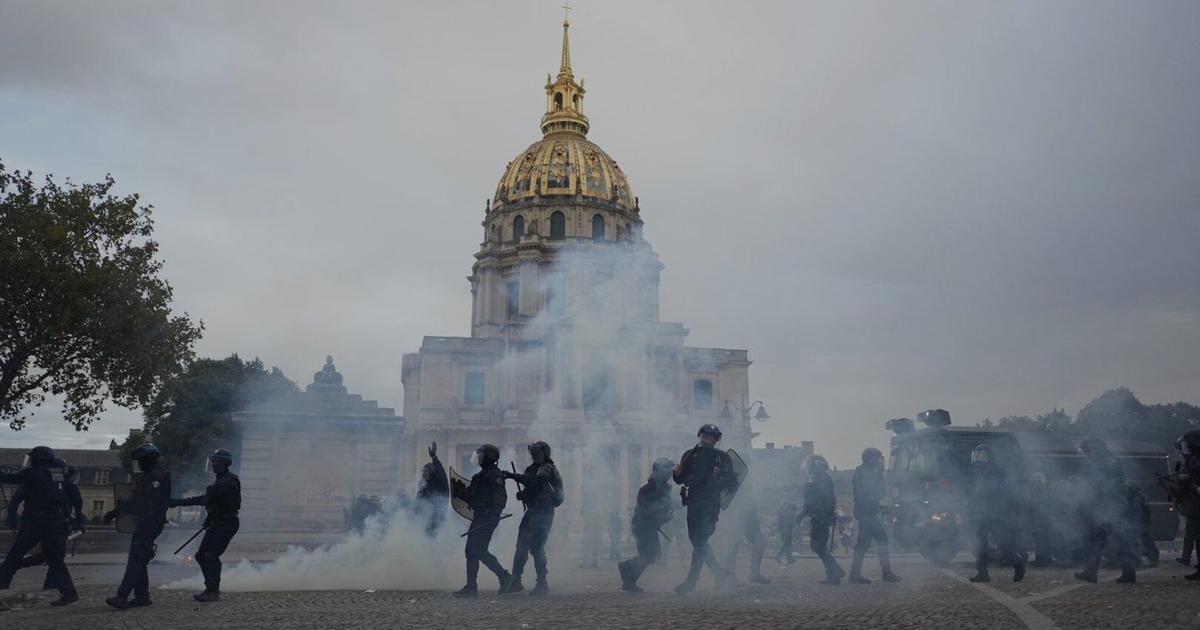
The protests have been met with significant police response, including extensive use of tear gas and batons. A notable incident involved a 14-year-old whose jaw was shattered by a tear gas grenade. UN experts have since expressed concern over the excessive use of force and the disproportionate number of arrests affecting mainly minors, which they argue deters peaceful assembly.

In Limoges, 500 to 600 ultra-left militants infiltrated a demonstration of around 5,000 people, causing significant damage. These events highlight underlying issues such as poor living conditions for workers and inadequate school facilities that students are protesting against.

Written for “French Protests Intensify Against Government” on 2026-10-31, grounded in this article and the 71 other(s) covering the same event.

Story

📰 French Protests Intensify Against Government
Politics · 72 article(s) covering the same event. Compare every outlet's account →

Compared with similar articles

This article reads leans left and hedges 3% of its claims. Each row says how that neighbour differs.
Al Jazeera
⚖️ Leans right further right than this Hedges 0 of 8 claims Outlet record 60/100
“Article A describes the initial protests and unrest on October 18, while Article B discusses the aftermath and scrutiny of police tactics from previous events and expectations for future protests.”
The Hindu
Hedges 1 of 33 claims Outlet record 77/100
“Article A describes immediate aftermath and damage from protests on October 17, 2026. Article B discusses weapons and tactics used by police during previous unrest and expected future protests.”
Dawn
Hedges 1 of 41 claims Outlet record 72/100
“Article A describes the immediate aftermath and impact of violent protests, including arrests and damage, while Article B focuses on police tactics used during previous unrest and injuries sustained by protesters.”
South China Morning Post
⚖️ Leans right further right than this Hedges 0 of 4 claims Outlet record 64/100
“The articles describe different time periods and focus on distinct aspects of related but separate events.”
Dawn
⚖️ Leans right further right than this Hedges 3 of 34 claims Outlet record 72/100
“Article A describes the unrest and arrests during a specific day of protests, while Article B discusses the aftermath and scrutiny over police tactics from previous unrest.”
The Guardian
Hedges 2 of 30 claims Outlet record 66/100
“The articles describe different protests occurring in Sydney, Australia and France.”
Daily Mail
Hedges 3 of 65 claims Outlet record 68/100
“Article A describes violent protests and damage in Paris on a specific date, while Article B discusses police tactics and injuries from previous unrest across France, not specifically the same incident.”
BBC News
⚖️ Leans strongly right further right than this Hedges 1 of 20 claims Outlet record 68/100
“Article A describes the destruction and damage caused during the protests, while Article B focuses on the police tactics and injuries sustained by protesters, indicating different aspects or later developments of the protest events.”
Toronto Star
⚖️ Leans right further right than this Hedges 2 of 36 claims Outlet record 64/100
“While both articles discuss protests and unrest in France, Article B focuses on police tactics and injuries from previous weekend's events rather than describing the exact same incidents as Article A.”
Daily Mail
Hedges 2 of 42 claims Outlet record 68/100
“Article A describes a British tourist injured in Toulouse, while Article B discusses police tactics and injuries to protesters in general, mentioning a separate incident involving a teenager losing an eye in Mulhouse.”
How this article was measured signals, leaning charts, publisher record, byline, topics and claims

Signals How these are calculated →

Claims extracted
38
sentences that state something as happening or true
Uncertain
3%
1 of 38 hedged ("reportedly", "may", "according to")
Leaning
Leans left
of the writing, not the subject · beta estimate
Publisher signals
64/100
Toronto Star's corrections and hedging, across everything collected from it. Not a measure of accuracy.
Outlets on this story
72
Politics
Same framing elsewhere
1
articles that frame the event the way this one does
Analyzed 2026-10-23 · how these are computed

How this is being covered How these are calculated →

Article leaning vs. publisher reliability
Source leaning vs. consistency

Publisher

Toronto Star · 10694 article(s) · 27 correction(s) detected
Running correction rate · 27 correction(s)
2026-10-26
Correction
2026-10-24
Correction
2026-10-07
Correction
2026-09-24
Correction

Who wrote this

Sylvie Corbet
10 article(s) here · 1 carrying a prediction
🔮 Scenes of looting, burned-out cars and attacks on public buildings left the impression that the government had lost control, as groups of masked vandals targeted businesses in Paris and other city centers. Interior Minister Laurent Nuñez said as many as 70,000 officers will be deployed nationwide, along with helicopters, armored vehicles and water cannons. A massive turnout is expected again after more than half a million took to the streets last week.
🔮 PARIS (AP) — Some 70,000 law enforcement officers will be deployed across France on Saturday while the Louvre and several other major Paris museums will be closed as authorities seek to prevent renewed violence during planned protests.
🔮 Corney said the measure would greatly improve accountability at little cost.
🔮 Macron vowed that the government would take an “uncompromising” stance against rioters, adding that the government’s regional representatives known as prefects would use whatever measures were needed to protect businesses and public buildings, including banning certain gatherings if needed.
🔮 “Even though these local issues are different and may vary, we have the same enemy and I definitely think that these movements are inspiring each other.”
🔮 Church bells across France are expected to toll at 10 a.m. Friday, when Leo’s charter flight lands at Paris’ Orly airport, and upward of a million people are expected to turn out to see him.
🔮 He explained that losing roughly 10 per cent of the grapes would mean a loss in volume rather than affect the quality of the wine.
Also by Sylvie Corbet
Nothing else under this byline is closely related to this article, so these are simply their most recent.
All 10 articles by Sylvie Corbet →
Sam Mcneil
8 article(s) here · 1 carrying a prediction
🔮 Corney said the measure would greatly improve accountability at little cost.
🔮 The mayhem of recent weeks — with mass arrests and hundreds of injured — has sparked an uproar in a country steeped in a centuries-old culture of protest.
🔮 As Saudi Arabia investigates how its air defenses failed to stop the Houthis’ attacks, it must also consider how to respond and what the rebels might do next.
🔮 Despite the seeming European unity this week, it remains unclear what the EU can or is willing to do.
🔮 Magnus Brunner said he would call for a vast expansion of Frontex, including new powers, more funding and a larger workforce.
🔮 BRUSSELS (AP) — Wars in the Middle East and Ukraine are driving governments across Europe to craft subsidies, taxes and policy revisions that might shield their economies, companies and increasingly aggrieved citizens from record gasoline and diesel prices.
Also by Sam Mcneil
Nothing else under this byline is closely related to this article, so these are simply their most recent.
All 8 articles by Sam Mcneil →

Topics

Amnesty International France French Mulhouse PARIS

Subjects

France GPE · 4× French NORP · 3× Amnesty International ORG · 2× French National Police ORG · 1× Mulhouse GPE · 1× Neil Corney PERSON · 1× PARIS GPE · 1× The Associated Press ORG · 1× U.K.-based GPE · 1× United Nations ORG · 1×

Narrative

Foam-round launchers were initially developed for military training and later adapted for “high-risk, hostage-type situations” and anti-terrorism operations, said Patrick Wilckin, an arms researcher at Amnesty International. “They were never really meant for policing of protests,” he said.
framing: assertive · carried by 1 article(s) · first seen 2026-10-23
🔮 Corney said the measure would greatly improve accountability at little cost.

Claims (38 extracted, 1 hedged)

PARIS (AP) — Police across France are under pressure to maintain security during further protests expected in some cities, while facing scrutiny over their riot-control tactics used during previous unrest that left some teenagers seriously injured. asserted
that → maintain → teenagers
Officers have appeared outnumbered and overwhelmed during last weekend’s protests against rising living costs and poor conditions in schools. asserted
Officers → appear → schools
Authorities have announced police reinforcements ahead of further protests expected on Saturday, amid fears of renewed violence. asserted
Authorities → announce → violence
A 17-year-old girl lost an eye while participating in a protest in Mulhouse last Saturday, while a 17-year-old boy lost a hand in Saint-Etienne. asserted
boy → lose → Etienne
Other teenagers have suffered disabling injuries during weeks of high school blockades and street demonstrations. asserted
teenagers → suffer → blockades
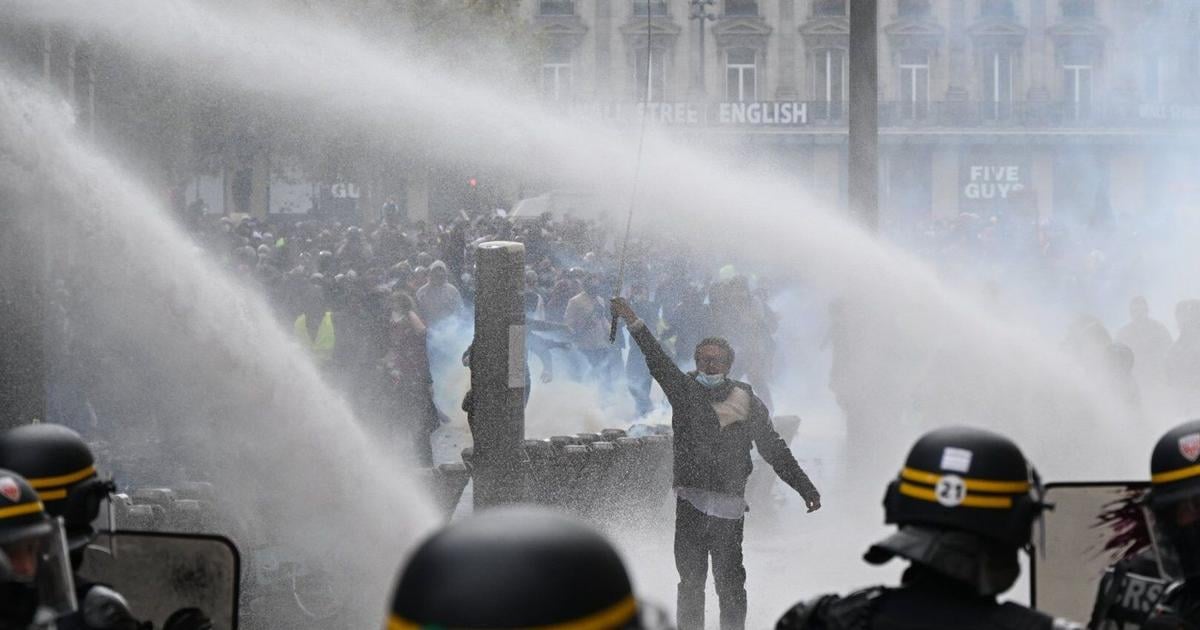
Police equipped with multiple riot-control weapons French police forces are equipped with batons, tear gas, sound grenades and foam-round launchers, as well as riot shields equipped with powerful strobe lights designed to disorient protesters. asserted
forces → equip → protesters
Electric stun guns are prohibited in crowd-control operations. asserted
guns → prohibit → operations
“Intermediate-force weapons are defensive response tools that allow law enforcement officers to respond to a threat in a graduated and proportionate manner,” French National Police said in a statement to The Associated Press. asserted
Police → allow → Press
But critics, including families of injured teenagers, say the police have been too heavy-handed. asserted
police → include → teenagers
Some have called for bans on foam-round launchers, tear gas and stun grenades, echoing demands made by human rights groups since the violent 2018 “yellow vest” protests. asserted
Some → call → protests
Earlier this month, Amnesty International called for a permanent ban on all stun grenades, saying they are designed to shock, disorient and sow panic, and that some can cause permanent hearing loss and life-changing injuries from blasts and shrapnel. asserted
some → call → blasts
Foam-round launchers face criticism United Nations guidance on what it calls “less-lethal weapons” says kinetic impact projectiles should be used only against an imminent threat, targeting the abdomen and never the head, face or neck. asserted
projectiles → face → abdomen
Foam-round launchers, though classified as less-lethal and considered safer than rubber-bullet shotguns, “in certain circumstances, can kill,” said Neil Corney, an arms researcher at the U.K.-based Omega Research Foundation who helped draft the U.N. guidance. asserted
who → classify → guidance
Proper training and guidelines can reduce injuries, he said, pointing to Spain, where authorities replaced criticized rubber-bullet shotguns with foam-round launchers following a violent police crackdown on Catalonia’s 2017 independence referendum. asserted
authorities → reduce → referendum
Injuries have declined there, he said. asserted
he → decline → ?
Foam-round launchers were initially developed for military training and later adapted for “high-risk, hostage-type situations” and anti-terrorism operations, said Patrick Wilckin, an arms researcher at Amnesty International. “They were never really meant for policing of protests,” he said. asserted
he → develop → protests
Unlike bullets, foam rounds generally leave no traceable evidence. asserted
rounds → leave → evidence
Activists have proposed stamping identification numbers on the rounds to help identify officers involved in incidents that cause serious injuries. asserted
that → propose → injuries
Corney said the measure would greatly improve accountability at little cost. asserted
measure → say → cost
The use of such weapons reflects a broader shift in French policing toward keeping officers at a distance from protesters, said Jean-Marie Godard, an author specializing in France’s internal security. asserted
Godard → reflect → security
In the early 2000s, France’s conservative government moved away from community policing, which emphasized foot patrols and engagement with residents, toward specialized riot-control units. asserted
which → move → units
People across France’s political spectrum regret abandoning the community policing model, Godard said. asserted
Godard → regret → model
French policing today differs from that in many other European countries, according to Laura Keesmann, a sociologist at the University of Antwerp who led a wide-ranging comparative study of policing methods in France, the U.K., the Netherlands and Sweden. uncertain
who → differ → France
In the other countries studied, police often engage directly with demonstrators, sometimes mingling with crowds to defuse tensions, she said. asserted
she → study → tensions
“That is just really, really not the case in France,” she said. asserted
she → say → France
Keesmann stressed, however, that French police face unusually militant and sometimes violent protesters. asserted
police → stress → protesters
On the eve of last Saturday’s protests, Interior Minister Laurent Nuñez said his instructions were “very clear: the police and gendarmes should be able to use the entirety of the intermediate weapons at their disposal. asserted
police → say → disposal
Over 2,000 arrests in a day France has more than 250,000 national police officers and gendarmes. asserted
France → have → officers
Police generally operate in cities, while gendarmes usually cover rural areas and smaller towns. asserted
gendarmes → operate → areas
Both forces fall under the Interior Ministry, which said 997 officers and gendarmes were injured during Saturday’s unrest, seven of them seriously. asserted
seven → fall → them
Police said more than 100 protesters and residents were injured in Paris on Saturday. asserted
protesters → say → Saturday
Authorities have not released a nationwide injury tally. asserted
Authorities → release → tally
About 2,400 people were arrested across France that day. asserted
people → arrest → France
Godard said protest movements have become increasingly decentralized as labor unions have lost influence over demonstrations, drawing a wider range of participants, including radical groups. asserted
unions → say → groups
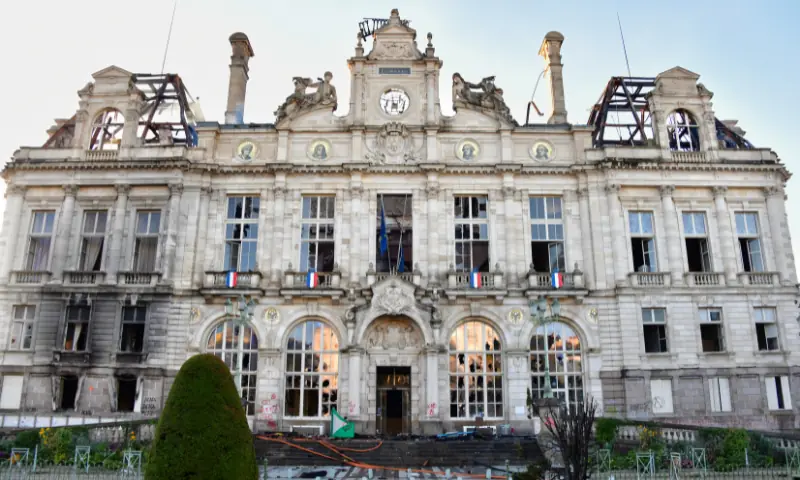
French authorities have blamed much of the recent violence on far-left radicals, accusing them of orchestrating clashes with police and targeting public buildings. asserted
authorities → blame → buildings
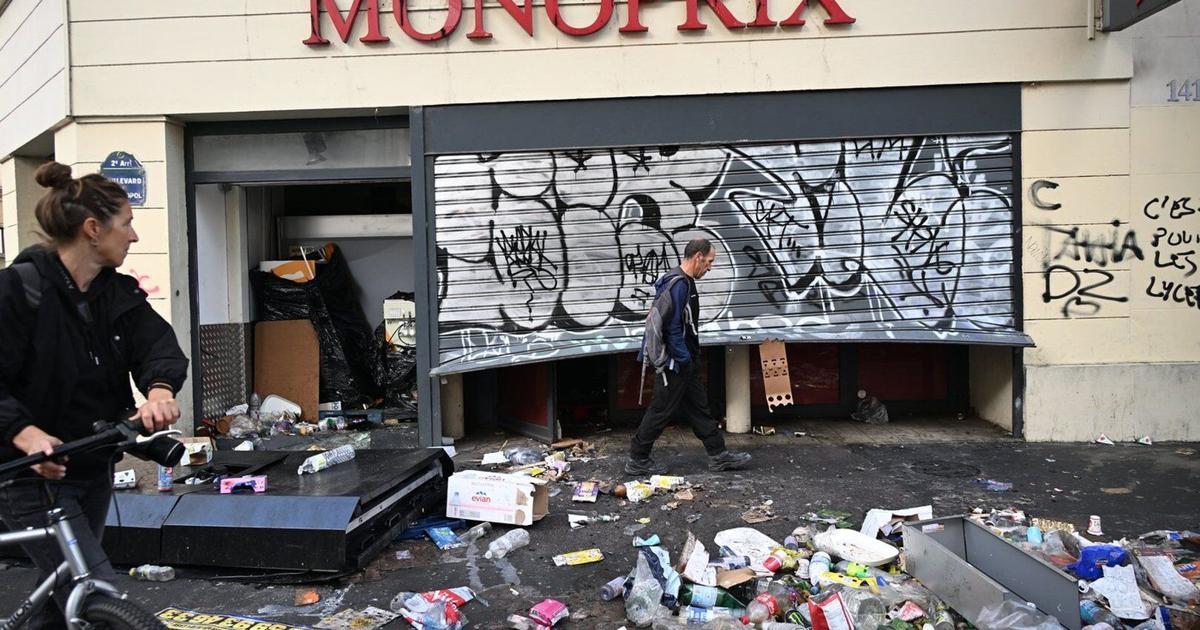
Others took advantage of the unrest to loot businesses, authorities said. asserted
authorities → take → businesses
___ McNeil reported from Brussels. asserted
McNeil → report → Brussels
AP journalist John Leicester contributed to the story. asserted
Leicester → contribute → story

💬Give feedback
🕘History 🎫Support