Photo via Toronto Star

EU sends envoy to Beijing as rising exports from China raise economic anxiety

Read the original at Toronto Star ↗
Cite

Ho-him, C., & Mcneil, S. (2026, October 8). EU sends envoy to Beijing as rising exports from China raise economic anxiety. Toronto Star. https://www.thestar.com/news/world/europe/eu-sends-envoy-to-beijing-as-rising-exports-from-china-raise-economic-anxiety/article_0566de9e-ce86-5747-8af1-a6d6f7886d08.html

Dated when The Aporia collected the article, usually within hours of publication. Check the original for its exact date and byline.

Toronto Star · collected 2026-10-08 · by Chan Ho-him, Sam Mcneil

Quick Summary

The European Union is sending its top trade envoy, Maroš Šefčovič, to Beijing for talks with Chinese Commerce Minister Wang Wentao amid growing concerns over the EU's $410 billion trade deficit with China. The delegation aims to address China’s economic practices that are seen as threatening core industrial sectors within the EU, following a European Parliament resolution advocating for stricter measures against China if it fails to open its markets. However, internal disagreements among EU nations like Spain and others more aligned with Germany and France complicate unified action.
Written by AI on 2026-10-08, from this article's own text only (the story summary below draws on all the coverage).

AI analysis

Story summary

As of October 10, 2026, EU trade negotiators led by Maroš Šefčovič reached an agreement in Beijing to reduce Chinese exports of hybrid and plug-in hybrid cars to Europe by more than half over four years. The deal came after two days of intense talks aimed at addressing the €1 billion-a-day trade deficit between the EU and China, a significant source of economic anxiety for European nations.

The negotiations were prompted by concerns that cheap Chinese imports are de-industrializing European economies, particularly in sectors like automotive manufacturing where companies such as Volkswagen have announced job cuts. The agreement limits Chinese hybrid car shipments to 350,000 units per year, increasing annually at 6%, well below the projected 800,000 vehicles expected by 2026 without intervention.

While seen as a crucial step in rebalancing trade relations, the deal addresses only part of the broader issues facing the EU and China, leaving much of the $1 billion-a-day deficit unresolved. European officials view this as a "paradigm shift" marking a new approach to negotiations, but acknowledge that it is merely the first step towards more comprehensive reforms needed to address structural trade imbalances.

Written for “EU-China Trade Talks Hybrid Cars” on 2026-10-31, grounded in this article and the 15 other(s) covering the same event.

Story

📰 EU-China Trade Talks Hybrid Cars
Politics · 16 article(s) covering the same event. Compare every outlet's account →

Compared with similar articles

This article reads leans right and hedges 8% of its claims. Each row says how that neighbour differs.
The Straits Times
⚖️ Leans right Hedges 0 of 3 claims Outlet record 66/100
The Hindu
⚖️ Leans right Hedges 3 of 40 claims Outlet record 60/100
The Independent
⚖️ Leans right Hedges 3 of 42 claims Outlet record 59/100
Al Jazeera
Hedges 2 of 22 claims Outlet record 60/100
The Hindu
⚖️ Leans right Hedges 0 of 9 claims Outlet record 60/100
“The articles describe different events: one is about an anti-dumping probe launched by China, while the other discusses EU's envoy visiting Beijing for trade talks.”
Euronews
⚖️ Leans right Hedges 0 of 20 claims Outlet record 60/100
“The articles describe different stages of an ongoing trade dispute: Article A reports on China opening an anti-dumping probe, while Article B discusses EU envoy Maroš Šefčovič's visit to Beijing for talks aimed at narrowing the trade deficit.”
Deutsche Welle
Hedges 3 of 23 claims Outlet record 95/100
“The articles describe different events: one is about Merz and Macron's joint appeal for tougher EU measures against unfair trade, while the other reports on an envoy meeting with China to address the trade deficit.”
The Straits Times
⚖️ Leans right Hedges 1 of 17 claims Outlet record 66/100
“The articles describe different events: one about France and Germany proposing a rapid-response trade tool against China, and another about an EU envoy visiting Beijing to address the trade deficit.”
The Sydney Morning Herald
⚖️ Leans right Hedges 9 of 46 claims Outlet record 61/100
South China Morning Post
Hedges 0 of 6 claims Outlet record 64/100
“The articles discuss different events: one about US-China relations and an embassy reception, the other about EU's trade envoy visiting Beijing over economic concerns.”
How this article was measured signals, leaning charts, publisher record, byline, topics and claims

Signals How these are calculated →

Claims extracted
40
sentences that state something as happening or true
Uncertain
8%
3 of 40 hedged ("reportedly", "may", "according to")
Leaning
Leans right
of the writing, not the subject · beta estimate
Publisher signals
64/100
Toronto Star's corrections and hedging, across everything collected from it. Not a measure of accuracy.
Outlets on this story
16
Politics
Same framing elsewhere
1
articles that frame the event the way this one does
Analyzed 2026-10-08 · how these are computed

How this is being covered How these are calculated →

Article leaning vs. publisher reliability
Source leaning vs. consistency

Publisher

Toronto Star · 10621 article(s) · 27 correction(s) detected
Running correction rate · 27 correction(s)
2026-10-26
Correction
2026-10-24
Correction
2026-10-07
Correction
2026-09-24
Correction

Who wrote this

Chan Ho-him
16 article(s) here · 1 carrying a prediction
🔮 As the rivalry intensifies, experts say the window for countries to be able to choose freely between the two AI superpowers may be narrowing, forcing them to at one point pick between the U.S.-led Pax Silica and the China-inspired World AI Cooperation Organization.
🔮 Earlier this month, the International Monetary Fund trimmed its forecast for China’s 2026 economic growth to 4.5%, just meeting the lower end of Beijing’s goal.
🔮 Index provider MSCI warned it would downgrade Indonesia from its “emerging market” status, triggering growing concerns of a capital flight.
🔮 Despite the seeming European unity this week, it remains unclear what the EU can or is willing to do.
🔮 Investors and traders are monitoring closely the U.S. monthly jobs report for September to be released on Friday, as the data could provide more signal to the likelihood of an October interest rate hike by the Federal Reserve, after the Fed raised rates in September for the first time in three years.
🔮 China’s Alibaba unveiled new artificial intelligence chip technologies and plans for more powerful models on Tuesday, including what it said was China’s most powerful AI chip, days ahead of a meeting between Chinese and U.S. leaders at which competition to lead on AI technology is expected to be a major theme.
🔮 HONG KONG (AP) — U.S. President Donald Trump and Chinese leader Xi Jinping, leaders of rival nations in a race to dominate artificial intelligence, are expected to meet this week against a backdrop of rising concerns about the threats that rogue AI could pose to humanity.
🔮 HONG KONG (AP) — Asian shares advanced Monday ahead of the expected meeting between U.S. President Donald Trump and Chinese leader Xi Jinping this week in Washington, which could cover trade, artificial intelligence and geopolitics.
🔮 But a taste for a cheap, crowd-pleasing meal may be something the two leaders share.
🔮 The current debate takes on greater importance ahead of Chinese President Xi Jinping’s expected visit to Washington this month to meet U.S. President Donald Trump, and as experts say the future of AI will depend significantly on what China and the U.S. do and don’t do.
Also by Chan Ho-him
Nothing else under this byline is closely related to this article, so these are simply their most recent.
All 16 articles by Chan Ho-him →
Sam Mcneil
8 article(s) here · 1 carrying a prediction
🔮 Corney said the measure would greatly improve accountability at little cost.
🔮 The mayhem of recent weeks — with mass arrests and hundreds of injured — has sparked an uproar in a country steeped in a centuries-old culture of protest.
🔮 As Saudi Arabia investigates how its air defenses failed to stop the Houthis’ attacks, it must also consider how to respond and what the rebels might do next.
🔮 Despite the seeming European unity this week, it remains unclear what the EU can or is willing to do.
🔮 Magnus Brunner said he would call for a vast expansion of Frontex, including new powers, more funding and a larger workforce.
🔮 BRUSSELS (AP) — Wars in the Middle East and Ukraine are driving governments across Europe to craft subsidies, taxes and policy revisions that might shield their economies, companies and increasingly aggrieved citizens from record gasoline and diesel prices.
Also by Sam Mcneil
Nothing else under this byline is closely related to this article, so these are simply their most recent.
All 8 articles by Sam Mcneil →

Topics

BRUSSELS Beijing China Chinese European

Subjects

China GPE · 17× European NORP · 4× Beijing GPE · 3× Chinese NORP · 3× BRUSSELS GPE · 2× France GPE · 2× Rühlig PERSON · 2× U.S. GPE · 2× The European Commission’s ORG · 1× The European Union ORG · 1×

Narrative

The European Policy Centre in Brussels said in June that European battery producers, solar panels, steel, electric vehicles, chemicals and machinery are already hemorrhaging jobs and capacity and called for a trade investigative body modelled on Section 301 of the U.S. Trade Act. European Commission President Ursula von der Leyen called the phenomenon another “ China shock ” for Europe, similar to what happened in the U.S. in the early 2000s when hundreds of thousands of factory jobs in the American heartland were wiped out. The EU’s ailing economy requires both a domestic overhaul and a more aggressive foreign trade policy, especially with China, said Tim Rühlig, a China analyst at the European Union Institute for Security Studies, the bloc’s internal think tank.
framing: assertive · carried by 1 article(s) · first seen 2026-10-08
🔮 Despite the seeming European unity this week, it remains unclear what the EU can or is willing to do.

Claims (40 extracted, 3 hedged)

BRUSSELS (AP) — The European Union is bracing for a confrontation with China as a trade deficit exceeding $1 billion a day heightens anxiety over potential job losses and pushes the bloc’s political leaders to take a more aggressive approach toward its second-largest trading partner. asserted
deficit → brace → partner
The goal is narrowing the EU’s 360 billion euro ($410 billion) trade deficit with China. asserted
goal → narrow → China
Earlier this year, he gave Beijing a deadline of October to provide meaningful results in doing so. asserted
he → give → results
Politicians and economists across the 27-nation bloc consider China’s massive subsidies and exports a major threat to core industrial sectors from steel foundries to car factories. asserted
subsidies → consider → factories
China diverted many of its exports to the EU and other markets after the U.S. raised tariffs. asserted
U.S. → divert → tariffs
In a debate Tuesday in European Parliament in Strasbourg, lawmakers overwhelmingly expressed anxiety alongside defiance over trade with China. asserted
lawmakers → express → China
On Wednesday, they voted 454 to 86 on a resolution to toughen up on China that centered on a call for “economic reciprocity and a proportionate EU response if China does not open its markets.” asserted
China → vote → markets
Ahead of the vote, Hilde Vautmans, the Belgian lawmaker who led the resolution, said that “Europe has economic power, it’s time we used it.” asserted
we → lead → it
EU options range from tariffs to a “trade bazooka” asserted
options → range → bazooka
Despite the seeming European unity this week, it remains unclear what the EU can or is willing to do. uncertain
EU → seem → what
It has already rolled out trade measures against Chinese steel imports and e-commerce small parcels. asserted
It → roll → imports
France’s High Commission for Strategy and Planning in February called for swift action, like 30% tariffs on many of China’s exports, and a devaluation of the euro against the Chinese currency. asserted
Commission → call → currency
Sales of German autos are plummeting in China, but China is also poised to gobble up market share in Europe by undercutting European automakers on price thanks to heavy state subsidies. asserted
China → plummet → subsidies
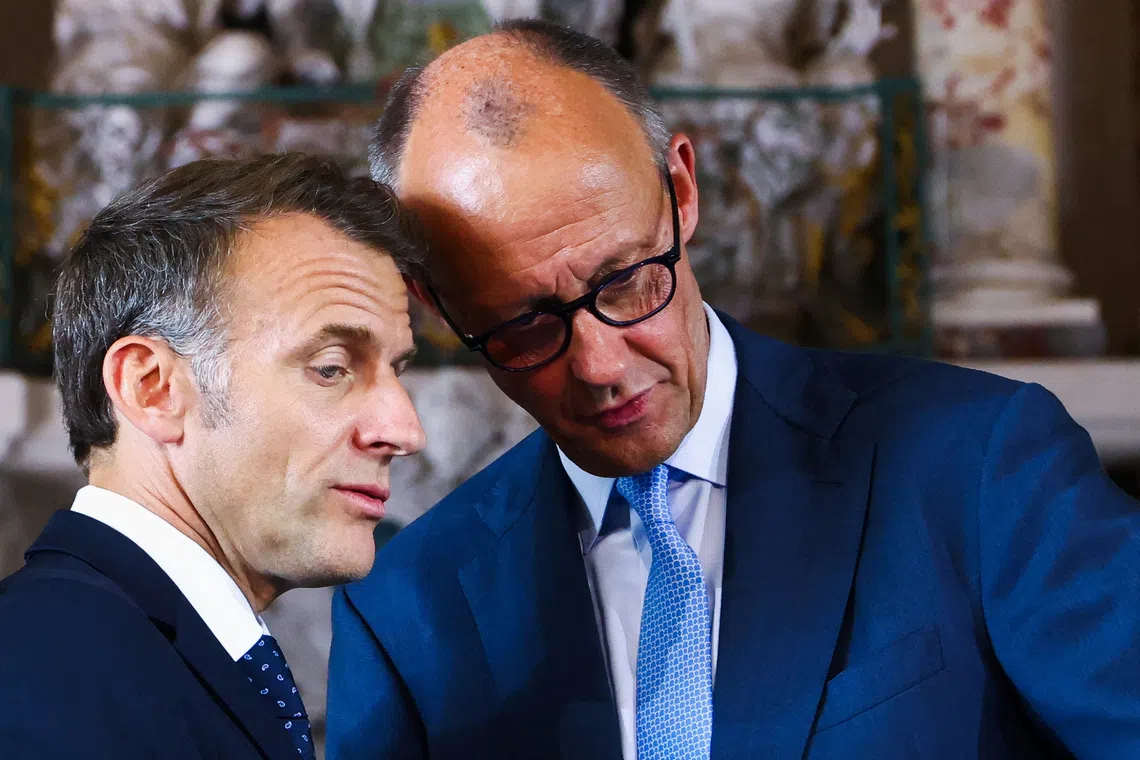
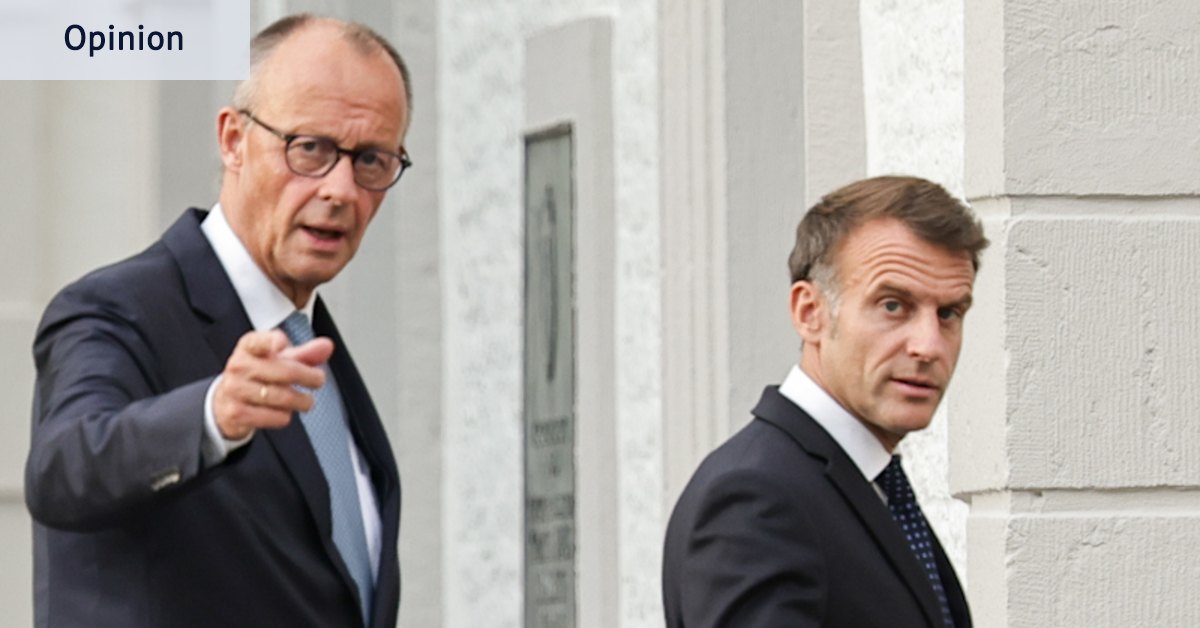
A letter by France and Germany, a copy of which was seen by The Associated Press, called for a sweeping rethink of the EU’s China policy. asserted
copy → see → policy
Among other actions, it proposed making it easier for the European Commission to use the bloc’s so-called “trade bazooka,” the Anti-Coercion Instrument. asserted
Commission → propose → bazooka
This is a never-used-before raft of measures for blocking or restricting trade and investment from countries found to be putting undue pressure on EU member nations or corporations. asserted
This → use → nations
Yet not all EU nations agree on such tough measures. asserted
nations → agree → measures
Prime Minister Pedro Sanchez has visited Beijing four times in three years. asserted
Sanchez → visit → years
The European Policy Centre in Brussels said in June that European battery producers, solar panels, steel, electric vehicles, chemicals and machinery are already hemorrhaging jobs and capacity and called for a trade investigative body modelled on Section 301 of the U.S. Trade Act. European Commission President Ursula von der Leyen called the phenomenon another “ China shock ” for Europe, similar to what happened in the U.S. in the early 2000s when hundreds of thousands of factory jobs in the American heartland were wiped out. The EU’s ailing economy requires both a domestic overhaul and a more aggressive foreign trade policy, especially with China, said Tim Rühlig, a China analyst at the European Union Institute for Security Studies, the bloc’s internal think tank. asserted
Rühlig → say → Studies
Rühlig also said that European businesses and political leadership bear some blame. asserted
businesses → say → blame
“It’s clear that just protecting yourself from China is not the future,” Rühlig said. asserted
Rühlig → ’ → China
“But to have a chance of making yourself ready for future technologies and to remain competitive in the coming 15-20 years, you have to protect yourself.” It is impossible to disengage completely with China as the EU did with Russia following its invasion of Ukraine, Rühlig said, but there is robust momentum now to reset trade relations with Beijing. asserted
Rühlig → have → Beijing
“Where do we make ourselves independent or at least more diverse? asserted
ourselves → make → ?
And where do we still work with the Chinese?” Rühlig asked. asserted
Rühlig → work → Chinese
China is ready for a long trade dispute This week in Beijing, when asked about the letter penned by France and Germany, a spokesperson at China’s Ministry of Commerce said that the countries should refrain from encouraging the EU to resort to protectionist measures. asserted
countries → ask → measures
“Protectionism cannot enhance competitiveness, and decoupling or cutting off supply chains will only harm others without benefiting oneself,” the commerce ministry said in a statement. asserted
ministry → enhance → statement
China is the EU’s second-largest goods trading partner after the U.S., according to European Commission data. uncertain
China → trade → data
Chinese exports to the EU rose 15.3% in the first eight months of this year, according to China’s customs agency, while its imports from the EU rose 6.2%. uncertain
imports → rise → EU
“The EU does not have the capacity to wage a trade war against China,” read an editorial last month in China’s state-run Global Times newspaper. asserted
editorial → have → newspaper
“If it is truly determined to do so, then let it try.” asserted
it → determine → ?
China’s exports to Europe, as well as Southeast Asia, Latin America and Africa, expanded after U.S. tariffs went into effect last year, but it still booked a $1.2 trillion trade surplus globally in 2025. asserted
it → expand → 2025
So far, China’s export machine has remained remarkably resilient despite U.S. tariffs and other trade restrictions, said Max Zenglein, Asia Pacific senior economist at The Conference Board. asserted
Zenglein → remain → Board
This past weekend, ahead of the meeting between Šefčovič and Wang, China launched an anti-dumping probe on EU exports of p-nitrotoluene, which is used in dyes and pharmaceuticals. asserted
which → launch → dyes
The probe was initiated after Beijing warned last month that it would take retaliatory actions if the EU instituted tougher protectionist trade measures. asserted
EU → initiate → measures
“China has been battle-tested by successive rounds of external pressure and, so far, has largely stared down attempts to force a change in course,” said Zenglein. asserted
Zenglein → test → course
China’s economy has been largely driven by exports as domestic demand remains sluggish. asserted
demand → drive → exports
The EU imports sizable amounts of Chinese lithium-ion batteries and hybrid electric vehicles, and Chinese carmakers are also expanding production capacity in Europe. asserted
carmakers → import → Europe
While China’s trade surplus has intensified concerns among its major trading partners, trade ties between the U.S. and China appear relatively stable following a summit between Chinese President Xi Jinping and President Donald Trump in Washington, wrote Bank of America economists, turning the attention to China-EU relations. asserted
economists → intensify → relations
When it comes to negotiations with the EU, Chinese investment in Europe is likely to be among Beijing’s bargaining chips, Zenglein added, particularly as EU member states compete to attract capital, jobs, and new manufacturing projects. asserted
states → come → capital
___ Chan reported from Hong Kong. asserted
Chan → report → Kong

💬Give feedback
🕘History 🎫Support