Photo via The Hindu

What is Romanch’s Law? New York City’s historic horse carriage ban after Indian tourist’s death

Read the original at The Hindu ↗
Cite

Bureau, T. H. (2026, October 23). What is Romanch’s Law? New York City’s historic horse carriage ban after Indian tourist’s death. The Hindu. https://www.thehindu.com/news/international/what-is-romanchs-law-new-york-city-historic-horse-carriage-ban-explained/article71614635.ece

Dated from the outlet's own feed. Check the original for its byline.

The Hindu · collected 2026-10-23 · by The Hindu Bureau

Quick Summary

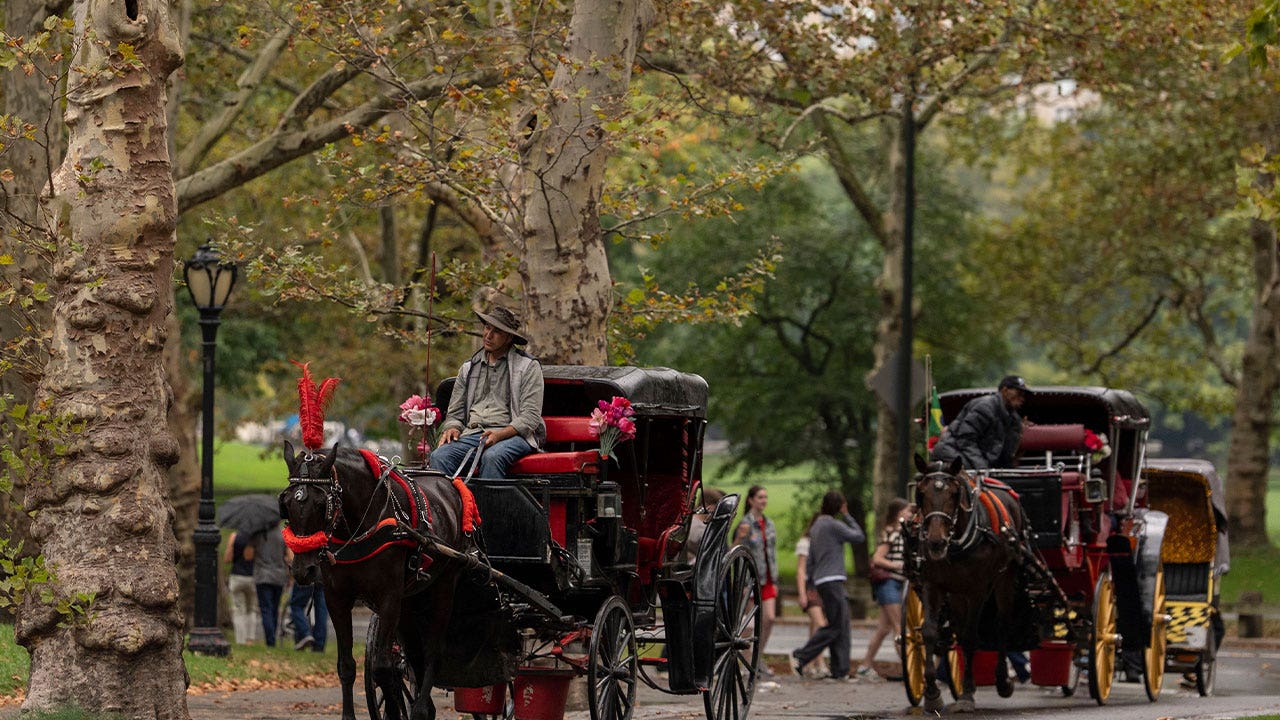
New York City's New York City Council voted on October 22, 2026, to ban horse-drawn carriages from city streets and Central Park, phasing out the industry by June 1, 2028. The bill, named Romanch’s Law after an Indian tourist, Romanch Mahajan, who died in a carriage accident earlier that year, passed with 40 votes in favor, seven against, and two abstentions. While celebrated by animal rights groups like PETA for public safety and welfare reasons, the ban faces legal challenges from the Transport Workers Union, which represents carriage owners and drivers.
Written by AI on 2026-10-23, from this article's own text only (the story summary below draws on all the coverage).

AI analysis

Story summary

The New York City Council voted on October 22, 2026, to ban horse-drawn carriages from city streets and Central Park starting June 1, 2028. The bill, named Romanch’s Law after the death of an 18-year-old tourist, Romanch Mahajan, who died in a carriage accident earlier this year, was supported by Mayor Zohran Mamdani and passed with 40 out of 51 votes. It aims to end a 160-year-old tradition while providing transition support for the approximately 150 drivers currently employed in the industry. The legislation includes provisions to ensure humane treatment for retired horses, preventing their sale or transfer to other carriage companies. Critics argue that carriages harm animal welfare and pose safety risks, while supporters highlight the cultural significance and job creation aspects of the longstanding tourist attraction.

Written for “NYC Horse Carriage Ban Deal” on 2026-10-30, grounded in this article and the 27 other(s) covering the same event.

Story

📰 NYC Horse Carriage Ban Deal
Politics · 28 article(s) covering the same event. Compare every outlet's account →

Compared with similar articles

This article reads leans left and hedges 5% of its claims. Each row says how that neighbour differs.
New York Post
⚖️ Leans strongly right further right than this Hedges 1 of 33 claims Outlet record 66/100
“Article A discusses opinions on a proposed ban without specifying it as an already passed law or mentioning Romanch's Law, while Article B reports on the actual passage of the horse carriage ban legislation named 'Romanch’s Law' and references a specific date.”
Fox News
⚖️ Leans left Hedges 1 of 24 claims Outlet record 70/100
National Post
⚖️ Leans left Hedges 0 of 13 claims Outlet record 60/100
CBS News
Hedges 1 of 27 claims Outlet record 66/100
BBC News
⚖️ Leans left Hedges 1 of 20 claims Outlet record 69/100
New York Post
⚖️ Leans left Hedges 0 of 14 claims Outlet record 66/100
CBC News
⚖️ Leans left Hedges 1 of 18 claims Outlet record 60/100
NBC News
Outlet record 60/100
Daily Mail
⚖️ Leans right further right than this Hedges 1 of 33 claims Outlet record 68/100
How this article was measured signals, leaning charts, publisher record, byline, topics and claims

Signals How these are calculated →

Claims extracted
21
sentences that state something as happening or true
Uncertain
5%
1 of 21 hedged ("reportedly", "may", "according to")
Leaning
Leans left
of the writing, not the subject · beta estimate
Publisher signals
77/100
The Hindu's corrections and hedging, across everything collected from it. Not a measure of accuracy.
Outlets on this story
28
Politics
Same framing elsewhere
1
articles that frame the event the way this one does
Analyzed 2026-10-23 · how these are computed

How this is being covered How these are calculated →

Article leaning vs. publisher reliability
Source leaning vs. consistency

Publisher

The Hindu · 697 article(s) · 2 correction(s) detected
Running correction rate · 2 correction(s)

Who wrote this

The Hindu Bureau
63 article(s) here · 1 carrying a prediction
🔮 A high-speed train collision south of Madrid in Spain killed at least 68 people and injured scores of people on Wednesday (October 28, 2026), with the death toll expected to rise, authorities said.
🔮 After the official results are published, Israel President Isaac Herzog will consult representatives of the elected parliamentary factions before assigning a lawmaker the task of forming a government.
🔮 Mohammad-Bagher Ghalibaf, Speaker of Iran’s Parliament, Majles, will be unable to attend the 12th BRICS Parliamentary Forum to be held in Delhi in the coming week, the Iranian Embassy in India said in a statement on Saturday (October 24, 2026).
🔮 Of the city's 51 lawmakers, 40 supported the bill, backed by Mayor Zohran Mamdani, who had earlier this month said the horse-drawn carriage industry would end.
🔮 Nepal is set to receive $21.6 million from the United Nations’ Loss and Damage Fund following the devastating Bhotekoshi floods that struck the country in August.
🔮 U.S. Secretary of State Marco Rubio said on Tuesday (October 20, 2026) that the United States will talk with Reliance about refining more Venezuelan crude.
🔮 He is set to meet government and business leaders during his two-day visit to India.
2026-10-20 · assertive framing · Rubio lands in Mumbai; set to meet Jaishankar today
🔮 Moreover, 95% of New Zealand’s exports to India will either be allowed tariff-free or at “sharply” reduced levies.
🔮 Foreign nationals may offer legal consultancy services but cannot practise law in China.
🔮 The employee was terminated,” stated OpenAI, adding that the case showed how AI could help address security threats.
Wire or desk byline, not an individual reporter.
Also by The Hindu Bureau
Nothing else under this byline is closely related to this article, so these are simply their most recent.
All 63 articles by The Hindu Bureau →

Topics

Council Indian PETA Romanch’s Law the New York City Council

Subjects

Julie Menin PERSON · 3× Romanch PERSON · 3× Council ORG · 2× Indian NORP · 2× PETA ORG · 2× Romanch Mahajan PERSON · 2× Christopher Marte PERSON · 1× New York City GPE · 1× Zohran Mamdani PERSON · 1× the New York City Council ORG · 1×

Narrative

The Central Park tragedy that changed the law Although efforts to ban or reform carriage rides date back to 2007, it reached a tipping point following a fatal accident in Central Park on June 17, 2026, when the Indian tourist Romanch Mahajan lost his life during a family trip when a carriage horse bolted after the driver stepped out to take a photograph.
framing: assertive · carried by 1 article(s) · first seen 2026-10-23
🔮 Of the city's 51 lawmakers, 40 supported the bill, backed by Mayor Zohran Mamdani, who had earlier this month said the horse-drawn carriage industry would end.

Claims (21 extracted, 1 hedged)

In a significant move to end a longstanding tradition, the New York City Council voted on Thursday (October 22, 2026) to pass legislation banning horse-drawn carriages from city streets and Central Park. asserted
Council → end → streets
The bill, known as Romanch’s Law, ends the historic tourist attraction after decades of debate over animal welfare and public safety. asserted
bill → know → welfare
The bill is named after an 18-year-old Indian tourist, Romanch Mahajan, who died following a carriage accident in Central Park earlier this year. asserted
who → name → Park
Of the city's 51 lawmakers, 40 supported the bill, backed by Mayor Zohran Mamdani, who had earlier this month said the horse-drawn carriage industry would end. asserted
industry → support → Mamdani
Seven council members voted against it and two abstained. asserted
two → vote → it
Romanch’s Law is a landmark municipal legislation that phases out the horse-drawn carriage industry in New York City by June 1, 2028. asserted
that → phase → June
First introduced by Council Member Christopher Marte and championed by Council Speaker Julie Menin, the law prohibits operation of horse-drawn cabs while providing a transition plan for affected workers and humane protections for retired horses. asserted
law → introduce → horses
The transition program includes job referrals, career counselling, hiring fairs and financial compensation for business owners. asserted
program → include → owners
The law includes strict animal welfare safeguards requiring horse owners to certify by June 1, 2027, that no retired horses will be sold or transferred for slaughter or any inhumane purpose.. asserted
horses → include → slaughter
The Central Park tragedy that changed the law Although efforts to ban or reform carriage rides date back to 2007, it reached a tipping point following a fatal accident in Central Park on June 17, 2026, when the Indian tourist Romanch Mahajan lost his life during a family trip when a carriage horse bolted after the driver stepped out to take a photograph. asserted
driver → change → photograph
As the horse panicked, Romanch’s mother fell from the vehicle and Romanch jumped out to assist her, sustaining fatal injuries. asserted
Romanch → panic → injuries
The tragedy led Speaker Julie Menin to convene city council hearing in July 2026 and Council Member Marte subsequently renamed his legislative effort, previously called Ryder’s Law to Romanch’s Law in honour of the teenager's memory. asserted
Marte → lead → memory
The ban drew mixed reactions from across political and advocacy groups. asserted
ban → draw → groups
Speaker Julie Menin and animal rights organisations such as PETA and NYCLASS celebrated the vote as a victory for public safety and animal welfare, with PETA offering fifty thousand dollars to assist with retiring the horses to rescue farms. asserted
PETA → celebrate → farms
Meanwhile, the Transport Workers Union, representing carriage owners and drivers, announced plans to seek temporary restraining orders in court, with their stance being that the law deprives business owners of their livelihood. asserted
law → represent → livelihood
Medet Fidan, a former cab driver who traded his steering wheel for a set of reins after ride-sharing apps upended the taxi industry, said he felt like he was being targeted. asserted
he → trade → industry
“I think the city is leaving us a big mess,” said Fidan, 56, who has been driving a carriage for 15 years. asserted
who → think → years
“We’re going to lose our businesses, we’re going to lose our jobs, we’re going to lose our livelihoods.” asserted
we → go → livelihoods
President Donald Trump also expressed scepticism on Truth Social, questioning why carriages were banned while cars remain permitted. asserted
cars → express → Social
The bill requires the city to develop a transition plan for the workforce by April and to consider a program to compensate carriage operators for their businesses and help with the disposition of their horses. asserted
bill → require → horses
Under the proposal, the horses could not be slaughtered. uncertain
horses → slaughter → proposal

💬Give feedback
🕘History 🎫Support