Photo via Toronto Star

Advocates flag contributions, not costs, of newcomers in Alberta referendum aftermath

Read the original at Toronto Star ↗
Cite

Krugel, L. (2026, October 23). Advocates flag contributions, not costs, of newcomers in Alberta referendum aftermath. Toronto Star. https://www.thestar.com/news/canada/alberta/advocates-flag-contributions-not-costs-of-newcomers-in-alberta-referendum-aftermath/article_df663189-bda4-567b-85a9-677a7d08f06a.html

Dated from the outlet's own feed. Check the original for its byline.

Toronto Star · collected 2026-10-23 · by Lauren Krugel

Quick Summary

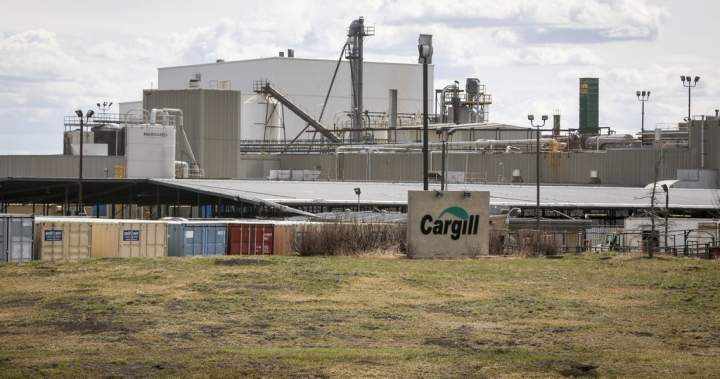
A union representative from Cargill’s beef processing plant near Calgary warns of potential labour shortages if recent Alberta referendum proposals limiting access to or charging for provincially funded services based on immigration status are implemented. With 98% of polls reporting, the referendum narrowly passed with slim majority support for these changes, despite Premier Danielle Smith's government arguing that providing health care and education to temporary residents costs $1 billion annually. Critics, including union leaders and healthcare executives, argue that such policies will make Alberta less attractive to newcomers crucial for filling job vacancies in sectors like meat processing and eldercare.
Written by AI on 2026-10-23, from this article's own text only (the story summary below draws on all the coverage).

AI analysis

Story summary

On October 19, 2026, Albertans voted in a referendum that included ten questions, primarily focusing on immigration and constitutional issues. The last question asked if the Government of Alberta should commence legal steps to hold a second binding referendum on separation from Canada. Voting began with advance polls on October 13 at 311 polling stations.

The results released later showed that three-quarters of Albertans voted against pursuing separation, with strong support for remaining in Canada. However, there was a noticeable rural-urban divide, where questions pertaining to immigration and constitutional changes garnered more support from rural areas compared to urban centers like Calgary and Edmonton.

Premier Danielle Smith's request for "strong mandates" on the nine ballot questions did not materialize as expected, with most provincial ridings rejecting many of the proposed measures. This has left her government hesitant about swift action despite winning majorities in some areas related to immigration policies.

Written for “Alberta Referendum Results” on 2026-11-04, grounded in this article and the 104 other(s) covering the same event.

Story

📰 Alberta Referendum Results
Politics · 105 article(s) covering the same event. Compare every outlet's account →

Compared with similar articles

This article reads unscored and hedges 7% of its claims. Each row says how that neighbour differs.
Global News
Hedges 2 of 26 claims Outlet record 63/100
CBC News
Hedges 10 of 46 claims Outlet record 74/100
“Article A discusses the aftermath of the Alberta referendum and its impact on immigration policy, while Article B reflects more broadly on how the referendum results may influence future debates and political relations.”
CBC News
⚖️ Leans right Hedges 5 of 60 claims Outlet record 74/100
“The articles discuss different aspects of the referendum: one focuses on labour shortages and immigration policy proposals, while the other reports on the overall results of the referendum.”
CBC News
⚖️ Leans right Hedges 2 of 28 claims Outlet record 74/100
“Article A discusses labor shortages concerning a specific union's viewpoint in the aftermath of the referendum, while Article B covers the overall results and divides between rural and urban areas on immigration proposals.”
The Globe and Mail
⚖️ Leans right Hedges 1 of 30 claims Outlet record 52/100
“Article A reports on the preliminary results and voter opinions regarding Alberta's referendum, while Article B discusses concerns raised by a union representative about the implications of the referendum results.”
Toronto Star
⚖️ Leans strongly left Hedges 3 of 40 claims Outlet record 64/100
“The articles discuss different aspects of Alberta's immigration referendum; Article A focuses on voter results and expert interpretations, while Article B highlights concerns from union representatives regarding potential labor shortages.”
The Globe and Mail
⚖️ Leans left Hedges 5 of 33 claims Outlet record 52/100
“The articles discuss different aspects of the referendum aftermath, with Article A focusing on the overall results and political implications, while Article B highlights concerns from a union representative about labor shortages in relation to specific referendum proposals.”
How this article was measured signals, leaning charts, publisher record, byline, topics and claims

Signals How these are calculated →

Claims extracted
27
sentences that state something as happening or true
Uncertain
7%
2 of 27 hedged ("reportedly", "may", "according to")
Leaning
withheld
no quote in the article backed the model's score
Publisher signals
64/100
Toronto Star's corrections and hedging, across everything collected from it. Not a measure of accuracy.
Outlets on this story
105
Politics
Same framing elsewhere
1
articles that frame the event the way this one does
Analyzed 2026-10-23 · how these are computed

How this is being covered How these are calculated →

Article leaning vs. publisher reliability
Source leaning vs. consistency

Publisher

Toronto Star · 11416 article(s) · 28 correction(s) detected
Running correction rate · 28 correction(s)
2026-10-26
Correction
2026-10-24
Correction
2026-10-07
Correction
2026-09-24
Correction

Who wrote this

Lauren Krugel
11 article(s) here · 1 carrying a prediction
🔮 But it will be a bit of work to adjust to permanent daylight time, making sure meetings happen, deliveries arrive and passengers catch flights when they’re supposed to.
🔮 But critics have warned that the referendum’s outcome could make Alberta less attractive to newcomers at a time when jobs desperately need to be filled.
🔮 It estimates a 2,000-hectare canola farm in Saskatchewan would see its fuel bill rise by between $68,000 and $106,000 in 2026.
🔮 It’s been a relatively quiet decade in Alberta’s oilsands, but the federal and provincial governments believe a new West Coast pipeline coupled with policy shifts might help turn up the volume.
🔮 Carney, Smith say new West Coast pipeline could get oil companies building again This time, sector is ready to heat up without the headaches, leaders say It's been a relatively quiet decade in Alberta's oilsands, but the federal and provincial governments believe a new West Coast pipeline coupled with policy shifts might help turn up the volume.
🔮 CALGARY - Alaska Gov. Mike Dunleavy says it would be shocking to the average American to see the United States invade Canada.
🔮 The serene alpine setting will stand in stark contrast to the theme of this year’s Global Business Forum conference: “thriving in chaos.”
🔮 “They would laugh you out of the room,” said the fourth-generation southern Alberta wheat grower.
🔮 Boosting trade with a more diverse array of international partners would only plug part of the hole in Canada’s economy if the U.S. were to withdraw from the North American trade pact, says a new Deloitte Canada report.
Also by Lauren Krugel
Nothing else under this byline is closely related to this article, so these are simply their most recent.
All 11 articles by Lauren Krugel →

Topics

Alberta CALGARY Cargill High River the United Food and Commercial Workers Local 401

Subjects

Alberta GPE · 4× Ahmed PERSON · 2× CALGARY GPE · 2× Canada GPE · 2× Cargill ORG · 2× Ottawa ORG · 2× Alta GPE · 1× Faduma Ahmed PERSON · 1× High River GPE · 1× the United Food and Commercial Workers Local 401 ORG · 1×

Narrative

“When we sit down to eat, we rarely think about the intense and the gruelling labour it takes to get the food onto our tables, right on our plate,” she said, adding that workers have come to her concerned about their ability to pay for health care and school for their children. “They are foundational to keeping our economy moving, and they are navigating the exact same punishing affordability crisis as every other Albertan.”
framing: assertive · carried by 1 article(s) · first seen 2026-10-23
🔮 But critics have warned that the referendum’s outcome could make Alberta less attractive to newcomers at a time when jobs desperately need to be filled.

Claims (27 extracted, 2 hedged)

A union representative for a beef processing plant south of Calgary is warning of worsening labour shortages if immigration policy proposals that narrowly passed in Alberta’s referendum are enacted. asserted
that → process → referendum
“These are tough and high turnover jobs with few candidates lining up to fill them,” said Faduma Ahmed, with the United Food and Commercial Workers Local 401 at Cargill’s abattoir in High River, Alta. asserted
Ahmed → line → River
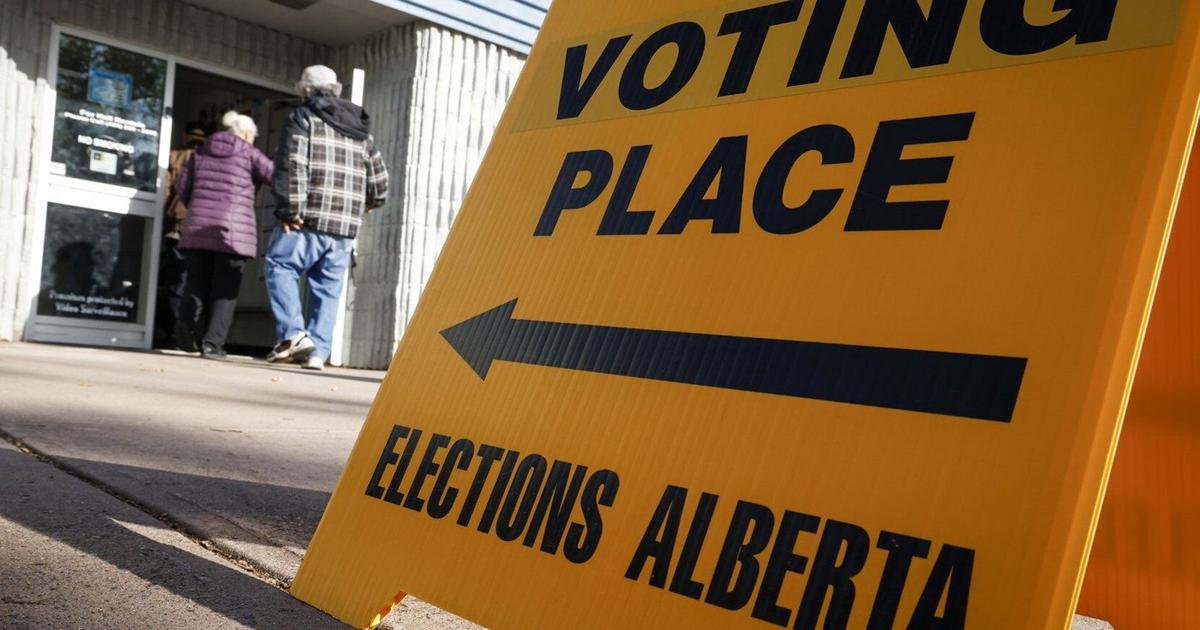
With 98 per cent of polls reporting in Monday’s referendum, a slim majority of votes were cast in favour of limiting access to or charging a fee for provincially funded services based on immigration status. asserted
majority → report → status
Premier Danielle Smith’s government had argued that the cost to provide health care and education to temporary Alberta residents amounts to $1 billion a year and that a surge in newcomers has strained affordability and services. asserted
surge → argue → affordability
But critics have warned that the referendum’s outcome could make Alberta less attractive to newcomers at a time when jobs desperately need to be filled. uncertain
jobs → warn → time
At the Cargill plant, temporary foreign workers, refugees, permanent residents and citizens from all over the globe work side by side and all pay taxes, said Ahmed. asserted
Ahmed → work → taxes
It’s back-breaking work, with staffers often having to hoist whole carcasses. asserted
staffers → ’ → carcasses
“When we sit down to eat, we rarely think about the intense and the gruelling labour it takes to get the food onto our tables, right on our plate,” she said, adding that workers have come to her concerned about their ability to pay for health care and school for their children. “They are foundational to keeping our economy moving, and they are navigating the exact same punishing affordability crisis as every other Albertan.” asserted
they → sit → Albertan
Ahmed said the union will draw a “hard line” if the proposals become law. asserted
proposals → say → line
“We will fight to ensure immigrant workers receive the same services they do today, up to and including making the employers pay at the bargaining table to fund the differences.” asserted
employers → fight → differences
Another sector that relies heavily on immigration is health care for seniors. asserted
that → rely → seniors
“Often we’ll find they’ll work in roles that maybe some Canadians may not be interested in,” said Leah Lechelt, executive director of the Christian Health Association of Alberta, which represents non-profits that employ 22,000 staff across the province. uncertain
that → find → province
She said some college programs for health-care aides have closed or reduced their enrolment simply because there haven’t been enough applications domestically. asserted
programs → say → enrolment
The workforce hails from around the world, and are mostly health-care aides, but also cleaning and food-service staff, Lechelt said. asserted
Lechelt → hail → world
They deal with vulnerable patients, so regulations largely limit those jobs to permanent residents and citizens. asserted
regulations → deal → residents
“It’s really a very attractive role for somebody who is fairly new to Canada and sometimes is working on some English language proficiency skills.” asserted
who → ’ → skills
The association has established an apprenticeship program that enables those in entry-level jobs, like housekeeping, to train on-site to become health-care aides and pursue a better-paying career path. asserted
those → establish → path
“And then we can backfill those positions with other newcomers, maybe starting out in their journey in Canada.” asserted
we → backfill → Canada
One of the referendum proposals asked whether Albertans would support the province taking more control of immigration from the federal government. asserted
province → ask → government
It was an idea the Business Council of Alberta has long advocated, said president Adam Legge. asserted
Legge → advocate → Alberta
“There’s a bit of a better on-the-ground intel perspective compared to a centralized decision in Ottawa,” he said. asserted
he → ’ → Ottawa
“Oftentimes there are some skills and geographic mismatches between what Ottawa approves on an immigration basis and what is needed.” asserted
what → be → basis
For instance, he said there’s a huge demand for workers in the skilled trades, like heavy-duty mechanics, welders and electricians. asserted
he → say → mechanics
He said he heard from members generally that they don’t want to see anything deter people from choosing to live in Alberta. asserted
anything → say → Alberta
Research by University of Calgary economist Trevor Tombe commissioned by the Calgary Chamber of Commerce found immigrants paid an estimated $4.1 billion in Alberta personal income taxes in 2026. asserted
immigrants → commission → 2026
It also found immigrants younger than 40 had a net fiscal contribution of almost $1 billion, after the cost of provincial family programs, workers’ compensation and social assistance are accounted for. asserted
cost → find → programs
This report by The Canadian Press was first published Oct. 23, 2026. asserted
report → publish → Press

💬Give feedback
🕘History 🎫Support