Photo via Times of India

New York couple's 30-year property dispute takes a turn after cameras record minor daughter

Read the original at Times of India ↗
Cite

TOI World Desk. (2026, October 24). New York couple's 30-year property dispute takes a turn after cameras record minor daughter. Times of India. https://timesofindia.indiatimes.com/world/us/in-1996-a-new-york-couple-bought-their-home-believing-a-tree-line-marked-the-boundary-30-years-later-an-appeals-court-revived-a-privacy-claim-over-cameras-filming-their-backyard-and-daughter/articleshow/135140559.cms

Dated from the outlet's own feed. Check the original for its byline.

Times of India · collected 2026-10-24 · by TOI World Desk

Quick Summary

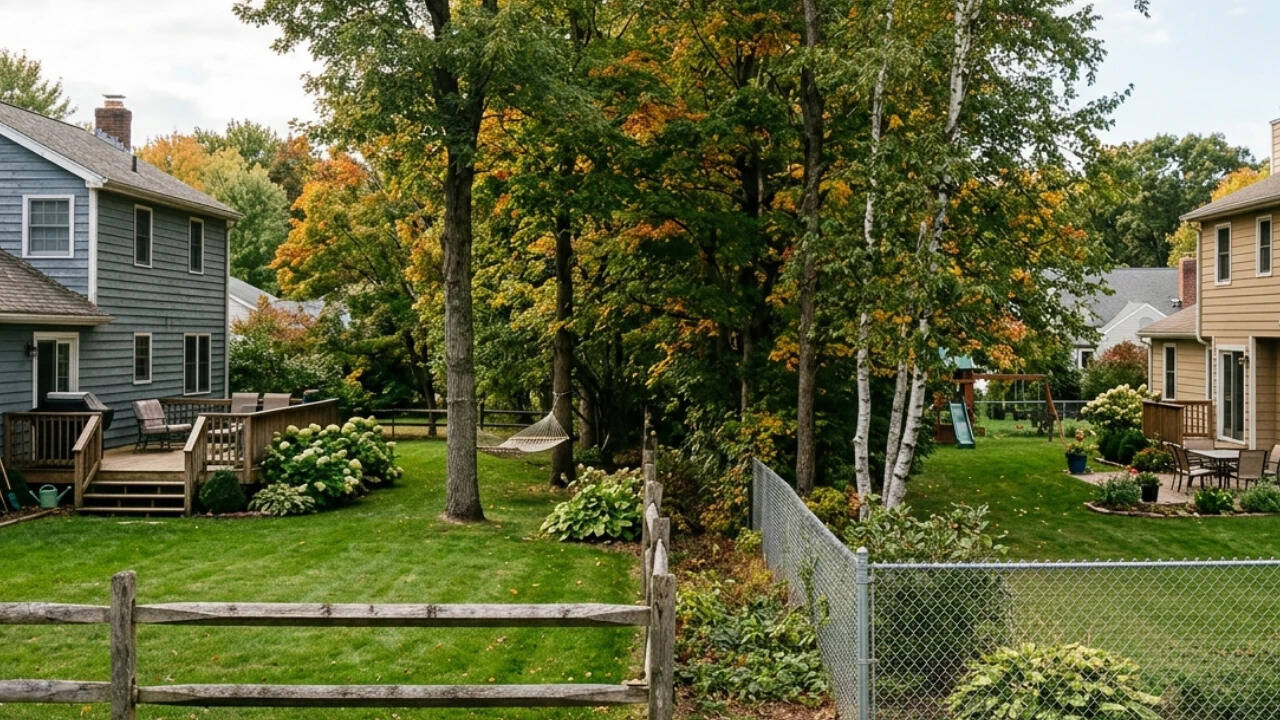
Timothy J. Riley and his wife purchased their home in Malta, Saratoga County, New York, in 1996, believing that a line of trees marked the boundary with their neighbor's property. In 2018, after years of disputes over this boundary, including the installation of surveillance cameras by the Dalys, the Rileys filed a lawsuit alleging privacy violations due to footage captured of their backyard and minor daughter. The New York appeals court recently revived the couple’s privacy claim, considering evidence that thousands of images and videos were recorded by the neighbors' cameras.
Written by AI on 2026-10-24, from this article's own text only (the story summary below draws on all the coverage).

AI analysis

Story summary

A New York couple in Saratoga County has won a significant legal battle after nearly three decades of a property dispute with their neighbors. Timothy J. Riley and his co-plaintiff bought their home in December 1996, believing that trees marked the boundary line between their property and their neighbor’s land. However, John C Daly and his co-defendant allegedly installed cameras recording activities on the Rileys' side of the boundary, including footage of their backyard and young daughter.

The case, which involved allegations of trespassing and surveillance harassment, was revived by an appeals court in New York after it ruled that such camera installations without written permission can be considered a violation. The ruling supports the Rileys' claim for damages if cameras are installed on adjoining property to record activities with intent to harass or alarm them. Both properties are part of a four-plot residential development in the Town of Malta.

The dispute centers around approximately 10 feet of land where surveys differ, leading to disagreements over property boundaries and usage rights. The decision is seen as significant for homeowners dealing with similar surveillance disputes.

Written for “Property Dispute Involves Daughter” on 2026-11-04, grounded in this article and the 0 other(s) covering the same event.

Story

📰 Property Dispute Involves Daughter
Crime & Law · 1 article(s) covering the same event.

Compared with similar articles

Nothing to compare against. No article is close enough to this one for the pipeline to have linked or judged the pair.
How this article was measured signals, leaning charts, publisher record, byline, topics and claims

Signals How these are calculated →

Claims extracted
42
sentences that state something as happening or true
Uncertain
24%
10 of 42 hedged ("reportedly", "may", "according to")
Leaning
not political
takes no side on a contested political question
Publisher signals
59/100
Times of India's corrections and hedging, across everything collected from it. Not a measure of accuracy.
Outlets on this story
1
Crime & Law
Same framing elsewhere
1
articles that frame the event the way this one does
Analyzed 2026-10-24 · how these are computed

How this is being covered How these are calculated →

Article leaning vs. publisher reliability
Source leaning vs. consistency

Publisher

Times of India · 4073 article(s) · 4 correction(s) detected
Running correction rate · 4 correction(s)

Who wrote this

TOI World Desk
1406 article(s) here · 1 carrying a prediction
🔮 Speaking to Fox News on Tuesday, the POTUS claimed he had a 99 per cent approval rating in Israel and suggested he could pursue a political career there if his popularity in the United States declined.
🔮 The Brennan Center's 2026 survey also found that more than half of local election officials were concerned that threats, harassment and intimidation could make it harder to recruit and retain election workers.
🔮 These videos may depict candidates taking part in unpopular activities or appearing alongside controversial public figures.
🔮 Chutkan further warned that beginning construction or demolition before the National Park Service issues its final authorization, or proceeding without the required 14-day notice, could violate earlier court orders, AP News reported.
🔮 As votes are counted, three main outcomes could shape the future of Congress.
🔮 "It is back to the way Abraham Lincoln would have wanted it."
🔮 As reported by The Salt Lake Tribune, he began considering whether similar infrastructure could work on his Utah property.
🔮 On 30 May 2024, the court held that the transactions qualified as donationes mortis causa, a legal term for gifts made in anticipation of death.
🔮 James Patterson is best known as one of the world’s most successful thriller writers, but his most consequential work may be happening far from the bestseller lists.
🔮 The money will benefit After-School All-Stars, a non-profit organisation that works with children and young people through free after-school programmes.
Wire or desk byline, not an individual reporter.
Also by TOI World Desk
Nothing else under this byline is closely related to this article, so these are simply their most recent.
All 1406 articles by TOI World Desk →

Topics

Justia New York Saratoga County the Town of Malta

Subjects

Rileys PERSON · 9× Dalys PERSON · 5× New York GPE · 4× John C Daly PERSON · 1× Justia ORG · 1× Saratoga County GPE · 1× Timothy J. Riley PERSON · 1× the Town of Malta GPE · 1×

Narrative

It allows people to seek damages if cameras are installed on adjoining property to record activities in their backyard without written permission and with the intention of harassing, alarming or threatening them.
framing: mixed · carried by 1 article(s) · first seen 2026-10-24
🔮 But the Rileys pointed out differences between the surveys, arguing that these could shift the boundary by approximately 10 feet.

Claims (42 extracted, 10 hedged)

A New York couple who bought their home in 1996 believing that a line of trees marked the boundary with their neighbour's property have spent years fighting over the same stretch of land. asserted
line → buy → land
What began as a disagreement over where one property ended and the other began eventually involved allegations of trespass and surveillance cameras recording their backyard. asserted
other → begin → backyard
Nearly 30 years after the purchase, a New York appeals court has revived the couple's privacy claim after they alleged that their neighbours' cameras captured thousands of images and videos, including footage of their swimming pool and young daughter. uncertain
cameras → revive → pool
According to details of the case available on Justia, the ruling, delivered on Thursday, concerns Timothy J. Riley and his co-plaintiff, who own a home in the Town of Malta, Saratoga County, and their neighbours, John C Daly and his co-defendant. uncertain
who → accord → Malta
Both properties are part of a four-plot residential development, with the Rileys living on the northern side and the Dalys to the south. asserted
Rileys → live → south
The Rileys purchased their property from the developer in December 1996. asserted
Rileys → purchase → December
At the time, they understood that the trees between the two plots marked the boundary. asserted
trees → understand → boundary
The original neighbour appeared to share that understanding. asserted
neighbour → appear → understanding
He watched them maintain the wooded area on their side and later helped them build a garage about 15 feet from the trees. asserted
them → watch → trees
Things began to change in 2004 when the neighbour sold his property to the Dalys. asserted
neighbour → begin → Dalys
Two years later, the new owners built a chain-link fence between the tree line and the Rileys' garage. asserted
owners → build → line
The Rileys believed the fence stood on their land. asserted
fence → believe → land
In 2011, they installed their own fence about two feet away. asserted
they → instal → fence
Over time, the disagreement grew into a dispute involving approximately 230 feet of the boundary. asserted
disagreement → grow → boundary
Disagreement over trees led to surveillance cameras By 2018, the dispute had reached the courts. asserted
dispute → lead → courts
Both households accused each other of wrongdoing in the contested area. asserted
households → accuse → area
The Rileys wanted the boundary they had recognised for years to be legally accepted, while the Dalys maintained that the land belonged to them. asserted
land → want → them
But the disagreement was no longer limited to fences and property lines. asserted
disagreement → limit → fences
The Dalys had also installed surveillance cameras, which became a major part of the Rileys' lawsuit. asserted
which → instal → lawsuit
The Dalys told the court that they had installed the cameras to monitor their property following alleged incidents of trespass, theft and harassment. asserted
they → tell → trespass
They maintained that the purpose was to prevent further problems, not to harass their neighbours. asserted
purpose → maintain → neighbours
The Rileys, however, raised concerns about what the cameras were recording. asserted
cameras → raise → what
They submitted photographs showing their backyard and swimming pool, including an image of their daughter, who was a minor. asserted
who → submit → daughter
They also claimed that information obtained from one of the cameras and during the legal proceedings showed that thousands of photographs or videos had been captured. asserted
thousands → claim → photographs
According to them, the recordings extended beyond the disputed strip of land into other parts of their backyard. uncertain
recordings → accord → backyard
Why court allowed privacy claim to continue New York has a law that protects homeowners against certain types of unwanted surveillance by neighbours. uncertain
that → allow → neighbours
It allows people to seek damages if cameras are installed on adjoining property to record activities in their backyard without written permission and with the intention of harassing, alarming or threatening them. asserted
cameras → allow → them
The lower court had earlier dismissed their privacy claim. uncertain
court → dismiss → claim
However, the appeals court disagreed, finding that the photographs and allegations about the recordings raised questions that needed further examination and reinstated the Rileys' invasion of privacy claim. uncertain
that → disagree → claim
What happened to the original property dispute? asserted
What → happen → dispute
While the cameras became an important issue, the question that started the disagreement remained unresolved: Where exactly was the boundary between the two homes? asserted
boundary → become → homes
The Rileys argued that the tree line should be recognised because it had been treated as the boundary for years. asserted
it → argue → years
Under New York law, a boundary accepted by neighbouring owners for more than 10 years can, in certain circumstances, become legally recognised. asserted
boundary → accept → circumstances
However, the court found that the Rileys had not provided enough evidence to establish that both households had accepted the trees as the boundary for the required period. asserted
households → find → period
The Dalys' decision to build a fence on the Rileys' claimed side of the trees also raised doubts about such an agreement. asserted
decision → build → agreement
The Dalys, meanwhile, relied on land surveys to support their ownership claim. uncertain
Dalys → rely → claim
But the Rileys pointed out differences between the surveys, arguing that these could shift the boundary by approximately 10 feet. uncertain
these → point → feet
They also alleged that wooden survey stakes and the original natural boundary had been removed before a surveyor inspected the property in 2018. asserted
surveyor → allege → 2018
The appeals court found that these differences could not be ignored. uncertain
differences → find → ?
It thus overturned the lower court's decision to settle the boundary according to the Dalys' survey. uncertain
It → overturn → survey
…and 2 more, not listed.

💬Give feedback
🕘History 🎫Support