Photo via The Guardian

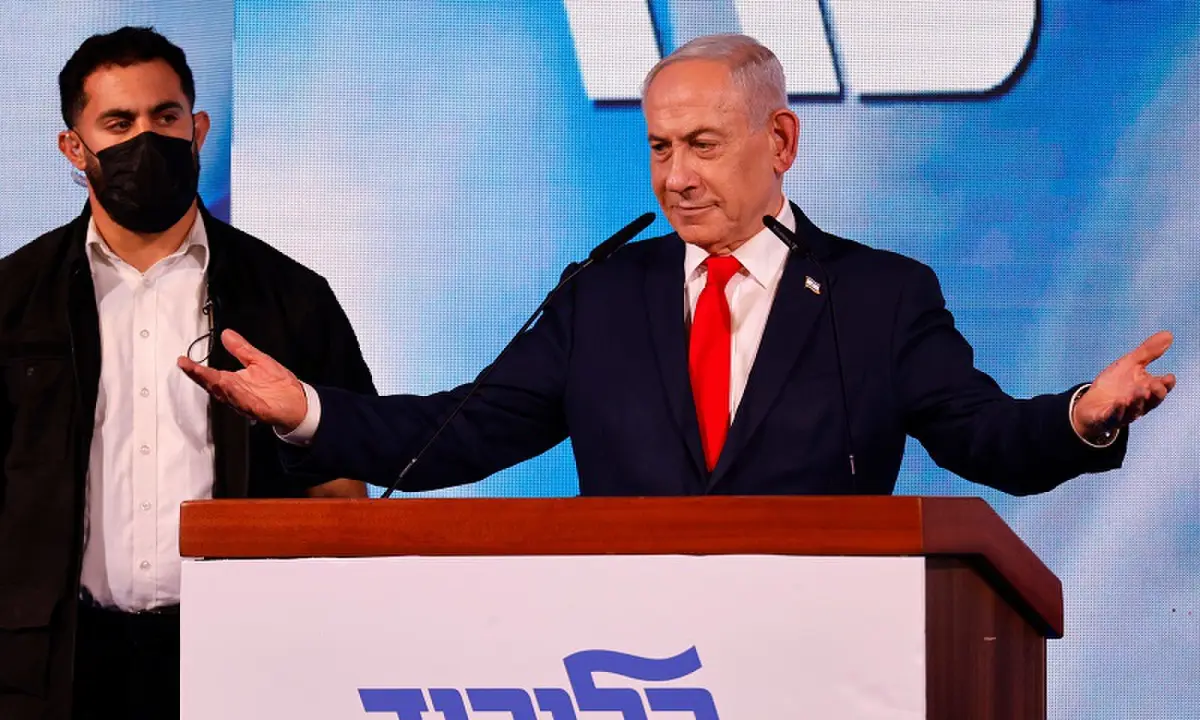
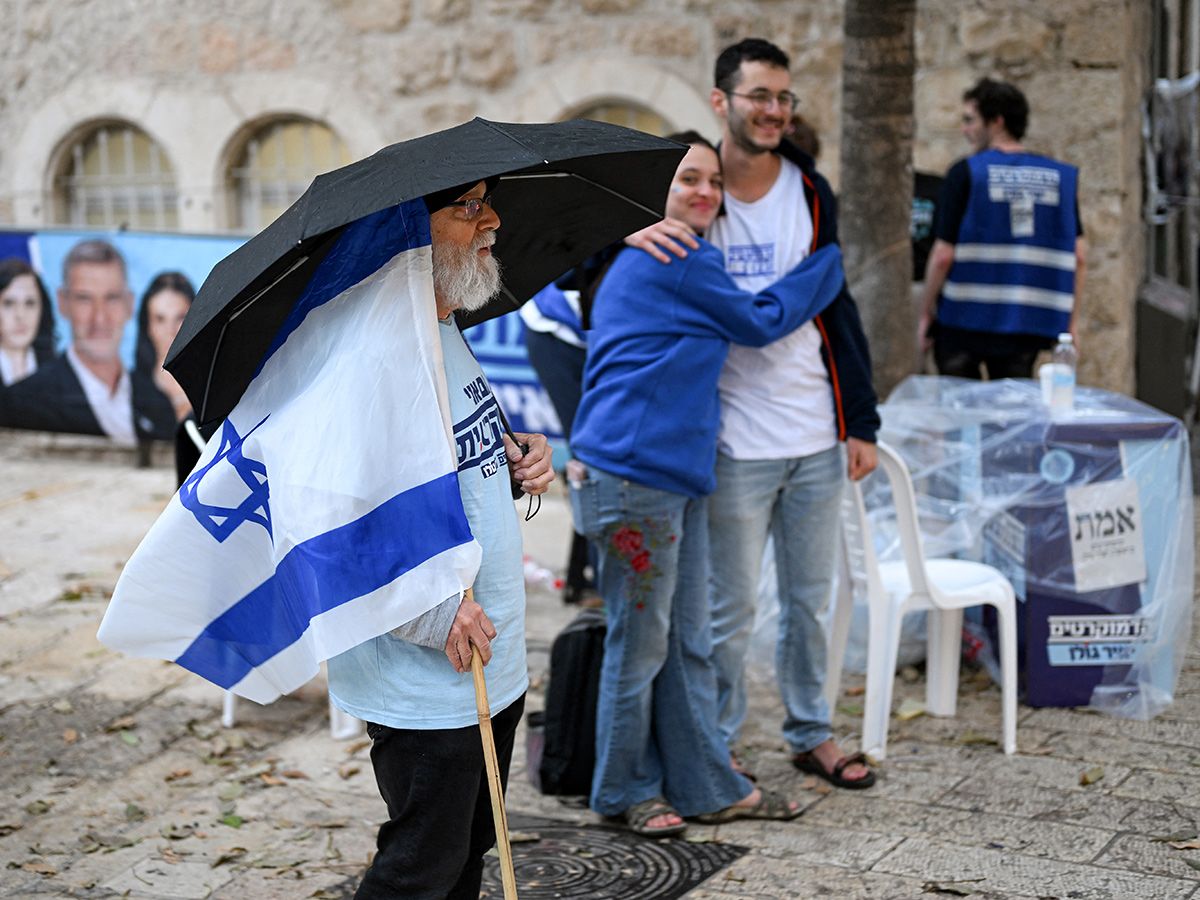
Coalition talks loom in Israel as Netanyahu and Eisenkot blocs set to fall short of majority

Read the original at The Guardian ↗
Cite

Jerusalem, J. B. i. (2026, October 28). Coalition talks loom in Israel as Netanyahu and Eisenkot blocs set to fall short of majority. The Guardian. https://www.theguardian.com/world/2026/oct/28/israel-election-exit-polls-suggest-netanyahu-eisenkot-blocs-tied-ntwnfb

Dated from the outlet's own feed. Check the original for its byline.

The Guardian · collected 2026-10-28 · by Julian Borger in Jerusalem

Quick Summary

On Wednesday, Israel faced potential political instability after exit polls indicated that neither Benjamin Netanyahu’s bloc nor Gadi Eisenkot’s opposition coalition would secure a majority in the Knesset. With 70% of votes counted, both sides appeared short of the necessary 61 seats, leaving them with the challenging task of either forming coalitions that include Arab Israeli parties or potentially facing new elections. Retired general and opposition leader Gadi Eisenkot initially claimed victory but his bloc’s lead over Netanyahu's has since narrowed, complicating efforts to form a stable government.
Written by AI on 2026-10-28, from this article's own text only (the story summary below draws on all the coverage).

AI analysis

Story summary

On October 27, 2026, Israelis voted in a closely contested parliamentary election amid ongoing tensions and recent conflicts. The main contenders were incumbent Prime Minister Benjamin Netanyahu of the Likud party and his challenger Gadi Eisenkot, leader of the newly formed Yashar party. Arab-Israeli parties, such as Ra’am and the Joint List, secured 19 seats in total, a record high reflecting growing voter dissatisfaction with Netanyahu’s leadership. Despite securing the most seats (53), Netanyahu's right-wing coalition fell short of a parliamentary majority, leaving his position uncertain. Eisenkot could potentially form an anti-Netanyahu government if he gains support from Arab-led parties and others, but negotiations remain deadlocked as no clear coalition has emerged yet.

Written for “Israeli Election Deadlock” on 2026-11-05, grounded in this article and the 230 other(s) covering the same event.

Story

📰 Israeli Election Deadlock
Politics · 231 article(s) covering the same event. Compare every outlet's account →

Compared with similar articles

This article reads leans left and hedges 15% of its claims. Each row says how that neighbour differs.
BBC News
Hedges 3 of 35 claims Outlet record 66/100
Dawn
Hedges 7 of 32 claims Outlet record 72/100
The Hindu
Hedges 7 of 33 claims Outlet record 77/100
Al Jazeera
⚖️ Leans strongly left further left than this Hedges 3 of 34 claims Outlet record 60/100
“The articles describe different stages of the Israeli election process and political aftermath rather than a single specific incident.”
New York Post
⚖️ Leans left Hedges 2 of 15 claims Outlet record 66/100
South China Morning Post
Hedges 2 of 4 claims Outlet record 62/100
“While both articles discuss Israel's election results and potential political deadlock, they refer to different stages of the process with distinct outcomes and implications.”
New York Post
⚖️ Leans left Hedges 4 of 10 claims Outlet record 66/100
National Post
Hedges 5 of 29 claims Outlet record 60/100
Al Jazeera
Hedges 5 of 14 claims Outlet record 60/100
How this article was measured signals, leaning charts, publisher record, byline, topics and claims

Signals How these are calculated →

Claims extracted
33
sentences that state something as happening or true
Uncertain
15%
5 of 33 hedged ("reportedly", "may", "according to")
Leaning
Leans left
of the writing, not the subject · beta estimate
Publisher signals
66/100
The Guardian's corrections and hedging, across everything collected from it. Not a measure of accuracy.
Outlets on this story
231
Politics
Same framing elsewhere
1
articles that frame the event the way this one does
Analyzed 2026-10-28 · how these are computed

How this is being covered How these are calculated →

Article leaning vs. publisher reliability
Source leaning vs. consistency

Publisher

The Guardian · 2996 article(s) · 6 correction(s) detected
Running correction rate · 6 correction(s)

Who wrote this

Julian Borger in Jerusalem
3 article(s) here · 1 carrying a prediction
🔮 The prime minister’s attack appeared aimed at stopping the Jewish and Arab opposition voting together in the new Knesset to oust the incumbent speaker, Amir Ohana, a Likud politician and former Shin Bet official, and advancing their own legislation.
🔮 As the vote count proceeded on Wednesday, initial exit poll projections that Eisenkot’s bloc would have a narrow lead over Netanyahu’s coalition looked increasingly in doubt as the prime minister’s bloc edged ahead, with the votes of deployed soldiers and other absentee ballots yet to be counted.
🔮 Israel’s Channel 12 news reported that the prime minister and the armed forces chief of staff, Lt Gen Eyal Zamir, clashed in recent days over a directive to the military which could “potentially spark an immediate conflagration with Iran at a very sensitive juncture”, by provoking a miscalculation by Iran.
Also by Julian Borger in Jerusalem
Nothing else under this byline is closely related to this article, so these are simply their most recent.

Topics

Arab Israel Jewish Joint List Palestinian

Subjects

Netanyahu PERSON · 12× Eisenkot PERSON · 6× Jewish NORP · 5× Arab NORP · 4× Israel GPE · 4× Joint List ORG · 2× Palestinian NORP · 2× Benjamin Netanyahu PERSON · 1× Gadi Eisenkot PERSON · 1× Zionist NORP · 1×

Narrative

We can no longer accept Netanyahu’s racist distinction between Jewish and Arab votes,” Golan said in a post on X. “Anyone who tries to erase the votes of Arab citizens is surrendering to Netanyahu and giving up on Israel,” he added, pointing out that Netanyahu relied on ultra-Orthodox Jewish parties that were non-Zionist and opposed conscription for their constituents.
framing: assertive · carried by 1 article(s) · first seen 2026-10-28
🔮 As the vote count proceeded on Wednesday, initial exit poll projections that Eisenkot’s bloc would have a narrow lead over Netanyahu’s coalition looked increasingly in doubt as the prime minister’s bloc edged ahead, with the votes of deployed soldiers and other absentee ballots yet to be counted.

Claims (33 extracted, 5 hedged)

Israel’s future hung in the balance on Wednesday morning as it became clear that Benjamin Netanyahu had lost his governing majority, and his political fate now depends on whether opposition Jewish parties are prepared to forge a common front with Palestinian parties, whose support surged in Tuesday’s elections. asserted
support → hang → elections
The leader of the Jewish opposition bloc, the retired general Gadi Eisenkot, appeared to rule out such a broad coalition in a premature declaration of victory overnight for what he called a “Zionist majority”. asserted
he → retire → what
As the vote count proceeded on Wednesday, initial exit poll projections that Eisenkot’s bloc would have a narrow lead over Netanyahu’s coalition looked increasingly in doubt as the prime minister’s bloc edged ahead, with the votes of deployed soldiers and other absentee ballots yet to be counted. asserted
votes → proceed → soldiers
With 70% of votes counted, both Jewish blocs looked certain to fall short of the 61 Knesset seats needed for a majority government, leaving Eisenkot and his allies facing a clear choice: either make a pact with Arab Israeli parties heading for a record result of 16-19 seats, or hand Netanyahu a political lifeline in the form of new elections or a unity government. asserted
blocs → count → elections
Donald Trump took credit for Netanyahu’s better than expected performance so far, claiming his overt backing in the run-up to the vote had made the difference. asserted
backing → take → difference
“When the endorsement went out, it helped him a lot,” Trump said, adding that the result appeared to be heading for a stalemate or a Netanyahu win. asserted
result → go → stalemate
Yair Golan, the leader of the centre-left Democrats, a junior partner in Eisenkot’s Change bloc, urged Eisenkot to negotiate with the two Palestinian parties, the Joint List and Ra’am (the United Arab List). asserted
Golan → urge → parties
“We have no future here if we don’t stop being afraid. asserted
we → have → future
And if we don’t put an end to racism. asserted
we → put → racism
We can no longer accept Netanyahu’s racist distinction between Jewish and Arab votes,” Golan said in a post on X. “Anyone who tries to erase the votes of Arab citizens is surrendering to Netanyahu and giving up on Israel,” he added, pointing out that Netanyahu relied on ultra-Orthodox Jewish parties that were non-Zionist and opposed conscription for their constituents. asserted
that → accept → constituents
Noa Landau, a commenter writing in Haaretz, argued that by making Zionism the test for forming a coalition, excluding potential partners, while the prime minister had not, Eisenkot had fallen “into the trap Netanyahu laid for him over the course of the election campaign”. asserted
Netanyahu → write → campaign
The Joint List leader, Yousef Jabareen, said its strong performance meant it “can’t be ignored under any political scenario”. asserted
it → say → scenario
He said Netanyahu’s government, especially its extremist national security minister, Itamar Ben-Gvir, “has made life bitter for every Arab citizen”. asserted
life → say → citizen
“We will be ready to pave the way to oust the government of Netanyahu, Ben-Gvir and Smotrich – and send them home,” Jabareen said. asserted
Jabareen → pave → them
Another Joint List official described the choice facing the Jewish opposition as “supremacy or building democracy”. asserted
official → describe → supremacy
Counting all the votes could take another few days, with absentee ballots the last to be tallied. uncertain
ballots → count → days
Most of those are from deployed soldiers. asserted
Most → deploy → soldiers
The army vote usually swings right, but that broad picture may be complicated by the fact that a lot of older, more moderate reservists are now on active duty. uncertain
lot → swing → duty
Once all the votes are accounted for, it will be up to Israel’s president, Isaac Herzog, to give one of the party leaders six weeks to form a government. asserted
it → account → government
If the first choice fails, the opportunity passes to his rival. asserted
opportunity → fail → rival
In the weeks of political wrangling likely to ensue, both Netanyahu and Eisenkot are expected to lure defectors from each other’s camps. asserted
Netanyahu → ensue → camps
Netanyahu would remain in office in a caretaker capacity until a new majority is formed. asserted
majority → remain → capacity
He might expect to benefit if the deadlock leads to another round of elections. uncertain
deadlock → expect → elections
Tens of thousands of diaspora Israelis who returned to vote on Tuesday, and were mostly opposed to the governing coalition, might not return for another vote, for example. uncertain
who → return → example
Tuesday’s election came as Israel is fighting accusations of genocide in Gaza and ethnic cleansing of Palestinians in the West Bank. asserted
Israel → come → Bank
Netanyahu is separately wanted by the international criminal court for alleged war crimes. asserted
Netanyahu → want → crimes
The election was widely seen as a referendum on the 77-year-old leader, and the vote drew 77.7% turnout, the highest since 1999, with marked increases in the number of serving military members voting. asserted
vote → see → members
Political deadlock has led to repeated votes in the past. asserted
deadlock → lead → past
Between 2019 and 2022, Israel held five elections. asserted
Israel → hold → elections
Netanyahu is Israel’s longest-serving prime minister, governing for 19 of the past 30 years, and its most tenacious political survivor. asserted
Netanyahu → serve → years
Entangled in a long-running corruption trial, Netanyahu and his far-right coalition had stoked xenophobic fears and suggested Israel would be vulnerable to a nuclear attack without him. uncertain
Israel → entangle → him
The campaign, febrile even by Israeli standards, included Netanyahu posting a picture of a nuclear explosion devastating Tel Aviv on the eve of the polls opening. asserted
polls → include → opening
Since the deadly attack launched by Hamas on Israel’s southern communities on 7 October 2023, Israel has devastated Gaza and killed more than 74,000 Palestinians, fought Hezbollah in Lebanon, occupied new territory in Syria and launched a war with the US against Iran. asserted
Israel → launch → Iran

💬Give feedback · no sign-in needed

No sign-in needed for now. Your note is sent without a name, so it cannot be answered.

🕘History 🎫Support